




- Nutraceuticals & Functional Foods
- High Fiber Snacks Market
High Fiber Snacks Market Size, Share, and Growth Forecast 2026 - 2033
High Fiber Snacks Market by Product Type (Snack Bars, Bakery-Based Snacks, Savory Snacks, Trail Mix & Blended Snacks, Others), Fiber Source (Whole Grains, Fruits & Vegetables, Legumes & Pulses, Functional Fibers, Nuts & Seeds, Others), Distribution Channel (Supermarkets/Hypermarkets, Convenience Stores, Specialty Health Stores, Online Retail/E-commerce, Others), and Regional Analysis, 2026 - 2033

High Fiber Snacks Market Size and Trend Analysis
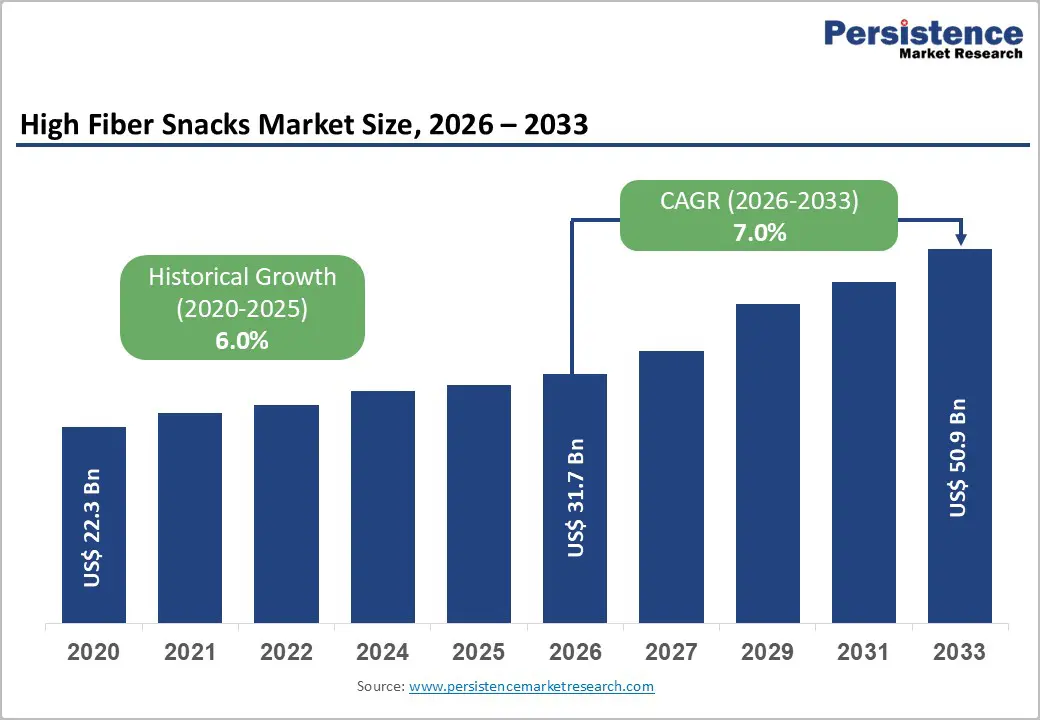
The global high fiber snacks market size is expected to be valued at US$ 31.7 billion in 2026 and projected to reach US$ 50.9 billion by 2033, growing at a CAGR of 7.0% between 2026 and 2033.
The high fiber snacks market is experiencing robust growth driven primarily by escalating consumer awareness of gut health and preventive nutrition. According to the U.S. Department of Agriculture (USDA), dietary fiber intake remains critically below recommended daily levels across most adult populations, fueling demand for convenient, fiber-enriched snacking options. The convergence of clean-label trends, the rise of functional food categories, and the growing prevalence of lifestyle diseases such as obesity and type 2 diabetes affecting over 537 million adults globally per the International Diabetes Federation (IDF) are collectively accelerating product innovation and market expansion across all geographies.
Key Highlights
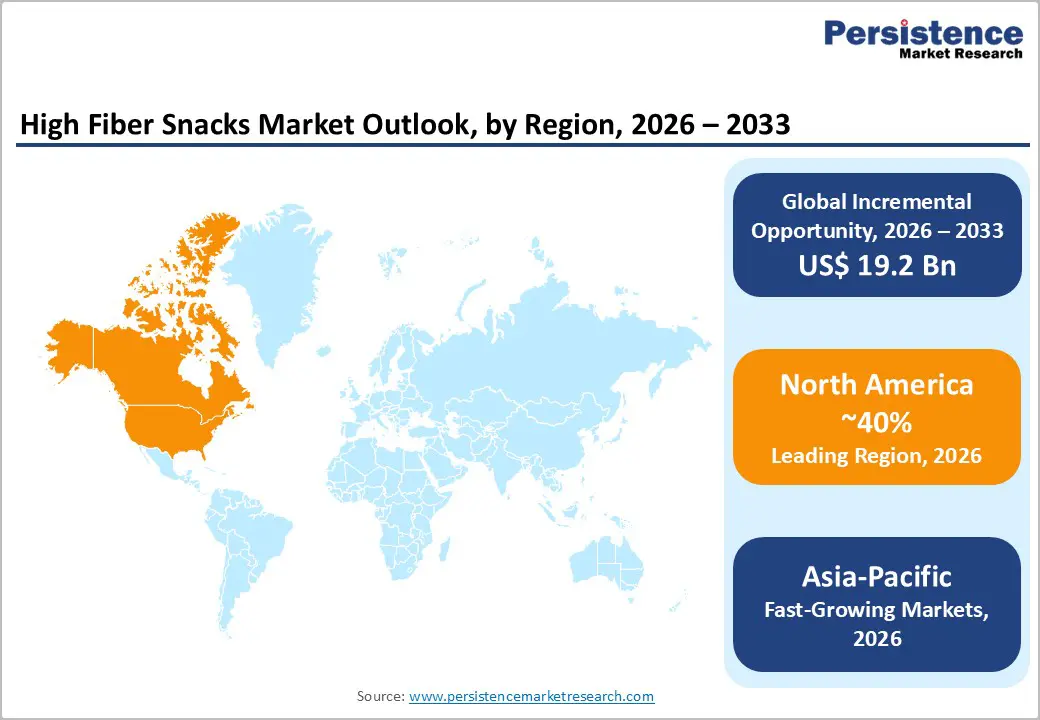
- Regional Leadership: North America leads the global high fiber snacks market with approximately 40% market share in 2025, driven by strong U.S. health food culture, FDA nutritional labeling mandates, and the innovation ecosystems of major players including Kellogg Company and General Mills Inc.
- Fast-growing Market: Asia Pacific is the fastest-growing region in the high fiber snacks market, supported by urbanization, rising middle-class incomes, and government nutrition initiatives such as China's Healthy China 2030 and India's evolving FSSAI labeling regulations driving consumer demand.
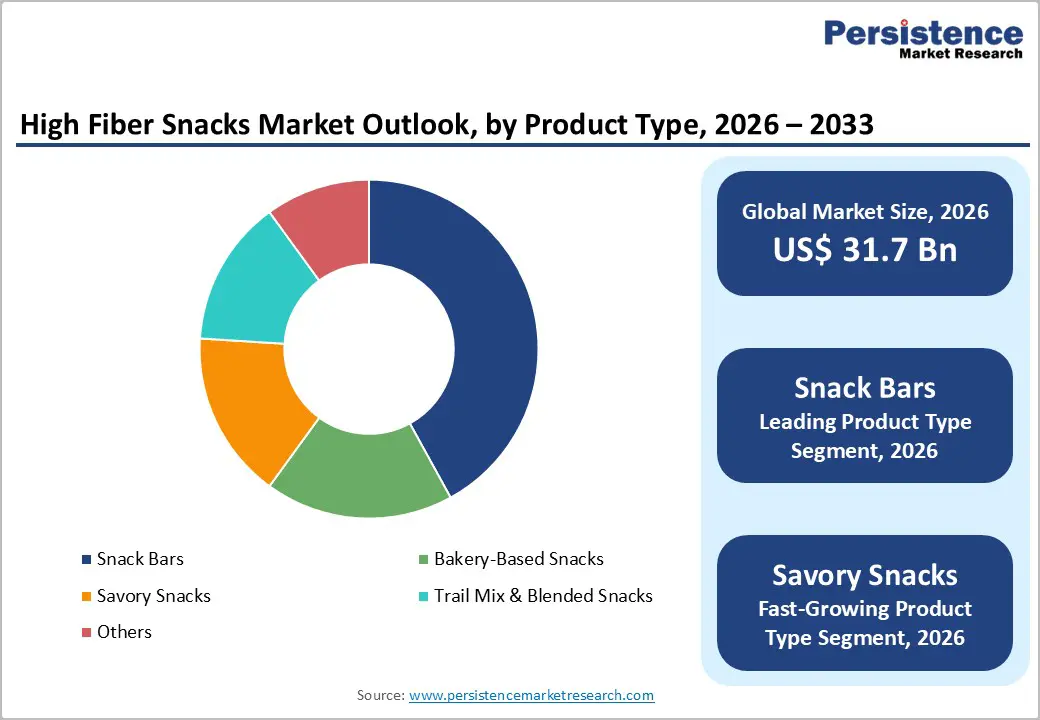
- Leading Product: Snack bars dominate the product type category with approximately 42% market share in 2025, underpinned by convenience-driven consumption patterns and the strong brand presence of Kind LLC, Clif Bar & Company, and Nature Valley across major retail channels globally.
- Fast-growing Product Type: Savory snacks represent the fastest-growing product segment in the high fiber snacks market, propelled by innovation in legume-based and whole grain savory formats and rising consumer interest in fiber-rich alternatives to traditional potato chips and pretzels.
- Opportunity: Opportunities emerge in Asia Pacific's underpenetrated emerging markets, where rapidly expanding middle-class demographics, supportive government nutrition policies, and e-commerce penetration offer substantial revenue growth potential for global and regional high fiber snack brands.
Market Dynamics
Drivers - Rising Consumer Awareness of Gut Health and Preventive Nutrition
Growing scientific recognition of the role dietary fiber plays in digestive health, metabolic regulation, and chronic disease prevention is a primary driver of the high fiber snacks market. The World Health Organization (WHO) recommends a daily fiber intake of 25–30 grams, yet surveys by the American Society for Nutrition indicate that fewer than 10% of Americans meet this benchmark. This persistent 'fiber gap' is converting Billions of health-conscious consumers toward high-fiber snacking alternatives. Manufacturers are responding with innovative product lines enriched with chicory root inulin, beta-glucan, and psyllium husk, driving premium product launches globally. Rising incidence of irritable bowel syndrome (IBS), which affects approximately 11% of the global population according to the Rome Foundation, is further intensifying demand for gut-friendly, fiber-dense snack formats.
Expansion of Health-Oriented Retail Channels and E-Commerce
The proliferation of specialty health stores, natural food retailers, and the exponential growth of online retail platforms have substantially widened the distribution reach of high fiber snacks. According to Statista, global e-commerce food and beverage sales surpassed US$ 330 billion in 2023, with health-focused products among the fastest-growing sub-categories. Platforms such as Amazon, Walmart.com, and dedicated wellness e-tailers like Thrive Market have made niche high-fiber brands accessible to broader demographics. Additionally, subscription-box models and direct-to-consumer (DTC) channels are enabling brands like Kind LLC and Clif Bar & Company to build loyal customer bases, reduce dependence on traditional brick-and-mortar retailers, and gather real-time consumer data to accelerate product innovation.
Restraints - High Production Costs and Premium Pricing Barriers
One of the primary restraints in the high fiber snacks market is the significantly elevated production cost associated with sourcing high-quality functional fiber ingredients such as soluble corn fiber, inulin, and oat beta-glucan. These ingredients command a considerable price premium over conventional snack ingredients, resulting in retail prices that can be 30–50% higher than standard snack alternatives. This pricing disparity limits market penetration among price-sensitive consumer segments, particularly in emerging economies. Data from the Food and Agriculture Organization (FAO) confirms that in lower-middle-income countries, discretionary health food spending remains constrained, limiting the addressable consumer base for premium fiber-enriched products.
Taste and Texture Challenges Limiting Mass-Market Appeal
Despite advances in food science, replicating the taste and texture profile of conventional snacks while maintaining high fiber content remains a formidable technical challenge. Consumer research by the International Food Information Council (IFIC) Foundation indicates that approximately 57% of consumers cite taste as the primary factor in food purchasing decisions, often overriding health considerations.
Fiber-dense formulations frequently result in denser, grittier textures and slightly bitter taste profiles, which can deter repeat purchases. This organoleptic limitation restricts the ability of high fiber snacks to fully displace conventional snack categories across mainstream consumer demographics.
Opportunities - Plant-Based and Functional Snack Innovation for Millennial and Gen Z Consumers
The intersection of plant-based eating trends and functional nutrition presents a significant growth opportunity for high fiber snack manufacturers. According to the Plant Based Foods Association (PBFA), the U.S. plant-based food retail market reached US$ 8.1 billion in 2023, reflecting sustained consumer migration toward plant-derived nutrition. High fiber snacks that incorporate legume-based proteins (chickpeas, lentils), ancient grains, and prebiotic fiber ingredients are particularly resonant with Millennial and Gen Z consumers aged 18–40, who demonstrate significantly higher willingness to pay for health-functional foods.
Brands such as Health Warrior Inc. and Kashi Company are already capitalizing on this. The rapidly growing demand for clean-label, minimally processed snacks that deliver measurable health benefits opens a broad commercialization runway for fiber-rich innovation in bars, chips, and grain-based snack formats.
Untapped Growth Potential in Asia-Pacific Emerging Markets
Asia-Pacific represents one of the most compelling growth opportunities for high fiber snack market participants, underpinned by rapid urbanization, rising disposable incomes, and a growing middle-class population increasingly receptive to Western-style health food trends. According to the Asian Development Bank (ADB), the region's middle class is projected to expand to 3.5 billion people by 2030, dramatically expanding the potential consumer base for premium health snacks. China's Healthy China 2030 national policy initiative and India's FSSAI dietary guidelines are creating regulatory tailwinds for functional food adoption. Localized product development incorporating region-specific fiber sources such as bamboo shoots, jackfruit seeds, and mung bean offers global players like Nestlé S.A. and Mondelez International Inc. a strategic pathway to capture significant market share in underpenetrated territories.
Category-wise Analysis
Product Type Insights
Snack bars represent the dominant segment within the product type category, commanding approximately 42% of the global high fiber snacks market share in 2025. This leadership position is driven by the format's unique combination of convenience, portability, and nutritional transparency, which aligns with fast-paced modern lifestyles. The snack bar segment benefits from strong brand ecosystems built by market leaders including Kind LLC, Clif Bar & Company, and Nature Valley (a brand of General Mills Inc.). According to the Specialty Food Association (SFA), snack bars rank among the top five fastest-growing specialty food categories in the United States. Growing consumer preference for on-the-go breakfast alternatives and mid-meal sustenance options continues to bolster snack bar sales, supported by expanded distribution through gym chains, travel retail, and health-focused foodservice outlets.
Fiber Source Insights
Whole grains constitute the leading fiber source segment in the high fiber snacks market, accounting for approximately 35% of the fiber source category in 2025. This dominance stems from whole grains' well-established health credentials, consumer familiarity, and wide applicability across product formats including bars, crackers, cereals, and baked snacks. Oats, barley, quinoa, and whole wheat are particularly prevalent, with oat beta-glucan earning a qualified health claim from the U.S. Food and Drug Administration (FDA) for its role in reducing cholesterol and heart disease risk. Companies such as Quaker Oats Company and Bob's Red Mill Natural Foods have built substantial market presence on whole grain fiber positioning, further cementing the segment's market leadership across both North America and European markets.
Regional Insights
North America High Fiber Snacks Market Trends and Insights
North America dominates due to strong functional food adoption, high awareness of digestive health, and widespread availability of fiber-enriched packaged foods. Government data shows fiber intake is a concern, driving demand for fortified snacks; the average intake in the U.S. is only ~16 g/day vs recommended 25–38 g/day, highlighting a clear nutritional gap. This deficiency directly supports demand for high-fiber snacks. Additionally, obesity and diabetes prevalence further push consumers toward functional snacking solutions.
U.S. High Fiber Snacks Market Trends and Insights
The U.S. leads due to strong health awareness and a mature snacking culture. Despite recommendations of 25–38 g/day, average intake remains ~16 g/day, creating sustained demand for fiber-enriched products. Functional snacks such as bars and fortified chips are widely consumed. Rising obesity and diabetes cases further accelerate demand. Innovation by major food companies and high penetration of ready-to-eat snacks continue to drive market expansion.
Canada High Fiber Snacks Market Trends and Insights
Canada is witnessing steady growth due to increasing health consciousness and government-led nutrition awareness programs. Fiber intake gaps similar to the U.S. are pushing demand for fortified foods. Consumers are shifting toward plant-based and clean-label snacks, including whole-grain and legume-based products. Growth is also supported by rising demand for organic snacks and increased retail availability of functional food products.
Europe High Fiber Snacks Market Trends and Insights
Europe holds a significant share due to strong regulatory frameworks, high awareness of dietary fiber benefits, and established consumption of whole grains. However, many Europeans still lack fiber intake recommendations, contributing to health risks including cardiovascular diseases and cancers. Low fiber diets were linked to ~60,000 deaths in the EU, reinforcing the importance of fiber-rich diets. This has led to increased demand for functional and fortified snack options.
Germany High Fiber Snacks Market Trends and Insights
Germany leads due to high consumption of whole grain products such as rye and oats, which are naturally rich in fiber. Consumers have a strong preference for natural and clean-label foods. Government dietary recommendations encourage fiber intake, supporting product innovation. High purchasing power and a well-developed retail infrastructure further strengthen the market. Demand for organic and functional snacks continues to rise steadily.
France High Fiber Snacks Market Trends and Insights
France is emerging as a fast-growing market driven by increasing awareness of gut health and preventive nutrition. Consumers are shifting toward healthier snacking habits, including fiber-rich biscuits and cereal bars. Government-backed nutrition campaigns promoting balanced diets are influencing consumption patterns. The growing popularity of plant-based diets is also accelerating demand for fiber-enriched snack products.
Asia Pacific High Fiber Snacks Market Trends and Insights
Asia Pacific is the fast-growing market due to urbanization, rising disposable income, and shifting dietary habits toward packaged and functional foods. Fiber intake levels in many Asian countries remain below recommended levels, often ranging between 10–17 g/day, significantly lower than global recommendations. This gap is driving demand for fiber-enriched snacks. Increasing health awareness and the westernization of diets further support growth.
China High Fiber Snacks Market Trends and Insights
China leads due to its large population and rapidly expanding packaged food industry. Rising middle-class income and increasing health awareness are driving demand for functional snacks. Traditional diets are shifting toward convenience foods, creating opportunities for fortified products. Government initiatives promoting balanced nutrition also support market growth, particularly in urban areas.
India High Fiber Snacks Market Trends and Insights
India is the fast-growing due to rising urbanization and increasing awareness of digestive health. Although traditional diets contain fiber, modern eating habits are reducing intake, creating demand for fortified snacks. Growth is driven by younger consumers, expansion of organized retail, and rising adoption of healthy snacking. The popularity of plant-based and millet-based snacks is further accelerating market expansion.
Competitive Landscape
The global high fiber snacks market exhibits a moderately consolidated structure, with leading multinationals including Kellogg Company, General Mills Inc., PepsiCo Inc., and Nestlé S.A. commanding significant brand equity and distribution scale. However, a vibrant ecosystem of mission-driven challenger brands, including Clif Bar & Company, Kind LLC, and Health Warrior Inc. continues to drive innovation in clean-label, functional fiber formulations. Key competitive strategies include aggressive new product development, strategic acquisitions of better-for-you brands, and sustainability-linked marketing. Emerging business models favor DTC e-commerce, personalized nutrition platforms, and co-manufacturing partnerships to scale production efficiently while maintaining ingredient transparency.
Key Developments:
- April 2026: PepsiCo Inc. launched a new range of fiber-enriched snacks in the United States, aiming to strengthen its position in the growing health and wellness segment. The company introduced products formulated with whole grains, oats, and plant-based fibers to cater to increasing consumer demand for digestive health and functional nutrition.
- April 2026: Quaker expanded its portfolio by launching new Protein Rice Crisps, offering 6 grams of protein and 9 grams of whole grains per serving. The company introduced this product to address rising consumer demand for nutritious, high-protein, and whole grain-based snacking options.
Global High Fiber Snacks Market - Key Insights & Details
| Key Insights | Details |
|---|---|
|
Historical Market Value (2020) |
US$ 22.3 Billion |
|
Projected Market Value (2026) |
US$ 31.7 Billion |
|
Projected Market Value (2033) |
US$ 50.9 Billion |
|
CAGR (2026-2033) |
7.0% |
|
Leading Region |
North America, 40% share |
|
Dominant Product Type |
Snack Bars, 42% share |
|
Top-ranking Fiber Source |
Whole Grains, 46% share |
|
Incremental Opportunity |
US$ 19.2 Billion |
Companies Covered in High Fiber Snacks Market
- Kellogg Company
- General Mills Inc.
- PepsiCo Inc.
- Nestlé S.A.
- Quaker Oats Company
- Blue Diamond Growers
- Nature Valley
- Health Warrior Inc.
- Kashi Company
- Boulder Canyon
- Mondelez International Inc.
- Kind LLC
- Clif Bar & Company
- Bob’s Red Mill Natural Foods
- Simply Good Foods Company
- Others
Frequently Asked Questions
The global high fiber snacks market is estimated to be valued at US$ 31.7 billion in 2026.
Rising digestive health awareness, obesity concerns, clean-label demand, plant-based diets, convenience snacking, functional nutrition trends.
North America leads the global high fiber snacks market, commanding approximately 40% of the global market share in 2025.
Expansion into emerging markets, innovative plant-based formulations, personalized nutrition, functional ingredients, and clean-label product development.
The key market players in the high fiber snacks market include Kellogg Company, General Mills Inc., PepsiCo Inc., Nestlé S.A., Quaker Oats Company, and Kind LLC, among others.


