




- Nutraceuticals & Functional Foods
- Anthocyanin Market
Anthocyanin Market Size, Share, and Growth Forecast, 2026 - 2033
Anthocyanin Market by Source Type (Fruits, Vegetables, Flowers, Legumes & Cereal), Application (Food & Beverage Industry, Nutraceutical Industry, Pharmaceutical Industry, Personal Care and Cosmetic Industry, Animal Feed), and Regional Analysis for 2026 - 2033

Anthocyanin Market Size and Trends Analysis
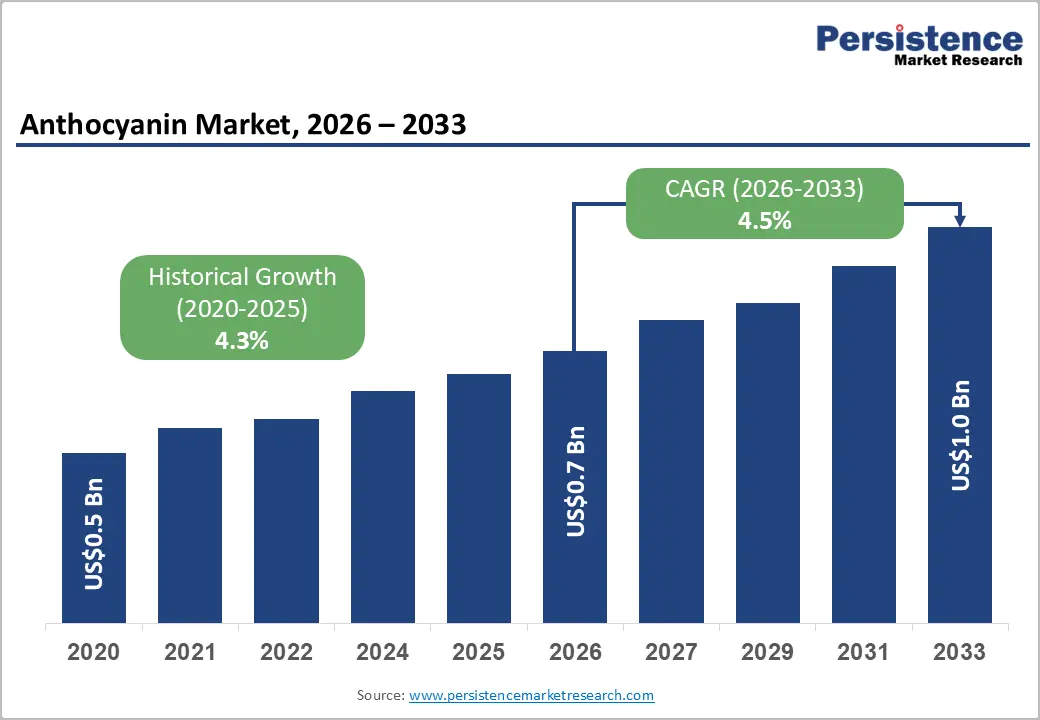
The global anthocyanin market size is likely to be valued at US$0.7 billion in 2026 and is expected to reach US$1.0 billion by 2033, growing at a CAGR of 4.5% during the forecast period from 2026 to 2033, driven by increasing demand for natural pigments and functional ingredients across multiple industries. This expansion is supported by the growing consumer preference for clean-label products and heightened awareness of the health benefits associated with anthocyanins, particularly their antioxidant, anti-inflammatory, and anti-aging properties.
Food and beverage manufacturers are adopting anthocyanins as natural colorants to replace synthetic dyes, while nutraceutical, pharmaceutical, and personal care companies are incorporating them into functional formulations and wellness products. Advances in extraction and stabilization technologies, such as microencapsulation and standardized purification, are enhancing the usability of anthocyanins in various formulations, overcoming traditional challenges of sensitivity to pH, light, and temperature. The industry is poised for moderate, consistent expansion as demand for natural, health-promoting ingredients continues to rise.
Key Industry Highlights:
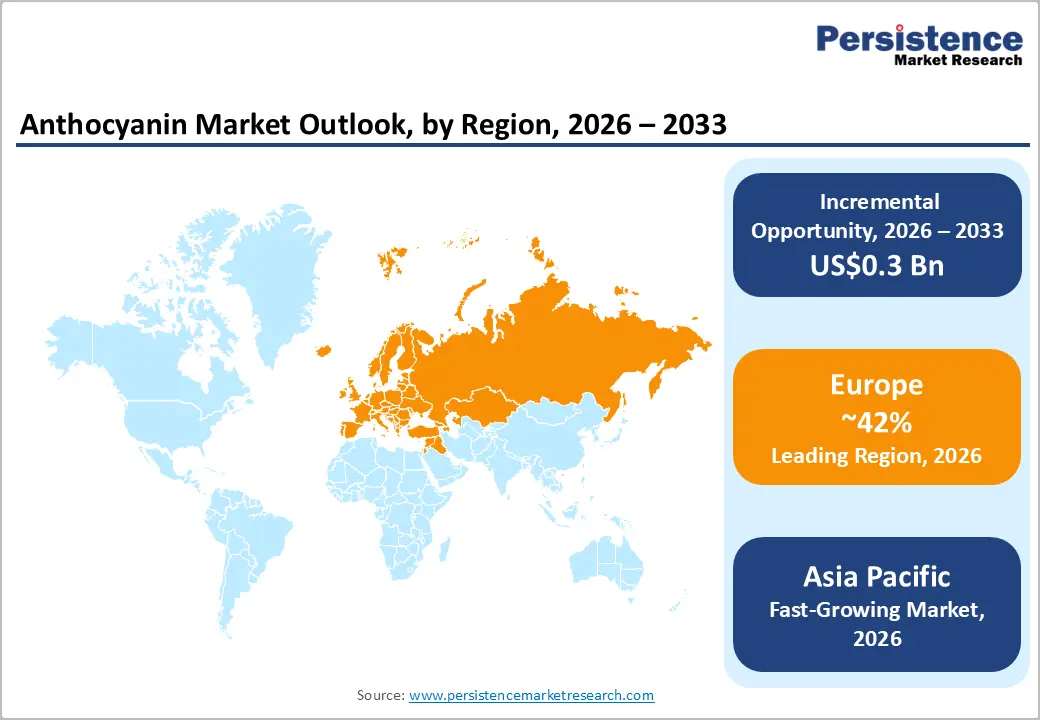
- Leading Region: Europe is anticipated to be the leading region, accounting for a market share of 42% in 2026, driven by mature industries, clean-label demand, and regulatory harmonization.
- Fastest-growing Region: Asia Pacific is likely to be the fastest-growing region, supported by rapid growth, manufacturing advantages, and rising health-conscious demand.
- Leading Source Type: Fruits are projected to represent the leading source type in 2026, accounting for 50% of the revenue share, driven by high anthocyanin content in berries, grapes, cherries, and pomegranates, and established extraction infrastructure.
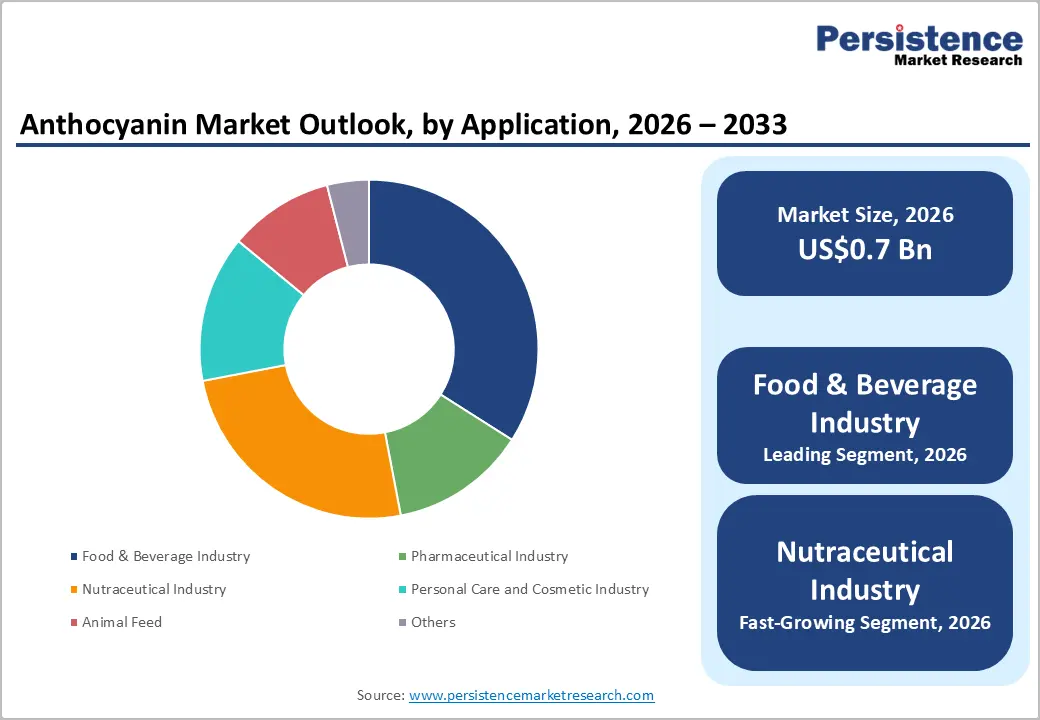
- Leading Application: The food & beverage industry is anticipated to be the leading application, accounting for over 55% of the revenue share in 2026, supported by strong demand for natural colorants in beverages, bakery, confectionery, and dairy, along with clean-label consumer preferences.
| Key Insights | Details |
|---|---|
|
Anthocyanin Market Size (2026E) |
US$0.7 Bn |
|
Market Value Forecast (2033F) |
US$1.0 Bn |
|
Projected Growth (CAGR 2026 to 2033) |
4.5% |
|
Historical Market Growth (CAGR 2020 to 2025) |
4.3% |
DRO Analysis
Driver - Rising Consumer Demand for Natural and Clean-Label Ingredients
Consumers are increasingly shifting toward products with natural and recognizable ingredients, fueling demand for anthocyanins as a clean-label alternative to synthetic colorants. Food & beverage manufacturers are responding by reformulating products to include plant-based pigments, especially in beverages, confectionery, dairy, and baked goods. The trend is amplified by rising health awareness and concern over chemical additives, pushing brands to highlight the functional and antioxidant properties of anthocyanins.
Anthocyanins appeal extends beyond color, as their bioactive properties support antioxidant and anti-inflammatory claims, reinforcing their role in functional and wellness-oriented products. With growing awareness of the benefits of plant-derived compounds, food, nutraceutical, and cosmetic companies are strategically integrating anthocyanins to meet both regulatory guidelines and consumer expectations. The clean-label trend also encourages sourcing transparency, traceability, and sustainability, driving companies to optimize supply chains for high-quality fruit, vegetable, and flower extracts.
Growing Applications in Nutraceutical and Pharmaceutical Sectors
Anthocyanins are increasingly incorporated into nutraceutical formulations due to their antioxidant, anti-inflammatory, and cardio-protective properties. Supplements, functional foods, and fortified beverages use anthocyanins to address aging populations, oxidative stress, and chronic disease prevention. Their bioactive properties support health claims that are validated by clinical studies, enhancing consumer confidence in premium products. Pharmaceuticals also explore anthocyanin derivatives in drug development and functional formulations.
Rising clinical interest in anthocyanins drives investments in research and product development, particularly in the prevention of cardiovascular diseases, cognitive decline, and metabolic disorders. Functional ingredients containing anthocyanins are now positioned as preventive health solutions, aligning with wellness trends. Pharmaceutical applications, although niche, benefit from rigorous quality standards, ensuring high-purity extracts. Companies are increasingly collaborating with research institutions and regulatory bodies to substantiate health claims and expand applications in supplements and functional food matrices.
Restraint - Limited Stability under Varying pH, Temperature, and Light
Anthocyanins are naturally sensitive to environmental conditions, including pH, temperature, and light exposure, which can degrade color intensity and reduce functional properties. This instability presents formulation challenges, particularly in processed foods, beverages, and supplements requiring long shelf life or thermal processing. Manufacturers must invest in stabilization techniques such as microencapsulation, co-pigmentation, and controlled storage conditions to maintain quality.
Instability affects both visual and functional attributes, which are key differentiators for anthocyanin-containing products. Variations in pigment intensity may require blending multiple sources or additives to achieve desired outcomes, raising production costs. Environmental factors during transportation and storage exacerbate degradation risks, especially in regions with extreme climate conditions. Ensuring regulatory compliance for colorant standards while maintaining functional efficacy requires sophisticated processing infrastructure and R&D investments.
Supply-Chain Complexity and Seasonality of Raw Materials
Anthocyanin production depends heavily on seasonal fruits, vegetables, and flowers, creating fluctuations in availability and quality. Supply chains must navigate agricultural variability, weather conditions, and crop yields, which can disrupt consistent production and lead to price volatility. Sourcing high-quality raw materials from multiple regions increases logistics complexity and operational costs. Companies must maintain buffer inventories, establish long-term supplier contracts, or invest in controlled cultivation to mitigate seasonal effects.
The reliance on natural raw materials also introduces quality variation between batches, influencing extract yield and pigment concentration. Export-oriented markets may face delays and additional costs due to regional harvest cycles, transportation, and regulatory compliance for agricultural products. Integrating traceability and sustainability practices to meet consumer and regulatory expectations adds operational demands.
Opportunity - Technological Convergence in Extraction and Stabilization
Advancements in extraction and stabilization technologies present significant growth opportunities for the anthocyanin market. Techniques such as supercritical fluid extraction, enzymatic processing, and microencapsulation improve pigment yield, purity, and stability, enabling broader application across food, beverages, nutraceuticals, and cosmetics. Stabilization methods help anthocyanins withstand pH, temperature, and light variations, enhancing shelf life and maintaining functional properties. Integration of AI, process optimization, and sustainable solvents increases efficiency and reduces environmental impact.
Enhanced extraction and stabilization technologies also enable cost optimization and scalability, attracting investment in industrial-scale production facilities. Companies can develop high-value, premium formulations with consistent color and bioactive potency, catering to consumer preferences. Collaboration between technology providers, ingredient suppliers, and R&D institutions accelerates innovation and supports regulatory compliance.
Expansion into Animal Feed and Sustainable Applications
Anthocyanins present emerging opportunities in animal nutrition and sustainable product development. Incorporating anthocyanins in premium pet food and livestock feed enhances product functionality, offering antioxidant benefits and natural pigmentation. These applications respond to growing consumer demand for high-quality, health-promoting animal products while differentiating brands in competitive markets. Sustainable sourcing from fruits, vegetables, and by-products also aligns with environmental initiatives, enabling companies to market circular and eco-friendly solutions.
Sustainability-driven applications also encompass bioplastics, cosmetic formulations, and natural dyes for textiles, leveraging anthocyanins’ vibrant pigments and eco-friendly profile. Investment in by-product utilization and agro-waste conversion increases raw material efficiency and reduces environmental impact. Companies adopting these strategies can access new markets, improve brand reputation, and meet the growing preference for green products. Regulatory incentives and certifications for sustainable sourcing enhance market attractiveness.
Category-wise Analysis
Source Type Insights
Fruits are expected to lead the anthocyanin market, accounting for approximately 50% of revenue in 2026, driven by their naturally high anthocyanin content and well-established extraction infrastructure. Berries, grapes, cherries, and pomegranates are key examples, providing concentrated pigments that deliver vibrant colors and potent antioxidant properties. The availability of scalable extraction methods and consistent quality from these fruit sources allows manufacturers to supply both the food and nutraceutical industries efficiently. For example, blueberries are widely used for their intense purple hue and bioactive benefits in beverages and functional foods.
Vegetables are likely to represent the fastest-growing segment, supported by diversification of supply, cost efficiencies, and rising plant-based consumer trends. Crops such as red cabbage, purple sweet potatoes, and eggplant provide alternative anthocyanin sources, which are increasingly integrated into multi-source blends to enhance stability and functional properties. For example, red cabbage extract is utilized in beverages and bakery products for its vivid color and pH-sensitive color-changing properties, appealing to clean-label and functional product positioning.
Application Insights
Food & beverage industry is projected to lead the market, capturing around 55% of the revenue share in 2026, supported by the need for natural colorants and functional ingredients in beverages, dairy, bakery, and confectionery products. Consumers increasingly prefer clean-label items with health-promoting properties, creating strong uptake of anthocyanin-rich formulations. For example, fruit-flavored beverages using blueberry or blackcurrant extracts exemplify how anthocyanins provide both vibrant color and antioxidant benefits. Food and beverage applications benefit from large-scale production, standardized processing techniques, and extensive market penetration across regions.
The nutraceutical industry is likely to be the fastest-growing application, driven by increasing consumer focus on preventive health, antioxidant supplementation, and functional foods. Products such as dietary supplements, fortified beverages, and antioxidant capsules leverage anthocyanins for their scientifically supported benefits, including cardiovascular support and anti-aging properties. For example, anthocyanin-rich blueberry or blackcurrant extracts are incorporated into antioxidant supplement capsules to target health-conscious consumers seeking evidence-based benefits.
Regional Insights
North America Anthocyanin Market Trends
North America is likely to be a significant market for anthocyanins, driven by strong consumer demand for natural and clean-label products, especially in beverages, bakery, confectionery, and dairy. Rising health awareness and preference for antioxidant-rich functional foods encourage manufacturers to replace synthetic colorants with anthocyanins. For example, Chr. Hansen provides high-quality fruit and vegetable-derived anthocyanins to North American beverage manufacturers, ensuring stable color and retention of bioactive properties.
North American growth also benefits from collaborations between ingredient suppliers and food manufacturers, which streamline supply chains and ensure product standardization. The region emphasizes clean-label transparency, sustainability, and functional health claims, aligning with broader wellness trends. Innovation in microencapsulation and co-pigmentation technologies enhances stability across diverse food matrices. Consumer interest in antioxidant-rich beverages, fortified snacks, and dietary supplements sustains demand for anthocyanins.
Europe Anthocyanin Market Trends
Europe is anticipated to be the leading region, accounting for a market share of 42% in 2026, due to mature food and beverage industries, clean-label regulations, and harmonized EU standards. Premium dairy, beverage, and cosmetic applications lead regional adoption, while consumers demand traceable, sustainably sourced ingredients. For example, Naturex (Givaudan) supplies standardized fruit and vegetable anthocyanin extracts across European markets, focusing on high quality and sustainability.
Growth opportunities arise in functional cosmetics and export-oriented production, leveraging countries such as Germany for advanced processing technologies and France for raw material cultivation. Sustainability initiatives and circular sourcing from agricultural by-products enhance supply chain efficiency and appeal to environmentally conscious consumers. Harmonized regulations reduce market fragmentation, enabling manufacturers to scale operations while maintaining product quality.
Asia Pacific Anthocyanin Market Trends
The Asia Pacific region is likely to be the fastest-growing region, driven by rising urbanization, increasing disposable incomes, and growing awareness of natural and functional ingredients. China, India, and ASEAN nations are leading regional adoption, supported by abundant raw material sources such as purple corn, red cabbage, berries, and other colorful fruits and vegetables. For example, Zhejiang Sunright Biotech Co., Ltd. supplies anthocyanin extracts across Asia for beverages, functional foods, and nutraceuticals, emphasizing competitive pricing and quality consistency.
The region also benefits from investment in technological innovations such as advanced stabilization and microencapsulation, enabling anthocyanins to withstand temperature, pH, and light variations. Demand is driven by functional beverages, supplements, and cosmetic formulations targeting health-conscious consumers. Emerging markets in ASEAN offer opportunities in personal care, premium foods, and export-oriented production. Manufacturers focus on sustainable sourcing and utilization of local crops to enhance efficiency and reduce costs.
Competitive Landscape
The global anthocyanin market exhibits a moderately fragmented structure, driven by the presence of numerous regional, domestic, and multinational ingredient suppliers competing across food, beverage, nutraceutical, pharmaceutical, and cosmetic applications. Market leaders focus on expanding product portfolios and enhancing technological capabilities in extraction, stabilization, and sustainable sourcing to meet rising demand for clean-label, plant-based solutions.
With key leaders including Sensient Technologies Corporation, Givaudan (via Naturex and DDW Color), and Archer Daniels Midland Company, the competitive dynamic emphasizes innovation, partnerships, and strategic expansion. These players compete through product diversification, acquisitions, and regional footprint enhancement to capture broader market share. Collaboration with global manufacturers, investments in capacity expansion, and strategic alliances strengthen competitive advantage and drive long-term growth in the anthocyanin market landscape.
Key Industry Developments:
- In April 2026, NiroWell LLC introduced a new anthocyanin-rich purple corn extract derived from a proprietary purple corn hybrid, expanding ingredient options for functional foods, supplements, and beverages. The extract contains multiple anthocyanin families known for antioxidant and anti-inflammatory properties, positioning it as a natural, high-value ingredient for clean-label formulations.
- In July 2025, Taiwan’s Wel-Bloom Biotech unveiled Wel-ROS6®, a high-concentration anthocyanin ingredient derived from its locally cultivated Black Crystal Roselle, at an industry seminar attended by around 300 health and nutrition professionals. The proprietary botanical ingredient, produced through triple-patented technology and natural farming methods, delivers significantly elevated anthocyanin, phenolic acid, and flavonoid content compared with standard roselle extracts, reinforcing Taiwan’s position in the anthocyanin and health supplement market.
Companies Covered in Anthocyanin Market
- Beton Nutrition Co Ltd
- Biogold Industries LLP
- California Natural Colors Inc.
- Cayman Chemical Company
- Chr. Hansen
- DDW Color
- EBC Ingredients
- Extrasynthese
- Givaudan
- Kanegrade Ltd
- Naturex
- Organic Herb Inc.
- Roha Dyechem Pvt Ltd
- Symrise AG
- Zhejiang Sunright Biotech Co., Ltd.
Frequently Asked Questions
The global anthocyanin market is projected to reach US$0.7 billion in 2026.
The anthocyanin market is driven by rising consumer demand for natural, clean-label, and antioxidant-rich ingredients across food, beverage, nutraceutical, and cosmetic applications.
The anthocyanin market is expected to grow at a CAGR of 4.5% from 2026 to 2033.
Key market opportunities lie in expanding applications in nutraceuticals, functional foods, personal care, animal feed, and sustainable high-concentration anthocyanin extracts.
Leading companies in the anthocyanin market include Beton Nutrition Co Ltd, Biogold Industries LLP, California Natural Colors Inc., Cayman Chemical Company, and Chr. Hansen.


