




- Processed Food
- Greek Yogurt Market
Greek Yogurt Market Size, Share, Growth, and Regional Forecast, 2026 to 2033
Greek Yogurt Market by Product Type (Plain Greek Yogurt, Flavored Greek Yogurt), Fat Content (Full Fat, Low-fat, Fat Free), by Nature (Organic, Conventional), Sales Channel (Supermarkets & Hypermarkets, Convenience Stores, Specialty Stores, Online Retail, Others), by Regional Analysis, 2026 - 2033

Greek Yogurt Market Share and Trends Analysis
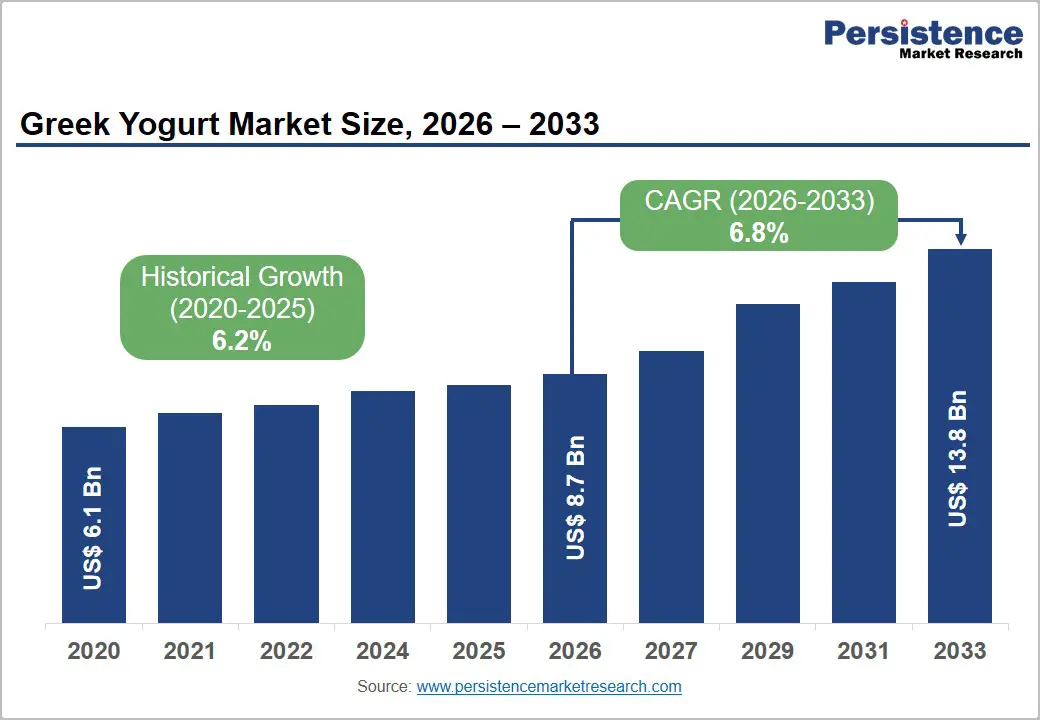
The global greek yogurt market is estimated to grow from US$ 8.7 billion in 2026 to US$ 13.8 billion, recording a CAGR of 6.8% from 2026 to 2033, as the market evolves rapidly and consumers increasingly prioritize protein-rich nutrition, digestive wellness, and convenient, healthy snacking options.
Greek yogurt has gained strong popularity among fitness-conscious consumers, working professionals, and younger demographics seeking functional dairy products with clean-label positioning.
Manufacturers are actively introducing flavored, fortified, lactose-free, and plant-based formulations to address changing dietary preferences and expanding vegan demand. Product innovation across texture, taste, probiotic content, and low-sugar formulations is strengthening premium market positioning globally. Expanding café culture, online grocery penetration, and modern retail infrastructure are further accelerating product accessibility across developed and emerging economies. Rising interest in balanced nutrition and wellness-focused lifestyles continues to support long-term market expansion.
Key Industry Highlights:
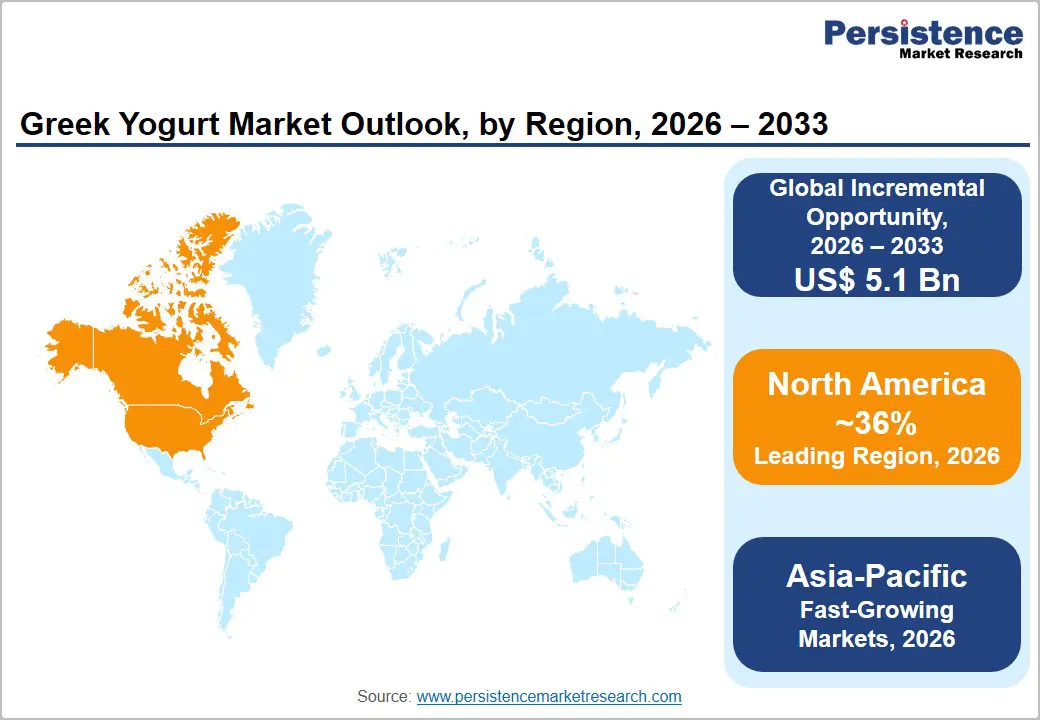
- Leading Region: North America, holding approximately 36% market share, driven by strong demand for high-protein dairy snacks, probiotic-rich formulations, clean-label products, and convenient breakfast nutrition.
- Fastest-Growing Region: Asia Pacific, projected to grow at a CAGR of 8.1%, fueled by rapid urbanization, rising disposable incomes, premium dairy consumption, and increasing awareness regarding protein-rich functional foods.
- Leading Fat Content Segment: Low-fat Greek Yogurt, accounting for 44% market share as of 2025, supported by rising demand for healthier dairy products with lower fat content and high protein value.
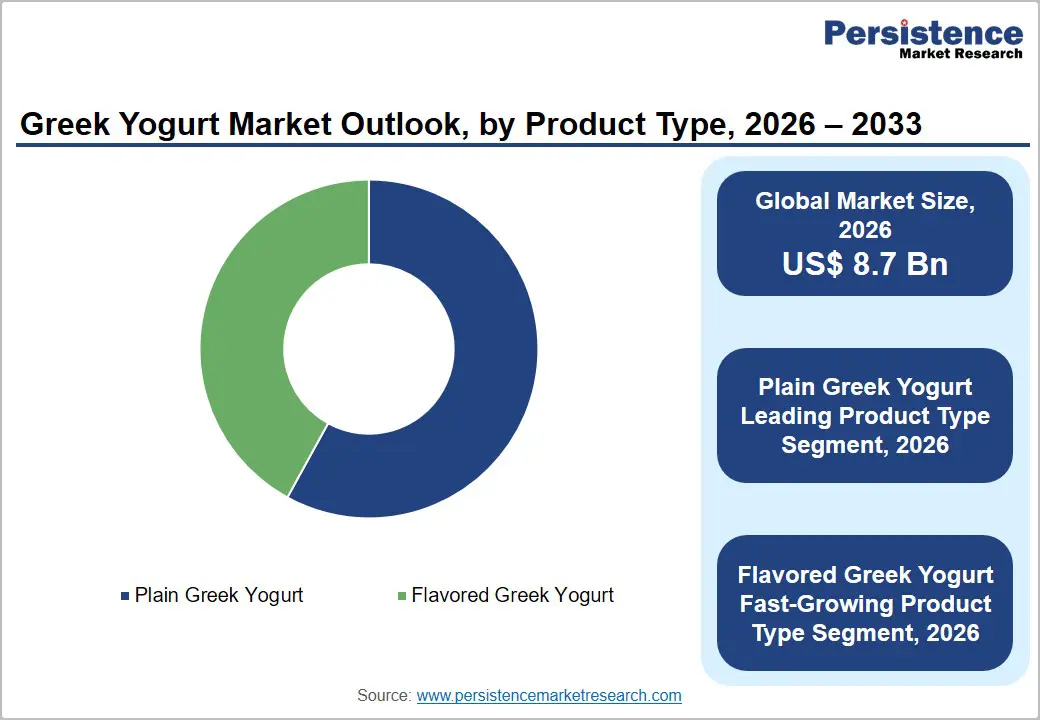
- Fastest-Growing Product Type Segment: Flavored Greek Yogurt, expected to expand at a CAGR of 8.9% during the forecast period, driven by rising demand for indulgent, convenient, and innovative protein-rich snack products.
- Market Drivers: Increasing global consumer demand for high-protein dairy foods is accelerating Greek yogurt consumption across breakfast meals, functional snacks, smoothies, and wellness-oriented diets.
- Opportunities: Comprehensive commercial penetration of plant-based vegan formulations is creating strong growth opportunities through almond, oat, soy, coconut, and cashew-based Greek yogurt innovations.
- Consumer Trends: Consumers are increasingly favoring probiotic-rich, low sugar, flavored, fortified, and plant-based Greek yogurt products aligned with fitness-focused and digestive wellness lifestyles.
Market Dynamics
Driver: Increasing Global Consumer Demand For High-protein Dairy Foods
A noticeable shift toward protein-rich and convenient dairy nutrition is strongly accelerating growth in the global Greek yogurt market. Consumers increasingly prefer Greek yogurt because of its thick texture, higher protein concentration, probiotic benefits, and versatility in daily diets. The product is widely consumed as a healthy breakfast, snack, and meal replacement among fitness-conscious individuals, working professionals, and younger consumers seeking balanced nutrition. Rising awareness regarding digestive wellness and weight management is further strengthening product demand across supermarkets, cafés, and online grocery platforms worldwide.
Food manufacturers are continuously introducing flavored, low-sugar, lactose-free, and fortified Greek yogurt varieties to attract broader consumer groups. Expanding usage in smoothies, desserts, protein bowls, and functional snacks is supporting higher consumption across households and foodservice channels. Premium packaging innovation and growing availability of plant-based Greek yogurt alternatives are also contributing to long-term market expansion globally. Rising investments in cold-chain distribution are improving product accessibility.
Restraint: Lactose Intolerance and Dairy-free Consumer Shift
Changing dietary habits and rising digestive health concerns are creating challenges for traditional dairy-based Greek yogurt products worldwide. A growing number of consumers experience lactose intolerance or sensitivity to dairy ingredients, limiting regular consumption of conventional Greek yogurt. Increasing awareness regarding plant-based nutrition and vegan lifestyles is further encouraging consumers to shift toward non-dairy yogurt alternatives made from almond, oat, coconut, and soy ingredients. This transition is gradually intensifying competitive pressure on dairy-based Greek yogurt manufacturers.
The expansion of dairy-free product portfolios across supermarkets and foodservice outlets is influencing purchasing behavior among younger and health-conscious consumers. Premium pricing of lactose-free Greek yogurt products can also restrict adoption in price-sensitive markets. These changing consumer preferences may slow demand growth for conventional Greek yogurt categories in several regions.
Opportunity: Comprehensive Commercial Penetration of Plant-based Vegan Formulations
A major transformation in consumer food preferences is creating strong commercial opportunities for plant-based Greek yogurt formulations worldwide. Rising adoption of vegan diets, flexitarian lifestyles, and dairy-free nutrition is encouraging manufacturers to develop innovative yogurt alternatives derived from almond, oat, coconut, soy, and cashew ingredients. Consumers are increasingly seeking products that combine high protein content, digestive wellness benefits, and sustainable sourcing, accelerating demand for premium plant-based Greek yogurt across retail and foodservice channels.
Food companies are investing heavily in texture enhancement, probiotic fortification, and clean-label ingredient development to improve product appeal and nutritional value. Expanding availability through supermarkets, cafés, and online grocery platforms is improving consumer accessibility globally. The growing popularity of lactose-free functional foods among younger consumers is further enabling manufacturers to strengthen premium vegan yogurt portfolios and diversify long-term revenue streams.
Category-wise Analysis
By Product Type Insights
Flavored Greek yogurt is expected to reveal a CAGR 8.9% in the forecast period, driven by rising consumer preference for convenient, indulgent, and protein-rich snack options. Consumers increasingly seek innovative yogurt flavors that combine nutritional value with enjoyable taste experiences, particularly among younger demographics and urban households. Fruit-infused, dessert-inspired, and exotic flavor variants are gaining strong popularity as manufacturers focus on expanding premium and differentiated product portfolios across retail shelves globally.
Food companies are continuously introducing limited-edition flavors, clean-label ingredients, and reduced-sugar formulations to strengthen consumer engagement and repeat purchases. Growing demand for on-the-go snacking and functional dairy products is further supporting segment expansion across supermarkets, cafés, and online grocery channels. Premium packaging innovation and increasing use of flavored Greek yogurt in smoothies, breakfast bowls, and desserts are also accelerating market growth worldwide.
By Fat Content Insights
Low-fat Greek yogurt is more likely to dominate with 44% share as of 2026, supported by rising consumer demand for healthier dairy products that balance nutrition, taste, and calorie management. Health-conscious consumers increasingly prefer low-fat yogurt options due to their high protein content and lower saturated fat levels compared to traditional dairy snacks. The segment has gained strong popularity among fitness enthusiasts, working professionals, and weight-management consumers seeking convenient and nutrient-dense meal options for daily consumption.
Manufacturers are continuously expanding low-fat product lines with flavored, probiotic-rich, and fortified variants to attract broader consumer groups. Growing awareness regarding digestive wellness and active lifestyles is further encouraging adoption across households and foodservice channels. Improved product availability through supermarkets, convenience stores, and online grocery platforms is strengthening global sales momentum. Rising incorporation of low-fat Greek yogurt into smoothies, breakfast bowls, and healthy desserts also continues to support segment expansion worldwide.
Regional Insights
North America Greek Yogurt Market Trends
North America Greek yogurt market is likely to register approximately 36% share in the global Greek yogurt market, driven by strong consumer preference for high-protein dairy snacks, convenient nutrition products, and functional food consumption. The region has witnessed increasing demand for clean-label yogurt, probiotic-rich formulations, and low-sugar dairy alternatives among health-conscious consumers. Expanding product innovation, premium flavored offerings, and rising adoption of on-the-go breakfast products are further strengthening regional market growth.
Growing availability across supermarkets, convenience stores, cafés, and digital grocery platforms is also improving product accessibility and repeat consumption patterns.
U.S. Greek Yogurt Market Trends
U.S. Greek Yogurt Market trends are shaped by increasing demand for protein-focused snacks, meal replacement products, and fortified dairy nutrition. Manufacturers are introducing lactose-free, keto-friendly, and plant-based Greek yogurt variants to target evolving dietary preferences. Premium dessert-inspired flavors and functional wellness positioning are gaining strong traction among younger consumers.
Canada Greek Yogurt Market Trends
Canada Greek yogurt market trends are influenced by rising interest in healthy snacking, digestive wellness, and clean-label dairy products. Expanding retail distribution and growing consumer preference for low-fat and organic yogurt options are supporting sustained market demand.
Asia Pacific Greek Yogurt Market Trends
Asia Pacific Greek Yogurt Market is expected to grow at a CAGR of 8.1%, driven by increasing urbanization, rising disposable incomes, and growing awareness regarding protein-rich functional foods. Consumers across the region are gradually shifting toward healthier snacking habits and premium dairy products with digestive wellness benefits. Expanding modern retail infrastructure, café culture, and international food exposure are supporting stronger adoption of Greek yogurt in metropolitan and emerging urban markets. Rising demand for convenient breakfast solutions and nutrient-dense snacks is further accelerating regional market expansion.
China Greek Yogurt Market Trends
China Greek Yogurt Market trends are influenced by growing consumer interest in premium dairy nutrition, probiotic-rich foods, and high-protein snack products. Domestic and international brands are introducing innovative flavors, drinkable yogurt formats, and low-sugar variants to attract younger consumers. E-commerce platforms and premium supermarket chains are improving product accessibility across major cities.
India Greek Yogurt Market Trends
India Greek Yogurt Market trends are driven by increasing fitness awareness, rising consumption of healthy dairy snacks, and expanding demand for convenient nutrition products. Manufacturers are launching fruit-based, low-fat, and protein-enriched Greek yogurt variants tailored to evolving urban consumer preferences.
Market Competitive Landscape
The global Greek yogurt market is characterized by intense competition among multinational dairy companies, regional yogurt manufacturers, and emerging plant-based brands focused on product innovation and premium positioning. Leading players are investing in high-protein formulations, probiotic enrichment, and clean-label ingredients to strengthen consumer appeal across health-conscious demographics. Product diversification through flavored, lactose-free, low sugar, and fortified Greek yogurt variants is becoming a major competitive strategy in both developed and emerging markets.
Companies are increasingly expanding production capacity, cold-chain logistics, and digital retail partnerships to improve market penetration and product accessibility. Premium packaging formats, convenient single-serve cups, and dessert-inspired yogurt innovations are helping brands differentiate in crowded retail shelves. Market participants are also focusing on plant-based Greek yogurt alternatives derived from almond, oat, coconut, and soy to capture rapidly evolving vegan and flexitarian consumer demand worldwide.
Key Developments:
- In January 2026, Boar's Head Brand introduced its new Greek Yogurt Dessert Dip Collection, expanding into indulgent protein-rich snacking products and strengthening innovation in the premium dairy snacks category.
- In November 2025, Al Rawabi Dairy Company launched a new Greek yogurt range produced in Dubai, featuring high protein content, reduced lactose, and a creamy texture to address rising demand for functional and health-oriented dairy products.
- In September 2025, Al Safi Danone unveiled Danone Greek Gelato, combining Greek yogurt texture with gelato-style indulgence to expand premium dairy dessert offerings in the regional market.
Companies Covered in Greek Yogurt Market
- Danone S.A.
- General Mills Inc.
- Nestlé S.A.
- FAGE International S.A.
- Inner Mongolia Yili Group
- Emmi Group
- Hain Celestial Group
- Kri-Kri Milk Industry S.A.
- Morinaga Milk Industry
- Chobani LLC
- Britannia Industries
- Groupe Lactalis
- Noosa Yoghurt LLC
- MEVGAL S.A.
- Others
Frequently Asked Questions
The global Greek yogurt market is projected to be valued at US$ 8.7 Bn in 2026.
Increasing global consumer demand for high-protein dairy foods is driving the global Greek yogurt market.
The global Greek yogurt market is poised to witness a CAGR of 6.8% between 2026 and 2033.
Expanding commercial adoption of plant-based and vegan Greek yogurt formulations is generating substantial growth opportunities in the global Greek yogurt market.
Danone S.A., General Mills Inc., Nestlé S.A., FAGE International S.A., Inner Mongolia Yili Group, Emmi Group, and Hain Celestial Group.


