




- Processed Food
- Frozen Dessert Market
Frozen Dessert Market Size, Share, Growth, and Regional Forecast, 2026 to 2033
Frozen Dessert Market by Product Type (Ice Cream, Yogurt, Sorbet & Sherbet, Frozen Cakes & Pastries, Others), by Ingredient Type (Dairy-Based, Plant-Based), Sales Channel (Supermarkets & Hypermarkets, Convenience Stores, Specialty Stores, Online Retail, Others), and Regional Analysis, 2026 - 2033

Frozen Dessert Market Share and Trends Analysis
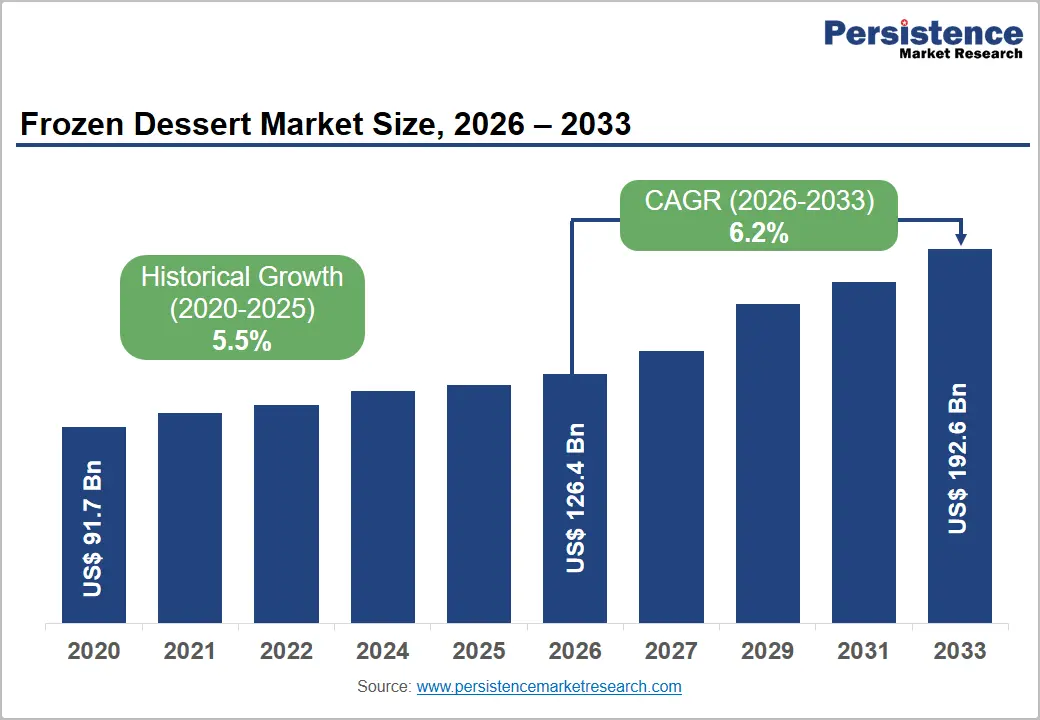
The global frozen dessert market size is estimated to grow from US$ 126.4 billion in 2026 to US$ 192.6 billion projected to record a CAGR of 6.2% during the forecast period from 2026 to 2033.
As consumers increasingly seeking indulgent, premium, and experience-driven dessert products across retail and foodservice channels. Manufacturers are focusing on innovative flavors, artisanal textures, plant-based alternatives, and functional ingredients to strengthen product differentiation and consumer engagement. Rising demand for convenient snacking, café-style desserts, and visually appealing frozen treats is accelerating innovation across ice cream, frozen yogurt, gelato, and dairy-free categories.
Companies are also investing in sustainable packaging, low-sugar formulations, and high-protein frozen desserts to align with changing health and wellness preferences. Expansion of online grocery platforms, cold-chain logistics, and quick-commerce delivery services is further improving product accessibility across developed and emerging markets. Continuous product launches and seasonal flavor innovations continue to reshape the competitive landscape.
Key Industry Highlights:
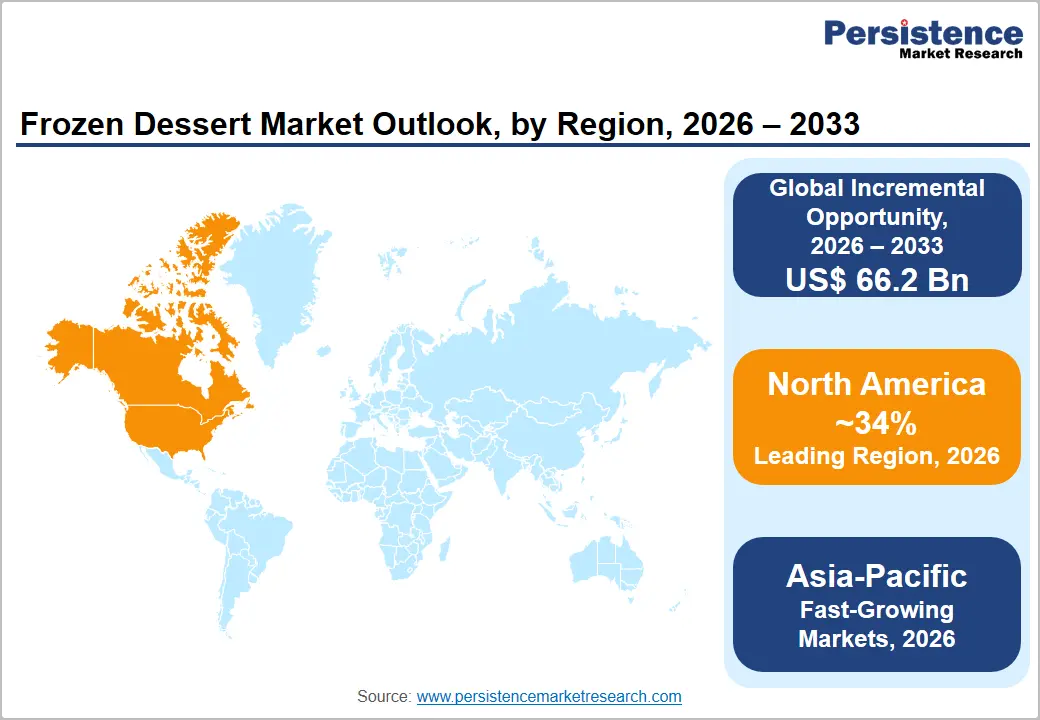
- Leading Region: North America is likely to register 34% share, driven by strong consumer demand for premium frozen treats, indulgent snacking, functional desserts, and innovative flavor experiences.
- Fastest-Growing Region: Asia Pacific projected at a CAGR of 8.6%, fueled by rising urbanization, expanding café culture, growing disposable incomes, and increasing exposure to international dessert trends.
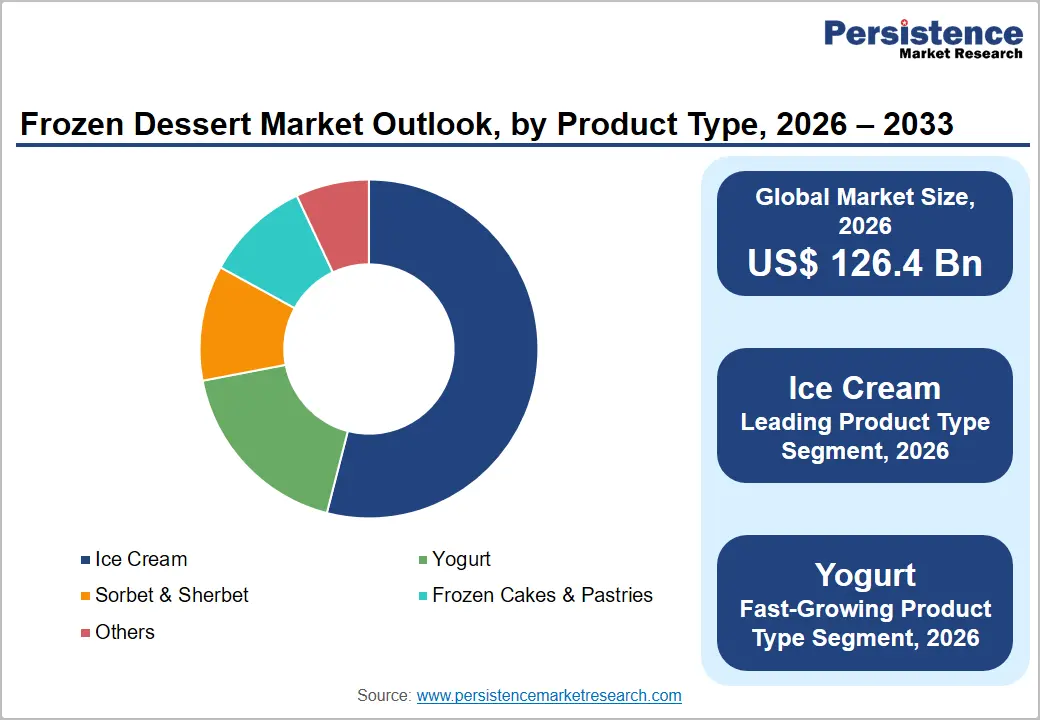
- Leading Product Type Segment: Ice-cream is likely to account for 54% share as of 2026, supported by extensive flavor variety, strong retail presence, premium product innovation, and widespread consumer appeal.
- Fastest-Growing Ingredient Type Segment: Plant-based frozen desserts, expected to reach a CAGR of 9.4% during the forecast period, driven by rising vegan adoption, lactose-free lifestyles, and demand for sustainable indulgence products.
- Growth Indicators: Rising demand for indulgent and premium dessert experiences is accelerating consumption of artisanal, gourmet, and visually appealing frozen desserts across multiple consumer groups.
- Opportunities: Expansion of plant-based and functional frozen desserts is creating strong growth opportunities through dairy-free, high-protein, probiotic-rich, and clean-label product innovation.
- Consumer Trends: Consumers are increasingly preferring premium flavors, low sugar formulations, plant-based frozen treats, protein-enriched desserts, and globally inspired indulgent snacking experiences.
Market Dynamics
Driver: Rising Demand for Indulgent and Premium Dessert Experiences
Luxury-inspired flavors and premium frozen treats are increasingly influencing consumer purchasing behavior in the frozen dessert market. Consumers are actively seeking indulgent dessert experiences featuring rich textures, artisanal recipes, and innovative flavor combinations that deliver café-style satisfaction at home. Premium ice creams, gelatos, frozen yogurt, and dessert novelties containing gourmet ingredients such as pistachio, caramel, cookies, berries, and premium chocolate are gaining widespread popularity among younger consumers and affluent households. Rising disposable incomes and evolving snacking preferences are further strengthening demand for high-value frozen desserts.
Manufacturers are introducing limited-edition collections, internationally inspired flavors, and visually attractive products to improve consumer engagement and brand differentiation. Growing preference for comfort foods, celebration-oriented desserts, and convenient indulgent snacks is supporting stronger retail and foodservice sales. Expansion of online grocery platforms and cold-chain distribution networks is also improving accessibility to premium frozen dessert products across multiple regions.
Restraint: Increasing Health Concerns Around Sugar and Fat Consumption
Growing awareness regarding balanced nutrition and lifestyle-related health issues is creating challenges for traditional frozen dessert consumption. Consumers are becoming increasingly cautious about products containing high sugar levels, saturated fats, and artificial ingredients due to concerns related to obesity, diabetes, and cardiovascular health. Conventional ice creams and frozen desserts are often perceived as indulgent products with lower nutritional value, encouraging health-conscious buyers to limit frequent consumption or shift toward healthier snack alternatives.
The rising popularity of low-calorie snacks, functional foods, and sugar-reduced products is intensifying pressure on frozen dessert manufacturers to reformulate existing offerings. Regulatory scrutiny around sugar labeling and nutritional transparency is also influencing purchasing decisions across multiple consumer groups. Higher development costs associated with healthier formulations may further impact profit margins and product pricing within the frozen dessert industry.
Opportunity: Expansion of Plant-based and Functional Frozen Desserts
Consumer enthusiasm for healthier indulgence is opening strong growth avenues for plant-based and functional frozen desserts across multiple markets. Rising adoption of vegan diets, lactose-free lifestyles, and wellness-focused eating habits is encouraging companies and startups to introduce frozen desserts made from almond, oat, coconut, soy, and cashew bases. Consumers increasingly seek products containing probiotics, high protein, low sugar, and natural ingredients that combine nutrition with premium taste experiences. This evolving preference is accelerating demand for innovative frozen dessert formulations among younger and health-conscious consumers.
Manufacturers are investing in texture enhancement technologies, clean-label ingredients, and functional fortification to improve product quality and differentiation. Expanding retail shelf space and online grocery availability are supporting stronger consumer accessibility. Startups focusing on sustainable sourcing, allergen-free products, and premium flavor innovation are gaining significant competitive advantages in the evolving frozen dessert industry.
Category-wise Analysis
By Product Type Insights
Ice cream products are likely to dominate with 54% share as of 2026, supported by their widespread consumer appeal, extensive flavor variety, and strong presence across retail and foodservice channels. Consumers continue to favor ice cream as a preferred indulgent dessert due to its creamy texture, premium taste experiences, and availability in multiple formats, including tubs, cones, bars, and sandwiches. Rising demand for artisanal, gourmet, and internationally inspired flavors is further strengthening category growth among younger consumers and premium dessert buyers.
Manufacturers are continuously expanding product portfolios with low sugar, high protein, plant-based, and functional ice cream innovations to address evolving dietary preferences. Strong seasonal demand, impulse purchasing behavior, and growing consumption during social gatherings and celebrations continue to support category leadership. Expanding online delivery services, convenience retail formats, and premium packaging innovations are also improving accessibility and consumer engagement across diverse markets.
By Ingredient Type Insights
Plant-based frozen dessert is expected to show promising growth during the forecast period, fueled by rising consumer preference for dairy-free indulgence and sustainable food consumption. Increasing adoption of vegan lifestyles, lactose-free diets, and flexitarian eating habits is encouraging consumers to explore frozen desserts derived from almond, oat, coconut, soy, and cashew ingredients. Health-conscious consumers are increasingly attracted toward products featuring lower cholesterol content, clean-label ingredients, and innovative flavor combinations with premium textures and taste profiles.
Manufacturers are rapidly expanding plant-based product portfolios through functional ingredients, reduced sugar formulations, and protein-enriched frozen dessert innovations. Growing availability across supermarkets, specialty retailers, cafés, and online grocery channels is improving product visibility and accessibility. Rising investments in sustainable sourcing, eco-friendly packaging, and texture enhancement technologies are further strengthening consumer acceptance and long-term category expansion across multiple regions.
Regional Insights
North America Frozen Dessert Market Trends
North America frozen dessert market holds approximately 34% share in the global market, supported by strong consumer demand for indulgent snacking, premium frozen treats, and convenient dessert options. The region continues to witness the rising popularity of artisanal ice creams, frozen yogurt, plant-based novelties, and limited-edition flavor launches across retail and foodservice channels. Expanding online grocery services, premium dessert cafés, and innovation in healthier frozen desserts are further empowering market growth. Consumer preference for texture-rich, visually appealing, and globally inspired dessert experiences is also encouraging continuous product diversification across the region.
U.S. Frozen Dessert Market Trends
U.S. frozen dessert market trends are influenced by growing demand for premium ice cream, protein-enriched frozen snacks, and dairy-free dessert alternatives. Manufacturers are focusing on innovative flavor combinations, seasonal launches, and functional ingredients to attract younger consumers. The rising popularity of direct-to-consumer delivery and dessert subscription models is also supporting category expansion.
Canada Frozen Dessert Market Trends
Canada frozen dessert market trends are shaped by increasing interest in organic, low-sugar, and plant-based frozen desserts. Consumers are showing stronger preference for sustainable packaging, clean-label ingredients, and premium indulgent products with locally inspired flavors.
Asia Pacific Frozen Dessert Market Trends
Asia Pacific frozen dessert market is expected to reach a CAGR of 8.6%, driven by expanding urban populations, rising disposable incomes, and increasing exposure to international dessert cultures. Consumers across the region are increasingly experimenting with premium frozen treats, innovative flavors, and convenient snacking products influenced by café culture and social media food trends. The growing penetration of modern retail chains, quick-commerce platforms, and specialty dessert outlets is improving accessibility to frozen desserts across metropolitan and emerging cities.
China Frozen Dessert Market Trends
China frozen dessert market trends are shaped by growing demand for premium ice cream, tea-infused frozen desserts, and visually distinctive products popular among younger consumers. Domestic brands are increasingly introducing low-sugar, fruit-based, and dairy-free innovations to address evolving dietary preferences. Expansion of online food delivery platforms and premium convenience retail is further accelerating category growth.
India Frozen Dessert Market Trends
India frozen dessert market trends are driven by rising consumption of impulse desserts, innovative regional flavors, and affordable single-serve frozen treats. Manufacturers are focusing on plant-based products, kulfi-inspired formats, and premium artisanal offerings targeting urban millennials and family consumers.
Competitive Landscape
The global frozen dessert market is highly competitive, driven by multinational food companies, regional dessert manufacturers, and emerging plant-based brands competing through flavor innovation, premiumization, and product diversification. Leading players are investing heavily in artisanal recipes, functional ingredients, and indulgent dessert formats to attract evolving consumer preferences. Innovation in low-sugar, high-protein, dairy-free, and clean-label frozen desserts is becoming a major differentiating strategy across retail and foodservice channels. Seasonal product launches and limited-edition collections are also strengthening consumer engagement and brand visibility.
Companies are expanding cold-chain infrastructure, digital delivery partnerships, and convenience retail presence to improve market reach and accessibility. Premium packaging, sustainable sourcing, and environmentally friendly production practices are increasingly shaping competitive positioning across developed and emerging markets. Startups focusing on vegan frozen desserts, exotic flavors, and functional nutrition concepts are further intensifying innovation and category transformation within the frozen dessert industry.
Key Developments:
- In April 2026, Armada Mercantile Ltd. announced that Ace Foods is expanding the distribution of London Dairy into 7-Eleven stores across the United States, strengthening retail penetration in the premium ice cream segment.
- In January 2026, Magnum launched its new Signature range in the United Kingdom, featuring pistachio and peach flavors, expanding indulgent premium ice cream offerings with innovative flavor profiles.
- In March 2025, Mondelez International and Lotus Bakeries expanded their partnership into the ice cream category through collaboration with Froneri to develop Biscoff-branded frozen novelty products.
Companies Covered in Frozen Dessert Market
- Nestlé S.A.
- General Mills Inc.
- Danone S.A.
- Conagra Brands Inc.
- Mondelez International
- Meiji Holdings Co. Ltd
- Fonterra Co-operative Group
- Amul (GCMMF)
- The Magnum Ice Cream Company
- Blue Bell Creameries
- Lotte Corporation
- Turkey Hill Dairy
- Graeter’s Ice Cream
- London Dairy
- Others
Frequently Asked Questions
The global frozen dessert market is projected to be valued at US$ 126.4 Bn in 2026.
Rising demand for indulgent and premium dessert experiences is driving the global frozen dessert market.
The global frozen dessert market is poised to witness a CAGR of 6.2% between 2026 and 2033.
The rising expansion of plant-based and functional frozen dessert products is creating significant growth opportunities in the global frozen dessert market.
Nestlé S.A., General Mills Inc., Danone S.A., Conagra Brands Inc., Mondelez International, and Meiji Holdings Co., Ltd.


