




- Processed Food
- Dairy Free Yogurt Market
Dairy Free Yogurt Market Size, Share, and Growth Forecast, 2026 - 2033
Dairy Free Yogurt Market by Product Type (Soy Yogurt, Rice Yogurt, Oat Yogurt, Almond Yogurt, Coconut Yogurt), Flavor (Vanilla, Cranberry, Peach, Raspberry, Carrot), and Regional Analysis for 2026 - 2033

Dairy Free Yogurt Market Size and Trends Analysis
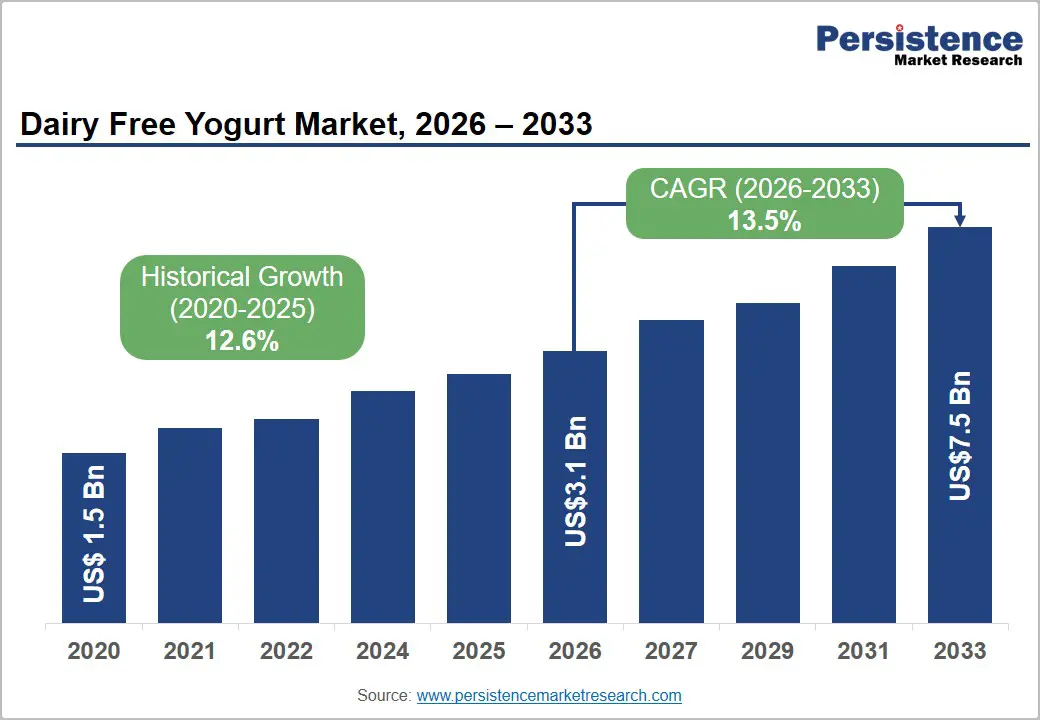
The global dairy free yogurt market size is likely to be valued at US$3.1 billion in 2026 and is expected to reach US$7.5 billion by 2033, growing at a CAGR of 13.5% during the forecast period from 2026 to 2033, driven by increasing consumer demand for plant-based, lactose-free, and sustainable food products.
Rising prevalence of lactose malabsorption, which affects a large share of the global population, along with growing adoption of vegan and flexitarian diets, continues to support market expansion. In 2025, the Good Food Institute reported that 60% of U.S. households purchased plant-based foods, while plant-based yogurt recorded 7% dollar sales growth and 1% unit sales growth, reflecting sustained consumer interest in dairy alternatives. The U.S. Food and Drug Administration highlighted increasing demand for plant-based alternatives, including yogurt, driven by health, dietary, and environmental considerations.
Key Industry Highlights:
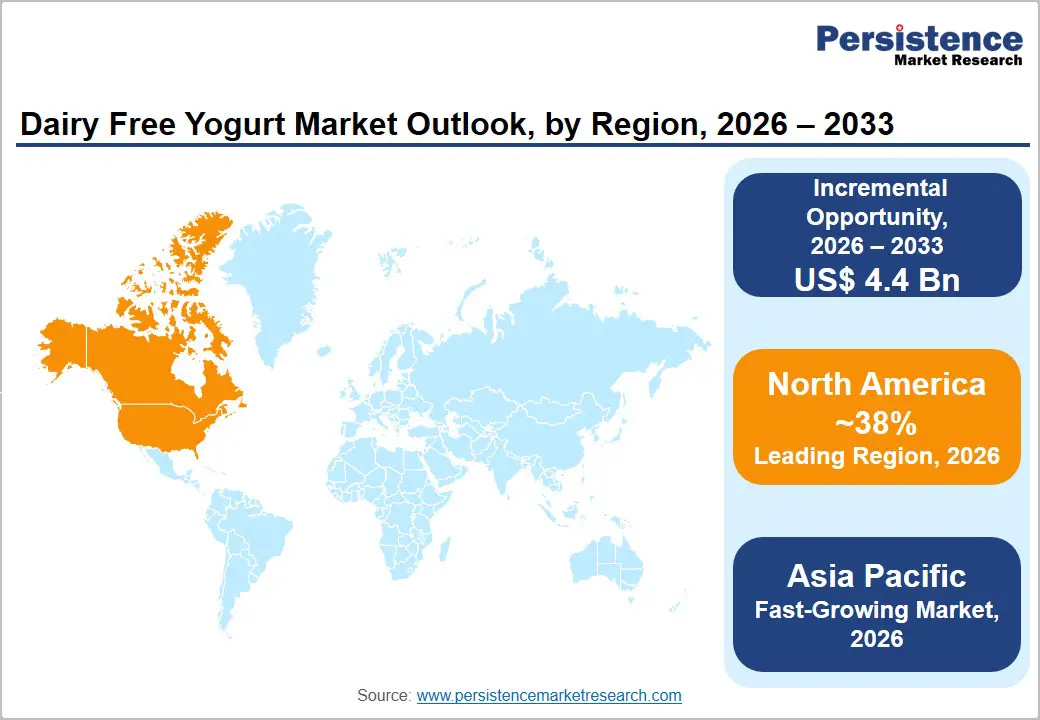
- Leading Region: North America is anticipated to be the leading region, accounting for a market share of 38% in 2026, driven by strong consumer adoption of plant-based foods, advanced retail networks, and continuous product innovation.
- Fastest-growing Region: Asia Pacific is likely to be the fastest-growing region, supported by a large consumer base, rising demand for plant-based nutrition, and strong regional manufacturing capabilities.
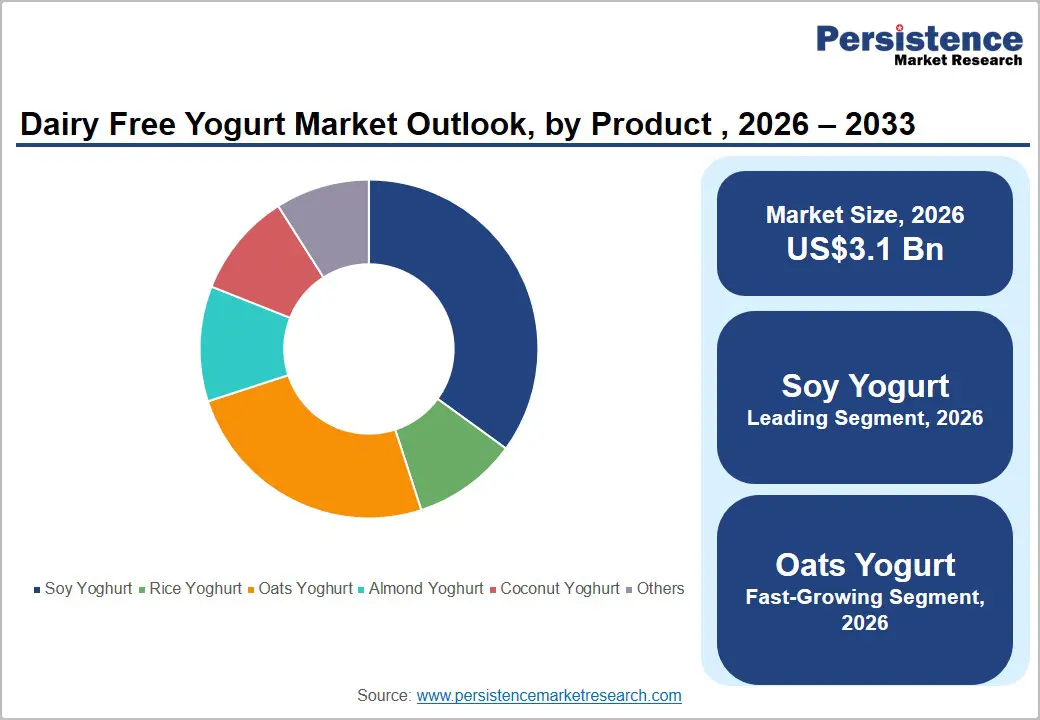
- Leading Product Type: Soy yogurt is expected to remain the dominant product type in 2026, accounting for approximately 42% of market revenue, driven by its high protein content, dairy-like texture, widespread consumer acceptance, and relatively cost-efficient production compared with other plant-based yogurt alternatives.
- Leading Flavor: Vanilla is anticipated to be the leading flavor, accounting for over 34% of the revenue share in 2026, supported by its universal consumer appeal, versatility across age groups, and compatibility with both plain and fruit-based dairy-free yogurt formulations.
- Key Opportunity: Expanding consumer demand for nutritious, functional, and sustainable plant-based dairy alternatives is creating significant opportunities for innovation in fortified, high-protein, and clean-label dairy-free yogurt products across global markets.
DRO Analysis
Driver - Rising Prevalence of Lactose Intolerance and Dairy Allergies
The increasing prevalence of lactose intolerance and dairy-related allergies is a major driver of the dairy-free yogurt market. Millions of consumers worldwide experience difficulty digesting lactose, prompting a shift toward plant-based alternatives that offer similar taste and texture without digestive discomfort. Dairy-free yogurt products made from soy, almond, oat, rice, and coconut sources provide accessible nutritional options for affected individuals.
Growing consumer awareness regarding food sensitivities, digestive health, and personalized nutrition has accelerated adoption. Healthcare professionals and nutrition experts increasingly recommend lactose-free dietary solutions, encouraging consumers to explore plant-based yogurt products as convenient daily alternatives.
Changing dietary habits and increasing health consciousness continue to strengthen demand for dairy-free yogurt among a broader consumer base beyond those with lactose intolerance. Consumers seeking digestive wellness, clean-label products, and allergen-friendly foods are actively incorporating plant-based yogurts into their diets. The expansion of product varieties, flavors, and nutritional formulations has improved consumer acceptance across multiple demographics.
Restraint - Perception and Taste Barriers
Many consumers continue to associate traditional dairy yogurt with superior taste, creaminess, and nutritional quality. Some plant-based yogurt products may exhibit differences in texture, mouthfeel, or flavor profiles that discourage repeat purchases among first-time users. Consumer skepticism regarding the ability of dairy-free alternatives to replicate the sensory experience of conventional yogurt can limit adoption rates. Varying ingredient formulations across brands often create inconsistent product experiences, making it challenging for manufacturers to build long-term consumer loyalty in highly competitive retail environments.
Price sensitivity and consumer expectations intensify taste-related challenges in the dairy-free yogurt sector. Premium plant-based ingredients and specialized manufacturing processes often result in higher retail prices compared with conventional yogurt products. Consumers paying premium prices generally expect exceptional taste and nutritional benefits, increasing pressure on manufacturers to deliver high-quality formulations. Negative perceptions from earlier generations of plant-based products may still influence purchasing decisions despite significant improvements in product quality.
Opportunity - Functional and Fortified Products
Consumers increasingly seek foods that provide benefits beyond basic nutrition, including digestive health support, immunity enhancement, and overall wellness. Manufacturers are responding by incorporating probiotics, prebiotics, vitamins, minerals, and plant-based proteins into dairy-free yogurt formulations. Fortification with nutrients such as calcium, vitamin D, and vitamin B12 helps address nutritional concerns often associated with dairy alternatives.
These value-added products appeal to health-conscious consumers looking for convenient ways to support daily nutritional requirements while maintaining plant-based, lactose-free, and allergen-friendly dietary preferences and lifestyle goals. Consumers increasingly prefer products tailored to specific health objectives, including protein enrichment, gut health improvement, weight management, and active lifestyles.
Functional dairy-free yogurts positioned around targeted wellness benefits can command stronger consumer interest and premium pricing potential. Advances in ingredient technology enable manufacturers to develop highly differentiated products without compromising taste or texture. As retail channels expand and consumer awareness of preventive health continues to increase.
Category-wise Analysis
Product Type Insights
Soy yogurt is expected to account for 42% of revenue in 2026, due to its strong nutritional profile, particularly its naturally high protein content compared with many other plant-based alternatives. Soy yogurt closely replicates the creamy texture and mouthfeel of conventional dairy yogurt, which supports widespread consumer acceptance. A notable example includes Danone SA, which offers soy-based yogurt products through its plant-based portfolio, helping expand consumer access to dairy-free yogurt options.
Oat yogurt is likely to represent the fastest-growing segment, supported by increasing consumer preference for oat-based foods due to their smooth texture, mild taste, and strong sustainability perception. Oat yogurt appeals to consumers seeking dairy-free alternatives that provide a neutral flavor profile suitable for both standalone consumption and recipe applications. For example, Oatly Group AB has expanded its oat-based dairy alternative portfolio and strengthened consumer interest in oat-derived yogurt products.
Flavor Insights
Vanilla is projected to lead the market, capturing around 34% of the revenue share in 2026, supported by broad consumer acceptance and its position as a familiar, versatile flavor across diverse age groups. Vanilla serves as a preferred option for consumers transitioning from traditional dairy yogurt because it provides a balanced taste profile without overpowering sweetness or fruit intensity. A notable example includes Forager Project LLC, which offers vanilla-flavored plant-based yogurt products designed to appeal to health-conscious consumers seeking dairy-free alternatives.
Raspberry is likely to be the fastest-growing flavor due to increasing consumer demand for fruit-based flavors that deliver a refreshing taste experience while aligning with health-oriented purchasing preferences. Consumers are increasingly attracted to flavors perceived as natural and authentic, encouraging manufacturers to expand fruit-focused product portfolios. For instance, Chobani LLC has expanded its plant-based yogurt offerings with fruit-inspired flavor profiles that reflect evolving consumer preferences in the dairy-free category.
Regional Insights
North America Dairy Free Yogurt Market Trends
North America is anticipated to be the leading region, accounting for a market share of 38% in 2026, supported by strong consumer awareness regarding plant-based nutrition, lactose intolerance, digestive health, and environmental sustainability. Demand continues to rise as consumers increasingly adopt vegan, flexitarian, and allergen-conscious diets. For example, Califia Farms LLC which continues expanding its plant-based product portfolio with consumer-focused innovations emphasizing clean ingredients and nutritional value.
U.S. Dairy Free Yogurt Market Trends
The U.S. is expected to dominate the regional market, accounting for approximately 80% of the market share in 2026. Consumer demand for plant-based foods continues to increase across retail and foodservice channels. Health-conscious consumers are increasingly seeking dairy-free products with added protein and probiotics. Major retailers continue expanding plant-based product offerings nationwide. Product innovation in oat- and almond-based yogurts remains strong.
Canada Dairy Free Yogurt Market Trends
Canada is likely to be a significant market for dairy free yogurt, holding approximately 20% of the market share in 2026, supported by rising interest in plant-based nutrition and sustainable food consumption. Consumers are actively exploring alternatives to conventional dairy products. Retail chains continue introducing a broader range of dairy-free yogurt brands. Demand for organic and clean-label products remains particularly strong. The country’s multicultural population supports interest in diverse plant-based ingredients.
Europe Dairy Free Yogurt Market Trends
Europe is likely to be a significant market for dairy free yogurt in 2026, due to growing vegan populations, sustainability initiatives, and increasing consumer focus on health and wellness. The region has witnessed strong adoption of plant-based dairy alternatives due to environmental awareness and changing dietary habits. For instance, Oatly Group AB is expanding its plant-based portfolio and strengthening consumer awareness of oat-based dairy alternatives.
U.K. Dairy Free Yogurt Market Trends
The U.K. is likely to be a significant market for dairy free yogurt, accounting for 15% of Europe market share in 2026. Consumers are increasingly adopting plant-based diets for health and sustainability reasons. Retailers regularly introduce new dairy-free yogurt options and flavor innovations. Demand for fortified products containing vitamins and probiotics is increasing. Vegan product launches remain highly visible across supermarkets. Younger consumers are driving interest in alternative dairy products.
Germany Dairy Free Yogurt Market Trends
Germany is anticipated to dominate the regional market, accounting for around 37% of the Europe market share in 2026. Consumer awareness regarding environmental sustainability is exceptionally high. Demand for vegan and flexitarian food products continues to increase steadily. Supermarkets are expanding dedicated plant-based product sections. Oat-based yogurt products have gained substantial popularity among consumers. Clean-label and organic formulations remain important purchasing factors.
Asia Pacific Dairy Free Yogurt Market Trends
The Asia Pacific region is likely to be the fastest-growing region in the dairy free yogurt in 2026, driven by its urbanization, changing dietary patterns, and growing awareness of plant-based nutrition. The region benefits from a large consumer base and increasing disposable incomes. A notable example includes Drums Food International Private Limited (Epigamia), which continues expanding its innovation-driven yogurt portfolio and increasing consumer awareness of modern dairy-free alternatives in the region.
China Dairy Free Yogurt Market Trends
China is projected to dominate the regional market, holding around a 30% share of the market in 2026. Urban consumers are increasingly interested in health and wellness-oriented foods. Demand for plant-based alternatives is rising among younger demographics. E-commerce platforms play a significant role in product distribution. Manufacturers continue introducing innovative flavors and functional ingredients. Interest in digestive health is supporting the adoption of dairy-free products.
India Dairy Free Yogurt Market Trends
India is expected to emerge as a significant market, accounting for approximately a 22% share in 2026, due to changing lifestyles and growing health awareness. Consumers are showing greater interest in plant-based nutrition and wellness products. Rising urbanization is influencing dietary preferences across major cities. Product innovation using local flavor profiles is gaining attention. Demand for clean-label and natural ingredient products continues to increase.
Competitive Landscape
The global dairy free yogurt market exhibits a moderately fragmented structure, driven by increasing consumer demand for plant-based nutrition, rising lactose intolerance awareness, and continuous product innovation across developed and emerging markets. The market is characterized by the presence of multinational food companies, specialized plant-based brands, and regional manufacturers competing to strengthen their positions through portfolio expansion and distribution network development.
With key leaders including Danone SA, Oatly Group AB, General Mills Inc., Chobani LLC, and Califia Farms LLC, the competitive environment continues to evolve as companies focus on innovation and market expansion. These players compete through product differentiation, flavor innovation, nutritional fortification, sustainable sourcing, and clean-label ingredient strategies.
Key Industry Developments:
- In February 2026, Forager Project expanded its Greek Style dairy-free yogurt portfolio by launching four new flavored single-serve varieties Strawberry Rhubarb, Mango Passion Fruit, Vanilla Cinnamon, and Summer Berry along with a new Vanilla multi-serve tub, strengthening its presence in the high-protein plant-based yogurt segment and addressing growing consumer demand for nutritious, dairy-free alternatives.
- In May 2025, Forager Project launched its new dairy-free organic Greek-style yogurt, featuring 10g of plant-based protein per serving and a thick, creamy texture, strengthening its position in the growing high-protein plant-based yogurt segment.
Companies Covered in Dairy Free Yogurt Market
- Danone SA
- Oatly Group AB
- General Mills Inc.
- Chobani LLC
- Califia Farms LLC
- Coconut Collaborative Ltd
- Drums Food International Private Limited (Epigamia)
- Forager Project LLC
- Culina Yogurt
- Olga
- Blue Diamond Growers
- GT’s Living Foods
- Hain Celestial Group
- Yoso Inc.
- Nature's Fynd
- Archer Daniels Midland Company
- Raglan Food Co.
Frequently Asked Questions
The global dairy free yogurt market is projected to reach US$3.1 billion in 2026.
Rising lactose intolerance prevalence, growing adoption of vegan and flexitarian diets, and increasing demand for plant-based nutritious foods are driving the dairy-free yogurt market.
The dairy free yogurt market is expected to grow at a CAGR of 13.5% from 2026 to 2033.
Development of functional, fortified, and high-protein plant-based yogurt products presents significant growth opportunities in the dairy-free yogurt market.
Danone SA, Oatly Group AB, General Mills Inc., Chobani LLC, Califia Farms LLC, and The Coconut Collaborative Ltd are the leading players.


