




- Food Ingredients & Additives
- Europe Fruit Powder Market
Europe Fruit Powder Market Size, Share, and Growth Forecast 2026 - 2033
Europe Fruit Powder Market by Product Type (Fruit Powder, Vegetable Powder), by Application (Food and Beverage, Nutraceuticals and Dietary Supplements, Cosmetics and Personal Care, Pharmaceuticals), by Distribution Channel (B2B, B2C), and Country Analysis, 2026 - 2033

Europe Fruit Powder Market Size and Trend Analysis
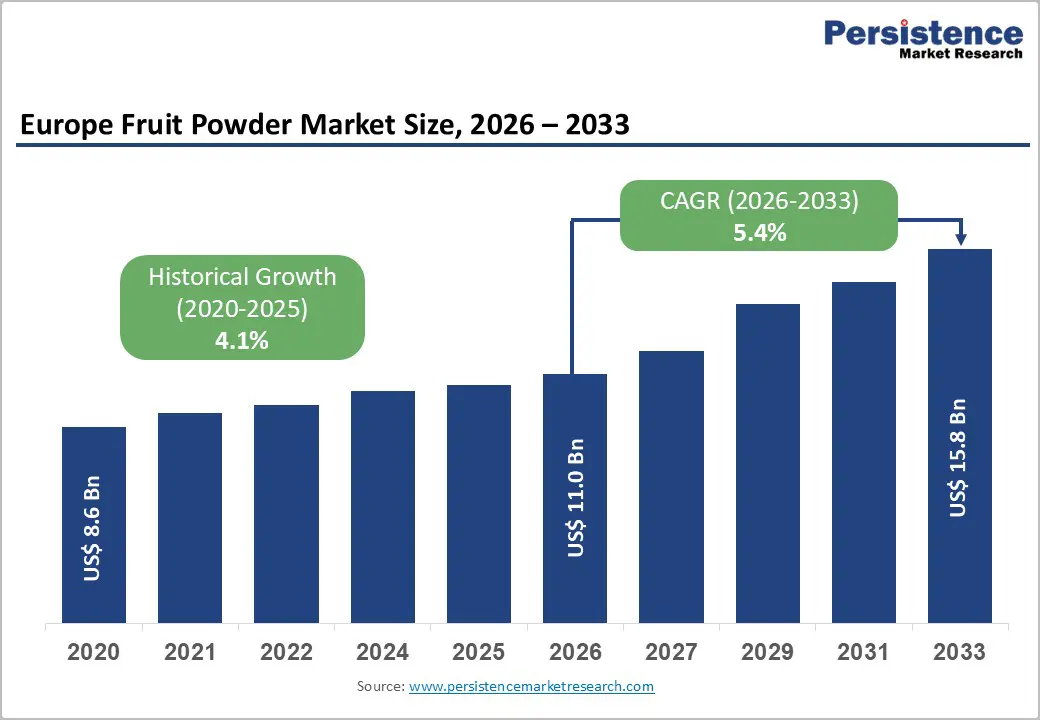
The Europe fruit powder market size is expected to be valued at US$ 11.0 billion in 2026 and projected to reach US$ 15.8 billion by 2033, growing at a CAGR of 5.4% between 2026 and 2033.
Demand for plant-based nutraceuticals in Europe is witnessing rapid growth, driven by rising consumer awareness of preventive health and wellness. The powders have become essential components in health-focused products like smoothies, protein shakes, and functional foods. This is attributed to the growing shift of modern consumers toward natural and sustainable alternatives.
The appeal lies in their rich concentration of vitamins, minerals, antioxidants, and dietary fiber. This makes them ideal for consumers seeking whole-food nutrition without artificial additives. The trend aligns with the increasing popularity of vegan and plant-based diets, particularly among millennials and Gen Z, who prioritize sustainable and ethical consumption.
Fruit powders like blueberry, acai, and pomegranate are integrated into energy-boosting formulas. Vegetable powders such as spinach, kale, and beetroot are gaining popularity in fitness supplements for their endurance-enhancing and detoxifying properties. Moreover, these powders are being incorporated into protein blends as plant-based protein alternatives like pea or hemp protein gain traction over animal-based products.
Key Industry Highlights:
- Germany leads Europe fruit powder market with a strong industrial infrastructure, advanced processing capabilities, and strict regulatory standards ensuring high-quality production and innovation.
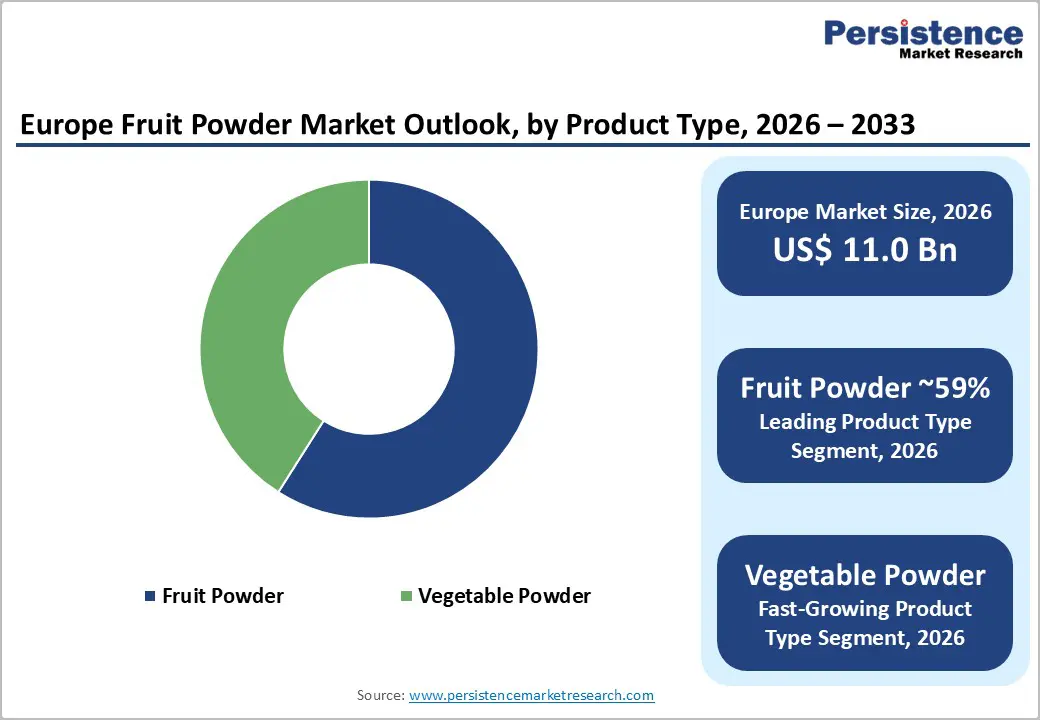
- By product type, the fruit powder segment is projected to dominate with a share of 59% in 2026 amid high demand for plant-based beverages like smoothies.
- Based on applications, the food and beverage category is estimated to lead with a share of 44% in 2026 as millennials look for organic and functional food items.
- Vegetable powder is the fastest-growing segment driven by increasing demand for functional and plant-based food products.
- The emergence of bioactive compound extraction methods that allow for the use and isolation of naturally occurring compounds is projected to create new opportunities.
- Increasing awareness among individuals regarding the importance of adding micronutrients to their daily diets is anticipated to boost sales.
- High demand for powders from bakeries, cafes, hotels, and restaurants for the preparation of cakes, pizzas, soups, condiments, salads, and meat will likely aid sales.
| Key Insights | Details |
|---|---|
| Europe Fruit Powder Market Size (2026E) | US$ 11.0 Billion |
| Market Value Forecast (2033F) | US$ 15.8 Billion |
| Projected Growth CAGR (2026 - 2033) | 5.4% |
| Historical Market Growth (2020 - 2025) | 4.1% |
Market Dynamics
Drivers - Rising Demand for Clean-Label and Natural Ingredients
European consumers are increasingly focused on transparency and health-conscious consumption, which is significantly boosting demand for fruit powders. According to the European Commission, over 60% of consumers in Europe actively review ingredient labels before purchasing food products. Fruit powders are perceived as natural alternatives to synthetic additives, offering flavor, color, and nutritional benefits without artificial chemicals. Their compatibility with clean-label formulations has made them essential in bakery, beverages, and snack manufacturing. Additionally, the rapid growth of plant-based diets is increasing the use of fruit powders as natural sweeteners and flavor enhancers, further strengthening their market position.
Companies in Europe Strive to Bag Organic Certifications to Gain Consumers’ Trust
Growing demand for organic and sustainable products in Europe is significantly driving the fruit and vegetable powder market. As consumers become more eco-conscious, they seek products with sustainable practices and minimal environmental impact.
Organic fruit and vegetable powders, produced without synthetic pesticides, fertilizers, or GMOs, align perfectly with these preferences. These are gaining traction across food, beverage, and nutraceutical industries. Europe’s customers view organic certifications as a mark of trust, further influencing purchasing decisions. It is especially significant across health-related segments, such as functional foods and infant nutrition.
Restraints - Production Costs to Remain High as Processing Techniques Become Advanced
High production costs are a significant challenge for companies in Europe, primarily augmented by the sourcing of high-quality organic ingredients. Organic farming practices typically require labor-intensive methods and strict adherence to sustainability standards, resulting in high costs for growers.
The premium pricing extends to the raw materials needed for powder production, which can inflate production expenses. Advanced processing techniques needed to maintain the nutritional integrity and flavor might add another layer of financial burden. For instance, freeze-drying and spray-drying methods, while effective in preserving the quality of the produce, require sophisticated technology and high energy consumption, thereby raising costs.
Rapid Climate Change May Affect Agricultural Yields
Short supply chain vulnerabilities pose a significant threat to the fruit and vegetable powder industry in Europe, with disruptions resulting from climate change and logistical challenges. Climate change has led to increasingly erratic weather patterns, impacting agricultural yields and the timely harvest of essential fruits and vegetables. For example, unseasonable frosts or drought conditions can severely reduce the quantity and quality of produce available for powder production, leading to scarcity and inflated prices.
As manufacturers rely on specific raw materials, any disruption in the supply chain can ripple through production schedules. It can further cause delays in product availability and negatively affect customer satisfaction.
Opportunities - Food Fortification to Prevent Micronutrient Deficiencies Creates New Avenues
Food fortification has become a key strategy for manufacturers aiming to enhance the nutritional value of their products. It is also enabling them to address public health concerns related to micronutrient deficiencies.
Fruit and vegetable powders emerge as versatile and innovative solutions that can seamlessly integrate into various food applications, including cereals, snack bars, and beverages. These powders are packed with essential vitamins, minerals, and phytonutrients, offering a concentrated source of nutrition without compromising flavor. For example, adding beetroot powder can boost iron levels, while spirulina can enrich products with protein and antioxidants. This not only raises the health profile of everyday foods but also caters to the rising demand for functional products that contribute to a person’s well-being.
Brands Focus on Establishing Online Presence to Connect Directly with Consumers
Rapid expansion of e-commerce has transformed how consumers shop, presenting a significant opportunity for companies in the Europe fruit and vegetable powder market. As online shopping becomes increasingly prevalent, companies are set to leverage e-commerce platforms to connect directly with consumers, offering a broad reach than traditional retail channels.
By establishing user-friendly websites and engaging in popular marketplaces, they can showcase their diverse range of fruit and vegetable protein powders. These can be exhibited with detailed product descriptions, health benefits, and usage suggestions.
Direct-to-consumer sales models further allow brands to create personalized shopping experiences, enhancing customer engagement through targeted marketing strategies. Additionally, subscription services for regular delivery of these powders cater to the growing consumer demand for convenience and sustainability.
Category-wise Analysis
Product Type Insights
Fruit powder is anticipated to remain at the forefront in the forecast period in Europe due to rising demand for clean-label and natural ingredients in the food and beverage industry. Fruit powders, such as apples, berries, and citrus, are widely preferred as they retain essential nutrients, flavors, and colors without synthetic additives. This aligns with rising consumer preferences for healthy and minimally processed food options. Additionally, the growing popularity of functional foods and beverages, including smoothies, health bars, and plant-based supplements, drives demand for natural fruit powders.
Application Insights
The food and beverage segment holds a dominant position in the application category of the Europe fruit and vegetable powder market. It is due to growing consumer demand for convenient, healthy, and functional food products. Consumers are increasingly prioritizing nutrition worldwide. Hence, manufacturers are leveraging freeze-dried fruit and vegetable powders as natural ingredients to enhance product profiles with essential vitamins, antioxidants, and minerals. These powders provide an attractive alternative to synthetic additives, aligning with the market’s clean-label and plant-based trends.
Distribution Channel Insights
The B2B segment dominated the distribution channel with approximately 68% share in 2025, supported by strong demand from food manufacturers, nutraceutical companies, and cosmetic brands. Bulk procurement and long-term supply agreements make B2B the preferred channel for large-scale operations. The growth of industrial food processing in Europe, supported by organizations such as the European Food and Drink Industry Association, has further strengthened the dominance of B2B distribution channels in the market.
Country Insights
Germany Fruit Powder Market Trends and Insights
Germany held the leading position with around 27% share in 2025, driven by rising awareness of natural, plant-based diets is set to fuel demand for powders. These are likely to be used in smoothies, supplements, and functional foods. Germany’s established food processing industry also plays a critical role as manufacturers incorporate fruit and vegetable powders into packaged foods and beverages. They aim to enhance nutrition without compromising taste or shelf life. The rise of organic agriculture in Germany is also set to push demand for clean-label products, thereby augmenting growth.
Organic fruit and vegetable powders are gaining immense popularity in Germany, especially among consumers seeking minimally processed, pesticide-free options. The shift toward sustainable sourcing practices also gives the country a competitive edge. Companies are likely to focus on transparent supply chains and sustainable production methods, meeting both European Union (EU) regulations and consumer expectations.
UK Fruit Powder Market Trends and Insights
The UK is emerging as one of the fastest-growing countries in the Europe fruit powder market, supported by strong consumer demand for functional and health-oriented food products. The country is projected to grow at a CAGR of approximately 6.4% over the forecast period, driven by increasing adoption of clean-label and plant-based diets. British consumers are early adopters of superfoods and dietary supplements, with a growing preference for natural ingredients in beverages, snacks, and meal replacements. The expanding retail presence of functional foods and the popularity of smoothies and ready-to-mix drinks are significantly boosting fruit powder consumption.
Additionally, the UK’s advanced e-commerce ecosystem and direct-to-consumer nutrition brands are accelerating product accessibility and innovation. The country imports nearly 29% of its fruits and vegetables, encouraging manufacturers to utilize shelf-stable fruit powders for supply chain stability. Furthermore, increasing investments in nutraceuticals and personalized nutrition solutions are strengthening demand across health-conscious consumer segments, positioning the UK as a key high-growth hub within the European fruit powder market.
Competitive Landscape
The competitive landscape of the Europe fruit and vegetable powder supplement industry is characterized by a mix of established players and emerging companies striving to capture high shares. Key industry players, such as Döhler Group, Olam International, and Kerry Group, dominate the market by offering a diverse range of high-quality products. They are leveraging advanced processing technologies to maintain nutritional integrity. These companies focus on research and development to create unique blends and functional powders that cater to health-conscious consumers and evolving dietary trends.
Key Developments:
- In February 2025, Givaudan announced a distribution agreement with Dole Specialty Ingredients (DSI), a business unit of Dole Asia Holdings Pte. Ltd., for DSI's unique upcycled Green Banana Powder ingredient.
- In August 2025, Symrise expanded its F&B powder blending facility in Jinqiao, Shanghai. The move boosts production capacity and strengthens its supply of natural ingredient solutions for the global food and beverage sector.
- In June 2023, Cabosse Naturals, based in Zurich, introduced its latest cacao fruit powder ingredient. It was developed to act as a refined sugar replacement in the food industry. It is entirely made of pure cacao fruit powder.
Companies Covered in Europe Fruit Powder Market
- Symrise
- Naturex (Givaudan)
- Dohler Group
- Herbafood Ingredients GmbH
- Kanegrade Ltd.
- Paradise Fruits (Johannes Lühders GmbH)
- Van Drunen Farms Europe
- Gustav Heess GmbH
- European Freeze Dry
- J. Rettenmaier and Söhne GmbH
- Milne Fruit Products
- Others
Frequently Asked Questions
Europe Fruit and Vegetable Powder Market is projected to be valued at US$ 11.0 billion in 2026.
The rising demand for timesaving, shelf-stable ingredients from the foodservice industry is driving demand for Fruit and Vegetable Powder in Europe.
Germany leads the market with around 27% share due to strong industrial and regulatory frameworks.
Brands that focus on establishing a strong online presence to connect directly with consumers represent a key market opportunity.
Major players in the Europe Fruit and Vegetable Powder Market include Symrise, Naturex (Givaudan), Döhler Group, Van Drunen Farms Europe, Paradise Fruits (Johannes Lühders GmbH), and others.


