




- Processed Food
- Brazzein Market
Brazzein Market Size, Share, and Growth Forecast 2026 - 2033
Brazzein Market by Form (Powder, Liquid), by Application (Food Products, Beverages, Pharmaceuticals, Nutraceuticals, Others), Distribution Channel (Online, Offline), and Regional Analysis, 2026 - 2033

Brazzein Market Share and Trends Analysis
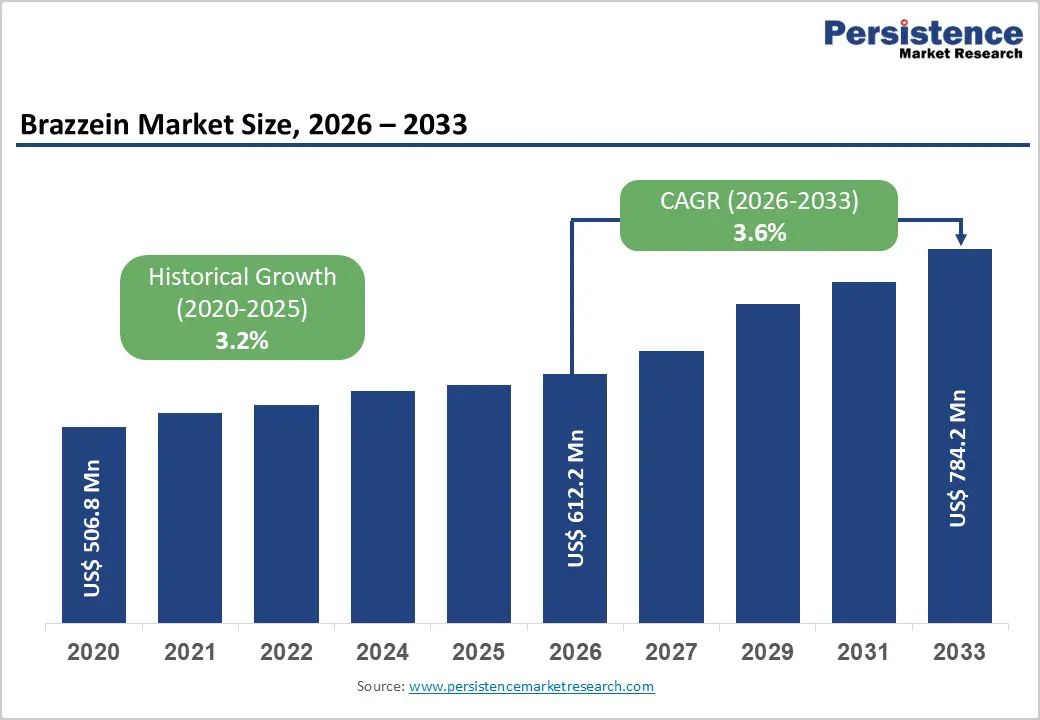
The global Brazzein market size is expected to be valued at US$ 612.2 million in 2026 and projected to reach US$ 784.2 million by 2033, growing at a CAGR of 3.6% between 2026 and 2033.
Demand is underpinned by accelerating sugar-reduction initiatives in food and beverages, as manufacturers seek next-generation sweeteners that deliver sugar-like taste with fewer calories and a cleaner label profile. Brazzein, a high-potency sweet protein discovered in Pentadiplandra brazzeana, is reported to be 500–2,000 times sweeter than sucrose on a weight basis while remaining heat and pH stable, making it highly attractive for reduced-sugar formulations across processed foods, drinks, nutraceuticals, and specialized diet products. The commercial scale-up of brazzein through precision fermentation by companies such as Sweegen and Conagen further supports market growth by providing a reliable, sustainable supply for global brands.
Key Industry Highlights:
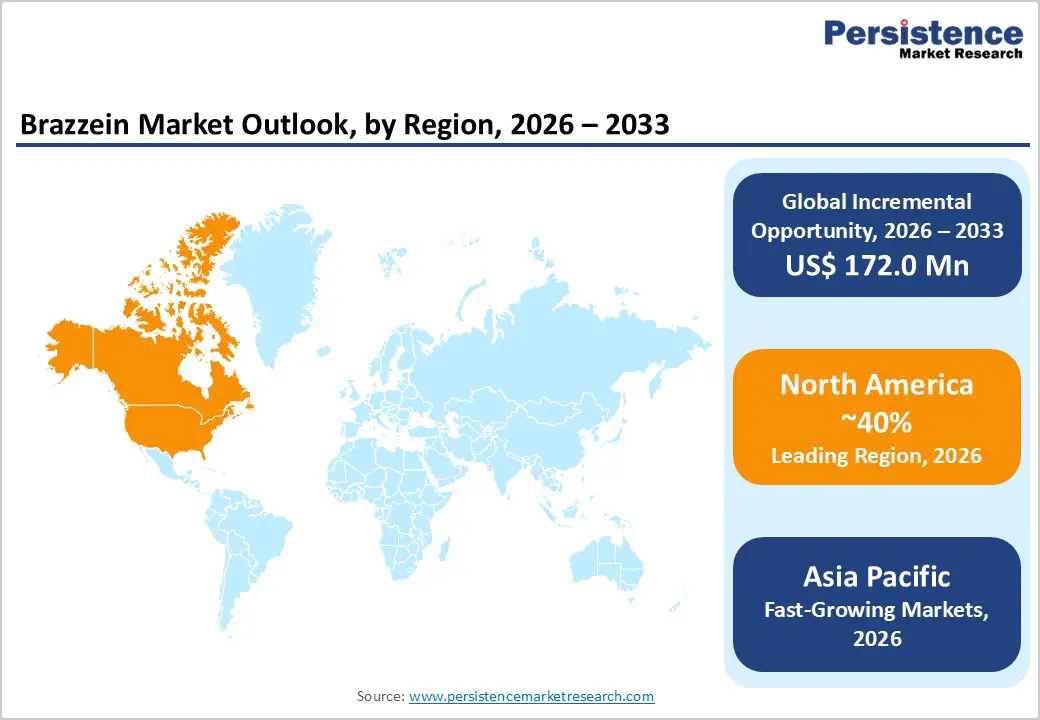
- North America is expected to remain the leading region for the brazzein market, driven by robust sugar reduction initiatives, early regulatory milestones such as FEMA GRAS, and strong innovation from companies like Sweegen, Conagen, and major CPG brands prioritizing healthier formulations.
- Asia Pacific is projected to be the fastest-growing regional market, supported by large populations, rising health awareness, sugar-tax policies, and expanding fermentation and ingredient manufacturing capacity in countries such as China, Japan, India, and ASEAN economies.
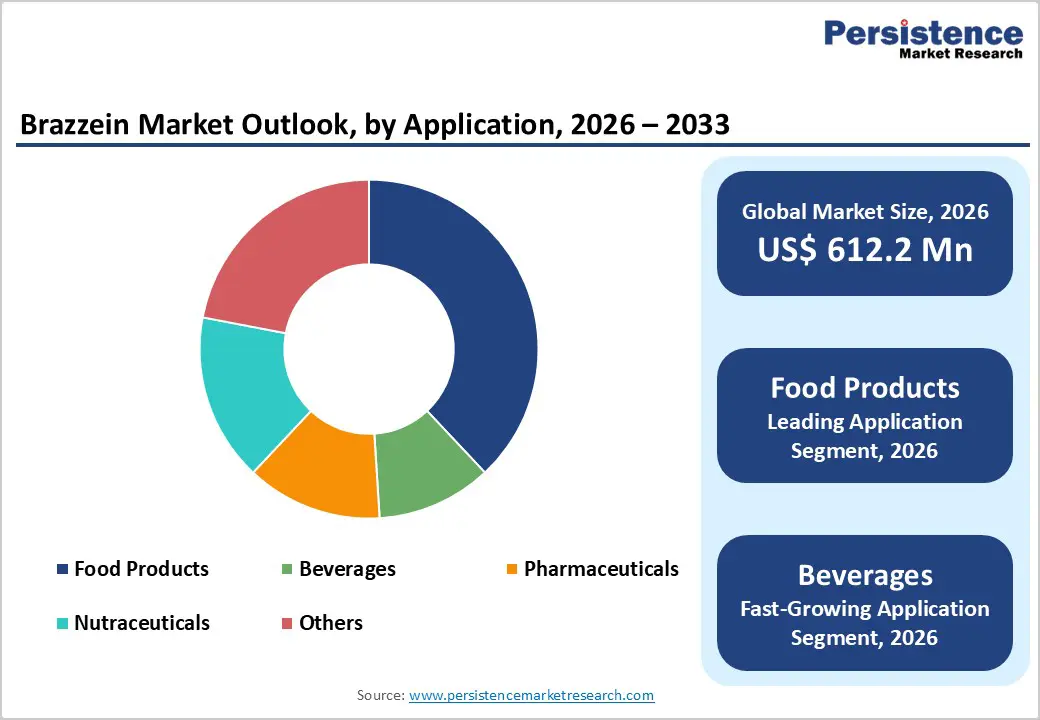
- The food products application segment currently dominates the brazzein market with around 38% share, reflecting high usage in bakery, confectionery, dairy, and processed foods where intense sweetness, heat stability, and clean-label positioning are critical for sugar reduction success.
- The beverages segment is expected to be the fastest-growing application area as soft drinks, flavored waters, energy drinks, and functional beverages seek sugar reductions using high-potency sweet proteins like brazzein that deliver sugar-like taste with fewer off-notes and better pH stability.
- A key opportunity for market participants lies in integrating brazzein into multi-component sweetening systems and nutraceutical, sports nutrition, and specialty diet products, where its zero-calorie, protein-based nature aligns with keto, diabetic-friendly, and high-protein trends and supports premium, science-backed positioning.
| Key Insights | Details |
|---|---|
|
Brazzein Market Size (2026E) |
US$ 612.2 million |
|
Market Value Forecast (2033F) |
US$ 784.2 million |
|
Projected Growth CAGR (2026–2033) |
3.6% |
|
Historical Market Growth (2020–2025) |
3.2% |
Market Dynamics
Drivers - Intensifying Global Focus on Sugar Reduction and Better-for-You Products
A major growth driver for the Brazzein market is the intensifying global focus on sugar reduction to combat obesity, diabetes, and other non-communicable diseases. Public health bodies such as the World Health Organization (WHO) and national advisory committees in Europe and North America have highlighted the need to reduce free sugar intake and have scrutinized traditional non-sugar sweeteners, prompting food and beverage manufacturers to explore newer, more “natural” alternatives. As a sweet protein that is 500–2,000 times sweeter than sucrose, brazzein can provide intense sweetness at very low use levels, contributing negligible calories and supporting significant sugar reduction while maintaining palatability. Its stability across a wide pH range and high temperature, including resistance to heat treatments up to 80–98°C, further supports its use in baked goods, pasteurized beverages, and processed foods, positioning the Brazzein market to benefit from ongoing reformulation efforts worldwide.
Precision Fermentation and Protein Engineering Enabling Commercial Scale
Another key driver is the rapid advancement of precision fermentation and protein engineering technologies that make commercial-scale brazzein production feasible and cost-effective. Traditionally, brazzein is present only in small amounts in the fruit of the West African plant Pentadiplandra brazzeana, limiting natural extraction as a viable supply route. Companies such as Conagen and Sweegen have addressed this by producing brazzein via proprietary precision fermentation platforms, which are also used to generate other high-intensity sweet proteins and peptides. These platforms enable consistent quality, scalable output, and improved sustainability relative to agricultural extraction, aligning with broader industry trends toward bio-based, fermentation-derived food ingredients. As more food manufacturers gain familiarity with fermentation-derived sweet proteins and as regulatory approvals expand (e.g., FEMA GRAS for brazzein in the U.S.), the addressable market for brazzein in mainstream food and beverage applications is likely to grow.
Restraints - Regulatory Uncertainty and Evolving Guidance on Non-Sugar Sweeteners
Regulatory uncertainty and evolving guidance on non-sugar sweeteners can restrain near-term adoption of brazzein. The WHO released guidelines in 2023 cautioning against the long-term use of non-sugar sweeteners for weight control or risk reduction of non-communicable diseases, generating broader debate and media attention around sweetener safety. Although these guidelines primarily consider established low- and no-calorie sweeteners and not newer sweet proteins such as brazzein, they may make some manufacturers more cautious about aggressive sweetener reformulation strategies. Divergent positions between organizations such as EFSA-backed health claims supporting intense sweeteners’ benefits on glycemic response can also create confusion, requiring brazzein suppliers to invest more heavily in safety data, toxicology, and communication to reassure regulators, brands, and consumers.
Competition from Established High-Intensity Sweeteners and Sweet Proteins
The Brazzein market also faces competitive pressure from established high-intensity sweeteners such as steviol glycosides, sucralose, and acesulfame-K and from other sweet proteins like thaumatin and next-generation designer sweet proteins. Stevia-based ingredients, for example, have extensive regulatory approvals worldwide and are already widely used in beverages and foods, supported by major suppliers like Cargill, Tate & Lyle, and Ingredion Incorporated in broader sugar-reduction portfolios. At the same time, companies such as Amai Proteins are developing hyper-sweet designer proteins where as little as one kilogram of protein can match the sweetness of 3–10 tons of sugar, offering alternative solutions for deep sugar reduction.
Opportunities - Expansion in Beverages and Functional Drinks as Fastest-Growing Application
A significant opportunity lies in the beverages and functional drinks segment, which is expected to be the fastest-growing application area for brazzein. High-potency sweeteners are especially important in soft drinks, flavored waters, energy drinks, and ready-to-drink teas, where sugar reduction targets are increasingly stringent and consumers still expect a “full sugar” taste. Brazzein offers advantages in this context due to its clean sweetness, reduced bitter or metallic aftertaste, and ability to reduce “sweet linger” when used in combination with other natural sweeteners, improving overall sensory profiles. Its high solubility and stability across varying pH levels make it particularly suitable for carbonated and non-carbonated beverages, while its protein nature and compatibility with keto and low-glycemic diets support premium positioning in functional and better-for-you drinks. As beverage brands in North America, Europe, and Asia Pacific accelerate sugar reduction and reformulation, brazzein suppliers have ample opportunity to expand inclusion in new and reformulated drink launches.
Growing Use in Nutraceuticals, Sports Nutrition, and Specialty Diet Products
Another promising opportunity is the use of brazzein in nutraceuticals, sports nutrition, and specialty diet products where formulation space is limited and label claims are critical. Nutraceutical tablets, gummies, and powders often require intense sweetness at low dosages without adding bulk sugars, while sports nutrition products must balance sweetness with protein content and stability. As a zero-calorie sweet protein, brazzein can be integrated into formulations targeting keto, diabetic-friendly, or high-protein lifestyles, where consumers actively seek sugar reduction without sacrificing taste. Furthermore, its heat stability and compatibility with both dry blends and liquid matrices make it suitable for instant drink mixes, ready-to-mix protein powders, and functional shots. Suppliers that can provide application-specific support and synergistic sweetener systems, combining brazzein with stevia, erythritol, or fiber, are likely to gain traction in this high-value niche.
Category-wise Analysis
Form Insights
Within the form category, powder is expected to be the leading segment, accounting for an estimated 68% share of the Brazzein market in 2025. Most commercial brazzein is produced via precision fermentation and subsequently dried into a high-purity powder, which offers superior stability, easier transportation, and longer shelf life compared with liquid forms. Powdered high-intensity sweeteners are widely used by manufacturers because they can be accurately dosed at very low inclusion levels into dry blends, bakery premixes, instant beverages, and table-top sweeteners. Additionally, early deployments of sweet proteins and designer proteins, including brazzein, thaumatin, and related peptides from companies such as Sweegen, Conagen, and Amai Proteins, have largely focused on powdered formats to support global B2B distribution and multi-application use. While liquid formulations will grow in specialized applications, powder’s operational advantages and alignment with current production technologies justify its leadership position.
Application Analysis
In terms of application, food products represent the leading segment, with an estimated 38% share of the Brazzein market in 2025, followed closely by beverages as the fastest-growing segment. Food categories such as bakery, dairy desserts, confectionery, breakfast cereals, and snacks are under strong pressure to reduce sugar while preserving taste, texture, and processing performance. The intense sweetness (up to 2,000 times that of sucrose in some conditions) and heat stability of brazzein make it appealing for baked goods and processed foods where traditional high-intensity sweeteners sometimes struggle with off-flavors or thermal degradation. In addition, its clean-label positioning as a protein-based sweetener resonates with consumers seeking “natural” alternatives to artificial sweeteners. As formulators gain experience using brazzein in combination with bulking agents and other sweeteners, its penetration across diverse food product lines is expected to widen, reinforcing the dominance of the food products segment.
Regional Insights
North America Brazzein Market Trends and Insights
North America holds a leading position in the Brazzein market due to strong demand for natural, low-calorie sweeteners and increasing consumer preference for clean-label food ingredients. Rising health concerns such as obesity and diabetes have encouraged food and beverage manufacturers to reduce sugar content and adopt alternative sweetening solutions like brazzein. The region also benefits from advanced biotechnology capabilities that support the commercial production of sweet proteins through fermentation and protein engineering. Additionally, the presence of well-established food processing industries and growing investment in innovative sugar-reduction technologies are accelerating product development. Regulatory support for novel food ingredients and increasing research activities by biotechnology companies are further strengthening market expansion. Brazzein is gaining attention for its high sweetness intensity, stability across a wide pH and temperature range, and potential to enhance flavor without adding calories. These factors collectively position North America as a key hub for innovation and commercialization in the brazzein market.
Asia Pacific Brazzein Market Trends and Insights
The Asia Pacific brazzein market is emerging rapidly due to growing awareness of healthier food alternatives and increasing demand for natural sweeteners across developing economies. Rising urbanization, changing dietary habits, and higher consumption of processed foods and beverages in countries such as China, India, Japan, and South Korea are creating favorable conditions for sugar-reduction ingredients. Consumers in the region are becoming more health conscious, leading to greater interest in low-calorie and plant-derived sweetening solutions such as brazzein.
The expanding functional food and nutraceutical industries are also supporting the adoption of innovative sweet proteins in various formulations. Additionally, the growth of the food processing sector and increasing investments in biotechnology and fermentation technologies are enabling regional manufacturers to explore advanced sweetener production methods. Government initiatives encouraging healthier diets and reducing sugar intake in packaged foods are further influencing market growth. As multinational food companies expand their presence and product portfolios in Asia Pacific, the demand for alternative sweeteners such as brazzein is expected to increase steadily in the coming years.
Competitive Landscape
The brazzein market is characterized by growing competition driven by advancements in biotechnology and increasing demand for natural, low-calorie sweeteners. Market participants are focusing on research and development to improve fermentation-based production methods and enhance the stability and sweetness profile of brazzein for commercial food and beverage applications. Companies are also investing in product innovation and expanding application areas such as functional foods, beverages, and nutraceuticals. Strategic collaborations with food manufacturers and ingredient suppliers are becoming common to accelerate commercialization. In addition, regulatory approvals and intellectual property developments play an important role in shaping market competition and supporting long-term industry growth.
Key Developments:
- In October 2025, Oobli received a “no questions” letter from the U.S. Food and Drug Administration (FDA) confirming that its sweet protein brazzein-54 is Generally Recognized as Safe (GRAS) for use as a sweetener in food and beverage products. This approval marked the third sweet protein from the company to receive FDA clearance, following earlier approvals for brazzein-53 and monellin.
Companies Covered in Brazzein Market
- Sweegen
- Conagen
- Blue California
- Bonumose
- Ingredion Incorporated
- Tate & Lyle
- Cargill
- Amai Proteins
- Evolva Holding SA
- GLG Life Tech Corporation
- Ginkgo Bioworks
- GreenLab
- Ocean Spray (as relevant brand partner)
Frequently Asked Questions
The global brazzein market is expected to reach approximately US$ 612.2 million in 2026, increasing from around US$ 506.8 million in 2020 on the back of steady sugar-reduction initiatives and the commercialization of fermentation-derived sweet proteins.
Key demand drivers include intensifying global efforts to reduce sugar intake, the search for clean-label and “natural” high-intensity sweeteners, and advances in precision fermentation that allow scalable production of brazzein, a sweet protein 500–2,000 times sweeter than sucrose with favorable stability and taste properties.
North America leads the global brazzein market, driven by strong sugar-reduction pressure on food and beverage manufacturers, early regulatory milestones such as FEMA GRAS for brazzein, and a robust innovation ecosystem including Sweegen, Conagen, and major CPG and beverage companies.
A major opportunity lies in beverages, nutraceuticals, and sports nutrition, where brazzein’s intense sweetness, clean taste, zero-calorie profile, and compatibility with keto and high-protein lifestyles support deep sugar reduction and premium positioning in rapidly growing functional and better-for-you product segments.
Leading and emerging companies include Sweegen, Conagen, Blue California, Bonumose, Ingredion Incorporated, Tate & Lyle, Cargill, Amai Proteins, Evolva Holding SA, GLG Life Tech Corporation, Ginkgo Bioworks, and GreenLab, alongside brand collaborators such as Ocean Spray exploring sweet-protein-based sugar reduction.


