




- Beverages
- Black Tea Extract Market
Black Tea Extract Market Size, Share, and Growth Forecast 2026 - 2033
Black Tea Extract Market by Form (Powder, Liquid, Encapsulated), by Nature (Organic, Conventional), by Application (Food & Beverages, Nutraceuticals / Dietary Supplements, Cosmetics & Personal Care, Others), by Distribution Channel, by Regional Analysis for 2026 to 2033

Black Tea Extract Market Size and Trend Analysis
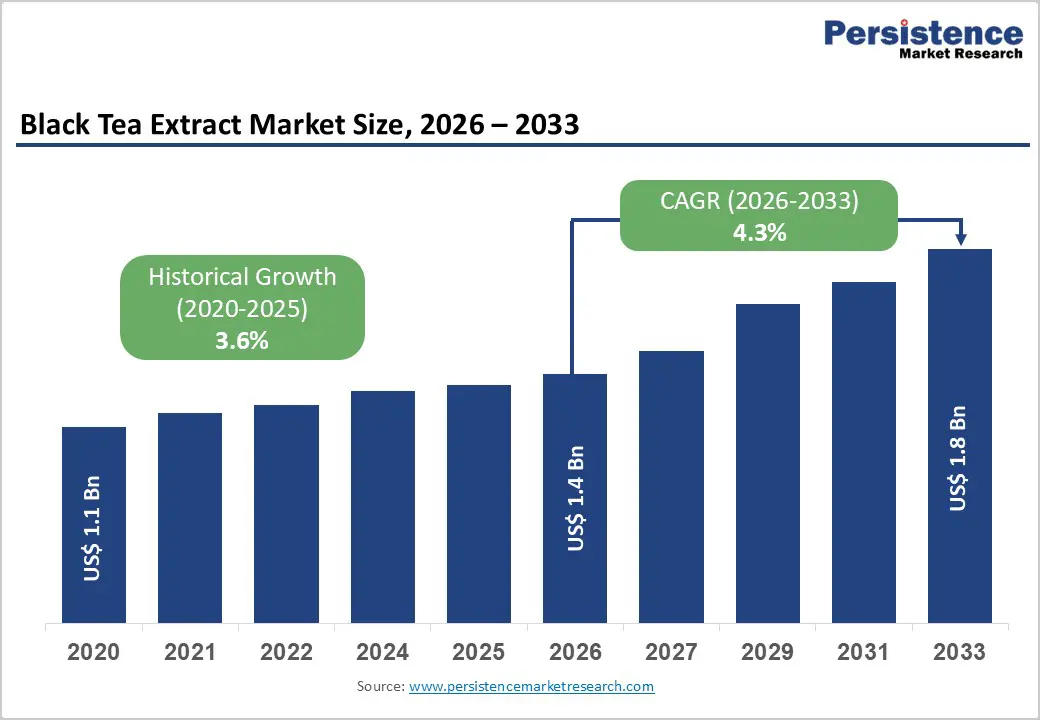
The global black tea extract market size is expected to be valued at US$ 1.4 billion in 2026 and projected to reach US$ 1.8 billion by 2033, growing at a CAGR of 4.3% between 2026 and 2033. The rise in the black tea extract market is driven by growing consumer focus on functional beverages, natural antioxidants, and clean-label ingredients that deliver both flavor and health benefits.
Clinical and epidemiological studies show that black tea is rich in polyphenols such as catechins, theaflavins, and thearubigins, which exhibit antioxidant, anti-inflammatory, and cardiometabolic benefits, encouraging broader use of standardized extracts in food, beverage, and nutraceutical formulations. At the same time, global tea production and consumption have trended upward over the last decade, with the FAO and FAO-IGG on Tea reporting steady growth in black tea output and a structural shift toward value-added products, creating a favorable supply-demand backdrop for extract manufacturers.
Key Industry Highlights:
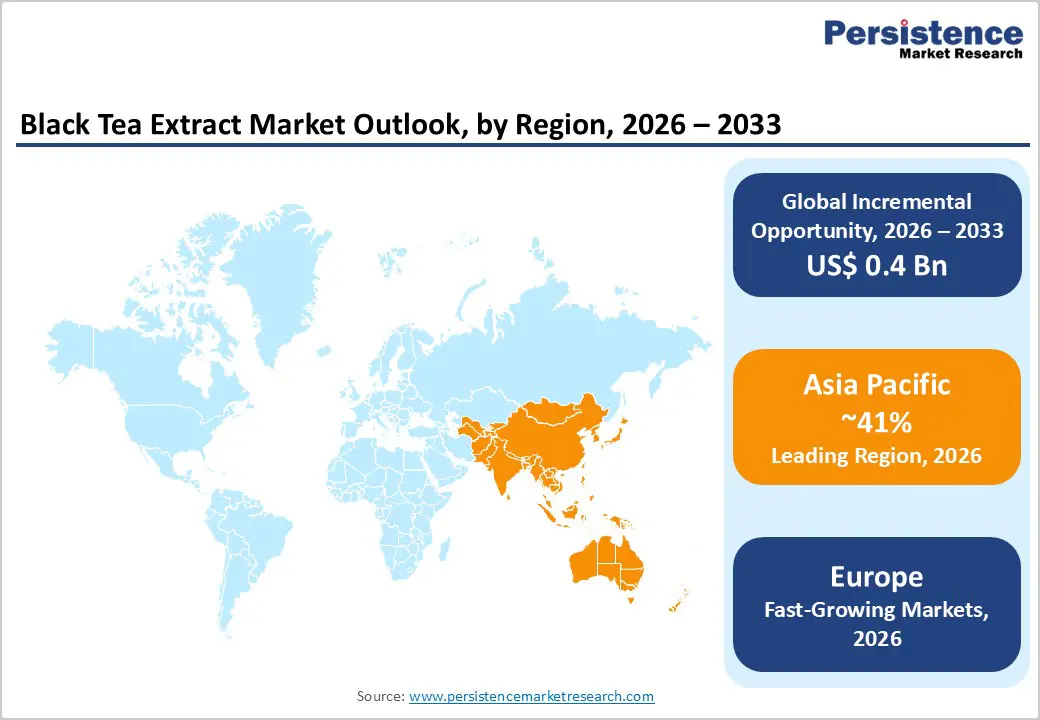
- Asia Pacific leads the black tea extract market with about 41% share in 2025, supported by strong tea production, domestic consumption, and export-focused extraction industries.
- Europe is projected to be the fastest-growing regional market during 2026 - 2033, driven by rising demand for functional beverages, premium tea products, and healthier drink alternatives.
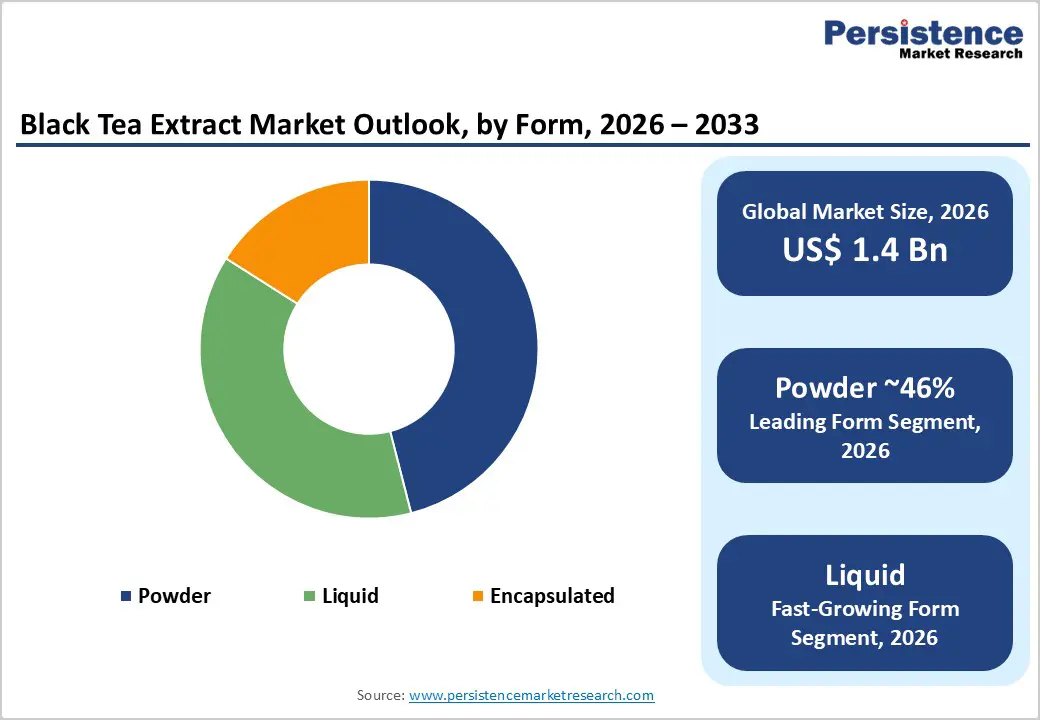
- By form, powder dominates with nearly 46% share in 2025, supported by versatility, long shelf life, easy dosing, and extensive use in beverage and food formulations.
- Liquid black tea extracts are the fastest-growing form segment, benefiting from increasing demand for ready-to-drink beverages, concentrates, and convenient ingredient solutions for foodservice applications.
- Major opportunities exist in premium, organic, sustainably sourced black tea extracts and expanding applications across nutraceuticals, cosmetics, and functional foods supported by polyphenol research.
| Key Insights | Details |
|---|---|
| Black Tea Extract Size (2026E) | US$ 1.4 billion |
| Market Value Forecast (2033F) | US$ 1.8 billion |
| Projected Growth CAGR (2026 - 2033) | 4.3% |
| Historical Market Growth (2020 - 2025) | 3.6% |
Market Dynamics
Drivers - Rising demand for functional beverages and better-for-you drinks
A primary growth driver for the black tea extract market is the global shift toward functional beverages that promise energy, focus, and wellness benefits without the sugar load of carbonated soft drinks. Industry analyses of ready-to-drink (RTD) tea and coffee highlight that consumers, especially younger demographics, increasingly view beverages as vehicles for health, seeking products enriched with antioxidants, polyphenols, and other bioactives. Black tea extracts provide a concentrated source of theaflavins, thearubigins, and caffeine, enabling formulators to create RTD teas, flavored waters, and energy drinks with a credible “tea health halo.” Reports on the RTD tea sector show steady volume and value growth, with antioxidant-positioned teas capturing a dominant share as brands respond to rising concerns around obesity, diabetes, and excessive sugar intake by offering low-calorie, tea-based alternatives.
Growing scientific evidence on health-promoting properties of black tea polyphenols
Another key driver is the expanding body of scientific research linking black tea consumption and its polyphenols to a range of health benefits, including cardiovascular support, improved endothelial function, weight management, and potential anticancer effects. Narrative reviews and mechanistic studies in peer-reviewed journals describe how black tea theaflavins and catechins exert antioxidant, anti-inflammatory, and microbiota-modulating actions, supporting their positioning in nutraceuticals and dietary supplements. For example, theaflavins have been shown to influence signaling pathways and transcription factors related to oxidative stress and inflammation, while the amino acid theanine may contribute to relaxation and cognitive benefits. As awareness of these findings spreads through healthcare professionals and consumers, demand increases for standardized black tea extracts in capsule, powder, and functional food formats positioned for heart health, metabolic support, and overall wellness.
Restraints - Competition from green tea and other plant-based ingredients
Black tea extracts also face competitive pressures from green tea extracts, herbal infusions, and newer botanical ingredients that are aggressively marketed for similar health benefits. FAO-IGG projections suggest that global green tea production is expected to grow at a faster annual rate than black tea through 2033, driven largely by strong domestic demand in China and rising global interest in green tea’s catechin-rich profile. At the same time, beverage innovators are incorporating botanicals such as yerba mate, rooibos, hibiscus, and adaptogenic herbs, which compete for shelf space and consumer attention in the functional drink and supplement aisles. This diversification of the broader tea and botanical landscape may limit the relative share of black tea extracts in some high-growth health-positioned categories.
Opportunities - Premiumization and organic black tea extract positioning
One of the most attractive opportunities lies in premium, organic, and sustainably sourced black tea extracts that align with clean-label and ethical consumption trends. Global analyses of the tea sector highlight growing consumer demand for high-quality, specialty, and origin-specific teas, as well as increased scrutiny of labor conditions, pesticide usage, and environmental impact in tea-producing regions. Brands that can offer certified-organic black tea extracts, along with transparent sourcing from smallholder farmers in countries such as India, Sri Lanka, and Kenya, are well-positioned to capture price premiums in the food, beverage, and nutraceutical industries. Moreover, corporate sustainability commitments by major beverage and ingredient companies are driving procurement policies that favor responsibly produced ingredients, creating a strong pull for traceable and certified black tea extracts.
Category-wise Analysis
Form Insights
In the Form category, Powder is the leading segment, accounting for approximately 46% of the black tea extract market share in 2025. Powdered black tea extracts are highly versatile and easy to dose, making them the preferred format for dry beverage mixes, instant teas, functional powders, bakery items, and dietary supplements. Their relatively high solubility and stability, combined with the ability to standardize active polyphenol content, allow formulators to deliver consistent sensory and health profiles across diverse applications. As global tea and functional beverage markets move toward convenient, on-the-go formats, powdered extracts fit well into single-serve sachets and stick packs, which have seen robust growth in both retail and foodservice channels. Although liquid and encapsulated formats are growing, the entrenched use of powders in B2B ingredient supply keeps powder as the dominant form.
Distribution Channel Insights
Across distribution channel, Business to Business (B2B) emerged as the leading segment in 2025, as most black tea extracts are sold as ingredients to food, beverage, nutraceutical, and cosmetics manufacturers rather than directly to end-consumers. The value chain is characterized by specialized extractors and ingredient companies that supply standardized black tea powders and liquids in bulk to brand owners and contract manufacturers, who then incorporate them into finished products for retail and foodservice markets. This B2B focus is reinforced by the technical nature of extract specifications such as defined levels of theaflavins, caffeine, and total polyphenols and the need for application-specific grades, which are typically negotiated through industrial supply contracts. Although B2C channels like online retail and specialty stores are expanding for finished black tea extract supplements and RTD teas, most of the volume still moves through B2B.
Regional Insights
North America Black Tea Extract Market Trends and Insights
In North America, and particularly the U.S., the black tea extract market benefits from strong demand for functional beverages and dietary supplements that emphasize natural caffeine and antioxidant content. Industry articles on the RTD tea segment report that U.S. sales of tea-based beverages continue to rise as consumers look for alternatives to carbonated soft drinks and sugary juices, with black tea-based products playing a central role in “better-for-you” positioning. Black tea extracts are widely used by beverage companies to standardize flavor and polyphenol levels, allowing for consistent quality across large-scale production runs and across different bottling locations.
On the nutraceutical side, black tea extracts appear in dietary supplements marketed for cardiovascular health, weight management, and antioxidant support, often in combination with green tea, vitamins, and botanical blends. Regulatory oversight by authorities such as the U.S. Food and Drug Administration (FDA) focuses on safety, good manufacturing practices, and truthful labeling, which pushes reputable players to rely on high-quality, well-characterized extracts and evidence-based messaging. As innovation in hybrid beverages accelerates, demand for black tea extracts in North America is expected to remain robust, particularly in the B2B ingredient and RTD beverage segments.
Europe Black Tea Extract Market Trends and Insights
In Europe, the black tea extract market is experiencing steady growth, supported by a long-standing tea-drinking culture, rising interest in functional and premium teas, and regulatory frameworks that promote high quality and product safety. Key markets such as the UK, Germany, France, and Spain show increasing demand for specialty and value-added tea products, including RTD teas, tea-infused beverages, and functional foods using black tea extracts for flavor and health positioning. European consumers are also embracing lower-sugar and clean-label beverages, providing a favorable environment for black tea-based formulations that highlight natural antioxidants and minimal artificial additives.
Regulators and standard-setting bodies in Europe, supported by organizations like FAO and the International Tea Committee (ITC) at the global level, emphasize traceability, pesticide residue management, and social compliance in tea supply chains, pushing ingredient suppliers to improve transparency and certification. As brands in Germany, the U.K., France, and Spain increasingly differentiate through origin labeling, organic certification, and ethical sourcing initiatives, demand is rising for premium black tea extracts that can credibly support such claims in both beverages and supplements. This, coupled with growing interest in nutraceutical and cosmetic applications, positions Europe as the fastest-growing region for black tea extracts.
Asia Pacific Black Tea Extract Market Trends and Insights
The Asia Pacific region is the leading market for black tea and, by extension, a pivotal region for the black tea extract market, with an estimated 41% share of global extract demand in 2026. Major producing countries such as China and India dominate global tea output FAO data show that together they account for more than 50% of world tea production while Kenya and Sri Lanka are the key exporters of black tea used in both domestic and international value chains. As tea consumption in producing countries rises and middle-class consumers trade up to branded and specialty products, local beverage and food manufacturers increasingly incorporate standardized black tea extracts into RTD teas, instant mixes, and fortified foods to deliver consistent quality and functionality.
Asia Pacific also benefits from strong manufacturing advantages, including lower production costs, established extraction infrastructure, and growing adherence to GMP and international quality standards for botanical ingredients. In China, a dynamic tea industry is exploring new value-added formats, including concentrated tea bases and extracts for foodservice and industrial clients, while India and ASEAN countries are expanding their roles as exporters of both bulk tea and processed tea ingredients. As global buyers seek resilient, diversified supply chains for tea-based ingredients, Asia Pacific is expected to maintain its leadership position in black tea extract production and consumption over the forecast period.
Competitive Landscape
The black tea extract market is moderately fragmented, with competition among botanical extract producers, ingredient suppliers, and tea processing companies. Market participants focus on quality sourcing, standardized polyphenol content, and advanced extraction technologies to differentiate their offerings. Companies increasingly invest in sustainable tea sourcing, organic certifications, and clean-label ingredient development to meet evolving consumer preferences. Strategic partnerships with beverage, nutraceutical, and food manufacturers are common to expand application areas. In addition, firms strengthen their global distribution networks and production capacities to serve growing demand from functional beverages, dietary supplements, and cosmetic formulations, particularly in Asia Pacific, Europe, and North America.
Key Developments:
- In May 2025, Finlays launched Finlays Solutions, an expanded extracts business aimed at supporting beverage brands with advanced tea extraction technologies and ingredient solutions.
- In January 2024, Organic India launched a new organic black tea range featuring Assam Black Tea, Masala Black Tea, and Elaichi Black Tea, formulated with premium handpicked tea leaves and botanicals to offer antioxidant-rich beverages and expand its portfolio of certified organic tea products.
- In May 2023, James Finlay Limited sold its James Finlay Kenya tea estates business to Browns Investments PLC, selecting the buyer for its strong legacy in growing tea estate operations.
Companies Covered in Black Tea Extract Market
- Synthite Industries Ltd.
- Martin Bauer Group
- James Finlay Limited
- AVT Naturals
- Phyto Life Sciences P. Ltd.
- Amax NutraSource, Inc.
- Teawolf LLC.
- Cymbio Pharma Pvt. Ltd
- BLUEBERRY AGRO
- The Archer-Daniels-Midland
- Others
Frequently Asked Questions
The global Black Tea Extract Market is expected to reach around US$ 1.4 billion in 2026, supported by steady growth in functional beverages, nutraceuticals, and value-added tea products worldwide.
A major demand driver is the rising consumption of functional and better-for-you beverages, with RTD teas and tea-based drinks leveraging black tea extracts for natural caffeine, flavor, and antioxidant benefits in low-sugar, clean-label formulations.
The Asia Pacific region leads the black tea extract market, accounting for an estimated 41% share of global demand in 2025, thanks to its dominance in tea production and expanding domestic and export markets for value-added tea ingredients.
Key growth opportunities include developing premium, organic, and sustainably sourced black tea extracts and expanding into nutraceutical, cosmetic, and functional food applications backed by scientific evidence of health-promoting polyphenols.
Prominent companies include Synthite Industries Ltd., Martin Bauer Group, James Finlay Limited, AVT Naturals, Phyto Life Sciences P. Ltd., Amax NutraSource, Inc., Teawolf LLC., Cymbio Pharma Pvt. Ltd, BLUEBERRY AGRO, and The Archer-Daniels-Midland Company, along with other regional botanical extract suppliers.


