




- Food Ingredients & Additives
- Yeast Extract Market
Yeast Extract Market Size, Share, Growth, and Regional Forecast, 2026 to 2033
Yeast Extract Market is segmented by Source (Baker's Yeast, Brewer's Yeast, Torula Yeast), by Form (Powder, Paste, Liquid), by End Use (Food & Beverages, Animal Feed, Pharmaceuticals & Nutraceuticals, Biofuels, Cosmetics & Personal Care, Others), and by Regional Analysis, 2026 - 2033

Yeast Extract Market Share and Trends Analysis
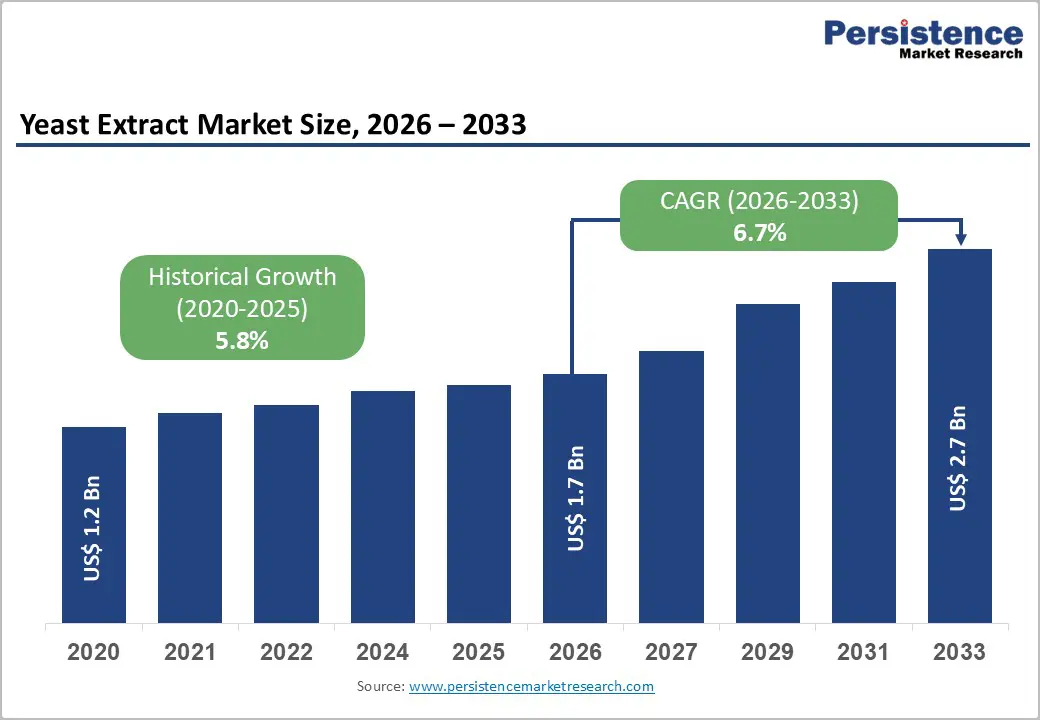
The global yeast extract market size is expected to be valued at US$ 1.7 billion in 2026 and projected to reach US$ 2.7 billion by 2033, growing at a CAGR of 6.7% between 2026 and 2033.
The market growth is primarily driven by the escalating demand for clean-label ingredients and natural flavor enhancers in the processed food industry. As consumers increasingly move away from synthetic additives such as Monosodium Glutamate (MSG), yeast extract has emerged as a preferred alternative due to its rich umami profile and natural origin. Additionally, the rapid expansion of the plant-based meat sector is significantly boosting market demand, as manufacturers use yeast extract to replicate the savory, meaty notes that are essential for acceptance of vegan and vegetarian products.
Key Industry Highlights
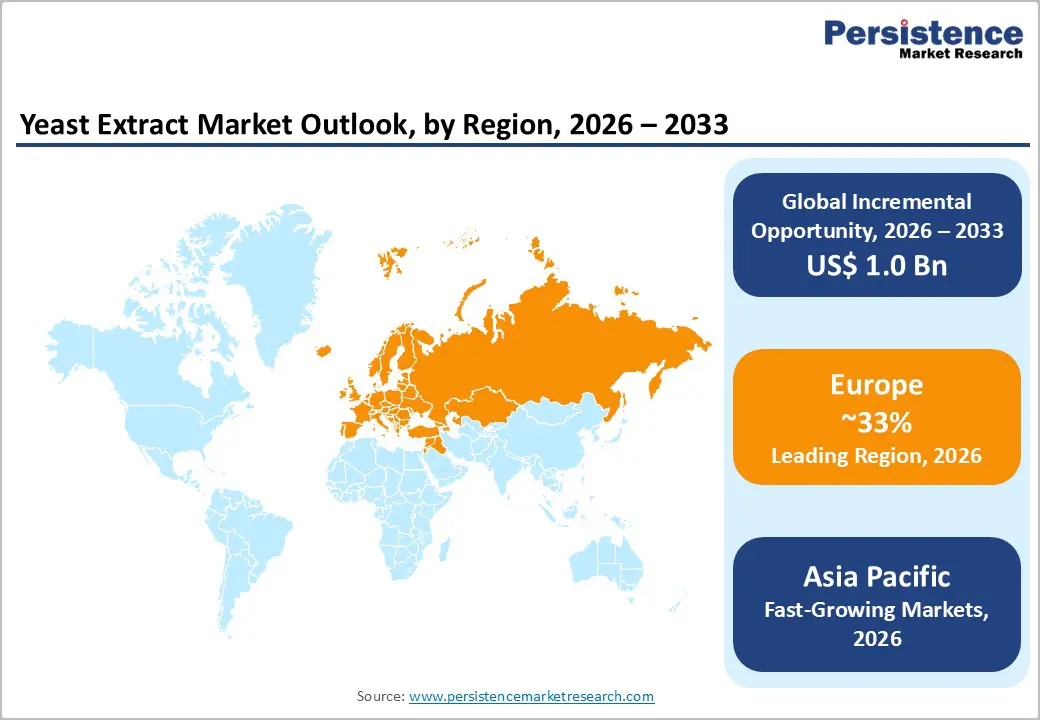
- Leading Region: Europe, accounting for 33% market share in 2025, supported by strong biotechnology capabilities, strict natural-ingredient regulations, and the presence of major producers such as Lesaffre Group and Associated British Foods.
- Fastest-Growing Region: Asia Pacific, driven by rapid processed food consumption, expanding manufacturing infrastructure, rising disposable incomes, and aggressive capacity expansions by companies such as Angel Yeast Co., Ltd.
- Fastest-Growing Source Segment: Torula Yeast, gaining momentum because of its sustainable substrate cultivation and strong positioning in animal feed and pet nutrition.
- Growth Indicator: Expansion of the plant-based and meat-alternative industry, increasing reliance on yeast extract for umami enhancement, sodium reduction, and clean-label formulation.
- Market Opportunity: Technological advancements in specialty yeast strains, enabling tailored flavor modulation, improved yield efficiency, and high-value applications in nutraceuticals and premium food segments.
- Key Developments: In March 2026, Lallemand Bio-Ingredients announced it will showcase advanced yeast-based ingredients at CFIA 2026 in France. In September 2025, Angel Yeast highlighted innovative yeast solutions at Fi India 2025. In March 2025, Asahi Group Foods acquired shares in a German beer yeast products company to strengthen its yeast business portfolio.
| Key Insights | Details |
|---|---|
| Global Yeast Extract Market Size (2026E) | US$ 1.7 Bn |
| Market Value Forecast (2033F) | US$ 2.7 Bn |
| Projected Growth (CAGR 2026 to 2033) | 6.7% |
| Historical Market Growth (CAGR 2020 to 2025) | 5.8% |
Market Dynamics
Driver - Expansion of the Plant-Based and Meat-Alternative Industry
A structural reformulation of global protein consumption is accelerating demand for functional flavor ingredients, positioning yeast extract at the center of plant-based innovation. As meat-alternative manufacturers strive to replicate the savory depth, mouthfeel, and umami complexity of animal-derived products, yeast extract has emerged as a critical clean-label solution. Its natural glutamic acid content enhances flavor intensity while supporting sodium reduction strategies, a priority in health-focused product development. This functionality makes it indispensable in plant-based burgers, sausages, ready meals, and dairy alternatives.
Beyond taste enhancement, yeast extract contributes to protein fortification and fermentation-based processing, aligning with the broader shift toward sustainable food systems. Rapid investments in alternative protein startups and large-scale production facilities are expanding application scope globally. As consumer expectations around authenticity and ingredient transparency rise, yeast extract demand is set to grow in parallel with the evolving plant-based ecosystem.
Restraints - Stringent Quality Standards and Regulatory Variations
Regulatory complexity remains a structural hurdle for yeast extract manufacturers operating across multiple jurisdictions. Differing definitions related to natural flavor labeling, autolyzed yeast declarations, allergen disclosures, and permissible processing aids create compliance burdens that elevate operational costs. In some regions, yeast extract faces scrutiny due to its association with glutamate content, prompting stricter labeling transparency and periodic reformulation. Approval procedures for food, nutraceutical, and animal feed applications also vary significantly, extending product launch timelines. For exporters, navigating tariff classifications and documentation requirements further complicates cross-border trade. These fragmented regulatory frameworks demand continuous monitoring, technical validation, and legal oversight, limiting agility for smaller producers and potentially slowing market expansion despite rising global demand for natural flavor enhancers.
Opportunity - Technological Advancements in Specialty Yeast Strains
Precision fermentation and strain engineering are redefining the functional boundaries of yeast extract applications. Advances in biotechnology now enable the development of specialty yeast strains tailored for enhanced umami intensity, specific amino acid profiles, and targeted nutritional enrichment. These innovations allow manufacturers to create differentiated extracts with reduced bitterness, improved solubility, and optimized flavor release, addressing evolving formulation needs in plant-based foods, savory snacks, and clean-label seasonings. Customized strain selection also supports sodium reduction strategies without compromising taste performance.
Beyond flavor optimization, next-generation yeast strains are being designed for higher yield efficiency and improved substrate utilization, strengthening cost competitiveness. Investment in R&D and strain libraries is expanding opportunities in nutraceuticals, functional beverages, and premium culinary applications. As food producers increasingly seek proprietary ingredient solutions, specialty yeast technology presents a high-value growth avenue within the global yeast extract market.
Category-wise Analysis
Source Insights
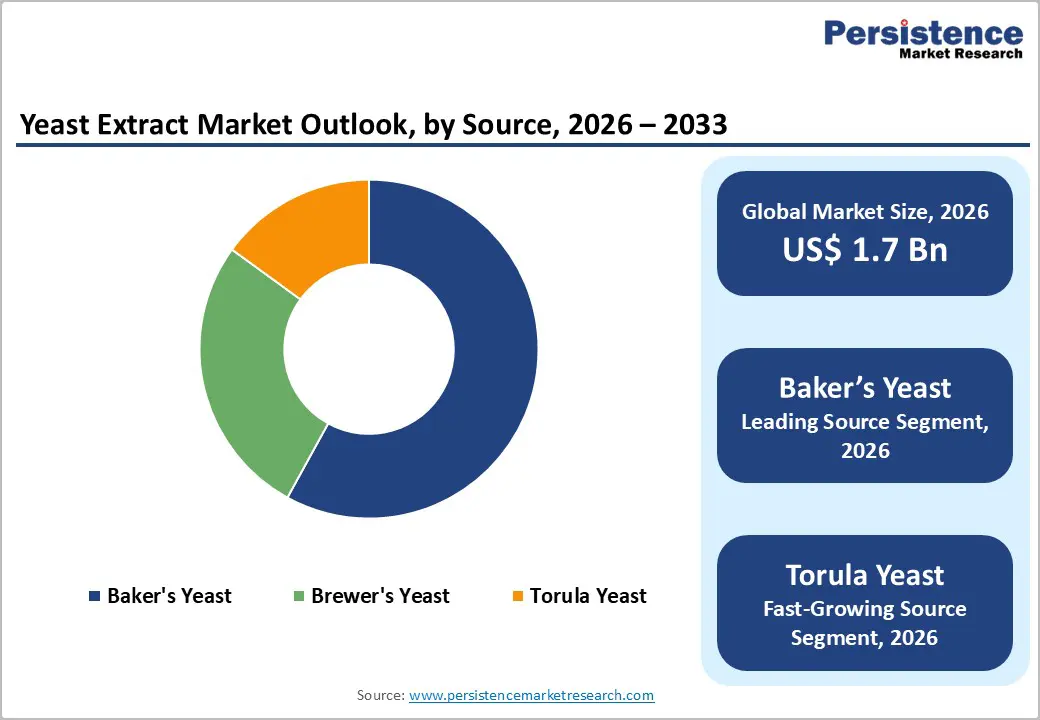
The Baker’s Yeast segment is the leading source in the market, holding a dominant 59% market share in 2025. This is largely due to the well-established global supply chain for Saccharomyces cerevisiae and its widespread use in the baking industry, which provides a consistent and abundant starting material for extract production. Its neutral flavor profile makes it highly versatile for various food applications. However, Torula Yeast is the fastest growing segment through 2032. The primary reason for its rapid rise is its distinct smoky flavor and its status as a high-quality protein source that can be cultivated on sustainable wood-sugar substrates, making it an attractive option for the environmentally conscious animal feed and pet food sectors.
Form Analysis
The Powder segment holds the leading market share in 2025, favored by food manufacturers for its ease of handling, long shelf life, and superior mixability in dry applications like seasoning blends and instant soups. The convenience of transport and storage associated with powdered yeast extract makes it the standard choice for global export. Conversely, the Liquid form is projected to be the fastest-growing segment. This growth is attributed to the increasing demand for ready-to-use ingredients in the industrial fermentation and beverage industries. Liquid yeast extract offers better solubility and avoids the energy-intensive drying process, aligning with the growing corporate focus on energy efficiency and sustainable manufacturing practices within the Food & Beverages industry.
Regional Insights
Europe Yeast Extract Market Trends and Insights
Europe is the leading region in the global yeast extract market, accounting for a 33% market share in 2025. This leadership is rooted in the region's long history of yeast production and the presence of industry giants such as Lesaffre Group and Associated British Foods. European consumers are among the most health-conscious globally, and the region's strict labeling laws, enforced by the EFSA, have historically favored natural ingredients over synthetic ones.
Key trends in countries like Germany, the U.K., and France include a significant shift toward organic yeast extracts and salt-reduction initiatives. The European market is also at the forefront of the vegan revolution, with yeast extract playing a pivotal role in the sensory development of dairy-free and meat-free products. Regional harmonization of food safety standards and a strong emphasis on biotechnology for industrial applications provide a stable environment for market growth, reinforcing Europe's position as the benchmark for quality and innovation in the yeast sector.
Asia Pacific Yeast Extract Market Trends and Insights
Asia Pacific is identified as the fastest growing segment globally, with a projected high CAGR through 2032. This expansion is fueled by the rapid urbanization and industrialization of economies such as China, India, and Japan. As disposable incomes rise, there is a marked increase in the consumption of processed and convenience foods, which rely heavily on yeast extract for flavor consistency. China is a major global player, not only as a consumer but also as a leading exporter, with Angel Yeast Co., Ltd. expanding its global footprint through massive production facilities.
The region's growth is also supported by the presence of a large manufacturing base and lower production costs compared to Western markets. In Japan, the traditional preference for umami flavors has always supported yeast extract usage, but modern health trends are now driving its application in low-sodium soy sauces and functional beverages. The ASEAN countries are also showing significant potential, as the food service industry expands and local manufacturers look to improve the nutritional profile of their offerings to meet emerging health standards and export requirements.
Competitive Landscape
The competitive landscape of the Yeast Extract Market is a mix of consolidated global players and specialized regional manufacturers. Market leaders like Lesaffre Group, Angel Yeast Co., Ltd., and Associated British Foods dominate the high-volume segments through extensive distribution networks and economies of scale. These companies are increasingly focusing on vertical integration controlling the production from yeast strain development to final extract processing to ensure quality and supply security. In contrast, players like Novonesis and Kerry Group plc differentiate themselves through advanced enzymatic technologies and application-specific expertise, particularly in the pharmaceutical and plant-based sectors. The market is also seeing an increase in collaborative ventures between yeast producers and food tech startups to create next-generation flavor modulators. Emerging business models are prioritizing sustainability and traceable supply chains to appeal to ethically-minded industrial buyers.
Key Developments:
- In March 2026, Lallemand Bio-Ingredients announced it will showcase a portfolio of yeast-based ingredients at CFIA 2026 in Rennes, France, aimed at enhancing flavor depth and recipe optimization for food manufacturers.
- In September 2025, Angel Yeast showcased its innovative yeast-based solutions at Fi India 2025, highlighting technologies designed to transform the food industry. The company emphasized applications that enhance flavor, nutrition, and sustainability across diverse food products.
- In March 2025, Asahi Group Foods acquired shares in a German beer yeast products company to strengthen its yeast business.
Companies Covered in Yeast Extract Market
- Lesaffre Group
- Angel Yeast Co., Ltd.
- Associated British Foods
- Novonesis
- Kerry Group plc
- Alltech, Inc.
- ADM
- Oriental Yeast Co., ltd
- Asahi Group Foods, Ltd.
- KOHJIN Life Sciences Co., Ltd
- Lallemand Inc.
- Others
Frequently Asked Questions
The global Yeast Extract market is projected to be valued at US$ 1.7 Bn in 2026.
Expansion of the Plant-Based and Meat-Alternative Industry is a major factor driving global Yeast Extract market.
The Global Yeast Extract market is poised to witness a CAGR of 6.7% between 2026 and 2033.
Technological Advancements in Specialty Yeast Strains is a significant opportunity in the Yeast Extract market.
Major players in the Global Yeast Extract market include Lesaffre Group, Angel Yeast Co., Ltd., Associated British Foods, Novonesis, Kerry Group plc, Alltech, Inc., and others.


