




- Clothing, Footwear, & Accessories
- Sports Socks Market
Sports Socks Market Size, Share, and Growth Forecast, 2025 - 2032
Sports Socks Market By Product Type (Ankle Socks, Crew Socks, Knee-High Socks), Material (Cotton, Nylon, Polyester, Spandex), Distribution Channel (Online Retail, Specialty Stores, Supermarkets and Hypermarkets, Others), and Regional Analysis for 2025 - 2032

Sports Socks Market Size and Trends Analysis
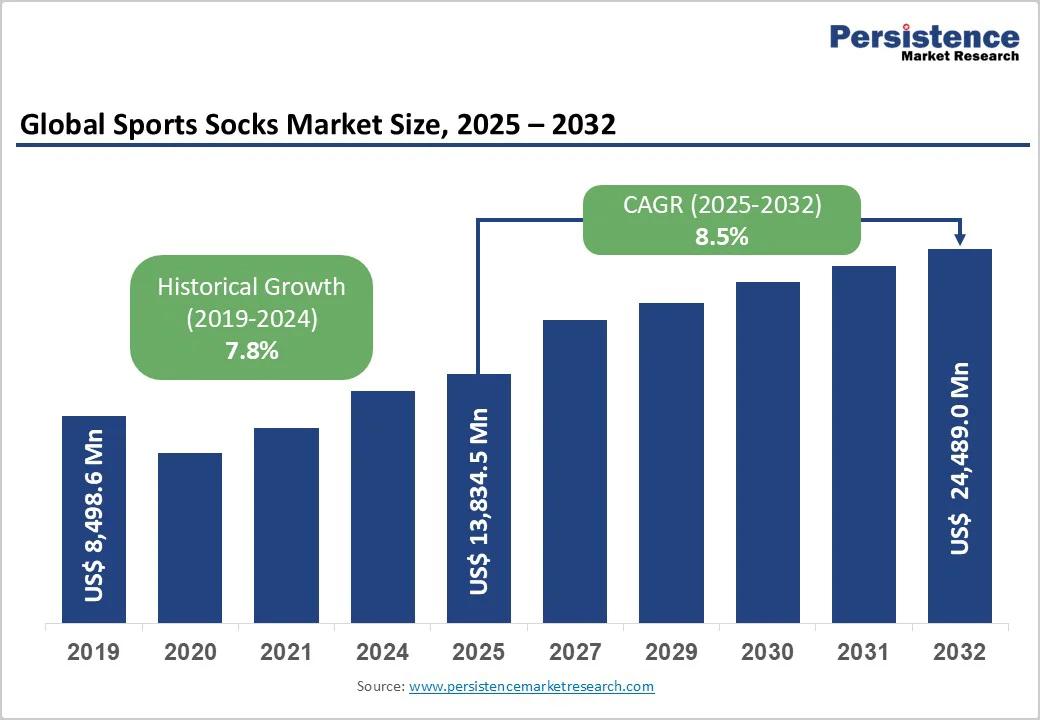
The global sports socks market size is likely to be valued US$13,834.5 Million in 2025, growing to US$24,489.0 Million by 2032 at a CAGR of 8.5% during the forecast period from 2025 to 2032, driven by the increasing demand for performance-enhancing footwear accessories, rising participation in sports and fitness activities, and advancements in material technologies for comfort and durability.
The need for moisture-wicking, cushioned, and compression-based socks to prevent injuries and improve athletic performance has significantly boosted the adoption of training socks across various applications and end-users, particularly in health-conscious and urbanized regions. The market is further propelled by innovations in sustainable and smart sock designs, catering to preferences for eco-friendly and tech-integrated products. The growing acceptance of gym socks as essential athletic gear, especially in team sports and fitness routines, is a key growth factor.
Key Industry Highlights:
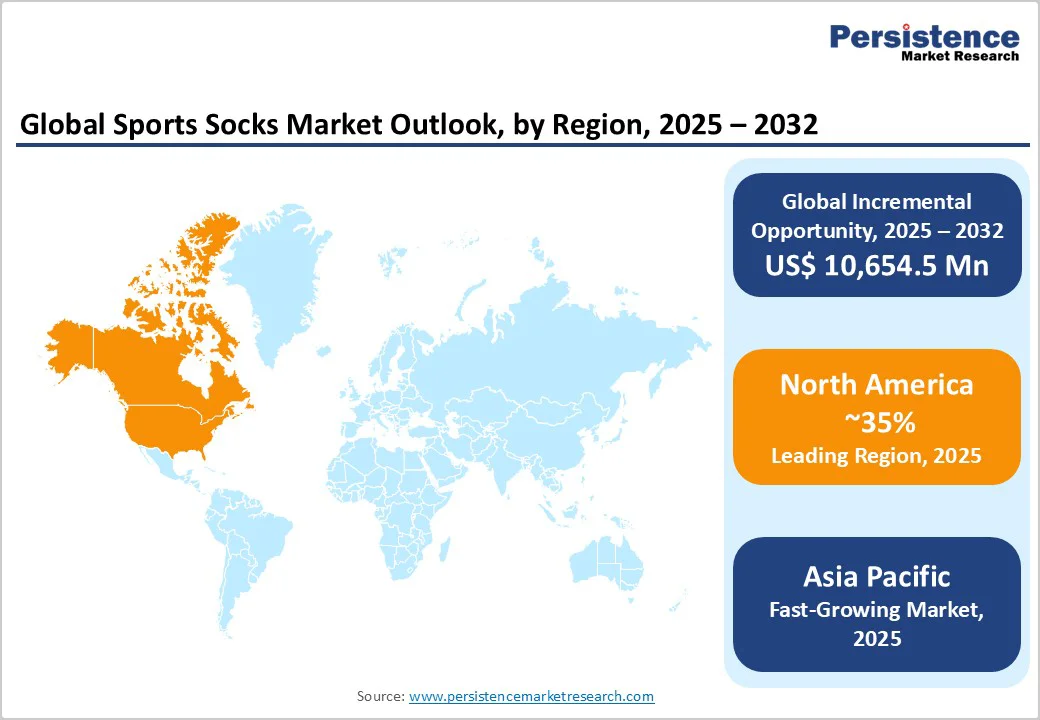
- Leading Region: North America, commanding a 35% market share in 2025, driven by high fitness culture and premium product demand in the U.S.
- Fastest-growing Region: Asia Pacific, fueled by rising urbanization, health awareness, and expanding retail in China and India.
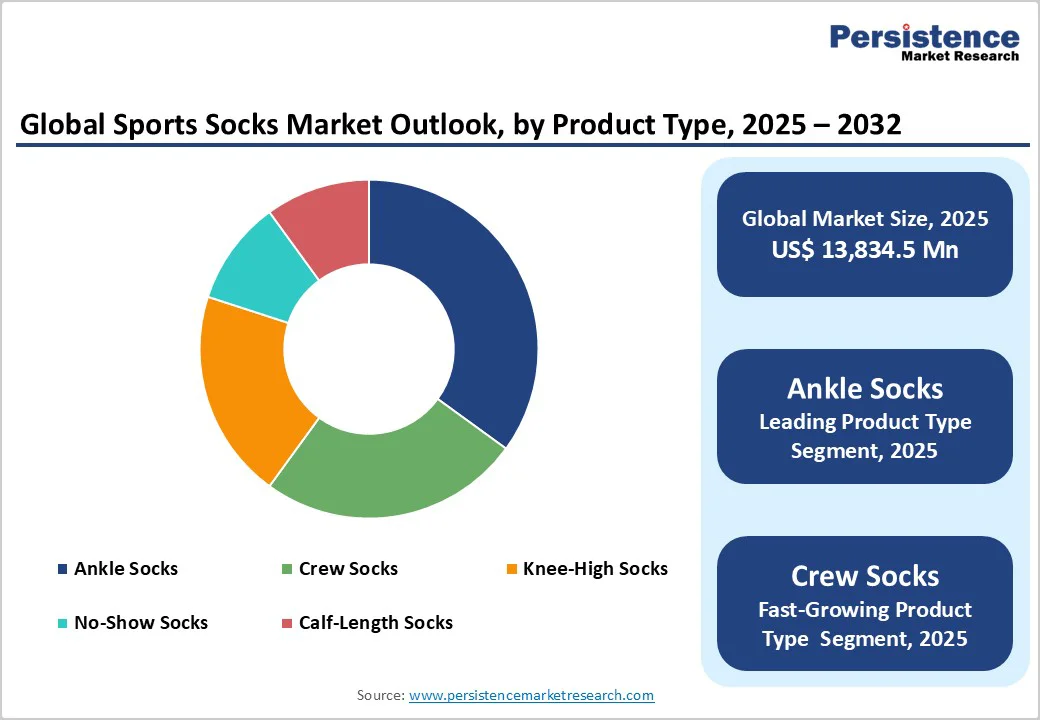
- Dominant Product Type: Ankle Socks, holding approximately 35% of the market share, due to versatility in running and casual sports.
- Leading Material: Polyester, accounting for over 40% of market revenue, driven by moisture-wicking properties.
- Leading Distribution Channel: Online Retail, contributing nearly 40% of market revenue, owing to e-commerce growth.
- Key Market Driver: Increasing engagement in running, gym workouts, and outdoor activities drives demand for high-performance, comfortable, and durable sports socks.
- Growth Opportunity: Expansion in sustainable bamboo fiber socks for eco-conscious consumers.
| Key Insights | Details |
|---|---|
|
Sports Socks Market Size (2025E) |
US$13,834.5 Mn |
|
Market Value Forecast (2032F) |
US$24,489.0 Mn |
|
Projected Growth (CAGR 2025 to 2032) |
8.5% |
|
Historical Market Growth (CAGR 2019 to 2024) |
7.8% |
Market Factors - Growth, Barriers, and Opportunity Analysis
Rising Sports and Fitness Participation
Rising sports and fitness participation is a major driver of the sports socks market, as consumers increasingly adopt active lifestyles focused on health and wellness. The global surge in running, gym workouts, yoga, cycling, and recreational sports has boosted demand for performance-enhancing apparel, including specialized socks. Training socks are designed to provide comfort, moisture control, and injury prevention, which are essential for athletes and fitness enthusiasts.
The growing influence of social media fitness trends and professional sports events encourages individuals to invest in high-quality gear. Governments and organizations promoting physical activity through community fitness programs and sports initiatives further accelerate market growth. Additionally, the rise of women’s sports participation and youth engagement in athletics expands the consumer base. In developing regions such as the Asia Pacific, improving disposable incomes and the popularity of fitness apps and wearables also fuel purchases of functional sports accessories.
High Market Fragmentation and Price Competition
High market fragmentation and price competition present significant challenges to the sports socks market. The industry consists of numerous global, regional, and local players offering similar products, which intensifies competition and limits pricing power. Large brands such as Nike, Adidas, and Puma compete with smaller manufacturers and private labels that offer low-cost alternatives. This saturation makes it difficult for companies to maintain strong profit margins and customer loyalty. In emerging markets, where price sensitivity is high, consumers often choose cheaper options, further pressuring premium brands.
The ease of online entry allows new players to quickly launch products, increasing competition in e-commerce channels. Retailers and online platforms often prioritize discounts and bundled deals to attract buyers, leading to further price erosion. Companies must continuously innovate in materials, design, and marketing to stand out. However, frequent product launches and promotional strategies increase operational costs, creating a tough balance between affordability and profitability in the highly competitive gym socks segment.
Growth in E-Commerce and D2C Channels
Growth in e-commerce and direct-to-consumer (D2C) channels presents a major opportunity for the sports socks market. The increasing digitalization of retail and widespread smartphone use have transformed how consumers purchase apparel and accessories. Online platforms such as Amazon, Flipkart, and brand-owned websites enable easy access to a wide range of training socks with varied designs, materials, and price points. D2C models allow brands to build stronger relationships with customers by offering personalized shopping experiences, exclusive collections, and loyalty programs.
This approach also helps eliminate intermediaries, improving profit margins and brand control. Moreover, social media marketing and influencer collaborations drive online visibility and help niche brands compete with established players. Subscription-based sock services and customization options further attract repeat buyers. E-commerce also supports sustainability by reducing overproduction and enabling made-to-order manufacturing. As consumers increasingly prefer convenience, transparency, and product variety, the online and D2C channels are expected to remain key growth drivers, particularly among younger, tech-savvy, and fitness-conscious demographics.
Category-wise Analysis
Product Type Insights
Ankle Socks dominates, hold 35% share in 2025. Their popularity stems from versatility, offering comfort and breathability suitable for running, gym workouts, and casual sports. These socks provide adequate protection without excess coverage, making them ideal for athletes seeking lightweight, stylish, and performance-oriented footwear accessories across multiple activities.
Crew Socks are the fastest-growing, driven by their increased adoption in basketball, training, and outdoor activities. They offer enhanced ankle support, moisture control, and cushioning, making them ideal for performance and comfort. The rising athleisure trend and preference for fashionable mid-length styles further boost their demand globally.
Material Insights
Polyester leads with 40% share in 2025, valued for its superior moisture-wicking and quick-drying properties. The material offers durability, elasticity, and breathability, keeping feet cool and comfortable during intense activities. Its affordability and ease of blending with spandex or nylon make it a preferred choice for performance-oriented sportswear brands.
Cotton is the fastest-growing, driven by rising demand for natural, breathable, and skin-friendly fabrics. Its softness and comfort make it ideal for casual sports and daily wear. The shift toward sustainable and organic cotton further enhances its appeal among eco-conscious consumers seeking comfort with environmental responsibility.
Distribution Channel Insights
Online Retail dominates with 40% share in 2025, driven by the convenience of e-commerce and wide product accessibility. Consumers benefit from diverse options, easy price comparisons, and doorstep delivery. Brand websites and platforms such as Amazon and Flipkart boost sales through discounts, influencer marketing, and customization, making online channels a key growth driver.
Specialty Stores are the fastest-growing, fueled by rising consumer preference for expert guidance and premium product selection. These stores offer personalized fitting, brand-exclusive collections, and a curated range of performance socks. Their focus on quality, comfort, and sports-specific needs enhances customer trust and drives higher in-store engagement.
Regional Insights
Asia Pacific Sports Socks Market Trends
Asia Pacific commands 35% share and is fastest-growing, driven by expanding sports participation, rising disposable incomes, and rapid urbanization. China’s strong manufacturing base enables large-scale production of affordable and high-quality gym socks, supporting both domestic consumption and export demand. India’s vibrant sports culture particularly the popularity of cricket and growing interest in running and fitness fuels steady sales growth.
The region also benefits from a booming athletic wear market, which is growing at nearly 15% year-on-year, supported by young demographics and increasing health awareness. E-commerce platforms such as Flipkart, Myntra, and Alibaba are transforming retail distribution, providing greater accessibility and brand reach. Additionally, the rising influence of local and international sportswear brands, combined with government initiatives promoting active lifestyles, accelerates market penetration.
North America Sports Socks Market Trends
North America accounts for 30% in 2025, supported by a strong sports culture and widespread fitness participation in the United States. The region’s consumers actively engage in running, gym workouts, and team sports, driving demand for high-performance, moisture-wicking, and compression socks. Innovation in design and material technology, particularly among leading brands such as Nike, Under Armour, and Adidas, continues to shape market growth.
The U.S. market is witnessing a clear shift toward sustainability, with nearly 50% of consumers showing preference for eco-friendly and recycled materials. Brands such as Patagonia and Bombas are leading this trend by introducing socks made from organic cotton, bamboo fibers, and recycled polyester. Additionally, the rapid expansion of e-commerce platforms and brand-owned online stores has strengthened product accessibility and consumer engagement.
Europe Sports Socks Market Trends
Europe holds 25% share, led by Germany and UK with EU regulations promoting recycled fabrics.The region’s growth is driven by strong consumer awareness of sustainability, health, and performance apparel. European consumers increasingly prioritize quality, comfort, and eco-friendly materials, aligning with the EU’s stringent regulations promoting the use of recycled fabrics and circular textile production. This has encouraged leading brands and regional manufacturers to integrate organic cotton, bamboo fibers, and recycled polyester into their product lines.
Germany leads in premium and performance-oriented gym socks, supported by its robust fitness culture and widespread participation in outdoor sports. Meanwhile, the UK market benefits from a strong athleisure trend, where fitness socks are increasingly worn as part of casual and streetwear fashion. The presence of innovative European brands, coupled with rising e-commerce adoption, enhances accessibility and customization options.
Competitive Landscape
The global sports socks market is highly competitive, characterized by the presence of numerous international and regional players striving to strengthen their market positions through innovation and brand differentiation. Leading companies such as Nike, Adidas, Puma, Under Armour, and ASICS are increasingly focusing on sustainable production and eco-friendly materials to meet growing consumer demand for environmentally responsible products. The integration of recycled polyester, organic cotton, and bamboo fibers has become a key strategy for gaining a competitive edge.
Advancements in performance fabrics such as moisture-wicking, compression, and anti-odor technologies are enhancing comfort and functionality, appealing to both athletes and fitness-conscious consumers. Digital marketing and e-commerce have emerged as crucial growth channels, with brands leveraging social media influencers, athlete endorsements, and personalized campaigns to attract younger audiences. Startups and niche brands are also entering the market through direct-to-consumer models, emphasizing unique designs and sustainability.
Key Developments
- In 2021, Nike launched sustainable sock collection from recycled polyester, aiming for zero waste.
- In 2024, Adidas introduced compression socks with advanced technology for performance improvement.
Companies Covered in Sports Socks Market
- Nike
- Adidas
- Snews
- ASICS
- Reebok
- Yaktrax
- Brooks
- Mizuno
- New Balance
- Balega
- Drymax
- Stance
- Pro-Feet
- Under Armour
- TCK
- Puma
Frequently Asked Questions
The global sports socks market is projected to reach US$13,834.5 Million in 2025, driven by fitness trends.
Growing use of sporty apparel in everyday fashion boosts sales of stylish, versatile, and functional socks across casual and athletic segments.
The market is poised to witness a CAGR of 8.5% from 2025 to 2032, supported by sustainable materials.
Expansion in smart training socks with sensors offers opportunities for performance tracking.
Nike, Adidas, New Balance, Under Armour, and ASICS lead the sports socks market with innovative designs.


