




- Clothing, Footwear, & Accessories
- Polarized Sunglasses Market
Polarized Sunglasses Market Size, Share, and Growth Forecast 2026 - 2033
Polarized Sunglasses Market by Sunglass Shape (Round/Oval, Rectangular, Square, Others), Lens Material (Plastic, Glass, Others), End-User (Women, Men, Kids), Distribution Channel (Specialty Stores & Brand Stores, Department Stores, Online Channels, Others), and Regional Analysis for 2026 - 2033

Polarized Sunglasses Market Size and Trend Analysis
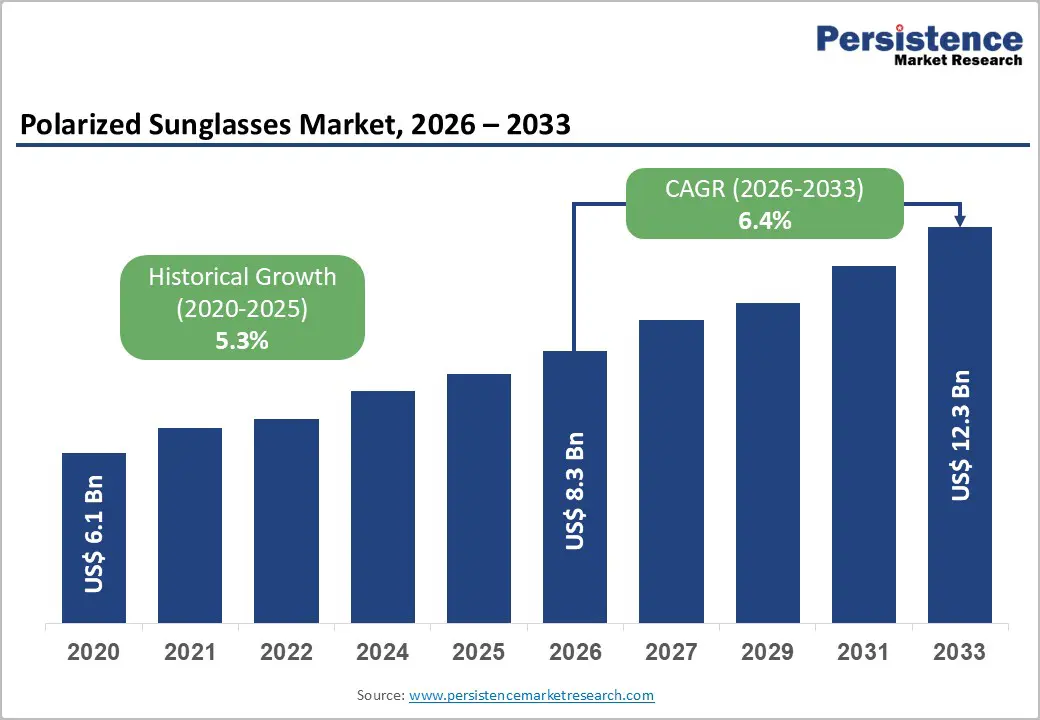
The global polarized sunglasses market size is valued at US$ 8.3 Bn in 2026 and is projected to reach US$ 12.8 Bn by 2033, growing at a CAGR of 6.4% between 2026 and 2033.
The market's robust expansion is primarily driven by escalating consumer awareness of UV-induced ocular damage and a surge in outdoor recreational participation. According to the World Health Organization (WHO), worldwide approximately 15 million people are blind from cataracts, of which around 10% are attributable to ultraviolet radiation exposure, a statistic that continues to accelerate adoption of polarized protective eyewear.
Key Market Highlights
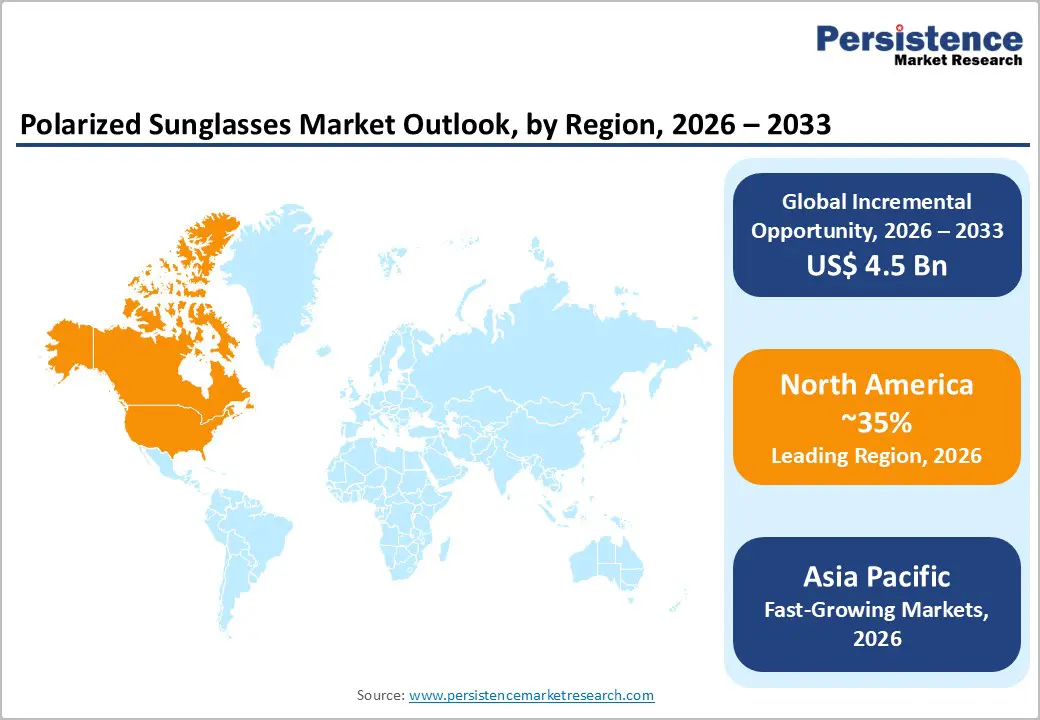
- Leading Region - North America leads the polarized unglasses market, driven by the U.S.'s strong outdoor sports culture, FDA-mandated lens standards, and the presence of premium brands such as Ray-Ban and Oakley under Essilor Luxottica’s portfolio.
- Fastest Growing Region - Asia Pacific is the fastest-growing region, led by China, India, and ASEAN markets, fueled by rising disposable incomes, increasing UV awareness, and rapid e-commerce expansion, driving polarized eyewear adoption.
- Dominant Segment - The Plastic lens material segment dominates with ~65% market share, driven by polycarbonate's lightweight, impact-resistant, and UV-protective properties, reinforced by FDA-mandated safety standards in North America.
- Fastest Growing Segment - Online Channels represent the fastest-growing distribution segment, powered by AR-enabled virtual try-on technology, DTC brand strategies, and expanding digital consumer bases across Asia Pacific and Latin America.
- Key Market Opportunity - The rising demand for eco-friendly polarized sunglasses using recycled polycarbonate, bio-based rubber, and ocean-plastic frames presents a high-growth opportunity, especially in premium European and North American consumer markets.
| Key Insights | Details |
|---|---|
| Polarized Sunglasses Market Size (2026E) | US$ 8.3 Bn |
| Market Value Forecast (2033F) | US$ 12.8 Bn |
| Projected Growth CAGR (2026 - 2033) | 6.4% |
| Historical Market Growth (2020 - 2025) | 5.3% |
DRO Analysis
Drivers - Rising Awareness of UV-Related Ocular Health Risks and Preventive Eyewear Adoption
The global imperative to combat UV-induced eye damage is one of the most powerful catalysts propelling the polarized sunglasses market forward. The World Health Organization (WHO) highlights that overexposure to ultraviolet radiation leads to serious conditions such as cataracts, pterygium, and age-related macular degeneration (AMD). Globally, at least 20% of cataracts are linked to excess UV exposure.
Governments and public health bodies worldwide have intensified awareness campaigns, including the WHO INTERSUN Programme, which recommends the use of wraparound sunglasses that provide 99-100% UVA and UVB protection. With UV damage being cumulative, particularly among children whose retinas are more susceptible to radiation penetration, parents and caregivers increasingly prioritize certified polarized eyewear. This growing preventive healthcare mindset is converting occasional sunglass buyers into consistent, quality-conscious purchasers, directly expanding addressable demand across all demographic segments.
Surging Outdoor Recreation Participation and Active Lifestyle Trends
The global boom in outdoor and adventure activities has become a significant structural driver for the polarized sunglasses market. According to American Trails' Outdoor Participation Trends Report 2024, outdoor recreation participation in the U.S. grew 4.1% year-on-year in 2023, with 7.7 million Americans trying outdoor activities for the first time. Polarized lenses offer superior glare reduction from reflective surfaces such as water, snow, and asphalt, making them indispensable for fishing, hiking, skiing, cycling, and driving.
The athleisure wave and growing sports-tourism culture across North America, Europe, and the Asia Pacific are further broadening the consumer base. Premium brands are leveraging this trend through performance-specific product lines with impact-resistant polycarbonate construction and advanced anti-reflective coatings, reinforcing the value proposition of polarized eyewear beyond conventional fashion accessories.
Restraints - Proliferation of Counterfeit and Low-Quality Alternatives
The polarized sunglasses market faces a persistent threat from the widespread availability of counterfeit and substandard products, particularly across Asia Pacific and Latin America. The Organisation for Economic Co-operation and Development (OECD) estimates that counterfeit luxury goods, including eyewear, account for approximately 3.3% of global trade.
These products, often sold without proper UV certification, not only erode the brand equity and revenue of legitimate manufacturers but also pose genuine health hazards to consumers who mistakenly assume they offer UV protection. The price sensitivity of large consumer segments in emerging markets makes counterfeit sunglasses an appealing substitute, limiting the penetration of certified polarized products and constraining premium market expansion.
High Price Premium of Certified Polarized Eyewear Limits Mass Adoption
Despite growing health awareness, the relatively high price of certified polarized sunglasses remains a significant adoption barrier in price-sensitive markets. Branded polarized sunglasses from leading European and American manufacturers can command prices of USD 100-500 per pair, placing them out of reach for middle and lower-income households across developing economies in Africa, South Asia, and Southeast Asia.
This affordability constraint limits the democratization of UV-protective eyewear, restricting revenue growth from high-population markets. Although private-label and entry-level certified options are narrowing the gap, the market's growth trajectory in these regions remains moderated by purchasing power limitations.
Opportunities - E-Commerce Expansion and Virtual Try-On Technologies Unlocking New Consumer Segments
The proliferation of global e-commerce platforms represents a transformational opportunity for polarized sunglasses market participants. According to the United Nations Conference on Trade and Development (UNCTAD), global e-commerce sales reached USD 26.7 trillion in 2023, and online retail penetration in eyewear continues to grow rapidly, particularly among digitally native millennials and Gen Z consumers.
Advanced virtual try-on technologies powered by augmented reality (AR) are significantly reducing purchase hesitation associated with buying eyewear online. Brands that leverage direct-to-consumer (DTC) e-commerce channels, supported by AI-based personalization and style recommendations, can access previously untapped rural and semi-urban consumers in fast-growing markets such as India, Indonesia, Brazil, and Vietnam, where brick-and-mortar optical retail infrastructure remains underdeveloped.
Growing Demand for Sustainable and Eco-Friendly Polarized Eyewear
Sustainability has emerged as a pivotal opportunity differentiator within the polarized sunglasses market. Environmentally conscious consumers, particularly in Western Europe and North America, are increasingly demanding eyewear crafted from recycled, biodegradable, or bio-based materials. Safilo Group S.p.A., for example, has integrated recycled polycarbonate (Polaroid PLD 6239/S/X), bio-based rubber, and recycled metal into its 2025 SS collections, aligning with its science-based sustainability targets validated by SBTi (Science Based Targets initiative) in February 2024.
Simultaneously, EssilorLuxottica S.A.'s Eyes on the Planet roadmap has set greenhouse gas reduction targets certified by the SBTi, reinforcing ESG-driven brand loyalty. Companies investing in circular economy product lines and transparent sustainability communication are poised to gain measurable market share among premium and lifestyle consumers in the forecast period.
Category-wise Analysis
Sunglass Shape Insights
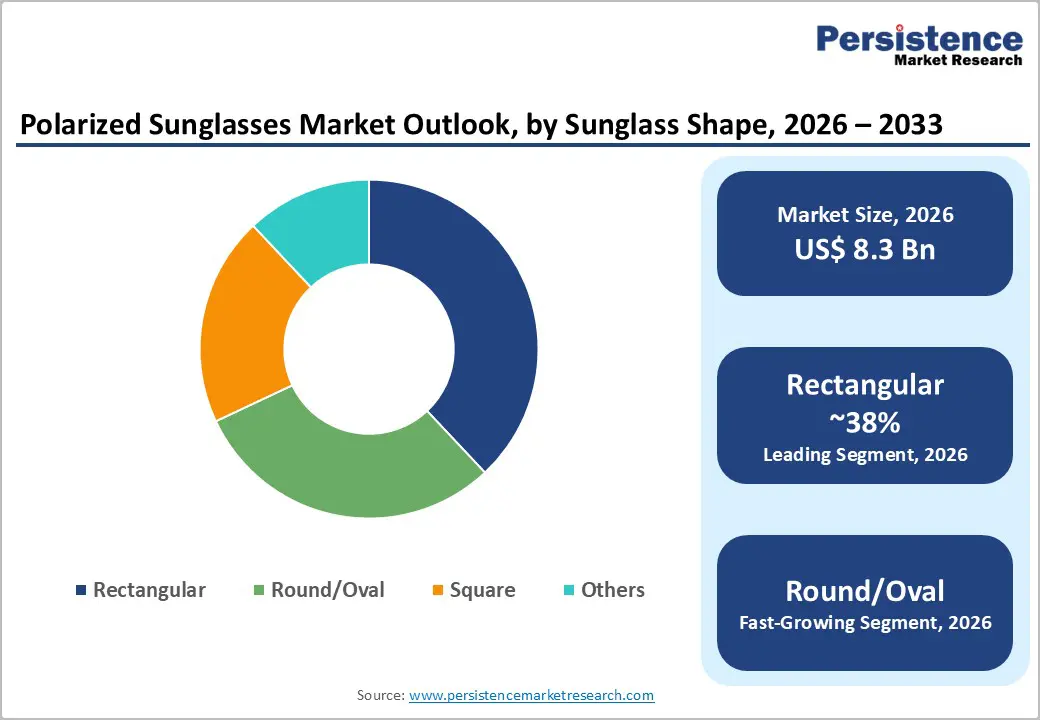
The rectangular shape segment commands the leading position in the Polarized Sunglasses market by Sunglass Shape, accounting for an estimated ~38% share of the market. Rectangular frames have retained their dominance through their universal appeal across gender demographics, their compatibility with diverse face shapes, and their enduring association with both active-use and everyday fashion. Iconic styles such as Ray-Ban Wayfarer and Oakley Holbrook, both from the portfolio of Essilor Luxottica S.A., have historically demonstrated the rectangular frame's grip on mainstream consumer preference.
Additionally, the resurgence of 90s-inspired and retro rectangular aesthetics, driven by social media fashion cycles, continues to reinforce segment leadership. The Round/Oval sub-segment is gaining momentum, particularly among younger consumers and the growing wellness-lifestyle cohort, though it has yet to challenge rectangular dominance at the category level.
Lens Material Insights
The plastic lens material segment leads the Polarized Sunglasses market across the Lens Material category, holding an estimated ~65% share. Plastic lenses, including polycarbonate and CR-39 variants, dominate due to their lightweight properties, superior impact resistance, and significantly lower manufacturing cost compared to glass. Polycarbonate lenses are particularly valued in the sports and active-wear sub-segments for their ability to meet safety standards while maintaining optical clarity.
The U.S. Food and Drug Administration (FDA) mandates impact-resistant lenses across all sunglass categories, a regulation that has led to the adoption of structurally reinforced polycarbonate in the North American market. Meanwhile, Essilor Luxottica’s Transitions GEN S technology, launched in April 2024, demonstrates continued innovation in advanced plastic lens substrates. Glass lenses, while offering superior optical clarity, remain a smaller segment due to weight and breakage risks.
End-user Insights
The men's segment holds the largest share in the Polarized Sunglasses market by End-User, accounting for ~45% of total market revenue. Men's dominance is primarily attributed to higher participation rates in outdoor sports, adventure activities, fishing, and driving use cases where glare reduction and UV protection are paramount performance requirements. Established consumer behaviour patterns, coupled with a strong pipeline of performance-focused product launches from brands such as Oakley and Carrera (Safilo Group S.p.A.), reinforce the segment's position.
Women's segment is expanding steadily, driven by increased female participation in outdoor recreational activities and a growing emphasis on style-functional purchases. The Kids' segment is also gaining notable traction as parental awareness of UV-induced paediatric retinal damage grows, supported by WHO guidance that children and adolescents face heightened UV vulnerability due to their eye structure.
Distribution Channel Insights
The Specialty Stores & Brand Stores segment dominates the Polarized Sunglasses market within the Distribution Channel category, accounting for an estimated ~42% share. Specialty retail provides a curated, experiential buying environment that is especially valuable for polarized eyewear, where lens technology differentiation, face-fit assessment, and personalized service strongly influence purchasing decisions.
Essilor Luxottica S.A.'s global retail network, comprising approximately 13,500 directly owned stores and 4,100 franchised stores under banners such as Sunglass Hut and LensCrafters, exemplifies the strategic advantage of omni-channel specialty retail. While Online Channels are the fastest-growing distribution sub-segment, buoyed by virtual try-on capabilities and direct-to-consumer platforms, specialty stores maintain primacy through brand loyalty programs, certified optical expertise, and the tactile buying experience that premium polarized eyewear demands.
Regional Analysis
North America Polarized Sunglasses Market Trends
North America represents the leading regional market for polarized sunglasses, underpinned by the United States' mature optical retail infrastructure, high per-capita disposable income, and a deeply embedded outdoor sports culture. The U.S. market is characterized by a discerning consumer base that prioritizes both optical performance and brand prestige with polarized models from Oakley, Ray-Ban, and Costa del Mar commanding strong loyalty.
Innovation and digital transformation are accelerating competitive differentiation in North America. Direct-to-consumer e-commerce channels, supported by AR-based virtual try-on platforms, are reshaping purchase journeys. Essilor Luxottica reported its strongest U.S. growth in Q4 2024 (+7.8% at constant exchange rates), driven by both professional solutions and direct-to-consumer business segments.
Asia Pacific Polarized Sunglasses Market Trends
Asia Pacific is the fastest-growing regional market for polarized sunglasses, driven by rapidly expanding middle-class populations in China, India, Japan, and ASEAN nations, along with rising urbanization and greater UV awareness. EssilorLuxottica’s Asia Pacific segment reported a remarkable 14% revenue growth at constant exchange rates in Q4 2024, underscoring the region's accelerating demand. China is the largest single market in the region, with a growing premium eyewear culture fueled by luxury consumption trends and a rapid e-commerce ecosystem.
In India, rising disposable incomes and the proliferation of optical retail chains are expanding the accessible market for polarized eyewear beyond urban metropolitan centres. Southeast Asia's high UV index levels, driven by geographic proximity to the equator, create a natural health imperative for protective eyewear adoption. Domestic manufacturing advantages in China enable regional players to offer competitively priced polarized options, while multinationals pursue premium positioning through brand investment.
Europe Polarized Sunglasses Market Trends
Europe holds a substantial share of the global Polarized Sunglasses market, propelled by a fashion-forward consumer base, high awareness of UV-induced eye health risks, and the presence of numerous leading eyewear manufacturers, including Essilor Luxottica S.A. (Italy/France), Safilo Group S.p.A. (Italy), Marcolin Group S.p.A. (Italy), De Rigo Vision S.p.A. (Italy), and Fielmann Group AG (Germany). Italy's Belluno province remains a global hub for premium eyewear design and manufacturing.
The EMEA segment of Essilor Luxottica posted 9.6% growth at constant exchange rates in Q4 2024, reflecting robust consumer demand across the region. Sustainability is a defining trend Safilo joined The Fashion Pact and implemented science-based sustainability targets validated by SBTi in February 2024. Premiumization, athleisure-driven demand, and a growing inclination toward eco-certified eyewear are expected to sustain European market momentum across the forecast period.
Competitive Landscape
The global polarized sunglasses market is moderately consolidated, with a small number of multinational conglomerates led by Essilor Luxottica S.A. commanding disproportionate brand equity, distribution reach, and R&D investment. The top tier is characterized by vertically integrated players controlling design, manufacturing, optical coating, and retail distribution. Mid-tier participants, including Safilo Group, Marcolin Group, and De Rigo Vision, compete through diversified licensing portfolios and manufacturing expertise. The competitive landscape is witnessing increased M&A activity, sustainability-driven differentiation, and smart eyewear innovation.
Key Developments:
- In July 2025, HOYA Vision Care launched HOYA polarized lenses and lumacore mirrors, patented technology-based products in the U.S. market.
- In July 2025, Innovative Eyewear, Inc., a manufacturer of smart eyewear under its brand Lucyd, launched Reebok athletic sunglasses on the Reebok.com website.
- In April 2025, TAG Heuer launched its Spring/Summer 2025 eyewear collection, which includes sunglasses equipped with polarization technology and a gradient colour finish.
Companies Covered in Polarized Sunglasses Market
- Essilor Luxottica S.A.
- Safilo Group S.p.A.
- Marcolin Group S.p.A.
- De Rigo Vision S.p.A.
- Kering S.A.
- Fielmann Group AG
- Hoya Corporation
- Carl Zeiss Vision GmbH
- Charmant Group
- Bushnell Corporation
Frequently Asked Questions
The global Polarized Sunglasses market is valued at US$ 8.3 Bn in 2026 and is projected to reach US$ 12.8 Bn by 2033, growing at a CAGR of 6.4% during the forecast period 2026-2033.
The market's growth is primarily driven by rising global awareness of UV-induced eye damage supported by WHO data linking UV radiation to cataracts and macular degeneration and by surging outdoor recreation participation.
The Plastic lens material segment dominates with approximately ~65% market share. Plastic particularly polycarbonate and CR-39 variants is preferred for its lightweight construction, superior impact resistance, UV protection capability, and cost efficiency.
North America leads the global Polarized Sunglasses market, anchored by the United States' high per-capita disposable income, a deeply ingrained outdoor sports culture with 57.3% of the U.S. population participating in outdoor sports (SFIA, 2024) stringent FDA quality standards, and the presence of globally dominant eyewear brands such as Essilor Luxottica S.A. and Safilo Group S.p.A.
The major companies operating in the global Polarized Sunglasses market include Essilor Luxottica S.A., Safilo Group S.p.A., Marcolin Group S.p.A., De Rigo Vision S.p.A., Kering S.A., Fielmann Group AG, Hoya Corporation, Carl Zeiss Vision GmbH, Charmant Group, and Bushnell Corporation, among others.


