




- Pharmaceuticals
- Naltrexone and Buprenorphine Market
Naltrexone and Buprenorphine Market Size, Share, and Growth Forecast 2026 - 2033
Naltrexone and Buprenorphine Market by Product Type (Naltrexone, Buprenorphine), Route of Administration (Oral, Injectable, Implantable Administration), Application (Opioid Use Disorder, Alcohol Use Disorder), and Regional Analysis, 2026 - 2033

Naltrexone and Buprenorphine Market Size and Trends Analysis
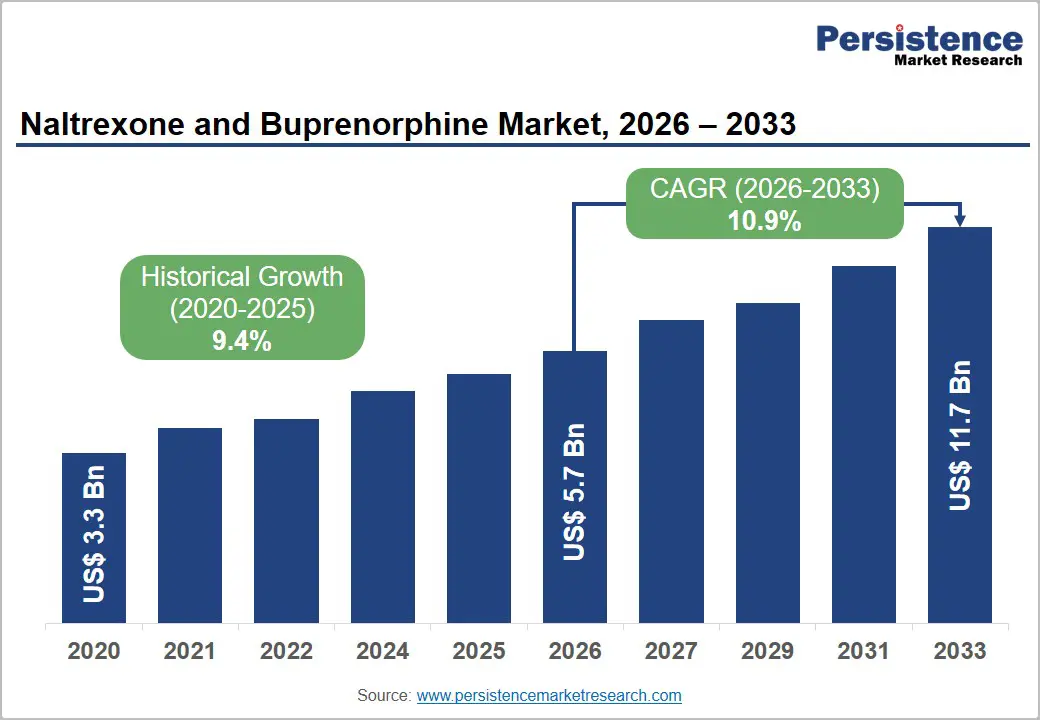
The global naltrexone and buprenorphine market size is likely to be valued at US$5.7 billion in 2026 and is estimated to reach US$11.7 billion by 2033, growing at a CAGR of 10.9% during the forecast period from 2026 to 2033, driven by the rising burden of opioid and alcohol dependence worldwide and surging government-backed treatment programs. Increasing clinical preference for medication-assisted treatment using buprenorphine and naltrexone is further propelling adoption.
Key Industry Highlights:
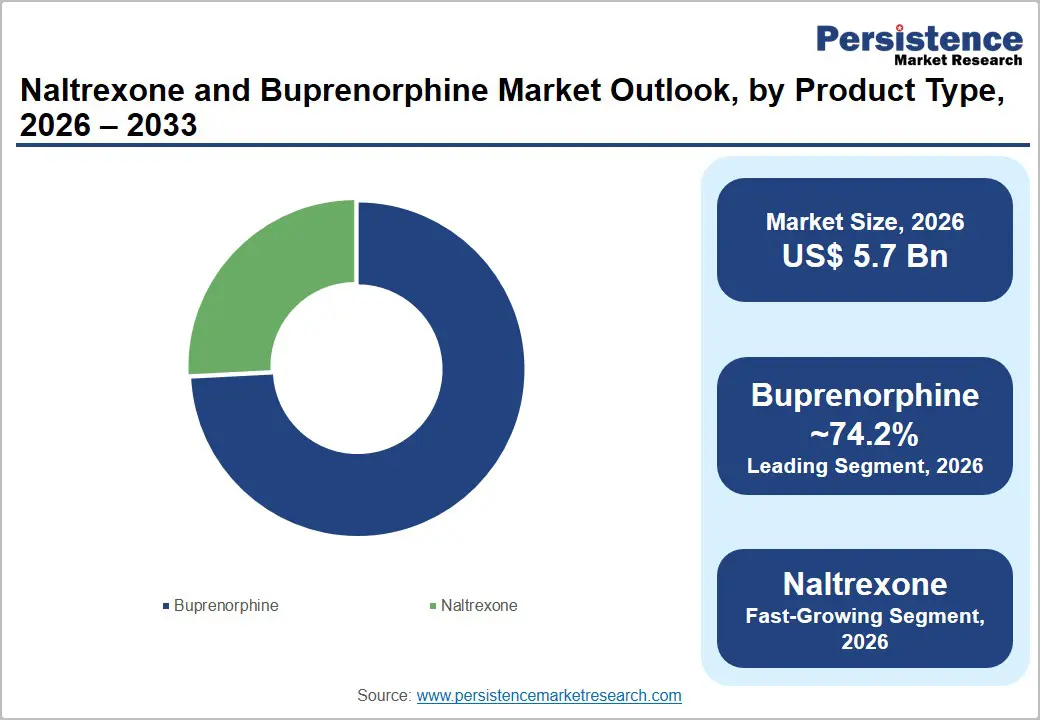
- Leading Product Type: Buprenorphine, approximately 74.2% share in 2026, as it reduces cravings with a low overdose risk.
- Dominant Application: Opioid Use Disorder (OUD), nearly 70.6% share in 2026, due to the large and growing patient pool linked to synthetic opioids.
- Latest Approval: In February 2025, Indivior received U.S. FDA approval for important label changes to SUBLOCADE (extended-release buprenorphine injection). The updated label allows rapid treatment initiation after a single transmucosal buprenorphine dose, reducing the previous waiting period.
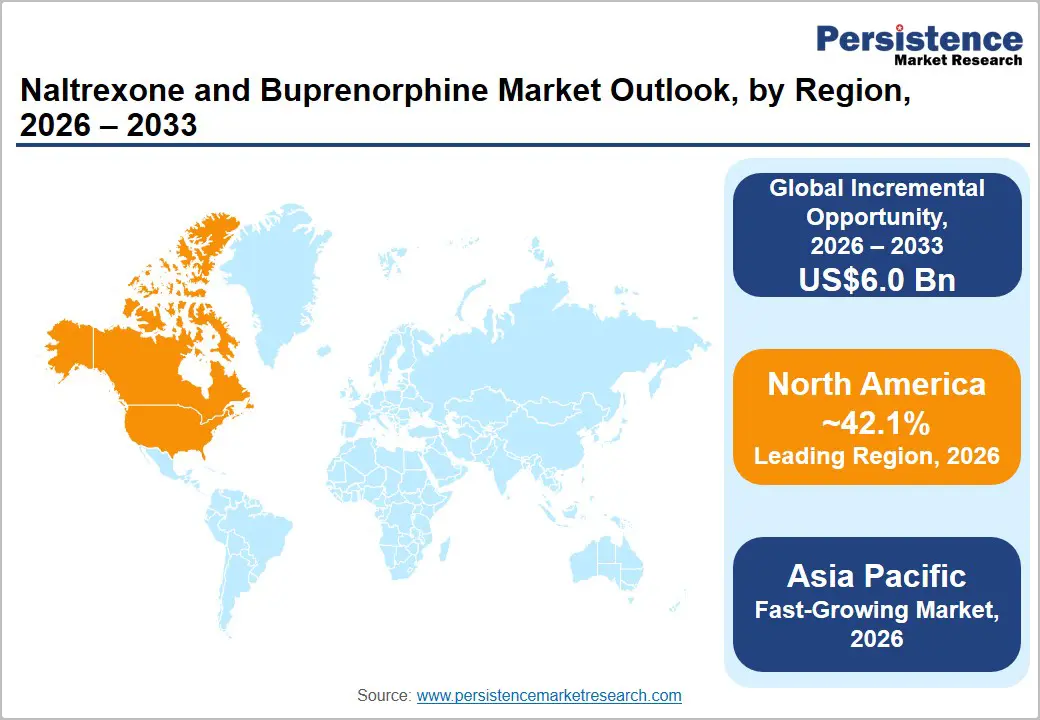
- Leading Region: North America, with about 42.1% share in 2026, owing to government-backed treatment programs and high opioid addiction burden.
- Fast-growing Region: Asia Pacific, fueled by rising diagnosis rates and increasing adoption of opioid substitution therapies.
DRO Analysis
Driver- A Persistently Large Patient Population Requiring Treatment
Despite a meaningful decline in overdose deaths in recent years, Opioid Use Disorder (OUD) and other Substance Use Disorders (SUDs) continue to affect tens of millions of people in the U.S. alone, finds SAMHSA's 2024 National Survey on Drug Use and Health (NSDUH). In 2023, an estimated 54.2 million Americans aged 12 or older required substance use disorder treatment in the past year, but only 12.8 million people with a substance use disorder received treatment.
The intensity of untreated OUD sustains demand for medications such as buprenorphine and naltrexone. Overdose deaths declined from more than 110,000 in 2023 to about 75,000 in 2024 according to the American Medical Association's 2025 report, yet the epidemic remains widespread and increasingly complex. It is propelled by polysubstance use and an unpredictable illicit drug supply. As long as this treatment gap persists, the case for expanding access to Medications for Opioid Use Disorder (MOUD), including buprenorphine and naltrexone, remains clinically urgent.
Regulatory Reform to Open Mainstream Medical Settings to Prescribing
For over two decades, prescribing buprenorphine required a special federal waiver, the X-waiver, separate from a standard Drug Enforcement Administration (DEA) registration. This created an artificial ceiling on how many providers could treat OUD. That barrier was removed in December 2022. Congress passed the Medication Access and Training Expansion (MATE) Act.
The Act allowed all providers, including medical doctors, dentists, nurse practitioners, and physician assistants, with a DEA license to prescribe buprenorphine for OUD treatment, without a special X-waiver. The practical impact on provider access was immediate and substantial. This regulatory change quickly and dramatically increased the potential pool of buprenorphine prescribers from 130,000 to 1.8 million. As buprenorphine prescribing becomes a routine component of family medicine and outpatient care, rather than a specialized addiction medicine function, it normalizes MOUD and broadens the geographic and clinical reach of treatment.
Restraint - Social Stigma and Provider Misconceptions May Hamper Treatment Uptake
Even as regulatory barriers have been reduced, deeply rooted stigma continues to suppress both prescribing rates and patient willingness to seek treatment. Despite proven benefits, there is stigma against lifesaving MOUD. The National Academy of Medicine (NAM) stated in a report that fewer than 10% of physicians in the U.S. have completed training required for prescribing buprenorphine. From the patient side, negative public perceptions of MOUD remain a significant obstacle. Medications for opioid use disorder, including buprenorphine and naltrexone, are safe and effective.
However, there are significant negative perceptions surrounding them, creating barriers to uptake. The American Medical Association's 2025 report confirmed that buprenorphine prescriptions increased 83% over the past decade, though utilization has plateaued in recent years. Stigma, regulatory barriers, and insurance restrictions were cited as the key reasons MOUD remains underused. For naltrexone (sold as Vivitrol), the misconception that it substitutes one drug for another, discourages patients from accepting a medication with no opioid activity and no abuse potential.
Opportunity - Combination of Buprenorphine and Naltrexone
Researchers are investigating whether using buprenorphine and naltrexone together, rather than as alternatives, can produce better outcomes than either drug alone. The two medications act on different opioid receptor mechanisms. Buprenorphine is a partial agonist at the mu-opioid receptor that reduces cravings and withdrawal, while naltrexone is a full antagonist that blocks opioid-induced euphoria.
A National Institute on Drug Abuse (NIDA)-funded Phase 3 clinical trial (NCT05011266), led by researchers at the New York State Psychiatric Institute and currently ongoing as of May 2026, is evaluating whether low-dose buprenorphine-naloxone administered alongside Extended-Release Naltrexone (XR-NTX) improves relapse prevention outcomes during transition from buprenorphine therapy. The underlying rationale is that low ascending doses of oral naltrexone co-administered with buprenorphine can facilitate the transition to extended-release naltrexone while managing withdrawal symptoms that often derail this process. If confirmed in large trials, this multi-receptor approach is anticipated to represent a new standard of care for patients seeking to transition off opioid agonist therapy.
Long-acting Injectable Formulations to Solve the Daily Adherence Problem
Daily oral dosing is one of the main reasons medications for OUD fail in practice. Missed doses quickly reopen the window for relapse. Extended-release injectable formulations of both buprenorphine and naltrexone were developed specifically to close that window. Three U.S. Food and Drug Administration (FDA)-approved Long-Acting Injectables (LAIs) are now available. These are Vivitrol (monthly extended-release naltrexone), Sublocade (monthly extended-release buprenorphine), and Brixadi (weekly or monthly extended-release buprenorphine, approved in May 2023). Clinical evidence supports their advantage over oral formulations.
In the RECOVER study, 47% of participants treated with Sublocade remained abstinent over 18 months, rising to 88.2% with longer treatment duration. A Phase 3 trial of Brixadi demonstrated comparable outcomes to daily sublingual buprenorphine-naloxone, with fentanyl-negative rates notably higher in the Brixadi group (74.6% versus 61.9%). Medicaid, the most prominent payer for behavioral health treatment in the U.S., now covers injectable buprenorphine in potentially all states, up from 18 states with no coverage as of 2018.
Category-wise Analysis
Product Type Insights
Buprenorphine is predicted to lead with a share of approximately 74.2% in 2026, as it delivers an effective balance between safety and efficacy. Unlike full opioid agonists such as heroin or methadone, buprenorphine is a partial opioid agonist. This means it reduces withdrawal symptoms and cravings without producing the same level of euphoria. Its ceiling effect also lowers the risk of respiratory depression and fatal overdose, making it safe for long-term treatment. The U.S. Substance Abuse and Mental Health Services Administration (SAMHSA) specifically highlights its low overdose risk and reduced misuse potential as key advantages.
Naltrexone is estimated to be the fastest-growing segment over the forecast period, as it provides a completely non-opioid treatment option. Unlike buprenorphine and methadone, it blocks opioid receptors rather than activating them. This characteristic appeals to healthcare providers, criminal justice programs, employers, and patients seeking recovery without ongoing opioid-based therapy.
Naltrexone also benefits from its dual application. It is approved for both opioid use disorder and alcohol use disorder. This broad therapeutic scope gives manufacturers access to two large patient populations. The ability to address both addictions with a single therapy has increased physician familiarity and reimbursement support.
Application Insights
The Opioid Use Disorder (OUD) segment is anticipated to dominate with a share of nearly 70.6% in 2026, as the opioid epidemic continues to be one of the most severe substance abuse crises globally. The widespread availability of fentanyl and other synthetic opioids has dramatically increased addiction rates and overdose risks. Healthcare institutions have hence prioritized OUD treatment more than other addiction categories. The vast patient pool is another key factor. The Centers for Disease Control and Prevention (CDC) estimated that approximately 6.1 million Americans had opioid use disorder in 2022. This large treatment population generates sustained demand for medications such as buprenorphine, methadone, and naltrexone.
The Alcohol Use Disorder (AUD) segment is expected to remain in the second position in 2026, as it remains one of the most underdiagnosed and undertreated substance use disorders worldwide. According to the World Health Organization (WHO), around 400 million people globally live with alcohol use disorders, including over 200 million with alcohol dependence. This creates a vast untreated patient population that is increasingly being targeted by healthcare networks. The public health burden of alcohol is enormous. WHO reported that alcohol consumption contributes to approximately 2.6 million deaths annually worldwide. Rising awareness of alcohol-related liver disease, cancer, cardiovascular complications, and mental health disorders has encouraged early diagnosis and treatment.
Regional Insights
North America Naltrexone and Buprenorphine Market Trends
North America is predicted to dominate in 2026 with a share of approximately 42.1%, as it has the strongest treatment environment for substance use disorders. The U.S. and Canada have well-established Medication-Assisted Treatment (MAT) programs. These programs widely use buprenorphine and naltrexone in routine care. Government agencies such as Substance Abuse and Mental Health Services Administration actively promote these therapies through clinical guidelines and funding.
U.S. Naltrexone and Buprenorphine Market Trends
A share of nearly 62.3% is expected to be held by the U.S. in 2026, owing to constant policy reforms and rising treatment demand. The removal of prescribing barriers has significantly increased the number of healthcare providers delivering buprenorphine. The National Institutes of Health (NIH) reported in 2023 that high-dose buprenorphine improves treatment retention, especially in fentanyl users. This has led to updated clinical practices.
Asia Pacific Naltrexone and Buprenorphine Market Trends
Asia Pacific is expected to be the fastest-growing region in 2026, accounting for nearly 30.2% of the market, driven by increasing awareness of substance use disorders and improving access to healthcare services. Historically underdiagnosed in many countries across the region, these conditions are now receiving greater attention as governments implement national mental health and addiction treatment initiatives. Efforts supported by the World Health Organization to expand opioid substitution therapy, along with the growing number of treatment centers and integration of addiction care into public health systems in countries such as China, India, and Indonesia, are further supporting market growth.
China Naltrexone and Buprenorphine Market Trends
China will likely lead in Asia Pacific in 2026 with a share of around 39.1%, spurred by increasing government-led intervention. The country has broadened its methadone maintenance and opioid substitution therapy programs over the past decade. According to reports from the National Health Commission of China, hundreds of clinics now provide addiction treatment services. There is also rising concern about synthetic drug use. While heroin use has declined, the use of synthetic opioids and other substances has increased. This shift has pushed authorities to strengthen treatment infrastructure.
India Naltrexone and Buprenorphine Market Trends
In 2026, India is projected to account for a share of approximately 17.4%, backed by increasing policy focus and awareness. The Ministry of Social Justice and Empowerment launched the Nasha Mukt Bharat Abhiyaan to reduce substance abuse. This program covers hundreds of districts and focuses on treatment and rehabilitation. Clinical adoption is also improving. The All India Institute of Medical Sciences and other government hospitals are promoting buprenorphine-based therapy. A 2019 national survey supported by the country’s government estimated that millions of people need help for opioid use disorders. This has pushed expansion of treatment centers and opioid substitution therapy programs, especially in northern states.
Europe Naltrexone and Buprenorphine Market Trends
Europe will likely see decent growth over the forecast period with a share of nearly 15.4% in 2026, as it already has an established treatment framework. Countries in Western Europe have long used opioid substitution therapies. Organizations such as the European Monitoring Centre for Drugs and Drug Addiction provide structured data and policy guidance. The region focuses on harm reduction. This includes supervised consumption sites, needle exchange programs, and long-term medication use. According to local health agencies, a large share of high-risk opioid users is already in treatment.
Germany Naltrexone and Buprenorphine Market Trends
Germany will likely register a substantial share of approximately 33.6% in 2026, fueled by rising clinical adoption and insurance coverage. The country has one of the most structured opioid substitution therapy networks in Europe. Treatments using buprenorphine and methadone are widely reimbursed under public health insurance. The Federal Ministry of Health Germany supports addiction treatment through national programs. The country also emphasizes physician-led care. This ensures controlled and monitored use of substitution therapies.
U.K. Naltrexone and Buprenorphine Market Trends
A share of around 29.4% is predicted to be held by the U.K. in 2026, fostered by increasing focus on drug-related harm. Data from the Office for National Statistics shows rising drug-related deaths in recent years, especially linked to opioids. This has led to increasing policy action. The government is further investing in treatment and recovery services. In 2022, the U.K. announced a multi-year drug strategy to extend access to treatment, including medication-assisted therapies. These steps are predicted to support consistent growth over the forecast period.
Competitive Landscape
The global naltrexone and buprenorphine market is moderately consolidated with a small group of addiction-treatment specialists controlling a significant share of branded therapies. Indivior remains the most influential competitor in the buprenorphine segment. Its products, including SUBLOCADE, Suboxone, and Subutex, have established leading positions in OUD treatment programs across North America and several international markets. The company's strategy focuses on extended-release formulations that reduce dosing frequency and improve treatment retention.
Alkermes dominates the naltrexone segment through Vivitrol, the prominent extended-release injectable naltrexone product used for both alcohol dependence and opioid dependence. Unlike buprenorphine-based therapies, Vivitrol is an opioid antagonist rather than a partial opioid agonist, giving it a unique positioning among clinicians seeking non-opioid treatment approaches. The company benefits from surging physician awareness and established reimbursement channels in key healthcare markets.
Key Industry Developments:
- In June 2026, Scilex Holding disclosed ongoing development of SP-104, a delayed-release low-dose naltrexone formulation for fibromyalgia. The company confirmed completion of Phase I studies and continued advancement of the candidate, highlighting expanding research interest in naltrexone beyond addiction treatment into chronic pain and neuroinflammatory conditions.
- In October 2025, Indivior announced exponential commercial growth for SUBLOCADE and increased its full-year revenue guidance. The company reported 15% year-over-year growth in SUBLOCADE revenue during the third quarter of 2025 and outlined strategic initiatives focused on extending long-acting injectable buprenorphine adoption globally.
- In November 2025, Indivior reported new evidence showing that treatment with monthly injectable buprenorphine was associated with improved management of infectious diseases among OUD patients. The retrospective study found lower rates of acute skin infections, bacteremia, and sexually transmitted infection-related outpatient visits among patients receiving SUBLOCADE compared with those using transmucosal buprenorphine formulations.
Companies Covered in Naltrexone and Buprenorphine Market
- Indivior PLC
- Collegium Pharmaceutical (BioDelivery Sciences International, Inc.)
- Alkermes, Inc.
- Orexo US, Inc. (a part of Orexo AB)
- Titan Pharmaceuticals, Inc.
- Omeros Corporation
- Camurus
- Sun Pharmaceutical Industries Ltd.
- Others
Frequently Asked Questions
The global naltrexone and buprenorphine market is projected to be valued at US$5.7 billion in 2026.
The market is expected to reach US$11.7 billion by 2033.
Key market trends include rising adoption of long-acting injectables and policy-driven expansion of treatment access.
Buprenorphine is expected to be the leading product type with a share of nearly 74.2% in 2026, as it can be prescribed in outpatient settings.
The market is expected to grow at a CAGR of 10.9% from 2026 to 2033.
Indivior PLC, Collegium Pharmaceutical (BioDelivery Sciences International, Inc.), and Alkermes, Inc. are a few key market players.


