




- Beverages
- Europe Bubble Tea Market
Europe Bubble Tea Market Size, Share, and Growth Forecast 2026 - 2033
Europe Bubble Tea Market by Tea Type (Black Tea, Green Tea, Oolong Tea, and White Tea), by Flavor (Classic, Fruit, Chocolate, Taro, Coffee, and Others), End-user (Foodservice, and Retail/Household), by Country Analysis, 2026 - 2033

Europe Bubble Tea Market Size and Trend Analysis
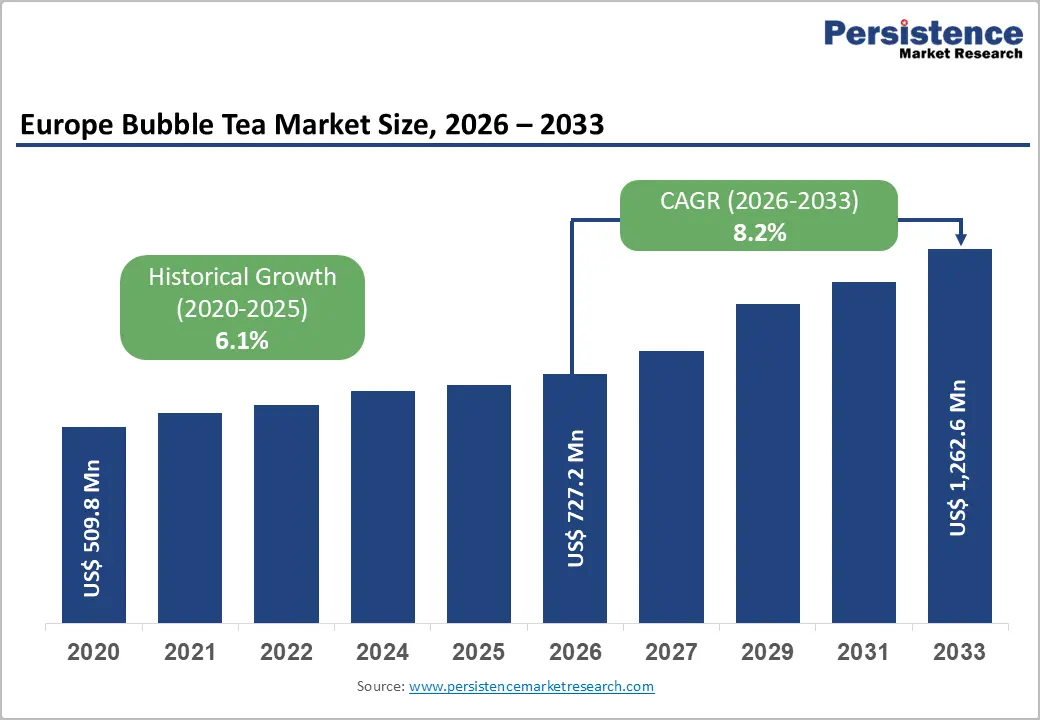
The Europe bubble tea market size is expected to be valued at US$ 727.2 million in 2026 and projected to reach US$ 1,262.6 million by 2033, growing at a CAGR of 8.2% between 2026 and 2033. It has experienced strong growth in recent years, driven by rising consumer demand for innovative and customizable beverages.
Originating in Taiwan, bubble tea has gained widespread popularity across countries such as Germany and the UK, particularly among younger consumers. Its appeal lies in diverse flavor options, vibrant presentation, and unique textures such as tapioca pearls and popping boba. For instance, in October 2024, CoCo Bubble Tea, a Taiwan-based premium brand, participated in the National Franchise Exhibition held in Birmingham. The company also announced plans to strengthen its European supply chain by establishing a dedicated regional warehouse, aimed at reducing material transportation time and improving operational efficiency for its franchise partners.
Key Industry Highlights:
- Leading Country: Germany accounts for around 28% share of the Europe bubble tea market in 2025, driven by strong urban demand, high franchise visibility, and increasing adoption of premium Asian-inspired beverages.
- Fastest Growing Market: The UK is the fastest growing market, supported by aggressive franchise expansion, strong delivery integration, and rising popularity among younger consumers seeking experiential beverages.
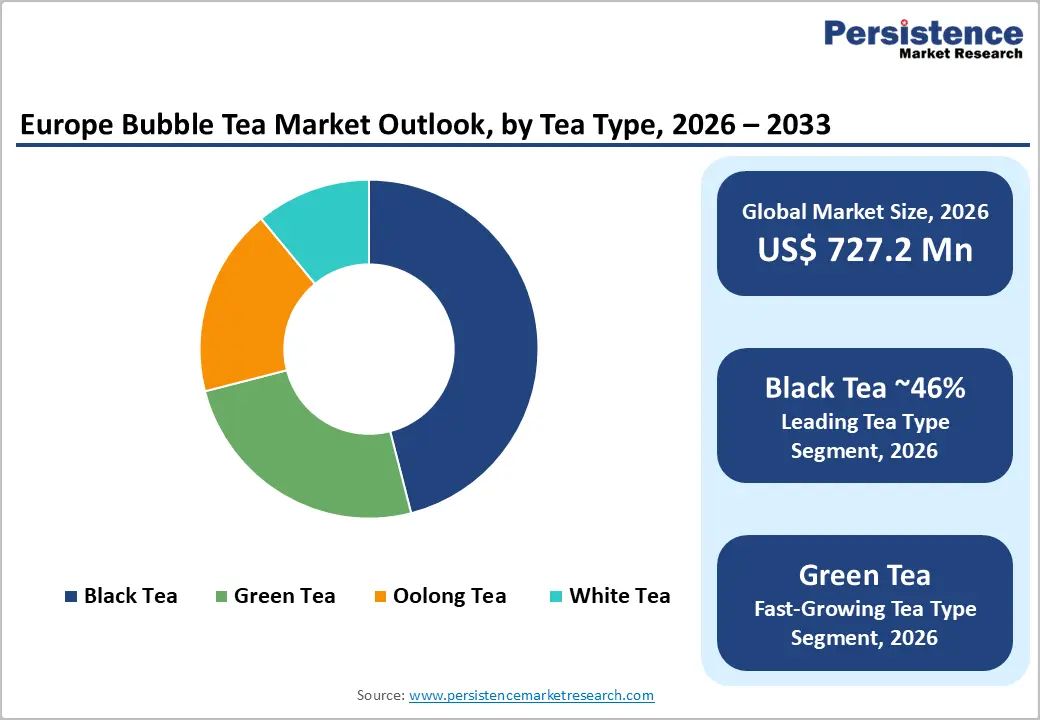
- Dominant Tea Segment: Black tea segment is expected to capture around 46% of the market in 2025, driven by its role as the traditional base for milk tea and flavored bubble tea formulations.
- Fastest Growing Tea Segment: Green tea is the fastest growing segment, supported by increasing consumer preference for lighter, health-oriented, and lower-sugar beverage options.
- Key Opportunity: Growth opportunities lie in omnichannel expansion through delivery platforms, takeaway formats, and retail-ready products, enabling brands to extend consumption beyond physical stores and enhance repeat demand.
| Key Insights | Details |
|---|---|
| Bubble Tea Market Size (2026E) | US$ 727.2 million |
| Market Value Forecast (2033F) | US$ 1,262.6 million |
| Projected Growth CAGR (2026 - 2033) | 8.2% |
| Historical Market Growth (2020 - 2025) | 6.1% |
Market Dynamics
Drivers - Influence of Oriental Culture in Europe to Bode Well for Market
The influence of oriental culture on global trends has significantly shaped the Europe beverage landscape, with bubble tea emerging as a quintessential example of this phenomenon. As modern consumers become increasingly enamored with cuisines from Asia Pacific, bubble tea has transitioned from a niche offering to a mainstream favorite. The beverage, originally from Taiwan, combines tea with chewy tapioca pearls. It offers a unique texture and flavor profile that appeals to the adventurous palates of younger demographics.
Cultural events, pop-up shops, and collaborations with Asia-themed festivals have further entrenched bubble tea demand in the social fabric of cities across Europe. It is hence gradually transforming the beverage into a symbol of trendy, social experiences.
The customizable nature of beverage allows for personalization, enabling consumers to craft novel drinks that resonate with their individual tastes and preferences. Consequently, the fusion of Asia’s culture with local influences has surged bubble tea's status. At the same time, it has fostered a vibrant community of enthusiasts eager to explore and celebrate this delightful drink.
Increasing Specialty Tea Shops Offering Customization Options to Boost Demand
The ongoing expansion of specialty tea shops and cafés dedicated to premium bubble tea is transforming the beverage segment in Europe. It is further significantly enhancing market growth and accessibility for consumers. These establishments go beyond traditional tea offerings. They mainly provide a curated menu that emphasizes high-quality ingredients, innovative flavor combinations, and artisanal preparation methods. By focusing on the craft of bubble tea, these shops attract a discerning clientele that seek not only unique taste experiences but also a visually appealing presentation.
The emphasis on customization is rising across Europe. Cafés and tea shops are allowing customers to choose from various tea bases, toppings, and sweetness levels. This creates a personalized experience that resonates with today’s consumers, particularly younger demographics who value individuality and creativity in their food and drink choices.
Restraints - Inclusion of Sweeteners and Syrups May Lead to Diabetes and Obesity
Health concerns surrounding bubble tea have become increasingly prominent as consumers grow more aware of the implications of high sugar content and artificial ingredients. Several traditional bubble tea recipes rely heavily on sweeteners, syrups, and flavored powders. These can significantly increase calorie counts and contribute to health issues like obesity and diabetes. This growing awareness has prompted health-conscious consumers to scrutinize their beverage choices, leading them to seek options that align with healthy lifestyles. As a result, bubble tea may be perceived as an indulgent treat rather than a nutritious choice, limiting its appeal among this demographic.
Opportunities - Brands Use Plant-based Ingredients to Cater to High Demand from Vegans
Increasing popularity of veganism and plant-based diets presents a significant opportunity for bubble tea companies to innovate and extend their product offerings. By incorporating plant-based milk alternatives, such as almond, oat, coconut, or soy milk, bubble tea brands can cater to a diverse range of dietary preferences and restrictions. These options not only appeal to vegans but also to lactose-intolerant consumers seeking delicious and creamy beverages without dairy.
The use of plant-based toppings, such as fruit jellies, chia seeds, or coconut-based pearls, can enhance the flavor profile while maintaining a health-conscious appeal. This approach aligns with growing consumer awareness of sustainability. Several plant-based ingredients have a lower environmental impact compared to traditional dairy products. By marketing bubble tea as a customizable experience, brands can attract health-focused individuals who are eager to explore unique flavor combinations while still adhering to their dietary choices.
Category-wise Analysis
Tea Type Insights
Black tea is the leading tea type segment in Europe bubble tea market, accounting for approximately 46% share in 2025. Its dominance is largely attributed to its role as the traditional base for bubble tea, offering a strong and robust flavor that blends well with milk, syrups, and tapioca pearls. This makes it the preferred choice for classic milk tea variants, which remain highly popular among consumers. The familiarity of black tea also supports repeat purchases, especially among first-time and regular consumers.
Additionally, most established bubble tea franchises continue to rely on black tea as their core offering, ensuring consistent demand across outlets. Its versatility allows brands to introduce multiple variations without deviating from the base ingredient. While alternative tea types are gaining traction, black tea’s alignment with traditional recipes and its ability to cater to a wide consumer base help maintain its leadership position in the market.
End-user Insights
Foodservice is the dominant end-user segment in the Europe bubble tea market, as the category is primarily driven by on-premises consumption through cafés, kiosks, and specialty beverage outlets. Bubble tea is closely associated with fresh preparation, customization, and a unique in-store experience, making foodservice the preferred channel for consumers. The ability to personalize sweetness levels, toppings, and flavors enhances customer engagement and supports higher footfall in physical outlets.
Leading brands such as Gong Cha, Chatime, and Bubbleology operate predominantly through store-based and franchise models, reinforcing the dominance of foodservice in market distribution. While retail formats like ready-to-drink products and DIY kits are gradually emerging, they still represent a smaller share compared to in-store purchases. The experiential nature of bubble tea consumption and strong presence of branded outlets continue to sustain the growth of the foodservice segment.
Country-wise Insights
Germany Bubble Tea Market Trends and Insights
Germany’s bubble tea market share is anticipated to rise to 26% in 2026. This growth is attributed to evolving consumer preferences and increasing demand for novelty beverages. Health-conscious millennial consumers are now seeking nutritious yet indulgent experiences. Bubble tea brands in Germany are hence offering a unique balance of customization, with options like fruit-based teas, low-sugar variants, and plant-based milk alternatives. The country’s multicultural urban centers, such as Berlin, Hamburg, and Munich, serve as key hubs for international food trends. These are anticipated to foster demand for this unique drink among young consumers and tourists.
Germany’s well-developed café culture further aligns perfectly with bubble tea, allowing retailers to thrive through partnerships with tea houses, cafés, and food delivery platforms. Digitization in food services, such as the rising use of delivery apps, has further propelled bubble tea consumption, making it accessible beyond physical stores. Sustainability efforts are also gaining traction, with companies introducing biodegradable cups and reusable straws to cater to eco-conscious consumers.
UK Bubble Tea Market Trends and Insights
The United Kingdom represents the fastest-growing bubble tea market in Europe, supported by rapid urban expansion and increasing popularity among Gen Z and millennial consumers. The category has gained traction through delivery platforms, social media trends, and the rising demand for experiential and visually appealing beverages. Major cities such as London and Manchester are key growth hubs, where consumers actively seek innovative drink formats and premium offerings.
Growth is further driven by aggressive brand expansion strategies and franchise development. Companies like Bubbleology and Gong Cha are accelerating market penetration through new store openings, localized menu innovations, and seasonal product launches. The UK’s strong foodservice infrastructure and openness to global food trends create a favorable environment for sustained growth, positioning it as the most dynamic and high-potential bubble tea market in Europe.
Competitive Landscape
Europe bubble tea market features a competitive mix of established global brands and emerging regional players focused on innovation and differentiation. Key companies, particularly from Asia and the U.S., dominate through strong brand recognition, extensive menus, and consistent product quality. Market participants are investing in advanced processing technologies to enhance product texture, flavor, and nutritional value. There is a growing focus on research and development to introduce unique tapioca pearls, plant-based options, and functional ingredients targeting health-conscious consumers. Additionally, companies are expanding retail footprints and adopting franchise models to strengthen market presence and capture increasing consumer demand across Europe.
Key Developments:
- In April 2025, CUPP Ltd., in celebration of National Boba Tea Day, collaborated with wellness brand Everystate to introduce an exclusive limited-edition range of functional boba teas, marking their debut as the first of their kind in the UK.
- In March 2025: Gong Cha announced plans to open 225 stores in the UK, highlighting major franchise expansion in one of Europe’s fastest-growing bubble tea markets.
- In October 2024, Spain-based bubble tea brand T4 (Tea for U) marked its entry into the UK market by opening its first store in Cardiff, Wales. The outlet offers an extensive range of beverages, including bubble tea, milkshakes, and smoothies, along with customizable toppings such as green tea jelly, coconut jelly, and pearls.
- In June 2024, London-based Bubbleology joined hands with Red Bull, the highly popular energy drink brand, to launch the first-ever energizing bubble tea in the UK called Red Bull Watermelon Boba Infusion. The base of this drink includes the former’s strawberry popping boba and crystal pearls.
Companies Covered in Europe Bubble Tea Market
- Bubbleology
- Chatime
- CUPP Ltd
- CoCo Fresh Tea & Juice
- Gong Cha
- The Alley
- Bobalife Ltd.
- Möge Tee
- Koi Thé
- Tea for U
- Others
Frequently Asked Questions
Europe bubble tea market is expected to be valued at US$ 727.2 million in 2026.
The influence of Oriental Culture in Europe is driving demand for bubble tea in Europe.
Germany leads the market with a 28% share in 2025.
Organizing bubble tea workshops and experiential events is the key market opportunity.
Major players in the Europe bubble tea market include Bubbleology, CUPP Ltd, CoCo Fresh Tea & Juice, Gong Cha, Bobalife Ltd., Möge Tee, Koi Thé, and others.


