




- Animal Health
- Essential Oils and Plant Extracts for Livestock Market
Essential Oils and Plant Extracts for Livestock Market Size, Share, and Growth Forecast, 2026 - 2033
Essential Oils and Plant Extracts for Livestock Market by Product Type (Essential Oils, Plant Extracts, Others), Form (Liquid, Solid, Others), Livestock, and Regional Analysis for 2026 - 2033

Essential Oils and Plant Extracts For Livestock Market Size and Trends Analysis
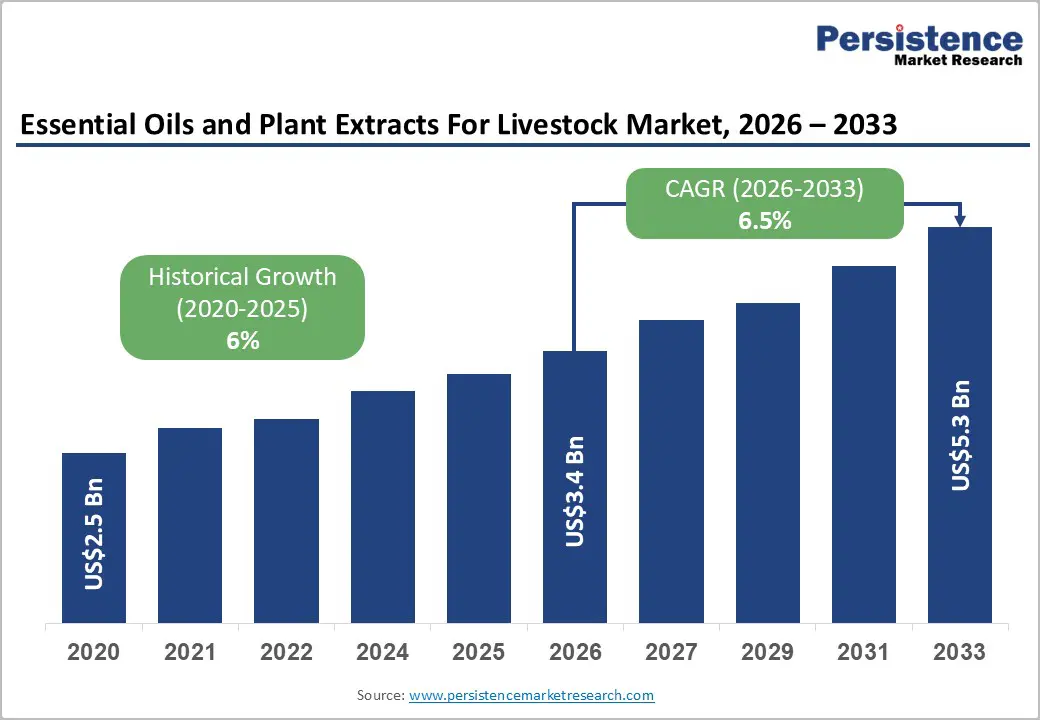
The global essential oils and plant extracts for livestock market size is likely to be valued at US$3.4 billion in 2026 and is expected to reach US$5.3 billion by 2033, growing at a CAGR of 6.5% between 2026 and 2033, driven by the increasing shift toward antibiotic-free livestock production, greater adoption of phytogenic feed additives for digestive health and productivity improvement, and rising global consumption of animal protein.
Regulatory restrictions on antibiotic growth promoters are encouraging producers to adopt plant-based alternatives in feed formulations. In parallel, advancements in extraction technologies and encapsulated formulations are improving the stability and efficacy of essential oils and plant extracts. Asia Pacific’s rapidly expanding livestock industry is also accelerating demand for phytogenic feed solutions.
Key Industry Highlights:
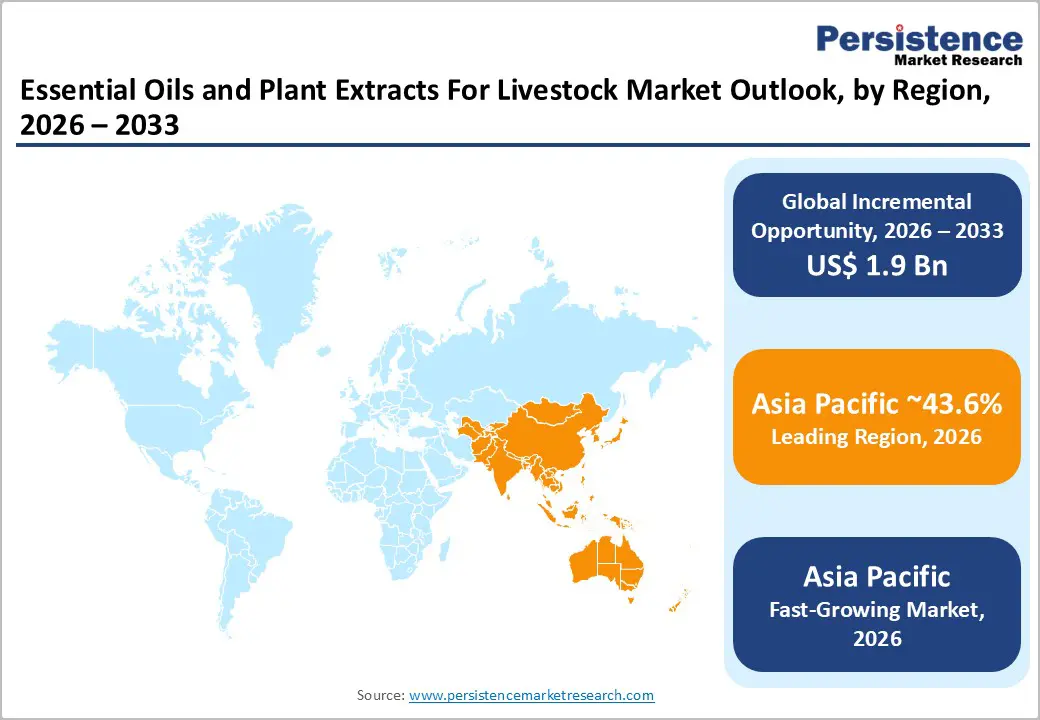
- Leading Region: Asia Pacific is projected to dominate the market, accounting for 43.6% of global demand, supported by the rapid expansion of livestock and aquaculture industries, along with increasing adoption of phytogenic feed additives in commercial animal nutrition.
- Fastest-growing Region: Asia Pacific is also the fastest-growing regional market, driven by rising meat consumption, expansion of poultry and aquaculture farming, and increasing regulatory shifts toward antibiotic-free livestock production across major economies.
- Investment Plans: Leading animal nutrition companies such as Cargill, Kemin Industries, and DSM-Firmenich are investing in phytogenic feed additive research, regional manufacturing expansion, and product innovation, including encapsulated essential oil formulations designed to improve feed efficiency and animal health in antibiotic-free production systems.
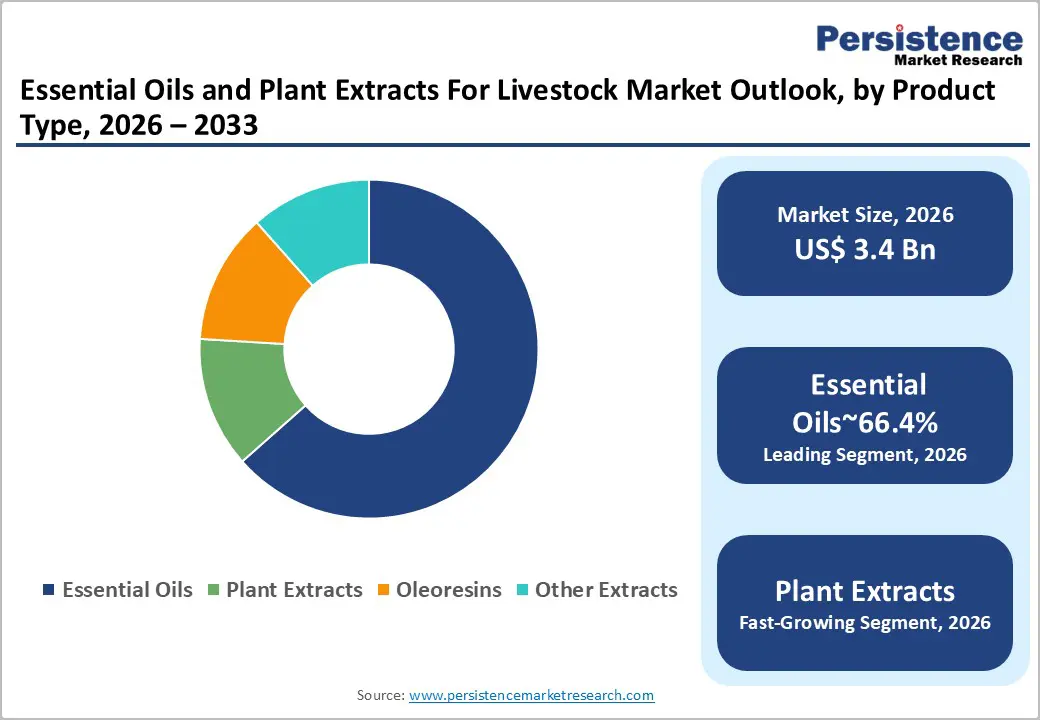
- Dominant Product Type: Essential oils represent the dominant segment, holding an anticipated 66.4% share of the market due to their strong antimicrobial and digestive health benefits in poultry, swine, and aquaculture feed formulations.
- Leading Form: Liquid formulations lead the segment with an anticipated 75.2% market share, as they can be easily incorporated into premixes and feed processing systems and allow flexible dosage adjustments in commercial livestock feed production.
| Key Insights | Details |
|---|---|
| Essential Oils & Plant Extracts For Livestock Market Size (2026E) | US$3.4 Bn |
| Market Value Forecast (2033F) | US$5.3 Bn |
| Projected Growth (CAGR 2026 to 2033) | 6.5% |
| Historical Market Growth (CAGR 2020 to 2025) | 6% |
Market Factors - Growth, Barriers, and Opportunity Analysis
Growth Analysis - Growing Regulatory Restrictions on Antibiotic Growth Promoters
Regulatory frameworks in major livestock-producing economies have increasingly restricted the use of antibiotic growth promoters in animal feed. Authorities across North America and Europe have implemented strict guidelines to reduce antimicrobial resistance risks associated with excessive antibiotic use in livestock production. These regulatory measures have prompted feed manufacturers and livestock producers to explore natural alternatives that maintain productivity while supporting animal health. Essential oils and plant extracts offer antimicrobial, antioxidant, and anti-inflammatory properties that help regulate gut microflora and improve nutrient absorption. As a result, phytogenic additives are increasingly integrated into poultry, swine, and ruminant diets to maintain growth performance without antibiotics.
Scientific Evidence Supporting Phytogenic Feed Additives
Continuous research in animal nutrition has strengthened confidence in phytogenic compounds as effective feed additives. Essential oils such as thymol, carvacrol, and cinnamaldehyde have demonstrated antimicrobial activity against harmful intestinal pathogens. Plant-derived compounds such as tannins and flavonoids contribute to improved digestive efficiency and immune response. Research trials across poultry and swine production systems have shown measurable improvements in feed conversion ratios and growth rates when phytogenic additives are incorporated into feed formulations. These results are particularly valuable in commercial livestock operations where feed efficiency directly affects profitability. As feed manufacturers increasingly rely on data-driven formulations, scientifically validated phytogenic blends are gaining wider acceptance in livestock nutrition programs.
Rising Global Demand for Animal Protein
Growing global demand for meat, dairy, and aquaculture products is increasing the scale and intensity of livestock production. Population growth, urbanization, and rising incomes in emerging economies are driving higher consumption of animal-based protein. This trend is particularly evident across the Asia Pacific, where poultry, swine, and aquaculture sectors are expanding rapidly. As livestock production intensifies, producers face greater pressure to maintain animal health, optimize feed efficiency, and comply with food safety standards. Essential oils and plant extracts provide natural solutions that improve digestive health while supporting sustainable production systems. Consequently, rising protein demand continues to expand the addressable market for phytogenic feed additives.
Barrier Analysis - Cost and Raw Material Variability
Essential oils and plant extracts often cost more than conventional feed additives. The production process requires high-quality botanical raw materials, extraction technologies, and rigorous quality control to maintain consistent active compound concentrations. Variability in crop yield, climate conditions, and harvesting practices can influence phytochemical content in plant sources. These variations can lead to inconsistent product performance if not properly standardized. For cost-sensitive livestock producers, the price premium associated with phytogenic additives can be a barrier to adoption, particularly in regions with narrow livestock margins.
Regulatory Approval and Scientific Validation Requirements
Feed additives must comply with regulatory standards in each market where they are sold. Essential oils and plant extracts require detailed safety and efficacy evaluations before approval for use in animal nutrition. These evaluations often involve multiple feeding trials and toxicological assessments to confirm their safety for animals and consumers. The regulatory approval process can extend product development timelines and increase research costs for manufacturers. Smaller companies may face challenges meeting these regulatory requirements, which can limit the pace of innovation and market entry for new phytogenic formulations.
Opportunity Analysis - Development of Encapsulated and Targeted Phytogenic Formulations
Advancements in microencapsulation technology are enabling manufacturers to develop more effective phytogenic feed additives. Encapsulation protects volatile compounds in essential oils from degradation during feed processing and allows controlled release within the digestive tract. These innovations enhance the stability of active compounds during high-temperature pelleting processes and improve absorption in animals. Feed manufacturers are increasingly developing species-specific blends designed for poultry, ruminants, or aquaculture species. Such tailored formulations provide measurable performance benefits and create opportunities for premium product positioning.
Expansion of Aquaculture Nutrition Solutions
Aquaculture is emerging as one of the fastest-growing application areas for essential oils and plant extracts. Fish and shrimp farming operations often face challenges related to bacterial infections, water quality, and disease outbreaks. Phytogenic additives can support immune response and improve feed utilization while maintaining residue-free production standards. The rapid expansion of aquaculture industries across the Asia Pacific, particularly in shrimp and tilapia farming, is generating strong demand for natural feed additives. Companies that develop water-stable phytogenic formulations suitable for aquatic species are expected to benefit from this expanding market opportunity.
Category-wise Analysis
Product Type Insights
Essential oils represent the largest segment of the market, accounting for an anticipated 66.4% market share in 2026. Oils derived from oregano, thyme, cinnamon, clove, eucalyptus, and garlic are widely used in livestock nutrition due to their antimicrobial, antioxidant, and digestive-stimulating properties. These oils contain bioactive compounds such as thymol, carvacrol, cinnamaldehyde, and eugenol, which help inhibit pathogenic bacteria while promoting beneficial gut microbiota balance in animals.
Livestock producers incorporate essential oils into feed formulations to enhance digestion, stimulate appetite, and improve overall growth performance. For example, oregano oil is frequently used in poultry diets to control intestinal pathogens and support feed conversion efficiency, while cinnamon and clove oils are used in swine feed to improve digestive enzyme activity. Their versatility across multiple livestock species, including poultry, swine, ruminants, and aquaculture, supports their dominant market position. In addition, essential oils can be combined into synergistic phytogenic blends that deliver broader antimicrobial and immune-support benefits, making them a preferred ingredient in antibiotic-free livestock production systems.
Plant extracts are the fastest-growing product category within the market. These extracts include oleoresins, tannins, flavonoids, saponins, and other phytochemicals derived from herbs, spices, and medicinal plants. Increasing interest in rumen modulation and digestive health in ruminant livestock is driving the adoption of plant-based extracts, particularly in cattle and sheep production systems.
Tannin-rich extracts from plants such as quebracho and chestnut are gaining attention for their ability to reduce methane emissions while improving nitrogen utilization in ruminant diets. Similarly, flavonoid-based extracts obtained from green tea, citrus, and grape seed provide antioxidant benefits that strengthen immune response and improve metabolic efficiency in animals. Plant extracts are also increasingly used in aquaculture feed formulations to support disease resistance and improve survival rates in fish and shrimp. As sustainability concerns grow in the livestock sector, plant extracts are expected to see strong demand due to their environmental, nutritional, and functional benefits.
Form Analysis Insights
Liquid formulations dominate the market, holding an anticipated 75.2% of market share in 2026, largely due to their ease of integration into commercial feed manufacturing systems. Liquid essential oil blends can be directly incorporated into premixes or sprayed onto feed during processing. This flexibility allows feed manufacturers to adjust dosage levels according to species-specific nutritional requirements and production stages.
Liquids are also commonly used in water-based delivery systems in certain livestock operations, particularly in poultry farming, where additives can be administered through drinking water during disease outbreaks or stress periods. Their rapid dispersion and compatibility with feed processing equipment make them the preferred format among feed manufacturers. For example, liquid oregano and thyme oil blends are frequently used in poultry feed mills to improve feed efficiency and support intestinal health during early growth stages.
Solid forms of phytogenic additives, including powders, granules, and encapsulated pellets, are experiencing the fastest market growth. These products are specifically designed to maintain stability during high-temperature feed pelleting processes, which can otherwise degrade volatile essential oil compounds. Encapsulation technologies protect sensitive essential oils within solid carriers, such as starch or lipid matrices, preventing evaporation or oxidation during feed manufacturing and storage.
Solid formats also provide controlled release within the digestive tract, ensuring that active compounds reach targeted areas such as the small intestine or rumen. For instance, encapsulated garlic and cinnamon extracts are widely used in pelleted poultry and swine feeds to maintain consistent dosage levels. As feed manufacturers increasingly demand stable, standardized, and easy-to-handle formulations, solid phytogenic additives are gaining greater adoption across large-scale feed production facilities.
Regional Insights
North America Essential Oils and Plant Extracts For Livestock Market Trends - Antibiotic-Free Livestock Production and Advanced Phytogenic Feed Innovation
North America represents a significant market for essential oils and plant extracts used in livestock nutrition. The U.S. leads the region due to its advanced livestock production systems and strong adoption of antibiotic-free animal production programs. Poultry and swine sectors are particularly active in incorporating phytogenic feed additives to maintain productivity while complying with regulatory guidelines. The restrictions on medically important antibiotics introduced by the U.S. Food and Drug Administration through initiatives such as the Veterinary Feed Directive have encouraged livestock producers to adopt natural alternatives that support gut health and immune function in animals.
The regulatory environment has accelerated innovation among feed additive manufacturers operating in the region. Companies such as Kemin Industries and Cargill have expanded their portfolios of phytogenic feed solutions designed for poultry and swine operations. For example, Kemin has developed essential-oil-based feed additives such as Enterosure, which supports intestinal health and pathogen control in poultry production systems. These products are widely used by large poultry integrators seeking to maintain feed conversion efficiency without relying on antibiotic growth promoters.
Research and innovation play a central role in the North American market. Feed additive manufacturers invest heavily in product development, clinical trials, and advanced formulation technologies. Companies such as Archer Daniels Midland and Alltech have strengthened their phytogenic product offerings through acquisitions and partnerships that combine plant-derived ingredients with broader animal nutrition platforms. Encapsulation and controlled-release delivery systems are increasingly used to protect volatile essential oils during feed pelleting processes and improve their bioavailability in animals. Investment activity in the region also includes product launches, collaborations with livestock integrators, and expansion of feed additive manufacturing capacity.
Rising consumer demand for antibiotic-free meat products in the U.S. and Canada is pushing poultry and pork producers to reformulate feed programs using natural additives. As retailers and foodservice companies expand antibiotic-free meat sourcing policies, North American producers are expected to maintain strong adoption of plant-based feed additives to meet supply chain requirements.
Europe Essential Oils and Plant Extracts For Livestock Market Trends - Strict Antibiotic Regulations and Sustainable Feed Additive Adoption
Europe is one of the most mature markets for essential oils and plant extracts in livestock nutrition. The region has long emphasized sustainable agriculture and food safety, which has encouraged early adoption of phytogenic feed additives. Regulatory measures implemented by the European Commission, including the historic ban on antibiotic growth promoters in animal feed, have created a strong market for plant-based alternatives that promote digestive health and disease resistance in livestock. Germany, the U.K., France, and Spain represent key markets within Europe.
Germany is known for strong research collaboration between universities and animal nutrition companies, while France and Spain have large poultry and ruminant industries that utilize phytogenic feed additives. One notable industry player is DSM-Firmenich, which has strengthened its natural feed additive portfolio through partnerships and acquisitions. Its subsidiary Delacon Biotechnik specializes in phytogenic feed additives and offers widely used product lines such as Biostrong, designed to improve feed efficiency and animal performance.
European livestock producers increasingly rely on plant-based additives to improve feed conversion ratios while meeting strict environmental and food safety regulations. Companies such as Olmix Group in France have expanded research into botanical extracts and marine-derived bioactives for livestock nutrition. Olmix’s phytogenic feed solutions are widely used in poultry and swine production systems across the European Union and are increasingly exported to international markets. Ongoing research and innovation continue to strengthen the market in Europe.
Feed additive developers are focusing on standardized botanical extracts with consistent concentrations of active compounds to ensure reliable performance in commercial livestock operations. These advancements improve product reliability, support regulatory compliance, and encourage broader adoption among feed manufacturers. As sustainability initiatives become more prominent across the European agricultural sector, phytogenic feed additives are expected to play an increasingly important role in reducing antibiotic use and improving animal welfare.
Asia Pacific Essential Oils and Plant Extracts For Livestock Market Trends - Expanding Livestock & Aquaculture Industries Driving Phytogenic Feed Demand
Asia Pacific is the largest and fastest-growing regional market, accounting for 43.6% of the market share in 2026. The region’s rapidly expanding livestock and aquaculture industries are the primary drivers of growth. Rising meat consumption, population growth, and intensifying animal production systems are increasing demand for feed additives that improve animal health and feed efficiency. China represents the largest market within Asia Pacific due to its extensive poultry and swine production sectors. The country’s livestock industry has been modernizing rapidly, with increasing emphasis on feed efficiency and disease prevention following restrictions on antibiotic growth promoters introduced by the Ministry of Agriculture and Rural Affairs of the People's Republic of China. These regulatory changes have accelerated the adoption of phytogenic feed additives.
Global companies such as Cargill and Adisseo have expanded feed additive manufacturing and research operations in China to meet the rising demand for natural livestock nutrition solutions. Southeast Asian countries such as Vietnam, Thailand, and Indonesia are major producers of aquaculture products. These countries rely heavily on feed additives to maintain the health of fish and shrimp in intensive farming systems. Phytogenic additives provide antimicrobial and antioxidant properties that support disease resistance in aquatic species.
Companies, including BIOMIN (part of DSM-Firmenich), have expanded distribution networks and technical support services across Southeast Asia to support aquaculture feed producers adopting natural feed additives. Investments in regional manufacturing facilities, distribution networks, and research centers are expected to further strengthen the Asia Pacific market. As livestock and aquaculture production continue to expand across the region, demand for essential oils and plant extracts in animal nutrition is expected to increase steadily, particularly as governments promote safer and more sustainable livestock production systems.
Competitive Landscape
The global essential oils and plant extracts for livestock market is moderately concentrated, with several multinational animal nutrition companies competing alongside specialized phytogenic feed additive manufacturers. Leading companies maintain strong global distribution networks and extensive research capabilities, enabling continuous product innovation. Large feed additive producers typically integrate phytogenic ingredients into broader animal nutrition solutions, including enzymes, probiotics, and vitamins. Specialized phytogenic companies focus primarily on botanical extracts and essential oil blends, offering targeted solutions for specific livestock species.
The competitive landscape is characterized by ongoing product innovation, strategic partnerships, and expansion into emerging livestock markets. Leading companies focus on innovation, scientific validation, and geographic expansion. Key strategies include developing encapsulated phytogenic formulations, expanding distribution networks in emerging livestock markets, and investing in research partnerships to demonstrate product efficacy.
Key Industry Developments:
- In March 2025, Kemin Industries launched PROSIDIUM, a feed biosecurity solution designed to help animal feed producers improve feed safety and protect raw materials from microbial contamination. The product introduction reflects the growing industry focus on safe, high-quality feed inputs and complements phytogenic feed programs used in modern livestock production systems.
Companies Covered in Essential Oils and Plant Extracts for Livestock Market
- Cargill, Incorporated
- DSM-Firmenich
- Archer Daniels Midland Company (ADM)
- Delacon Biotechnik GmbH
- Kemin Industries, Inc.
- Phytobiotics Futterzusatzstoffe GmbH
- Novus International, Inc.
- Alltech, Inc.
- Nutrex NV
- Dostofarm GmbH
- Silvateam S.p.A.
- Nor-Feed SAS
- Synthite Industries Ltd.
- Natural Remedies Pvt. Ltd.
- Ayurvet Limited
- Growell India
Frequently Asked Questions
The global essential oils and plant extracts for livestock market is estimated to reach US$3.4 billion in 2026.
The essential oils and plant extracts for the livestock market is projected to reach US$5.3 billion by 2033.
Key trends include increasing adoption of phytogenic feed additives, growing demand for antibiotic-free animal production, rising focus on gut health and immunity in livestock, and expansion of natural feed solutions in poultry, swine, and ruminant farming systems.
The poultry segment represents the leading end-use segment, as poultry producers widely adopt plant-based feed additives to improve digestibility, feed efficiency, and disease resistance while complying with antibiotic reduction policies.
The essential oils and plant extracts for the livestock market is expected to grow at a CAGR of 6.5% between 2026 and 2033.
Major companies include Cargill, Incorporated, DSM-Firmenich, Delacon Biotechnik GmbH, Kemin Industries, Inc., and BIOMIN Holding GmbH.


