




- Food Ingredients & Additives
- Cheese Concentrate Market
Cheese Concentrate Market Size, Share, and Growth Forecast, 2026 - 2033
Cheese Concentrate Market by Form (Paste, Powder), Cheese Type (Cheddar Cheese, Swiss Cheese, Blue Cheese, Goat Cheese, Asiago Cheese, Parmesan Cheese, Romano Cheese, Mild European Cheese), Application (Processed Cheese, Bakery Products, Ready Meals, Snacks, Salad Dressings, Dressings and Seasonings, Others), and Regional Analysis for 2026 - 2033

Cheese Concentrate Market Share and Trends Analysis
The global cheese concentrate market size is likely to be valued at US$2.2 billion in 2026, and is estimated to reach US$3.7 billion by 2033, growing at a CAGR of 7.8% during the forecast period 2026 - 2033, driven by strong demand for flavorful, shelf-stable, and cost-efficient cheese ingredients, expanding snack and ready meal production, and the growing use of cheese flavors in seasonings and sauces.
The market recorded healthy growth during historic period as food manufacturers sought concentrated cheese flavor systems that reduce formulation cost and logistics burden compared with fresh cheese. The forecast period anticipates faster expansion as clean-label reformulation, global snack innovation, and the premiumization of authentic and regional cheese flavors encourage manufacturers to adopt high-quality cheese concentrates.
Key Industry Highlights
- Dominant Form: Powder is set to command around 64% of the revenue share in 2026, while paste is likely to grow the fastest at about 8.9% CAGR through 2033, as food manufacturers seek richer flavor and better texture for sauces, fillings, and ready meals.
- Leading Cheese Type: Cheddar cheese is expected to lead with about 36% share in 2026, while Parmesan cheese is likely to be the fastest-growing at approximately 9.0% CAGR during 2026 - 2033, supported by demand for savory, umami-rich profiles in snacks and seasonings.
- Dominant Application: Processed cheese is anticipated to lead with an estimated 29% share in 2026, while snacks are slated to represent the fastest-growing application at about 9.3% CAGR from 2026 to 2033.
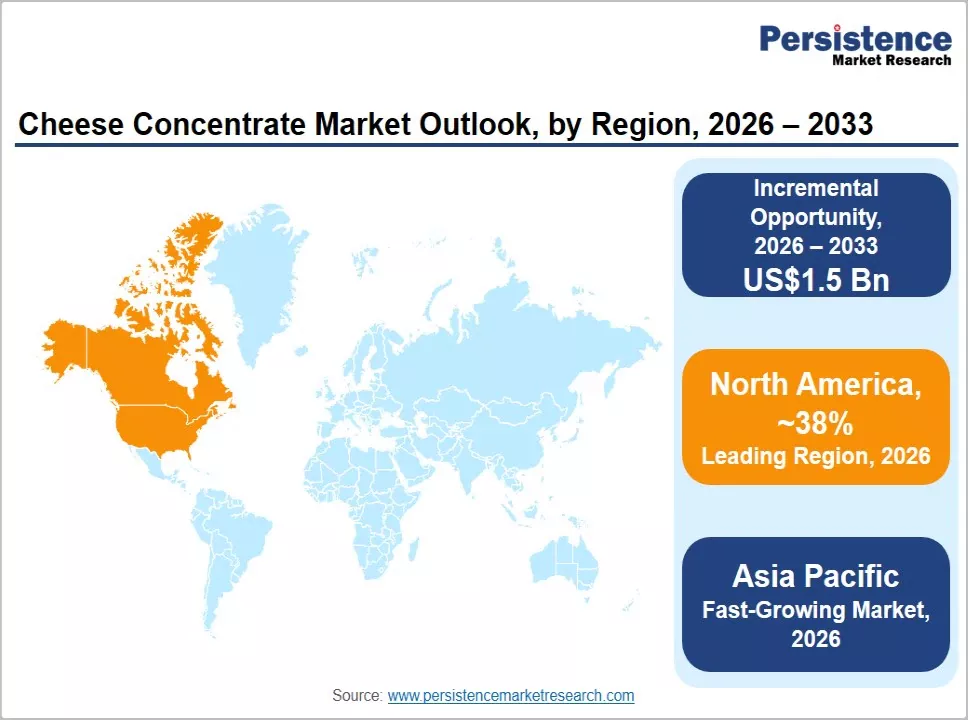
- Regional Leadership: North America is poised to dominate with an estimated 38% share in 2026, while Asia Pacific is projected to register the fastest growth at about 9.4% CAGR through 2033, led by snack and fast-food expansion in China, India, and Southeast Asia.
- April 2026: Meister Cheese announced an expansion to enhance its cheesemaking capacity through its Nex-Gen plant project, reflecting continued investment in cheese and whey production capacity by U.S. dairy processors.
DRO Analysis
Driver: Snack and Convenience Food Expansion as Primary Growth Catalyst
The rapid growth of snacks, ready meals, and convenience foods is the leading force driving demand for cheese concentrates. Dried and pasted cheese concentrates deliver intense, consistent cheese flavor in a compact, shelf-stable format, which makes them well suited for seasoning powders, extruded and baked snacks, instant sauces, and frozen meals. Unlike fresh cheese, concentrates are easier to store, transport, and dose, reducing spoilage and supply chain costs for food manufacturers operating at scale. Their functional properties, such as emulsification and melt, also support use in processed cheese and bakery formulations.
Rising consumer interest in bold, savory flavors and authentic regional cheeses is encouraging manufacturers to expand their use of specialty profiles, including Parmesan, Romano, Asiago, and blue cheese. At the same time, the industry is moving toward cleaner labels, favoring concentrates made from real cheese over artificial flavors and colors. Developments in spray drying and enzyme-modified cheese technology are further improving flavor intensity and functionality, ensuring sustained demand across both mature and emerging food markets.
Restraints: Dairy Input Cost Volatility and Product Quality Challenges
Cheese concentrate producers depend on natural cheese and dairy streams, so price fluctuations in milk, cheese, and whey directly affect costs and margins. Seasonal milk supply, weather events, and shifts in global dairy demand create pricing volatility that is difficult to pass on to food manufacturers working under long-term contracts. Smaller suppliers with limited access to cost-competitive cheese feedstock are particularly exposed to these swings.
Producing high-quality concentrates also requires careful control of heat exposure, moisture, and fat content to protect flavor and prevent clumping or oxidation. Competition from lower-cost cheese analogues, artificial cheese flavors, and plant-based alternatives limits uptake in price-sensitive applications, while evolving labeling rules on dairy ingredients, allergens, and sodium add compliance requirements for suppliers serving multiple regions.
Opportunities: Premium Flavors, Plant-forward Hybrids, and Emerging Market Snack Growth
Emerging economies in Asia Pacific, Latin America, and the Middle East are witnessing rapid growth in packaged snacks, quick-service restaurants, and modern retail, creating new demand for cheese-flavored products. Local manufacturers are adapting cheese concentrates to regional tastes, such as spicy and savory seasonings, while global brands are expanding cheese-flavored snack lines into new markets. Rising urban incomes and the popularity of Western-style foods, including pizza, burgers, and pasta, are further expanding the addressable market.
Premiumization is another opportunity. Specialty concentrates with clearly identified origins and flavor profiles, such as aged Parmesan or goat cheese, allow brands to differentiate products and command higher prices. Food developers are also exploring reduced-sodium formulations, protein-enriched snacks, and hybrid dairy and plant-based products that use concentrated cheese for flavor, opening additional avenues for ingredient suppliers to collaborate on co-developed solutions.
Category-wise Analysis
Form Insights
Powder is the leading form segment, expected to hold about 64% of the cheese concentrate market revenue share in 2026. Spray-dried and blended cheese powders offer long shelf life, easy handling, and compatibility with dry seasoning systems, making them the standard choice for snacks, seasonings, instant sauces, and bakery applications. Large-scale production, standardized specifications, and broad supplier availability support stable pricing and consistent demand, with growth driven mainly by the overall expansion of the snack and convenience food industries.
Paste is likely to grow the fastest through 2033, at an estimated 8.9% CAGR. Cheese pastes preserve more of the fresh cheese flavor and creamy texture, and are valued in sauces, fillings, dips, ready meals, and refrigerated and frozen foods. Growing demand for authentic taste and clean-label products is encouraging food manufacturers to use pastes, while advances in packaging and cold-chain logistics are improving distribution. Premium pricing is supported by superior flavor delivery and functionality.
Cheese Type Insights
Cheddar cheese dominates the cheese type segment, projected to capture about 36% of the revenue share in 2026. Cheddar's familiar, versatile flavor and strong association with snacks, sauces, and processed cheese make it the default profile for many manufacturers, especially in North America. Abundant supply, mature processing technology, and wide consumer acceptance support stable volumes, while variations such as sharp and aged cheddar allow brands to add flavor intensity.
Parmesan cheese represents the fastest-growing cheese type, anticipated to achieve about 9.0% CAGR during the 2026 - 2033 period. Its deep, savory, umami-rich character makes it popular in seasonings, pasta sauces, dressings, and premium snacks. Growing interest in Italian-style foods, authentic regional flavors, and gourmet snacking is supporting demand. Other specialty types such as Romano, Asiago, Swiss, blue, and goat cheese are also gaining traction in premium and artisanal product lines, although they remain smaller niches.
Application Insights
Processed cheese is the leading application segment, estimated to hold about 29% share in 2026. Cheese concentrates are used to enhance flavor, adjust texture, and improve cost efficiency in processed cheese slices, spreads, and sauces. The application is mature and closely linked to quick-service restaurants, packaged foods, and institutional catering, resulting in predictable demand patterns and stable supplier relationships.
Snacks represent the fastest-growing application, expected to grow at roughly 9.3% CAGR through 2033. Cheese-flavored chips, puffs, crackers, popcorn, and baked snacks are popular globally, and manufacturers are using concentrates to deliver bolder flavors with cleaner labels. Product innovation in plant-based and high-protein snacks is also incorporating cheese concentrates for taste. Ready meals, bakery products, and salad dressings, dressings and seasonings are other important applications, supported by the continued growth of convenience and foodservice channels.
Regional Insights
North America Cheese Concentrate Market Trends
North America is predicted to command an estimated 38% of the cheese concentrate market share in 2026. The U.S. anchors regional demand, supported by one of the world's largest snack, processed cheese, and quick-service restaurant industries, and by abundant domestic cheese and whey production. U.S. dairy processors continue to invest in cheesemaking capacity, such as the Nex-Gen plant project announced by Meister Cheese in April 2026, supporting ingredient supply for downstream food manufacturers.
Canada offers steady demand for processed and prepared foods. The regional market is characterized by strong competition among ingredient suppliers, dairy cooperatives, and flavor houses, with portfolio consolidation, such as Kerry's acquisition of the B2B powdered cheese business of Kraft Heinz, reshaping supplier relationships.
Europe Cheese Concentrate Market Trends
Europe is likely to hold 27% of the global market share in 2026. The region's rich cheesemaking heritage, strong dairy industry, and sophisticated food manufacturing base support demand for specialty cheese concentrates, particularly Parmesan, Swiss, and mild European varieties. Denmark is home to a leading cheese powder specialist, Lactosan, which operates manufacturing and research facilities in Denmark and Uruguay, highlighting the region's role as an innovation hub.
The Europe market is characterized by clean-label expectations, interest in reduced-salt formulations, and protection of designations of origin for traditional cheeses, which influence sourcing and labeling. Germany, France, Italy, and the U.K. remain key consumption markets, with growing demand for ready meals and snacks, while Eastern Europe is an emerging opportunity as modern retail and packaged food consumption expand.
Asia Pacific Cheese Concentrate Market Trends
Asia Pacific is anticipated to be the fastest-growing region, registering about 9.4% CAGR through 2033 and capturing an estimated 21% share in 2026. China is the largest growth engine, with rising consumption of Western-style foods, expanding quick-service restaurant chains, and a growing packaged snack industry. Local manufacturers are increasingly using cheese flavors in seasonings and snacks tailored to regional tastes.
India is expected to offer dynamic opportunities as urbanization, organized retail, and pizza and fast-food chains expand demand for cheese-based ingredients. Southeast Asia, Japan, and South Korea are also witnessing growth in convenience foods and bakery applications, while Australia and New Zealand serve as important dairy ingredient exporters to the region.
Competitive Landscape
The global cheese concentrate market is moderately fragmented, with leading ingredient and dairy companies, including Kerry Group, Lactosan, Glanbia, and Dairy Farmers of America, holding a significant share of revenue. These players leverage access to cheese supply, spray-drying and enzyme-modification expertise, flavor application capabilities, and long-term relationships with snack, processed cheese, and foodservice customers.
Regional and specialty suppliers such as Land O'Lakes, Bega Cheese, Fonterra, and Lactalis Ingredients are focusing on niche cheese varieties, regional strongholds, and customized solutions. Barriers such as cheese sourcing, food safety compliance, and technical know-how limit new entrants, though demand for authentic flavors is attracting flavor specialists into the category. Portfolio realignments and acquisitions are expected to continue as larger players seek to expand capabilities and geographic reach.
Key Industry Developments:
- In April 2026, Meister Cheese announced an expansion of its cheesemaking operations under the Nex-Gen plant project, aimed at enhancing capacity for cheese and whey production. The investment reflects growing demand for cheese and dairy ingredients from snack, foodservice, and packaged food customers.
Companies Covered in Cheese Concentrate Market
- Kerry Group plc
- Lactosan A/S
- Glanbia Nutritionals
- Dairy Farmers of America, Inc.
- Land O'Lakes, Inc.
- Bega Cheese Limited
- Fonterra Co-operative Group Limited
- Lactalis Ingredients
- Meister Cheese Company
Frequently Asked Questions
The global cheese concentrate market is projected to reach US$2.2 billion in 2026.
Strong demand for flavorful, shelf-stable cheese ingredients, expanding snack and ready meal production, and the growing use of cheese flavors in seasonings and sauces are driving the market.
The market is poised to witness a CAGR of 7.8% from 2026 to 2033.
Premium and specialty cheese flavors, clean-label and reduced-sodium formulations, and rapid growth of snacks and quick-service foods in emerging economies are key market opportunities.
Kerry Group plc, Lactosan A/S, Glanbia Nutritionals, and Dairy Farmers of America, Inc. are some of the key players in the market.


