




- Processed Food
- Apricot Kernels Market
Apricot Kernels Market Size, Share, Growth, and Regional Forecast, 2026 to 2033
Apricot Kernels Market is segmented by Product Type (Bitter Apricot Kernels, Sweet Apricot Kernels), by Nature (Organic, Conventional), End-user (Food & Beverages, Pharmaceuticals & Nutraceuticals, Cosmetics & Personal Care, Others), and Regional Analysis, 2026 - 2033

Apricot Kernels Market Share and Trends Analysis
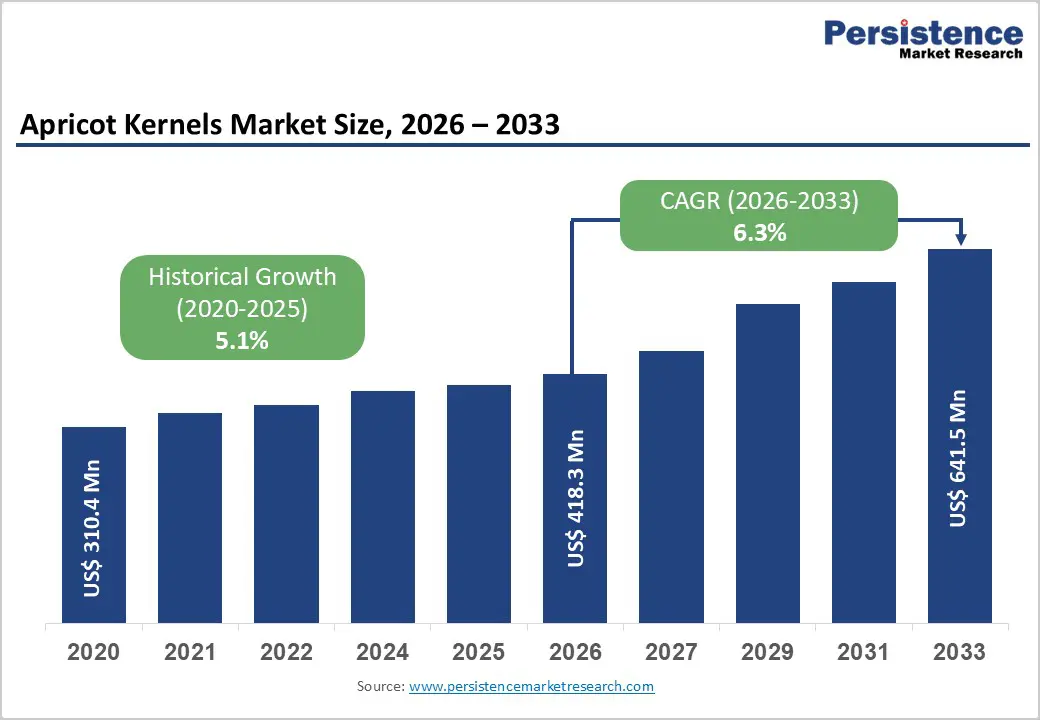
The global apricot kernels market size is expected to be valued at US$ 418.3 million in 2026 and projected to reach US$ 641.5 million by 2033, growing at a CAGR of 6.3% between 2026 and 2033.
The market expansion is primarily attributed to the surging demand for natural and plant-based ingredients across the functional food and personal care sectors. As consumers pivot toward nutrient-dense superfoods, apricot kernels have gained traction due to their high protein, healthy fat, and fiber content. Furthermore, the industrial shift toward clean-label products has encouraged manufacturers to incorporate kernel-derived oils and powders into a variety of formulations, sustaining a robust growth trajectory throughout the forecast period.
Key Industry Highlights:
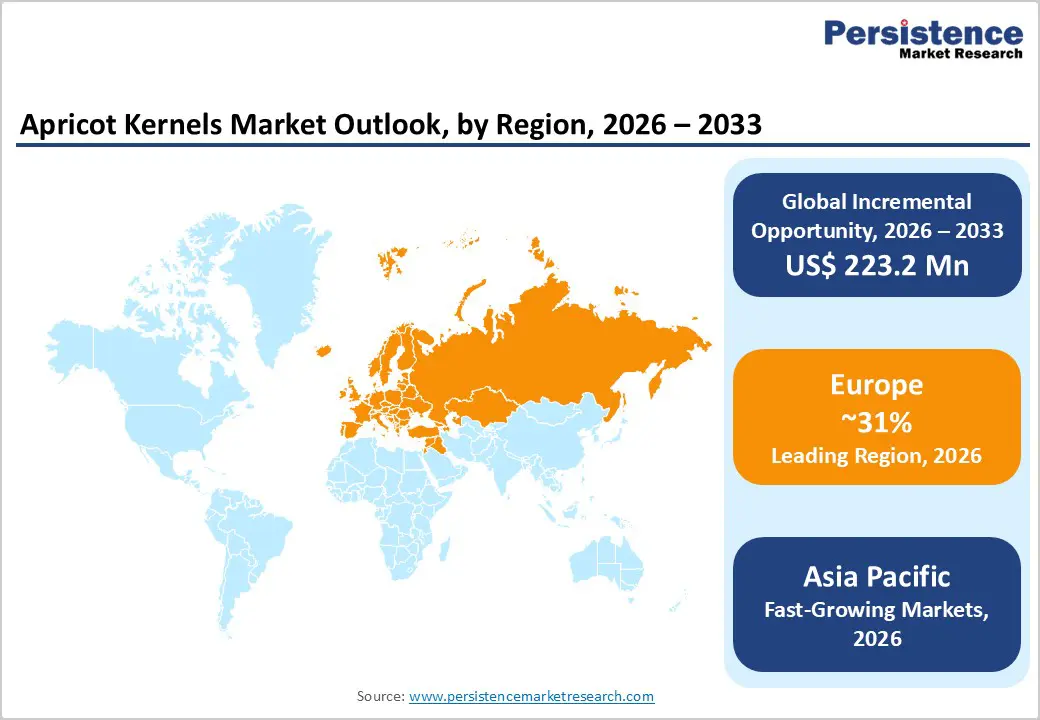
- Leading Region: Europe, holding 31% market share, supported by strong demand for botanical cosmetics, herbal formulations, and organic-certified ingredients across Germany, France, and the U.K.
- Fastest-Growing Region: Asia Pacific, driven by large apricot production bases in China and Central Asia, rising middle-class demand for natural wellness products, and expanding e-commerce channels.
- Fastest-Growing Nature Segment: Organic Apricot Kernels, fueled by rising clean-label demand, consumer willingness to pay premium prices for pesticide-free ingredients, and the expansion of green beauty and organic food sectors.
- Market Drivers: Rising adoption of plant-based functional ingredients is increasing the use of apricot kernel derivatives in beverages, bakery fillings, nutraceutical formulations, and plant-based dairy alternatives.
- Opportunities: Growing demand for certified organic kernels and transparent sourcing practices is enabling brands to differentiate through sustainable farming partnerships and premium product positioning.
- Key Developments: In April 2024, Bauer partnered with Kern Tec to launch a plant-based milk alternative produced from upcycled apricot kernels, transforming fruit processing byproducts into sustainable beverage ingredients.
| Key Insights | Details |
|---|---|
| Global Apricot Kernels Market Size (2026E) | US$ 418.3 Mn |
| Market Value Forecast (2033F) | US$ 641.5 Mn |
| Projected Growth (CAGR 2026 to 2033) | 6.3% |
| Historical Market Growth (CAGR 2020 to 2025) | 5.1% |
Market Dynamics
Driver - Rising Demand for Plant-Based Functional Ingredients
The accelerating shift toward plant-derived functional ingredients is emerging as a powerful growth catalyst for the global apricot kernels market. Consumers are increasingly prioritizing natural and minimally processed ingredients that deliver both nutritional and functional benefits in everyday diets. Apricot kernels, rich in healthy fats, protein, and bioactive compounds such as amygdalin and polyphenols, are gaining traction as a multifunctional ingredient across food formulations. Food manufacturers are incorporating apricot kernel derivatives into plant-based beverages, spreads, bakery fillings, and dairy alternatives to enhance nutritional value while maintaining clean-label positioning.
Beyond traditional food applications, apricot kernels are also being explored as functional ingredients in nutraceuticals and wellness products. The rising popularity of plant-based dietary patterns, combined with growing consumer awareness of sustainable ingredient sourcing, is encouraging manufacturers to diversify raw material usage. Additionally, the utilization of apricot kernels as upcycled agricultural byproducts supports circular economy initiatives within the food industry. This dual advantage of nutritional functionality and sustainability is strengthening their appeal among manufacturers seeking innovative plant-based ingredient solutions.
Restraints - Stringent Regulatory Frameworks Regarding Amygdalin Content
Regulatory scrutiny surrounding naturally occurring compounds in apricot kernels has become a significant constraint for market expansion. Apricot kernels contain amygdalin, a compound that can release hydrogen cyanide when metabolized, prompting food safety authorities to impose strict consumption limits and labeling requirements. Organizations such as the European Food Safety Authority and the U.S. Food and Drug Administration have issued safety assessments and guidance restricting the allowable levels of cyanogenic glycosides in food products containing apricot kernels.
These regulatory controls create compliance challenges for manufacturers, particularly when exporting products across multiple jurisdictions with varying safety thresholds. Companies must invest in advanced processing, detoxification techniques, and rigorous quality testing to ensure safe amygdalin levels. Such additional regulatory and production costs can discourage smaller processors and limit the widespread commercialization of apricot kernel-based food ingredients.
Opportunity - Expansion into the Organic and Clean-Label Segment
For market participants to tap into the high-growth organic apricot kernels segment the market offers numerous opportunities. As transparency in food sourcing becomes a priority, consumers are increasingly willing to pay a premium for certified organic products that are free from synthetic pesticides and fertilizers. This trend is particularly strong in Europe and North America, where clean-label initiatives are deeply rooted. Companies that invest in securing USDA Organic or EU Organic certifications can differentiate themselves in a competitive landscape. By leveraging sustainable farming practices and transparent supply chains, brands can appeal to the eco-conscious consumer base that prioritizes environmental health alongside personal wellness.
Category-wise Insights
By Source
The Bitter Apricot Kernels segment remains a vital component of the market, primarily serving the pharmaceutical and cosmetic industries. These kernels are the primary source of Amygdalin, which is processed for a variety of medicinal extracts. However, the Sweet Apricot Kernels segment is gaining significant traction in the culinary world as a nutritious snack and baking ingredient. Sweet kernels are often preferred in the Food & Beverages industry due to their lack of bitterness and lower cyanide risk. While bitter kernels hold a strong position in technical applications, the growing demand for almond-like flavors in the snack industry is expected to drive steady volume growth for the sweet variety across mainstream retail channels.
By Nature
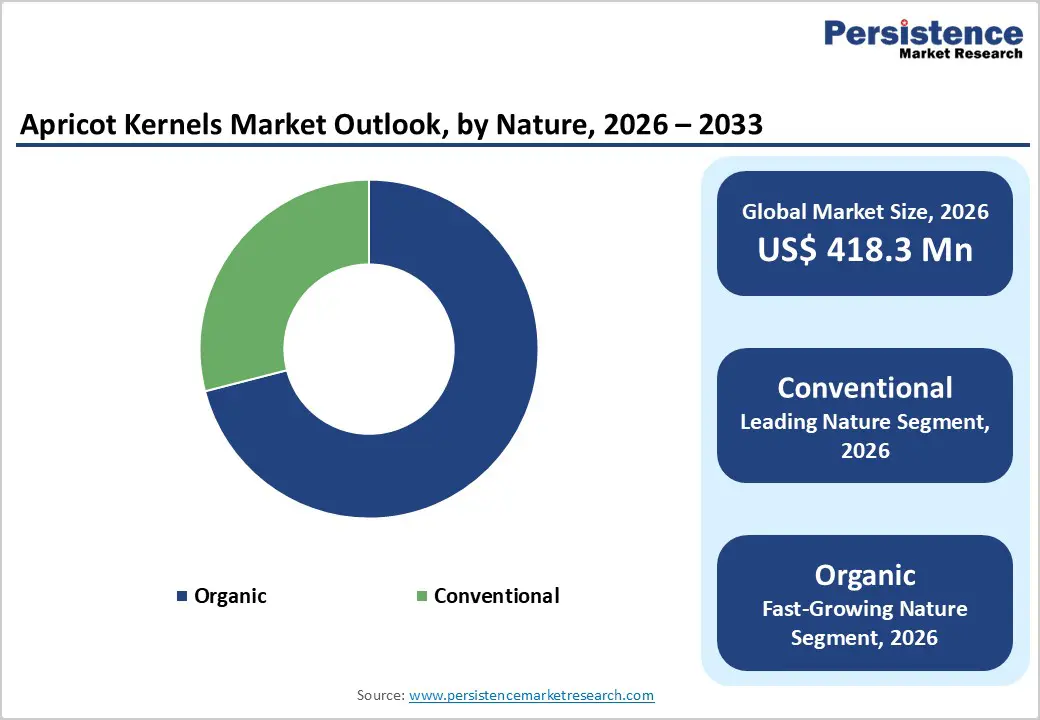
The Conventional segment currently holds a leading 71% market share in 2025, largely due to its widespread availability and lower price point. Conventional farming remains the primary method for large-scale apricot production, particularly in major exporting hubs. On the other hand, the Organic segment is identified as the fastest growing segment through 2032. This growth is fueled by the rising consumer perception that organic products are safer and more environmentally friendly. The shift toward organic nature is particularly pronounced in the Cosmetics & Personal Care sector, where brands are increasingly seeking high-quality, pesticide-free oils to meet the demands of the "green beauty" movement.
Regional Insights
Europe Apricot Kernels Market Trends and Insights
Europe currently holds the leading market share of 31% in 2025, underpinned by a strong tradition of herbal medicine and botanical skincare. Countries like Germany, France, and the U.K. are major consumers of apricot kernel oil for the cosmetics industry. The region's strict REACH regulations ensure that chemical ingredients in cosmetics meet high safety standards, which favors natural alternatives like apricot oil.
Furthermore, the European market is a hub for organic food consumption. Regulatory harmonization across the European Union has facilitated the trade of certified organic kernels, benefiting companies that adhere to these standards. The performance analysis of the region shows a steady demand from the confectionery industry, where sweet kernels are used in marzipan-like products. Europe's focus on sustainability and eco-friendly packaging also aligns well with the natural profile of apricot kernels, making it a pivotal region for global market leaders.
Asia Pacific Apricot Kernels Market Trends and Insights
Asia Pacific is identified as the fastest growing segment for the market through 2032. This rapid expansion is driven by the massive production bases in China and Central Asia, as well as the rising demand for natural ingredients in India and Japan. China is a dominant force, being both a major producer and consumer of apricot kernels, which are deeply rooted in Traditional Chinese Medicine (TCM).
The growth dynamics in the region are also influenced by the burgeoning middle class, which is increasingly seeking premium personal care and health products. Manufacturing advantages in the region allow for cost-effective processing of kernel-derived oils and powders. Furthermore, the expansion of the e-commerce sector in India and China has made apricot kernels more accessible to a wider consumer base. As local manufacturers in ASEAN countries begin to integrate apricot kernels into regional food and beauty products, the Asia Pacific region is poised to become a central pillar of the global market.
Competitive Landscape
The global apricot kernels market exhibits a fragmented structure, with a large number of regional players operating in major cultivation hubs. Competition is centered around product purity, certification, and supply chain reliability. Leading companies like Chengde Yaou Nuts & Seeds Co., Ltd. and Kenkko Corporation employ strategies focused on expanding their export networks and achieving international food safety certifications. Key differentiators in this market include the ability to provide consistent kernel sizes and low moisture content, which are critical for industrial processing. Emerging business model trends show a move toward vertical integration, where processors work directly with farmers to ensure the quality of raw materials. Additionally, the adoption of advanced sorting and grading technologies is helping market leaders maintain a competitive edge in terms of product quality and safety compliance.
Key Developments:
- In April 2024, Bauer partnered with Kern Tec to introduce a plant-based milk alternative derived from upcycled apricot kernels, transforming a byproduct of fruit farming into a sustainable dairy substitute ingredient for beverage applications.
Companies Covered in Apricot Kernels Market
- Chengde Yaou Nuts & Seeds Co., Ltd.
- Zhagjiakou Yongchangyuan Kernel Food Co.,Ltd
- Izmir Organic
- Kenkko Corporation
- Akadsun
- Keyaniyan Company GmbH
- Yaban Food
- Ladakh Basket
- Ladakh Orchards
- Others
Frequently Asked Questions
The global apricot kernels market is projected to be valued at US$ 418.3 Mn in 2026.
Rising Demand for Plant-Based Functional Ingredients is a major factor driving global Apricot Kernels market.
The Global Apricot Kernels market is poised to witness a CAGR of 6.3% between 2026 and 2033.
Expansion into the Organic and Clean-Label Segment is a significant opportunity in the Apricot Kernels market.
Major players in the Global Apricot Kernels market include Chengde Yaou Nuts & Seeds Co., Ltd., Zhagjiakou Yongchangyuan Kernel Food Co.,Ltd, Izmir Organic, Kenkko Corporation, Akadsun, Keyaniyan Company GmbH, Yaban Food and others.


