




- Processed Food
- U.S. French Fries Market
U.S. French Fries Market Size, Share, Growth, and Regional Forecast, 2026 - 2033
The U.S. French Fries Market By Product Type (Frozen French Fries, Fresh / Chilled French Fries), Nature (Organic, Conventional), End-user (HoReCa, QSRs, Foodservice, Retail / Household), Regional Analysis, 2026 - 2033

U.S. French Fries Market Share and Trends Analysis
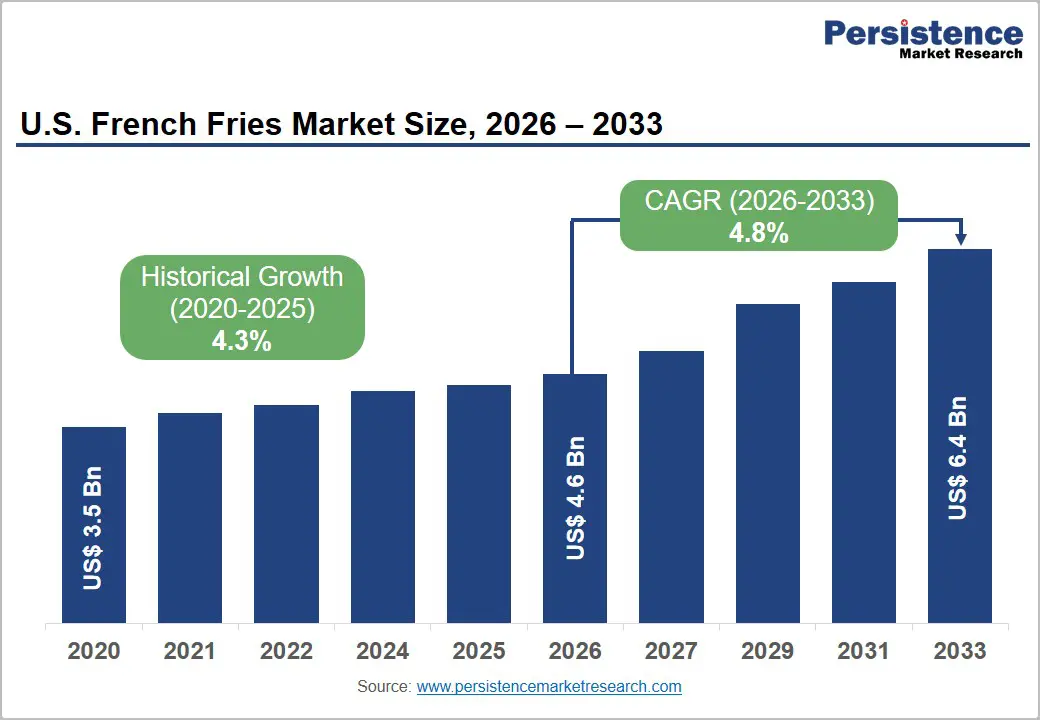
The U.S. French Fries market size is estimated to grow from US$ 4.6 billion in 2026 to US$ 6.4 billion by 2033. The market is projected to record a CAGR of 4.8% during the forecast period from 2026 to 2033.
Crispy potato products continue to strengthen their position in the U.S. convenience food industry as consumers increasingly prioritize speed, taste, and versatile meal solutions. French fries remain deeply integrated into quick-service dining, frozen retail foods, and at-home snacking habits across the country.
Expanding fast-food chains, growing air-fryer adoption, and rising preference for ready-to-cook frozen snacks are accelerating category demand among households and foodservice operators. Manufacturers are actively investing in healthier formulations, premium cuts, organic potatoes, and clean-label innovations to align with evolving consumer expectations. Product diversification through seasoned fries, waffle cuts, and skin-on varieties is further enhancing market competitiveness across retail and restaurant channels.
Key Industry Highlights:
- Leading Product Type Segment: Frozen French Fries are likely to register 81% market share as of 2025, driven by convenience, long shelf life, operational efficiency, and strong demand across quick-service restaurants and households.
- Fastest-Growing End-user Segment: Retail / Household, projected to grow at a CAGR of 6.1% during the forecast period, fueled by rising at-home dining trends, frozen food consumption, and increasing air-fryer usage across U.S. households.
- Market Drivers: Rapid expansion of quick-service restaurants, digital food delivery platforms, and fast-casual dining chains is significantly increasing demand for frozen and ready-to-cook French fries across the U.S. foodservice sector.
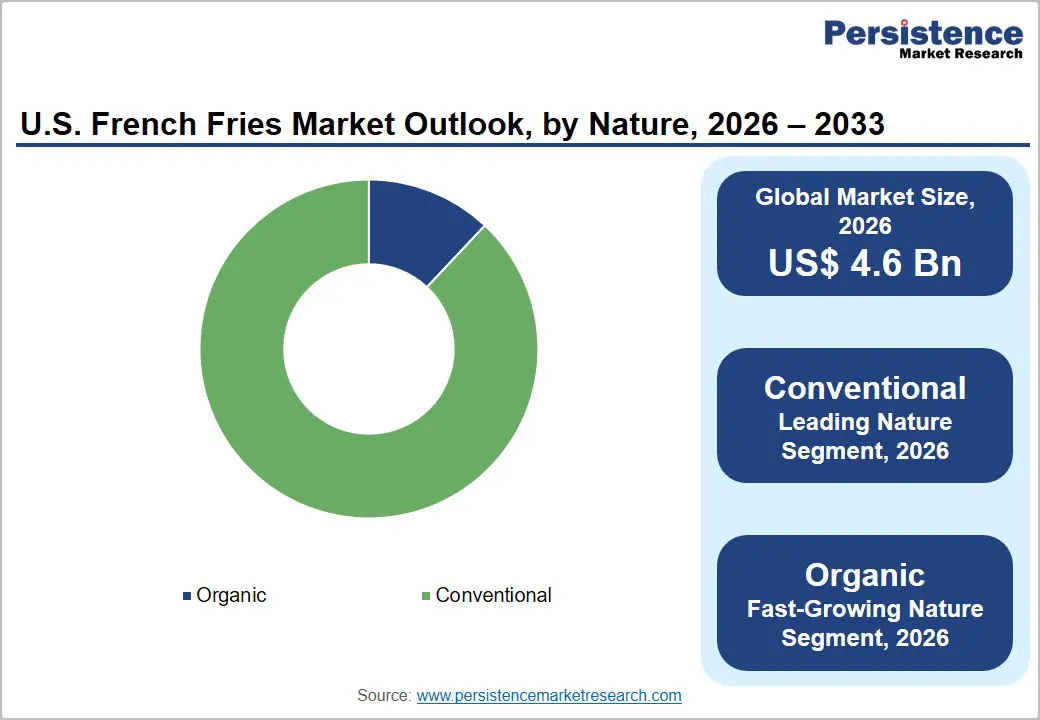
- Opportunities: Growing consumer preference for organic, clean-label, preservative-free, and minimally processed potato products is creating strong innovation and premiumization opportunities for French fries manufacturers.
- Consumer Trends: Consumers are increasingly favoring seasoned fries, air-fryer-friendly formats, skin-on potato products, and premium restaurant-style frozen snacks tailored for convenient home consumption.
- Key Industry Developments: In May 2026, Lamb Weston introduced refreshed packaging and updated branding for its Grown in Idaho retail potato portfolio under the campaign slogan “New Pack. Same Stud Spuds.”
Market Dynamics
Driver: Surging QSR & Fast-Casual Chain expansion benefits the market
Golden fries served in quick meals have become an essential part of America’s fast-food culture, creating strong momentum for the U.S. French fries market. Rapid expansion of quick-service restaurants and fast-casual dining chains is significantly increasing demand for frozen and ready-to-cook potato products across the country. Burgers, sandwiches, fried chicken meals, and combo menus frequently include French fries as a core side item, strengthening consistent volume consumption. Growing urban lifestyles, rising convenience-driven eating habits, and increasing food delivery usage are further accelerating product demand across major metropolitan areas.
Restaurant operators are actively introducing seasoned fries, loaded fries, waffle cuts, and premium potato offerings to attract younger consumers seeking flavor variety and indulgent snacking experiences. Expansion of drive-thru services, digital ordering platforms, and late-night dining trends continues supporting higher French fries consumption across the U.S. foodservice industry.
Restraint: Health & Obesity Concerns Linked to Fried Foods
French fries may remain a comfort food favorite, yet growing health awareness is reshaping consumer attitudes toward fried potato products across the U.S. Increasing concerns regarding obesity, high calorie intake, excess sodium consumption, and cardiovascular health are encouraging many consumers to reduce frequent consumption of deep-fried foods, including French fries. Parents, fitness-focused individuals, and health-conscious consumers are increasingly shifting toward baked snacks, air-fried alternatives, and low-fat meal options perceived as healthier choices. Public health campaigns and nutritional awareness initiatives are also influencing dietary habits across younger demographics and urban households.
Foodservice operators and frozen potato manufacturers are facing rising pressure to improve nutritional profiles while maintaining traditional taste and texture expectations. Concerns surrounding processed oils, trans fats, and excessive fast-food consumption may continue limiting demand growth across certain consumer groups within the U.S. French fries industry.
Opportunity: Growing Demand for Organic and Clean-label Products
Consumers increasingly prefer products made with simple ingredients, non-GMO potatoes, organic farming practices, and reduced artificial additives as awareness regarding food quality and transparency continues to rise. Demand for clean-label French fries prepared with healthier oils, lower sodium content, and preservative-free processing is expanding across retail and foodservice channels. Families, younger consumers, and wellness-focused buyers are actively seeking products aligned with natural and minimally processed food preferences.
Key players are investing in organic potato sourcing, sustainable farming partnerships, and advanced processing technologies to strengthen premium product positioning. Expansion of air-fryer-friendly fries, skin-on potato products, and minimally processed frozen formats is also supporting innovation opportunities across supermarkets and quick-service restaurant supply chains in the U.S.
Category-wise Analysis
By Product Type Insights
Frozen French Fries with an 81% share as of 2026 continue to dominate the U.S. French fries market due to their strong convenience appeal, longer shelf life, and widespread usage across quick-service restaurants, retail stores, and household consumption. Consumers increasingly prefer frozen fries because they offer consistent texture, easy preparation, and compatibility with ovens, air fryers, and deep-frying methods. Expanding fast-food culture, rising demand for ready-to-cook snacks, and growing preference for convenient meal accompaniments are further strengthening product demand across urban households. Foodservice operators also favor frozen fries for operational efficiency and standardized quality.
Manufacturers are actively introducing seasoned variants, crinkle cuts, skin-on fries, and air-fryer-friendly products to improve consumer engagement. Advanced freezing technologies, improved packaging solutions, and expansion of retail freezer infrastructure continue supporting strong commercial growth across the U.S.
By End-user Insights
Retail/Household is expected to reach a CAGR 6.1% during the forecast period, fueled by rising at-home dining habits, expanding frozen food consumption, and increasing demand for convenient snack solutions across U.S. households. Consumers increasingly prefer frozen French fries because they offer quick preparation, restaurant-style taste, and compatibility with air fryers, ovens, and modern kitchen appliances. Busy lifestyles, hybrid work patterns, and growing family preference for easy meal accompaniments are further strengthening retail demand for frozen potato products. Premium seasoned fries, crinkle cuts, waffle fries, and skin-on varieties are also gaining popularity among younger consumers and families.
Manufacturers are actively expanding retail-focused product portfolios with organic, clean-label, and air-fryer-friendly formats tailored toward health-conscious households. Growth in supermarket freezer sections, online grocery platforms, and bulk retail purchasing is further accelerating household consumption across the U.S.
Competitive Landscape
The U.S. French fries market is highly competitive, driven by frozen potato processors, quick-service restaurant suppliers, retail food brands, and specialty potato product manufacturers competing through convenience, flavor innovation, and premium product positioning. Companies are increasingly investing in air-fryer-friendly fries, seasoned varieties, organic potato sourcing, and clean-label formulations to address evolving consumer preferences. Product differentiation through crinkle cuts, waffle fries, skin-on formats, and reduced-oil processing technologies is strengthening competition across retail and foodservice channels.
Leading manufacturers are expanding frozen processing capacities, upgrading cold-chain logistics, and strengthening partnerships with quick-service restaurants and supermarket retailers to improve distribution efficiency. Sustainable farming practices, advanced freezing technologies, and attractive retail packaging innovation are becoming important competitive strategies. Companies are also focusing on healthier preparation formats and premium potato varieties to strengthen long-term market positioning across the U.S.
Key Industry Developments:
- In May 2026, Lamb Weston launched refreshed packaging and updated branding for its Grown in Idaho retail potato product portfolio under the campaign slogan “New Pack. Same Stud Spuds.”
- In May 2026, FPS Food Process Solutions secured a major project with MAF Gateways to deliver a complete potato processing and freezing line in Egypt aimed at supporting both domestic demand and export-oriented frozen French fry production.
- In November 2025, McCain Foods agreed to acquire Penobscot McCrum LLC, strengthening its North American potato products network and expanding operational capabilities across the region.
Companies Covered in U.S. French Fries Market
- Lamb Weston, Inc.
- Conagra Brands, Inc.
- Kraft Heinz Company
- General Mills, Inc.
- B&G Foods, Inc.
- Hormel Foods Corp.
- McCain Foods Limited
- Simplot Global Food, LLC
- Cavendish Farms
- Farm Frites International B.V
- Smithfield Foods, Inc.
- Others
Frequently Asked Questions
The U.S. French Fries market is projected to be valued at US$ 4.6 Bn in 2026.
Surging QSR & Fast-Casual Chain expansion is driving the U.S. French Fries market.
The U.S. French Fries market is poised to witness a CAGR of 4.8% between 2026 and 2033.
Rising consumer preference for organic, clean-label, and minimally processed potato products is generating strong growth opportunities in the U.S. French Fries Market.
Lamb Weston, Inc., Conagra Brands, Inc., Kraft Heinz Company, General Mills, Inc., B&G Foods, Inc., Hormel Foods Corp., McCain Foods Limited.


