




- Medical Devices
- Tablet Crushers Market
Tablet Crushers Market Size, Share, and Growth Forecast, 2026 – 2033
Tablet Crushers Market by Product Type (Handheld Tablet Crushers, Electric Tablet Crushers, Silent Tablet Crushers), Material (Glass, Metal, Plastic, Porcelain), and Regional Analysis for 2026 – 2033

Tablet Crushers Market Size and Trends Analysis
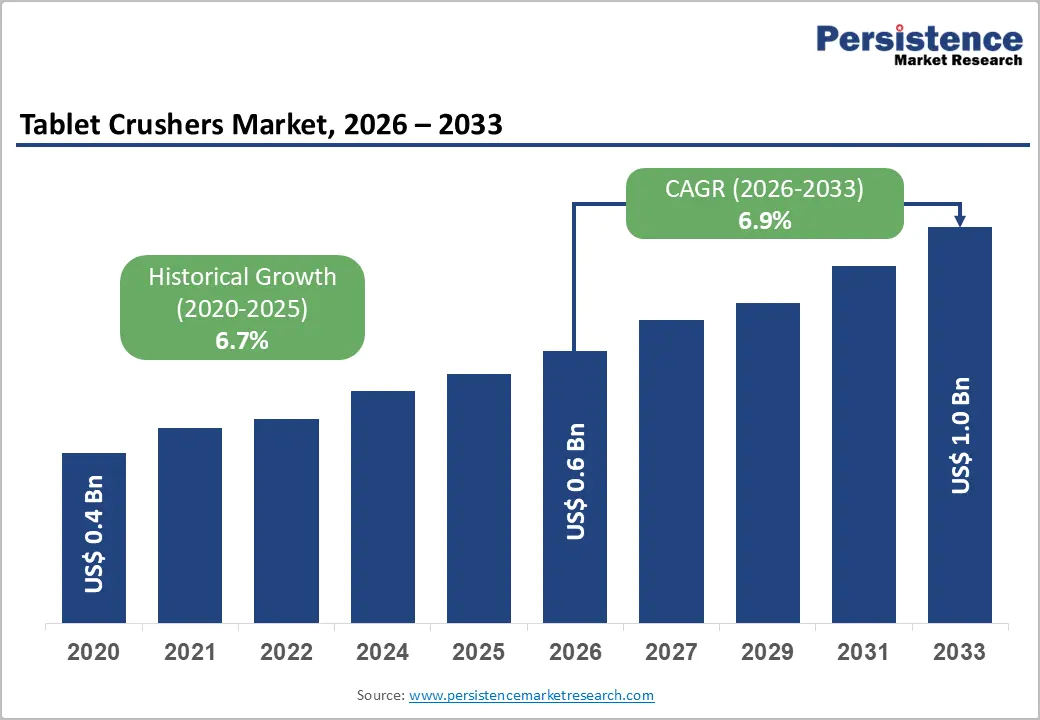
The global tablet crushers market size is likely to be valued at US$0.6 billion in 2026 and is expected to reach US$1.0 billion by 2033, growing at a CAGR of 6.9% during the forecast period from 2026 to 2033, driven by the rising elderly population, increasing prevalence of dysphagia, and growing demand for efficient medication management in hospitals, long-term care centers, and home healthcare settings.
Recent healthcare studies published in 2025 highlighted a growing incidence of swallowing disorders among hospitalized older adults, supporting demand for tablet crushing solutions. According to the World Health Organization, by 2030, one in six people globally will be aged 60 years or older, significantly increasing the need for assisted drug administration devices.
Regulatory endorsements from bodies such as the U.S. Food and Drug Administration (FDA) and the European Medicines Agency (EMA) regarding safe medication administration practices are reinforcing demand for standardized crushing equipment.
Key Industry Highlights:
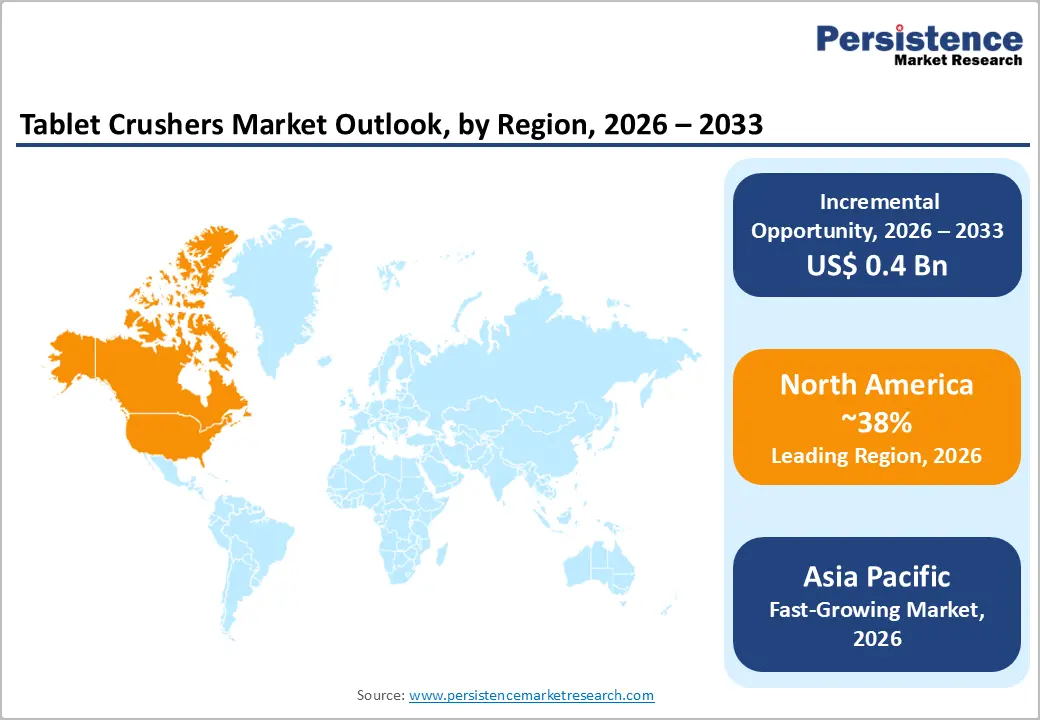
- Leading Region: North America is anticipated to be the leading region, accounting for a market share of 38% in 2026, driven by strong healthcare infrastructure, a high geriatric population, and increasing demand for medication management solutions.
- Fastest-growing Region: Asia Pacific is likely to be the fastest-growing region, supported by a rising elderly population and increasing demand for cost-effective medication management solutions.
- Leading Product Type: Handheld tablet crushers are projected to represent the leading product type in 2026, accounting for 48% of the revenue share, driven by their affordability and ease of use across home care and small healthcare settings.
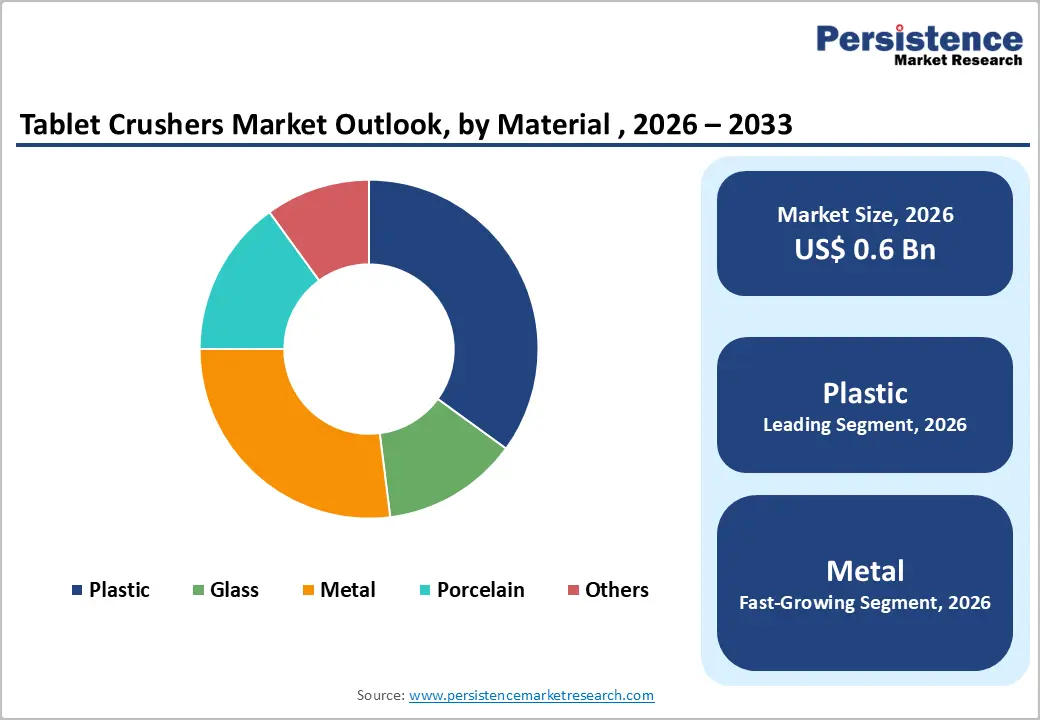
- Leading Material: Plastic-based tablet crushers are anticipated to be the leading material, accounting for over 46% of the revenue share in 2026, supported by their lightweight structure, low cost, and hygienic disposability features.
- Key Opportunity: The rising focus on elderly care and home-based healthcare is creating strong opportunities for advanced, silent, and hygiene-focused tablet crushers that improve medication adherence, patient comfort, and caregiver efficiency across modern healthcare environments.
DRO Analysis
Driver - Growing Demand for Assisted Medication Administration in Elderly Care
Older adults commonly experience dysphagia, arthritis, stroke complications, and neurological disorders that make swallowing solid medications difficult. Tablet crushers help convert tablets into powder form, improving medication adherence and patient comfort. The World Health Organization (WHO) estimates that one in three adults aged 65 and older takes five or more medications daily, though this rate exceeds 50% in countries such as the U.K., or for those in nursing homes.
Healthcare providers are increasingly adopting portable, easy-to-use crushers to support geriatric patients requiring long-term therapies, especially in chronic disease management and rehabilitation settings. The rising prevalence of chronic diseases, including Parkinson’s disease, Alzheimer’s disease, and cardiovascular disorders, accelerates growth. Patients with these conditions frequently require multiple medications daily, increasing the need for efficient pill management solutions.
Long-term care facilities and hospitals are investing in advanced medication administration tools to reduce patient discomfort and improve treatment compliance. Home healthcare expansion also contributes significantly, as caregivers seek convenient devices for elderly family members. Manufacturers are responding with ergonomic and lightweight tablet crushers designed for frequent use.
Restraint - Infection Control and Cross-Contamination Risks
Reusable crushers can retain medication residue if not cleaned properly, increasing the risk of contamination between patients. Certain drug particles may also interact negatively with subsequent medications, creating safety concerns for healthcare providers. Regulatory agencies and healthcare institutions are emphasizing strict sanitation protocols, which increase operational complexity and cleaning requirements.
Healthcare providers are increasingly cautious regarding medication handling standards, particularly after heightened awareness of infection prevention in recent years. Tablet crushers made from low-quality materials develop cracks or surface damage over time, making proper cleaning difficult and increasing bacterial accumulation risks. Disposable medication pouches and single-use accessories partially address these concerns but also raise operational costs for hospitals and caregivers. Regulatory pressure surrounding hygiene compliance continues to influence purchasing decisions across healthcare institutions.
Opportunity - Product Innovation – Silent and Smart Electric Tablet Crushers
Healthcare facilities increasingly prefer low-noise equipment to maintain calm environments in hospitals, rehabilitation centers, and nursing homes. Silent crushers help reduce patient discomfort, particularly among elderly individuals and patients with neurological disorders sensitive to excessive noise. Manufacturers are integrating automated crushing mechanisms that improve consistency and reduce physical effort for caregivers.
Advanced electric models also enhance operational efficiency in high-volume medication settings. Silent tablet crushers with noise levels below 50 decibels are gaining adoption in ICUs, pediatric wards, and memory care facilities. Electrically powered, programmable crushers with sealed chamber technology reduce operator error.
Smart electric tablet crushers equipped with safety locks, programmable settings, and automated dose management capabilities are gaining attention among healthcare providers seeking improved medication accuracy. Integration of easy-clean surfaces, antimicrobial materials, and portable rechargeable systems strengthens product appeal across hospitals and home care environments. Companies are also investing in compact and ergonomic product designs to improve usability for caregivers and elderly patients.
Category-wise Analysis
Product Type Insights
Handheld tablet crushers are expected to lead the tablet crushers market, accounting for approximately 48% of revenue in 2026, driven by their affordability, portability, and ease of use across home care and small healthcare settings. These crushers are widely preferred by elderly patients and caregivers because they require minimal maintenance and support quick medication preparation. A notable example includes the handheld tablet crusher range offered by Medline Industries, Inc., which is extensively utilized in nursing homes and assisted living centers for daily medication management applications.
Electric tablet crushers are likely to represent the fastest-growing segment, supported by an increasingly prioritized efficiency, consistency, and reduced caregiver workload. Hospitals, rehabilitation centers, and long-term care facilities are adopting automated crushers to improve medication administration processes for patients requiring multiple prescriptions daily. Silent electric variants are gaining additional traction in noise-sensitive settings, including geriatric wards and dementia care facilities, where maintaining calm patient surroundings is important. For instance, the electric tablet crushing systems developed by Cardinal Health are designed to improve patient safety, reduce medication preparation time, and support institutional medication management efficiency.
Material Type Insights
Plastic tablet crushers are projected to lead the market, capturing around 46% of the revenue share in 2026, supported by their lightweight construction, cost-effectiveness, and hygienic disposability advantages. Healthcare providers and home care users widely prefer plastic crushers because they are affordable and easy to replace, making them practical for routine medication management. For example, the plastic tablet crusher portfolio offered by DUKAL Corporation is commonly used across clinics and nursing facilities for efficient medication administration and hygiene-focused patient care practices.
Metal tablet crushers are likely to be the fastest-growing material type, driven by their superior durability, long-term reliability, and suitability for repeated institutional use. Hospitals and rehabilitation centers increasingly prefer metal crushers because they withstand heavy daily usage while maintaining consistent crushing performance over extended periods. A notable example includes the professional-grade metal crushing equipment manufactured by Briggs Healthcare, designed specifically for high-volume medication management applications in hospitals.
Regional Insights
North America Tablet Crushers Market Trends
North America is anticipated to be the leading region, accounting for a market share of 38% in 2026, driven by advanced healthcare infrastructure, strong elderly care systems, and increasing awareness regarding dysphagia management. Hospitals, assisted living centers, and home healthcare providers are rapidly adopting advanced tablet crushing devices to improve medication adherence among aging populations. For example, CareLine Medical has expanded its medication management product offerings for nursing homes and rehabilitation centers.
U.S. Tablet Crushers Market Trends
The U.S. dominates the regional market, driven by its large geriatric population and increasing prevalence of chronic diseases requiring long-term medication administration support. Hospitals and long-term care facilities are investing in electric tablet crushers that reduce caregiver workload and improve dosage preparation consistency. Rising adoption of home healthcare services is supporting portable crusher demand among elderly patients.
Canada Tablet Crushers Market Trends
Canada is a significant market for tablet crushers, supported by increasing healthcare investments and a rising elderly population requiring assisted medication administration solutions. Long-term care facilities are emphasizing patient comfort and medication adherence, driving demand for silent and ergonomic crushing devices. Hospitals are increasingly adopting reusable and easy-to-clean crushers to support infection control standards. Growth in community healthcare services and home care programs is creating additional opportunities for portable medication management equipment.
Europe Tablet Crushers Market Trends
Europe is likely to be a significant market for tablet crushers in 2026, due to expanding elderly populations, rising chronic disease burden, and increasing focus on patient-centric healthcare practices. Healthcare providers across hospitals and nursing homes are adopting advanced medication management devices to improve treatment compliance among patients with swallowing disorders. A notable example includes Medline Industries, Inc., which supplies tablet crushers and medication management products to hospitals and long-term care facilities across several European healthcare distribution networks.
U.K. Tablet Crushers Market Trends
The U.K. is a significant market for tablet crushers, supported by growing demand for elderly care services and increased focus on safe medication administration practices. National healthcare providers are emphasizing patient safety and medication adherence in hospitals and community healthcare programs. Rising pressure on healthcare staff is encouraging the adoption of automated crushers that reduce preparation time and physical effort. Long-term care facilities are increasingly utilizing portable and silent crushers for patients with swallowing disorders and neurological conditions.
Germany Tablet Crushers Market Trends
Germany dominates the regional market, driven by its advanced hospital infrastructure and strong elderly care services. Healthcare institutions are increasingly investing in automated medication preparation systems to improve operational efficiency and reduce caregiver workload. Demand for durable metal tablet crushers is rising because of strict hygiene and sterilization standards in German healthcare facilities. The country’s rehabilitation centers and nursing homes are also adopting silent crushers to support patient comfort during medication administration.
Asia Pacific Tablet Crushers Market Trends
The Asia Pacific region is likely to be the fastest-growing region in tablet crushers in 2026, driven by rapidly aging populations, expanding healthcare infrastructure, and increasing healthcare expenditure across developing economies. Hospitals and home healthcare providers are witnessing rising demand for medication management solutions that improve treatment adherence among elderly patients and those with chronic diseases. For instance, Scientific Industries Inc. has expanded international healthcare equipment distribution partnerships supporting medication management technology availability across hospitals and care facilities.
China Tablet Crushers Market Trends
China dominates the regional market, driven by rapid healthcare infrastructure expansion and an increasing elderly population requiring long-term medication support. Hospitals and elderly care facilities are increasingly adopting automated tablet crushers to improve efficiency in medication preparation processes. The rising prevalence of chronic illnesses and neurological disorders is supporting product demand.
India Tablet Crushers Market Trends
India is a significant market for tablet crushers, supported by expanding healthcare access, increasing chronic disease prevalence, and rising awareness regarding elderly patient care. Hospitals and home healthcare providers are adopting affordable medication management solutions to improve treatment adherence among aging populations. Growth in private healthcare infrastructure is supporting higher adoption of electric and ergonomic crushing devices.
Competitive Landscape
The global tablet crushers market exhibits a moderately fragmented structure, driven by the presence of both multinational healthcare suppliers and specialized medication management device manufacturers. Growing demand from hospitals, nursing homes, rehabilitation centers, and home healthcare settings is intensifying competition among market participants. Companies are increasingly focusing on ergonomic product designs, silent crushing technologies, and easy-clean mechanisms to strengthen their market position.
With key leaders including Cardinal Health, Medline Industries, Inc., Briggs Healthcare, Graham Field Health Products, Inc., and DUKAL Corporation, the competitive landscape continues evolving through product innovation and distribution expansion strategies. These players compete through advanced electric crushers, silent operation technologies, improved hygiene-focused designs, and partnerships with hospitals and long-term care providers.
Key Industry Developments:
- In April 2026, Briggs Healthcare highlighted the growing adoption of its Silent Knight Tablet Crushing System across hospitals and long-term care facilities due to its quiet dual-action crushing technology, ergonomic design, and disposable pouch system that helps minimize cross-contamination risks during medication administration.
In March 2026, Medline strengthened its medication management portfolio by promoting the Rx Crush ENFit Tablet Crusher, designed to support safer enteral medication delivery and reduce tube misconnections through ENFit-compatible systems aligned with ISO safety standards. The device gained attention across hospitals and long-term care facilities for improving medication administration efficiency and patient safety in enteral feeding applications
Companies Covered in Tablet Crushers Market
- Cardinal Health
- Briggs Healthcare
- Medline Industries, Inc.
- Graham Field Health Products, Inc.
- Equadose
- CareLine Medical
- Avacare Medical
- RD Plastics
- Tiger Medical Group
- DUKAL Corporation
- Scientific Industries, Inc.
Frequently Asked Questions
The global tablet crushers market is projected to reach US$0.6 billion in 2026.
The tablet crushers market is driven by the growing elderly population, rising prevalence of dysphagia and chronic diseases, and increasing demand for efficient medication management in hospitals and home healthcare settings.
The tablet crushers market is expected to grow at a CAGR of 6.9% from 2026 to 2033.
Key market opportunities in the tablet crushers market include the development of silent and smart electric crushers, expanding home healthcare adoption, and rising demand for hygienic medication management solutions in elderly care facilities.
Cardinal Health, Briggs Healthcare, Medline Industries, Inc, and Graham Field Health Products, Inc. are the leading players.


