




- Food and Beverages
- Surimi Market
Surimi Market Size, Share, Growth, and Regional Forecast, 2026 to 2033
Surimi Market is segmented by Source (Fish, Beef, Pork, Plant, Others), End-user (Food Processing Industry, Foodservice, Retail / Household), by Sales Channel (Supermarkets & Hypermarkets, Specialty Stores, Online Retail, Others), and by Regional Analysis, 2026 - 2033

Surimi Market Share and Trends Analysis
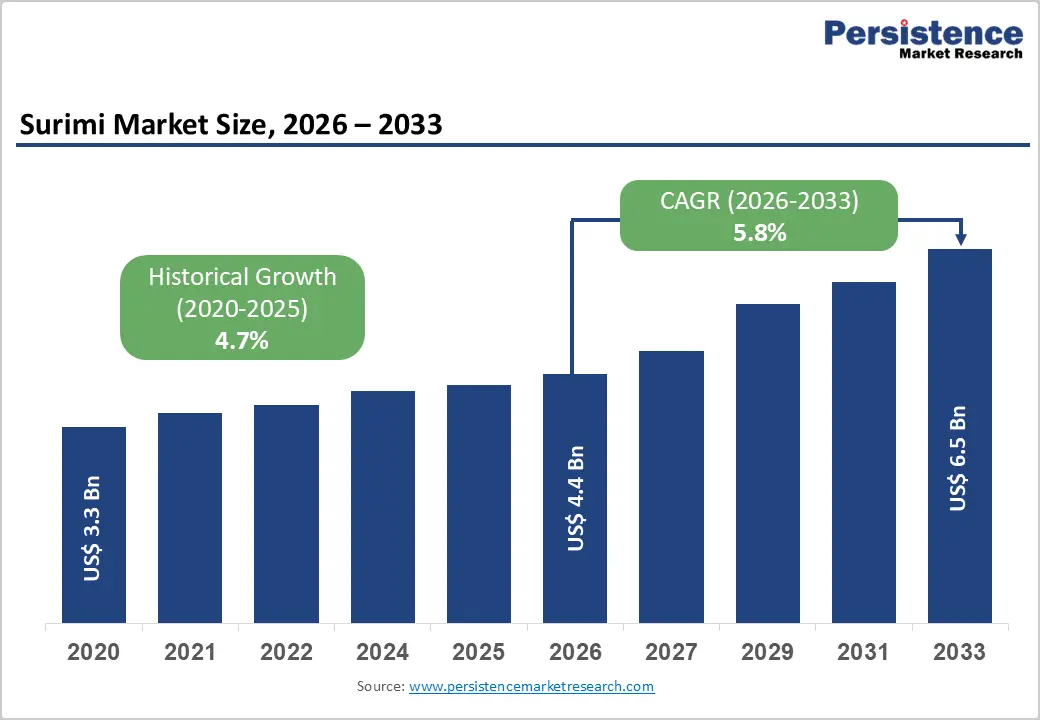
The global surimi market size is expected to be valued at US$ 4.4 billion in 2026 and projected to reach US$ 6.5 billion by 2033, growing at a CAGR of 5.8% between 2026 and 2033.
The market's upward trajectory is primarily underpinned by the intensifying global demand for cost-effective, high-protein seafood alternatives and the functional versatility of surimi in various culinary applications. As a stabilized myofibrillar protein obtained from mechanically deboned fish flesh, surimi serves as the foundational ingredient for popular imitation products like crab sticks and kamaboko. The consistent growth is further bolstered by technological advancements in surimi processing and the rising consumer preference for ready-to-eat and ready-to-cook seafood formulations across both developed and developing economies.
Key Industry Highlights:
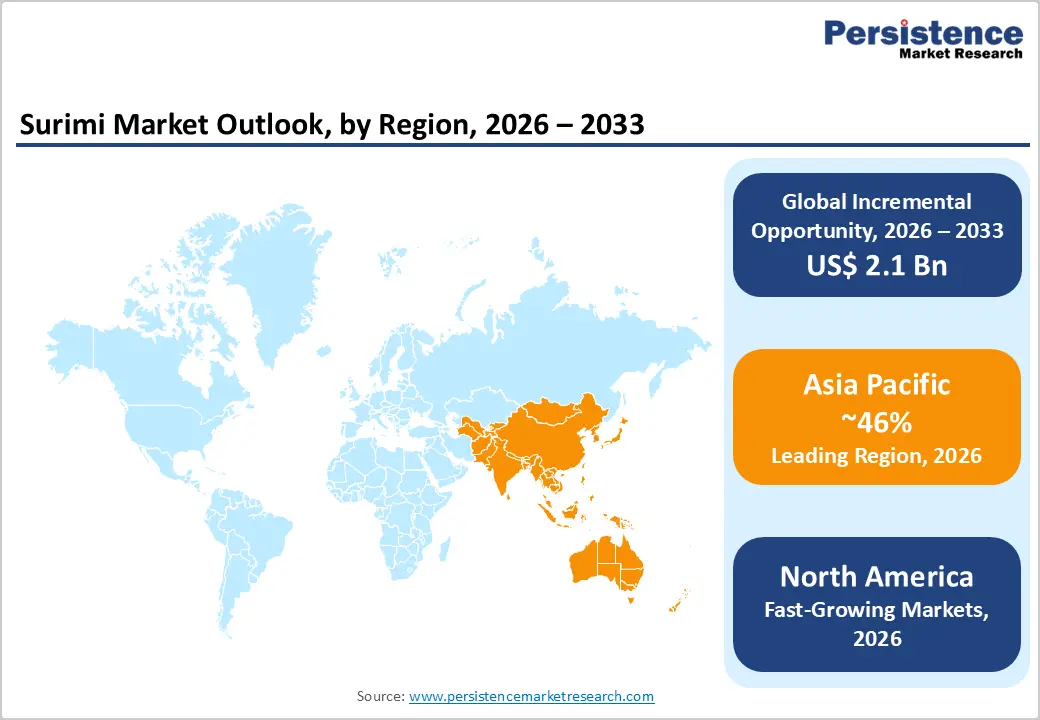
- Leading Region: Asia Pacific, holding 46% market share, driven by strong cultural consumption of surimi products, extensive seafood processing infrastructure, and widespread use in traditional foods such as fish balls, kamaboko, and hot pot ingredients.
- Fastest-Growing Region: North America, supported by expanding demand for high-protein seafood snacks, the sustainable Alaska pollock fishery, and growing integration of surimi into modern culinary formats like sushi and poke bowls.
- Leading Source Segment: Fish dominates the market due to its superior gel-forming protein structure and established supply chains using species such as Alaska pollock and Pacific whiting for high-quality surimi paste production.
- Market Drivers: Rapid growth in ready-to-eat seafood consumption and the versatility of surimi in replicating premium seafood textures are accelerating adoption across foodservice, food processing, and retail sectors.
- Opportunities: Innovation in non-fish surimi sources and plant-based alternatives enables producers to diversify raw material sourcing while meeting sustainability and vegan seafood demand.
- Key Developments: In February 2026, the Association of Genuine Alaska Pollock Producers issued an RFP to support surimi production research in India. In November 2025, Trident Seafoods launched Louis Kemp Sea Legs surimi seafood product exclusively in the freezer aisle of Walmart.
| Key Insights | Details |
|---|---|
| Global Surimi Market Size (2026E) | US$ 4.4 Bn |
| Market Value Forecast (2033F) | US$ 6.5 Bn |
| Projected Growth (CAGR 2026 to 2033) | 5.8% |
| Historical Market Growth (CAGR 2020 to 2025) | 4.7% |
Market Dynamics
Driver - Rapid Expansion of Ready-to-Eat (RTE) Seafood Convenience Trends
The modern consumer's lifestyle, characterized by time constraints and a preference for convenience, has significantly boosted the surimi market. Surimi-based products are highly processed and pre-cooked, making them ideal for the Retail / Household and Foodservice sectors. The versatility of surimi allows it to be molded into various shapes and textures, mimicking expensive seafood like lobster, shrimp, and crab. The consumption of surimi seafood in salads, sushi rolls, and snacks has surged as consumers look for quick, healthy meal solutions. This convenience factor is a major catalyst for market growth, especially in urban areas where the demand for chilled and frozen seafood snacks is consistently rising.
Restraints - Fluctuating Raw Material Availability and Environmental Regulations
A significant barrier to the steady growth of the surimi market is the volatility in the supply of raw materials, specifically whitefish species. Overfishing and stringent environmental quotas established by organizations like the National Marine Fisheries Service (NMFS) can lead to sudden shortages of Alaska Pollock or Pacific Whiting. These supply chain disruptions often result in price spikes for surimi paste, impacting the profit margins of global processors. Furthermore, climate change and warming ocean temperatures are shifting fish migration patterns, creating unpredictability in catch volumes. These environmental and regulatory constraints force companies to maintain complex inventory strategies, which can hinder the market's ability to achieve its full potential in terms of cost-efficiency.
Opportunity - Innovation in Non-Fish Surimi Sources and Plant-Based Alternatives
Reimagining surimi beyond traditional fish inputs is opening a new frontier for innovation within the global seafood processing industry. Producers are experimenting with alternative protein bases such as poultry, beef, and even algae-derived ingredients to replicate the fibrous texture and mild flavor profile that defines surimi products. These innovations allow manufacturers to diversify raw material sourcing while mitigating risks linked to fluctuating fish stocks and supply chain disruptions. Non-fish surimi formulations also enable product developers to introduce hybrid seafood analogs that maintain familiar textures while appealing to broader consumer segments seeking novel protein formats.
Simultaneously, plant-based surimi alternatives are emerging as a promising category for health- and sustainability-focused consumers. Food technology companies are leveraging pea protein, soy isolates, konjac, and seaweed extracts to recreate the elastic texture associated with traditional surimi. Such developments create opportunities for seafood processors to expand into vegan seafood analogs, tapping into growing demand for ethical and environmentally responsible protein options. As texture engineering and flavor encapsulation technologies advance, plant-based surimi products are expected to unlock new retail and foodservice applications globally.
Category-wise Insights
By Source
The Fish segment remains the dominant source for surimi production, primarily utilizing whitefish species such as Alaska Pollock, Pacific Whiting, and various tropical fish. This segment benefits from established global supply chains and the superior gel-forming properties of fish myofibrillar proteins. However, there is an increasing interest in plant-based surimi. As sustainability becomes a core consumer value, these non-traditional sources are expected to see significant investment. While Beef and Pork surimi find localized applications in specific Asian meat-analog products, the global focus remains on optimizing fish-based surimi to meet the food processing industry standards.
By End-user
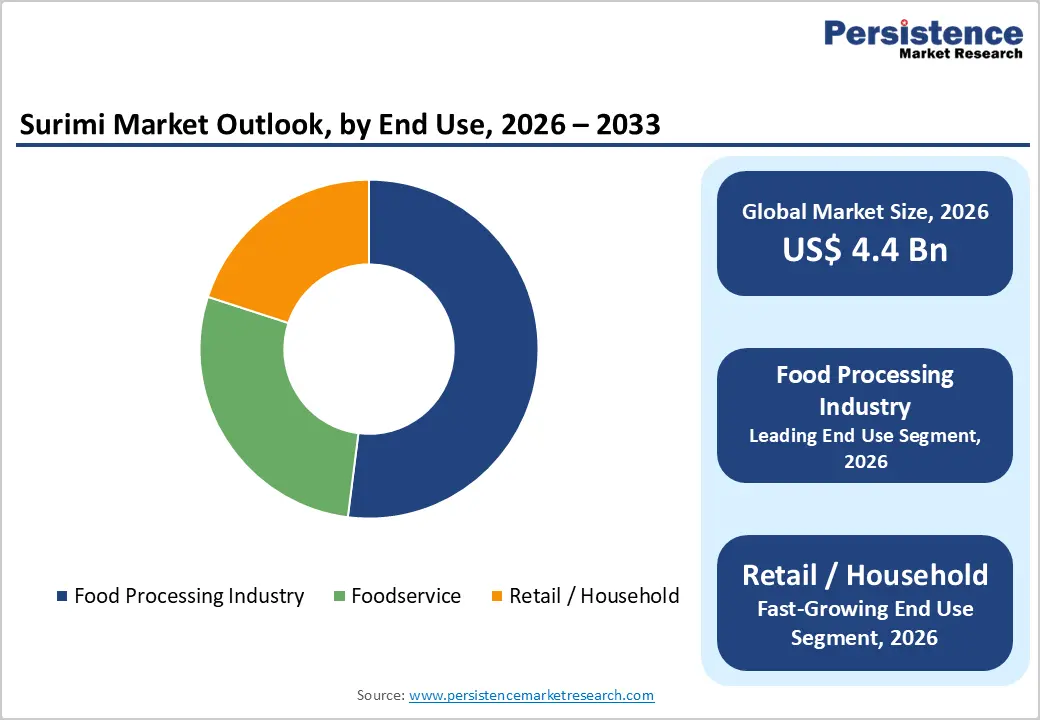
The Food Processing Industry is the leading end-use segment, accounting for a substantial 53% market share in 2025. This dominance is attributed to the widespread use of surimi paste as a raw material for producing crab sticks, kamaboko, fish balls, and other restructured seafood products. Manufacturers in this sector prioritize surimi for its excellent binding and gelling properties. Conversely, the Retail / Household segment is identified as the fastest-growing segment through 2033. This growth is fueled by the introduction of branded, ready-to-eat surimi snacks and frozen meal kits that cater to the home-cooking trend. As retailers expand their private-label seafood offerings, surimi's role as a versatile home-cooking ingredient is becoming more prominent.
Regional Insights
North America Surimi Market Trends and Insights
North America is identified as the fastest-growing region for the surimi market through 2033. The market leadership in the U.S. is driven by the massive Alaska Pollock fishery, which is one of the most sustainably managed fisheries in the world. Organizations like the Association of Genuine Alaska Pollock Producers (GAPP) have been instrumental in rebranding surimi as wild-caught whitefish protein to appeal to health-conscious American consumers.
The innovation ecosystem in North America is focused on the development of clean label surimi products and high-protein snacks. Regulatory frameworks established by the FDA ensure high safety standards, fostering consumer trust. The region is seeing a surge in surimi integration into mainstream culinary trends, such as poke bowls and high-end sushi. With the rising popularity of seafood-based diets and the expansion of the Online Retail channel, North America is poised to see significant volume growth over the forecast period.
Asia Pacific Surimi Market Trends and Insights
Asia Pacific currently holds the leading market share of 46% in 2025, deeply rooted in the cultural heritage of surimi consumption in countries like Japan, China, South Korea, and Thailand. Japan remains the global hub for surimi innovation, where companies like Maruha Nichiro Corporation and Nissui Corporation have pioneered processing technologies. The region benefits from extensive manufacturing advantages and a well-established aquaculture and fishing infrastructure.
In China and Southeast Asia, the demand for surimi is driven by its widespread use in street food, particularly fish balls and hot pot ingredients. The growth dynamics in this region are further supported by a rising middle class and the expansion of modern retail chains. Regulatory support for sustainable fishing in the ASEAN region is also helping to stabilize the supply of raw materials. As the Asia Pacific region continues to lead in surimi production and consumption, it remains the primary engine for global market value.
Competitive Landscape
The global surimi market exhibits a consolidated structure, dominated by a few global giants with highly integrated supply chains. Key market leaders like Maruha Nichiro Corporation, Nissui Corporation, and Trident Seafoods Corporation control a significant portion of the raw material supply, particularly in the Alaska Pollock and tropical fish segments. These companies employ strategies focused on vertical integration, research and development, and global expansion. Key differentiators in the market include the ability to produce high-grade surimi paste with superior gel strength and color. Emerging business models are increasingly prioritizing sustainability certifications, such as Marine Stewardship Council (MSC) certification, to appeal to eco-conscious retailers and consumers. As the market matures, there is a visible trend toward strategic partnerships between surimi processors and food technology companies to create next-generation seafood mimics.
Key Developments:
- In February 2026, the Association of Genuine Alaska Pollock Producers (GAPP) issued a request for proposals (RFP) to support new research on surimi production in India, aiming to expand processing capabilities and explore new market opportunities for Alaska pollock-based products.
- In November 2025, Trident Seafoods expanded its retail presence with the launch of Louis Kemp Sea Legs, a surimi seafood product made from Alaska pollock, now available exclusively in the freezer aisle of Walmart stores.
- In June 2025, Maruha Nichiro Corporation announced the launch of a new freeze-dried surimi snack, designed to make fish-derived protein more accessible to health-conscious consumers seeking convenient, high-protein seafood snack options.
Frequently Asked Questions
The global surimi market is projected to be valued at US$ 4.4 Bn in 2026.
Rapid Expansion of Ready-to-Eat (RTE) Seafood Convenience Trends is a major factor driving the global Surimi market.
The Global Surimi market is poised to witness a CAGR of 5.8% between 2026 and 2033.
Innovation in Non-Fish Surimi Sources and Plant-Based Alternatives is a significant opportunity in the Surimi market.
Major players in the Global Surimi market include Maruha Nichiro Corporation, Nissui Corporation, Kyokuyo Co., Ltd., Dongwon Industries Co., Ltd., Pacific Seafood, Trident Seafoods Corporation, and others.


