




- Display Technologies
- Stretchable Devices Market
Stretchable Devices Market Size, Share, and Growth Forecast, 2026 - 2033
Stretchable Devices Market by Component Type (Stretchable Batteries, Stretchable Displays, Stretchable Sensors, Stretchable Circuits & Conductors, Stretchable Transistors, Stretchable Photovoltaics / Energy Harvesters, and Others.), Material (Polydimethylsiloxane (PDMS), Ecoflex, Polyurethane, Electroactive Polymers (EAPs), Conductive Nanomaterials, and Others / Hybrid Materials.), End Use Industry (Healthcare & Medical, Consumer Electronics, Automotive Electronics, Aerospace & Defense, Sports & Fitness, Energy & Power, and Others) and Regional Analysis for 2026 - 2033

Stretchable Devices Market Size and Trends Analysis
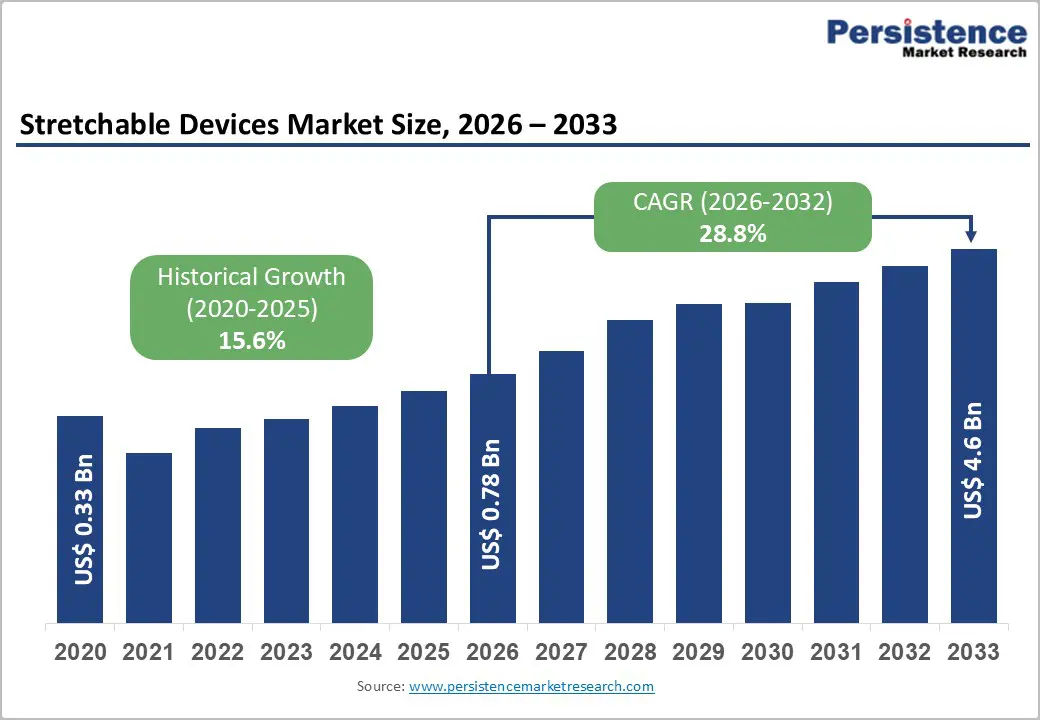
The Global Stretchable Devices Market size was valued at US$0.8 billion in 2026 and is projected to reach US$4.1 billion by 2033, growing at a CAGR of 25.2% between 2026 and 2033. This exceptional growth trajectory reflects accelerating demand for wearable health monitoring devices, breakthrough advancements in flexible materials and manufacturing processes enabling commercial-scale production, and systematic investment from major technology companies including Apple, Samsung, and Google pursuing next-generation flexible and stretchable display technologies.
The market's rapid expansion is driven by healthcare sector digitalization prioritizing remote patient monitoring, consumer adoption of wearable fitness and health tracking devices, and automotive and aerospace industries incorporating lightweight stretchable electronics into advanced vehicle platforms and aircraft systems.
Key Industry Highlights:
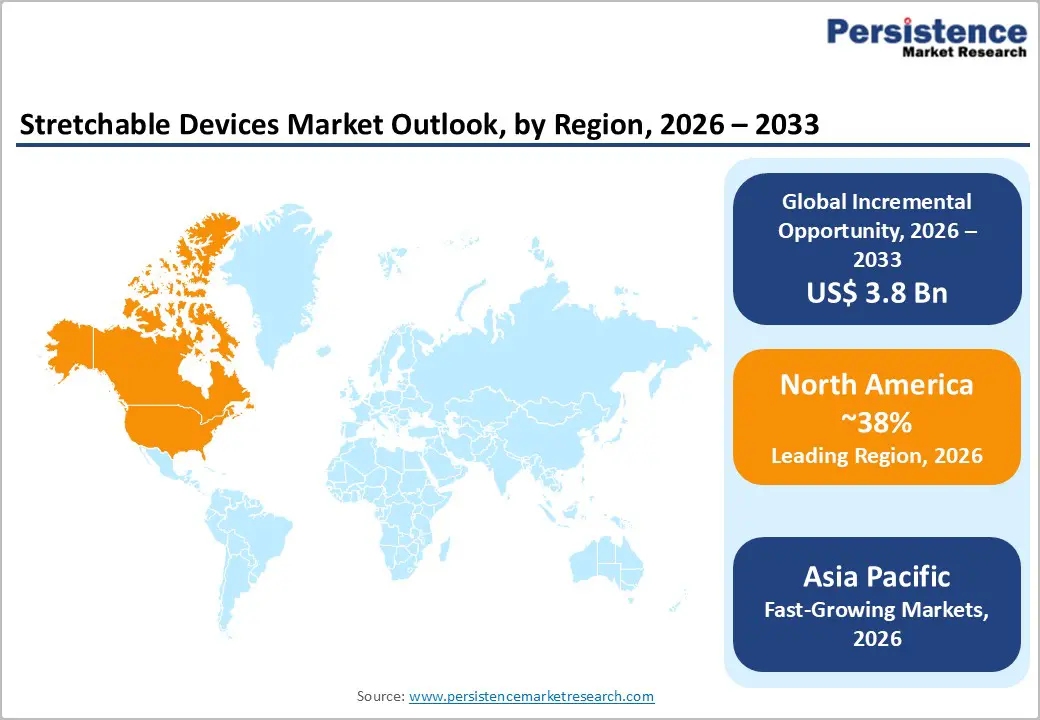
- Regional Leadership: North America leads the global Stretchable Devices market with 35% share, driven by strong R&D concentration, early adoption of wearable medical technologies, and large-scale deployment of remote patient monitoring across healthcare systems.
- Fastest-Growing Region: East Asia accounts for 25% share and represents the fastest-growing region, supported by rapid scale-up of stretchable displays, batteries, and sensors, along with manufacturing leadership in South Korea, Japan, and China.
- Significant European Market: Europe holds 20% share, underpinned by preventive healthcare policies, strong medical device regulation, and sustained investment in advanced materials and wearable medical research.
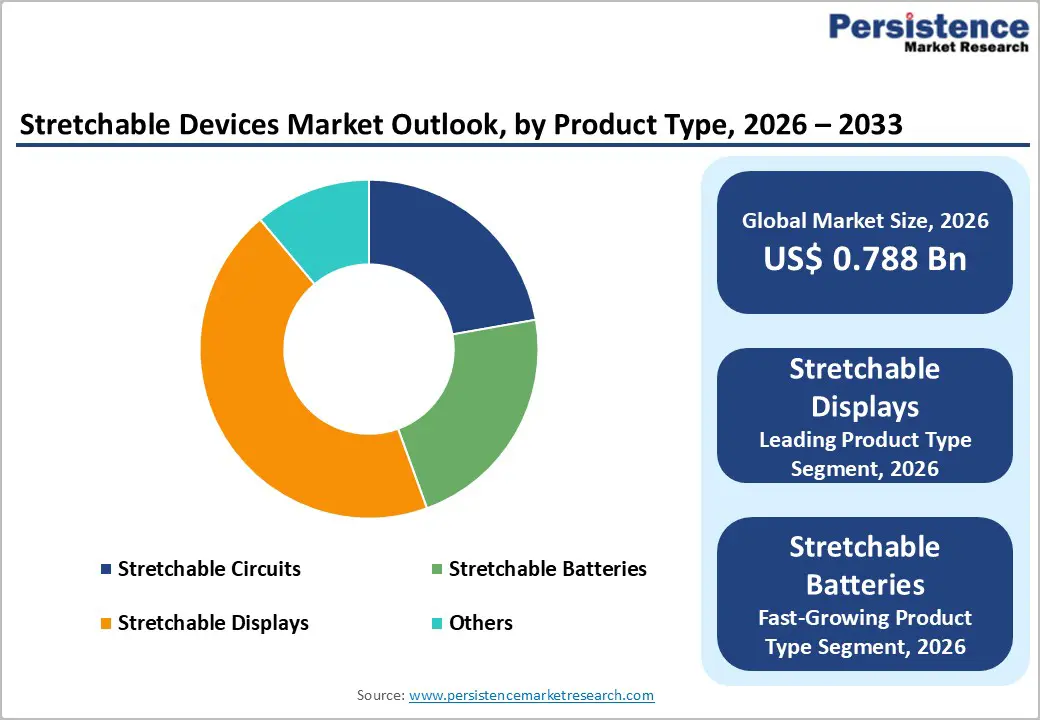
- Leading Component Segment: Stretchable sensors dominate the market with 30% share, reflecting their critical role in continuous physiological monitoring for healthcare, fitness, and consumer wearable applications.
| Key Insights | Details |
|---|---|
|
Stretchable Devices Market Size (2026E) |
US$ 0.8 Bn |
|
Market Value Forecast (2033F) |
US$ 4.1 Bn |
|
Projected Growth (CAGR 2026 to 2033) |
25.2% |
|
Historical Market Growth (CAGR 2020 to 2025) |
18.6% |
Market Dynamics
Growth Drivers
Wearable Technology Mainstream Adoption and Health Monitoring Imperatives
Global consumer adoption of wearable health monitoring devices has transitioned from early-adopter niche status to mainstream market participation, with fitness trackers, smartwatches, and health monitoring patches achieving penetration across diverse demographic segments. Healthcare professionals increasingly recommend wearable devices for chronic disease management including diabetes, hypertension, and cardiac conditions, where continuous physiological monitoring enables early intervention preventing acute episodes and hospital admissions.
The Market is directly enabled by wearable technology proliferation, as stretchable sensors, displays, and power solutions are essential components enabling continuous health monitoring without compromising user comfort or device wearability.
The market fundamentals reflect substantial medical device adoption. Over 26 million wearable medical devices deployed worldwide in 2024 utilize flexible battery technologies, , demonstrating mainstream medical acceptance of stretchable component technologies. Healthcare organizations are systematically implementing remote patient monitoring programs leveraging wearable devices for early deterioration detection among high-risk populations including elderly patients and individuals with chronic conditions.
Flexible wearable electronic sensors enabling real-time monitoring of physiological parameters including heart rate, blood glucose, respiration, and muscle movement with non-invasive skin-adhered sensors that users can comfortably wear continuously without the device degradation or skin irritation experienced with rigid alternatives. This healthcare imperative directly translates to sustained demand for stretchable sensor technologies, flexible power solutions, and advanced wearable form factors that balance monitoring capability with user comfort and acceptance.
Advanced Material Science Breakthroughs and Scalable Manufacturing Innovation
Recent material science advancements have fundamentally transformed stretchable electronics feasibility and commercial viability, enabling development of flexible components maintaining performance under severe mechanical deformation.
Researchers have successfully synthesized copper nanoparticles at ultra-fine 8.5-nanometer scales achieving exceptional conductivity of 1.9 μΩ·cm through low-temperature sintering processes, enabling printed stretchable circuits via direct ink writing technology without requiring traditional fabrication infrastructure. Stretchable lithium-ion battery research from Nanjing University demonstrated devices stretching 5000% while maintaining efficiency after 70 charging cycles, and University of Houston researchers developed fabric-based elastic lithium-ion batteries using conductive silver fabric enabling devices that bend and stretch while maintaining electrical conductivity during operation.
The Stretchable Devices Market expansion is fundamentally enabled by manufacturing process innovation transitioning stretchable electronics from laboratory demonstrations to commercial-scale production. Roll-to-roll (R2R) processing represents a critical breakthrough enabling continuous production of flexible electronic circuits on large substrate sheets at substantially higher speeds than conventional batch manufacturing, with implications for dramatic cost reduction enabling mainstream product deployment.
Specialized fabrication techniques including kirigami-inspired manufacturing (combining cutting and folding approaches), shape-memory polymer transfer, and 3D structure fabrication create manufacturing pathways for diverse stretchable component types from displays to sensors to power systems. Strategic partnerships exemplify accelerating commercialization:
DuPont and STMicroelectronics collaborated in November 2023 on flexible smart biosensing patches for cardiac monitoring, while Epicore Biosystems partnered with 3M and Innovize in September 2022 to scale sweat-sensing wearable technology leveraging roll-to-roll manufacturing enabling high-volume stretchable device production.
Market Restraining Factors
Manufacturing Scalability Challenges and Cost Structure Barriers
Despite material science advances and manufacturing innovation, stretchable electronics production at commercial scale remains substantially more expensive than conventional rigid electronics, creating cost barriers limiting market penetration particularly in price-sensitive consumer segments. Stretchable components require specialized substrate materials, custom fabrication processes, and precision control of mechanical properties that preclude adoption of conventional semiconductor manufacturing infrastructure designed for rigid devices.
The complexity of material longevity, resilience under high strain, energy consumption optimization, and heat dissipation management necessitates custom engineering for each application, increasing development costs and manufacturing complexity compared to standardized rigid component manufacturing approaches. Energy flow through stretchable circuits presents particular challenges as fabrication defects propagate through interconnected flexible networks with cascading failure consequences requiring substantially higher manufacturing yields and quality control standards than conventional electronics.
Key Market Opportunities
Healthcare Digitalization and Chronic Disease Management Expansion
Healthcare systems worldwide are systematically transitioning toward value-based care models emphasizing disease prevention and early intervention requiring continuous patient monitoring beyond episodic clinical encounters. Stretchable wearable devices enable continuous physiological monitoring that conventional episodic assessments cannot match, detecting subtle deterioration patterns enabling early intervention preventing acute exacerbations. Chronic conditions including congestive heart failure, atrial fibrillation, and diabetes present particular opportunities where wearable monitoring enables medication titration, lifestyle intervention timing, and rapid response to warning signals clinical capabilities fundamentally improving outcomes while reducing emergency department utilization and hospitalizations
The Stretchable Devices Market expansion in healthcare reflects governmental healthcare system priorities and payer recognition that remote patient monitoring reduces overall healthcare system costs through prevention and early intervention. Healthcare provider organizations including hospitals, accountable care organizations, and integrated delivery networks are systematically deploying remote patient monitoring programs leveraging wearable technologies to manage high-risk populations with chronic conditions.
Aging population demographics in developed markets combined with rising healthcare costs create compelling economic incentives for remote monitoring technologies enabling safe management of larger patient populations with fixed clinical resources. Advanced Stretchable Devices Market solutions enabling continuous biosignal monitoring from skin-conformable patches address critical unmet needs in long-term disease management, particularly for elderly populations prioritizing home-based care and independent living while maintaining clinical oversight.
Consumer Electronics and Fashion Technology Integration Convergence
Consumer electronics companies including Apple and Samsung are systematically pursuing stretchable display technologies as strategic next-generation platforms offering user experience differentiation and premium product positioning. Apple's June 2024 patent filings for stretchable displays capable of wrapping around surfaces while functioning as standard OLED screens demonstrate major technology companies' commitment to stretchable display commercialization for future iPhones, Apple Watches, laptops, and VR/AR devices This strategic commitment from major consumer electronics manufacturers accelerates material science development, manufacturing process innovation, and cost reduction across the broader stretchable electronics ecosystem, benefiting all market participants.
The Stretchable Devices Market expansion in consumer electronics extends beyond displays to encompass flexible sensors enabling novel form factors and interaction modalities. Consumer interest in health and fitness tracking wearables creates demand for stretchable sensors integrated into apparel, accessories, and personal devices enabling seamless health monitoring without requiring bulky or conspicuous devices. Fashion and athletic apparel manufacturers are exploring smart textiles incorporating stretchable sensors enabling activity tracking, biometric monitoring, and personalized performance coaching through fabric-integrated technologies.
The convergence of consumer electronics innovation with fashion and athletic apparel creates substantial opportunities for stretchable device vendors providing component solutions enabling novel product categories addressing consumer preferences for invisible, comfortable monitoring integrated into everyday wear rather than requiring conscious device adoption.
Category-wise Analysis
Component Type Insights
Stretchable sensors commanded 30% of the Stretchable Devices Market share in 2026, reflecting their fundamental role in enabling wearable applications across healthcare, fitness, and consumer electronics markets.
Stretchable sensors encompass diverse sensing modalities including electrochemical sensors for biomarkers and glucose monitoring, mechanical sensors for strain and pressure detection, thermal sensors for temperature measurement, and optical sensors for light-based measurements. These sensors enable continuous physiological monitoring when skin-adhered or fabric-integrated, providing real-time health insights previously requiring episodic clinical assessments. Stretchable sensor development has advanced rapidly, with commercial products now available for heart rate monitoring, temperature sensing, respiration tracking, and glucose measurement through skin-adhered patches.
Stretchable batteries represent the fastest-growing component segment within the Stretchable Devices Market, driven by recognition that wearable device utility is fundamentally constrained by power availability and battery form factor compatibility with skin-conformal or fabric-integrated applications.
Traditional rigid lithium-ion batteries cannot accommodate the mechanical deformation inherent in wearable applications, creating critical demand for flexible power solutions enabling extended operational periods while remaining stretchable and skin-compatible. Recent breakthroughs in stretchable lithium-ion battery technology have demonstrated commercial viability through devices maintaining functionality while stretching up to 5000% and operating reliably across extended charge cycles.
End Use Insights
Healthcare and Medical applications maintained 35% of the Stretchable Devices Market share in 2026, establishing the sector as the dominant commercial market driven by healthcare digitalization priorities, regulatory reimbursement for remote patient monitoring, and clinical evidence supporting wearable monitoring efficacy.
Healthcare organizations worldwide are systematically deploying remote patient monitoring programs leveraging stretchable wearables for chronic disease management, post-acute care monitoring, and early warning sign detection enabling rapid clinical intervention. Stretchable wearable applications include cardiac monitoring through patch-based electrocardiogram systems, continuous glucose monitoring for diabetes management, respiration and oxygen saturation monitoring for respiratory disease assessment, and wound monitoring through smart dressings detecting infection development.
The Healthcare segment's dominance reflects substantial clinical validation supporting wearable monitoring efficacy combined with economic incentives for healthcare systems seeking to manage increasing patient populations with limited clinical resources. Reimbursement policies increasingly recognize remote patient monitoring as legitimate clinical services generating healthcare provider revenue comparable to in-office visits while enabling superior patient outcomes through continuous surveillance. DuPont's partnership with STMicroelectronics announced in November 2023 on flexible smart biosensing patches for cardiac monitoring exemplifies major material science companies' commitment to healthcare-focused stretchable device development.
Regional Insights and Trends
North America Market Trend
North America maintained approximately 35% of the Global Stretchable Devices Market share, establishing the region as the largest market driven by substantial R&D investment concentration, early technology adoption, and robust healthcare system investment in wearable monitoring infrastructure.
The United States dominates North American stretchable device markets through presence of major technology companies including Apple, Google, and Meta pursuing flexible and stretchable technologies, presence of leading medical device manufacturers including Medtronic and Boston Scientific, and active venture capital ecosystem funding stretchable electronics startups developing novel applications.
North American regulatory environment including FDA approval pathways for wearable medical devices supports commercialization of healthcare-focused stretchable devices, with reimbursement policies from Medicare and private insurers providing financial incentives for remote patient monitoring deployment. Healthcare provider organizations including Mayo Clinic, Cleveland Clinic, and Kaiser Permanente are systematically implementing wearable monitoring programs leveraging stretchable sensor technologies for chronic disease management.
The region's concentration of academic research institutions pursuing stretchable electronics innovation creates talent pipelines and intellectual property foundations supporting continued commercialization. Technology companies' active patent filings and product development programs demonstrate confidence in near-term commercialization feasibility, supporting supplier ecosystem investment and manufacturing capacity buildout.
East Asia Market Trend
East Asia accounted for approximately 25% of the Global Stretchable Devices Market share while demonstrating the fastest regional growth trajectory, driven by manufacturing scale-up across South Korea, Japan, and China combined with rising healthcare investment in emerging economies. South Korean companies including Samsung and LG are actively developing stretchable display technologies as strategic next-generation platforms, with LG demonstrating 50% expandable display prototypes providing visible proof-of-concept validating stretchable display feasibility.
Japan's technology manufacturers including Sony are advancing stretchable sensor and component development, while Chinese manufacturers are rapidly scaling production of stretchable batteries and related components leveraging cost-optimized manufacturing approaches.
Government initiatives supporting healthcare modernization and digital infrastructure development create favorable environments for stretchable wearable device adoption. The region's role as global manufacturing hub for electronics enables cost-competitive production supporting mainstream consumer market penetration.
Europe Market Trend
Europe represented approximately 20% of the Global Stretchable Devices Market share, characterized by stringent healthcare regulations, strong emphasis on patient privacy and data protection, and substantial research investment in wearable medical devices. European aerospace and defense sector generated €325.7 billion in turnover during 2024 with €23.4 billion R&D investment emphasizing advanced materials and manufacturing innovation applicable to stretchable electronics.
European Union healthcare systems emphasize preventive care and chronic disease management creating strong demand drivers for wearable monitoring technologies.
European regulations including GDPR establish stringent data protection requirements that shape stretchable wearable device development, particularly for healthcare applications processing sensitive biometric data. Medical device manufacturers in Germany, France, and Switzerland are actively developing stretchable sensor and monitoring solutions for European healthcare markets. The region's emphasis on manufacturing innovation and advanced materials development supports continued research and commercialization of stretchable technologies through university-industry collaborations and government-funded research initiatives.
Competitive Landscape
The global Stretchable Devices market is fragmented with emerging consolidation trends, driven by both large multinationals and specialized technology firms. Leading players such as DuPont de Nemours, Inc., Samsung Electronics Co., Ltd., LG Display Co., Ltd., 3M Company, Panasonic Corporation, and MC10, Inc. hold significant influence through extensive R&D, broad product portfolios, and strategic initiatives in stretchable sensors, displays, and circuits. Smaller and mid-tier companies, including NextFlex, LEAP Technology ApS, and StretchSense Ltd., focus on niche applications like bio-integrated sensors and flexible substrates, fueling innovation. While no single company dominates, larger firms leverage scale and brand power, and collaborations, partnerships, and acquisitions are shaping market dynamics. Overall, the market remains fragmented, but ongoing innovation and strategic moves indicate potential for consolidation in the coming years.
Key Industry Developments
- June 27, 2024 – Apple: Apple filed a patent for stretchable displays that could be used on future devices such as iPhones, iPads, and MacBooks, indicating the company’s active research into flexible and wraparound screen technology, with a large team of 55 inventors contributing to the innovation.
- Nov. 2, 2023 – DuPont & STMicroelectronics: DuPont™ Liveo™ Healthcare Solutions collaborated with STMicroelectronics to develop a flexible smart biosensing patch for remote cardiac monitoring, integrating multifunctional microsensors and ultra-low-power electronics into a skin-conformable, stretchable wearable design, reinforcing innovation in stretchable medical devices for long-term biosignal monitoring.
Companies Covered in Stretchable Devices Market
- 3M Company
- Apple Inc.
- AVERY DENNISON CORPORATION
- Bainisha cvba
- Blue Spark Technologies
- BodyMedia
- Canatu Oy
- DuPont
- Forciot Ltd
- Gcell
- IMEC
- Leap Technology ApS
- LG Display
- NextFlex.
- PowerFilm Solar Inc.
- Panasonic Corporation
- Philips N.V.
- Samsung Electronics
- StretchSense
Frequently Asked Questions
The global Stretchable Devices Market is projected to be valued at US$ 0.8 Bn in 2026.
Healthcare & Medical Segment is expected to account for approximately 35% of the global Stretchable Devices Market by End Use Industry in 2026.
The market is expected to witness a CAGR of 25.2% from 2026 to 2033.
Stretchable Devices Market growth is driven by mainstream adoption of wearable health monitoring, rising demand for continuous and comfortable medical sensing, and material science and manufacturing breakthroughs enabling scalable, cost-effective stretchable sensors, circuits, displays, and power components.
Key market opportunities in the Stretchable Devices Market arise from expanding remote patient monitoring and chronic disease management in value-based healthcare, alongside integration of stretchable sensors and displays into next-generation consumer electronics, smart wearables, and fashion-tech applications.
The key players in the Stretchable Devices Market include 3M Company, Apple Inc., DuPont, Samsung Electronics, LG Display, and Avery Dennison Corporation.


