




- Nutraceuticals & Functional Foods
- Sacha Inchi Market
Sacha Inchi Market Size, Share, and Growth Forecast, 2025 - 2032
Sacha Inchi Market by Product Type (Oil, Powder, Capsules, Others), Application (Food & Beverages, Dietary Supplements, Cosmetics, Others), Distribution Channel (Online Stores, Supermarkets/Hypermarkets, Specialty Stores, Others), and Regional Analysis for 2025 - 2032

Sacha Inchi Market Size and Trends Analysis
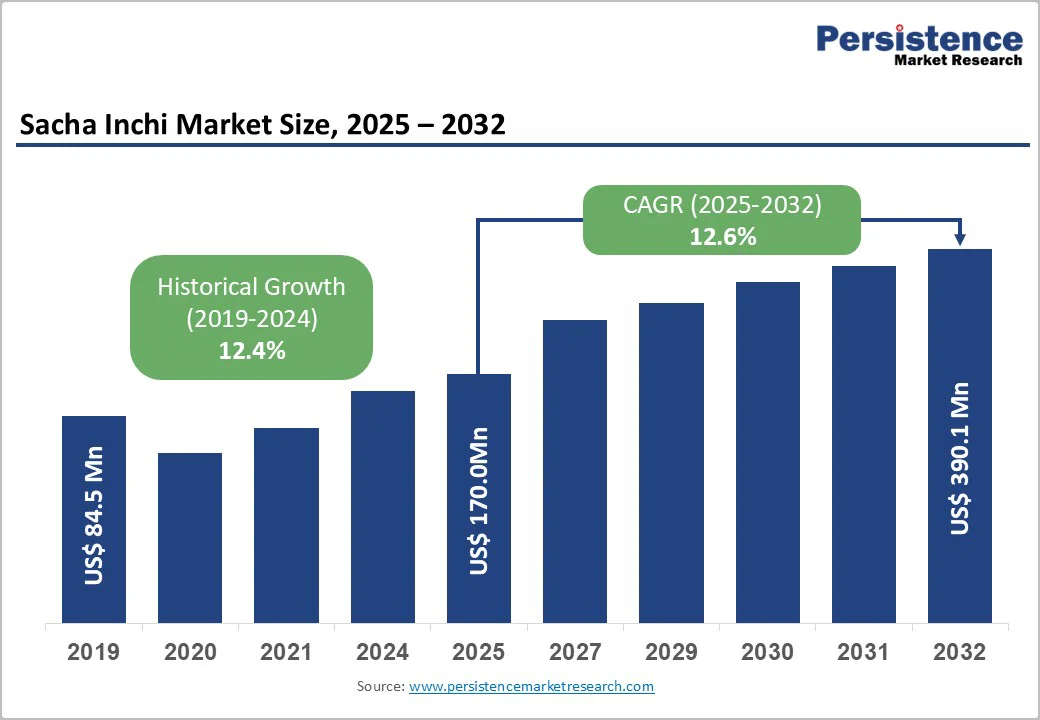
The global sacha inchi market size is likely to be valued at US$170.0 million in 2025, projected to reach US$390.1 million by 2032, growing at a CAGR of 12.6% during the forecast period from 2025 to 2032, driven by the increasing prevalence of superfood trends, rising demand for omega-3-rich oils in dietary supplements, and advancements in sustainable agriculture.
Rising demand for nutrient-dense ingredients is driving the adoption of sacha inchi across food, beverages, and cosmetics. Market growth is supported by convenient powder and capsule formats and its recognition as a superseed promoting heart health and skincare.
Key Industry Highlights:
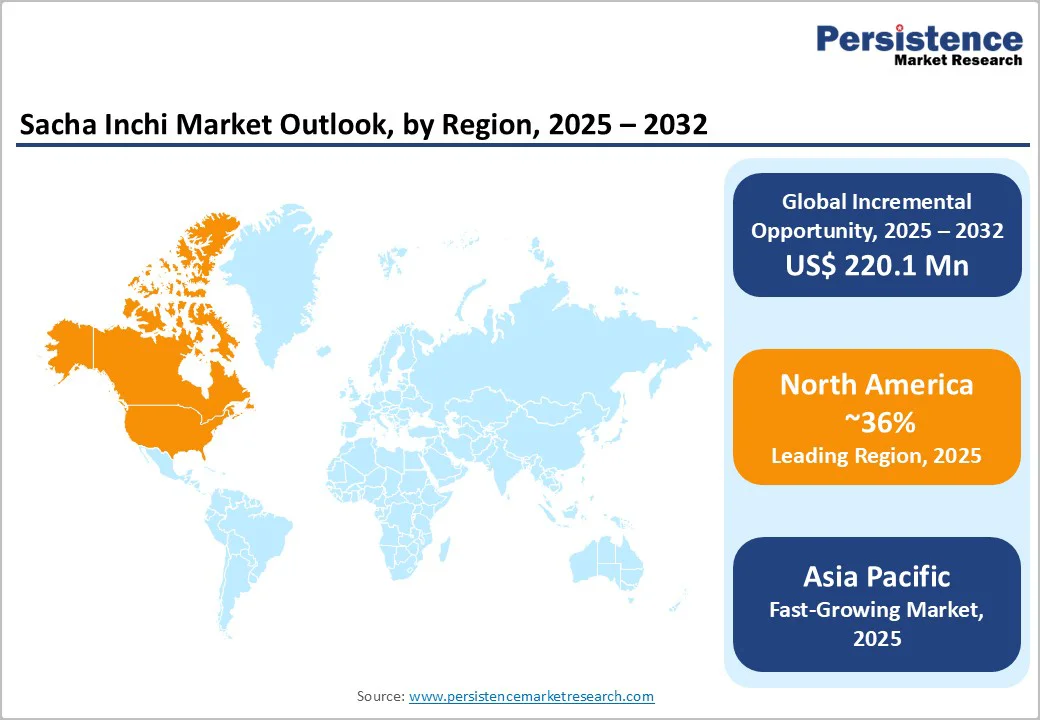
- Leading Region: North America, commanding a 36% market share in 2025, due to strong demand for plant-based, omega-rich superfoods and a well-developed nutraceutical and functional food industry.
- Fastest-growing Region: Asia Pacific is the fastest-growing, driven by rising health awareness and interest in plant-based nutrition, which are boosting demand for Sacha Inchi products.
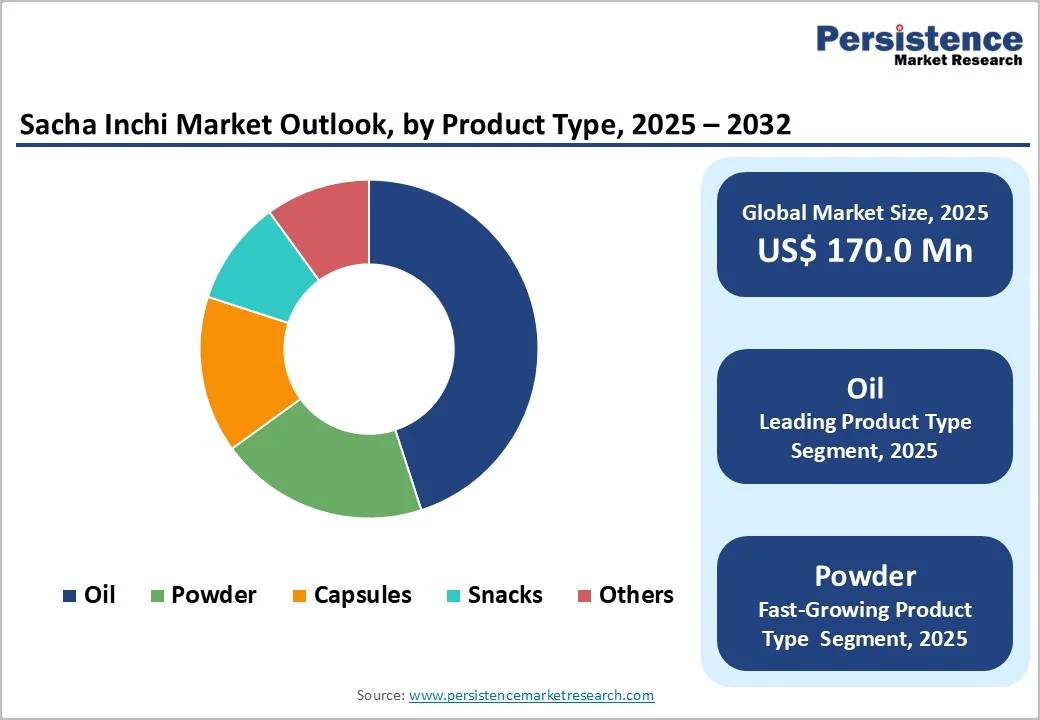
- Dominant Product Type: Oil, holding approximately 45% of the market share in 2025, due to its versatility in cooking and supplements.
- Leading Application: Dietary supplements, accounting for over 35% of market revenue, driven by omega-3 benefits.
- Leading Distribution Channel: Online stores, contributing nearly 30% of market revenue, due to e-commerce growth.
- Key Market Driver: Rising demand for sustainable, nutrient-rich superfoods is accelerating adoption of sacha inchi in functional foods and wellness products.
- Market Opportunity: Expansion in cosmetics and pharmaceuticals creates strong opportunities for high-purity sacha inchi extracts and derivatives.
| Key Insights | Details |
|---|---|
|
Sacha Inchi Market Size (2025E) |
US$170.0 Mn |
|
Market Value Forecast (2032F) |
US$390.1 Mn |
|
Projected Growth (CAGR 2025 to 2032) |
12.6% |
|
Historical Market Growth (CAGR 2019 to 2024) |
12.4% |
Market Factors - Growth, Barriers, and Opportunity Analysis
Rising Prevalence of Superfood Trends and the Demand for Omega-3 Rich Ingredients
The rising prevalence of superfood trends and the surge in demand for omega-3-rich ingredients are the primary growth engines of the sacha inchi market. Sacha inchi, often called the “Inca peanut,” has gained immense popularity due to its exceptional nutritional profile, including high levels of essential fatty acids, antioxidants, and plant-based protein. As consumers worldwide embrace plant-based diets and functional foods, sacha inchi's versatility as an oil, powder, or whole seed positions it as a must-have ingredient in smoothies, energy bars, salads, and nutritional supplements. Official nutrition bodies recognize omega-3 as an essential nutrient that many populations fail to consume in adequate quantities, which creates a public health rationale for foods and products fortified with or naturally high in omega-3 (e.g., superfoods, plant-based sources).
The growth of the global superfood market, combined with post-pandemic health awareness, has driven interest in nutrient-rich seeds such as sacha inchi, especially among millennials and Gen Z, who value clean-label and sustainably sourced ingredients. In dietary supplements, sacha inchi provides plant-based omega-3s, offering a heart-friendly, anti-inflammatory option for vegan consumers. Its extracts are gaining attention in skincare and wellness products for potential anti-aging and skin health benefits. With a mild, nutty flavor, sacha inchi is versatile in food and beverage applications, from smoothies to functional snacks, while its sustainability credentials appeal to environmentally conscious brands.
High Development and Supply Chain Volatility Costs
The high costs associated with sacha inchi development and supply chain volatility pose a significant restraint on market growth. As a niche superfood primarily cultivated in the Amazon region of Peru and Bolivia, sacha inchi faces challenges in scaling production to meet global demand. Harvesting and processing require specialized knowledge to maintain seed integrity and oil quality, driving up operational expenses for small-scale farmers and processors. Limited arable land and vulnerability to climate variability further exacerbate supply inconsistencies, leading to price fluctuations that deter large-scale adoption by food manufacturers and supplement brands.
Regulatory hurdles also add complexity, as sacha inchi must navigate stringent food safety standards and organic certification requirements in key markets such as the U.S. and the EU. Compliance with GRAS status and allergen labeling increases development timelines and costs, particularly for new product formulations. While these factors ensure quality, they create barriers for emerging players and slow market penetration in price-sensitive segments.
Advancements in Extraction Technologies and Expanded Functional Applications
Advancements in extraction technologies and expanded functional applications present significant growth opportunities for the sacha inchi market. Cold-pressing and supercritical CO2 extraction methods are improving oil yield and nutrient retention, making sacha inchi more competitive with established omega-3 sources such as chia and flaxseed. These innovations lower production costs and enhance shelf stability, enabling wider use in shelf-stable snacks, beverages, and cosmetics. The rise of microencapsulation further protects sensitive omega-3s from oxidation, opening doors to fortified dairy, bakery goods, and oral care products.
Sacha inchi's untapped potential in pharmaceuticals and nutraceuticals for anti-inflammatory supplements, joint health formulations, and even pet foods offers high-margin opportunities. As research validates its bioavailability and health benefits, brands can leverage clinical backing to position as premium. Strategic partnerships with Amazonian cooperatives can secure ethical sourcing, while vertical integration in processing reduces volatility, positioning sacha inchi as a scalable superfood for the next decade.
Category-wise Analysis
Product Type Insights
Oil dominates with a 45% share in 2025, due to its broad applicability across food, supplements, and personal care. Its rich omega-3 content drives strong demand in dietary formulations, while its light texture and antioxidant profile make it popular in skincare. The rising shift toward plant-based, multifunctional oils further strengthens its market leadership. For example, DSM-Firmenich's Life's® DHA B54-0100 algal oil is primarily being adopted across the nutraceutical and food and beverage sectors, and is also relevant for pet nutrition and cosmetics. The product's high potency and plant-based, sustainable nature make it suitable for a wide range of applications.
Powder is the fastest-growing segment, driven by its long shelf life, easy blending, and versatility in functional foods. Brands increasingly incorporate sacha inchi powder into energy bars, protein blends, and smoothies to enhance plant-based protein content. Its mild flavor and nutrient density make it a preferred choice for clean-label, high-performance nutrition formulations. For example, Incatein™ sacha inchi protein powder is developed as a nutrient-dense plant protein that brands can incorporate into bars, beverages, baked goods, and smoothies, making it a versatile ingredient across multiple functional food applications.
Application Insights
Dietary supplements are leading, accounting for 35% revenue share in 2025, supported by strong consumer demand for plant-based omega-3, antioxidants, and clean-label nutrition. Sacha inchi capsules, softgels, and powders gain traction as natural alternatives to fish oil, appealing to vegans and health-focused buyers seeking sustainable, high-purity formulations for daily wellness. For example, plant-based sacha inchi capsules are marketed as a natural source of omega-3, appealing to vegans and health-focused consumers looking for sustainable alternatives to fish oil supplements.
The food & beverages segment is the fastest-growing, driven by its use in functional snacks, fortified beverages, and plant-based formulations. Rising demand for protein-rich, omega-3 infused foods boosts their adoption in bars, shakes, spreads, and ready-to-drink wellness beverages. Manufacturers leverage their clean-label profile to meet consumer preferences for natural, nutrient-dense ingredients. For example, a powdered form of sacha inchi can be used by food manufacturers to fortify beverages, smoothies, shakes, and functional foods with plant-based omega-3s and nutrients.
Distribution Channel Insights
Online stores lead with a 30% share in 2025, as direct-to-consumer wellness brands capitalize on digital reach, personalized marketing, and subscription-based models. E-commerce platforms offer a broader range of products, transparent reviews, and easy comparisons, making them ideal for health-conscious buyers. Faster delivery, promotional discounts, and influencer-driven awareness further strengthen online sales of sacha inchi products. For example, digital marketing, direct-to-consumer strategies, and subscription models help brands build loyalty and repeat purchases, factors that underpin the strong online performance of sacha inchi products.
Supermarkets/Hypermarkets are the fastest-growing, as retailers allocate larger shelf space to superfoods and plant-based nutrition products. Their strong visibility, bulk availability, and promotional campaigns help introduce sacha inchi to mainstream consumers. Convenient access, competitive pricing, and in-store education displays further accelerate product awareness and boost sales across multiple formats. For example, grocery retailers are also expanding “superfood” and plant-based nutrition sections, often with dedicated shelf space for high-protein and omega-rich products, where sacha inchi-based bars and powders appear next to other well-known plant proteins.
Regional Insights
North America Sacha Inchi Market Trends
North America accounts for 36% global share in 2025, led by the high demand for premium supplements and plant-based omega-3 alternatives in the U.S. Consumers in the region are actively shifting toward high-protein, allergen-free, and heart-healthy food options, which is increasing the adoption of sacha inchi seeds, oil, and protein powder. The ingredient’s rich omega-3, omega-6, and omega-9 fatty acid profile supports the growing demand for functional foods that support cardiovascular health, weight management, and overall wellness.
In the U.S., the surge in vegan lifestyles and sports nutrition consumption is encouraging brands to incorporate sacha inchi into protein blends, nut alternatives, and snack formulations. The trend toward natural beauty and wellness products is also creating opportunities for sacha inchi oil in skincare formulations, given its moisturizing and anti-inflammatory benefits. Retail channels, especially e-commerce, continue to play a crucial role as consumers seek specialty superfoods online. Increasing awareness campaigns around sustainable farming and biodiversity further support the market’s appeal.
Europe Sacha Inchi Market Trends
Europe holds a 20% share in 2025, driven by consumers increasingly prioritizing plant-based nutrition, clean-label ingredients, and sustainably sourced superfoods. Demand is rising across Germany, the U.K., France, Italy, and the Nordic countries, where awareness of omega-rich oils and high-quality plant proteins is particularly strong. Sacha inchi oil, capsules, protein powders, and snack formats are gaining popularity in health food stores, pharmacies, and online wellness platforms. European food and supplement manufacturers are incorporating Sacha inchi into functional beverages, protein blends, and bakery products to meet the region’s preference for natural, minimally processed ingredients.
Sustainability is one of the most influential trends in Europe. Brands highlight ethical sourcing, organic certification, and transparent supply chains to appeal to environmentally conscious consumers. Companies are investing in stricter quality standards, cold-pressed extraction methods, and clean refining processes to preserve nutritional value and meet EU regulations. In cosmetics and personal care, sacha inchi oil is increasingly used for its moisturizing and antioxidant properties, expanding its use beyond food and supplements. While the region depends on imports, long-term sourcing agreements and improved logistics are supporting consistent availability.
Asia Pacific Sacha Inchi Market Trends
Asia Pacific is the fastest-growing region, led by China and India. The market is expanding rapidly as the region embraces plant-based nutrition, functional foods, and natural wellness products. Growing consumer awareness of omega-3, omega-6, and plant-derived protein benefits is driving strong interest in sacha inchi oil, snacks, and protein powders. Countries such as China, India, Japan, and Australia are seeing increased demand through both retail and online channels, supported by rising disposable incomes and shifting preferences toward clean-label, minimally processed ingredients. Local brands are incorporating sacha inchi into beverages, fortified foods, and skincare formulations, broadening its visibility and appeal.
The crop is not native to Asia, and import-dependent markets are forming long-term partnerships with Latin American suppliers to ensure consistent quality and traceability. At the same time, processors in the region are improving extraction, filtration, and refining techniques to enhance flavor, stability, and nutritional value. Sustainability, origin transparency, and ethical sourcing are becoming key purchasing criteria, prompting brands to highlight certifications and responsible sourcing practices. While limited domestic cultivation presents challenges, strong demand momentum, product innovation, and expanding distribution networks position the Asia-Pacific as the fastest-growing market for sacha inchi in the coming years.
Competitive Landscape
The global sacha inchi market is highly competitive, with distinct roles played by regional producers, processors, and international brands. Peruvian suppliers such as MG Natura Peru S.A.C. dominate raw seed production, benefiting from native cultivation expertise and established farming networks. These producers form the backbone of the supply chain, ensuring a steady flow of seeds to global processors.
In contrast, North American and European companies lead in value-added processing, specializing in oil refinement, protein powder micronization, encapsulation, and formulation of premium nutraceutical and functional food products. Companies such as Axiom Foods and Arista Industries have built strong capabilities in delivering high-purity Incha peanut oil and protein ingredients that meet stringent quality standards.
A major trend reshaping competitiveness is vertical integration, with international brands increasingly acquiring or partnering with farms to secure stable supplies, improve traceability, and ensure ethical sourcing. This direct farm-to-brand model enhances supply chain resilience. Sustainability certifications, organic labeling, and blockchain-based traceability systems are becoming key differentiators, as consumers and regulatory bodies demand transparency in origin, environmental impact, and social responsibility. This shift toward certified, traceable sourcing is intensifying competition and raising the market’s overall quality standards.
Key Industry Developments
- In January 2024, the United Nations Office on Drugs and Crime (UNODC) and the Colombian government agency ICBF launched a new nutritional formula that uses local sacha inchi and cassava to replace imported ingredients in a national nutrition program, thereby supporting local farmers.
- In July 2023, BeAmaz and Blendhub partnered to develop nutrient-rich, sacha inchi–based powder foods to combat malnutrition. The collaboration also supported Amazonian biodiversity by promoting sustainable, regenerative cultivation of native crops.
Companies Covered in Sacha Inchi Market
- MG Natura Peru S.A.C.
- Peruvian Nature
- Amazon Andes Export S.A.C.
- Calarina gourmet
- Axiom Foods
- Arista Industries
- Nature's Power Nutraceuticals (NP Nutra)
- Herbs America, Inc.
- Agritrade S.A.C.
Frequently Asked Questions
The global sacha inchi market is projected to reach US$170.0 million in 2025.
Rising demand for omega-3-rich superfoods and plant-based ingredients in supplements, food, and cosmetics is the primary growth driver.
The sacha inchi market is expected to grow at a CAGR of 12.6% from 2025 to 2032.
Expansion in cosmetics and pharmaceuticals creates strong opportunities for high-purity sacha inchi extracts and derivatives.
Key players include MG Natura Peru S.A.C., Peruvian Nature, Amazon Andes Export S.A.C., Axiom Foods, and Arista Industries.


