




- Specialty & Fine Chemicals
- Paint Ingredient Market
Paint Ingredient Market Size, Share, and Growth Forecast 2026 - 2033
Paint Ingredient Market by Ingredient Type (Pigments, Resins (Binders), Solvents, Additives), by Formulation (Water-based, Solvent-based, Powder coatings), Application (Architectural, Automotive, Industrial, Wood, Marine), and Regional Analysis, 2026 - 2033

Paint Ingredient Market Size and Trend Analysis
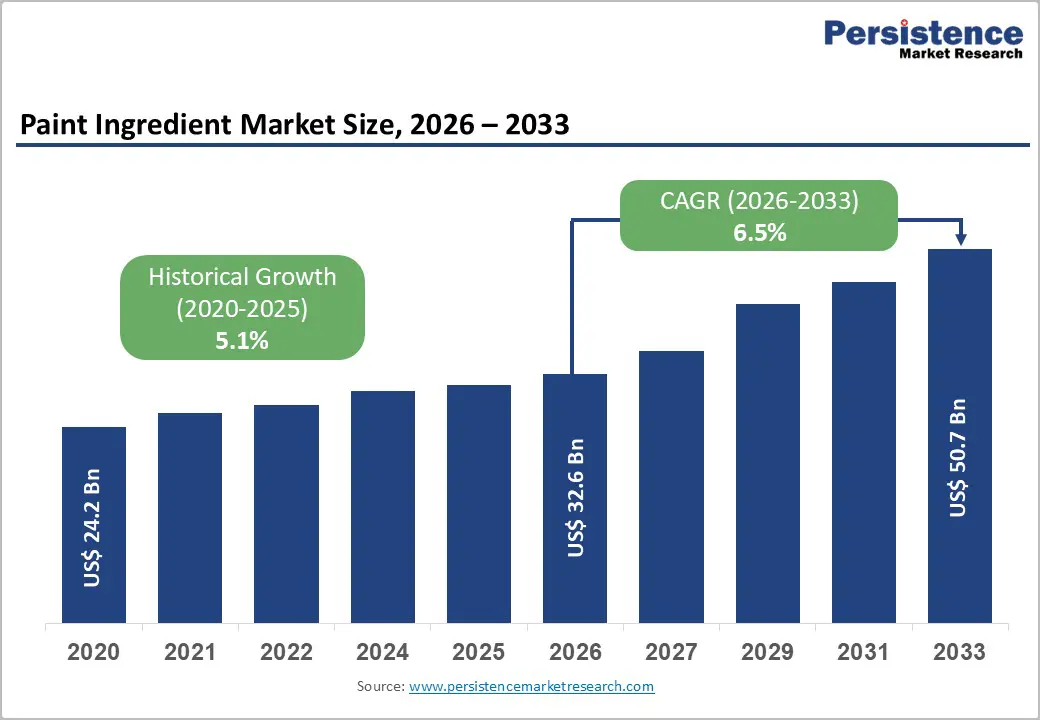
The global paint ingredient market size is expected to be valued at US$ 32.6 billion in 2026 and projected to reach US$ 50.7 Billion by 2033, growing at a CAGR of 6.5% between 2026 and 2033.
Growth is driven by rising construction activity and expanding automotive production worldwide. Increasing urbanization is boosting demand for durable and high-performance architectural coatings. Additionally, the transition toward electric vehicles is accelerating the need for advanced pigments and resins with enhanced functionality. Infrastructure development, renovation trends, and industrial expansion further support demand, ensuring consistent growth of paint ingredients across both developed and emerging economies.
Key Industry Highlights:
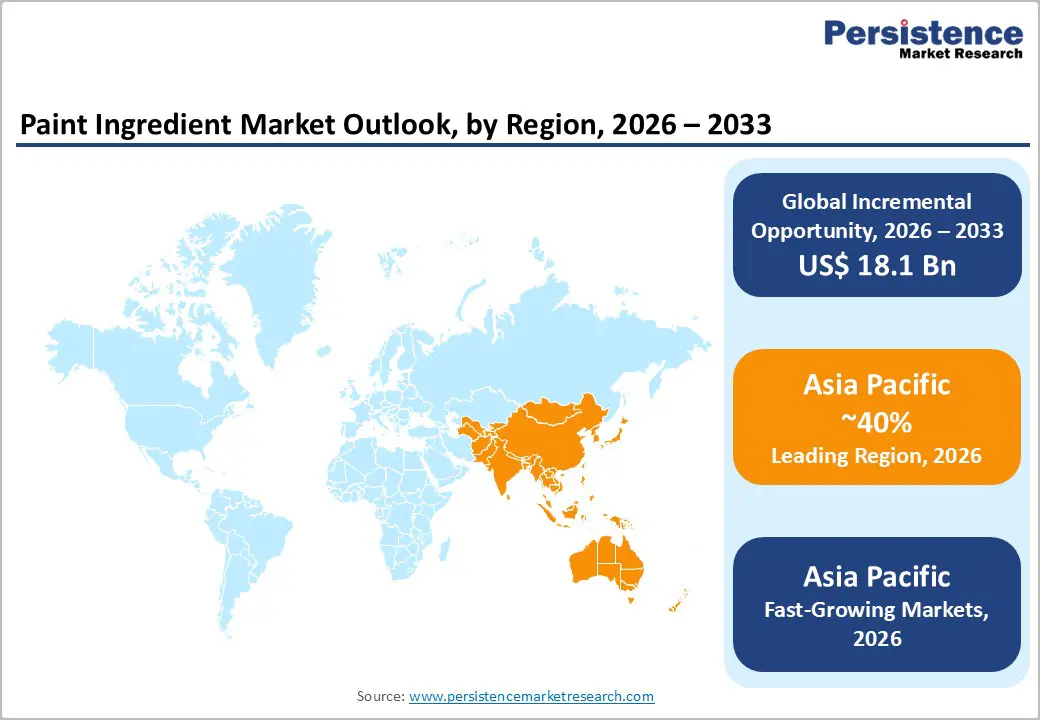
- Leading Region: Asia Pacific leads the market with around 40% share, driven by strong urbanization and expanding manufacturing activities in China and India.
- Fastest Growing Region: Asia Pacific is also the fastest growing region with a 7.8% CAGR, supported by infrastructure development and favorable government policies.
- Leading Category: Water-based formulations dominate with approximately 45% share, driven by stringent VOC regulations and rising demand for eco-friendly coatings.
- Fast-Growing Category: Powder coatings are the fastest growing segment with a 8.2% CAGR, supported by increasing demand for zero-emission and energy-efficient coating solutions.
- Key Opportunity: Bio-based pigments are emerging as a key opportunity, driven by advancements in green technologies and increasing focus on sustainable and circular coating solutions.
| Key Insights | Details |
|---|---|
| Paint Ingredient Market Size (2026E) | US$ 32.6 Billion |
| Market Value Forecast (2033F) | US$ 50.7 Billion |
| Projected Growth CAGR (2026 - 2033) | 6.5% |
| Historical Market Growth (2020 - 2025) | 5.1% |
Market Dynamics
Drivers - Rapid Urbanization and Construction Expansion Driving Architectural Coatings Demand
Global construction growth is significantly increasing demand for paint ingredients, particularly pigments and resins used in protective and decorative coatings. Expanding infrastructure projects, residential development, and commercial construction are fueling consistent consumption of these materials across both developed and emerging economies.
Government-led housing initiatives and urban expansion programs are further strengthening demand for architectural paints. This has resulted in the dominance of the architectural segment in several regions, driving higher volumes of binders, additives, and performance-enhancing ingredients used in long-lasting and aesthetically appealing coatings.
Stringent Environmental Regulations Accelerating Shift Toward Low-VOC Formulations
Regulatory frameworks focused on reducing environmental impact are pushing the adoption of low-VOC and eco-friendly paint technologies. This transition is increasing the demand for water-based formulations, along with bio-based resins and advanced additives that comply with sustainability standards.
Water-borne coatings are gaining widespread acceptance due to their reduced emissions and improved safety profiles. Industries such as automotive and industrial coatings are increasingly shifting toward these solutions, encouraging continuous innovation in ingredient development and supporting long-term market growth.
Restraints - Stringent VOC Regulations Increasing Compliance Costs for Manufacturers
Strict environmental regulations targeting volatile organic compound emissions are significantly increasing compliance costs for paint ingredient manufacturers. Regulatory frameworks require continuous reformulation of solvent-based products, leading to higher research, testing, and production expenses across the value chain.
These regulatory pressures are particularly challenging for small and mid-sized producers, who face limited resources to adapt quickly. As a result, the transition away from solvent-based systems is slowing growth in certain segments while increasing overall operational complexity within the market.
Fluctuating Raw Material Prices Impacting Production Stability
Volatility in raw material prices, particularly petrochemical-based inputs, is creating uncertainty in the paint ingredient market. Since a large share of ingredients depends on crude oil derivatives, frequent price fluctuations directly affect production costs and profit margins.
Geopolitical tensions and supply chain disruptions further intensify these challenges by affecting the availability of key raw materials. This instability forces manufacturers to frequently adjust pricing strategies, making long-term planning difficult and impacting consistent supply across the industry.
Opportunities - Rising Demand for Sustainable Bio-Based Pigments and Resin Solutions
Growing focus on sustainability is driving the adoption of bio-based pigments and resins in the paint ingredient market. Advances in green chemistry are enabling cost-effective production of eco-friendly alternatives, making them increasingly viable for large-scale use in coatings applications. These materials are gaining traction in architectural coatings, where environmental compliance and performance are critical. As sustainability becomes a key purchasing factor, bio-based ingredients are expected to witness strong demand, supporting long-term growth and innovation across decorative and protective paint segments.
Increasing Adoption of Powder Coatings for Zero-Emission Applications
Powder coatings are emerging as a major opportunity due to their zero-VOC properties and environmentally friendly profile. Their ability to deliver high-performance finishes without harmful emissions is driving adoption across industrial and commercial applications. Additionally, powder coatings offer energy efficiency and reduced material waste, making them attractive for manufacturers aiming to lower operational costs. Growing usage in automotive and wood coatings is further expanding their application scope, creating new growth avenues for advanced paint ingredients.
Category-wise Analysis
Ingredient Type Insights
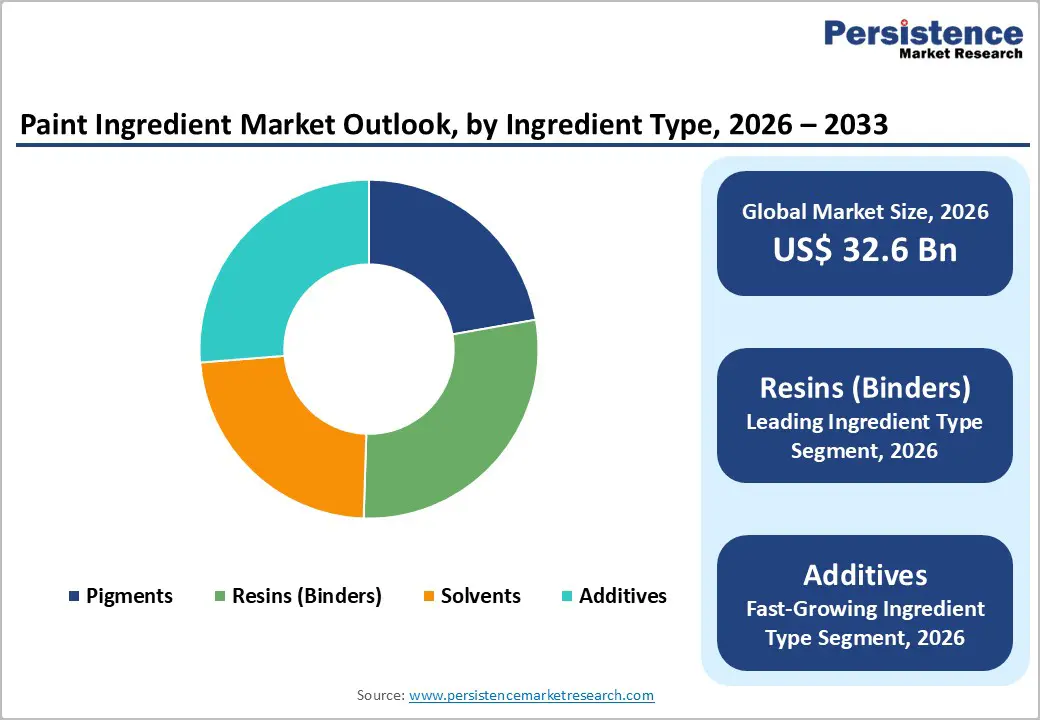
Resins (binders) dominate the paint ingredient market, accounting for around 38% share in 2025 due to their critical role in adhesion, film formation, and durability. Among resin types, acrylics hold nearly 30% of the segment, supported by their versatility and strong performance characteristics. Industry standards and specifications widely favor resin-based formulations, reinforcing their extensive use across coatings.
Additives are emerging as the fastest-growing category, driven by the increasing need for performance enhancement and formulation efficiency. Demand for advanced additives such as dispersants, rheology modifiers, and UV stabilizers is rising as manufacturers focus on improving coating functionality, longevity, and environmental compliance across applications.
Formulation Insights
Water-based formulations lead the market with around 45% share in 2025, supported by strong regulatory compliance and widespread adoption across regions. Their dominance is particularly evident in markets such as India and Asia-Pacific, where environmental standards and consumer preferences are accelerating the shift toward low-emission coating technologies.
Powder coatings are witnessing the fastest growth due to their eco-friendly nature and zero-VOC emissions. Their superior finish quality, durability, and efficient material utilization make them increasingly attractive across industrial, automotive, and wood coating applications, driving broader adoption globally.
Application Insights
Architectural applications hold the largest share of around 42% in 2025, with even higher dominance in regions like India. This leadership is driven by rapid urbanization, rising housing demand, and significant investments in infrastructure development, which continue to boost consumption of decorative and protective coatings.
Industrial coatings are emerging as the fastest-growing application segment, supported by expanding manufacturing activities and the need for high-performance protective solutions. Increasing demand for corrosion resistance, durability, and specialized coatings across industries is driving growth in this segment.
Regional Insights
North America Paint Ingredient Market Trends and Insights
North America accounts for approximately 36.8% share of the paint ingredient market, supported by strong renovation activity and well-established construction infrastructure. The U.S. leads regional demand, with high spending on residential and commercial projects alongside growing adoption of environmentally compliant coatings.
Sustainability trends are shaping the market, with increasing use of water-based formulations and bio-based ingredients. Additionally, advancements in automotive coatings and rising demand for powder coatings are supporting steady growth, as manufacturers focus on high-performance and low-emission solutions.
Europe Paint Ingredient Market Trends and Insights
Europe represents a mature yet steadily growing market, driven by stringent environmental regulations and a strong industrial base led by countries such as Germany, France, and the UK. The region emphasizes sustainable production practices, encouraging widespread adoption of eco-friendly paint ingredients.
The market is projected to reach a CAGR of 5.5% by 2033, supported by initiatives promoting low-VOC and energy-efficient coatings. Policies aligned with sustainability goals are accelerating the adoption of water-based and powder coatings, while ongoing infrastructure and renovation activities continue to sustain demand.
Asia Pacific Paint Ingredient Market Trends and Insights
Asia Pacific leads the paint ingredient market with around 40% share in 2025, supported by strong construction activity, expanding manufacturing sectors, and rising urbanization. China remains the largest contributor within the region, while India and Southeast Asia continue to strengthen demand through infrastructure development and housing initiatives.
The region is also the fastest growing, driven by rapid industrialization and government-led urban projects. Increasing investments in smart cities, transportation infrastructure, and domestic manufacturing are boosting demand for pigments, resins, and advanced additives across architectural and industrial coatings applications.
Competitive Landscape
The paint ingredient market is moderately consolidated, with leading players focusing on strengthening their market position through vertical integration and supply chain control. Companies are increasingly investing in research and development to advance bio-based materials and improve product performance while aligning with evolving environmental standards and sustainability certifications.
Strategic initiatives such as mergers, acquisitions, and partnerships facilitate procurement of raw material availability and expand global reach. Additionally, manufacturers are moving toward circular economy models, emphasizing recycling, resource efficiency, and reduced environmental impact, which is reshaping competitive dynamics and long-term growth strategies.
Key Developments:
- In March 2025, BASF introduced an eco-friendly resin designed to significantly reduce environmental impact, achieving up to 50% reduction in VOC emissions while maintaining high performance, supporting sustainable coatings development and compliance with evolving environmental regulations.
- In July 2024, Dow expanded its additives production capacity in the Asia-Pacific region with a new facility focused on advanced, low-emission technologies, aiming to support growing regional demand and enhance supply efficiency with near-zero environmental impact processes.
- In November 2023, AkzoNobel developed innovative bio-based pigments derived from industrial waste materials, promoting circular economy practices by reducing raw material dependency while offering sustainable alternatives for coatings manufacturers seeking environmentally responsible ingredient solutions.
Companies Covered in Paint Ingredient Market
- BASF SE
- Dow Inc.
- Arkema S.A.
- Akzo Nobel N.V.
- Evonik Industries AG
- Eastman Chemical Company
- Huntsman Corporation
- Covestro AG
- Clariant AG
- ALTANA AG
- Momentive Performance Materials
- Cabot Corporation
- Lanxess AG
- DIC Corporation
- Nouryon
Frequently Asked Questions
The Paint Ingredient Market is expected to reach US$ 32.6 Billion in 2026, driven by strong growth in construction activities and increasing automotive production globally.
Key demand drivers include rapid urbanization and stringent low-VOC regulations, which are accelerating the adoption of sustainable and high-performance paint ingredients.
Asia Pacific is the leading region, accounting for around 40% market share in 2025, supported by strong urbanization and manufacturing growth.
Major opportunities include the growth of bio-based pigments and the increasing adoption of powder coatings, driven by the global shift toward sustainable and eco-friendly solutions.
Key players in the market include BASF, Dow, AkzoNobel, and PPG, which are actively focusing on innovation and sustainability initiatives.


