




- Medical Devices
- Neurotechnology Market
Neurotechnology Market Size, Share, and Growth Forecast, 2026 – 2033
Neurotechnology Market by Product Type (Neuro-stimulation Devices, Brain-Computer Interfaces, Neuro-prosthetics), Application (Parkinson’s Disease, Epilepsy, Alzheimer’s and Dementia, Others), and Regional Analysis for 2026 – 2033

Neurotechnology Market Size and Trends Analysis
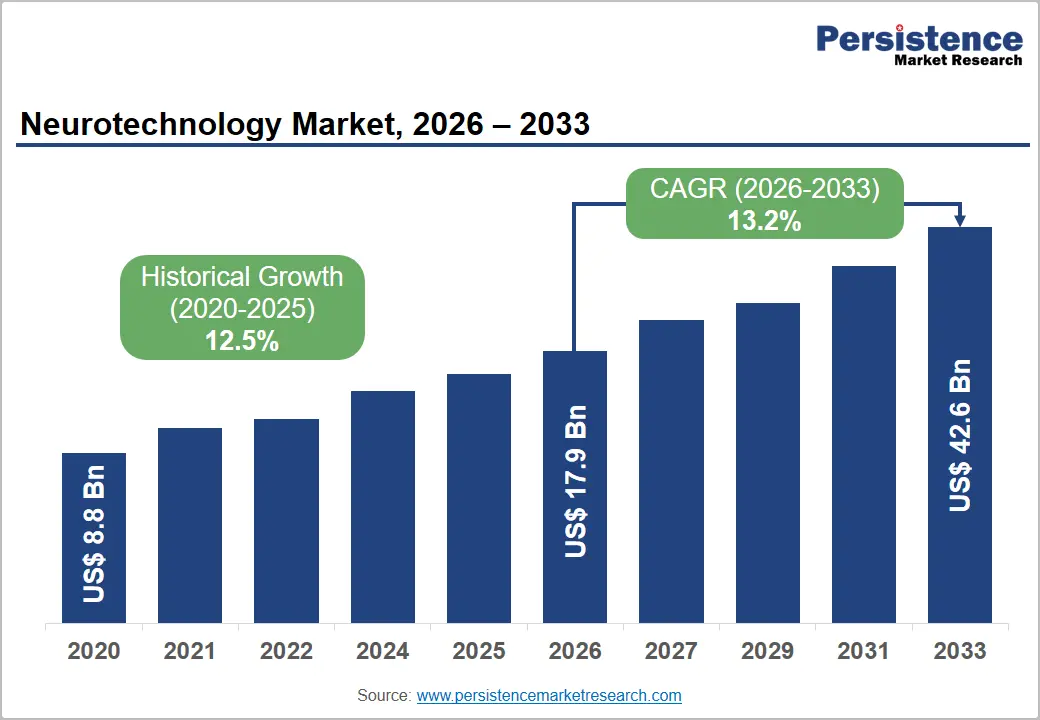
The global neurotechnology market size is likely to be valued at US$17.9 billion in 2026 and is expected to reach US$42.6 billion by 2033, growing at a CAGR of 13.2% during the forecast period from 2026 to 2033, driven by the increasing burden of neurological disorders and rapid advancements in brain-interfacing technologies.
According to the World Health Organization (WHO) and the Global Burden of Disease (GBD) 2021 study, neurological conditions affected more than 3 billion people globally in 2021 and have become the leading cause of illness and disability worldwide. In 2025, the WHO reported that neurological disorders affect over 40% of the global population, highlighting the growing need for advanced diagnostic, therapeutic, and rehabilitation solutions.
Key Industry Highlights:
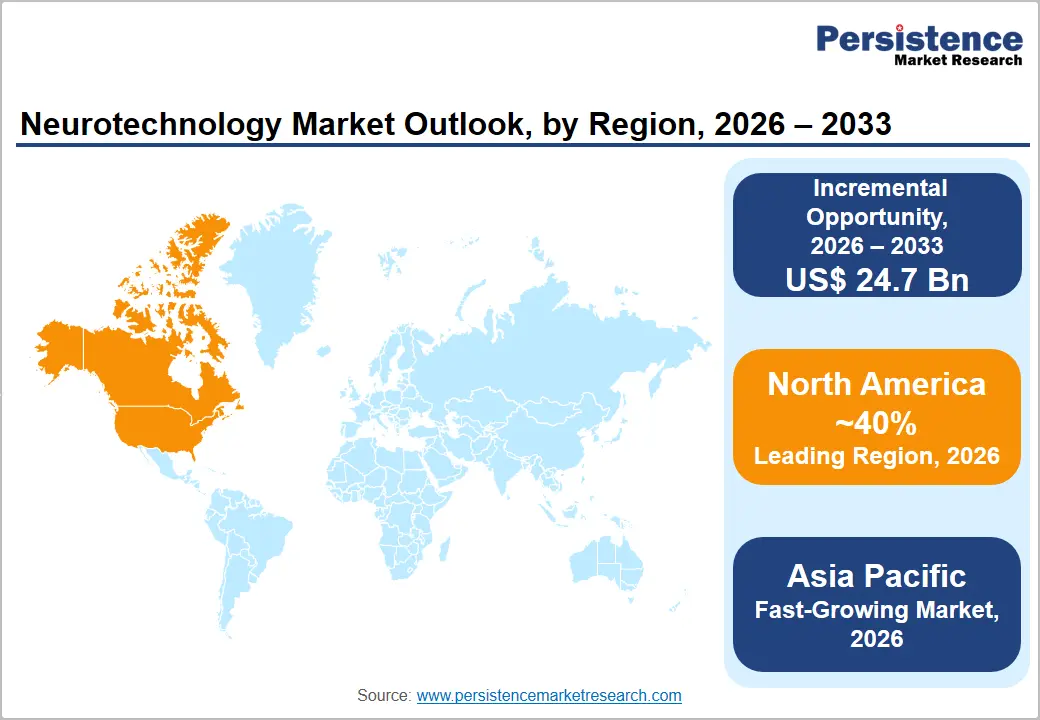
- Leading Region: North America is anticipated to be the leading region, accounting for a market share of 40% in 2026, driven by strong innovation, advanced healthcare infrastructure, and widespread adoption of neurostimulation and brain-computer interface technologies.
- Fastest-growing Region: Asia Pacific is likely to be the fastest-growing region, supported by expanding healthcare infrastructure, growing neurological disease awareness, and increasing adoption of advanced neurotechnology solutions.
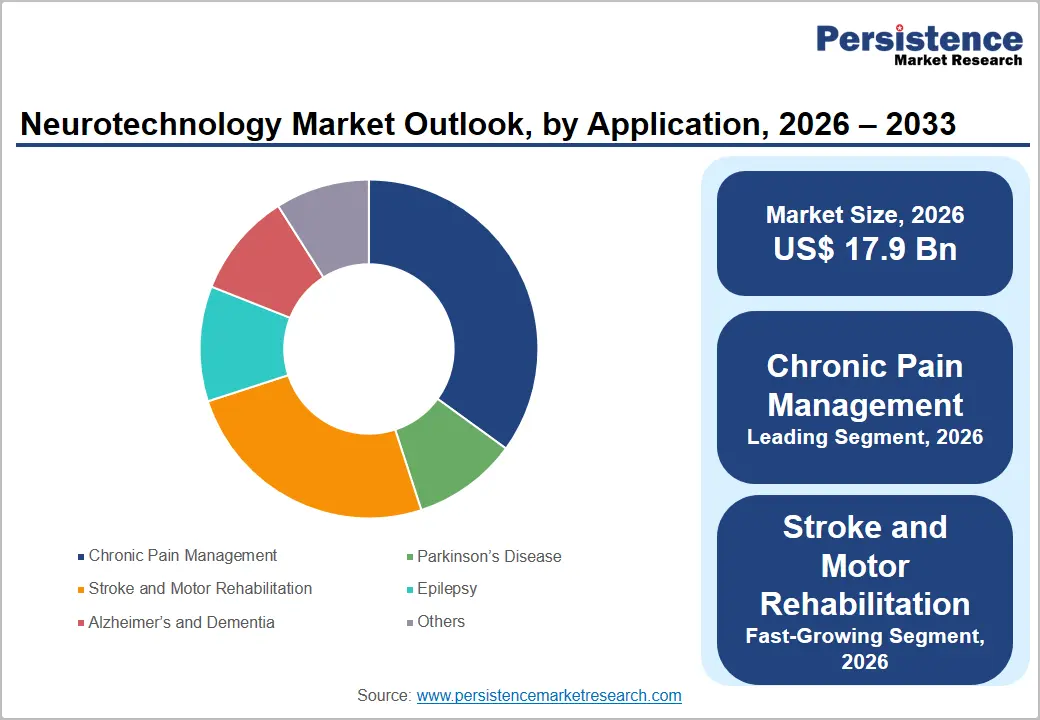
- Leading Product Type: Neuro-stimulation devices are expected to lead the market in 2026, capturing 45% of the revenue share, supported by their widespread clinical use in managing chronic pain, Parkinson’s disease, and epilepsy.
- Leading Application: Chronic pain management is anticipated to be the leading application, accounting for over 55% of the revenue share in 2026, supported by high procedure volumes and established neurostimulation efficacy.
- Key Opportunity: The growing convergence of AI-powered neurotechnology, brain-computer interfaces, and personalized neuromodulation therapies presents a significant opportunity to transform neurological diagnosis, rehabilitation, and long-term disease management worldwide.
DRO Analysis
Driver - Technological Advancements in Neurostimulation and BCIs
Modern neurostimulation systems offer improved precision, adaptive programming capabilities, and enhanced patient outcomes for neurological disorders such as Parkinson’s disease, epilepsy, and chronic pain. Innovations in electrode design, wireless communication, battery longevity, and miniaturization have increased device effectiveness while reducing procedural complexity.
Healthcare providers are increasingly adopting these technologies because they provide targeted therapeutic interventions with fewer side effects than conventional treatment approaches. Continuous improvements in neural signal acquisition and processing are strengthening clinical confidence and expanding applications. The rapid evolution of BCI technologies is creating new possibilities for restoring communication, mobility, and independence among patients with severe neurological impairments.
Artificial intelligence, machine learning, and advanced neural decoding algorithms enable more accurate interpretation of brain signals, improving device responsiveness and usability. Non-invasive and minimally invasive BCI platforms are attracting growing interest from healthcare institutions, researchers, and investors due to their expanding therapeutic potential. Increasing collaboration between neuroscience researchers, medical device manufacturers, and technology companies is accelerating product development and commercialization.
Restraint - Technical and Integration Challenges
Neurostimulation devices and BCIs require accurate neural signal acquisition, processing, and interpretation, which can be affected by biological variability and environmental interference. Achieving consistent performance across diverse patient populations remains a complex task for developers. Device calibration, software reliability, data transmission accuracy, and long-term system stability present additional technical hurdles.
The integration of advanced neurotechnology platforms with hospital systems, rehabilitation programs, and digital health ecosystems requires seamless interoperability and standardized protocols. Variations in hardware configurations, software architectures, and data formats can complicate implementation and limit scalability. Healthcare providers face operational challenges when incorporating sophisticated neural monitoring and stimulation systems into routine clinical practice.
Opportunity - Technological Convergence with AI and Digital Health
AI-powered analytics can process large volumes of neural data, enabling more accurate diagnosis, personalized treatment planning, and real-time therapeutic adjustments. Digital health technologies facilitate remote monitoring, patient engagement, and continuous assessment of neurological conditions, improving clinical outcomes and operational efficiency.
Integrating neurotechnology with cloud computing, wearable sensors, and connected healthcare systems allows providers to access valuable insights and support data-driven decision-making. These advancements are expanding the capabilities of neurotechnology solutions across multiple clinical applications. Growing demand for precision medicine and personalized neurological care is accelerating adoption of AI-enabled neurotechnology platforms.
Advanced algorithms can identify complex neural patterns, predict disease progression, and optimize neurostimulation parameters for individual patients. Integration with digital health ecosystems enables continuous collection and analysis of real-world patient data, supporting proactive intervention strategies and long-term disease management. Healthcare organizations are increasingly investing in intelligent neurotechnology solutions that enhance treatment effectiveness while reducing resource burdens.
Category-wise Analysis
Product Type Insights
Neuro-stimulation devices are expected to lead accounting for 45% of revenue in 2026. Their dominance is primarily attributed to extensive clinical validation, broad regulatory approvals, and widespread adoption for the treatment of neurological disorders such as Parkinson’s disease, epilepsy, and chronic pain. These devices provide targeted electrical stimulation to specific neural pathways, enabling symptom management and improved patient outcomes. A notable example includes the Medtronic Percept™ PC Deep Brain Stimulation system, which incorporates brain-sensing capabilities to optimize therapy delivery and support improved neurological disease management.
Brain-computer interfaces (BCIs) are likely to represent the fastest-growing segment, supported by rapid advances in neural engineering, artificial intelligence, and signal-processing technologies. These solutions enable direct communication between the brain and external devices, creating transformative opportunities for individuals with paralysis, severe motor impairments, and neurological injuries. For example, Synchron’s Stentrode™ Brain-Computer Interface enables users to control digital devices using neural signals without requiring open-brain surgery.
Application Insights
Chronic pain management is projected to lead the market, capturing around 55% of the revenue share in 2026, supported by the extensive use of neurostimulation therapies in these clinical areas. High patient populations, established treatment protocols, and strong clinical evidence supporting long-term therapeutic benefits have contributed to their leadership position. Continuous innovation in implantable devices, programming capabilities, and patient-specific therapy customization also contributes to sustained adoption.
For example, Abbott’s Proclaim™ Spinal Cord Stimulation system is widely utilized for the management of chronic pain through personalized neuromodulation therapy.
Stroke and motor rehabilitation is likely to be the fastest-growing application due to increasing demand for advanced rehabilitation solutions that support neurological recovery and functional restoration. Growing awareness of neuroplasticity and the benefits of early intervention has encouraged greater adoption of technologies that assist patients in regaining motor function after stroke and neurological injury. A notable example includes the Synchron Brain-Computer Interface platform, which is being explored for enabling communication and motor function support among patients with severe neurological impairments.
Regional Insights
North America Neurotechnology Market Trends
North America is anticipated to be the leading region, accounting for a market share of 40% in 2026, supported by advanced healthcare infrastructure, strong neuroscience research capabilities, and widespread adoption of neurostimulation and brain-computer interface technologies. The region benefits from substantial investments in neurological disorder management, digital health integration, and AI-enabled neural diagnostics. For example, Synchron Inc. has expanded the development of its minimally invasive BCI platform for communication and assistive applications.
U.S. Neurotechnology Market Trends
The U.S. is expected to dominate the regional market, accounting for approximately 80% of the market share in 2026, supported by substantial investments in neuroscience research and innovation. The adoption of AI-enabled neurological diagnostic technologies is expanding across major healthcare systems, while demand for advanced neurostimulation therapies for conditions such as Parkinson’s disease and chronic pain continues to grow. The development of brain-computer interfaces is also gaining momentum through increasing collaboration between technology companies and medical institutions.
Canada Neurotechnology Market Trends
Canada is expected to represent a significant share of the neurotechnology market, accounting for approximately 20% of the regional market in 2026. Growth is supported by active research and development efforts from universities and research institutions advancing neuroengineering technologies. The adoption of neurorehabilitation platforms across healthcare facilities is increasing, while demand for digital neurological monitoring solutions continues to rise. Canadian organizations are also expanding research into neural interfaces and cognitive health technologies, with public-private partnerships playing a key role in accelerating commercialization and market development.
Europe Neurotechnology Market Trends
Europe is likely to be a significant market for neurotechnology in 2026, due to strong healthcare systems, expanding neurological research programs, and increasing adoption of advanced neuromodulation therapies. The region is witnessing growing interest in personalized neurological treatment approaches, AI-assisted diagnostics, and neurorehabilitation technologies. For instance, Aleva Neurotherapeutics continues to advance directional deep brain stimulation technologies designed to improve precision and therapeutic outcomes for neurological disease management.
U.K. Neurotechnology Market Trends
The U.K. is expected to be a significant market for neurotechnology, accounting for approximately 15% of the European market share in 2026. Growth is supported by leading universities actively engaged in brain-computer interface research and development. Demand for neurorehabilitation technologies continues to rise, while healthcare providers are increasingly adopting digital neurological monitoring systems. Strong investments in neuroscience innovation and expanding research collaborations are further accelerating the commercialization of advanced neural technologies.
Germany Neurotechnology Market Trends
Germany is anticipated to dominate the European neurotechnology market, accounting for approximately 37% of the regional market share in 2026. This leadership is supported by the country’s strong medical device manufacturing capabilities and continued focus on technological innovation. Hospitals are increasingly adopting advanced neurostimulation systems, while research institutions are expanding neuroscience and neuroengineering programs. Demand for Parkinson’s disease management technologies remains robust, and the growing acceptance of AI-enabled neurological diagnostic solutions is further contributing to market growth.
Asia Pacific Neurotechnology Market Trends
The Asia Pacific region is expected to be the fastest-growing market for neurotechnology in 2026, driven by expanding healthcare infrastructure, increasing awareness of neurological disorders, and rising investments in advanced medical technologies. The adoption of neurostimulation devices, neurorehabilitation technologies, and AI-powered neurological diagnostic solutions continues to accelerate across the region. A notable example is Cochlear Limited, which continues to advance innovation in neural implant technologies and sophisticated hearing solutions, supporting the region’s growth in neurotechnology.
China Neurotechnology Market Trends
China is projected to dominate the Asia Pacific neurotechnology market, accounting for approximately 30% of the regional market share in 2026. Growth is being driven by increasing investments in neuroscience research and the expanding capabilities of domestic companies in neural interface development. The adoption of AI-based neurological diagnostic solutions is rising, while hospitals continue to invest in advanced neuromodulation technologies. Research in brain-computer interfaces is also gaining momentum, supported by growing collaborations between technology companies and medical institutions aimed at accelerating innovation and commercialization.
India Neurotechnology Market Trends
India is expected to emerge as a significant market for neurotechnology, accounting for approximately 22% of the regional market share in 2026. Growth is being driven by increasing healthcare investments that are enhancing access to advanced neurological care. Demand for neurorehabilitation technologies is rising across major healthcare facilities, while the adoption of digital health platforms is supporting more effective neurological disease management. In addition, research institutions are expanding their efforts in neuroscience and biomedical engineering, and growing awareness of neurostimulation therapies is further contributing to market expansion.
Competitive Landscape
The global neurotechnology market exhibits a moderately fragmented structure, driven by rapid advancements in neurostimulation devices, brain-computer interfaces (BCIs), neuroprosthetics, and AI-enabled neurological diagnostics. Increasing demand for innovative solutions to address neurological disorders such as Parkinson’s disease, epilepsy, chronic pain, and stroke-related impairments has intensified competition across the industry.
With key leaders, including Medtronic PLC, Abbott Laboratories, Boston Scientific Corporation, LivaNova PLC, Cochlear Limited, NeuroPace Inc., Synchron Inc., and Paradromics Inc., the competitive landscape remains highly innovation-driven. These players compete through product innovation, clinical validation, strategic partnerships, regulatory approvals, geographical expansion, and continuous investment in next-generation neural interface technologies.
Key Industry Developments:
- In March 2026, Paradromics Inc. launched its APEX Partnership Program, enabling leading academic researchers to collaborate on the company’s Connexus® brain-computer interface platform and accelerate the development of next-generation BCI applications for communication and mobility restoration.
- In May 2026, ABILITY Neurotech received regulatory approval in the Netherlands to initiate the first chronic clinical trial of its fully implantable wireless brain-computer interface in patients with ALS, advancing the commercialization of implantable neurotechnology solutions.
- In March 2026, China approved the world’s first commercial brain-computer interface medical device, developed by Borui Kang Medical Technology, marking a major milestone for neurotechnology adoption and neurological rehabilitation.
Companies Covered in Neurotechnology Market
- Medtronic PLC
- Abbott Laboratories
- Boston Scientific Corporation
- LivaNova PLC
- Cochlear Limited
- Nevro Corp.
- NeuroPace Inc.
- Neuronetics Inc.
- Curonix LLC
- Aleva Neurotherapeutics
- Synapse Biomedical Inc.
- Synchron Inc.
- Blackrock Neurotech LLC
- Paradromics Inc.
Frequently Asked Questions
The global neurotechnology market is projected to reach US$17.9 billion in 2026.
Increasing prevalence of neurological disorders and continuous advancements in neurostimulation, brain-computer interfaces, and neural diagnostic technologies are driving the neurotechnology market.
The neurotechnology market is expected to grow at a CAGR of 13.2% from 2026 to 2033.
Integration of artificial intelligence, digital health platforms, and next-generation brain-computer interfaces is creating significant growth opportunities in the neurotechnology market.
Medtronic PLC, Abbott Laboratories, Boston Scientific Corporation, LivaNova PLC, and Cochlear Limited are the leading players.


