




- Medical Devices
- Neuroendovascular Coil Market
Neuroendovascular Coil Market Size, Share, Growth, and Regional Forecast, 2026 to 2033
Neuroendovascular Coil Market by Product Type (Guglielmi Detachable Coils, Matrix Coils), Indication (Ruptured Aneurysm, Unruptured Aneurysm), End-user (Hospitals, Ambulatory Surgical Centres, Stroke Centres), and Regional Analysis, from 2026 to 2033

Neuroendovascular Coil Market Share and Trends Analysis
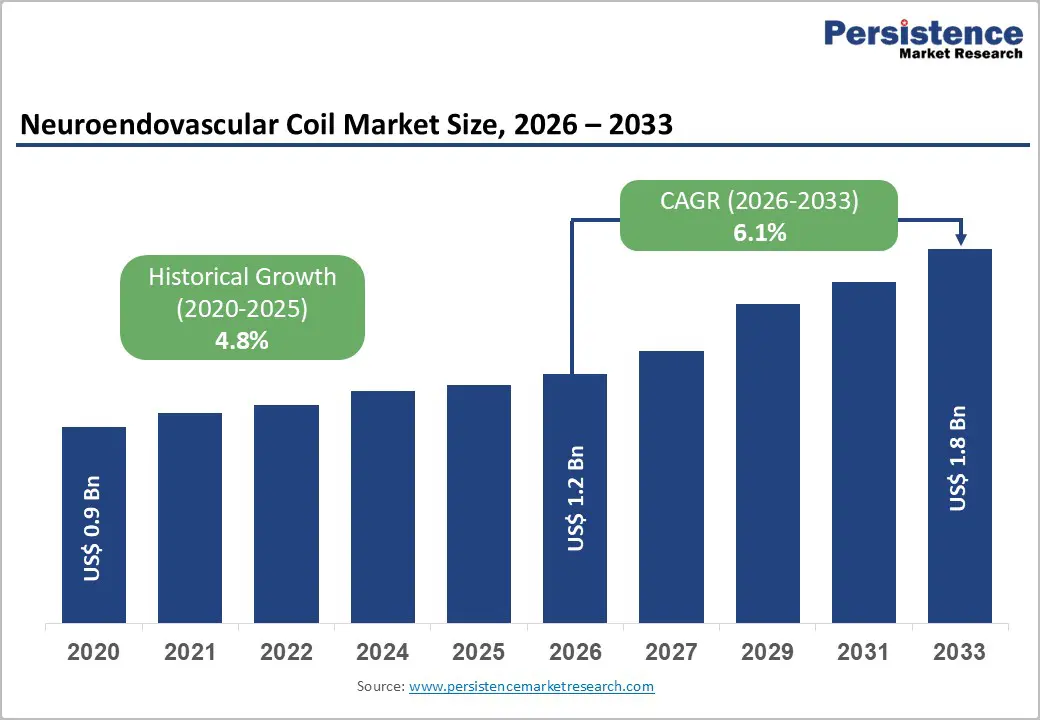
The global neuroendovascular coil market size is expected to be valued at US$ 1.2 billion in 2026 and projected to reach US$ 1.8 billion by 2033, growing at a CAGR of 6.1% between 2026 and 2033. Neuroendovascular coiling is a minimally invasive endovascular procedure used to occlude blood flow in cerebral vessels. Treating an aneurysm, a dilation resulting from a weakening in a blood vessel wall is crucial, as it may rupture under increased pressure and lead to cerebral haemorrhage.
The manifestations of a ruptured aneurysm typically encompass an abrupt, intense headache, nausea, emesis, visual disturbances such as blurred or double vision, and seizures. In neuroendovascular coiling, a surgeon meticulously fills the aneurysm with detachable platinum coils to promote thrombosis and reduce strain on the vessel wall. Neuroendovascular coiling is gaining global popularity due to its reduced cost and diminished patient risk.
Significant advances have been made in neuroendovascular coil technology in terms of design, length, and bioactivity. Additionally, substantial advances have been made in intracranial stents to improve their deployment and distribution mechanisms. Surgeons have begun integrating intracranial stents with coil technology to treat aneurysms and mitigate recurrence-related complications. Endovascular coiling is regarded as a superior surgical method to clipping with respect to postoperative complications, clinical outcomes, and rehabilitation. Additionally, numerous industry participants are investing in the development of technologically improved products.
Key Industry Highlights
- The increasing prevalence of aneurysms and strokes drives demand for minimally invasive treatments.
- North America dominates the market with the largest share due to its advanced healthcare infrastructure.
- Technological advancements like hydrogel-coated and bioactive coils enhance treatment outcomes.
- The growing adoption of minimally invasive procedures over traditional surgical methods is a crucial market driver.
- Significant growth potential in emerging markets such as Asia-Pacific and Latin America influences the market globally.
- Increasing investments in research and development and innovations in coil designs are expected to drive market growth.
| Key Insights | Details |
|---|---|
| Neuroendovascular Coil Market Size (2026E) | US$ 1.2 billion |
| Market Value Forecast (2033F) | US$ 1.8 billion |
| Projected Growth CAGR (2026 - 2033) | 6.1% |
| Historical Market Growth (2020 - 2025) | 4.8% |
Market Dynamics
Driver - Increasing Prevalence of Cerebral Aneurysms and Stroke
The rising incidence of cerebral aneurysms and stroke is a significant growth driver for the neuroendovascular coil market. As populations age and risk factors like hypertension, obesity, and smoking become more prevalent, the number of patients experiencing aneurysms is on the rise globally.
Stroke remains one of the leading causes of death and long-term disability. This surge in neurological conditions necessitates effective, minimally invasive treatment options like neuroendovascular coiling, which has become a preferred method for treating intracranial aneurysms.
The increasing awareness and early diagnosis of these conditions, combined with advancements in imaging technologies, are leading to more neuroendovascular procedures. As healthcare systems focus on reducing the burden of stroke-related disabilities, the demand for neuroendovascular coils is projected to grow significantly.
Technological Advancements in Neurointerventional Devices
Technological innovations in neuroendovascular coil design are a crucial driver of market growth. Modern coils have improved flexibility, visibility, and biocompatibility, allowing for more precise and safer interventions. Developing hydrogel-coated coils that expand within the aneurysm has enhanced treatment efficacy by increasing the likelihood of successful aneurysm occlusion.
Micro catheters and other delivery systems have also evolved, enabling physicians to more accurately navigate complex and delicate neurovascular pathways. Such advancements reduce procedural risks and recovery times, making neuroendovascular procedures appealing to patients and physicians. As companies continue investing in R&D, new products that further improve patient outcomes and procedural efficiency will drive market growth.
Rising Adoption of Minimally Invasive Neurosurgery
The increasing preference for minimally invasive surgical techniques over open surgical methods is a significant growth driver for the neuroendovascular coil market.
Traditional aneurysm treatments, such as open surgical clipping, involve significant risks, longer recovery times, and potential complications. In contrast, neuroendovascular coiling is a less invasive procedure that can be performed through a small incision in the femoral or radial artery, allowing for a faster recovery and reduced hospital stays.
With growing patient awareness of these benefits, there is a shift toward endovascular treatments for aneurysms and other cerebrovascular disorders. The shift is powerful in regions with advanced healthcare infrastructure, such as North America and Europe, but is also expanding in emerging markets. The rising demand for less invasive procedures continues to boost the adoption of neuroendovascular coils.
Restraints - High Cost of Neuroendovascular Procedures
One of the primary restraints on the neuroendovascular coil market is the high cost of these procedures. Neuroendovascular treatments, particularly in developed regions like North America and Europe, can be expensive due to the need for specialized equipment, advanced imaging technologies, and skilled healthcare professionals.
The cost of the coils and hospital fees can make these procedures unaffordable for patients in regions with limited healthcare coverage or poor reimbursement systems. In emerging markets such as the Asia-Pacific and Latin America, where healthcare infrastructure is still developing, the high cost of neuroendovascular coils further restricts market penetration. This financial barrier limits access to treatment, especially for lower-income populations, thereby constraining the overall market growth.
Limited Awareness and Expertise in Emerging Markets
Another critical restraint is the limited awareness and expertise in neuroendovascular procedures, particularly in low- and middle-income countries. Many healthcare facilities in emerging regions require additional infrastructure, trained professionals, and advanced imaging technologies to support these complex treatments.
There is often a need for more patient awareness regarding the availability of neuroendovascular treatment options, leading to delayed diagnosis or the selection of more traditional, invasive procedures like surgical clipping.
The shortage of skilled neurointerventionists and specialized equipment in hospitals limits the adoption of neuroendovascular coils in regions with growing demand, slowing the market expansion. Training programs and education for patients and healthcare providers will be crucial to overcoming this challenge.
Opportunity - Advancements in Bioactive and Hydrogel-Coated Coils
Technological advancements in neuroendovascular coil design present another significant growth opportunity. Developing bioactive and hydrogel-coated coils is improving treatment outcomes for patients with aneurysms.
Hydrogel-coated coils, for example, expand within the aneurysm, thereby improving occlusion rates and reducing the need for retreatment. These coils offer improved efficacy, especially in challenging cases involving wide-neck or irregular aneurysms.
Bioactive coils stimulate healing by promoting endothelial growth and further enhance patient outcomes by encouraging natural vessel healing. These next-generation coils are gaining traction among neurosurgeons and interventional radiologists, leading to broader adoption of neuroendovascular procedures. As R&D continues to improve coil technology, the effectiveness and safety of these treatments will expand, presenting a promising avenue for market growth.
Integration of Artificial Intelligence in Treatment Planning
The integration of artificial intelligence (AI) in neuroendovascular procedures represents a transformative opportunity for the market. AI-driven imaging and diagnostic tools can significantly improve the precision and accuracy of aneurysm detection and treatment planning.
Advanced AI algorithms are being developed to assist physicians in determining the most effective treatment options, predicting procedural outcomes, and optimizing the placement of neuroendovascular coils. This technology not only enhances procedural success rates but also reduces the time required for complex neurointerventions.
As AI continues to evolve and becomes more integrated into healthcare systems, it can dramatically streamline neuroendovascular treatments, making these procedures more accessible and affordable for a broader patient population.
Category-wise Analysis
By Product Type Insights
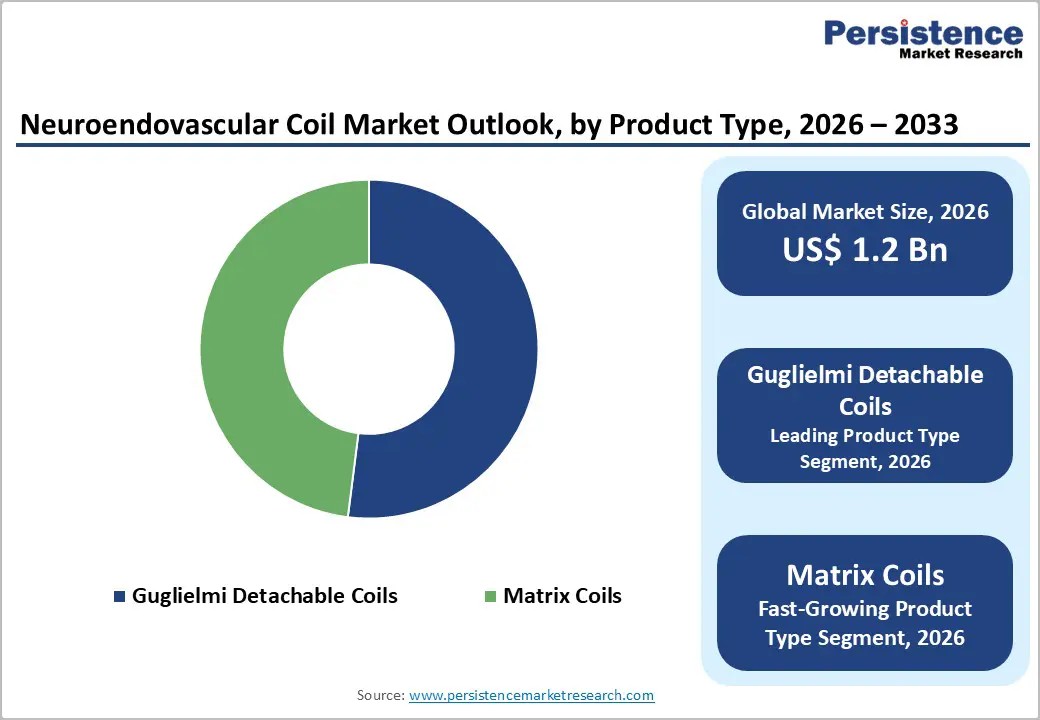
The global neuroendovascular coil market is primarily segmented into Guglielmi Detachable Coils (GDCs) and matrix coils, with GDCs holding the dominant market position. GDCs have become the preferred choice among neurosurgeons and interventional radiologists due to their superior flexibility, availability in both two-dimensional and three-dimensional configurations, and ease of deployment during procedures. These coils provide enhanced control over detachment and positioning, with improved visibility under fluoroscopic imaging, which reduces procedural risks and improves patient outcomes.
The rising number of neuroendovascular procedures, including treatments for cerebral aneurysms, arteriovenous malformations, and strokes, contributes significantly to the demand for GDCs. Additionally, the aging global population, particularly individuals over 60 years who are more susceptible to cerebrovascular conditions, further drives the adoption of these coils. Ongoing innovations in coil design, such as bioactive coatings and improved radiopacity, are enhancing their therapeutic effectiveness. As healthcare providers increasingly prioritize minimally invasive procedures that reduce hospital stays and recovery time, GDCs continue to maintain a leading share of the neuroendovascular coil market globally.
By End-user Insights
The neuroendovascular coil market is segmented by end-users into hospitals, ambulatory surgical centers, and stroke centers, with hospitals representing the largest share. Hospitals dominate the market due to their advanced infrastructure, access to highly qualified physicians, and multidisciplinary teams capable of performing complex neurointerventional procedures. Patients often prefer hospital settings for the diagnosis and treatment of cerebrovascular diseases such as cerebral aneurysms, arteriovenous malformations, and brain tumors, as hospitals provide comprehensive pre- and post-operative care.
The growing volume of neuroendovascular procedures globally further strengthens hospital demand. Hospitals are equipped with state-of-the-art imaging technologies, including fluoroscopy, DSA, and CT/MRI-guided navigation systems, which are critical for precise coil placement. Additionally, hospitals often have well-established neurology and neurosurgery departments, enabling rapid procedural response and minimizing complications. Rising awareness of minimally invasive procedures, increasing incidence of strokes and aneurysms, and supportive reimbursement frameworks in developed regions also contribute to the hospital segment’s dominance. As patient preference shifts toward high-quality care and shorter recovery times, hospitals remain the primary end-user driving growth in the neuroendovascular coil market worldwide.
Region-wise Insights
North America Neuroendovascular Coil Market Trends
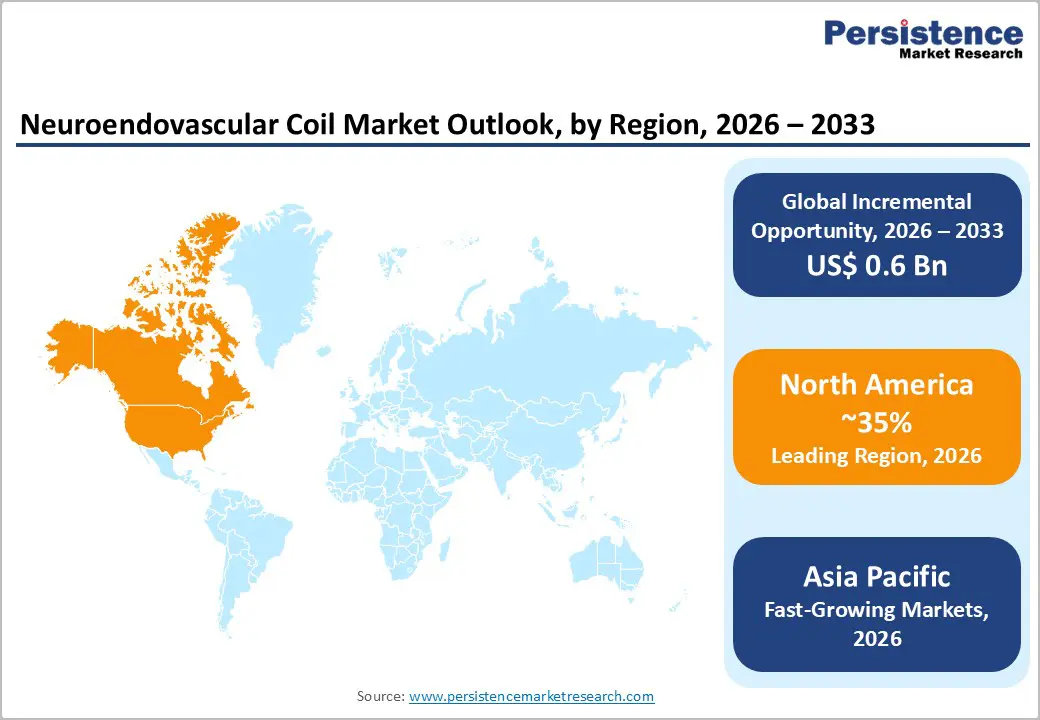
North America dominates the global neuroendovascular coil market, with the United States holding the largest share due to a combination of advanced healthcare infrastructure, high per capita healthcare expenditure, and widespread adoption of neurological devices. The increasing prevalence of cerebrovascular diseases, including cerebral aneurysms and ischemic strokes, particularly among the aging population, has significantly boosted demand for minimally invasive endovascular treatments. Hospitals and specialized neurology centers in the U.S. prioritize advanced coil technologies to improve procedural outcomes, reduce complications, and shorten recovery times.
The presence of key market players such as Stryker, Medtronic, and Johnson & Johnson drives innovation in coil design, bioactive coatings, and detachable systems. Favorable regulatory frameworks from the U.S. Food and Drug Administration (FDA) promote clinical trials and fast-track approval for advanced devices, enabling rapid commercialization. Additionally, government investment in healthcare research, including support from the National Institutes of Health (NIH), encourages the development of minimally invasive neurointerventional solutions. Combined with increasing awareness among clinicians and patients about the benefits of endovascular procedures, these factors ensure sustained growth of the neuroendovascular coil market across North America.
Europe Neuroendovascular Coil Market Trends
Europe represents a significant market for neuroendovascular coils, with Germany, France, and the U.K. serving as major contributors. The region benefits from advanced healthcare infrastructure and a high rate of adoption of minimally invasive neurosurgical procedures. The aging population in Europe, with increasing susceptibility to cerebrovascular conditions such as aneurysms, strokes, and vascular malformations, is a major driver for neuroendovascular coil usage. Hospitals and specialized neurology centers increasingly rely on coil technologies to improve patient outcomes, reduce hospitalization periods, and lower complication rates.
The market is regulated by the European Medicines Agency (EMA), which, despite stringent requirements, supports the approval and adoption of innovative coil designs and bioactive technologies. Reimbursement policies, particularly in Western Europe, facilitate the uptake of high-cost devices like neuroendovascular coils, enabling hospitals to adopt advanced neurointerventional solutions. Unlike North America, Europe exhibits a fragmented healthcare landscape with country-specific protocols, pricing structures, and regulatory nuances, leading to variability in market penetration. Nevertheless, increasing investment in clinical research, growing awareness of minimally invasive procedures, and the presence of established and emerging players continue to support steady growth of the neuroendovascular coil market across the region.
Asia Pacific Neuroendovascular Coil Market Trends
Asia Pacific is emerging as one of the fastest-growing markets for neuroendovascular coils, driven by rising prevalence of cerebrovascular diseases, including strokes and cerebral aneurysms, particularly in aging populations across China, Japan, and India. Rapid urbanization, changing lifestyles, and increasing incidence of hypertension and diabetes are contributing to a higher disease burden, which, in turn, fuels demand for minimally invasive neurointerventional procedures. Hospitals and specialty neurology centers in the region are increasingly adopting advanced coil technologies to improve procedural safety, reduce complications, and shorten recovery times.
The growth of the market is further supported by expanding healthcare infrastructure, government initiatives to improve access to advanced neurocare, and rising investments in medical device manufacturing. Countries like Japan and China are focusing on local production of endovascular devices, improving affordability and accessibility. Additionally, increasing awareness among physicians and patients regarding the benefits of neuroendovascular treatments, coupled with ongoing training programs for minimally invasive procedures, is accelerating adoption. These factors position Asia Pacific as a high-growth region for neuroendovascular coil demand in the coming years.
Competitive Landscape
The neuroendovascular coil market is highly competitive, dominated by several key players focusing on innovation and expanding their product portfolios. Leading companies include Stryker, Medtronic, Johnson & Johnson (via its subsidiary Codman Neuro), and Terumo Corporation. The companies are engaged in continuous R&D efforts to develop advanced coils, such as bioactive and hydrogel-coated varieties, which enhance procedural outcomes.
The market is also witnessing increasing competition from regional players, particularly in Asia-Pacific, as they introduce cost-effective alternatives to cater to price-sensitive markets. Mergers, acquisitions, and partnerships are common strategies among these players to maintain a competitive edge, while regulatory approvals of new products are crucial for market expansion and dominance.
Key Industry Developments:
- In October 2025, Neuroendovascular Penumbra introduced the SwiftSET™ Coil, a novel complex coil system designed for adaptive embolization. The SwiftSET™ is crafted to enhance vessel wall apposition with its unique shape, enabling smooth deployment and natural conformity in tight spaces for dense occlusion of small vessels.
- In May 2023, Medical Device Business Services, Inc. (J&J MedTech) announced the commercial introduction of their CEREPAK Detachable Coils utilized for treating brain aneurysms, in the U.S. market.
- In May 2023, Stryker announced the acquisition of Cerus Endovascular, a medical device firm specializing in neurointerventional devices to enhance its product range for treating intracranial aneurysms.
Companies Covered in Neuroendovascular Coil Market
- Medtronic
- Stryker Corporation
- DePuy Synthes
- Penumbra
- Johnson & Johnson Services Inc.
- Terumo Corporation
- Cardinal Health
- Boston Scientific Corporation
- Cook Medical Incorporated
- Balt Extrusion
- EndoShape
- Others
Frequently Asked Questions
The global neuroendovascular coil market is projected to be valued at US$ 1.2 Bn in 2026.
Rising prevalence of cerebrovascular diseases and aneurysms, coupled with minimally invasive procedure preference, drives demand for neuroendovascular coils globally.
The global market is expected to witness a CAGR of 6.1% between 2026 and 2033.
Technological advancements in coil materials, bioactive coatings, and growing adoption in emerging markets present significant growth opportunities for manufacturers.
North America is the leading region in the global neuroendovascular coil market.


