




- Food Ingredients & Additives
- Low Glycemic Index Rice Market
Low Glycemic Index Rice Market Size, Share, and Growth Forecast 2026–2033
Low Glycemic Index Rice Market by Type (Basmati, Jasmine, Brown, Branded), Application (Diabetes Management, Weight Management, Sports Nutrition), Distribution Channel (Supermarkets/Hypermarkets, Online Retailers), and Regional Analysis, 2026–2033

Low Glycemic Index Rice Market Size and Trend Analysis
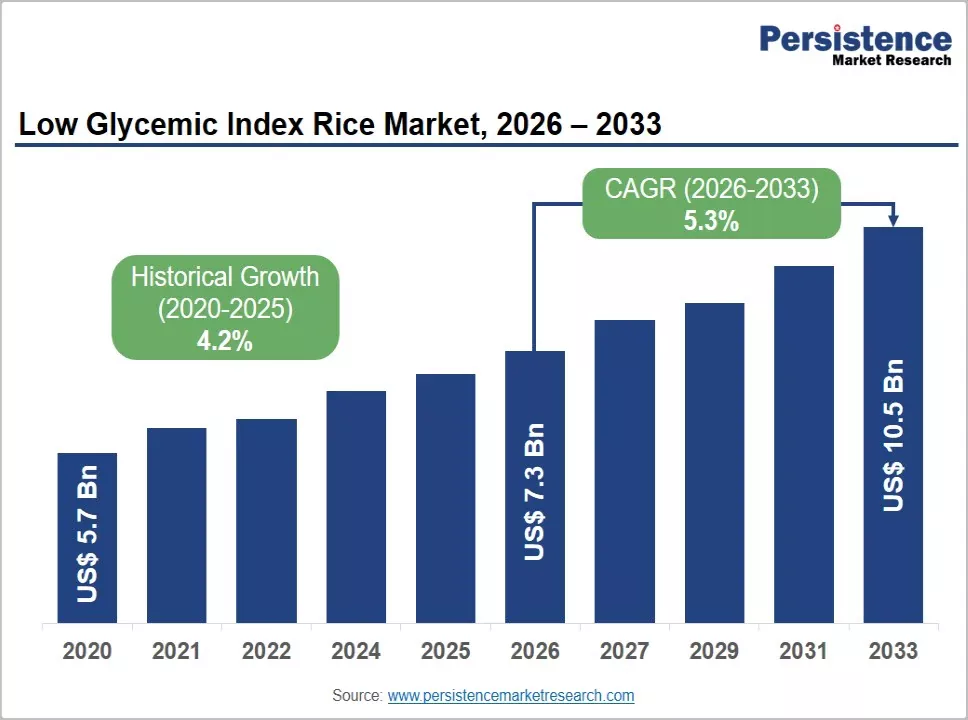
The global low glycemic index rice market size is likely to be valued at US$ 7.3 billion in 2026, and is estimated to reach US$ 10.5 billion by 2033, growing at a CAGR of 5.3% during the forecast period 2026–2033.
Growth is underpinned by the rising prevalence of diabetes and metabolic disorders, growing consumer preference for blood-sugar-friendly staples, and active crop-breeding programs that are bringing low glycemic index varieties into mainstream retail across developed and emerging economies.
The market recorded a historical CAGR of 4.2% during 2020–2025, reflecting limited awareness and a narrow range of certified varieties. However, the forecast period anticipates stronger acceleration as established rice companies launch dedicated low glycemic index brands, public research institutes release new varieties, and online retail makes specialty health staples accessible to a wider consumer base.
Key Industry Highlights
- Dominant Type: Basmati rice is set to command around 41% of the revenue share in 2026, while brown rice is likely to grow the fastest at 7% CAGR through 2033, as fiber-rich whole grain options gain traction among health-conscious consumers.
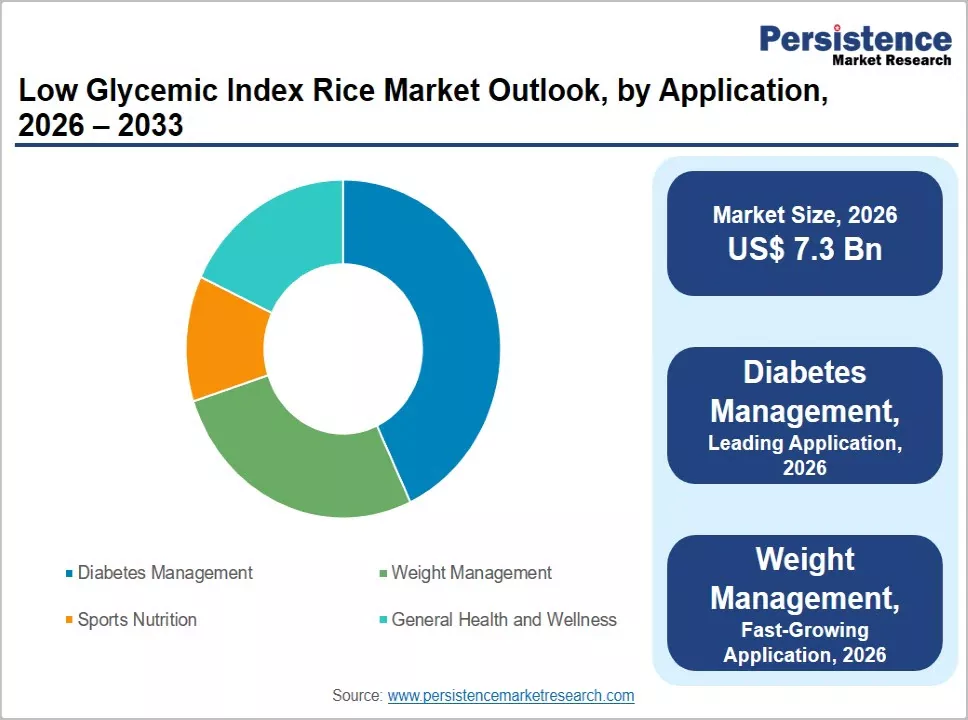
- Leading Application: Diabetes management is expected to lead with 44% in 2026, while weight management is likely to be the fastest-growing application at about 6.9% CAGR during 2026–2033, reflecting demand for satiety-oriented staples.
- Dominant Distribution Channel: Supermarkets and hypermarkets are anticipated to lead with an estimated 47% share in 2026, while online retailers are slated to represent the fastest-growing channel at 8.2% CAGR from 2026 to 2033.
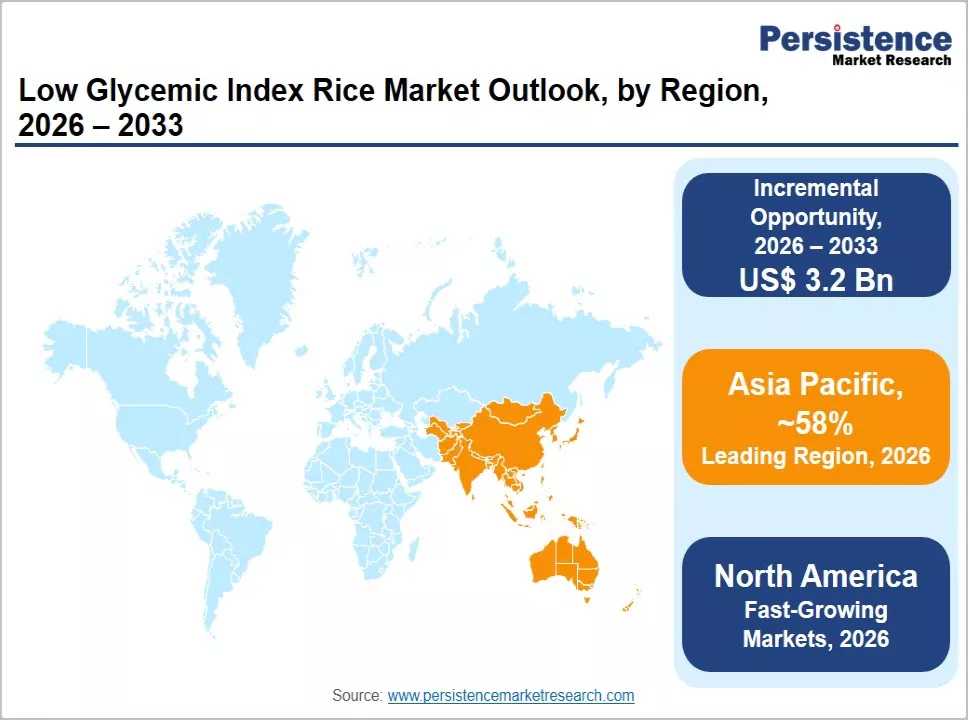
- Regional Leadership: Asia Pacific is poised to dominate with an estimated 58% share in 2026 and register a 5.8% CAGR through 2033, led by large rice-consuming populations and high diabetes prevalence in India and China.
- Competitive Environment: Competitive dynamics include dedicated low glycemic index product launches by leading rice companies, variety development with public research institutes, and retail expansion into mainstream grocery chains.
DRO Analysis
Drivers: Rising Diabetes Prevalence and Demand for Blood-Sugar-Friendly Staples as Primary Growth Catalyst
The growing burden of diabetes and pre-diabetes is the leading force driving the low glycemic index rice market growth, as rice is a daily staple for billions of people and conventional white rice typically falls in the high glycemic index category. The International Diabetes Federation estimates that more than 580 million adults are living with diabetes globally, with India and China among the most affected countries, and clinicians increasingly advise patients to choose foods with a glycemic index of 55 or below. Consumers who do not wish to give up rice are therefore turning to low glycemic index alternatives that preserve familiar taste and cooking habits. Retailers and brands are positioning these products as everyday staples rather than niche medical foods, which is widening their appeal beyond diagnosed patients.
Variety Development and Branded Launches
Crop science is playing a central role in market expansion. Research institutes have developed varieties with low glycemic response and higher protein content, such as those from Louisiana State University's AgCenter and the International Rice Research Institute, while national research bodies in Asia are releasing locally adapted low glycemic varieties. Major rice companies are following with branded launches, including a low glycemic index everyday rice introduced by India's KRBL in early 2026, helping move the category from specialty stores into mainstream retail.
Restraints: Premium Pricing, Variability, and Limited Standardization
Low glycemic index rice generally carries a price premium over conventional rice, which can restrict adoption in price-sensitive markets where rice is a subsidized or low-cost staple. The glycemic response of rice also depends on variety, milling, processing, cooking method, and accompanying foods, making it difficult for consumers to understand what a low glycemic index claim means in practice. Testing requires human clinical protocols and accredited laboratories, adding cost and time for producers seeking credible certification.
Awareness Gaps and Supply Constraints
Awareness of glycemic index remains uneven, particularly in rural regions of emerging economies, and some consumers perceive low glycemic index products as medical foods rather than everyday options. Limited seed availability, smaller cultivated areas, and the need to keep specialty varieties segregated from conventional rice complicate supply chains. Inconsistent labeling rules across countries and the risk of unsubstantiated claims further challenge consumer trust, while brown rice variants face concerns around shorter shelf life and arsenic accumulation that require careful sourcing and testing.
Opportunities: Retail Expansion, Fortified Blends, and Public Health Programs
Large untapped opportunities exist in markets where diabetes prevalence is rising rapidly and rice is central to the diet, including India, Bangladesh, Southeast Asia, and parts of Africa and the Middle East. Recent examples include a low glycemic index rice variety expanding to 170 grocery stores across Texas in the U.S. and the commercial marketing of research-developed low glycemic varieties by pharmaceutical and agribusiness companies in Bangladesh, indicating a broadening geographic reach.
Product Innovation and Health Partnerships
Producers are developing blends combining low glycemic rice with legumes, millets, and fiber to reduce glycemic response further, and parboiled, ready-to-cook, and microwavable formats are improving convenience. Partnerships with hospitals, pharmacies, diabetes educators, and digital health platforms offer new channels for credible education and distribution. Government nutrition programs and procurement schemes that adopt low glycemic varieties could scale volumes considerably, supporting both farmer incomes and public health goals through 2033.
Category-wise Insights
Type Analysis
Why Does Basmati Rice Lead the Low Glycemic Index Rice Market?
Basmati rice is the leading type segment, expected to hold about 41% of the low glycemic index rice market revenue share in 2026. Aged basmati varieties are known for their long, slender grains, aroma, and naturally moderate glycemic response, and several brands now market basmati with tested glycemic index values at or below 55. Strong export traditions, established premium pricing, and consumer familiarity in South Asia, the Middle East, and diaspora communities support steady demand. Jasmine rice, popular across Southeast Asia, contributes a stable share, while branded low glycemic index rice products are building loyalty by offering certified claims.
Brown rice is likely to grow the fastest through 2033, at about 7% CAGR. Its intact bran layer provides higher fiber, vitamins, and minerals, which slow starch digestion and align with whole grain and weight management trends. Manufacturers are addressing challenges such as longer cooking times and shorter shelf life through quick-cook, parboiled, and stabilized bran formats. Low glycemic brown varieties from public breeding programs are also entering retail, supporting adoption among diabetic and fitness-oriented consumers.
Application Analysis
Which Application Dominates Low Glycemic Index Rice?
Diabetes management dominates the application segment, projected to capture about 44% of the revenue share in 2026. Physicians, dietitians, and diabetes associations routinely recommend replacing high glycemic index staples with lower-glycemic options, and rice substitution is one of the simplest dietary changes for patients in Asia. Product labeling that highlights tested glycemic index values and endorsements by health professionals strengthens trust, while retailers increasingly dedicate shelf space to diabetic-friendly staples.
Weight management represents the fastest-growing application, anticipated to achieve about 6.9% CAGR during the 2026–2033 period. Slow-digesting carbohydrates promote longer satiety and reduce post-meal glucose spikes, aligning with calorie control and metabolic health goals. Sports nutrition and general health and wellness applications are also expanding, as athletes seek sustained energy and wellness-oriented households adopt low glycemic index staples as part of balanced diets and meal-prep routines.
Distribution Channel Analysis
Why Do Supermarkets and Hypermarkets Lead Distribution Channels?
Supermarkets and hypermarkets are poised to lead with an estimated 47% share in 2026, favored for broad assortment, bulk rice formats, promotional offers, and consumer trust in organized retail. Large grocery chains are expanding dedicated health staple sections and partnering with rice brands for in-store education and sampling. As mainstream retailers add low glycemic index products at accessible price points, the channel is expected to remain the primary route to market for volume sales.
Online retailers are the fastest-growing distribution channel, expected to showcase an approximate 8.2% CAGR through 2033. E-commerce platforms and quick-commerce services allow specialty brands to reach health-conscious consumers without extensive shelf placement, while detailed product information supports glycemic claims. Health food stores and pharmacies serve patients and wellness shoppers seeking guidance, with pharmacies in particular helping position low glycemic index rice within broader diabetes care. Subscription and bulk-delivery models are further improving access in urban areas.
Regional Insights
North America Low Glycemic Index Rice Market Trends and Insights
North America is anticipated to account for an estimated 15% of the global low glycemic index rice market in 2026. The region's low glycemic index rice industry is likely to benefit from high diabetes and obesity awareness, strong demand for functional foods, and the commercialization of university-developed varieties. Recent retail expansion by domestic producers of low glycemic index white rice, combined with imports of basmati and jasmine brands, is widening consumer choice. Growth in online grocery and health-focused retailers is expected to support steady adoption through 2033.
U.S. Low Glycemic Index Rice Market Size
The U.S. is estimated to account for approximately 83% of the North America low glycemic index rice market in 2026. Market growth is likely to be supported by Louisiana-grown low glycemic index varieties, which have a tested glycemic index of around 41 and have expanded across regional grocery chains, including a launch in 170 stores in Texas in November 2026. Rising interest in protein-enriched, blood-sugar-friendly staples, together with large diabetic and pre-diabetic populations, is expected to drive demand for domestic and imported low glycemic index options.
Canada Low Glycemic Index Rice Market Size
Canada is projected to represent approximately 7% of the North America low glycemic index rice market in 2026. Market expansion is expected to be driven by large South Asian and East Asian communities that consume basmati, jasmine, and brown rice regularly, along with growing diabetes awareness and public health messaging. Imported low glycemic index basmati brands are increasingly stocked in major grocery chains and ethnic retailers. Online grocery adoption and demand for fiber-rich whole grains are anticipated to support wider consumption across the country through 2033.
Europe Low Glycemic Index Rice Market Trends and Insights
Europe is estimated to account for approximately 14% of the global low glycemic index rice market in 2026. The region's market is expected to benefit from growing metabolic health awareness, rising demand for whole grains, and strong ethnic food retail serving South Asian and Middle Eastern communities. Basmati and brown rice remain the most visible categories, and retailers are expanding health-oriented private-label ranges. Regulatory scrutiny of health and nutrition claims under European rules is likely to push brands toward substantiated glycemic index testing and clear labeling through 2033.
U.K. Low Glycemic Index Rice Market Size
The U.K. is anticipated to account for approximately 22% of the Europe low glycemic index rice market in 2026. Demand is expected to be supported by a large South Asian population, high basmati consumption, and growing attention to type 2 diabetes prevention. Major supermarkets are expanding wholegrain and low-GI-positioned rice ranges, and established basmati brands are promoting tested glycemic index values. Online grocery penetration and interest in meal-prep and fitness nutrition are projected to support market expansion through 2033.
Why Is Asia Pacific Expected to Lead the Low Glycemic Index Rice Market?
Asia Pacific is projected to account for approximately 58% of the global low glycemic index rice market in 2026, making it the largest regional market. The region is also anticipated to register the fastest growth, expanding at an estimated CAGR of 5.8% through 2033. Market expansion is likely to be driven by rice being the dietary staple, rapidly rising diabetes prevalence, and active crop research programs in India, China, Bangladesh, the Philippines, and Vietnam. Domestic rice companies and pharmaceutical firms are introducing low glycemic varieties, while urbanization and e-commerce are improving access to specialty staples.
India Low Glycemic Index Rice Market Size
India is estimated to represent approximately 31% of the Asia Pacific low glycemic index rice market in 2026. The country's market is expected to benefit from one of the world's largest diabetic populations, a deep-rooted basmati industry, and growing consumer willingness to pay for health-oriented staples. Leading rice companies have introduced dedicated low glycemic index products, including KRBL's India Gate Uplife Lite Everyday Rice launched in February 2026. Research by national agricultural institutes on low glycemic and high-protein varieties is also expected to widen product choice through 2033.
China Low Glycemic Index Rice Market Size
China is projected to account for approximately 29% of the Asia Pacific low glycemic index rice market in 2026. The market is expected to witness steady expansion, supported by a large population with diabetes and pre-diabetes, rising health awareness, and domestic breeding programs. Agricultural research institutes and food brands are certifying rice varieties with glycemic index values at or below 55 and promoting them through premium retail and online channels. Growth of e-commerce and demand for functional staples among older consumers are likely to support market growth through 2033.
Competitive Landscape
The global low glycemic index rice market structure is moderately fragmented, with the top vendors, including KRBL, LT Foods, Tilda, and Ebro Foods, controlling around 35% of the revenue share. These established players leverage extensive sourcing networks, strong basmati and premium rice brands, and wide retail distribution. They are also known to invest in variety partnerships, clinical glycemic testing, and consumer education to build credible low glycemic index portfolios.
Regional and niche competitors such as SunRice, Lundberg Family Farms, Supreme Rice, and AWL Agri Business are focusing on specialized segments, including regional low glycemic varieties, organic brown rice, and value-oriented products. Barriers such as certification costs, seed access, and supply segregation limit new entrants, while collaborations with public research institutes are enabling smaller brands to access proprietary varieties. Market consolidation is expected to increase gradually as larger rice companies acquire or partner with health-focused brands to expand their wellness positioning.
Key Market Developments
- In November 2026, Parish Rice, a Louisiana-grown white rice with a tested glycemic index of 41, expanded its retail presence with a launch in 170 H-E-B grocery stores across Texas.
- In June 2026, low glycemic index rice varieties developed by the Bangladesh Rice Research Institute were reported to be reaching consumers through commercial marketing by Renata Agro Industries, a subsidiary of Renata Limited.
- In February 2026, KRBL Limited launched India Gate Uplife Lite Everyday Rice, a low glycemic index rice that expands its Uplife health-focused portfolio.
Companies Covered in Low Glycemic Index Rice Market
- KRBL Limited
- LT Foods Limited
- Tilda Limited
- Ebro Foods, S.A.
- Ricegrowers Limited (SunRice)
- Mars, Incorporated
- Lundberg Family Farms
- Supreme Rice, LLC
- AWL Agri Business Limited
- Renata Limited
Frequently Asked Questions
The global low glycemic index rice market is valued at US$ 7.3 billion in 2026 and is projected to reach US$ 10.5 billion by 2033, expanding at a CAGR of 5.3% during 2026–2033.
Rising diabetes prevalence, growing preference for blood-sugar-friendly staples, and crop-breeding programs and branded launches that bring low glycemic index varieties into mainstream retail are driving the market.
Basmati leads types with about 41% share, diabetes management leads applications with about 44%, and supermarkets and hypermarkets lead distribution channels with an estimated 47% in 2026.
Asia Pacific dominates the market with an estimated 58% share in 2026 and is projected to register a 5.8% CAGR through 2033, led by rice-based diets and high diabetes prevalence in India and China.
Retail and online expansion in emerging economies, fortified and blended product innovation, and partnerships with healthcare channels and public nutrition programs are key market opportunities.
The market is moderately fragmented, with KRBL, LT Foods, Tilda, and Ebro Foods controlling around 35% of the revenue share.


