




- Pharmaceuticals
- Longevity and General Wellness Supplements Market
Longevity and General Wellness Supplements Market Size, Share, and Growth Forecast 2026 - 2033
Longevity and General Wellness Supplements Market by Product Type (Longevity Supplements, General Wellness Supplements), by Ingredient Source (Natural, Synthetic), by Sales Channel (Online, Offline), and Regional Analysis, 2026 - 2033

Longevity and General Wellness Supplements Market Size and Trends Analysis
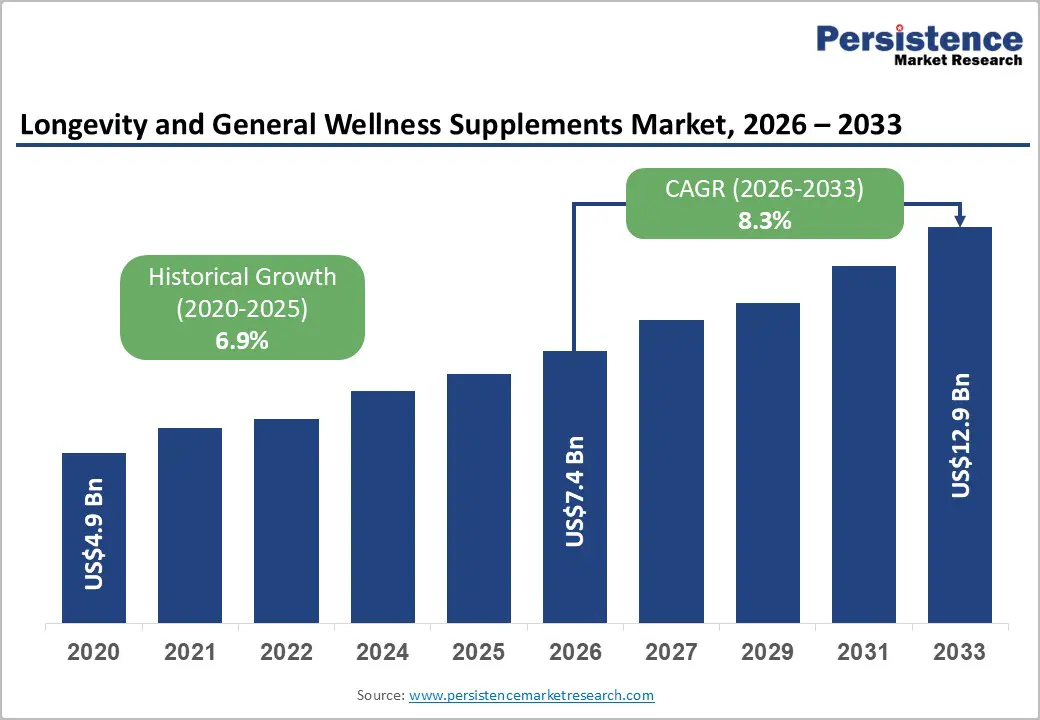
The global longevity and general wellness supplements market size is likely to be valued at US$7.4 billion in 2026 and is expected to reach US$12.9 billion by 2033, growing at a CAGR of 8.3% during the forecast period from 2026 to 2033, driven by rising consumer focus on preventive healthcare and increasing demand for science-backed ingredients such as NAD+ boosters and adaptogens.
The market is also supported by the expansion of personalized nutrition platforms and high adoption of daily supplement routines among urban populations.
Key Industry Highlights:
- Leading Product Type: Longevity supplements, approximately 63.7% share in 2026, as these target cellular aging and energy decline.
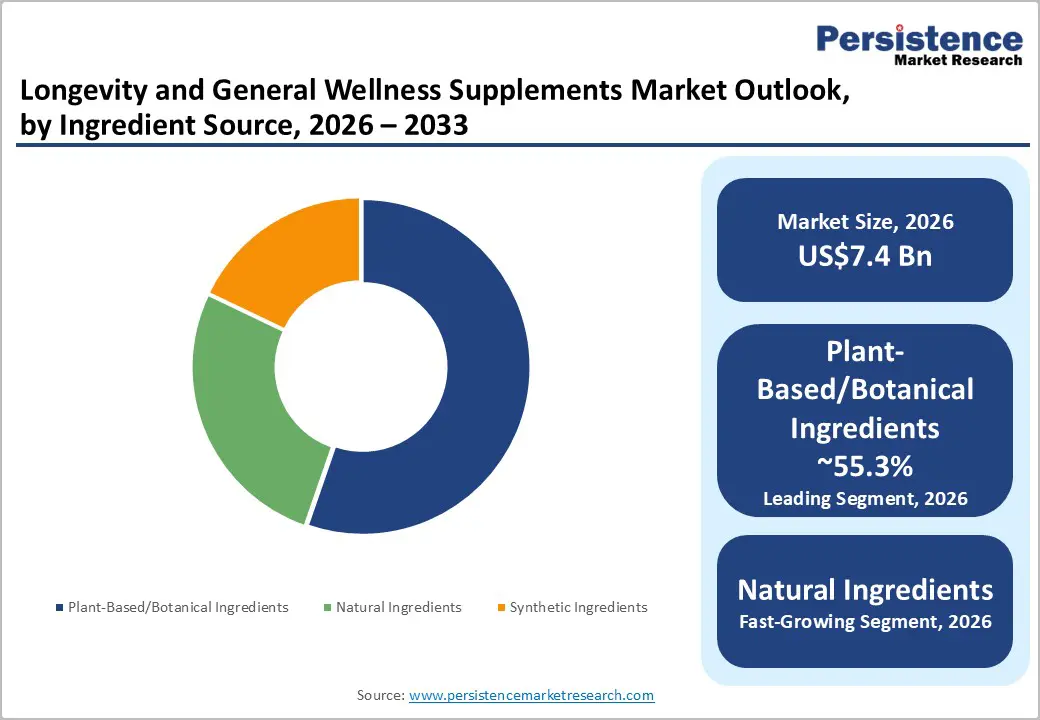
- Dominant Ingredient Source: Plant-based/botanical ingredients, nearly 55.3% in 2026, spurred by increasing consumer trust rooted in traditional medicine.
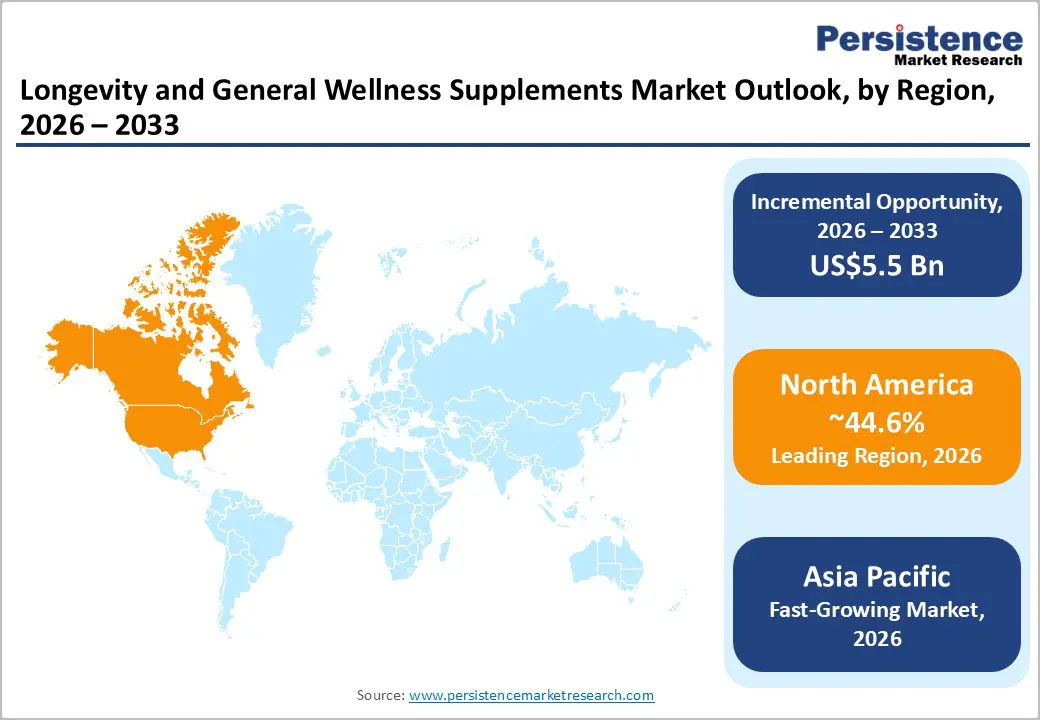
- Leading Region: North America, with about 44.6% share in 2026, backed by high daily supplement usage and well-defined regulations under the FDA.
- Fast-growing Region: Asia Pacific, owing to surging reliance on traditional medicine and increased access through e-commerce platforms.
- New Start-up: In March 2026, Margarita Zhao introduced a nutraceutical start-up, Vavitas, in New Jersey, focusing on longevity and healthspan products. The products are currently on a pilot launch in the U.S. through their official website.
DRO Analysis
Driver - Proactive Defense against Age-Related and Chronic Illness
Individuals are no longer waiting to get sick before taking action. They are building supplement routines around prevention, and not treatment. According to the Nutrition Business Journal, 39% of consumers now combine conventional medicine with natural or integrative healthcare solutions. This shows a clear intent to manage health before problems surface.
The Centers for Disease Control and Prevention’s (CDC) 2024 highlights show a strong push toward behavioral monitoring and community-level chronic disease prevention, with nearly US$21 million awarded to tribal health programs focused on nutrition and physical activity. The COVID-19 pandemic also left a lasting mark. It pushed millions to rethink their long-term health, especially around immunity and aging. Longevity supplements, right from omega-3s to adaptogens, have benefited from this behavioral shift.
Digital Wellness Culture among Younger Generations
Younger consumers are treating wellness as a daily identity, not just an occasional habit. Gen Z now accounts for more than 41% of wellness spending in the U.S., despite making up just over a third of the adult population. Nearly 30% of Gen Z report caring significantly more about personal wellness than just a year ago, outpacing every other generation. Social platforms play a key role.
Social media and influencers promoting biohacking practices play a huge role in attracting millennials and Gen Z, who seek self-optimization and prefer taking control of their health rather than relying on traditional healthcare systems. A latest survey of 9,000 people found that two-thirds of Gen Z and millennials purchased functional nutrition products in the past year, compared to just half of consumers overall.
Restraint - Fat-Soluble Vitamin Build-Up and Organ Risk
Unlike water-soluble vitamins that pass through the body, fat-soluble vitamins accumulate in tissues, and this is where the danger lies. Fat-soluble vitamins A, D, E, and K build up in the system and are the ones most likely to cause toxicity in excess. Harvard Health Publishing has warned that excessive vitamin D intake leads to a calcium buildup in the blood (hypercalcemia), which can cause nausea, kidney stones, and organ damage. Vitamin A isn't safer.
According to a review published on the National Center for Biotechnology Information (NCBI), chronic vitamin A toxicity affects multiple organs, including bone resorption leading to osteoporosis, and central nervous system effects such as headaches and vomiting. The American Association of Poison Control Centers' National Poison Data System reported 50,120 single vitamin exposures in 2021, with thousands resulting in adverse outcomes. As supplement self-prescribing rises with minimal professional oversight, this risk is surging.
Opportunity - NMN and NR Supplements to Gain Scientific Backing
Nicotinamide Mononucleotide (NMN) and Nicotinamide Riboside (NR) supplements are gaining superior scientific traction. NAD+ is a coenzyme essential for metabolism, energy production, gene regulation, and cellular communication. As individuals age, NAD+ levels fall, and this decline is linked to age-related disease and impaired physical function. Clinical evidence is building. A 2024 randomized, double-blind, and placebo-controlled trial on adults aged 65 to 75 found that 250 mg/day of NMN for 12 weeks significantly improved blood NAD+ levels, reduced 4-meter walking time, and improved sleep quality compared to the placebo group.
A clinical trial published in Aging Cell in June 2025 by Chiba University found that NR supplementation improved cardiovascular health, skin ulcers, and helped prevent kidney function decline in patients with Werner Syndrome. It is a condition that mirrors accelerated aging. These findings position NAD+ precursors as one of the most credible and commercially expandable categories in longevity supplementation.
Senolytic Compounds to Emerge as Key Natural Ingredients
Senolytics represent one of the most exciting frontiers in longevity science. These compounds selectively push senescent cells toward natural cell death, cells that would otherwise accumulate and boost chronic inflammation and tissue breakdown. Research published on NCBI established that fisetin, a naturally occurring flavone with low toxicity, selectively induces apoptosis in senescent cells without harming normal proliferating cells. Animal evidence is compelling. Fisetin attenuated age-related conditions and increased healthy mouse lifespan by approximately 20%, while the plant-derived compound procyanidin C1 (PCC1) increased remaining lifespan in aged mice by close to 64%.
In humans, a 2025 pilot trial published in PubMed Central (PMC) is investigating the senolytic combination of Dasatinib and Quercetin in older adults with schizophrenia and treatment-resistant depression. It targets accelerated biological aging. As more human trials conclude, senolytic supplements, mainly plant-based flavonoids such as fisetin and quercetin, are poised to shift from niche longevity tools to mainstream supplement products.
Category-wise Analysis
Product Type Insights
Longevity supplements are predicted to lead with a share of approximately 63.7% in 2026, as these promise targeted aging benefits and not just basic nutrition. Consumers are no longer satisfied with general multivitamins. They want solutions that address cellular aging, energy decline, and cognitive health. Compounds such as NAD+ boosters and spermidine are positioned as tools to improve mitochondrial function and DNA repair. A study published in Nature Aging highlighted how NAD+ levels decline with age and are linked to reduced metabolic function. This has influenced demand for products such as nicotinamide riboside (NR).
General wellness supplements are estimated to be the fastest-growing segment in the forecast period, as these fit into daily lifestyle routines and stress management needs. Modern consumers often face sleep issues, anxiety, and poor diet quality. This has pushed demand for supplements targeting immunity, gut health, and mental well-being. During and after COVID-19, immunity products saw a strong surge. According to the Ministry of AYUSH, Ayurvedic immunity products such as Ashwagandha and Giloy recorded a sharp rise in adoption across India. This trend has continued as individuals focus on preventive care.
Ingredient Source Insights
Plant-based/botanical ingredients are anticipated to dominate with a share of nearly 55.3% in 2026. Consumers trust plant-based ingredients due to their long history in Ayurveda and Traditional Chinese Medicine. Ingredients such as turmeric, ashwagandha, and ginseng already have cultural acceptance and documented usage. The World Health Organization (WHO) has noted that a large share of the global population relies on herbal medicine for primary healthcare. This propels confidence in botanical supplements.
Natural ingredients are expected to remain in the second position in 2026, as consumers are actively avoiding synthetic additives and questioning product safety. There is rising skepticism toward artificial preservatives, colors, and chemically synthesized nutrients. Clean-label awareness has become a key purchasing factor. A 2022 survey by the International Food Information Council found that a large share of consumers prefers foods and supplements with recognizable ingredients. This behavior has further influenced supplement formulations.
Regional Insights
North America Longevity and General Wellness Supplements Market Trends
North America is predicted to dominate and account for a share of approximately 44.6% in 2026, owing to strong clinical backing, high supplement usage, and favorable regulatory frameworks. The region has a mature supplement culture. A large share of adults already use dietary supplements daily. According to the National Institutes of Health, over half of U.S. adults consume supplements regularly. This creates a stable demand base.
Another key factor is scientific validation. Companies invest heavily in clinical trials and patented ingredients, especially in longevity products such as NAD+ boosters. The presence of structured regulations under the U.S. Food and Drug Administration (FDA) also builds consumer trust. Superior DTC brands and subscription models have further improved accessibility and repeat purchases.
U.S. Longevity and General Wellness Supplements Market Trends
The U.S. growth outlook remains steady due to personalization and preventive healthcare trends. The country is estimated to account for a share of nearly 77.5% in 2026 in North America. Consumers are moving toward customized supplement plans based on health data. Companies now provide DNA-based or blood-test-based nutrition plans. This trend is supported by healthcare shifts toward prevention.
The Centers for Disease Control and Prevention (CDC) highlights the rising burden of chronic diseases, which has increased interest in preventive nutrition. Another growth driver is innovation. For example, NAD+ research continues to extend through clinical studies funded by the NIH, which keeps the longevity category relevant. The U.S. also sees steady venture funding in wellness start-ups, which bolsters product innovation and market growth.
Asia Pacific Longevity and General Wellness Supplements Market Trends
Asia Pacific is anticipated to be the fastest-growing region due to rising income levels and strong traditional medicine systems. Countries in this region already have a cultural base for herbal and preventive healthcare. Ayurveda and Traditional Chinese Medicine are widely accepted. The World Health Organization (WHO) has stated that a large part of Asia Pacific still relies on traditional medicine for primary care. As incomes rise, consumers are shifting from raw herbs to branded supplements. E-commerce platforms such as Tmall and Amazon India have made these products more accessible. Another factor is urban lifestyle stress, which is increasing demand for immunity, sleep, and energy supplements.
China Longevity and General Wellness Supplements Market Trends
China’s growth outlook is decent due to government support and aging population trends. The country is actively promoting health and nutrition under policies such as the Healthy China 2030 initiative released by the State Council. This policy focuses on preventive healthcare and wellness consumption. The country is also facing speedy population aging, which is increasing demand for anti-aging and longevity products. In recent years, cross-border e-commerce has boosted sales of imported supplements. At the same time, local companies are developing traditional herb-based formulations with modern branding. This mix of policy support and demographic change is driving long-term growth.
India Longevity and General Wellness Supplements Market Trends
India is seeing substantial growth with a shift from traditional remedies to branded supplements. It has a strong base in Ayurveda, but the market is moving toward packaged and standardized products. The Ministry of AYUSH reported a surge in demand for immunity-boosting herbs such as Ashwagandha during and after COVID-19. Start-ups and FMCG companies are now converting these ingredients into capsules, powders, and gummies. Another key factor is digital reach. Online pharmacies and wellness platforms have extended access beyond metro cities. However, price sensitivity and lack of awareness in rural areas still limit faster growth.
Europe Longevity and General Wellness Supplements Market Trends
Europe is seeing steady growth owing to strict regulations and high product quality standards. The region has a cautious but stable market. Regulations under the European Food Safety Authority ensure that only approved health claims are used. This reduces misleading marketing but also slows down product launches. Consumers in the continent prefer evidence-based products, which supports steady demand for clinically tested supplements. There is also rising interest in sustainability, which is pushing companies toward plant-based and eco-friendly formulations.
U.K. Longevity and General Wellness Supplements Market Trends
The U.K. market is evolving with high demand for clean-label and personalized supplements. The country has seen a rise in online supplement brands providing customized nutrition plans. Consumers are highly aware of ingredient sourcing and labeling. According to the National Health Service, there is increasing public focus on vitamin D and general supplementation due to limited sunlight exposure. This has supported consistent demand. Post-Brexit regulatory changes are also influencing the market, with companies adapting to new labeling and compliance rules. The market is innovation-driven but remains quality-focused rather than volume-driven.
Germany Longevity and General Wellness Supplements Market Trends
Germany’s growth outlook is stable due to well-established pharmacy networks and trust in science-based products. The country has one of the most structured supplement markets in Europe. Products are often sold through pharmacies, which increases credibility. The country also has a long tradition of herbal medicine. Institutions such as the Federal Institute for Drugs and Medical Devices ensure strict oversight. Modern consumers prefer supplements with proven efficacy, which supports consistent demand rather than rapid spikes. Growth is also supported by an aging population that focuses on preventive health.
Competitive Landscape
The global longevity and general wellness supplements market is highly fragmented but increasingly brand-driven. While large players such as Nestlé Health Science, Unilever, Amway, and GNC Holdings have superior distribution networks, no single company dominates the wellness supplements field. This trend is driven by evolving consumer preferences toward targeted health objectives, including longevity, gut health, cognitive function, sleep enhancement, and healthy aging.
Brands such as Niagen Bioscience, Elysium Health, Life Extension, and Thorne Research compete heavily on clinical research, ingredient patents, and physician credibility rather than price. Tru Niagen remains one of the strongest branded NAD+ products globally, supported by hundreds of scientific publications and intellectual property protections, giving it a competitive advantage over generic formulations. A few companies are also investing in clinical trials, proprietary delivery systems, and third-party testing to differentiate themselves.
Key Industry Developments:
- In May 2026, Ayuvya, an Ayurveda-inspired wellness brand, unveiled a ready-to-drink wellness supplement called Diabo Plus Shots. It is made for diabetic consumers. The brand also launched a digital video campaign named ‘DITCH THE JUICE, TAKE THE SHOT’ to highlight the role of consistent wellness habits.
- In May 2026, INSTYTUTUM introduced a next-generation NMN supplement and an at-home biological age testing kit. The Longevity Supplement combines 500 mg liposomal NMN and 500 mg micronized trans-resveratrol into a single supplement to support NAD+ levels and boost cellular energy, metabolic health, physical performance, and mental clarity.
- In April 2026, Sirio Europe launched Aeion, its habit-first longevity platform to help consumers build sustainable habits around long-term health with eight ready-to-launch product concepts targeting energy, mobility, heart health, and inflammaging.
Companies Covered in Longevity and General Wellness Supplements Market
- Nutraceutical Innovations
- Vitality Nutrition
- Healthspan
- Omega Supplements
- Herbalife Nutrition
- Nature's Way
- NOW Foods
- Life Extension
- Garden of Life
- Solgar
- Pure Encapsulations
- Thorne Research
- Nutra Bio
- Ancient Nutrition
- Jarrow Formulas
- Others
Frequently Asked Questions
The global longevity and general wellness supplements market is projected to be valued at US$7.4 billion in 2026.
The longevity and general wellness supplements market is expected to reach US$12.9 billion by 2033.
Key market trends include the shift toward science-backed formulations and rising demand for personalized nutrition plans.
Longevity supplements are expected to be the leading solution with a share of nearly 63.7% in 2026, as consumers adopt preventive health habits and follow biohacking trends.
The market is expected to grow at a CAGR of 8.3% from 2026 to 2033.
Nutraceutical Innovations, Vitality Nutrition, Healthspan, and Omega Supplements are a few key market players.


