




- Processed Food
- Gourmet Food Market
Gourmet Food Market Size, Share, Growth, and Regional Forecast, 2026 to 2033
Gourmet Food Market is segmented by Product Type (Cheese & Dairy, Chocolate & Confectionery, Bakery & Patisserie, Meat, Poultry & Charcuterie, Seafood, Others), by Source (Animal, Plant), by Sales Channel (HoReCa, Supermarkets & Hypermarkets, Specialty Stores, Online Retail, Others), and by Regional Analysis, 2026 - 2033

Gourmet Food Market Share and Trends Analysis
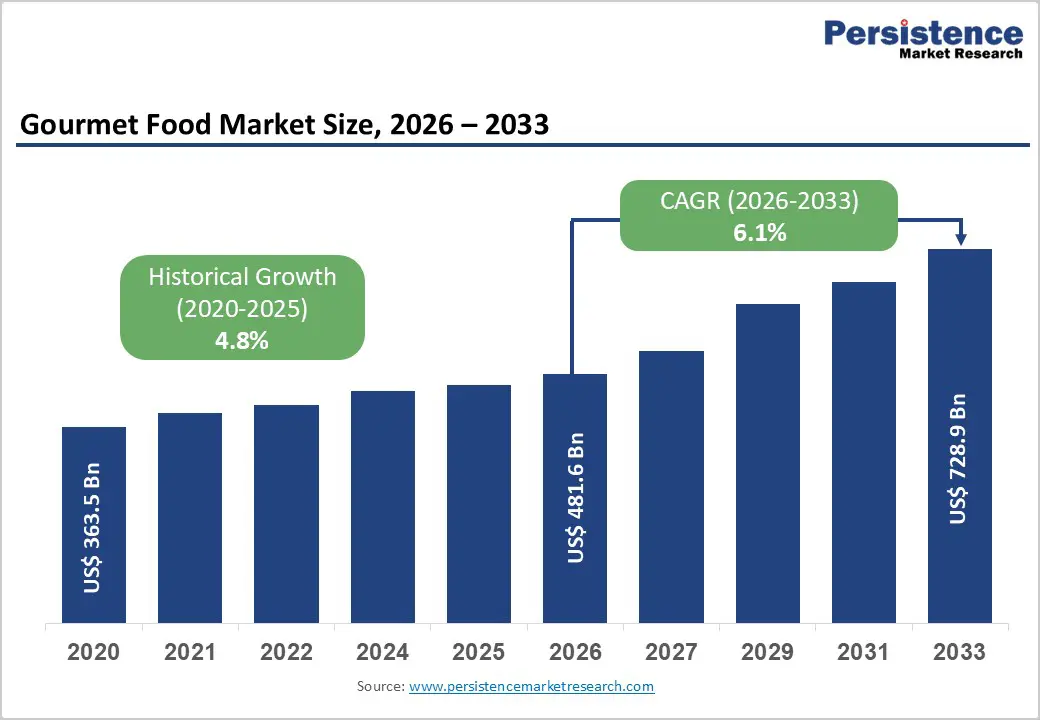
The global gourmet food market size is expected to be valued at US$ 481.6 billion in 2026 and projected to reach US$ 728.9 billion by 2033, growing at a CAGR of 6.1% between 2026 and 2033.
The market growth is primarily propelled by the rising global affluent population and a significant shift in consumer behavior toward premium, high-quality, and authentic culinary experiences. As household disposable incomes increase, particularly in emerging economies, consumers are increasingly willing to pay a premium for products that offer unique flavors, superior nutritional profiles, and artisanal craftsmanship. This trend is further supported by the rapid expansion of digital commerce and specialized retail channels that have made rare and international gourmet products more accessible to a broader global audience.
Key Industry Highlights
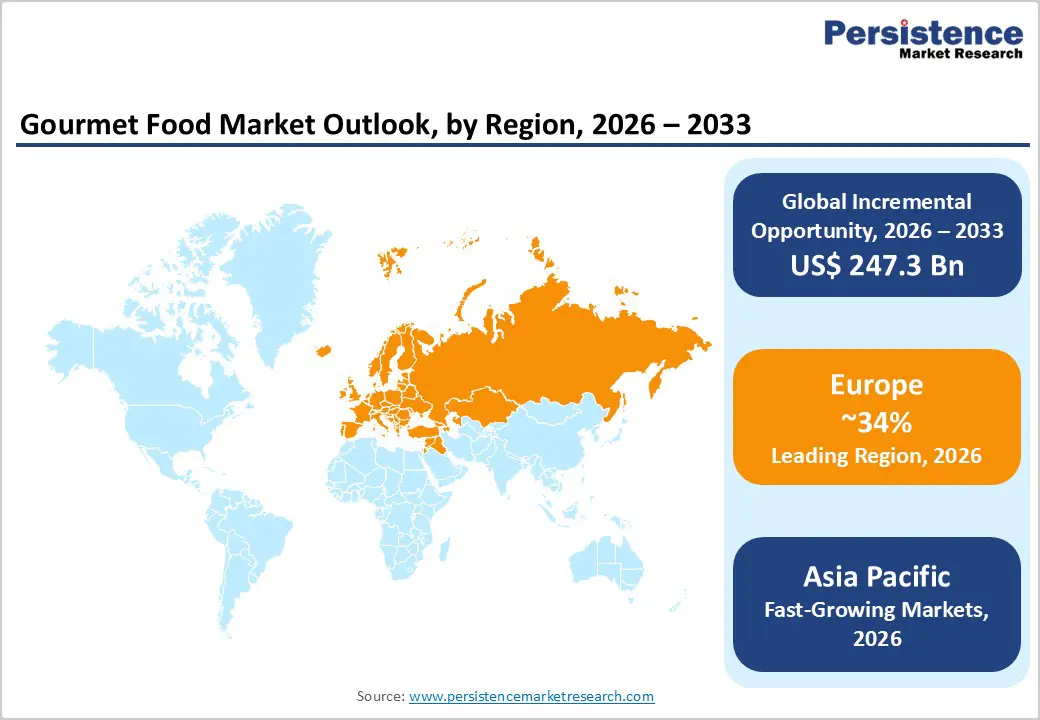
- Leading Region: Europe, holding 34% market share, supported by strong culinary heritage, protected geographical indication (PGI) products, established artisanal cheese and charcuterie traditions, and a dense network of specialty stores and premium HoReCa establishments.
- Fastest-Growing Region: Asia Pacific, driven by rapid urbanization, expanding middle-class spending power, and rising interest in Western-style premium foods such as artisanal cheeses, luxury chocolates, and gourmet bakery products.
- Fastest-Growing Product Type Segment: Seafood, supported by growing consumer preference for premium protein sources, increased demand for luxury seafood varieties like king crab and bluefin tuna, and improved cold-chain logistics for global distribution.
- Market Drivers: Increasing consumer demand for clean-label, minimally processed, and natural specialty foods is encouraging artisanal production methods and transparent sourcing practices across gourmet product categories.
- Opportunities: Expanding direct-to-consumer channels through curated gourmet subscription boxes, artisan membership clubs, and seasonal limited-edition product drops that strengthen brand loyalty and recurring revenue streams.
- Key Developments: In February 2026, Edward & Sons Trading Company Inc. unveiled a refreshed brand identity set to debut at Natural Products Expo West 2026. In February 2026, MarieBelle New York introduced its Valentine’s Day 2026 Collection featuring curated artisanal chocolates and luxury confectionery.
| Key Insights | Details |
|---|---|
| Global Gourmet Food Market Size (2026E) | US$ 481.6 Bn |
| Market Value Forecast (2033F) | US$ 728.9 Bn |
| Projected Growth (CAGR 2026 to 2033) | 6.1% |
| Historical Market Growth (CAGR 2020 to 2025) | 4.8% |
Market Dynamics
Driver - Rising Demand for Clean-Label and Health-Conscious Specialty Products
A fundamental driver for the gourmet food industry is the heightening consumer awareness regarding the health impacts of food consumption. Modern consumers are pivoting away from mass-produced, highly processed items in favor of clean-label products that emphasize natural ingredients and transparency. According to the Specialty Food Association, a significant majority of consumers now prioritize products that are non-GMO, organic, and free from synthetic preservatives. Gourmet foods, which traditionally focus on small-batch production and high-quality raw materials, naturally align with these wellness trends. This shift is particularly evident in the Cheese & Dairy and Bakery & Patisserie segments, where artisanal methods are perceived as healthier and more environmentally sustainable, encouraging high-frequency purchases among the health-conscious demographic.
Restraints - High Premium Pricing and Economic Sensitivity
The primary barrier to broader market penetration remains the high price point associated with gourmet products. Gourmet foods often involve labor-intensive artisanal processes, rare ingredients, and specialized logistics, which inevitably lead to premium retail prices. During periods of economic volatility or high inflation, the International Monetary Fund (IMF) reports that discretionary spending on luxury food items tends to contract as consumers prioritize essential commodities. This price sensitivity can limit the market to high-income earners and prevent mass-market adoption. Furthermore, the cost of maintaining specialized cold chains for perishable gourmet items like Seafood and Charcuterie adds significant overhead for retailers, which is often passed down to the consumer, potentially deterring budget-conscious segments.
Opportunity - Building Owned Direct-to-consumer Channels via Curated Subscription Boxes, Artisan Club Memberships, And Seasonal Drops
Premium food brands are increasingly bypassing traditional retail by building owned direct-to-consumer ecosystems that offer curated gourmet experiences rather than simple product transactions. Subscription-based gourmet boxes featuring rotating selections of artisanal cheeses, craft chocolates, charcuterie, specialty oils, and seasonal delicacies allow companies to maintain closer relationships with consumers while capturing higher margins. These models enable producers to introduce limited-batch products, regional specialties, and chef collaborations directly to customers, strengthening brand storytelling and authenticity-an essential factor in the gourmet food category where provenance and craftsmanship drive purchasing decisions.
In addition, artisan club memberships and seasonal product drops are emerging as powerful engagement tools. Members gain early access to small-batch releases, exclusive tasting kits, and themed culinary experiences aligned with holidays or harvest seasons. This approach supports predictable recurring revenue while giving producers valuable consumer preference data. For emerging gourmet brands and specialty producers, such channels provide scalable global reach, reduced dependence on retail intermediaries, and the flexibility to test new flavors or product innovations quickly.
Category-wise Analysis
By Product Type
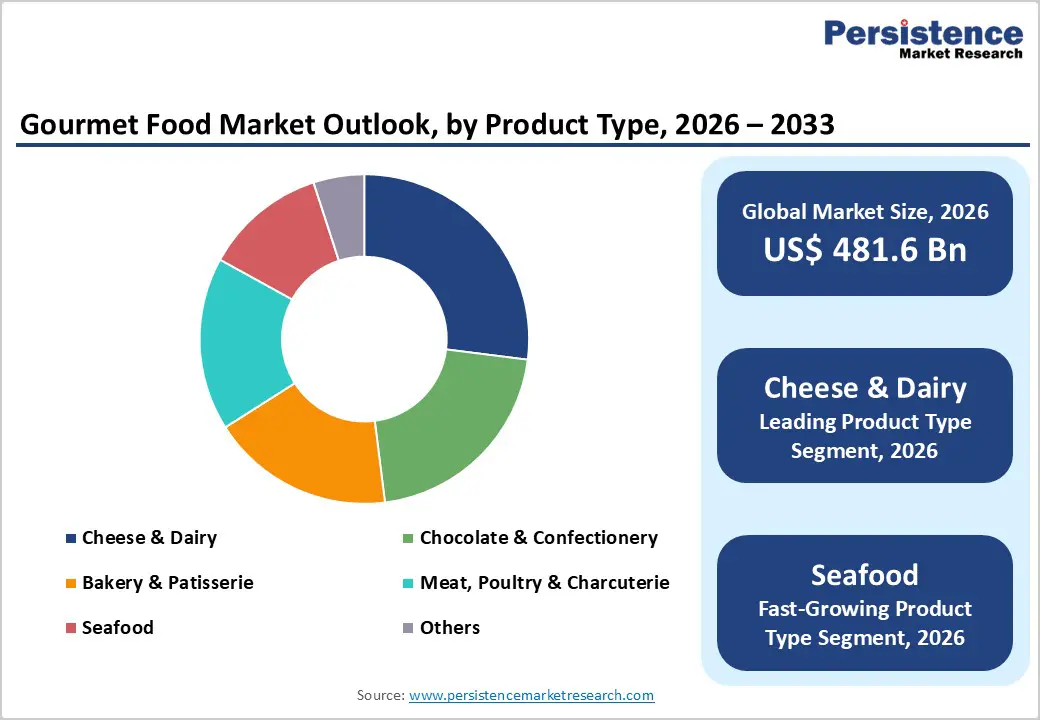
The Cheese & Dairy segment is the leading segment in product type, accounting for a substantial 27% market share in 2025. This dominance is attributed to the long-standing cultural importance of artisanal cheeses in Europe and their growing popularity in the North American and Asian markets. The segment benefits from a wide variety of textures and flavor profiles that cater to both snacking and professional cooking. On the other hand, the Seafood segment is identified as the fastest growing segment through 2033. This rapid growth is fueled by the rising consumer perception of high-end seafood as a healthy protein source and the increasing availability of premium varieties like bluefin tuna, king crab, and organic salmon through specialized cold-chain logistics.
By Source
Animal source remains the dominant leading segment in 2025, driven by the high demand for premium meats, dairy, and seafood. Products like aged steaks, artisanal cheeses, and charcuterie have a deeply rooted presence in the gourmet market. However, the Plant source is emerging as a significant growth area. The rise of gourmet plant-based alternatives such as truffle-infused nut cheeses, high-end plant-based charcuterie, and artisanal vegan chocolates is attracting a new wave of flexitarian consumers. As technology improves the sensory profile of plant-based products, this segment is expected to see double-digit growth, particularly in urbanized regions where ethical and environmental concerns are paramount in dietary choices.
Regional Insights
Europe Gourmet Food Market Trends and Insights
Europe currently holds the leading market share of 34% in 2025, deeply rooted in its rich culinary heritage and traditional artisanal production methods. Countries like France, Italy, and Spain are the primary drivers, known for their protected geographical indications (PGI) and world-class Cheese & Dairy and Charcuterie. The region benefits from a highly developed infrastructure of Specialty Stores and local markets that prioritize quality and authenticity over mass production.
The performance analysis of the European market shows a strong commitment to regulatory harmonization through the European Commission, which protects the integrity of gourmet labels. Sustainability is also a key trend, with European consumers being early adopters of eco-friendly and ethically sourced gourmet products. The regions tourism industry significantly boosts the market, as travelers seek out local delicacies, which are then exported globally. The high density of Michelin-starred restaurants also supports a robust HoReCa channel, ensuring a constant demand for high-end ingredients and artisanal craftsmanship across the continent.
Asia Pacific Gourmet Food Market Trends and Insights
Asia Pacific is identified as the fastest growing segment for the gourmet food market through 2033. This rapid expansion is primarily driven by the burgeoning middle class in China, India, and ASEAN countries, who are increasingly adopting Western-style premium food habits. Urbanization and rising disposable incomes have led to a surge in demand for high-end Cheese & Dairy and Chocolate & Confectionery. China is a major engine of growth, with a growing appetite for luxury food imports and artisanal beverages.
The manufacturing advantages in the region also play a role, as local producers begin to create their own gourmet versions of traditional snacks. However, the region remains a massive importer of European and North American gourmet brands. The growth dynamics are further amplified by the rapid expansion of the e-commerce sector and digital payment systems, making it easier for global gourmet brands to enter these markets. Countries like Japan and South Korea continue to lead in gourmet innovation, particularly in the premium Seafood and Bakery categories, where aesthetic presentation and quality are highly prioritized.
Competitive Landscape
The gourmet food market exhibits a fragmented structure, where global multinational corporations coexist with a vast number of small-to-medium artisanal producers. While giants like Nestlé S.A., Mondelez International, and Danone S.A. dominate the high-volume categories like dairy and confectionery through their extensive distribution networks, the true gourmet essence is often maintained by niche players. Key differentiators in this market include brand heritage, quality of ingredients, and specialized production techniques. Market leaders are increasingly focusing on strategic acquisitions of smaller, authentic brands to diversify their portfolios and capture the premium market segment. Emerging business models are prioritizing transparency and story-led marketing, where the origin of the product and the craft of the producer are central to the brand identity, helping companies stand out in a crowded marketplace.
Key Developments:
- In February 2026, Edward & Sons Trading Company Inc. unveiled a refreshed brand identity, scheduled to debut publicly at the Natural Products Expo West in March 2026 as part of the companys strategy to strengthen its presence in the natural and organic foods segment.
- In February 2026, MarieBelle New York announced its Valentines Day 2026 Collection, featuring a curated assortment of artisanal handcrafted chocolates and premium confections designed to highlight the brands luxury gifting and seasonal product innovation.
- In September 2025, Lindt & Sprüngli launched a new range of indulgent chocolate bars in the UK, developed to elevate the post-meal dessert experience and expand the companys premium everyday indulgence portfolio.
Companies Covered in Gourmet Food Market
- Nestlé S.A.
- Mondelēz International
- The Hershey Company
- The Kraft Heinz Company
- General Mills Inc.
- Danone S.A.
- McCormick & Company
- Premium Brands Holdings
- Ferrero Group
- Mars Inc.
- Others
Frequently Asked Questions
The global gourmet food market is projected to be valued at US$ 481.6 Bn in 2026.
Rising Demand for Clean-Label and Health-Conscious Specialty Products is a major factor driving global Gourmet Food market.
The Global Gourmet Food market is poised to witness a CAGR of 6.1% between 2026 and 2033.
Building Owned Direct-to-consumer Channels via Curated Subscription Boxes, Artisan Club Memberships, And Seasonal Drops is a significant opportunity in the Gourmet Food market.
Major players in the Global Gourmet Food market include Nestlé S.A., Mondelēz International, The Hershey Company, The Kraft Heinz Company, General Mills Inc., Danone S.A., McCormick & Company, and others.


