




- Pharmaceuticals
- Future of Pharmacy Market
Future of Pharmacy Market Size, Share, and Growth Forecast 2026 - 2033
Future of Pharmacy Market by Pharmacy Type (Hospital Pharmacy, Retail Pharmacy, Online Pharmacy/ePharmacy, Others), Drug Type (Branded Drugs, Generic Drugs), End-user (Hospitals, Clinics, Homecare Settings, Individual Consumers), Regional Analysis, 2026 - 2033

Future of Pharmacy Market Share and Trends Analysis
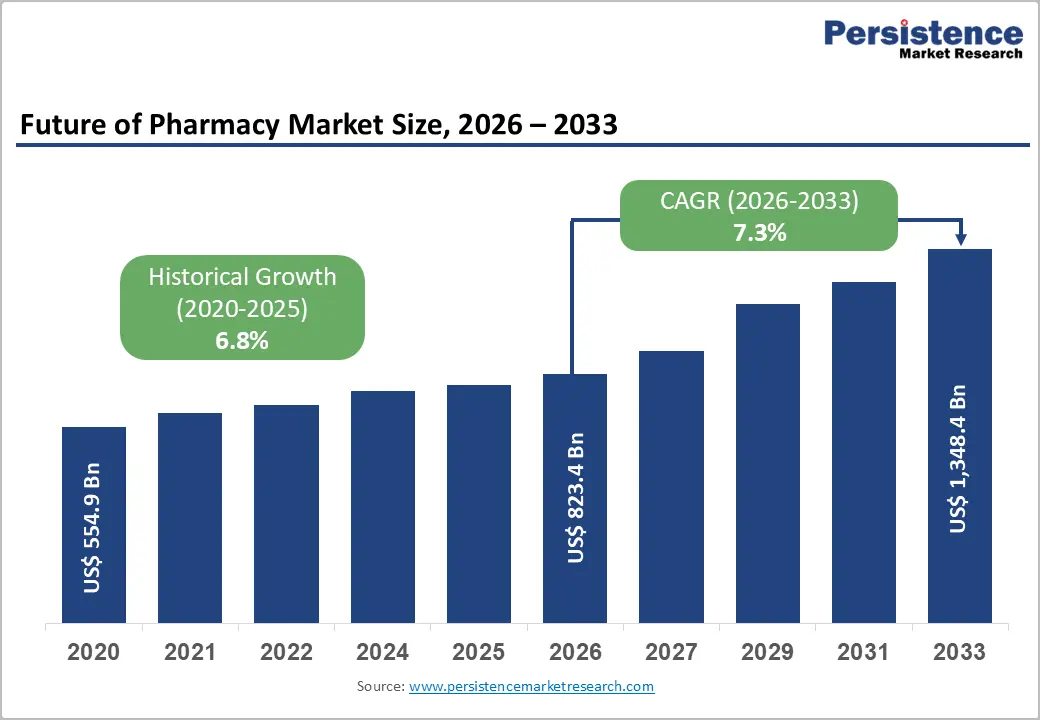
The global future of pharmacy market size is likely to be valued at US$ 823.4 billion in 2026 and projected to reach US$ 1348.4 billion at a CAGR of 7.3% by 2033 owing to rapid integration with digital healthcare, personalized medicine, and expanded patient care services. Traditional retail pharmacies are transforming into healthcare hubs offering vaccinations, chronic disease management, and diagnostic support alongside prescription dispensing.
The rise of ePharmacy platforms has improved medicine accessibility through online ordering, home delivery, and teleconsultation services. Growing demand for specialty drugs, biologics, and long-term therapies is further reshaping pharmacy operations. Automation, AI-based inventory management, and data-driven patient engagement are improving efficiency, while regulatory support and healthcare investments continue to accelerate global market expansion.
Key Industry Highlights:
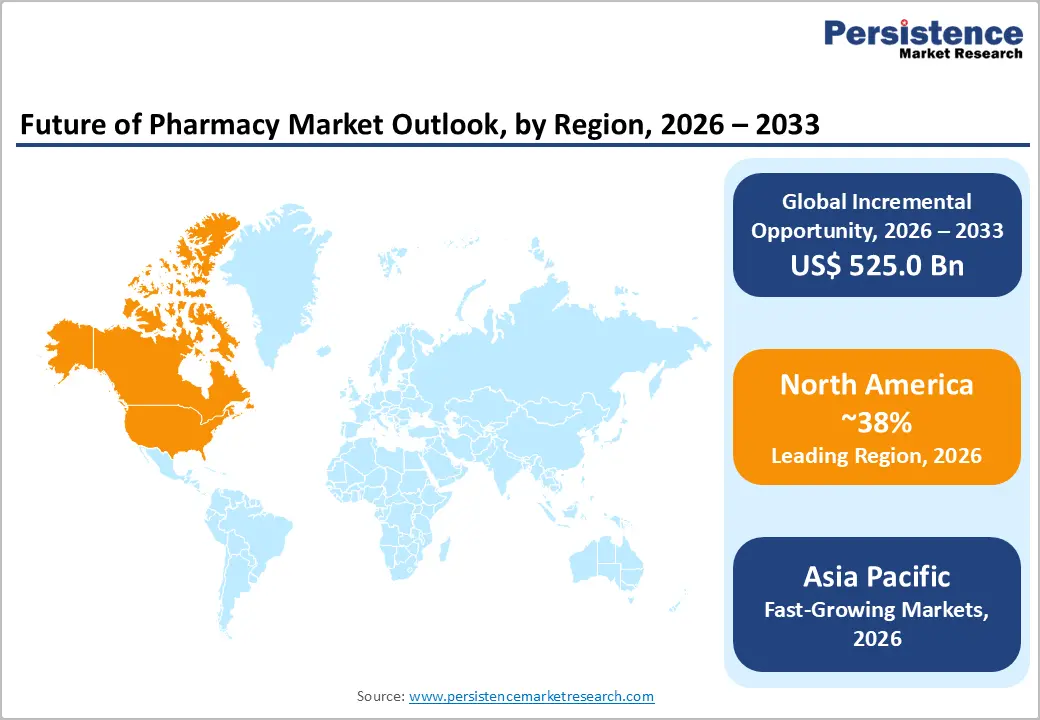
- Leading Region - North America commanded approximately 38% of the global pharmacy market share in 2026, anchored by the U.S.'s 67,000+ pharmacies, high per-capita pharmaceutical spending, and landmark IRA drug pricing reform reshaping prescription economics.
- Fast-Growing Market - Asia-Pacific is the fastest-growing pharmacy market, driven by China's booming digital pharmacy platforms (JD Health, Alibaba Health), India's ABDM digital health mission, and Japan's 80%+ generic dispensing rate target, accelerating pharmacy modernization.
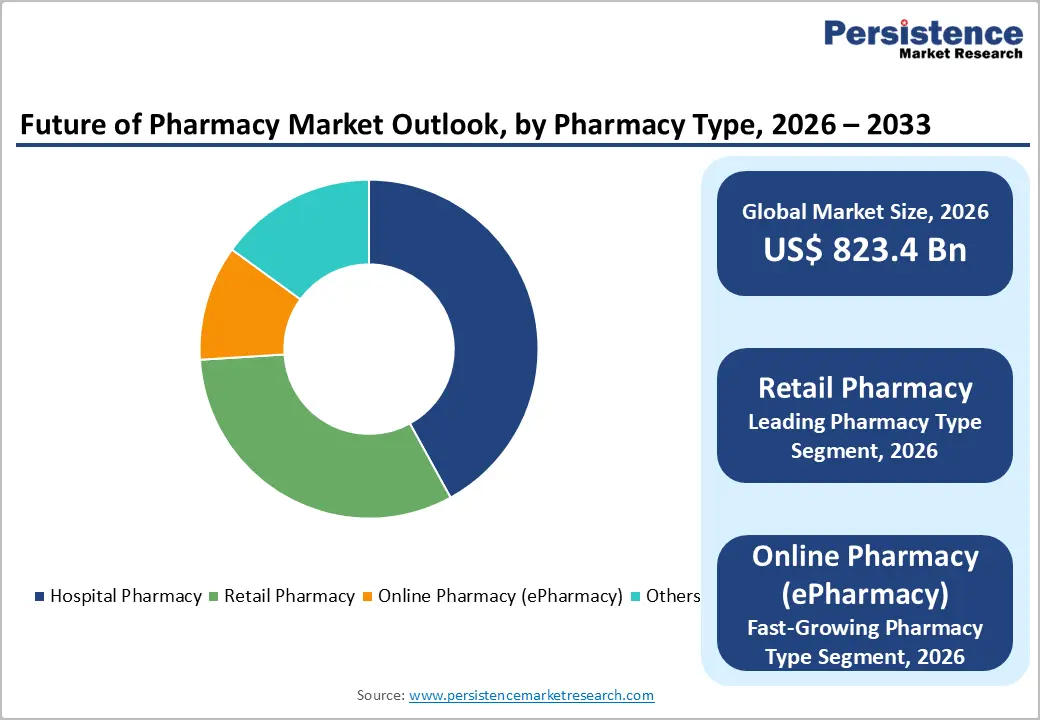
- Dominant Pharmacy Type - Retail pharmacy held approximately 42% share in 2026, supported by CVS Health's 9,900+ locations and Walgreens' 8,700+ U.S. stores, offering prescription dispensing, OTC products, and integrated clinic services.
- Fast-Growing Pharmacy Type - ePharmacy is the fastest-growing channel, with FIP data documenting 40%+ adoption growth (2020-2023) and Amazon Pharmacy's RxPass, JD Health, and Apollo Pharmacy driving digital dispensing disruption globally.
- Key Opportunity - Generics represent a compelling margin opportunity, accounting for over 90% of U.S. prescriptions and saving US$ 408 billion annually per AAM data, with India's 10,000+ Jan Aushadhi Kendras and EU biosimilar policy driving further volume growth.
Market Dynamics
Drivers - Rising Global Burden of Chronic Disease Fueling Sustained Prescription Drug Demand
The rise in global prevalence of chronic diseases, including diabetes, cardiovascular disease, cancer, and respiratory disorders, is a primary structural growth driver for the pharmacy market. The World Health Organization (WHO) estimates that non-communicable diseases (NCDs) account for 74% of all global deaths annually, with over 422 million people living with diabetes and more than 1.28 billion adults globally affected by hypertension.
Each of these conditions requires long-term, often lifelong pharmacological management, generating persistent and growing prescription volumes. The International Diabetes Federation (IDF) projects that the number of people with diabetes will reach 783 million by 2045, creating a vast and expanding patient cohort requiring continuous medication supply, directly translating into compounding pharmacy revenue growth across all channels, including retail, hospital, and online platforms.
Digital Transformation and ePharmacy Expansion Reshaping Medication Access
The rapid digital transformation of pharmacy services driven by smartphone penetration, telehealth integration, and regulatory frameworks progressively legitimizing online drug dispensing is one of the most consequential growth catalysts in the pharmacy sector. The U.S. Department of Health and Human Services (HHS) reports that telehealth utilization has stabilized at 38 times higher than pre-pandemic levels, with telepharmacy emerging as a natural extension of remote care pathways.
In India, the Ministry of Health and Family Welfare's e-Pharmacy Rules framework has legitimized online drug sales, catalyzing market participation from platforms including Apollo Pharmacy and MedPlus. Amazon Pharmacy's expansion across North America and Europe is further accelerating the shift, combining logistics infrastructure with prescription management technology to challenge traditional retail pharmacy incumbents.
Restraints - Drug Pricing Pressures and Regulatory Complexity Compressing Pharmacy Margins
Pharmacy operators globally face intensifying margin pressure from government-imposed drug price controls, increasing generic substitution mandates, and insurance-driven reimbursement caps. In the United States, the Inflation Reduction Act (IRA) of 2022 empowers Medicare to negotiate drug prices directly with manufacturers for the first time, a shift with cascading implications for pharmacy reimbursement rates. Independent and community pharmacies are particularly vulnerable, with the National Community Pharmacists Association (NCPA) documenting that over 300 independent U.S. pharmacies closed in 2023 due to unsustainable reimbursement levels from pharmacy benefit managers (PBMs).
Counterfeit Drug Penetration and Supply Chain Integrity Challenges
The proliferation of counterfeit and substandard medicines, particularly through unregulated online pharmacy channels, poses a significant threat to market integrity and patient safety. The WHO estimates that 1 in 10 medical products in low- and middle-income countries is substandard or falsified, with online pharmacy fraud generating significant consumer harm. Regulatory enforcement disparities across jurisdictions create compliance arbitrage opportunities for bad actors, compelling legitimate operators to invest heavily in track-and-trace systems, DSCSA (Drug Supply Chain Security Act) compliance infrastructure in the U.S., and EU Falsified Medicines Directive (FMD) serialization requirements, increasing operational costs and limiting profitability.
Opportunities - Online Pharmacy (ePharmacy): The Fastest-Growing Channel Disrupting Traditional Dispensing
Online pharmacy (ePharmacy) represents the single most dynamic growth opportunity in the pharmacy sector, capitalizing on accelerating digital health adoption, consumer demand for convenience, and the expansion of telepharmacy-linked prescription services. According to the International Pharmaceutical Federation (FIP), digital pharmacy adoption grew by over 40% in major markets between 2020 and 2023.
Amazon Pharmacy has demonstrated the sector's disruptive potential by integrating prescription management, Prime membership discounts, and PillPack medication packaging technology. In China, platforms such as JD Health and Alibaba Health have captured substantial market share. Regulatory modernization under frameworks like India's e-Pharmacy Rules and EU Directive 2011/62/EU on distance selling of medicines is progressively legitimizing the channel, creating a significant addressable market for both pure-play ePharmacy operators and omnichannel incumbents such as CVS Health and Walgreens Boots Alliance.
Category-wise Analysis
Pharmacy Type Insights
The retail pharmacy segment accounted for a dominant position in the pharmacy market, commanding approximately 42% of total market share in 2026. This leadership reflects retail pharmacy's role as the primary point of dispensing contact for the majority of patients globally, handling both chronic disease maintenance prescriptions and acute care medications through extensive physical network footprints. In the United States alone, chains such as CVS Health operate over 9,900 retail pharmacy locations, while Walgreens Boots Alliance maintains over 8,700 U.S. locations.
The convenience of walk-in access, pharmacist counseling services, and the integration of MinuteClinic-style health services within retail pharmacy formats continue to sustain consumer preference for the channel. Retail pharmacies are also primary dispensers of OTC medications, vaccines, and health and wellness products, further broadening their revenue base beyond prescription dispensing.
Drug Type Insights
Generic drugs constituted the leading drug type segment, representing approximately 55% of total pharmacy market demand by volume in 2026. The dominance of generics is anchored by government healthcare cost-containment policies across virtually all major markets, with generic drugs providing therapeutically equivalent treatment at significantly lower cost. According to the Association for Accessible Medicines (AAM), generic and biosimilar medicines saved the U.S. healthcare system US$ 408 billion in 2022 alone.
In India, the world's largest generic drug manufacturing hub, the Pradhan Mantri Bhartiya Janaushadhi Pariyojana (PMBJP) has established over 10,000 Jan Aushadhi Kendras (generic medicine stores) nationwide, institutionalizing generic dispensing at scale. Patent expiration waves affecting blockbuster biologics, including adalimumab (Humira®) and etanercept, are further expanding biosimilar dispensing volumes through pharmacy channels globally.
End-user Insights
Individual consumers constituted the leading end-user segment of the pharmacy market, accounting for approximately 46% of total end-user demand in 2026. This dominance reflects the retail and ePharmacy channel's direct-to-consumer dispensing of both prescription and over-the-counter (OTC) medications to self-managing patients, a category that has expanded significantly with the rise of chronic disease self-management, digital health apps, and telepharmacy-linked prescription renewals.
The Consumer Healthcare Products Association (CHPA) estimates the U.S. OTC market at over US$ 46 billion annually, the majority of which flows through pharmacy channels to individual consumers. The COVID-19 pandemic permanently shifted consumer behavior toward proactive health management and direct pharmacy purchasing, particularly for respiratory, cardiovascular, and metabolic health products, reinforcing the individual consumer segment's market leadership.
Regional Insights
North America Future of Pharmacy Market Trends and Insights
North America is likely to dominate the global pharmacy market with approximately 38% share in 202, driven by the region's advanced healthcare infrastructure, high per-capita pharmaceutical expenditure, expanding telepharmacy adoption, and significant ePharmacy investment from both traditional chains and technology entrants, including Amazon Pharmacy.
U.S. Future of Pharmacy Market Size
The U.S. accounts for approximately 85% of North American pharmacy revenues, supported by over 67,000 pharmacies nationwide per NCPA data. High branded drug pricing, expanding Medicare prescription coverage, and the IRA's drug negotiation provisions are reshaping pharmacy economics, simultaneously expanding patient access while compressing margin structures across the retail segment.
Europe Future of Pharmacy Market Trends and Insights
Europe represents the second-largest pharmacy market, characterized by universal healthcare coverage, robust generic drug promotion policies, and progressive ePharmacy regulatory harmonization under EU Directive 2011/62/EU. Government-controlled pharmacy dispensing models in France, Germany, and Italy support stable revenue bases, while digital pharmacy innovation is advancing rapidly across Northern Europe.
Germany Future of Pharmacy Market Size
Germany is Europe's largest pharmacy market, home to approximately 18,000 community pharmacies per ABDA (Federal Union of German Associations of Pharmacists) data, with total pharmaceutical expenditure exceeding €60 billion annually. Strong statutory health insurance (GKV) coverage and the country's e-prescription (eRezept) rollout are accelerating ePharmacy adoption and digital workflow integration.
UK Future of Pharmacy Market Size
The U.K. pharmacy market is anchored by the NHS Community Pharmacy Contractual Framework, supporting approximately 11,600 community pharmacies. The Pharmacy First initiative, launched in January 2024 expanded pharmacist prescribing scope for seven common conditions, significantly increasing prescription volume flowing through community pharmacy channels and broadening the revenue base.
France Future of Pharmacy Market Size
France operates one of the most tightly regulated pharmacy networks in Europe, with approximately 21,000 community pharmacies per ORDRE NATIONAL DES PHARMACIENS data, benefiting from mandatory dispensing monopolies and full Sécurité Sociale reimbursement integration. Digital health investment under Mon Espace Santé (France's national health data platform) is progressively enabling ePharmacy integration with electronic prescription systems.
Asia Pacific Future of Pharmacy Market Trends and Insights
Asia-Pacific is the fastest-growing regional pharmacy market, fueled by expanding middle-class health expenditure, large and aging populations, ePharmacy platform proliferation, and government initiatives to improve medication access. China's digital pharmacy sector led by JD Health, Alibaba Health, and Ping An Good Doctor, is among the world's largest, with online prescription drug sales growing at double-digit rates annually following NMPA regulatory liberalization.
India Future of Pharmacy Market Size
India is one of the fastest-growing pharmacy markets in Asia-Pacific, driven by its position as the world's largest generic drug producer and rapidly expanding retail pharmacy networks. Apollo Pharmacy operates over 6,500 outlets nationally, while MedPlus maintains over 4,500 stores. The Ayushman Bharat Digital Mission (ABDM) is accelerating ePharmacy integration with the national digital health infrastructure, unlocking significant online dispensing growth.
Competitive Landscape
The global Future of Pharmacy market is highly competitive, shaped by strong retail networks, rapid digital transformation, and growing demand for specialty care services. Major participants focus on expanding omnichannel pharmacy models that combine physical stores with online platforms and home delivery solutions. Strategic partnerships with healthcare providers, insurers, and telehealth platforms are strengthening customer reach and the efficiency of prescription management. Companies are also investing in automation, AI-driven inventory systems, and personalized patient engagement programs to improve operational performance.
Key Developments
- In May 2026, GITAM Deemed to be University announced the integration of artificial intelligence (AI) and machine learning (ML) into its pharmacy curriculum to align education with evolving healthcare technologies and industry needs.
- In May 2026, CVS Health partnered with Western Governors University to launch a fully online Associate of Science-Health Science, Pre-Pharmacy degree program aimed at addressing the nationwide pharmacist shortage.
Companies Covered in Future of Pharmacy Market
- CVS Health
- Walgreens Boots Alliance
- Cigna
- Walmart
- Kroger
- Rite Aid Corporation
- Well Pharmacy
- LloydsPharmacy
- Humana Pharmacy Solutions
- Matsumoto Kiyoshi
- Apollo Pharmacy
- MedPlus
- Amazon Pharmacy
Frequently Asked Questions
The global pharmacy market is expected to be valued at US$ 823.4 billion in 2026.
Key demand drivers include the rising global chronic disease burden with the WHO estimating 74% of deaths attributed to NCDs and 422 million people with diabetes globally, alongside the rapid digital transformation of pharmacy services, with telehealth utilization stabilizing at 38 times pre-pandemic levels per U.S. HHS, directly fueling ePharmacy and telepharmacy demand.
North America leads with approximately 38% of global market share in 2025, anchored by the U.S.'s 67,000+ pharmacy locations, dominant chains CVS Health and Walgreens, and landmark drug pricing reform under the Inflation Reduction Act (IRA), reshaping prescription dispensing and PBM economics.
Rising demand for home delivery, telepharmacy, and digital prescription management is creating strong opportunities in online pharmacy models.
Leading companies include CVS Health, Walgreens Boots Alliance, Amazon Pharmacy, Cigna (Express Scripts), Walmart Pharmacy, Apollo Pharmacy, MedPlus, JD Health, and Alibaba Health.


