




- Processed Food
- Fishmeal And Fish Oil Market
Fishmeal And Fish Oil Market Size, Share, and Growth Forecast 2026 - 2033
Fishmeal And Fish Oil Market is segmented by Product Type (Fishmeal, Fish Oil), Source (Marine Fish, Salmon & Trout, Tilapia, Crustaceans, Carps), Application, and Regional Analysis, 2026 - 2033

Fishmeal Oil and Fish Oil Market Share and Trends Analysis
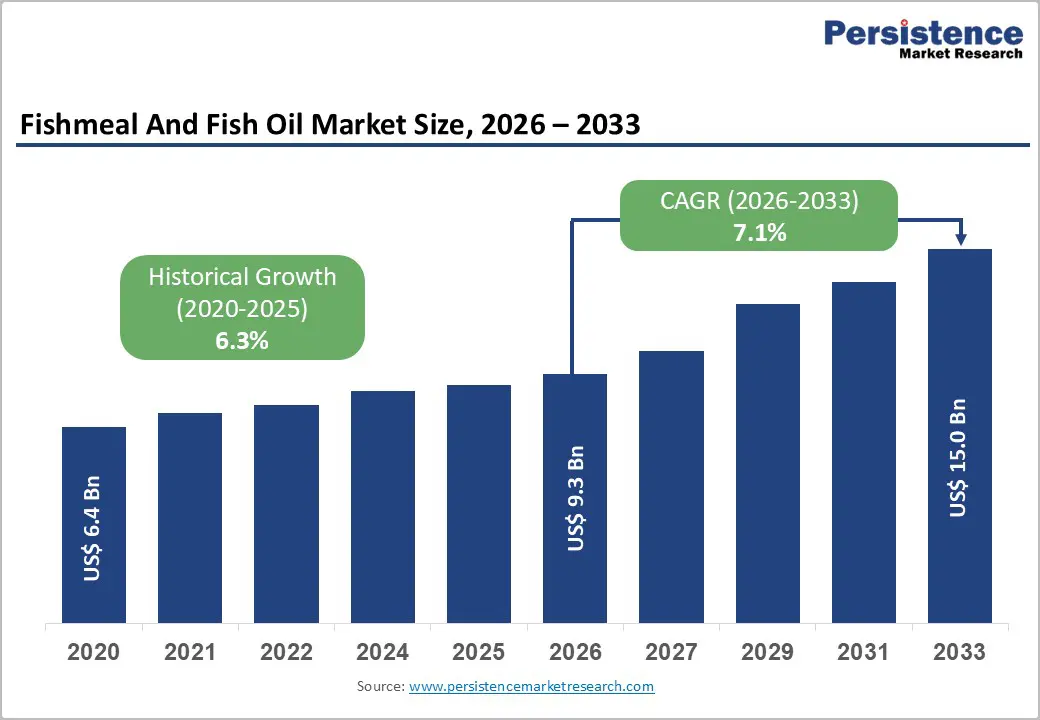
The global fishmeal and fish oil market size is expected to be valued at US$ 9.3 billion in 2026 and is projected to reach US$ 15.0 billion by 2033, growing at a CAGR of 7.1% between 2026 and 2033. The fishmeal and fish oil market is driven by growing demand from aquaculture, livestock feeds, and dietary supplements. Fishmeal, rich in protein, and fish oil, abundant in omega-3 fatty acids, are essential ingredients for improving animal growth, feed conversion, and nutritional value. Rapid urbanization, rising health awareness, and increasing consumption of protein-rich diets are fueling market expansion globally.
Current trends emphasize sustainable sourcing, clean-label formulations, and functional feed innovations. Companies are investing in advanced processing technologies, certified sourcing, and value-added product development to meet regulatory compliance and evolving consumer preferences. This is fostering long-term growth opportunities across all regions.
Key Industry Highlights:
- Leading Region: Asia-Pacific dominates the global fishmeal and fish oil market, driven by high aquaculture production, expanding middle-class populations, and cost-efficient manufacturing capabilities.
- Fastest Growing Region: Europe is the fastest-growing market, fueled by sustainability initiatives, harmonized regulations, and increasing adoption of functional feeds and nutraceutical applications
- Dominant Segment: Fishmeal leads due to protein richness, widespread use in feed, and established supply chains.
- Fastest Growing Segment: Fish Oil gains traction with increasing dietary supplement and nutraceutical adoption.
- Key Opportunity: Sustainable aquaculture and high-quality omega-3 feed formulations offer substantial growth potential for market participants.
| Key Insights | Details |
|---|---|
| Fishmeal And Fish Oil Market Size (2026E) | US$ 9.3 billion |
| Market Value Forecast (2033F) | US$ 15.0 billion |
| Projected Growth CAGR (2026 - 2033) | 7.1% |
| Historical Market Growth (2020 - 2025) | 6.3% |
Market Dynamics
Driver - Rising Demand from Aquaculture and Livestock Feeds
The aquaculture industry has become a central driver of the global fishmeal and fish oil market. In 2025, global aquaculture production reached approximately 90 million tons, with the Asia-Pacific region contributing nearly 70% of this output. Fishmeal, valued for its high protein content and rich amino acid profile, plays a crucial role in promoting faster growth rates, improving feed conversion ratios, and enhancing overall animal health in both aquaculture and livestock operations. As aquaculture farms in countries such as China, India, and Vietnam expand, they are increasingly demanding high-quality feed ingredients, further elevating the market significance of fishmeal. Its well-established functionality and nutritional benefits ensure it remains a staple in feed formulations worldwide.
Simultaneously, fish oil is seeing increasing use in aquaculture diets and dietary supplements due to its high omega-3 fatty acid content. Its inclusion in aquafeeds not only improves the nutritional profile of farmed fish but also enhances consumer perception of the final product’s health benefits. Rising awareness of nutritional optimization and sustainable feed practices is driving demand for these ingredients, supporting market growth. The combined need for protein-rich fishmeal and nutrient-dense fish oil ensures a robust and expanding market landscape through 2033.
Growing Health Awareness and Dietary Supplement Consumption
Rising consumer awareness about the health benefits of omega-3 fatty acids is significantly boosting the demand for fish oil. Studies highlighting cardiovascular, cognitive, and anti-inflammatory advantages have contributed to a growing trend of integrating omega-3 into everyday diets. The trend is particularly strong in North America and Europe, where consumers increasingly adopt preventive health measures. Fish oil’s inclusion in nutraceuticals, fortified foods, and functional beverages provides convenient access to essential fatty acids, meeting daily nutritional requirements while supporting wellness goals.
Governments and health authorities globally recommend daily intakes of EPA and DHA, prompting manufacturers to expand fish oil product offerings, including capsules, gummies, and liquid formulations. Rising demand for clean-label, high-purity supplements has encouraged investment in advanced extraction, encapsulation, and taste-masking technologies. As consumers seek transparency and efficacy, fish oil-based products are rapidly gaining market traction. This growing health-conscious trend ensures that fish oil, the fastest-growing segment, will continue its upward trajectory from 2026 to 2033, both in supplement applications and functional food markets.
Restraints - Volatility in Raw Material Supply and Prices
The fishmeal and fish oil market is highly sensitive to fluctuations in raw material availability, primarily due to dependency on marine fish stocks. Overfishing, climate change, and seasonal variations in fish populations contribute to frequent supply uncertainties. Regions like Peru and Chile, key exporters of fishmeal, have faced environmental regulations, trade restrictions, and production disruptions that directly affect global supply chains. This volatility creates cost pressure for manufacturers, complicates long-term procurement strategies, and can lead to price spikes, particularly affecting small and mid-sized players with limited sourcing flexibility.
Price instability also impacts downstream industries such as aquaculture, livestock feed, and dietary supplements, which rely on consistent ingredient quality and volume. Manufacturers may be forced to pass increased costs to customers, affecting market demand in price-sensitive regions. Additionally, the unpredictability of raw material availability can hinder expansion plans and investment in new product lines. As a result, operational risk and supply chain management remain key challenges for market participants, highlighting the importance of sustainable sourcing and diversified supplier networks to ensure long-term market stability.
Opportunity - Expansion of Sustainable Aquaculture Practices
Sustainable aquaculture presents a significant growth opportunity for the fishmeal and fish oil market. Global aquaculture production is projected to surpass 100 million tons by 2030, driving demand for responsibly sourced feed ingredients. Fishmeal and fish oil derived from sustainable marine sources and farmed fish by-products provide essential nutrients while adhering to environmental standards. Companies that invest in sustainable sourcing, certification programs, and low-impact extraction technologies are well-positioned to capture premium market segments. Advanced processes such as enzymatic hydrolysis and high-precision omega-3 concentration enhance product quality, attract health-focused feed manufacturers, and strengthen brand credibility.
The growing focus on eco-friendly and traceable feed ingredients aligns with global sustainability goals, ensuring long-term market resilience. Sustainable sourcing also helps mitigate supply chain risks, stabilize prices, and meet regulatory expectations. As consumer and regulatory pressure intensifies, market participants offering high-quality, environmentally responsible products gain a competitive advantage. Adoption of sustainable practices not only addresses ecological concerns but also enables differentiation in aquaculture and dietary supplement markets, supporting steady revenue growth and reinforcing long-term demand for fishmeal and fish oil.
Rising Adoption of Omega-3 Rich Dietary Supplements
Fish oil, the fastest-growing segment, is seeing increased adoption in dietary supplements amid rising health-consciousness. Governments and health authorities recommend daily intakes of 250-500 mg of EPA and DHA, encouraging manufacturers to develop high-purity fish oil products in capsules, gummies, and functional beverages. Innovations in encapsulation, taste masking, and cold-chain distribution enhance product stability and consumer convenience, increasing market penetration. Traceability and sustainability messaging further differentiate products in competitive supplement markets, driving long-term adoption and consumer trust.
North America and Europe are leading regions for fish oil supplements, with growing awareness of preventive health, cardiovascular wellness, and cognitive benefits. Rising disposable income and urban lifestyles support the consumption of nutraceuticals and functional foods. Companies focusing on high-quality sourcing, third-party certifications, and sustainable practices are capturing premium market share. This trend reinforces fish oil’s rapid growth trajectory from 2026 to 2033, creating opportunities for innovation, product diversification, and expansion into emerging markets where health awareness and supplement adoption are increasing.
Category-wise Analysis
Product Type Insights
The fishmeal segment holds market leadership with approximately 57% share in 2025, primarily due to its high protein content, excellent digestibility, and established role in aquaculture feed formulations. It is preferred in large-scale feed production as it ensures consistent growth rates, superior feed conversion ratios, and overall animal health. Strong supply from marine fish and crustacean by-products, particularly in Latin America and the Asia-Pacific, reinforces its dominance. Technological advancements in drying, grinding, and storage processes preserve nutrient integrity, ensuring consistent product quality. Meanwhile, fish oil is emerging as the fastest-growing segment, driven by rising demand in functional feeds, dietary supplements, and nutraceutical applications. Its high omega-3 content positions it as a premium nutritional ingredient, supporting long-term market growth.
Source Insights
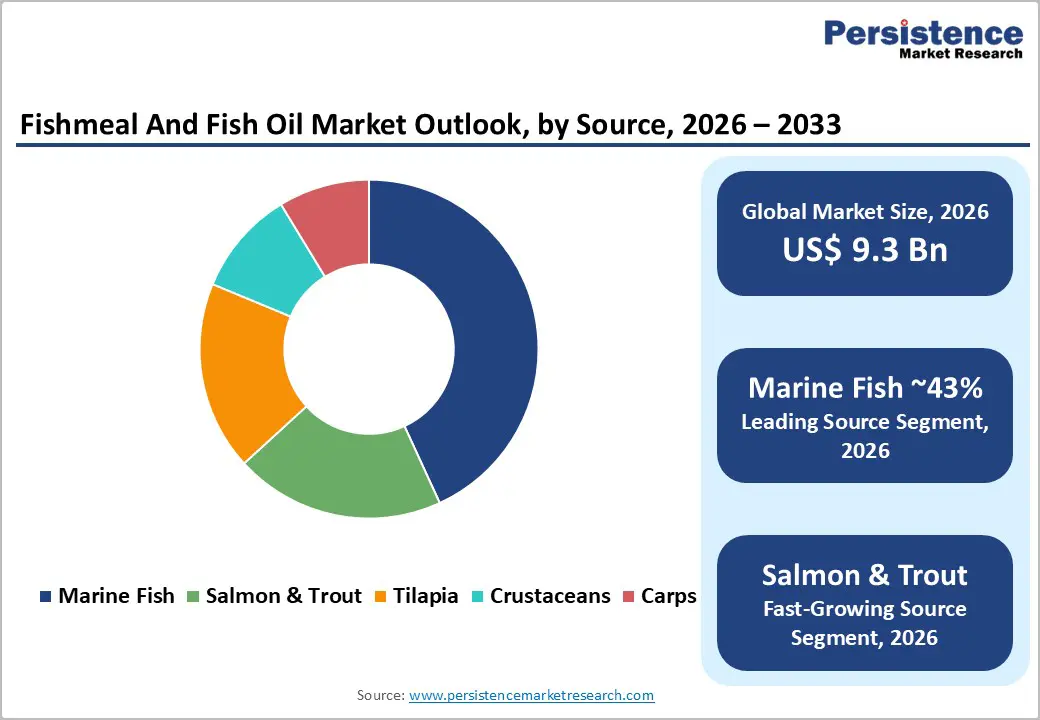
Marine fish remain the leading source, accounting for around 43% market share in 2025, due to their abundant availability and high protein and omega-3 fatty acid content. Species such as anchovies, sardines, and herring dominate fishmeal and fish oil production, especially in Peru and Chile, which are major global exporters. Products derived from marine fish offer consistent quality, critical for aquaculture feed and dietary supplement applications. Salmon and trout are the fastest-growing sources, reflecting the expansion of aquaculture in North America and Europe. These species support premium feed formulations and nutraceutical products enriched with EPA and DHA. The focus on high-quality, traceable sources ensures the nutritional efficacy of feed and supplements, further strengthening market adoption and long-term growth prospects.
Region-wise Insights
North America Fishmeal and Fish Oil Market Trends
North America maintains a leadership position in the global fishmeal and fish oil market, supported by strong consumer awareness, advanced feed formulations, and a highly developed aquaculture and livestock industry. Increasing demand for omega-3-enriched feeds and dietary supplements is driving innovation in product development. Companies are leveraging research-driven approaches to improve feed conversion ratios, growth performance, and nutritional value, ensuring quality and functional compliance. The region’s focus on high-standard feed safety and regulatory adherence reinforces confidence among producers and consumers alike.
The U.S. is the dominant contributor, with well-established supply chains, strong distribution networks, and collaborative partnerships between feed manufacturers and ingredient suppliers. Large-scale aquaculture and livestock operations rely on consistent, high-quality fishmeal and fish oil products to enhance animal health and productivity. Innovation in encapsulated fish oil supplements and fortified feed formulations further expands market penetration. High consumer spending power, increasing health-conscious diets, and the adoption of preventive nutrition support support continued growth. Altogether, North America remains the benchmark region for technological advancement, sustainability compliance, and premium product adoption in the fishmeal and fish oil market.
Asia Pacific Fishmeal and Fish Oil Market Trends
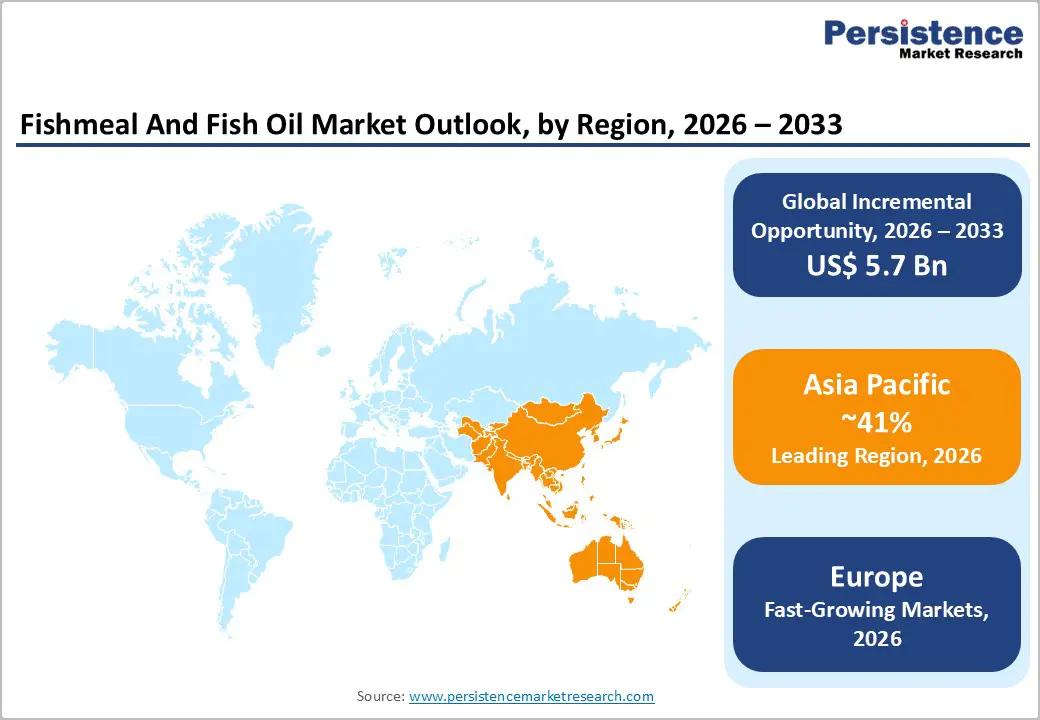
Asia-Pacific is the fastest-growing regional market, capturing around 41% market share in 2025, driven by rapid urbanization, rising disposable incomes, and increasing middle-class populations. Expanding aquaculture production in countries such as China, India, and Indonesia fuels demand for high-quality, protein-rich feed ingredients. Fishmeal and fish oil are critical in improving feed efficiency, growth rates, and overall aquaculture yield. The rise of salmon & trout-based feed formulations, along with fortified dietary supplements, supports market diversification and premium product adoption.
Governments across the Asia-Pacific are supporting aquaculture growth through favorable policies, investments in cold-chain logistics, and infrastructure development. Cost-efficient manufacturing capabilities, large-scale processing facilities, and improved supply chain networks enhance regional competitiveness. The rising consumption of fish-based protein, coupled with increasing health awareness, accelerates the adoption of fish oil supplements in both human nutrition and aquafeed. Combined, these factors position Asia-Pacific as a central growth engine, driving sustained expansion and reinforcing its leadership as the most dynamic market for fishmeal and fish oil globally.
Competitive Landscape
The fishmeal and fish oil market is moderately fragmented with multinational and regional players competing in feed, supplement, and pharmaceutical applications. Market leaders focus on R&D, sustainable sourcing, and premium product differentiation. Key strategies include strategic partnerships, capacity expansion in emerging markets, and clean-label product launches. Smaller players target niche applications, including organic feed and high-concentration omega-3 oils, enhancing market diversity.
Key Developments:
- In December 2025: Mukka Proteins Ltd. acquired a 68% stake in Oman-based United Gulf Fishery Products LLC, strengthening its presence in the Middle East.
- In October 2025: The Arab Authority for Agricultural Investment and Development (AAAID) established a USD 28 million fish-processing facility in Nouadhibou, Mauritania, operated by the Arab Mauritanian Fish Company (SAMAK).
Companies Covered in Fishmeal And Fish Oil Market
- Scoular Company
- Colpex International SAC
- Corpesca S.A.
- Corporacion Pesquera Inca S.A.C.
- Croda International PLC
- Tasa
- FMC Corporation
- GC Rieber Oil
- Marvesa Holding NV
- Mukka Sea Foods Industries Pvt. Ltd.
- Oceana Group Ltd.
- Omega Protein Corporation
- Orizon S.A.
- Pesquera Exalmar S.A.A.
- Others
Frequently Asked Questions
The fishmeal and fish oil market is estimated to be valued at US$ 9.3 Bn in 2026.
Key drivers include rising aquaculture production, increased dietary supplement consumption, growing health awareness, and preference for high-protein feed ingredients.
The global market is expected to witness a CAGR of 7.1% between 2026 and 2033.
Key companies include Scoular Company, Colpex International SAC, Corpesca S.A., Croda International PLC, FMC Corporation, GC Rieber Oil, Omega Protein Corporation, among others.
North America is the leading region in the global fishmeal and fish oil market.


