




- Processed Food
- Fig Snacks Market
Fig Snacks Market Size, Share, and Growth Forecast, 2026 - 2033
Fig Snacks Market by Product Type (Dried, Processed, Fresh), Application (Food & Beverages, Bakery & Confectionery, Dietary Supplements, Cosmetics & Personal Care), Distribution Channel (Online Stores, Supermarkets), and Regional Analysis for 2026-2033

Fig Snacks Market Share and Trends Analysis
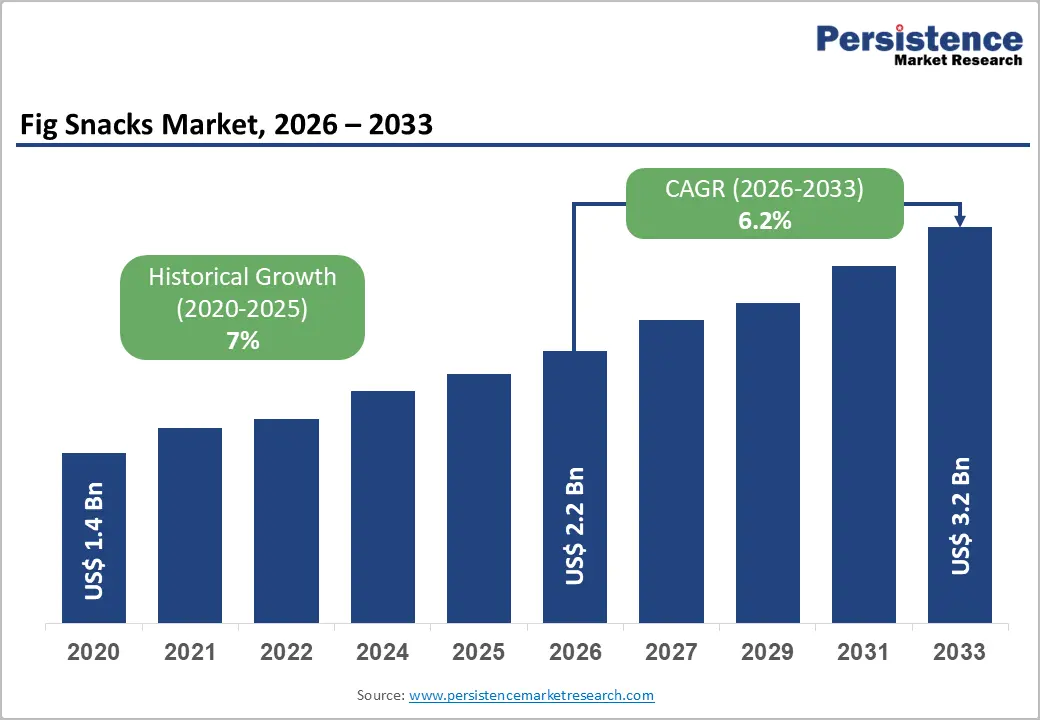
The global fig snacks market size is likely to be valued at US$ 2.2 billion in 2026, and is projected to reach US$ 3.2 billion by 2033, growing at a CAGR of 6.2% during the forecast period 2026−2033.
A major driver of growth in the figs market is the rising consumer preference for healthier, functional foods. Naturally high in dietary fiber, antioxidants, vitamins, and essential minerals, figs appeal strongly to health-conscious consumers. The growing shift toward plant-based, nutrient-dense diets is further boosting demand, particularly in developed markets where people are increasingly looking for natural alternatives to processed sugars and artificial ingredients. In addition, the global increase in vegan and vegetarian populations has enhanced the popularity of figs as a versatile component in a wide range of culinary applications, snacks, and dietary supplements.
Key Industry Highlights
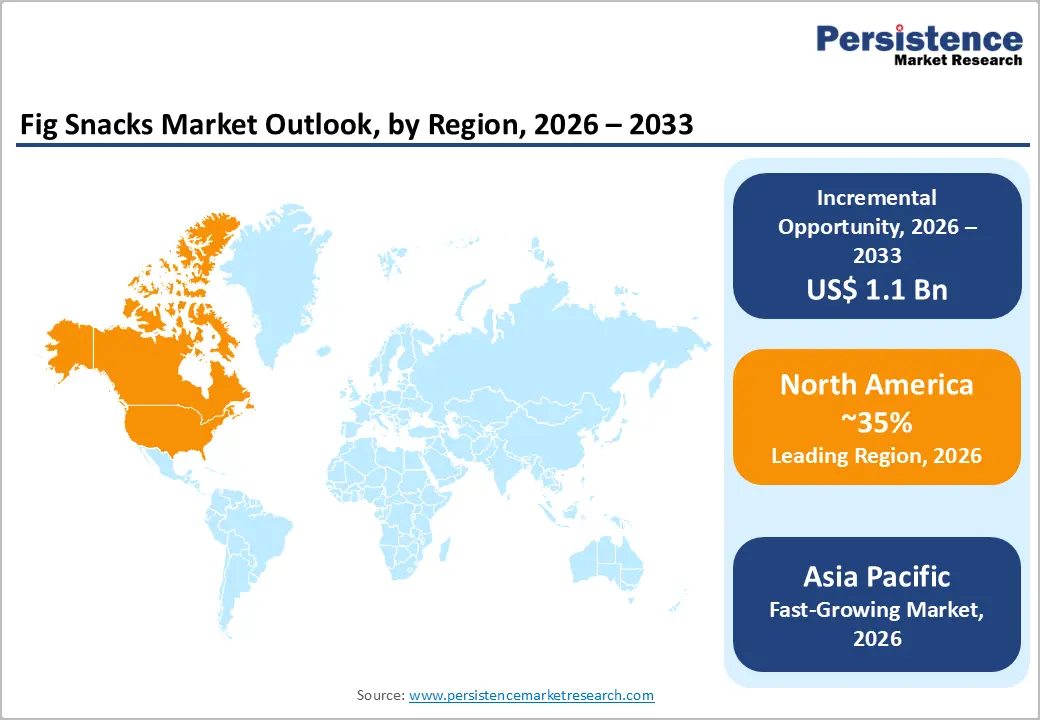
- Dominant Region: North America is expected to command about 35% market share in 2026, fueled by well-established health and wellness trends, strong organic food penetration.
- Fastest-growing Market: The Asia Pacific market is poised to be the fastest-growing during the forecast period, aided by escalating urbanization and increasing focus on preventive health.
- Leading & Fastest-growing Product Type: Dried figs are expected to dominate in 2026 with approximately 62% revenue share, while processed figs are likely to be the fastest-growing segment during the 2026-2033 forecast period.
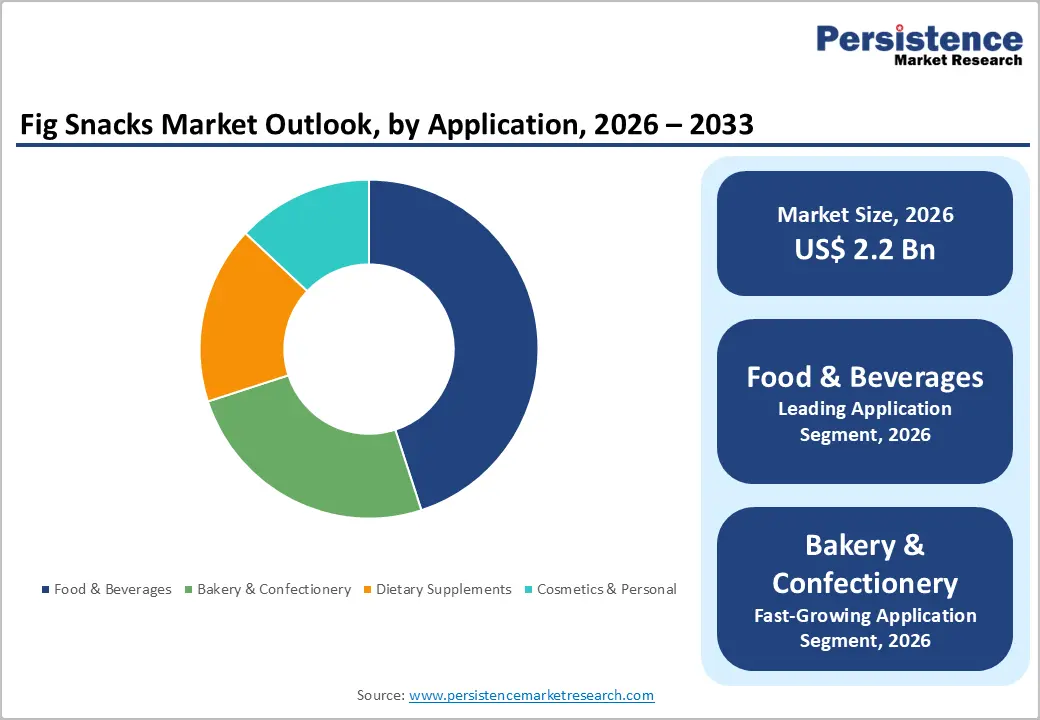
- Leading & Fastest-growing Application: Food & beverages are set to lead with around 52% market revenue share in 2026, with bakery & confectionery recording the fastest growth from 2026 to 2033.
| Report Attribute | Details |
|---|---|
|
Fig Snacks Market Size (2026E) |
US$ 2.2 Bn |
|
Market Value Forecast (2033F) |
US$ 3.2 Bn |
|
Projected Growth (CAGR 2026 to 2033) |
6.2% |
|
Historical Market Growth (CAGR 2020 to 2025) |
7% |
Market Factors – Growth, Barriers, and Opportunity Analysis
Rising Health and Wellness Consciousness
The global transition toward healthier snacking habits is increasingly shaping the expansion of the fig snacks market. Consumers are actively reassessing daily food choices and are moving toward options that are supporting overall wellness and long-term health goals. Rising awareness around weight management and lifestyle-related conditions is encouraging demand for snacks that are delivering nutritional value while maintaining natural composition. Figs are gaining attention because they are providing essential nutrients such as dietary fiber, minerals, and bioactive compounds that are supporting digestive balance and metabolic health. Guidance from the World Health Organization (WHO) and several national health bodies is reinforcing consumer focus on clean and wholesome eating patterns, which is steadily elevating the role of fruit-based snacks within modern diets.
Purchasing behavior is increasingly favoring products made with recognizable and minimally processed ingredients. Research insights from the International Food Information Council (IFIC) indicate that shoppers are prioritizing transparency, digestive support, and plant-based nutrition when selecting snack products. This shift is encouraging manufacturers to innovate continuously by developing fig-based snack formats such as bars, bites, and blended fruit snacks. Brands are responding by refining textures, improving flavor profiles, and enhancing functional benefits without relying on artificial additives. As innovation pipelines are expanding and consumer trust is strengthening, the fig snacks category will have established a solid position within the evolving health-focused snack ecosystem.
Growing Demand for Plant-Based and Clean-Label Products
Consumer interest in clear ingredient disclosure and plant-based nutrition is continuously reshaping the global snacking environment. Shoppers are increasingly reading labels and are favoring foods that are reflecting simplicity, ethical sourcing, and natural origins. Fig are fitting seamlessly into this transition because they are naturally vegan, free from gluten, and requiring minimal processing. These qualities are aligning with clean-label expectations and are strengthening consumer trust. As awareness around food sourcing and nutritional transparency is growing, fig-based snacks are becoming symbols of mindful consumption rather than indulgent treats.
Regulatory influence is also actively guiding formulation strategies within the snack industry. Initiatives such as the European Union (EU) Farm to Fork Strategy and policy direction from the U.S. Food and Drug Administration (FDA) are encouraging reduced reliance on refined sugars and artificial additives. Manufacturers are increasingly incorporating figs as natural sweetening agents while maintaining product integrity and flavor balance. This approach is improving compliance while enhancing nutritional positioning. As innovation cycles are accelerating, brands will have prioritized fig ingredients to meet regulatory alignment and evolving consumer expectations. As a result, fig-centered snack solutions are steadily cementing their position as commercially attractive, future-ready offerings within the clean-label snack segment.
Regulatory Classification Ambiguity and Sugar Content Scrutiny
Fig-based snacks are increasingly operating within a complex regulatory environment as governments are tightening sugar reduction policies aimed at processed foods while continuing to exempt whole fruits. This distinction is creating uncertainty for products that are using concentrated fruit formats. Fresh and dried figs are naturally containing sugars that are intensifying during dehydration, which is drawing regulatory attention despite the absence of added sweeteners. Policymakers are evaluating sugar content based on numeric thresholds rather than ingredient origin, and this approach is placing fig snacks in an unclear compliance category. Brands are navigating classification challenges while attempting to preserve their natural and health-oriented positioning.
Regulatory initiatives such as the U.K. High in Fat, Sugar and Salt (HFSS) framework and evolving front-of-pack labeling systems across the EU and Latin American markets are further complicating market entry and promotion strategies. These rules are limiting product visibility, marketing claims, and retail placement for certain snack formats. At the consumer level, mixed messaging around natural sugars is creating confusion and is weakening confidence in dried fruit snacks as healthy choices. Manufacturers are therefore investing heavily in reformulation, testing, and legal guidance to remain compliant across regions. Over time, successful brands will have developed clearer communication strategies and adaptive formulations to navigate regulatory pressure while maintaining consumer trust.
Limited Consumer Awareness and Market Penetration
Despite strong nutritional positioning, fig-based snacks are continuing to face awareness limitations beyond regions with established fig consumption habits. In several emerging markets, consumers are showing limited familiarity with figs as everyday snack ingredients, which is reducing trial and repeat purchases. This gap is largely developing from restrained promotional activity, as leading consumer packaged goods (CPG) companies are prioritizing higher-velocity snack segments. Without consistent visibility across retail shelves, digital platforms, and foodservice channels, fig snacks are remaining niche offerings rather than mainstream choices. Potential demand is not fully translating into sustained market traction.
Cultural unfamiliarity is also shaping consumption behavior and slowing category development. Many consumers are lacking exposure to figs in traditional meals or modern snacking formats, which is increasing hesitation during purchase decisions. Brands are therefore needing to invest in education-led strategies that are explaining taste profiles, usage occasions, and health relevance. This process is requiring long-term commitment and coordinated messaging across markets. For new entrants, these efforts are raising entry barriers and extending time-to-scale. To find success in this space, market players will have to strengthen awareness through storytelling, sampling initiatives, and localized product adaptations, making fig snacks more palatable as versatile, nutritious alternatives to traditional processed snacks.
Innovation in Value-Added Fig Snack Formats
Strong expansion potential is emerging through the development of convenient and differentiated fig snack formats that are addressing specific consumption moments and nutritional preferences. Brands are actively exploring combinations such as fig-infused protein bars, fig-based energy bites enhanced with superfoods, and organic fig snacks designed for children. These formats are aligning with changing lifestyles that are favoring portability, satiety, and functional benefits. As consumers are seeking snacks that are delivering both nourishment and convenience, figs are increasingly serving as versatile bases for cross-category product development.
Innovation is increasingly targeting specialized dietary needs. Manufacturers are formulating fig snacks that are supporting eating patterns such as ketogenic diets, paleo nutrition, and blood sugar management. This focus is enabling brands to reach narrowly defined but loyal consumer segments. Research and development investment is playing a critical role in improving texture consistency, expanding flavor profiles, and optimizing functional ingredient integration. As these capabilities are advancing, companies will have strengthened differentiation and value perception. Over the long term, strategic innovation will have unlocked new revenue streams and reinforced figs as adaptable ingredients within the evolving global snack ecosystem.
Sustainability-Driven Product Positioning and Certification
Rising attention to environmental responsibility among corporations and consumers is creating strong differentiation opportunities for fig snack brands that are prioritizing sustainable practices. Buyers are increasingly evaluating products based on environmental impact, ethical sourcing, and long-term resource efficiency. Figs are supporting these expectations because they are requiring lower agricultural inputs compared to many alternative snack ingredients. This advantage is enabling brands to communicate credible sustainability stories that are resonating with climate-aware audiences. As awareness around food system impact is growing, fig snacks are increasingly positioned as responsible choices that are aligning with modern environmental values and conscious consumption habits.
Strategic certification and transparent production practices are further strengthening this positioning. Recognitions such as Rainforest Alliance certification, Carbon Neutral labeling, and B Corporation status are reinforcing brand credibility and are supporting premium placement within sustainability-focused retail environments. Retailers committed to environmental, social, & governance (ESG) goals are actively favoring products that demonstrate measurable impact reduction. Producers are investing in regenerative agriculture and circular economy models to reduce waste and improve soil health. Fig snack brands adopting these approaches will have established stronger market relevance, enhanced pricing power, and long-term competitive advantage within the evolving sustainable food landscape.
Category-wise Analysis
Product Type Insights
Dried figs are slated to dominate the product type segment, commanding approximately 62% of the fig snacks market revenue share in 2026, due to their long shelf life, intensified natural sweetness, and broad usability across food applications. The drying process is preserving the fruit while concentrating sugars, which is making dried figs highly suitable for bakery items, confectionery products, and snack formulations. Their stability and flavor profile are supporting consistent demand across both household and industrial use.
International trade is further strengthening the dried figs segment, with key production and export activity centered in countries such as Turkey, Iran, and the U.S. Growing interest in healthier snacking is continuing to drive consumption, especially among urban consumers who are seeking convenient and nutrient-dense foods.
Processed figs are likely to be the fastest-growing segment during the 2026-2033 forecast period. Processed fig products, including jams, pastes, purees, and other value-added formats, are increasingly gaining momentum because of their convenience and versatility across food applications. Manufacturers are actively using these ingredients to improve flavor depth, texture, and nutritional value in products such as breakfast cereals, yogurts, energy bars, and sauces. Their adaptability is making them a preferred choice for both packaged food producers and product developers.
Rising demand for clean-label and organic offerings is further shaping innovation within this segment. Producers are emphasizing gentle processing techniques and limiting additive use to preserve natural qualities and consumer trust.
Application Insights
Food & beverage applications are anticipated to capture an estimated 52% of the fig snacks market share in 2026. Within the food and beverage industry, figs are widely appreciated for their distinctive flavor, appealing texture, and strong nutritional profile. They are being incorporated into a broad range of applications such as salads, dairy alternatives, sauces, and beverages. Growing preference for natural and minimally processed ingredients is supporting the use of figs as natural sweeteners and flavor enhancers. At the same time, manufacturers are increasingly integrating figs into health-focused product lines to leverage their high fiber content, antioxidant properties, and essential micronutrients.
Bakery & confectionery is expected to be the fastest-growing segment over the 2026-2033 forecast period. Thes segment is a key application area for figs, with dried and processed formats commonly used in cakes, cookies, pastries, chocolates, and energy bars. Their natural sweetness and distinctive chewy texture are enhancing taste and mouthfeel in baked and confectionery products. Increasing demand for clean-label and functional foods is encouraging manufacturers to develop new formulations that emphasize the nutritional benefits of figs. In addition, figs are being incorporated into gluten-free and vegan bakery offerings, supporting the growing need for products tailored to specific dietary preferences.
Regional Insights
North America Fig Snacks Market Trends
North America is set to command a significant portion of the fig snacks market share at approximately 42% in 2026, owing to strong alignment with health-focused lifestyles and premium food preferences. The United States is driving consumption as consumers are actively choosing functional snacks that support wellness goals. Awareness around weight management and nutrition is shaping daily choices, which is increasing demand for fruit-based options with natural benefits.
Guidance from the Centres for Disease Control and Prevention (CDC) is reinforcing attention on healthier eating patterns. Updated labelling direction from the FDA is encouraging manufacturers to reduce reliance on refined sweeteners. Domestic fig cultivation is supporting supply stability while enabling local sourcing stories that are resonating with shoppers seeking transparency and authenticity.
Retail and regulatory structures are further strengthening regional performance. Certification programs from the United States Department of Agriculture (USDA) Organic and Non-GMO Project verification are building trust and supporting premium positioning.
Specialized retail networks such as Whole Foods Market, Sprouts Farmers Market, and Trader Joe’s are providing strong visibility for fig-based products through curated assortments. Competitive activity is intensifying as established brands, private labels, and digital-first startups are expanding offerings. Companies can broaden their reach into mainstream channels, introduce protein-enhanced formats, and highlight sustainability commitments to appeal to environmentally conscious buyers shaping future purchasing behavior.
Europe Fig Snacks Market Trends
Europe is likely to emerge as the second-largest market for fig snacks through 2033, supported by long-standing dietary traditions rooted in Mediterranean eating patterns. Consumers across the region are showing strong acceptance of fig-based products because figs are already familiar ingredients in everyday meals. Germany, the U.K., France, and Spain are driving demand through varied preferences ranging from organic foods to convenient snacking formats.
Germany is strengthening momentum through widespread adoption of organic products, while the U.K. is accelerating interest in on-the-go snack solutions. This cultural and behavioral alignment is enabling fig snacks to integrate naturally into daily consumption habits across diverse European markets.
Regulatory and demographic factors are further shaping market development. European Union policies, including the Nutri-Score labeling framework and the Farm to Fork Strategy under the EU, are encouraging food producers to prioritize natural ingredients and sustainable sourcing. These initiatives are supporting organic fig cultivation and are enhancing opportunities for certified products. An aging population is also increasing interest in foods that support digestive wellness, which is reinforcing fig snack relevance.
Competitive activity is intensifying as regional brands, producer cooperatives, and private labels are expanding presence across retail formats such as discount chains and premium outlets. Investments in traceability, product differentiation, and targeted innovation are solidifying Europe’s role in shaping the future of fig-based snacking.
Asia Pacific Fig Snacks Market Trends
Asia Pacific is anticipated to become the fastest-growing market for fig snacks between 2026 and 2033. China, Japan, India, and members of the ASEAN are driving expansion through rising urbanization, growing middle-income populations, and increasing focus on preventive health. Consumers are actively seeking nutritious snack alternatives that fit busy routines, especially in metropolitan areas. In China, government-led nutrition awareness and changing eating habits are supporting interest in functional snacks.
Japan is reinforcing growth through a strong culture of health-oriented foods, supported by the Foods for Specified Health Uses (FOSHU) framework, which is allowing clear communication of wellness benefits and strengthening consumer trust in fig-based products.
India and Southeast Asian markets are also contributing strongly to regional momentum. In India, familiarity with dried fruits such as anjeer is supporting acceptance, while expanding modern retail and workforce participation are increasing demand for convenient snacks.
Producers are adapting pricing and pack sizes to address cost sensitivity and widen reach. Proximity to major fig-producing countries is helping improve supply efficiency, although tariffs remain a challenge. At the same time, local manufacturing capacity is expanding with government-backed food processing zones. Brands are well-positioned to leverage e-commerce platforms, localize flavors, and deepen digital engagement to build awareness and secure long-term growth across Asia Pacific.
Competitive Landscape
The global fig snacks market structure is moderately fragmented, featuring a mix of multinational corporations, established regional manufacturers, and niche specialty brands. Top companies such as Sunsweet Growers, Made in Nature, Terrafertil, Delicious and Sons, and Fig Food collectively account for approximately 35-40% of the total market share, which indicates a competitive yet unconsolidated environment. Competitive intensity is being driven by measurable factors such as product quality benchmarks, pricing architecture, innovation pipelines, geographic penetration, and brand trust. Market leaders are expanding their portfolios through new product development initiatives, including functional and value-added variants, while they are investing in responsible sourcing frameworks and transparent supply chains.
Product differentiation is increasingly focusing on organic-certified, non-GMO, and clean-label formulations, which are supporting premiumization strategies and higher margin realization. Companies are forming strategic alliances with food manufacturers, retail chains, and foodservice operators to expand distribution reach and secure long-term procurement agreements. These collaborations are enabling faster response cycles to shifting consumer preferences, particularly in health-oriented snacking and plant-based nutrition segments. Manufacturers are also optimizing packaging innovation, sustainability credentials, and ingredient traceability systems to enhance consumer confidence and regulatory compliance. As competitive pressures intensify, companies that are integrating supply chain resilience, brand storytelling, and innovation-led differentiation are likely to entrench their market positioning and capture incremental growth opportunities in both mature and emerging markets.
Key Industry Developments
- In May 2025, Nature’s Bakery introduced two new soft-baked snacks by expanding its existing product lines with an Oatmeal Crumble raspberry lemon bar and a gluten-free strawberry fig bar, both made with plant-based, nut-free, and dairy-free ingredients.
Companies Covered in Fig Snacks Market
- Sunsweet Growers Inc.
- Made in Nature
- Terrafertil
- Delicious & Sons
- Fig Food Co.
- Marmara Birlik
- Natulife
- Valley Fig Growers
- Natura Dry Fruit
- Mariani Packing Company
- Newman's Own Organics
- Anna and Sarah
- Ayoub's Dried Fruits & Nuts
- Karen's Naturals
- Traina Foods
Frequently Asked Questions
The global fig snacks market is projected to reach US$ 2.2 billion in 2026.
Rising demand for healthy, clean-label, and plant-based snacks is driving growth in the market.
The market is poised to witness a CAGR of 6.2% from 2026 to 2033.
Innovation in functional formats, sustainable sourcing, and expansion into emerging markets is creating strong growth opportunities.
Sunsweet Growers Inc., Made in Nature, Terrafertil, Delicious & Sons, and Fig Food Co. are some of the key players in the market.


