




- Healthcare Services
- Central Europe Condom Market
Central Europe Condom Market Size, Share and Growth Forecast
Central Europe Condom Market by Product Type (Male Condoms, Female Condoms), Material (Latex, Non-latex), Distribution Channel (Mass Merchandisers, Drug Stores/Pharmacies, Online Retail Stores), and Regional Analysis for 2026 - 2033

Central Europe Condom Market Share and Trends Analysis
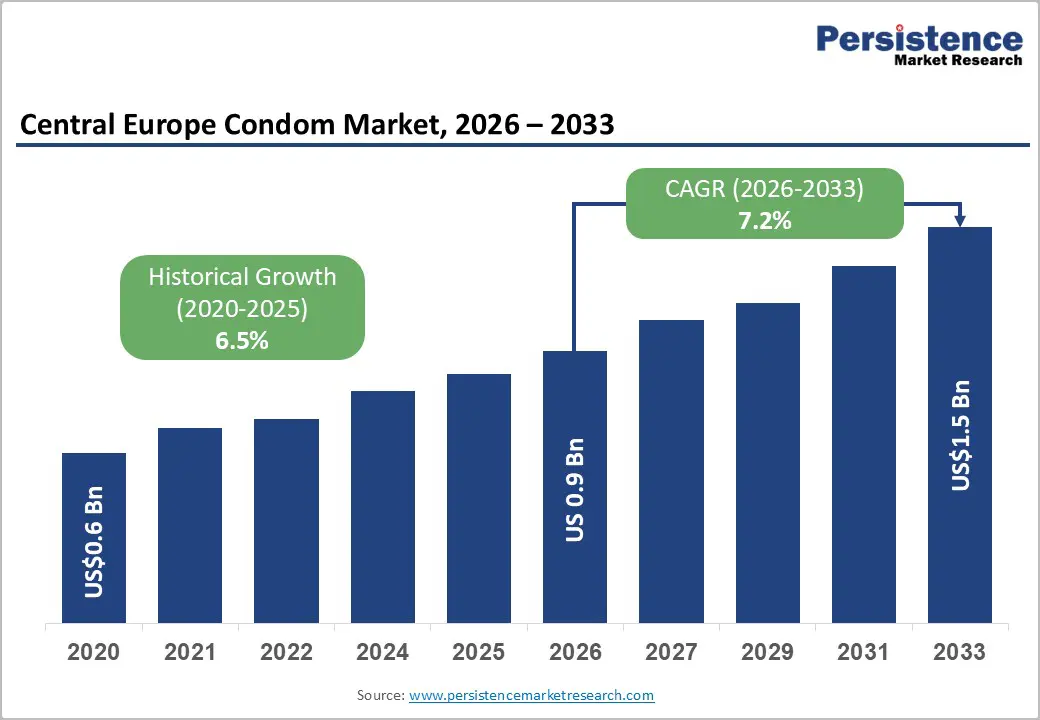
The Central Europe condom market size is likely to be valued at US$0.9 billion in 2026 and is projected to reach US$1.5 billion by 2033, growing at a CAGR of 7.2% during the forecast period 2026 - 2033, driven by increasing awareness of sexual health, rising adoption of contraceptive products, and expanding access to sexual wellness products through pharmacies and digital channels.
Public health initiatives promoting STI prevention, favorable consumer attitudes toward family planning, and growing e-commerce penetration continue to strengthen demand across Central Europe. Product innovation, including ultra-thin, latex-free, and sustainable condom variants, is further expanding the addressable consumer base.
Key Industry Highlights:
- Dominant Product Type: Male condoms are expected to command approximately 78% market revenue share in 2026, while female condoms are anticipated to be the fastest-growing product segment through 2033, driven by greater emphasis on reproductive autonomy and inclusive healthcare access.
- Leading Material Segment: Latex condoms are projected to hold over 72% market share in 2026, whereas non-latex condoms are likely to witness the fastest growth during 2026 - 2033, supported by increasing consumer preference for allergy-free and premium alternatives.
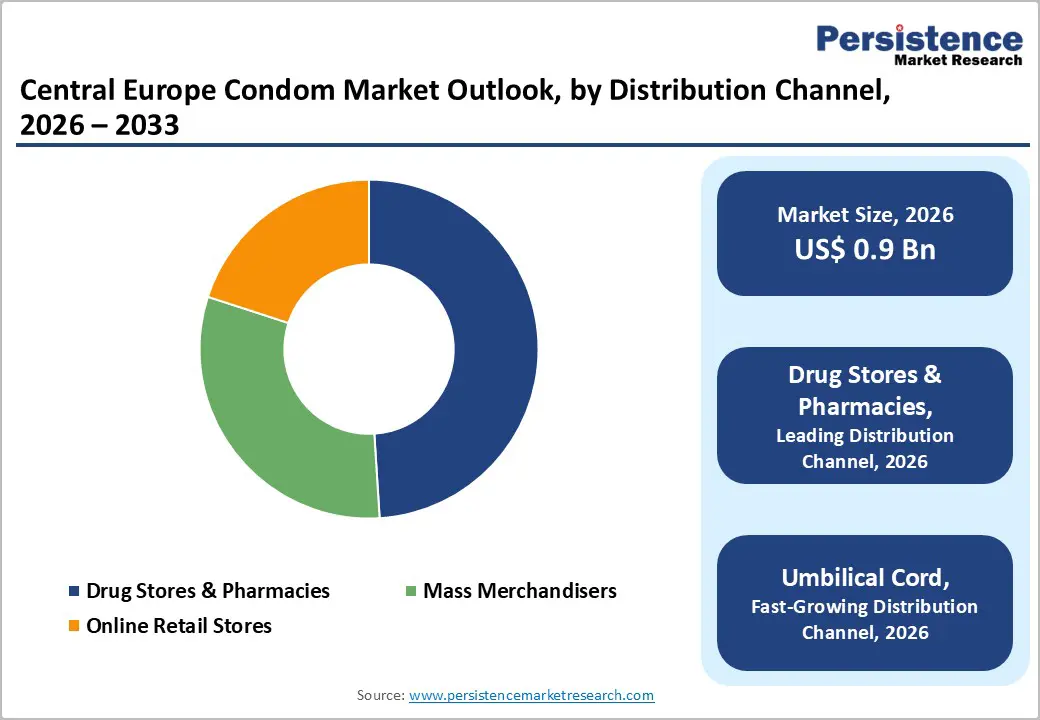
- Dominant Distribution Channel: Drug stores and pharmacies are estimated to account for nearly 49% of the total sales in 2026, while online retail stores are expected to represent the fastest-growing distribution channel through 2033, benefiting from convenience, privacy, and expanding e-commerce penetration.
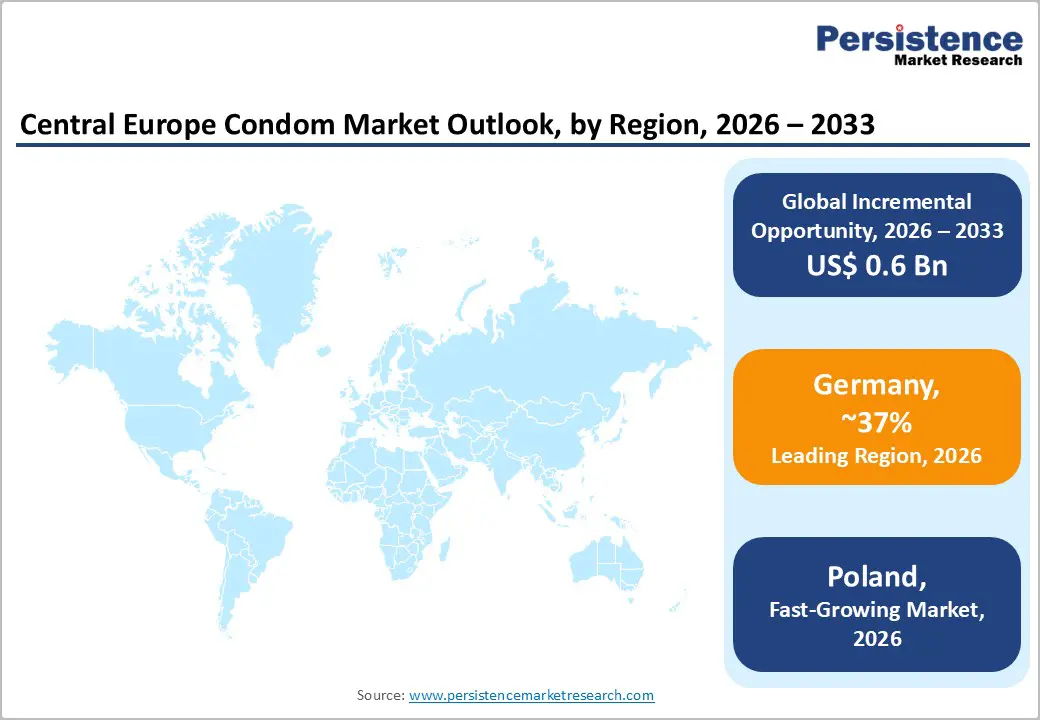
- Regional Leadership: Germany is expected to lead with an estimated 37% share in 2026, while Poland is projected to be the fastest-growing country through 2033, supported by rising sexual wellness awareness, expanding e-commerce penetration, and improving access to contraceptive products.
- Competitive Environment: Market competition is increasingly centered on product innovation, sustainable materials, premium product development, and digital commerce expansion, with manufacturers investing in latex-free technologies, eco-friendly offerings, and direct-to-consumer sales channels to strengthen market positioning through 2033.
DRO Analysis
Driver - Rising Sexual Health Awareness and STI Prevention Programs Driving Condom Adoption
Growing awareness regarding sexually transmitted infections (STIs), HIV prevention, and reproductive health remains the most significant growth driver for the Central Europe condom market. According to the European public health framework, governments and healthcare organizations continue to invest in sexual education programs targeting adolescents and young adults. Market evidence indicates that condom sales in Central Europe increased by approximately 12% during 2023 as consumers increasingly prioritized safe sexual practices.
Sexual health campaigns and free distribution initiatives implemented by healthcare institutions also have improved accessibility and normalized condom usage among younger demographics. Public awareness efforts supported by health authorities and non-government organizations have expanded outreach through schools, universities, and digital platforms. These initiatives are translating into sustained demand growth for condoms, sexual wellness products, and broader contraceptive solutions, creating long-term market expansion opportunities.
Restraint - Cultural Sensitivities and Price Pressure Limiting Market Penetration
Despite improving acceptance levels, cultural attitudes toward contraception continue to create adoption barriers across selected Central European markets. Social stigma surrounding the purchase of sexual wellness products still influences consumer behavior, particularly in conservative demographic segments. Price sensitivity also remains a challenge, especially for premium condom variants incorporating specialty lubricants, ultra-thin materials, or sustainable formulations.
Inflationary pressures across Europe have increased household spending scrutiny, encouraging consumers to prioritize lower-cost alternatives. Furthermore, supply chain disruptions affecting latex, synthetic materials, packaging, and logistics have increased production costs. Industry participants have also reported higher freight expenses and raw material volatility, creating pricing challenges throughout the value chain. These structural barriers can constrain premium product adoption and moderate growth potential in price-sensitive consumer segments.
Opportunity - Expansion of E-commerce and Premium Sexual Wellness Products
The rapid growth of digital retail channels presents a substantial opportunity for manufacturers operating in the Central Europe condom market. Consumers increasingly prefer discreet online purchasing options for personal healthcare products, reducing social barriers traditionally associated with in-store purchases. Online platforms enable brands to offer wider product portfolios, subscription services, customized recommendations, and direct-to-consumer engagement.
Simultaneously, demand is increasing for premium products such as ultra-thin condoms, vegan-certified condoms, latex-free alternatives, and eco-friendly variants. Manufacturers are leveraging digital marketing, influencer campaigns, and partnerships with dating applications to expand customer reach among younger consumers. Growing acceptance of sexual wellness, combined with the premiumization trend and digital commerce expansion, creates a scalable growth opportunity capable of supporting above-market revenue growth throughout the forecast period.
Category-wise Analysis
Product Type Insights
Male condoms are projected to account for approximately 78% of the Central Europe condom market revenue in 2026, maintaining their dominance due to their established role in European sexual health programs and widespread retail availability. Public health authorities across Europe continue to recommend male condoms as the most effective dual-protection method against both STIs and unintended pregnancies. Their lower average selling price compared to female condoms, combined with availability across pharmacies, supermarkets, and online platforms, supports significantly higher consumer adoption and repeat purchases.
Female condoms are expected to be the fastest-growing segment, registering an estimated 8.4% CAGR through 2033. Growth is being driven by increasing policy focus on women's reproductive health and the expansion of female-controlled contraceptive options. Several European sexual health organizations have strengthened educational initiatives around female barrier methods in recent years, while broader online availability has improved product accessibility. The segment is also benefiting from a relatively low penetration base, creating substantial room for future adoption.
Material Insights
Latex condoms are expected to hold over 72% of market share in 2026, supported by their established manufacturing ecosystem and cost advantages. Latex remains the preferred material for most leading brands due to its proven effectiveness, compliance with European safety standards, and lower production costs compared with synthetic alternatives. The extensive global natural rubber supply chain also enables manufacturers to produce latex condoms at scale, supporting their widespread availability across both mass-market and pharmacy channels.
Non-latex condoms are anticipated to be the fastest-growing material segment, advancing at an estimated 8.1% CAGR from 2026 to 2033. Growth is supported by rising demand for alternatives among consumers affected by latex sensitivities, which studies estimate impact approximately 1-6% of the general population. Manufacturers are increasingly launching polyurethane and polyisoprene products that offer improved heat transfer and comfort characteristics. The segment is further benefiting from premiumization trends, as consumers increasingly seek specialized and higher-performance sexual wellness products.
Distribution Channel Insights
Drug stores and pharmacies are projected to account for nearly 49% of total market revenue in 2026, making them the leading distribution channel. Their leadership is supported by Europe's extensive pharmacy infrastructure, particularly in countries such as Germany, where more than 17,000 pharmacies provide broad consumer access to contraceptive products. Pharmacies also remain key partners in government-supported sexual health programs, reinforcing their role as a trusted purchase channel for reproductive healthcare products.
Online retail stores are expected to be the fastest-growing channel, expanding at an estimated 9.2% CAGR through 2033. The segment is benefiting from Europe's high digital adoption, with internet penetration exceeding 90% in many Central European markets. Online platforms provide consumers with greater privacy, broader product selection, and easier access to premium, specialty, and female condom products that may not be widely stocked in physical stores. The rapid growth of direct-to-consumer sexual wellness brands and subscription purchasing models is further accelerating online channel expansion.
Country Analysis
Germany Condom Market Trends
Germany is expected to remain the largest market in Europe, contributing around 37% of regional revenue in 2026. Its leadership is supported by one of the region's largest healthcare systems, with healthcare expenditure exceeding 12% of GDP, ensuring broad access to preventive and reproductive healthcare services. Germany also has more than 17,000 pharmacies, providing extensive distribution coverage for contraceptive products.
According to federal health surveys, contraceptive awareness and usage levels remain high among adults of reproductive age. The country's strong adoption of premium healthcare products, combined with increasing demand for latex-free and sustainable condom options, continues to strengthen its position as the leading market within Europe.
Poland Condom Market Trends
Poland is poised to account for nearly 15% of the regional market share and is expected to be the fastest-growing country in the region. The country's growth is supported by one of the fastest-expanding e-commerce sectors in Central Europe, with online retail accounting for an increasing share of consumer healthcare purchases. According to the European Commission's Digital Economy and Society indicators, internet usage among Polish adults exceeds 85%, improving access to online sexual wellness products.
Poland also has a younger demographic profile than many Western European countries, with individuals aged 15-49 representing a significant share of the population, supporting sustained demand for contraceptive products. Furthermore, condom penetration remains below levels observed in Germany and other mature Western European markets, providing greater headroom for future adoption and category growth.
Competitive Landscape
The Central Europe condom market is moderately consolidated, with leading players such as Durex (Reckitt), Ansell, MAPA GmbH, and Pasante Healthcare accounting for a significant share of regional revenue. These companies leverage strong brand recognition, extensive pharmacy and retail distribution networks, regulatory expertise, and diversified product portfolios. Continuous investments in premium products, latex-free alternatives, and sustainable materials help maintain their competitive advantage.
Regional manufacturers such as Ritex GmbH and emerging sexual wellness brands are strengthening their presence through niche positioning in eco-friendly, vegan-certified, and specialty condom categories. While strict quality standards and established brand loyalty create entry barriers, the growth of e-commerce and direct-to-consumer channels is enabling smaller players to expand market reach. Competition is increasingly centered on product innovation, sustainability, and digital consumer engagement.
Key Industry Developments:
- In March 2026, Cupid Limited announced the development of a Nitrile Female Condom, targeting the premium female-controlled contraception segment. The initiative expands competition in the global non-latex female condom category and aligns with rising demand for allergy-free alternatives.
- In October 2024, Billy Boy, a sexual health brand from Germany, introduced Camdom, a digital condom app that disables smartphone cameras and microphones, preventing unauthorized audio and video recordings during intimate moments, gaining popularity in Europe.
Companies Covered in Central Europe Condom Market
- Reckitt Benckiser Group plc
- Ansell Limited
- MAPA GmbH
- Pasante Healthcare Limited
- Lifestyles Healthcare
- Ritex GmbH
- EXS Condoms
- Vulkan Condoms
- Dolphi Condoms
- Karex Berhad
- Okamoto Industries Inc.
- Sagami Holdings Corporation
- Mayer Laboratories Inc.
- Veru Inc.
Frequently Asked Questions
The Central Europe condom market is projected to reach US$0.9 billion in 2026.
Rising sexual health awareness, STI prevention initiatives, and growing adoption of contraceptive products drive market growth.
The Central Europe condom market is expected to grow at a CAGR of 7.2% from 2026 to 2033.
Manufacturers can capitalize on expanding e-commerce channels, premium condom demand, and increasing adoption of non-latex products.
Reckitt (Durex), Ansell Limited, MAPA GmbH, Pasante Healthcare, Ritex GmbH, Karex Berhad, and Okamoto Industries are key market participants.


