




- Healthcare
- Cell and Gene Therapy Clinical Trials Market
Cell and Gene Therapy Clinical Trials Market Size, Share, and Growth Forecast 2026 – 2033
Cell and Gene Therapy Clinical Trials Market by Phase (Phase I, Phase II, Phase III, Phase IV), Indication (Oncology, Cardiology, CNS, Musculoskeletal, Infectious Diseases, Dermatology), and Regional Analysis, 2026 – 2033

Cell and Gene Therapy Clinical Trials Market Size and Trends Analysis
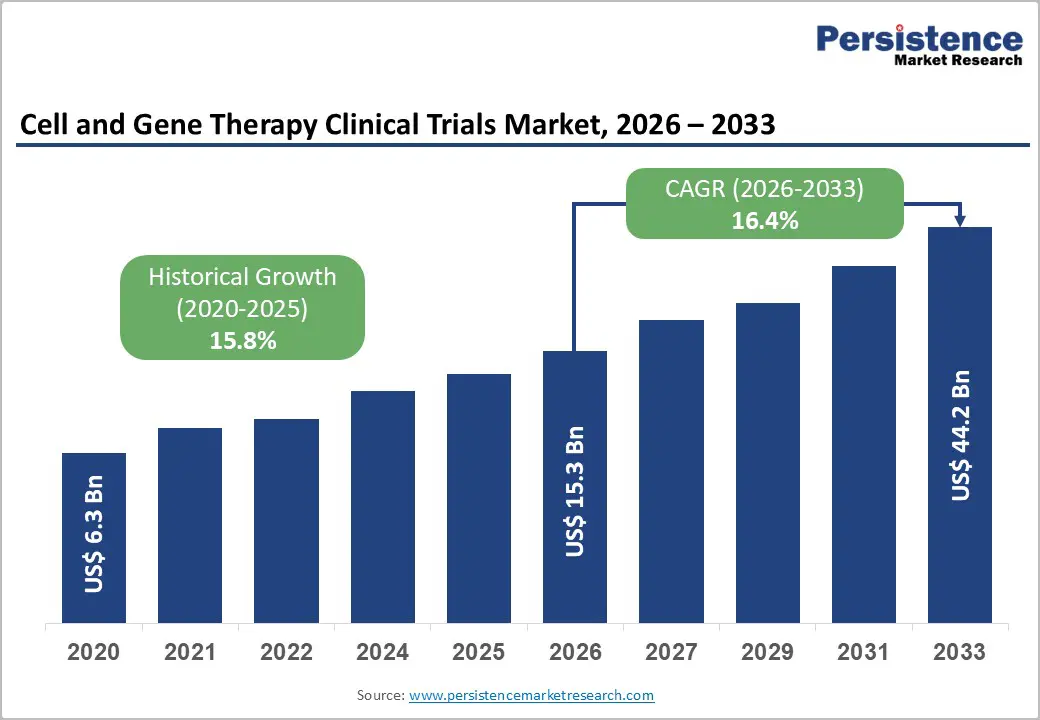
The global cell and gene therapy clinical trials market size is likely to be valued at US$15.3 billion in 2026 and is expected to reach US$44.2 billion by 2033, growing at a CAGR of 16.4% during the forecast period from 2026 to 2033, driven by the rising number of gene-editing and CAR-T candidates entering clinical pipelines. Increasing regulatory support through accelerated approval pathways for advanced therapies is also fueling the market.
Key Industry Highlights:
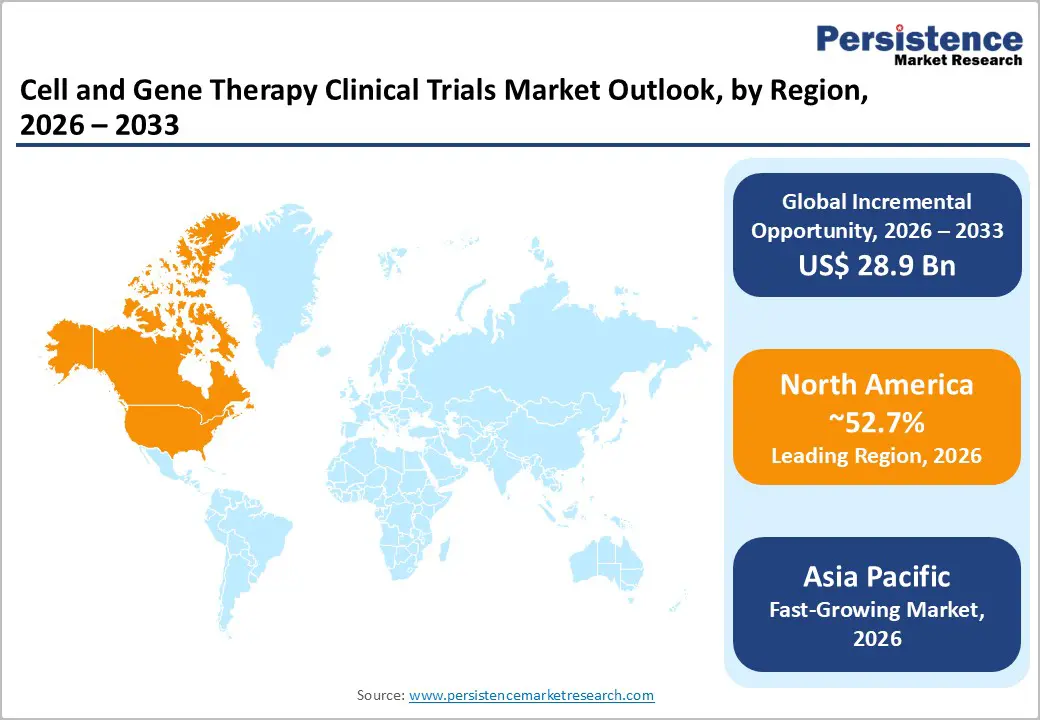
- Leading Region: North America, with about 52.7% share in 2026, fueled by its superior clinical trial infrastructure and supportive regulatory pathways.
- Fast-growing Region: Asia Pacific, backed by rising government funding and access to large patient pools for fast recruitment.
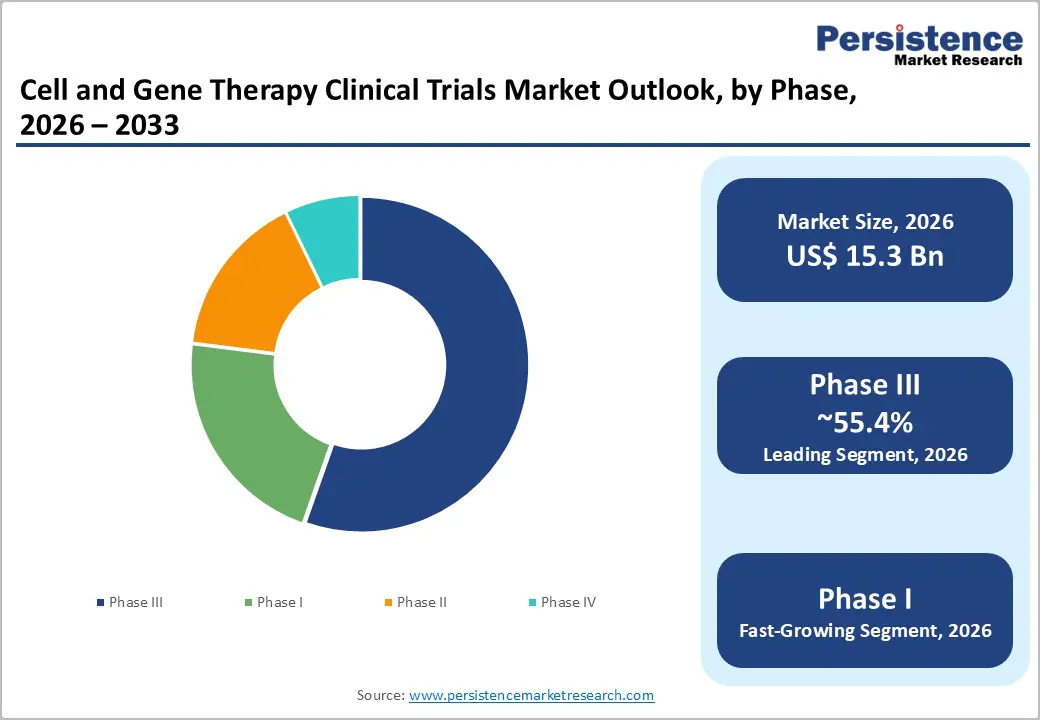
- Leading Phase: Phase III, approximately 55.4% share in 2026, as most therapies are now in late-stage development with proven safety and efficacy.
- Dominant Indication: Oncology, nearly 49.6% share in 2026, as cell and gene therapies such as CAR-T have shown high clinical success in treating hematological cancers.
- Recent Developments: In January 2026, Cellectis announced key clinical milestones for its allogeneic CAR-T portfolio, including the ongoing pivotal Phase II BALLI-01 trial for lasme-cel in acute lymphoblastic leukemia. The company also highlighted its strategic collaboration with AstraZeneca as part of its efforts to bolster next-generation gene-edited cell therapy development.
DRO Analysis
Driver - Rising Investments to Spur Clinical Pipeline Expansion
Private and institutional funding has become a key force behind the expansion of cell and gene therapy trials. Strategic partnerships are now co-funding clinical programs, sharing financial risk while speeding up timelines. For example, in November 2024, ReCode Therapeutics secured up to US$15 million from the Cystic Fibrosis Foundation to boost gene-correction research for cystic fibrosis.
Favorable regulatory incentives such as Regenerative Medicine Advanced Therapy (RMAT) and PRIority MEdicines (PRIME) designations have also helped attract investor interest. Meanwhile, a 2025 landscape analysis confirmed 115 regulatory-approved clinical trials testing 83 human pluripotent stem cell-derived products, with over 1,200 patients dosed. This is a clear sign that funding is translating into real clinical activity.
Surging Interest in Cell and Gene Therapies for Cancer Treatment
Cancer treatment has emerged as the most active application area for cell and gene therapies. What began with blood cancers has now expanded to solid tumors. In February 2024, the Food and Drug Administration (FDA) granted fast-track approval to lifileucel (Amtagvi). It is the first Tumor-Infiltrating Lymphocyte (TIL) therapy for solid tumors, meant for adults with unresectable or metastatic melanoma.
This was followed by FDA approval in August 2024 of afamitresgene autoleucel, the first TCR T-cell therapy, for patients with synovial sarcoma. It marked a meaningful step beyond hematologic cancers. The National Cancer Institute (NCI) has also established a dedicated program to manufacture CAR T-cell therapies for use in clinical trials, reinforcing oncology as the primary growth frontier for this field.
Restraint - Immune and Genetic Safety Concerns May Hinder Clinical Progress
Safety remains one of the most serious barriers in the market. When viral vectors or modified cells are introduced into the body, the immune system can mount strong reactions, sometimes dangerous ones. During a public listening session in September 2024, the FDA's Office of Tissues and Proteins identified key short-term risks from cell and gene therapy administration, including liver toxicity, immune responses, and hematologic toxicity, as well as long-term risks such as secondary malignancy and off-target genetic effects.
Vector integration remains a particular concern. Documented cases of blood malignancy have emerged following lentiviral gene therapy, mainly where heterologous retroviral promoters were used. This has raised serious questions about long-term genomic stability. Immune-related toxicities are especially pronounced with high-dose AAV therapies, prompting researchers to explore capsid engineering and transient immunosuppression as mitigation strategies.
Opportunity - Direct In-Body Cell Reprogramming to Change Therapy Delivery
Traditional CAR-T therapy requires removing a patient's cells, engineering them in a lab, and reinfusing them, which is a slow and expensive process. In vivo cell engineering bypasses all of that by delivering gene-modifying constructs directly into the patient's body. For instance, Umoja Biopharma's UB-VV100 received FDA clearance to initiate a Phase I trial in patients with relapsed or refractory large B-cell lymphoma.
Interius BioTherapeutics also launched a first-in-human trial of INT2104, a CD20-directed in vivo CAR-T candidate, for B-cell malignancies. The commercial momentum is notable. Since March 2025, at least four in vivo CAR-T biotechs have been acquired by leading pharma companies, including Capstan Therapeutics by AbbVie and Interius BioTherapeutics by Kite/Gilead.
Donor-Derived Therapies to Unlock Broad Patient Access
Allogeneic or donor-derived cell therapies are gaining traction as a more expandable alternative to patient-specific approaches. As autologous therapies are manufactured individually, they are time-consuming and costly. Off-the-shelf products aim to change that. A 2025 study published in Blood Advances confirmed that generating an off-the-shelf CAR EBV-VST cell bank for Phase 1 use is feasible and clinically safe for relapsed or refractory B-cell malignancies.
Allogene Therapeutics is advancing this approach further with ALLO-329, a dual-targeted CD19/CD70 allogeneic CAR-T. Its Phase 1 RESOLUTION trial is evaluating multiple dose levels across autoimmune indications, including systemic lupus erythematosus, scleroderma, and inflammatory myositis, with one cohort receiving no lymphodepletion at all.
Category-wise Analysis
Phase Insights
Phase III is predicted to lead with a share of approximately 55.4% in 2026, as it is the final step before regulatory approval. Therapies that reach this stage have already demonstrated acceptable safety and promising efficacy in earlier studies. Hence, developers are willing to invest heavily in large patient populations and multinational trial networks. Another reason is the maturation of the industry. Several cell and gene therapies that entered Phase I trials between 2018 and 2022 have now progressed into pivotal Phase III studies. Regulatory agencies such as the FDA and EMA have also become more familiar with advanced therapies, creating transparent development pathways.
Phase I is estimated to be the fastest-growing segment in the forecast period, as innovation in cell and gene therapy remains extremely active. New technologies such as CRISPR gene editing, base editing, prime editing, in-vivo CAR-T therapies, RNA-guided therapies, and next-generation viral vectors are generating a continuous flow of new clinical candidates. Unlike traditional drug development, multiple cell and gene therapies target rare diseases that previously had no effective treatment options. Academic centers, biotechnology firms, and large pharmaceutical companies are all launching first-in-human studies.
Indication Insights
The oncology segment is anticipated to dominate with a share of nearly 49.6% in 2026, as cancer is where cell and gene therapies have delivered the strongest clinical proof of concept. CAR-T therapies, Tumor-Infiltrating Lymphocytes (TILs), T-Cell Receptor (TCR) therapies, and oncolytic viral therapies have shown the ability to produce deep and durable responses in patients with advanced cancers. Cancer is also biologically suitable for cell engineering approaches. Tumor cells often express specific antigens that can be targeted by engineered immune cells. This has enabled the development of dozens of CAR-T and TCR platforms targeting different blood cancers and solid tumors.
The cardiology segment is expected to remain in the second position in 2026, as cardiovascular diseases remain one of the key causes of death globally, yet many heart conditions cannot be fully reversed using existing drugs. Cell and gene therapies deliver the possibility of repairing damaged heart tissue rather than simply managing symptoms. Historically, cardiac gene therapy faced challenges related to gene delivery and inconsistent efficacy. However, developments in Adeno-Associated Virus (AAV) vectors, targeted delivery systems, and molecular engineering have improved the feasibility of treating heart diseases through genetic approaches.
Regional Insights
North America Cell and Gene Therapy Clinical Trials Market Trends
North America is predicted to dominate in 2026 with a share of approximately 52.7%, as it has the world's most mature regulatory, research, and commercialization network. The region hosts a large concentration of biotechnology companies, academic medical centers, specialized manufacturing facilities, and contract research organizations. This allows therapies to move from laboratory research to human trials more quickly than in most other regions. The regulatory environment is another key advantage.
FDA has established multiple pathways such as Regenerative Medicine Advanced Therapy (RMAT) designation and accelerated approval mechanisms to support new therapies. The agency continues to approve new cell and gene therapies and actively works with developers during clinical development. FDA data shows that cell and gene therapy development activity in the U.S. continues to extend steadily, with multiple products advancing through clinical stages.
U.S. Cell and Gene Therapy Clinical Trials Market Trends
A share of nearly 62.3% is expected to be held by the U.S. in 2026, as it combines scientific innovation with a relatively efficient regulatory framework. The country hosts several of the world's leading cell and gene therapy developers, including companies working on CRISPR-based therapies, CAR-T treatments, and next-generation gene-editing platforms. Another important factor is the increasing number of regulatory approvals. In 2025 alone, the FDA approved several novel gene therapies, including treatments for rare immune disorders, spinal muscular atrophy, and genetic skin diseases. These approvals provide confidence to investors and encourage companies to push additional candidates into clinical trials.
Asia Pacific Cell and Gene Therapy Clinical Trials Market Trends
Asia Pacific is anticipated to be the fastest-growing region in 2026 with a share of nearly 24.8%, as governments across the region are investing heavily in biotechnology infrastructure, advanced manufacturing, and translational medicine. China, Japan, South Korea, Singapore, and Australia have established programs specifically designed to attract advanced therapy research. The region also provides access to large patient populations, which can help fuel recruitment for clinical trials. Several countries have broadened their clinical research capabilities and improved regulatory processes, making them increasingly attractive for multinational studies.
China Cell and Gene Therapy Clinical Trials Market Trends
China will likely lead in Asia Pacific in 2026 with a share of around 39.4%, due to strong government support and increasing investment in biotechnology innovation. The country has built a large network of research institutions, hospitals, and manufacturing facilities dedicated to advanced therapies. China is particularly strong in CAR-T development. Various domestic biotechnology companies are conducting trials for blood cancers and increasingly for solid tumors. The country's large patient base allows developers to recruit participants relatively quickly compared with several Western markets.
Japan Cell and Gene Therapy Clinical Trials Market Trends
In 2026, Japan is projected to account for a share of approximately 24.3%, supported by one of the world's most advanced regulatory frameworks for regenerative medicine. The country introduced legislation that allows conditional and time-limited approvals for certain regenerative therapies. This framework can shorten the path from clinical development to commercialization. Japan also has a well-established academic research base. Universities and research centers continue to play an important role in stem cell and induced pluripotent stem cell (iPSC) research. The pioneering work of Shinya Yamanaka helped establish Japan as a global leader in regenerative medicine.
Europe Cell and Gene Therapy Clinical Trials Market Trends
Europe will likely see decent growth in the forecast period with a share of nearly 13.9% in 2026, as it combines superior scientific expertise with a well-established regulatory structure. The region has a long history of research in stem cell therapy, gene therapy, and tissue engineering. Various leading academic hospitals and biotechnology clusters are located across Germany, the U.K., France, Switzerland, and the Netherlands. The regulatory environment is becoming increasingly supportive. The European Medicines Agency has introduced updated guidance for Advanced Therapy Medicinal Products (ATMPs), helping companies design and execute clinical trials more efficiently. This provides greater clarity for developers entering the market.
Germany Cell and Gene Therapy Clinical Trials Market Trends
Germany will likely register a substantial share of approximately 44.6% in 2026, as it benefits from world-class academic institutions, advanced healthcare infrastructure, and a highly skilled biotechnology workforce. Local research centers are particularly active in oncology, rare diseases, and regenerative medicine. The country is also a prominent manufacturing location for advanced therapies, which supports both domestic and international clinical programs. Germany's favorable reimbursement policies and healthcare infrastructure make it an attractive destination for sponsors seeking clinical trial sites.
U.K. Cell and Gene Therapy Clinical Trials Market Trends
A share of around 29.7% is predicted to be held by the U.K. in 2026. According to Cell and Gene Therapy Catapult's 2025 database, the country participated in 9% of global advanced therapy clinical trials and 57% of all trials across Europe. More than half of these studies were early-stage trials, indicating a strong future pipeline. The country further benefits from a supportive regulatory environment led by the U.K.'s Medicines and Healthcare products Regulatory Agency (MHRA). Recent policy updates and regulatory reforms are designed to improve access to novel therapies and attract clinical research investment.
Competitive Landscape
The global cell and gene therapy clinical trials market is moderately fragmented. The competition is split between large full-service CROs, specialized cell and gene therapy service providers, and therapy developers running their own clinical programs. No single company dominates the market as trial execution requires expertise in regulatory affairs, viral vectors, patient recruitment, manufacturing logistics, biomarker testing, and long-term patient monitoring.
A defining feature of the competitive landscape is the surging influence of large CROs such as IQVIA, ICON plc, Parexel, Labcorp, and Medpace. These companies are now winning contracts from biotech firms that lack the infrastructure to manage complex global trials. Their competitive advantage comes from global site networks, regulatory expertise, patient recruitment capabilities, and integrated data platforms. Competition is also intensifying through partnerships and network-building initiatives.
Key Industry Developments:
- In November 2025, the FDA introduced the Plausible Mechanism Pathway, a proposed regulatory framework designed to push development of therapies for ultra-rare diseases where traditional randomized clinical trials are difficult to conduct. The initiative is anticipated to benefit future gene therapy developers targeting small patient populations.
- In November 2025, Bharat Biotech announced the launch of Nucelion Therapeutics, a dedicated subsidiary focused on cell and gene therapy development and manufacturing. The company established a GMP-compliant facility in Hyderabad capable of supporting plasmid production, viral vectors, cell therapies, and clinical-stage manufacturing activities for global innovators.
- In June 2025, Ocugen announced FDA clearance to initiate a Phase II/III pivotal clinical trial for OCU410ST, its modifier gene therapy candidate for Stargardt disease. The trial is designed to evaluate a broad treatment approach for ABCA4-associated retinal disorders and represents one of the notable late-stage ophthalmic gene therapy programs currently advancing in the clinic.
Companies Covered in Cell and Gene Therapy Clinical Trials Market
- IQVIA
- ICON Plc
- LabCorp
- Charles River Laboratories
- PAREXEL International Corp.
- Syneos Health
- Medpace
- Thermo Fisher Scientific, Inc.
- Novotech
- Veristat, LLC
- Others
Frequently Asked Questions
The global cell and gene therapy clinical trials market is projected to be valued at US$15.3 billion in 2026.
The cell and gene therapy clinical trials market is expected to reach US$44.2 billion by 2033.
Key market trends include the rise of in-vivo gene editing and expansion of cell therapies into non-oncology indications.
Oncology is expected to be the leading indication with a share of nearly 49.6% in 2026, owing to the high unmet need in advanced cancers, which pushes fast trial approvals and patient enrollment.
The cell and gene therapy clinical trials market is expected to grow at a CAGR of 16.4% from 2026 to 2033.
IQVIA, ICON Plc, and LabCorp are a few key market players.


