




- Sporting Goods & Equipment
- Bicycle Roller Brake Market
Bicycle Roller Brake Market Size, Share, and Growth Forecast 2026 - 2033
Bicycle Roller Brake Market by Product (Standard Roller Brakes, High-Performance Roller Brakes, Integrated Hub-Gear Roller Brakes, Coaster Brakes), by Brake (Mechanical, Hydraulic), by Bicycle Type (Conventional, and E-bike), by Application (Mountain, Road, Hybrid, Cargo, and Others), by Regional Analysis, 2026 - 2033

Bicycle Roller Brake Market Size and Trend Analysis
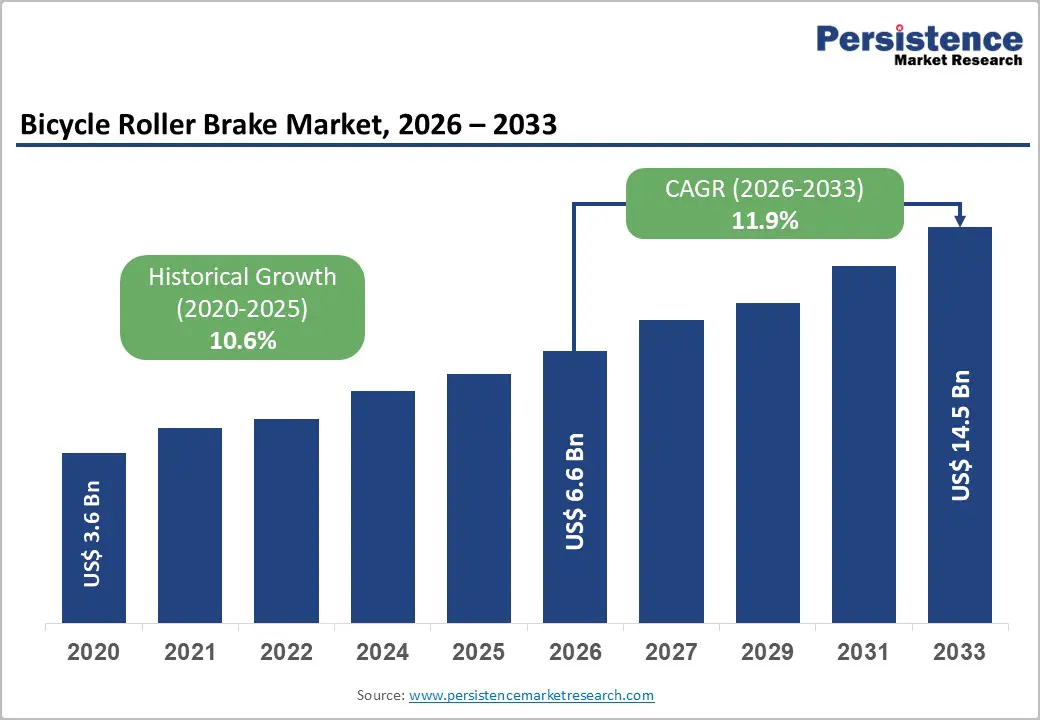
The global bicycle roller brake market size is likely to be valued at US$ 6.6 Billion in 2026 and is expected to reach US$ 14.5 Billion by 2033, growing at a CAGR of 11.9% during the forecast period from 2026 and 2033.
Rising demand for reliable braking systems in urban commuting and recreational cycling drives this expansion, supported by the surge in e-bike adoption and infrastructure investments worldwide.
Key Industry Highlights:
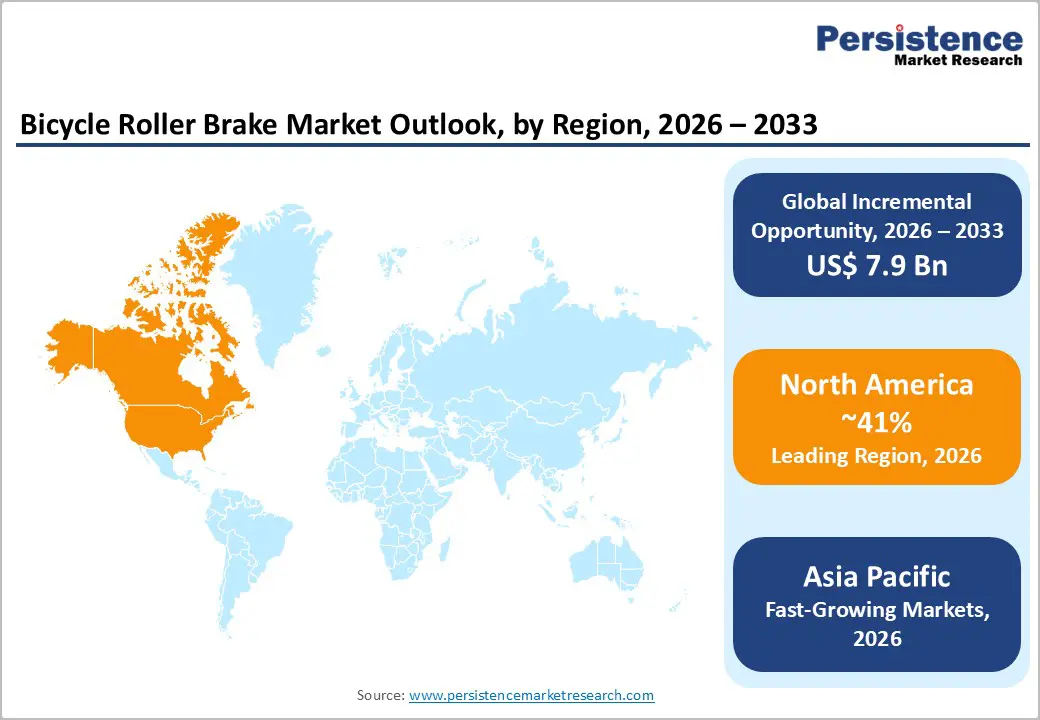
- Leading Region: North America leads the bicycle roller brake market, holding 41% share, driven by strict safety regulations and strong infrastructure investments. Regulatory bodies like the U.S. Consumer Product Safety Commission are enforcing advanced braking standards, while expanding e-bike infrastructure further accelerates adoption across urban mobility systems.
- Fastest-Growing Region: Asia Pacific is the fastest-growing region with rising CAGR of 14.3%, supported by large-scale bicycle manufacturing in countries like China and India. Rising urbanization, affordability of bicycles, and increasing demand for eco-friendly transport solutions are significantly boosting roller brake adoption across commuter and hybrid bicycle segments.
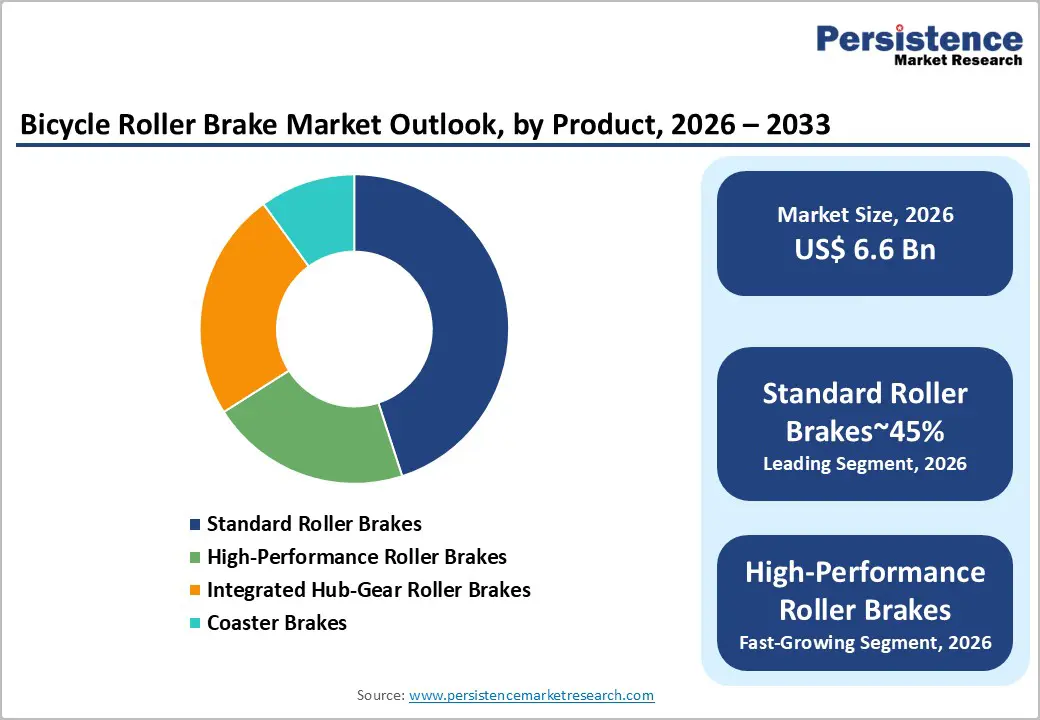
- Leading Segment: Standard roller brakes dominate the segment with a 45% market share, primarily due to their affordability, durability, and low maintenance requirements. Their consistent braking performance in daily commuting conditions makes them a preferred choice for urban cyclists and shared mobility systems.
- Fastest-Growing Segment: The hydraulic roller brake segment is witnessing rapid growth, particularly in e-bikes, due to its superior braking control and smooth performance. Advanced fluid-based systems enhance rider safety and comfort, making them increasingly popular in premium electric bicycles and high-performance urban mobility solutions.
- Key Opportunity: The growing adoption of cargo bikes in last-mile delivery services presents a significant market opportunity. With logistics companies expanding urban fleets, there is increasing demand for durable and efficient braking systems, positioning roller brakes as a reliable solution for heavy-load and high-frequency usage applications.
| Key Insights | Details |
|---|---|
| Bicycle Roller Brake Market Size (2026E) | US$ 6.6 Billion |
| Market Value Forecast (2033F) | US$ 14.5 Billion |
| Projected Growth CAGR (2026 - 2033) | 11.9% |
| Historical Market Growth (2020 - 2025) | 10.6% |
DRO Analysis
Drivers - Rising global e-bike adoption accelerates demand for durable, low-maintenance roller brakes in urban mobility systems
The rapid increase in global e-bike adoption is significantly driving demand for durable and efficient roller brakes. As urban populations grow and cities promote eco-friendly transportation, e-bikes have become a preferred choice for daily commuting. According to the Light Electric Vehicle Association, e-bike registrations in Europe grew by over 30% annually between 2020 and 2025, highlighting strong market momentum. This surge has created a parallel demand for braking systems that perform reliably in diverse weather conditions.
Roller brakes, known for their enclosed design and consistent braking performance, are particularly suited for urban environments. Their low-maintenance nature reduces service frequency and operational downtime, making them highly attractive to daily commuters and shared mobility operators. Additionally, enhanced safety and ease of use in congested city traffic further strengthen their adoption, positioning roller brakes as a practical solution in the expanding urban mobility ecosystem.
Increasing safety regulations and infrastructure investments drive the adoption of reliable roller brake systems globally
The implementation of stricter bicycle safety regulations across global markets is playing a crucial role in boosting the adoption of reliable braking systems such as roller brakes. Governments and regulatory bodies are increasingly focusing on reducing cycling-related accidents, thereby increasing braking performance requirements. For instance, the U.S. Consumer Product Safety Commission reported a 25% rise in bicycle-related incidents, prompting the introduction of stricter safety norms.
In parallel, large-scale investments in cycling infrastructure are further supporting market growth. The U.S. Bipartisan Infrastructure Law, which allocates approximately $5 billion toward cycling infrastructure development, is a notable example. Improved bike lanes, urban connectivity, and shared mobility programs are encouraging more people to adopt cycling. These developments create a strong need for dependable and low-maintenance braking systems, positioning roller brakes as an ideal solution for commuter bicycles and public bike-sharing fleets.
Restraints - Growing preference for high-performance disc brakes limits roller brake adoption in premium cycling segments worldwide
The growing popularity of advanced disc brake systems presents a significant challenge to the adoption of roller brakes, particularly in high-performance cycling segments. Disc brakes are widely recognized for their superior stopping power and better modulation, especially under extreme weather conditions such as rain or mud. According to Shimano’s performance data, disc brakes deliver approximately 40% higher stopping efficiency in wet conditions, as measured under ISO 4210 testing standards.
This performance advantage makes them the preferred choice among professional cyclists and mountain bike users who prioritize precision and control. As a result, roller brakes are gradually losing traction in premium and performance-oriented bicycle categories. Although roller brakes continue to perform well in urban and commuter segments, the growing shift toward disc brakes in high-end bicycles limits their overall market penetration and slows growth in advanced cycling applications.
High production costs of hydraulic roller brakes restrict adoption in price-sensitive and emerging global markets
Hydraulic roller brakes, while offering improved braking performance and smoother operation, face adoption challenges due to their relatively high manufacturing costs. The complexity of designing and producing hydraulic systems, including fluid-based components and precision engineering, significantly increases production costs. Industry insights suggest that hydraulic roller brakes can cost 30% more than their mechanical counterparts, making them less accessible in price-sensitive markets.
This cost disparity is particularly evident in emerging economies where affordability remains a key purchasing factor for consumers. Additionally, higher initial costs can deter bicycle manufacturers from integrating these systems into entry-level and mid-range models. As a result, the adoption of hydraulic roller brakes remains limited despite their technical advantages. Manufacturers must balance performance improvements with cost optimization to expand their reach in competitive and cost-conscious global markets.
Opportunities - Expanding cargo and delivery bike usage creates strong demand for durable and efficient roller brake systems
The rapid growth of cargo and delivery bicycles, particularly in urban last-mile logistics, presents a significant opportunity for the roller brake market. With the rise of e-commerce and food delivery services, companies are increasingly adopting cargo bikes as a cost-effective and environmentally friendly alternative to traditional delivery vehicles. For example, United Parcel Service (UPS) expanded its cargo bike fleet by 15% in 2025, reflecting a broader industry trend.
These bikes often carry heavy loads and operate in densely populated areas, requiring highly reliable and durable braking systems. Roller brakes, known for their consistent performance and low maintenance, are well-suited for such applications. According to the International Transport Forum, urban delivery demand is expected to grow at an annual rate of 12%, further strengthening this opportunity. Manufacturers can capitalize on this trend by developing integrated hub-based roller brake systems tailored specifically for high-load cargo bicycles.
Smart braking technologies and IoT integration create new growth opportunities for advanced roller brake systems
Technological advancements in cycling components are opening new growth avenues for roller brake systems, particularly through integration with smart and connected bike technologies. The emergence of IoT-enabled bicycles has created demand for intelligent braking systems that enhance rider safety and performance. Companies such as Rohloff AG have introduced prototype roller brakes equipped with sensor-based auto-adjusting mechanisms, which can improve braking efficiency by up to 25%, according to tests conducted by the German Bicycle Industry Association (ZIV).
These innovations align with the growing trend of smart mobility solutions, especially in regions like Asia Pacific, where governments are actively promoting advanced e-bike adoption. Features such as real-time performance monitoring, adaptive braking response, and predictive maintenance capabilities are expected to transform traditional braking systems. This integration not only enhances user experience but also positions roller brakes as a future-ready solution in the evolving smart bicycle ecosystem.
Category-wise Analysis
By Product Insights
Standard roller brakes dominate the market with a share of approximately 45%, primarily due to their cost-effectiveness, reliability, and widespread use in urban bicycles. These brakes are highly preferred for city commuting as they offer consistent performance with minimal maintenance requirements. Manufacturers such as Sturmey-Archer have played a significant role in driving adoption, with their models being widely used in European city bikes.
According to CEN standards, over 60% of city bicycles in Europe incorporate such braking systems, highlighting their strong market presence. The ease of installation and compatibility with various bicycle types further contribute to their popularity. Additionally, their enclosed design protects internal components from dust and water, ensuring durability in daily use. As urban cycling continues to expand, the demand for dependable and affordable braking solutions is expected to sustain the dominance of standard roller brakes in the global market.
By Brake Insights
Mechanical roller brakes hold the largest market share, accounting for approximately 65%, driven by their simplicity, affordability, and ease of maintenance. These systems are widely used across conventional bicycles due to their compatibility and straightforward design, making them ideal for both manufacturers and end-users. According to Tektro Technology, mechanical braking systems are utilized in nearly 70% of bicycle retrofits, indicating strong aftermarket demand. Their proven durability, supported by ISO testing standards demonstrating performance over 10,000 braking cycles, further enhances their appeal.
Mechanical brakes are particularly popular in developing markets where cost efficiency and reliability are key purchasing considerations. Additionally, their ease of repair and availability of spare parts contribute to long-term usability. As a result, mechanical roller brakes continue to dominate the segment, especially in budget-conscious regions and high-volume bicycle markets.
By Bicycle Type Insights
Conventional bicycles account for around 55% of the roller brake market, primarily due to their widespread use in daily transportation and recreational activities. These bicycles remain highly popular in regions such as Asia, where affordability and practicality drive consumer preferences. According to SunRace data, conventional bicycles outsell e-bikes by a ratio of 2:1 in Asia, highlighting their dominant position.
Roller brakes are particularly well-suited for these bicycles as they offer reliable performance with minimal maintenance, making them ideal for everyday use. Their cost-effectiveness further supports adoption among price-sensitive consumers. Additionally, the growing emphasis on sustainable transportation is encouraging the use of conventional bicycles for short-distance travel. As a result, the demand for dependable braking systems like roller brakes continues to grow within this segment, reinforcing its leading market share globally.
By Application Insights
Road applications represent the largest segment, accounting for approximately 35% of the roller brake market, driven by the need for smooth and consistent braking performance. Urban commuters and fitness cyclists prefer roller brakes for their ability to provide stable braking without sudden jerks, enhancing overall riding comfort. According to Shimano’s 2025 surveys, roller brakes generate approximately 20% less drag compared to traditional caliper brakes, making them suitable for road cycling.
Their enclosed mechanism also ensures consistent performance across varying weather conditions, which is essential for daily commuting. Additionally, compliance with regulatory standards such as those set by the Union Cycliste Internationale (UCI) further supports their adoption in road bicycles. As more individuals turn to cycling for both transportation and fitness, the demand for efficient and reliable braking systems continues to rise, strengthening the dominance of roller brakes in road applications.
Regional Insights
North America Bicycle Roller Brake Trends Analysis
North America is emerging as a leading market for bicycle roller brakes, supported by strong regulatory frameworks and increasing investments in cycling infrastructure. The U.S. Consumer Product Safety Commission has implemented stricter safety standards since 2024, encouraging the adoption of advanced braking systems. In addition, government initiatives, including approximately $1.2 billion in federal funding for bike lane development, are promoting cycling as a sustainable mode of transportation.
Companies such as Hayes Performance Systems are actively investing in research and development to enhance braking technologies and meet evolving safety requirements. Furthermore, the rapid growth of the e-bike market, which has increased by nearly 40% according to PeopleForBikes, is driving demand for low-maintenance and reliable braking systems. Roller brakes, with their durability and consistent performance, are gaining traction among urban commuters and shared mobility operators, contributing to the region’s market growth.
Europe Bicycle Roller Brake Market Trends Analysis
Europe continues to be a key market for bicycle roller brakes, driven by strong regulatory support and a well-established cycling culture. The implementation of EN 15194 standards has significantly boosted the adoption of advanced braking systems, including hydraulic roller brakes. Countries such as Germany have witnessed a 25% increase in bicycle sales in 2025, supported by government subsidies and incentives promoting sustainable transportation. The region’s focus on performance and safety has encouraged the integration of high-quality braking systems in new bicycle models.
According to Eurostat data, approximately 50% of newly deployed bicycle fleets in countries like the UK and France incorporate advanced hub-based braking solutions from manufacturers such as Shimano. Additionally, the expansion of urban cycling infrastructure and growing environmental awareness are further supporting market growth. These factors collectively position Europe as a mature and innovation-driven market for roller brakes.
Asia Pacific Bicycle Roller Brake Market Trends
Asia Pacific is experiencing rapid growth in the bicycle roller brake market, supported by strong manufacturing capabilities and increasing domestic demand. Countries such as China and India serve as major production hubs, contributing significantly to global bicycle output. In Japan, adherence to JIS standards has strengthened the export of high-quality braking systems, with reports indicating a 15% annual growth rate in regional trade.
India, in particular, produces nearly 20 million bicycles annually, according to the Society of Indian Automobile Manufacturers (SIAM), creating substantial demand for cost-effective braking solutions. Roller brakes are widely adopted in hybrid and commuter bicycles due to their affordability and durability. Additionally, rising urbanization and government initiatives promoting cycling as an eco-friendly transportation mode are driving market expansion. As a result, the Asia Pacific is emerging as a high-growth region with strong potential for roller brake manufacturers.
Competitive Landscape
The bicycle roller brake market is moderately consolidated, with leading players such as Shimano and SRAM collectively accounting for approximately 40% of the global market share. These companies maintain their competitive edge through continuous investment in research and development, focusing on advanced and integrated braking systems. Strategic collaborations with original equipment manufacturers (OEMs) further strengthen their market position by ensuring widespread product adoption.
The sustainability initiatives and eco-friendly manufacturing practices are becoming key differentiators in the competitive landscape. Companies are also leveraging intellectual property rights and patented technologies to maintain product uniqueness and market leadership. Emerging business models, including subscription-based maintenance services, are gaining traction as they offer long-term value to customers. Overall, the market is characterized by innovation, strategic partnerships, and a strong focus on enhancing product performance and customer experience.
Key Market Developments
- In March, 2025: Shimano introduced an upgraded Deore braking series designed specifically for e-bikes, featuring improved heat dissipation technology. This enhancement ensures consistent braking performance under high load and prolonged usage, addressing overheating issues in urban and off-road electric cycling applications.
- In July, 2024: Magura unveiled advanced hydraulic roller brake prototypes aligned with stringent European Union safety standards. These prototypes focus on improved modulation, durability, and rider safety, supporting regulatory compliance while expanding adoption of high-performance braking systems across premium and electric bicycle segments.
- In January, 2025: Hope Technology announced a strategic partnership to integrate advanced braking systems into cargo bikes across North America. This collaboration targets last-mile delivery growth, ensuring enhanced load-handling capability, safety, and braking efficiency in urban logistics and commercial cycling applications.
Companies Covered in Bicycle Roller Brake Market
- Campagnolo
- Clarks Cycle Systems
- Hayes Performance Systems
- Hope Technology
- Magura
- Promax Components
- Shimano
- SRAM
- Tektro Technology
- Alhonga
- Sturmey-Archer
- SunRace
- Enviolo
- Rohloff AG
- Kindernay AS
Frequently Asked Questions
Valued at US$ 6.6 Billion in 2026, it is expected to reach US$ 14.5 Billion by 2033 at 11.9% CAGR.
E-bike surge and safety regulations, with 30% growth in Europe per Light Electric Vehicle Association.
Standard Roller Brakes at 45% share, due to urban commuting reliability per industry standards.
North America, driven by U.S. regulations and infrastructure investments.
Cargo bike expansions, with 12% delivery growth per International Transport Forum.
Shimano, SRAM, Magura, and Tektro lead via innovation and OEM partnerships.


