




- Travel and Tourism
- Wine Tourism Market
Wine Tourism Market Size, Share, and Growth Forecast 2026 - 2033
Wine Tourism Market by Service (Wine Tastings and Tours, Wine Festivals and Events, Others), by Tourist Type (Domestic, International), by Booking Mode (Direct Booking, Travel Agencies, Online Marketplaces), by Regional Analysis, 2026 - 2033

Wine Tourism Market Size and Trend Analysis
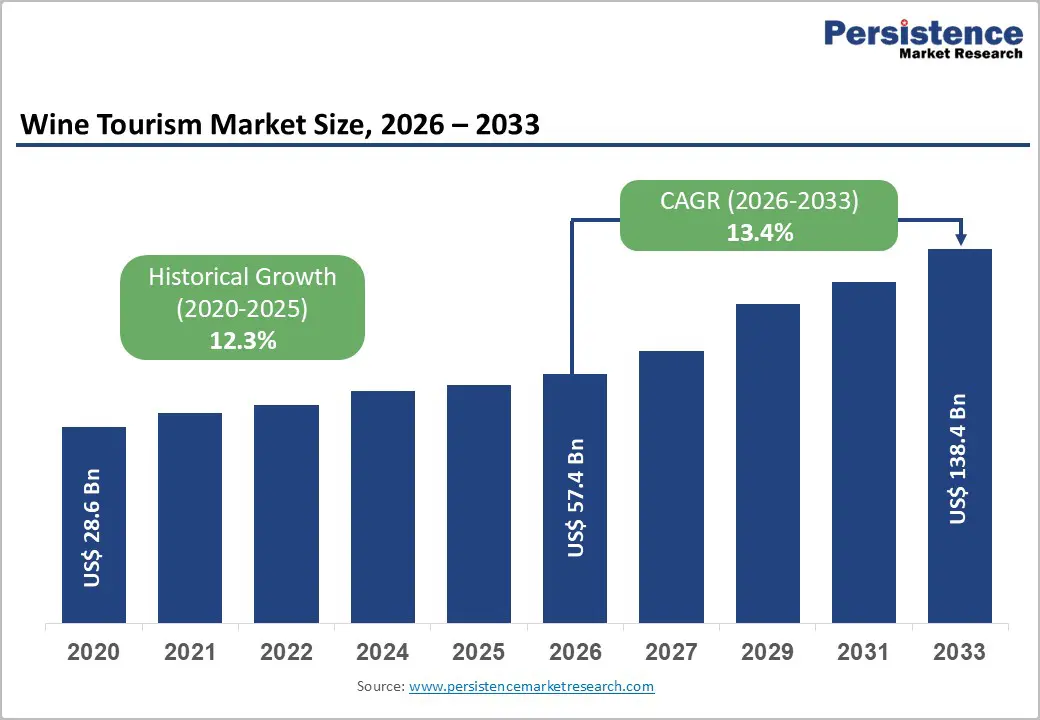
The global wine tourism market size is expected to be valued at US$ 57.4 billion in 2026 and projected to reach US$ 138.4 billion by 2033, growing at a CAGR of 13.4% between 2026 and 2033. Rising disposable incomes and a shift toward experiential travel are propelling demand for immersive vineyard visits, tastings, and cultural experiences.
Globally recognized wine regions such as the Douro Valley and Burgundy Climats are experiencing rising tourist inflows. Additionally, growth in global wine production and a strong rebound in international travel continue to support market expansion, with experiential tourism segments outperforming traditional leisure travel worldwide.
Key Market Highlights
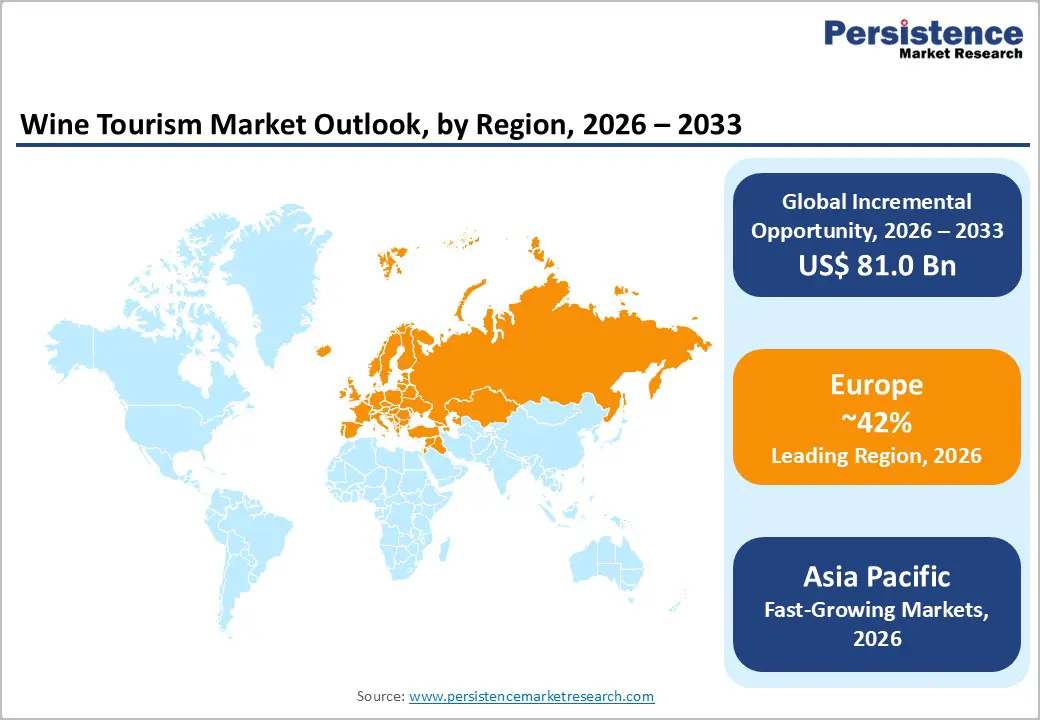
- Leading Region: Europe leads the wine tourism market with about 42% share in 2025, driven by iconic destinations such as Bordeaux, Tuscany, and Rioja, which attract strong international visitor inflows.
- Fastest-Growing Region: Asia Pacific holds around 32% share in 2025 and is the fastest growing region, supported by a CAGR of about 15.2%, driven by rising middle-class demand and expanding wine tourism infrastructure.
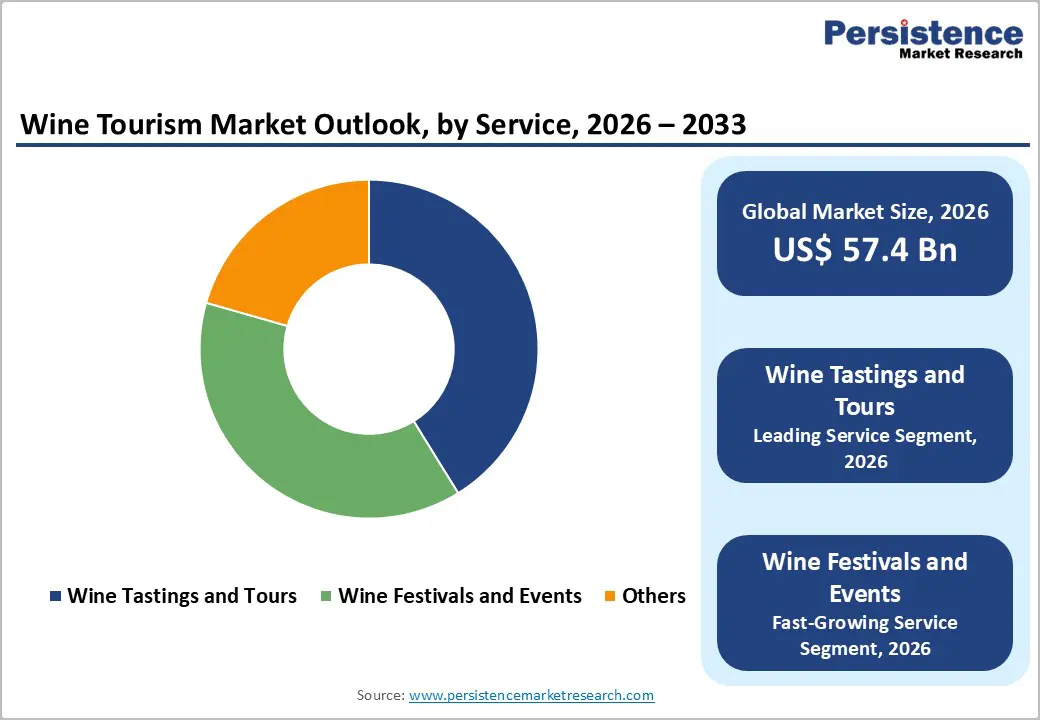
- Leading Category: Wine Tastings and Tours dominate with about 52% share in 2025, as they provide direct access to vineyards, cellar experiences, and guided interactions with winemakers.
- Fastest-Growing Category: Online Marketplaces account for about 45% share in 2025 and are the fastest-growing booking mode, driven by the rising use of digital platforms and mobile-based travel planning.
- Key Market Opportunity: Sustainable wine festivals and experiential events present a key opportunity by combining eco-friendly practices, culture, and gastronomy to attract premium, experience-driven travelers.
| Key Insights | Details |
|---|---|
| Wine Tourism Size (2026E) | US$ 57.4 billion |
| Market Value Forecast (2033F) | US$ 138.4 billion |
| Projected Growth CAGR (2026 - 2033) | 13.4% |
| Historical Market Growth (2020 - 2025) | 12.3% |
Market Dynamics
Market Drivers
Growing Consumer Preference for Immersive and Experiential Travel Activities
Rising demand for experiential travel is significantly driving wine tourism, as travelers increasingly prioritize authentic and immersive experiences over traditional sightseeing. Wine tourism blends leisure, culture, and education, appealing strongly to younger demographics seeking engaging and visually appealing activities. Regions such as Napa Valley continue to witness steady growth in visitor numbers due to curated vineyard tours, tasting sessions, and seasonal harvest participation opportunities.
This shift is transforming wine regions into lifestyle-driven destinations rather than purely production-focused areas. Operators benefit from higher per-visitor spending, repeat visits, and premium experience packages, strengthening long-term revenue streams. Additionally, social media influence and experiential storytelling further amplify demand, positioning wine tourism as a key segment within the broader global travel and hospitality industry.
Increasing Wine Production and Infrastructure Development Enhancing Tourism
The expansion of global wine production and supporting tourism infrastructure is strengthening the wine tourism market. Growth in vineyard acreage across traditional and emerging regions is creating a wider base of destinations for travelers. Established regions such as Tuscany and Bordeaux are enhancing accessibility through improved transport networks and hospitality investments, boosting visitor convenience and overall experience quality.
Infrastructure developments including rail connectivity, cycling routes, and winery accommodations are increasing visitor dwell time and enabling diversified offerings. These improvements allow regions to handle higher tourist volumes while promoting integrated experiences such as wine trails, culinary tourism, and cultural heritage tours, thereby supporting sustained market growth and destination competitiveness.
Market Restraints
Stringent Regulations and Seasonal Demand Limiting Market Stability
Strict alcohol regulations and seasonal demand patterns present key challenges for the wine tourism market. Regulatory bodies often impose restrictions on tasting volumes, operating hours, and on-site sales, limiting visitor capacity and flexibility in experience design. Additionally, wine tourism demand is heavily concentrated around harvest and festival seasons, making revenues highly time-dependent. Regions such as Bordeaux and Rioja have experienced fluctuations due to climate-related disruptions affecting vineyard output.
These seasonal and regulatory constraints create operational uncertainty, particularly for smaller wineries dependent on peak tourist periods. Weather variability, including droughts and inconsistent harvests, further impacts visitor inflow. As a result, operators face challenges in maintaining consistent revenue streams and must explore diversification strategies to mitigate risks associated with seasonality and regulatory limitations.
Economic Uncertainty and Geopolitical Issues Affecting Tourism Demand
Economic volatility and geopolitical tensions significantly impact wine tourism by influencing travel spending and cross-border mobility. During economic slowdowns, discretionary spending on premium experiences such as wine tourism tends to decline, directly affecting visitor numbers. International travel flows are also sensitive to geopolitical developments, including visa restrictions and security concerns, which can disrupt tourism patterns across key wine destinations such as Tuscany and Champagne.
This dependence on global economic stability makes the market vulnerable to external shocks. Regions reliant on high-spending international tourists face greater risks, prompting industry players to focus on domestic tourism, flexible pricing strategies, and diversified offerings to maintain resilience and sustain steady revenue.
Market Opportunities
Rising Adoption of Sustainable Tourism Practices Creating Growth Opportunities
Sustainable tourism and enotourism initiatives are creating strong growth opportunities in the wine tourism market, particularly through eco-conscious wine trails and low-impact experiences. Increasing traveler preference for environmentally responsible destinations is encouraging wineries to adopt sustainability certifications and promote climate-friendly practices. Regions such as the Douro Valley and the Barossa Valley are integrating sustainability into tourism strategies, enhancing their global appeal and attracting conscious travelers.
This shift allows operators to differentiate offerings beyond wine quality by emphasizing environmental stewardship and responsible tourism. It also opens access to policy support and funding for rural development. As a result, wineries can introduce premium-priced sustainable experiences, build long-term customer loyalty, and strengthen brand positioning in an increasingly competitive and sustainability-driven global tourism landscape.
Digital Platforms and Personalization Enhancing Customer Engagement Opportunities
The rapid adoption of digital platforms and data-driven personalization is unlocking significant opportunities in wine tourism, particularly within online booking channels. Travelers increasingly rely on digital marketplaces and direct platforms to discover and book curated wine experiences, including tastings, vineyard tours, and workshops. Advanced tools such as CRM systems and analytics enable operators to deliver personalized recommendations and dynamic pricing based on preferences and seasonal factors.
Additionally, technologies like virtual tastings, AR/VR previews, and interactive maps are expanding audience reach beyond physical visits. This digital transformation enables continuous customer engagement and diversified revenue streams, including subscription-based wine clubs and remote experiences, positioning the market for sustained growth beyond traditional seasonal tourism models.
Category wise Insights
Service Analysis
Wine Tastings and Tours lead the market, accounting for approximately 52% share in 2025. This dominance is driven by their accessibility, shorter duration, and direct engagement with local wines and producers. Major regions such as Napa Valley report that tastings and guided tours generate a significant share of winery tourism revenue, supported by high visitor frequency and premium upgrade options, such as private sessions and curated pairings.
Wine Festivals and Events are emerging as the fastest-growing segment due to their strong appeal in attracting large visitor volumes and seasonal tourism spikes. These events enhance regional branding and encourage extended stays, while experiential formats, such as themed festivals and cultural integrations, continue to boost visitor engagement and spending across diverse wine tourism destinations worldwide.
Tourist Type Analysis
Domestic tourists dominate the market, contributing around 68% of total volume in 2025. This leadership is attributed to proximity advantages, lower travel costs, and strong regional loyalty. In destinations such as Sonoma County, a majority of visitors come from nearby regions, ensuring steady footfall and consistent revenue streams for wineries year-round.
International tourists represent the fastest-growing segment, driven by increasing global interest in wine culture and premium travel experiences. These travelers typically exhibit higher spending patterns and demand curated itineraries, luxury accommodations, and exclusive vineyard access, encouraging operators to expand high-end offerings and tailor experiences to attract global audiences.
Booking Mode Analysis
Online Marketplaces lead the segment, capturing approximately 45% of total bookings in 2025. This dominance is fueled by the growing reliance on digital platforms that offer convenience, transparency, and integrated booking experiences. Travelers prefer centralized platforms with reviews, pricing comparisons, and instant confirmations, making them the preferred choice for planning wine tourism activities across regions such as Tuscany.
Direct Booking is the fastest-growing segment as wineries increasingly invest in their own digital channels to build direct customer relationships. Personalized offerings, exclusive deals, and flexible booking options are encouraging visitors to book directly, enabling operators to improve margins, control customer data, and enhance overall experience customization.
Regional Insights
North America Wine Tourism Market Trends and Insights
North America is a major wine tourism hub led by the United States, with destinations such as Napa Valley and Sonoma attracting millions of visitors annually. The region benefits from a supportive regulatory framework under the Alcohol and Tobacco Tax and Trade Bureau (TTB), enabling direct-to-consumer sales, tasting rooms, and event-based tourism. This has encouraged strong investment in visitor infrastructure, hospitality, and curated wine experiences.
North America is expected to grow at a CAGR of around 12.8% during 2026 - 2033, driven by rising demand for experiential travel. The region is also witnessing rapid digital adoption, including mobile-based bookings, AR-enabled tastings, and personalized wine itineraries. Experiential packages combining wine, food, and outdoor tourism are increasingly preferred, supporting premium pricing and higher visitor spending across key wine-producing states.
Europe Wine Tourism Market Trends and Insights
Europe dominates the wine tourism market with approximately 42% market share in 2025, supported by iconic destinations such as Bordeaux, Tuscany, Rioja, and the Mosel Valley. The region’s appeal is driven by centuries-old winemaking traditions, cultural heritage landscapes, and strong international tourist inflows. France, Italy, and Spain remain central contributors, offering diverse vineyard experiences ranging from luxury château tours to rural wine trails.
Europe continues to maintain leadership through robust regulatory systems like PDO and PGI certifications, ensuring quality consistency and consumer trust. Integrated transport networks and cross-border tourism initiatives further enhance accessibility. These strengths position Europe as a stable and mature market, maintaining its dominance despite rising competition from emerging regions in Asia Pacific and Latin America.
Asia Pacific Wine Tourism Market Trends and Insights
Asia Pacific is the fastest-growing region in the wine tourism market, accounting for approximately 32% of the market share in 2025, driven by rising disposable incomes and expanding interest in premium lifestyle experiences. Countries such as China, India, Japan, Australia, and New Zealand are witnessing the rapid development of vineyard tourism infrastructure. Regions like Ningxia are becoming major investment hubs, supported by government-led tourism initiatives and increasing domestic wine consumption.
A CAGR of around 15.2% further strengthens the region’s growth during 2026 - 2033, the highest globally. Australia and New Zealand serve as established wine tourism destinations, attracting both domestic and international travelers. Meanwhile, China and India are emerging as high-potential markets, where wine tourism is increasingly integrated with cultural, culinary, and wellness experiences, making the Asia Pacific a key future growth engine for the global market.
Competitive Landscape
The wine tourism market is moderately fragmented, with numerous independent wineries and regional tourism operators coexisting alongside a smaller group of large hospitality groups. Small and medium enterprises dominate local offerings, focusing on vineyard tours, tastings, and culturally rich experiences reflecting regional terroir. Larger players are increasingly pursuing partnerships and selective consolidation to expand access to premium destinations and strengthen customer loyalty across key wine regions.
Competition is shifting from price-based rivalry to value-driven differentiation based on sustainability, brand strength, and digital capabilities. Operators are adopting eco-friendly viticulture practices, sustainability certifications, and carbon reduction initiatives. At the same time, digital tools such as CRM systems and personalized platforms enhance engagement, improve customer retention, and support long-term experiential tourism growth strategies.
Key Market Developments
- In March 2025, Treasury Wine Estates launched immersive VR-based vineyard tours for its flagship Australian brands, enabling remote 360-degree exploration of vineyards and cellars, which reportedly increased off-season bookings by approximately 18% during the first quarter.
- In July 2024, Constellation Brands expanded festival-style programming in Napa Valley through partnerships with live event organizers, hosting large-scale wine and music festivals that attracted over 50,000 visitors across multiple weekends, strengthening its experiential tourism positioning.
- In November 2024, Accolade Wines introduced sustainable wine tourism experiences in South Australia certified under the Sustainable Winegrowing Australia framework, incorporating low-impact transport options and carbon offset initiatives to attract environmentally conscious travelers.
Companies Covered in Wine Tourism Market
- WineTourism.com
- Winalist
- BKWine Tours
- Cellar Tours
- Wine Paths
- Grape Escapes
- Castlexperience
- Backcountry Wine Tours
- Pure Luxury Transportation
- González Byass
- Delaire Graff Estate
- Viña Matetic
- Bodega Trapiche
- Ottella Winery
- Rustic Vines
Frequently Asked Questions
The Wine Tourism Market is expected to reach about US$ 57.4 billion in 2026 and grow to around US$ 138.4 billion by 2033 at roughly 13.4% CAGR.
Key demand drivers include experiential travel demand, rising incomes, expanding wine infrastructure, sustainability focus, and rapid digital booking adoption.
Europe leads the market with about 42% share in 2025, supported by strong wine regions like France, Italy, Spain, and Germany.
A key opportunity is the growth of sustainable, premium experiences such as eco-friendly wine trails, festivals, and food and wine tourism packages.
Prominent players include Treasury Wine Estates, Constellation Brands, Accolade Wines, E&J Gallo Winery, The Wine Group, and Casella Family Brands.


