




- Hardware & Software IT Services
- Web Application Firewall Market
Web Application Firewall Market Size, Share, and Growth Forecast, 2026 – 2033
Web Application Firewall Market by Deployment Type (On-Premises, Cloud-Based, Hybrid), Component (Solution, Services), End-user (Banking, Financial Services, and Insurance (BFSI), Retail, Healthcare, Government, IT, Telecommunications), and Regional Analysis for 2026 - 2033

Web Application Firewall Market Share and Trends Analysis
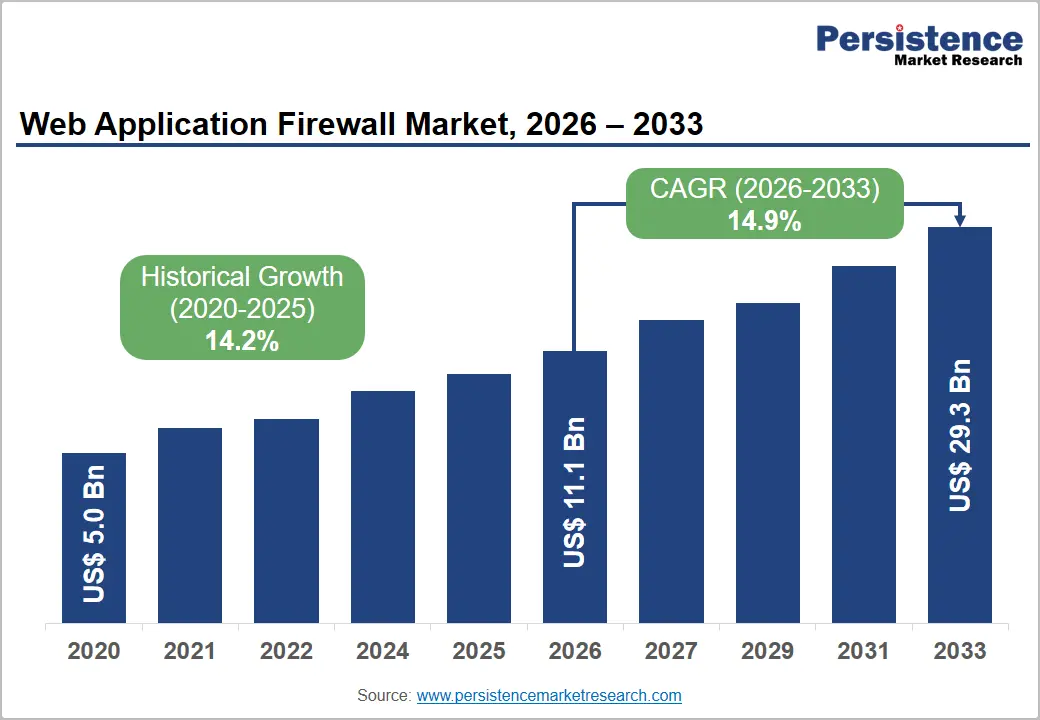
The global web application firewall market size is likely to be valued at US$11.1 billion in 2026 and is estimated to reach US$29.3 billion by 2033, growing at a CAGR of 14.9% during the forecast period 2026 to 2033, driven by the rapid expansion of the digital economy, which is increasing the need for advanced security solutions to safeguard critical enterprise applications and sensitive data. Rising awareness of cybersecurity risks among organizations is encouraging greater investment in application-layer protection technologies. Additionally, the integration of Artificial Intelligence (AI) and Machine Learning (ML) into web application firewall solutions is improving threat detection and automated response capabilities, making these platforms more effective and attractive to end users. The ongoing digital transformation of industries such as healthcare and financial services is further expanding the attack surface, driving demand for sophisticated web application security solutions to mitigate evolving cyber threats.
Key Industry Highlights:
- Leading Deployment Type: The cloud-based segment is set to hold around 62% revenue share in 2026, driven by the demand for scalable and flexible security.
- Fastest-growing Deployment Type: Hybrid is projected as the fastest-growing segment, supported by the integration of legacy systems with cloud environments.
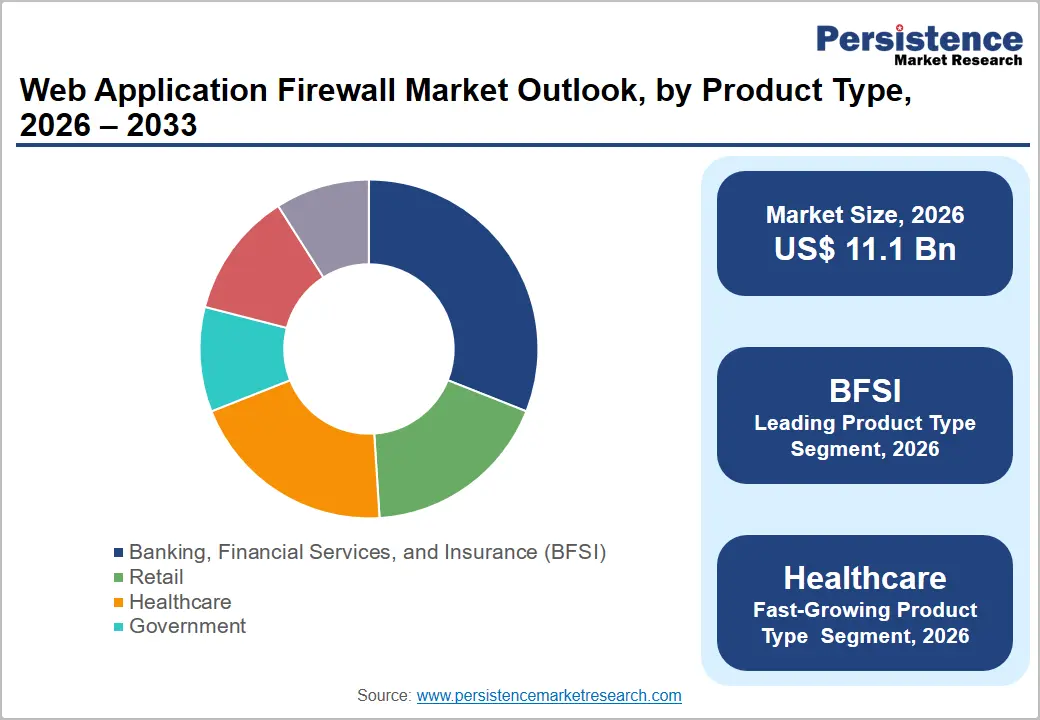
- Leading End-user: The BFSI segment is estimated to hold roughly 31% revenue share in 2026, due to the critical need for protecting sensitive financial assets.
- Fastest-growing End-user: Healthcare is forecast to record the fastest growth, driven by the rapid digitalization of medical infrastructure and telehealth.
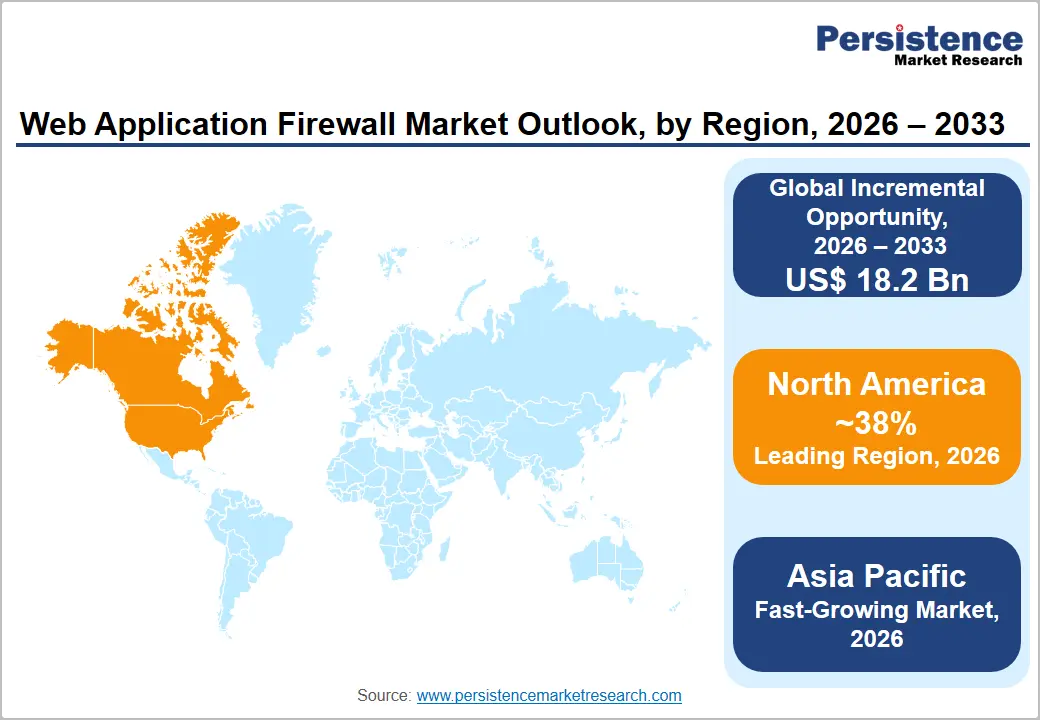
- Regional Leadership: North America is projected to capture roughly 38% of the market share by 2026, while Asia Pacific is forecast to record the fastest growth.
- Competitive Environment: The market reflects a moderately consolidated structure, with key players such as Akamai and Cloudflare leveraging global edge networks.
- Innovation Trends: Technological advancements in AI-driven threat detection and the convergence of API security are shaping long-term investment direction.
DRO Analysis
Driver - Rising Sophistication of Application-Layer Cyberattacks
Frequent emergence of complex vulnerabilities within software architectures necessitates advanced defensive layers. Malicious actors increasingly exploit zero-day flaws and automated injection techniques to bypass traditional network defenses. Such activities threaten enterprise continuity and intellectual property integrity. Systemic shifts toward high-frequency exploits compel organizations to prioritize specialized security infrastructure. This transition effectively mitigates operational risk by neutralizing threats at the entry point. Strategic investment follows the requirement for uninterrupted digital operations.
Modern threat landscapes require granular traffic inspection to identify behavioral anomalies. Basic filtering methods prove insufficient against polymorphic code and API-based exploits. Deployment of intelligent shielding tools reduces the probability of catastrophic system downtime. These assets provide real-time protection while maintaining low latency for legitimate user traffic. Effective mitigation improves digital trust and preserves brand equity. Robust security frameworks directly support digital transformation initiatives by ensuring reliable service delivery across global networks.
Restraint - Shortage of Specialized Cybersecurity Personnel
Insufficient technical expertise limits the effective configuration and management of advanced security solutions. Organizations struggle to maintain optimal defense postures without skilled analysts to interpret complex threat telemetry. This talent deficit creates operational bottlenecks, as misconfigured systems frequently generate excessive false positives. Consequently, enterprises delay deployment to avoid performance degradation.
Limited availability of certified professionals increases internal training expenditures and recruitment costs. Higher wage demands for specialized roles strain IT budgets, restricting capital allocation for new infrastructure. Qualitative risk grows when inadequate staffing leads to unpatched vulnerabilities or overlooked alerts. These human capital constraints directly impede the scalability of comprehensive protection frameworks.
Opportunity - Integration of Artificial Intelligence and Machine Learning
Automated detection capabilities provide a critical advantage in identifying zero-day exploits and polymorphic threats. Traditional signature-based defenses struggle to keep pace with rapid code alterations utilized by modern adversaries. Integrating advanced algorithms enables real-time behavioral analysis to establish baseline traffic patterns and isolate anomalies immediately. According to the European Union Agency for Cybersecurity, AI-supported phishing campaigns represented more than 80% of observed social engineering activity worldwide by early 2025.
Operational efficiency increases as predictive modeling reduces the volume of false positives requiring manual intervention. Security teams utilize these automated insights to prioritize high-risk incidents, effectively optimizing resource allocation across the enterprise. Structural demand rises as organizations seek to maintain low latency while defending increasingly complex API ecosystems. This transition toward autonomous security management supports sustainable digital expansion by neutralizing threats at the network edge. Enhanced detection accuracy preserves system uptime and protects high-value data assets from sophisticated extraction attempts.
Category-wise Analysis
Deployment Type Insights
Cloud-based is anticipated to secure around 62% of the web application firewall market share in 2026, reflecting the massive transition toward decentralized computing and the preference for elastic security models. Organizations utilize Amazon Web Services WAF to achieve rapid deployment. This infrastructure allows real-time global signature updates, ensuring immediate defense against vulnerabilities.
Hybrid is expected to be the fastest-growing segment, propelled by the organizational need to secure legacy on-premises systems while simultaneously protecting emerging cloud workloads. F5 Distributed Cloud Services provides an example of this integration. This model offers optimal flexibility for large enterprises requiring consistent security policy enforcement across diverse environments.
Component Insights
Solutions are poised to dominate with a forecast market share of over 65% in 2026, powered by the primary requirement for core security software and hardware appliances. Enterprise demand for integrated security suites that combine firewalling with both management and API protection drives the high valuation of this segment. Fortinet FortiWeb exemplifies such a solution, offering automated bot mitigation and API discovery features.
Services are estimated to be the fastest-growing segment, fueled by the rising complexity of cyber threats and the internal skills gap within many organizations. Professional and managed services facilitate seamless integration, continuous monitoring, and expert configuration, ensuring that security investments deliver maximum protection against sophisticated application-layer attacks. Orange Cyberdefense Managed WAF provides specialized oversight and real-time policy tuning to optimize performance.
End-user Insights
Banking, financial services, and insurance (BFSI) is likely to be the leading segment with a projected 31% of the web application firewall market share in 2026 due to the extreme sensitivity of financial data. This sector faces stringent regulatory requirements and persistent targeting by high-level threat actors, necessitating premier security solutions.
The healthcare segment is anticipated to be the fastest-growing segment, fueled by the rapid digitalization of patient records and the expansion of telehealth services. The sector increasingly adopts advanced firewall technologies to comply with privacy laws such as the Health Insurance Portability and Accountability Act (HIPAA) while defending against ransomware and data breaches targeting critical medical infrastructure.
Regional Insights
North America Web Application Firewall Market Trends
North America is expected to lead with an estimated 38% of the web application firewall share in 2026, supported by rapid cloud-native adoption and mature digital infrastructure. High concentration of premier technology vendors fosters continuous innovation and competitive solution availability. Strict federal mandates and sectoral compliance standards necessitate robust application-level protection.
U.S. Web Application Firewall Market Insights
The U.S. is projected to account for nearly 82% of North America's revenue in 2026. Dominant providers such as F5, Akamai, and Cloudflare lead the domestic landscape. In early 2026, F5 partnered with NVIDIA to accelerate AI factory security, while Cloudflare enhanced its autonomous mitigation features to defend against post-quantum cryptographic threats.
Canada Web Application Firewall Market Insights
Canada is expected to contribute approximately 18% of North America's revenue in 2026, driven by strict adherence to the Personal Information Protection and Electronic Documents Act (PIPEDA). Prominent entities such as Fortinet, Cisco Systems, and Cloudflare lead the domestic security landscape. Fortinet focused on consolidating its Security Fabric to address local talent shortages through automated, AI-driven mitigation.
Europe Web Application Firewall Market Trends
Europe is anticipated to hold around 31% of the market share in 2026, supported by a rigorous regulatory landscape and advanced technological adoption. Strict enforcement of the Network and Information Systems (NIS2) Directive compels organizations to implement robust application-layer defenses. High demand for data residency and digital sovereignty drives investment in localized cloud security. Unified cybersecurity frameworks across member nations facilitate seamless cross-border threat intelligence sharing.
Germany Web Application Firewall Market Insights
Germany is forecast to represent nearly 23% of Europe's revenue in 2026, driven by the immediate enforcement of the NIS2 Directive. Key domestic players such as Myra Security, Rohde & Schwarz Cybersecurity, and Check Point lead the market. Myra Security integrated post-quantum cryptography into its protection layers to defend critical infrastructure against advanced future threats.
U.K. Web Application Firewall Market Insights
The U.K. is likely to account for approximately 19% of Europe revenue in 2026, driven by high adoption of managed security services and strict regulatory compliance. Leading providers such as Darktrace, Cloudflare, and Akamai characterize the competitive landscape. Organizations prioritize sophisticated application shielding to align with the Telecommunications Security Act and national cybersecurity strategies.
Asia Pacific Web Application Firewall Market Trends
Asia Pacific is forecast to be the fastest-growing market for web application firewall, stimulated by rapid digital transformation and expanding e-commerce ecosystems across emerging economies. Accelerating cloud-native migration among small enterprises necessitates scalable security solutions. Increasing frequency of application-layer attacks drives urgent adoption within the financial sector.
China Web Application Firewall Market Insights
China is projected to contribute nearly 36% of Asia Pacific revenue in 2026. Domestic leaders such as Alibaba Cloud, NSFOCUS, and Sangfor Technologies command significant market presence. Alibaba Cloud enhanced its cloud-native security stack to address triple-digit growth in AI-related product demand, while NSFOCUS focused on specialized API protection and zero-trust architectures to meet rigorous national data sovereignty mandates.
India Web Application Firewall Market Insights
India is expected to account for approximately 21% of Asia Pacific revenue in 2026, fueled by rapid 5G deployment and digital payment proliferation. Leading providers such as Tata Consultancy Services (TCS), Wipro, and Akamai dominate the landscape. TCS expanded its AI-driven Cyber Defense Suite to provide localized, autonomous threat mitigation for the booming fintech sector.
Competitive Landscape
The global web application firewall market reflects a moderately consolidated structure, dominated by a few major players holding significant revenue shares. Entities such as Akamai Technologies, Cloudflare Inc., and Imperva (Thales Group) leverage extensive edge networks. Leadership depends on offering integrated suites featuring bot mitigation, API security, and robust DDoS protection.
Large-scale vendors such as F5, Inc., and Barracuda Networks, Inc. lead the enterprise segment through comprehensive security platforms. Conversely, specialized providers and cloud-native startups introduce fragmentation within the mid-market and niche application areas. Competitive positioning remains defined by the ability to deliver scalable, automated defenses against increasingly sophisticated application-layer exploits.
Key Industry Developments:
- In February 2026, Barracuda Networks announced the launch of a managed Web Application Firewall service in Japan, enabling organizations to secure web applications with integrated DDoS protection, vulnerability scanning, and encryption without requiring in-house cybersecurity expertise amid rising cyber threats.
- In May 2025, Microsoft announced the availability of Content Delivery Network and Web Application Firewall capabilities in Power Pages for the US Government Cloud, enabling organizations to protect web applications from threats such as cross-site scripting while improving performance through integrated edge delivery.
- In March 2025, Progress Software launched a fully managed Web Application Firewall for MOVEit Cloud, strengthening file transfer security by blocking malicious web traffic and enabling organizations to meet PCI DSS 4.0 compliance requirements while simplifying cybersecurity management.
Companies Covered in Web Application Firewall Market
- Akamai Technologies
- Cloudflare Inc.
- Imperva (Thales Group)
- F5, Inc.
- Barracuda Networks, Inc.
- Fortinet, Inc.
- Radware Ltd.
- Palo Alto Networks
- Microsoft Corporation
- Amazon Web Services (AWS)
- Check Point Software Technologies
- Alibaba Cloud
- Qualys, Inc.
Frequently Asked Questions
The global web application firewall market is projected to reach US$11.1 billion in 2026.
Rising cyberattack sophistication and expanding regulatory compliance requirements drive the web application firewall market by increasing enterprise demand for real-time application-layer security solutions.
The web application firewall market is poised to witness a CAGR of 14.9% from 2026 to 2033.
Integration of artificial intelligence in threat detection and expansion of digital infrastructure across emerging economies create key market opportunities by enabling scalable and adaptive web application firewall deployment.
Some of the key market players include Akamai Technologies, Cloudflare Inc., Imperva (Thales Group), F5, Inc., and Barracuda Networks, Inc.


