




- Beverages
- U.S. and Canada Tonic Water Market
U.S. and Canada Tonic Water Market Size, Share, and Growth Forecast 2026 - 2033
U.S. and Canada Tonic Water Market by Product Type (Classic Tonic Water, Diet Tonic Water), by Variety (Unflavored; Flavored), by Packaging Type (Bottles, Cans), by Sales Channel, by Country Analysis, 2026 - 2033

U.S. and Canada Tonic Water Market Size and Trend Analysis
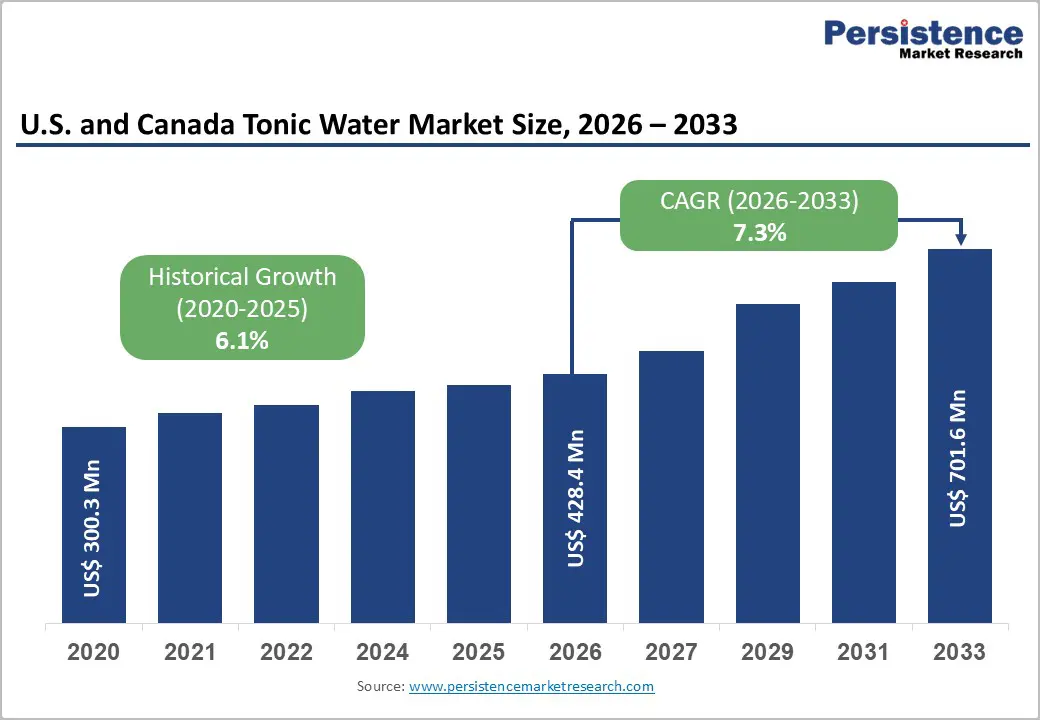
The U.S. and Canada tonic water market size is expected to be valued at US$ 428.4 million in 2026 and projected to reach US$ 701.6 million by 2033, growing at a CAGR of 7.3% between 2026 and 2033.
This robust growth is driven by the expanding cocktail and mocktail culture across the U.S. and Canada, the rapid premiumization of the mixer category, and a decisive consumer pivot toward low-sugar and diet beverage formats. The rise of the no-and-low-alcohol movement has structurally expanded tonic water's role as a premium standalone beverage and sophisticated mixer creating demand beyond its traditional gin-and-tonic application.
According to the Distilled Spirits Council of the United States (DISCUS), spirits consumption in the U.S. reached record levels in 2022, with gin tonic water's primary cocktail partner among the highest-growth spirits categories. Simultaneously, health-conscious consumer preferences for diet and botanically flavored tonic water variants are accelerating product innovation and expanding the category's consumer demographic reach across both markets through 2033.
Key Industry Highlights
- Leading Country - The U.S. holds 86% of the combined U.S. and Canada tonic water market in 2025, driven by strong cocktail culture, premium mixer demand, and extensive retail distribution networks.
- Fastest Growing Country - Canada is the fastest-growing country market (8.5% CAGR, propelled by rapidly growing craft gin production, premium cocktail culture expansion in urban centers, and Statistics Canada-reported consistent spirits sales growth sustaining premium tonic companion demand.
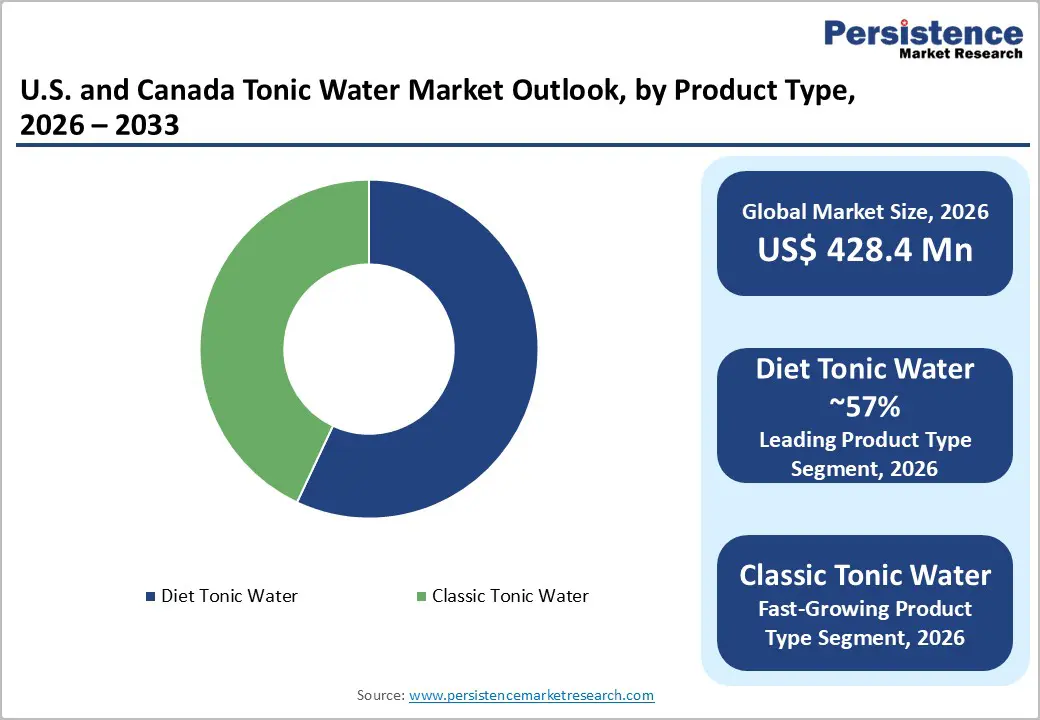
- Dominant Segment - Diet Tonic Water commands 57% market share in 2025, driven by CDC-reported sugar reduction priorities among 45% of U.S. adults and the alignment of zero-calorie tonic formats with health-conscious cocktail and mocktail consumption occasions across both markets.
- Fastest Growing Segment - Herbal and Botanical Flavored Tonic Water is the fastest-growing variety, fuelled by craft spirits enthusiasts seeking premium botanical complexity, the no-and-low movement expanding non-alcoholic occasion drinking, and premium grocery chain shelf space expansion.
- Key Opportunity - Online retail growing at 10%+ annually and botanical tonic water innovation commanding the highest retail price premiums represent the most compelling revenue growth opportunities for premium tonic brands expanding in the U.S. and Canada through 2033.
Market Dynamics
Drivers - Premiumization of the Cocktail Mixer Category and the Craft Spirits Boom
The accelerating premiumization of the cocktail experience across the U.S. and Canada is the most powerful structural driver of the tonic water market. Consumers are increasingly elevating at-home and on-premises cocktail occasions by pairing premium spirits with high-quality artisan mixers transforming tonic water from a commodity ingredient into a premium beverage component worthy of its own brand selection and taste consideration. According to the Distilled Spirits Council of the United States (DISCUS), U.S. spirits sales reached approximately US$ 37.3 billion in 2022 a record high with premium and super-premium segments demonstrating the strongest growth.
In Canada, Statistics Canada reports consistent growth in spirit consumption, particularly in premium gin and vodka tonic water's primary cocktail partners. The craft spirits movement, with over 2,000 craft distilleries now operating across the U.S. per the American Craft Spirits Association (ACSA), has created a vibrant ecosystem of premium mixers led by brands like Q Mixers, Fever-Tree, and Fentimans that compete on ingredient quality, botanical complexity, and carbonation precision, collectively elevating consumer expectations and average selling prices across the tonic water category.
Restraints - Intense Competition from Adjacent Premium Sparkling and Functional Beverages
The U.S. and Canada tonic water market faces significant share competition from a rapidly expanding array of premium sparkling beverages including flavored sparkling water, hard seltzers, and functional sparkling drinks that compete for similar premium refreshment and occasion-beverage occasions. According to Nielsen IQ, the U.S. flavored sparkling water category has grown to over US$ 2.5 billion in retail sales, attracting consumers with zero-calorie, zero-sugar credentials that challenge tonic water's positioning in health-conscious consumer segments.
The abundance of substitute options makes it challenging for tonic water brands to grow consumer frequency and trial beyond their established gin-mixer core user base.
Price Sensitivity and Private-Label Competition in Mass Retail Channels
While premium tonic water brands command significant price premiums with Fever-Tree and Q Mixers retailing at 2-4x the price of conventional alternatives the majority of U.S. and Canadian tonic water volume is sold through price-competitive mass retail channels. Private-label tonic water offerings from major grocery retailers including Walmart, Kroger, and Loblaw Companies are growing, squeezing mid-tier branded products. The Private Label Manufacturers Association (PLMA) reports consistent private-label beverage growth across North American grocery, limiting branded players' ability to sustain volume growth in value-oriented shopper segments.
Opportunities - Botanical and Herbal Flavored Tonic Water the Fastest-Growing Variety Driving Premiumization
Herbal and Botanical Flavored tonic water represents the fastest-growing variety segment in the U.S. and Canada market, driven by consumers' growing sophistication in cocktail and mocktail creation, the craft spirits movement's influence on mixer expectations, and the rise of functional botanical beverages. Tonic variants infused with elderflower, cucumber, rosemary, lavender, Mediterranean herbs, and exotic botanicals exemplified by Fever-Tree's Mediterranean and Elderflower Tonic lines, are experiencing double-digit growth rates and commanding substantial retail price premiums.
According to the American Botanical Council, consumer familiarity and trust in botanical ingredients in beverages has grown substantially, with herbal beverage-related sales data confirming double-digit growth trends across health and specialty retail. Premium grocery chains, including Whole Foods Market, Sprouts Farmers Market, and Total Wine & More, have significantly expanded their botanical mixer shelf space, creating improved retail distribution for innovative herbal tonic brands. Manufacturers investing in proprietary botanical sourcing, distinctive flavor architecture, and artisan brand storytelling are positioned to capture the highest margin growth in this segment through 2033.
Online Retail and Direct-to-Consumer Channel Expansion Enabling Premium Brand Growth
The rapid expansion of online retail encompassing e-commerce platforms, subscription services, and direct-to-consumer (DTC) brand channels represents a compelling strategic growth opportunity for premium tonic water brands in the U.S. and Canada. According to the U.S. Census Bureau, e-commerce food and beverage sales have grown at over 10% annually since 2020, with premium non-alcoholic beverages among the fastest-growing sub-categories. Online channels enable premium tonic brands to reach cocktail-enthusiast consumers beyond traditional retail trade areas, execute curated multi-pack and gift assortment strategies, and build subscription revenue models that deliver predictable recurring demand.
Q Mixers and Fever-Tree have both invested in DTC e-commerce capabilities and Amazon marketplace presence, using these channels to convert consumers to premium products through bundled sampling and gifting. For emerging artisan tonic brands, including Boylan Bottling and Fentimans online channels enable national reach without disproportionate brick-and-mortar distribution investment, making the online channel a critical growth accelerator for the broader premium tonic water market through 2033.
Category-wise Insights
Product Type Analysis
Diet tonic water is expected to lead the mixer market expansion in the U.S. and Canada, owing to changing customer preferences for healthier and lower-calorie beverage options. With an increasing awareness of sugar consumption, particularly among millennials and Gen Z, diet variations have become the preferred option for both at-home mixology and professional bartending. As customers become more aware of ingredients, diet tonic water appeals more to customers.
Its adaptability in premium drinks aligned with health goals makes it a popular choice in high-end restaurants, bars, and lounges. This expansion is fueled by innovations in flavor variety and natural sweetener blends, empowering brands to cater to audiences with existing medical conditions.
Sales Channel Analysis
Hypermarkets and Supermarkets lead the Sales Channel category with approximately 42% market share in 2025. Major grocery chains, including Walmart, Kroger, Albertsons in the U.S. and Loblaw Companies, Sobeys in Canada, serve as the primary point of purchase for tonic water, offering broad brand variety, competitive pricing, and convenient multi-pack purchase formats for at-home cocktail consumption.
HoReCa (hotels, restaurants, and cafés) is the second-largest channel, driven by premium on-premise cocktail programs and the professional bartender community's strong influence on consumer brand preferences, with brands such as Fever-Tree building significant category authority through on-premise placement in high-end cocktail bars and hotel programs. Online Retail is the fastest-growing sales channel, expanding at double-digit rates as consumers use Amazon, Drizly, and branded DTC platforms to purchase premium tonic multi-packs and specialty botanical varieties unavailable in local retail.
Regional Insights
U.S. Tonic Water Market Trends and Insights
The U.S. dominates the North American tonic water market with approximately 86% of the combined U.S. and Canada market share in 2025, supported by the world's most sophisticated cocktail culture, the highest spirits consumption per capita among comparable markets, and an extremely dynamic premium mixer innovation ecosystem. The Distilled Spirits Council of the United States (DISCUS) reports record U.S. spirits sales exceeding US$ 37 billion in 2022, creating a massive and growing demand base for premium tonic as a cocktail companion.
The American Craft Spirits Association (ACSA) reports over 2,000 active craft distilleries nationally, a density that cultivates sophisticated consumer palates and drives premium mixer adoption.
The U.S. market is also a global hub for tonic water innovation, with brands like Q Mixers, Betty Buzz, and Boylan Bottling pioneering new flavor architectures, dietary formats, and packaging innovations. The FDA's well-established framework for quinine-containing beverages and GRAS-status botanical flavor ingredients provides regulatory clarity supporting product innovation. The no-and-low-alcohol movement, growing at over 31% in the U.S. per IWSR data is particularly strong in major metropolitan markets, including New York, Los Angeles, Chicago, and San Francisco, creating premium tonic demand among non-drinkers and moderators who prioritize sophisticated beverage experiences.
Canada Tonic Water Market Trends and Insights
Canada is the fastest-growing country market within the U.S. and Canada Tonic Water market, expanding at an estimated CAGR of approximately 8.5% through 2033, outpacing the regional average. Canada's tonic water market is benefiting from a convergence of rising cocktail culture, premiumization of at-home entertaining, and the rapid growth of the Canadian craft spirits and craft gin industry. Statistics Canada reports consistent growth in spirit sales nationally, with premium gin brands including Canadian craft gins from Dillon's Distillers, Collective Arts, and Last Straw Distillery building strong followings that create natural companion demand for premium tonic water.
Canada's multicultural urban centers, particularly Toronto, Vancouver, and Montreal, are vibrant cocktail culture hubs where premium international mixer brands, including Fever-Tree and Fentimans have built strong on-premise and retail presence. Health Canada's food and beverage regulatory framework which mirrors FDA standards in its quinine and botanical ingredient approvals, provides a straightforward compliance pathway for U.S.-origin tonic water brands expanding into Canada.
The growth of premium grocery retail and specialty liquor stores in Canadian urban markets is expanding premium tonic shelf presence, while online spirits delivery platforms, including Drizly Canada and LCBO online are making premium tonic purchasing increasingly accessible to cocktail-enthusiast consumers across the country.
Competitive Landscape
The U.S. & Canada tonic water market is highly competitive, dynamic and characterized by both established beverage giants and niche premium brands vying for consumer attention. Companies are continuously exploring unique flavor combinations, organic ingredients, and natural sweeteners to cater to evolving consumer preferences. In addition to product innovation, significant investments are made in cutting-edge bottling methods, environmentally friendly packaging, and robust sales channels.
Brands are using conventional retail and on-premises channels in addition to direct-to-consumer (DTC) e-commerce platforms for maximum customer reach. Restaurants and bars serve as influential points of sale, where premium positioning and bartender recommendations help shape brand perception.
Key Developments:
- In February 2025, Boylan Bottling Co. reaffirmed domestic manufacturing and ensured that all its products are made exclusively with 100% U.S.-sourced components and raw materials.
- In January 2025, Fever-Tree entered a long-term strategic partnership with Molson Coors for the exclusive sales, distribution, and production of the Fever-Tree brand in the U.S.
- In October 2024, Dappled Tonic entered the U.S. tonic water market with the launch of its new range of mixers. The brand introduced three distinct variants: Citrus, Floral, and Aromatic.
- In November 2023, Q Mixers unveiled a refreshed visual identity, embracing a bold and vibrant design aesthetic that reflects the premium and lively nature of its mixers. This rebranding initiative introduced vivid packaging and a modernized brand look aimed at enhancing shelf appeal and aligning with evolving consumer tastes.
U.S. and Canada Tonic Water Market - Key Insights & Details
| Key Insights | Details |
|---|---|
| Historical Market Value (2020) | US$ 300.2 Million |
| Projected Market Value (2026) | US$ 428.4 Million |
| Projected Market Value (2033) | US$ 701.6 Million |
| CAGR (2026 - 2033) | 7.3% |
| Leading Country | U.S., 86% share |
| Dominant Product Type | Diet Tonic Water, 57% share |
| Top-ranking Variety | Unflavoured, 64% share |
| Incremental Opportunity | US$ 273.2 Million |
Companies Covered in U.S. and Canada Tonic Water Market
- Q Mixers
- Keurig Dr Pepper, Inc.
- The Coca-Cola Company
- Fever-Tree
- PepsiCo, Inc.
- Fentimans
- White Rock Products Corporation
- Britvic plc
- SodaStream Inc.
- Betty Buzz
- Boylan Bottling
- Others
Frequently Asked Questions
The U.S. and Canada market is estimated to be valued at US$ 428.4 million in 2026.
The rising popularity of premium spirits and craft cocktails is fueling the increasing demand for tonic water in the U.S. and Canadian markets.
The U.S. leads in tonic water consumption, accounting for approximately 86% of the total market share in the U.S. and Canada tonic water market.
Diet Tonic Water is the most popular and in-demand product type in the U.S. and Canada Tonic Water market.
Q Mixers, Keurig Dr Pepper, Inc., The Coca-Cola Company, Fever-Tree, PepsiCo, Inc., Fentimans, etc. are the leading players in the U.S. and Canada Tonic Water market.


