




- Pharmaceuticals
- Sleep Paralysis Treatment Market
Sleep Paralysis Treatment Market Size, Share, and Growth Forecast 2026 - 2033
Sleep Paralysis Treatment Market by Treatment Type (Medication, Cognitive Behavioral Therapy), Indication (Isolated Sleep Paralysis, Narcolepsy-associated Sleep Paralysis), Distribution Channel (Hospital Pharmacies), and Regional Analysis, 2026 - 2033

Sleep Paralysis Treatment Market Size and Trends Analysis
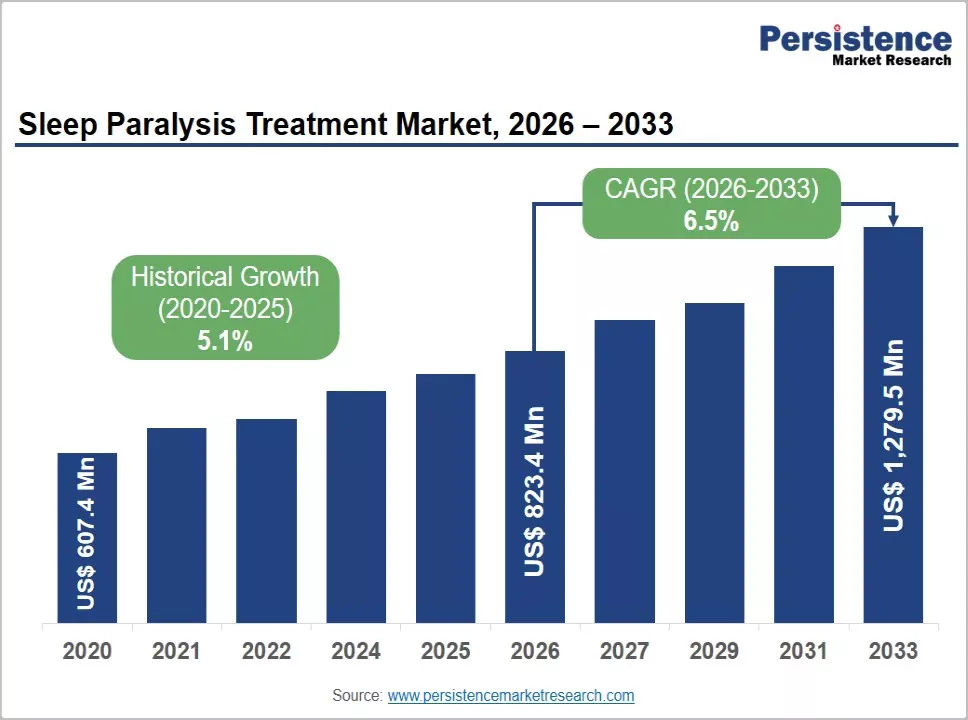
The global sleep paralysis treatment market size is likely to be valued at US$823.4 million in 2026 and is estimated to reach US$1,279.5 million by 2033, growing at a CAGR of 6.5% during the forecast period from 2026 to 2033, driven by greater recognition of sleep paralysis and rising diagnosis of associated sleep disorders. Treatment remains focused on preventing episodes and managing underlying causes. Sleep hygiene, behavioral interventions, and medicines used for associated disorders are gaining attention as awareness improves.
Key Industry Highlights:
- Leading Treatment Type: Medication, about 47.8% share in 2026, as pharmacological treatment is widely used when sleep paralysis occurs with narcolepsy or other sleep and mental health conditions.
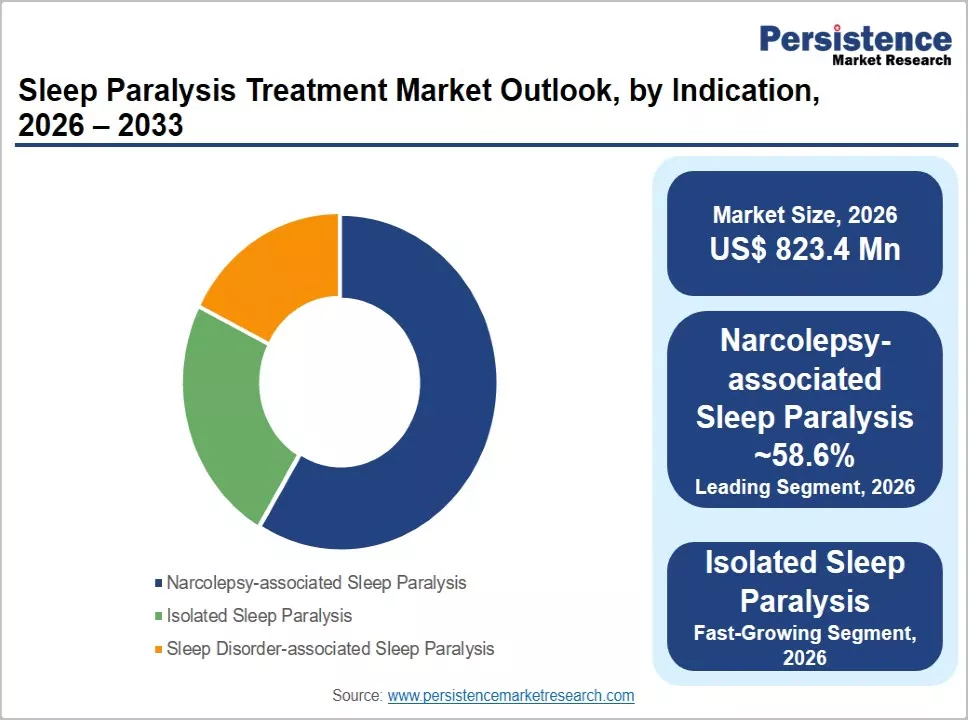
- Dominant Indication: Narcolepsy-associated sleep paralysis, around 58.6% share in 2026, as narcolepsy can cause recurrent sleep paralysis alongside other REM-related symptoms.
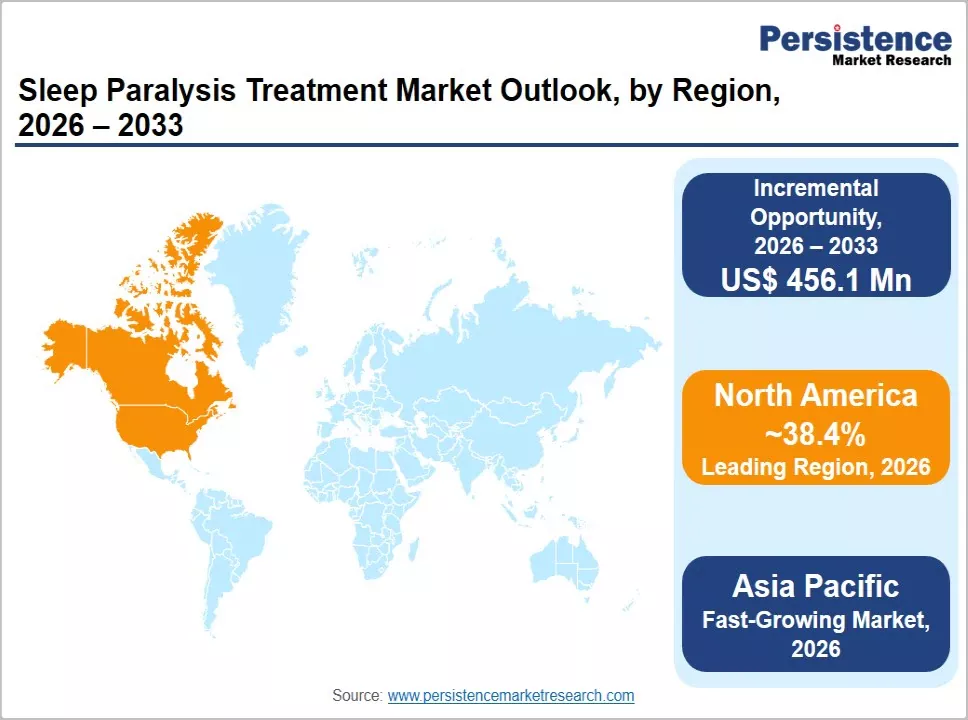
- Leading Region: North America, with about 38.4% share in 2026, supported by established sleep-medicine services, awareness, and access to prescription therapies.
- Fast-growing Region: Asia Pacific, due to a large young population, rising sleep-health awareness, and expanding access to specialist care.
- Latest Study: In September 2025, a cross-sectional study published in the Journal of Clinical Neuroscience examined the relationship between sleep quality, stress, and isolated sleep paralysis. The study found that poor sleep quality was associated with more frequent sleep paralysis episodes, while moderate stress was associated with higher prevalence, supporting sleep-quality and stress-management approaches as potential areas for intervention.
DRO Analysis
Driver - Rising Recognition of Sleep Paralysis and Associated Sleep Disorders
Sleep paralysis is receiving more attention as sleep medicine expands. A 2024 systematic review and meta-analysis covering 76 studies and 167,133 participants estimated global sleep paralysis prevalence at 30%. The estimate varied sharply across populations, showing the importance of diagnosis and patient awareness. Students and psychiatric populations reported higher rates than the general population.
U.S. longitudinal data also show a meaningful burden. In a representative study, 9.7% of adults reported at least one sleep paralysis episode in the previous year at the first assessment. The share reached 15.1% at the second assessment three years later. Such findings create demand for better screening, patient education, and management of recurring episodes.
Narcolepsy to Support Demand for Pharmacological Treatment
Sleep paralysis is a recognized symptom of narcolepsy. Patients may also experience excessive daytime sleepiness, cataplexy, hallucinations, and disrupted nighttime sleep. This creates a treatment pathway beyond isolated sleep paralysis. Clinicians can address the underlying disorder and reduce related REM symptoms.
The U.S. FDA approved WAKIX for narcolepsy and expanded its pediatric indication in 2026. The updated labeling covers excessive daytime sleepiness or cataplexy in patients 6 years and older. These broader treatment options can increase access to medicines that manage narcolepsy-associated symptoms.
Restraint - Lack of a Direct Episode-aborting Medicine May Hinder Growth
A major restraint is the absence of an established medicine that can reliably stop an isolated sleep paralysis episode while it is happening. Current management focuses on sleep hygiene and treatment of underlying conditions. Some medicines that suppress REM sleep may be used in selected cases, but they are generally prescribed for the underlying disorder rather than as a direct cure for isolated episodes.
This limits the size of the standalone pharmaceutical opportunity. It also places greater emphasis on behavioral care, patient education, and sleep-specialist services. Evidence for direct interventions remains limited. Small studies of meditation-relaxation approaches are promising but require larger controlled trials.
Opportunity - Orexin-targeted Therapies to Expand Narcolepsy-linked Treatment
Orexin biology is creating a new treatment pathway for narcolepsy. In August 2026, the FDA approved Orzeyful for adults with narcolepsy type 1. It is the first approved medicine to directly restore orexin signaling for the full disorder. In two randomized 12-week studies involving 273 adults, the treatment improved daytime wakefulness and reduced cataplexy.
The FDA also reported improvements in sleep paralysis, hallucinations, and disrupted nighttime sleep. This development can widen the addressable treatment pool for sleep paralysis associated with narcolepsy. It may also encourage research into REM regulation and orexin-related mechanisms.
Digital and Behavioral Care to Create New Service Opportunities
Behavioral care offers another opportunity. Sleep hygiene is a common part of management as irregular sleep, sleep deprivation, and poor sleep quality can increase episodes. Regular sleep schedules, adequate sleep duration, and reducing evening stimulants are commonly recommended.
Digital sleep platforms can support these behaviors through sleep diaries, reminders, relaxation exercises, and educational content. Sleep clinics can also combine behavioral guidance with screening for narcolepsy, insomnia, sleep apnea, anxiety, and other conditions. This creates opportunities for integrated treatment pathways rather than drug-only models.
Category-wise Analysis
Treatment Type Insights
The medication is predicted to lead with a share of about 47.8% in 2026, as drug therapy plays an important role when sleep paralysis is linked to narcolepsy. Medicines can target excessive daytime sleepiness, cataplexy, or REM-related symptoms. Examples include pitolisant and sodium oxybate products used in narcolepsy care. These medicines are not broadly approved as direct treatments for isolated sleep paralysis.
Cognitive behavioral therapy is expected to be the fastest-growing treatment type over the forecast period, as providers seek non-drug approaches for recurring episodes, anxiety, and poor sleep habits. Behavioral interventions can include psychoeducation, cognitive restructuring, relaxation, and sleep-schedule management. The evidence base remains smaller than that for established narcolepsy medicines, leaving room for clinical research and standardized treatment protocols.
Indication Insights
Narcolepsy-associated sleep paralysis is anticipated to dominate with a share of around 58.6% in 2026, as narcolepsy patients can experience several REM intrusion symptoms together. Treating the underlying disorder can therefore address a broader symptom burden. New therapies are also improving the narcolepsy treatment landscape. In 2026, the FDA expanded WAKIX use in pediatric narcolepsy and approved Orzeyful for adults with narcolepsy type 1.
Isolated sleep paralysis is expected to be the faster-growing indication over the forecast period, supported by wider public awareness and improved recognition of recurring episodes. Most isolated cases do not require drug therapy. Patients are often advised to improve sleep schedules, reduce sleep deprivation, and address stress or other triggers. Specialist referral becomes more relevant when episodes are frequent, distressing, or associated with daytime sleepiness or other symptoms.
Regional Insights
North America Sleep Paralysis Treatment Market Trends
North America is predicted to dominate with a global share of approximately 38.4%, supported by mature sleep-medicine infrastructure, specialist clinics, established pharmaceutical distribution, and high awareness of sleep disorders. The U.S. remains the major contributor. Demand is supported by diagnosis and treatment of narcolepsy, insomnia, anxiety, and other conditions associated with sleep paralysis. The region also benefits from active research and rapid adoption of newly approved sleep medicines.
U.S. Sleep Paralysis Treatment Market Trends
A share of nearly 65.4% is expected to be held by the U.S. in 2026 in North America, due to its large healthcare system and strong presence of sleep centers. U.S. clinical practice commonly focuses on improving sleep habits and treating underlying conditions. Prescription medicines are more relevant when sleep paralysis occurs with narcolepsy. The regulatory environment is also expanding treatment choices. In August 2026, the FDA approved Orzeyful for adults with narcolepsy type 1. In February 2026, the FDA updated WAKIX approval to cover excessive daytime sleepiness or cataplexy in patients 6 years and older. These developments support broader management of REM-related symptoms.
Asia Pacific Sleep Paralysis Treatment Market Trends
Asia Pacific is anticipated to be the fastest-growing region, driven by a large young population, changing sleep patterns, urbanization, and expanding awareness of sleep health. A 2026 systematic review of South Asian studies examined 23 studies involving 5,520 participants and highlighted wide variation in sleep paralysis prevalence across populations. Such variation points to a need for better screening and culturally appropriate patient education.
China Sleep Paralysis Treatment Market Trends
China will likely lead in Asia Pacific in 2026 with a share of about 37.8%, as its large population and expanding hospital network support greater access to sleep-related care. Earlier research among Chinese adolescents found a 6.77% prevalence of sleep paralysis and linked episodes with factors such as poor subjective sleep quality and alcohol use. Greater awareness among young people and growth in specialist services can support demand for diagnosis and behavioral management.
India Sleep Paralysis Treatment Market Trends
In 2026, India is projected to account for a share of just about 15.4% in Asia Pacific, supported by its young population, growing health awareness, and expanding access to specialist services. A 2024 study of medical students in India examined sleep paralysis prevalence and associated factors. The growing research base can improve recognition of sleep paralysis in young adults. Better awareness can also encourage patients with recurrent episodes to seek medical advice.
Europe Sleep Paralysis Treatment Market Trends
Europe will witness steady growth over the forecast period with a share of roughly 26.2% in 2026 globally, supported by established sleep clinics, prescription access, and public healthcare systems. Narcolepsy management remains an important treatment pathway. Pitolisant is authorized in Europe for narcolepsy in adults, adolescents, and children from age 6, with or without cataplexy. This supports access to pharmacological treatment for patients with narcolepsy-associated REM symptoms.
Germany Sleep Paralysis Treatment Market Trends
Germany is predicted to register a substantial share of approximately 24.8% in 2026 in Europe, due to its strong healthcare infrastructure and established sleep-medicine services. Sleep disorders are evaluated through specialist practices and clinics, supporting diagnosis when recurring paralysis occurs with daytime sleepiness or other symptoms. Demand is also supported by access to prescription therapies used for narcolepsy.
U.K. Sleep Paralysis Treatment Market Trends
A share of nearly 19.6% is predicted to be held by the U.K. in 2026 in Europe, with demand shaped by access to National Health Service sleep services and growing awareness of sleep disorders. NHS guidance recommends regular sleep schedules, adequate sleep duration, and avoiding alcohol and caffeine near bedtime to help prevent episodes. Patients with frequent or distressing episodes may be assessed for underlying conditions and referred to sleep specialists.
Competitive Landscape
The global sleep paralysis treatment market is fragmented as no single therapy directly treats all forms of sleep paralysis. Pharmaceutical companies compete mainly through medicines for narcolepsy and related sleep disorders. Sleep clinics, behavioral health providers, digital sleep platforms, and wellness services form another layer of competition.
Competition is shifting toward therapies that address underlying mechanisms and broader symptom clusters. Pitolisant and sodium oxybate products remain established options in narcolepsy care. New orexin-targeted therapy adds another mechanism to the market. Companies also compete through pediatric indications, dosing convenience, safety profiles, specialist support, and reimbursement access.
Key Industry Developments:
- In August 2026, the U.S. FDA approved Takeda's Orzeyful (oveporexton) for adults with narcolepsy type 1, marking the first medicine approved to address the full range of symptoms associated with the disorder. The FDA reported that the clinical studies showed improvements in daytime sleepiness, cataplexy, sleep paralysis, hallucinations, and disrupted nighttime sleep, making the approval particularly relevant to narcolepsy-associated sleep paralysis.
- In May 2026, Phase 3 analyses of oveporexton showed significant reductions in sleep paralysis and other REM-related symptoms in people with narcolepsy type 1. Data presented at SLEEP 2026 showed that treatment improved REM sleep architecture and significantly reduced patient-reported sleep paralysis and hallucinations across the Phase 3 studies.
- In May 2026, a systematic review presented at the SLEEP 2026 meeting evaluated non-pharmacological interventions for central disorders of hypersomnolence, including narcolepsy. The review identified cognitive behavioral therapy, mindfulness, meditation-relaxation therapy, and sleep-schedule interventions among the approaches studied, and reported that meditation-relaxation therapy showed significant improvement in sleep paralysis in the available pilot evidence.
Companies Covered in Sleep Paralysis Treatment Market
- Takeda Pharmaceutical Company Limited
- Harmony Biosciences Holdings, Inc.
- Avadel Pharmaceuticals plc
- Jazz Pharmaceuticals plc
- Teva Pharmaceutical Industries Ltd.
- Novartis AG
- Axsome Therapeutics, Inc.
- Bioprojet
- Eisai Co., Ltd.
- Pfizer Inc.
- Others
Frequently Asked Questions
The global sleep paralysis treatment market is projected to be valued at US$823.4 million in 2026.
The sleep paralysis treatment market is expected to reach US$1,279.5 million by 2033.
Key market trends include surging recognition of recurring sleep paralysis, growth in behavioral and sleep-hygiene interventions, expanding treatment options for narcolepsy, and development of orexin-targeted therapies.
Medication is expected to be the leading treatment type with a share of around 47.8% in 2026, as pharmacological therapies are widely used for narcolepsy-associated sleep paralysis and related sleep symptoms.
The sleep paralysis treatment market is expected to grow at a CAGR of 6.5% from 2026 to 2033.
Takeda Pharmaceutical Company Limited, Harmony Biosciences Holdings, Inc., and Avadel Pharmaceuticals plc are a few key market players.


