




- Nutraceuticals & Functional Foods
- Prenatal Vitamin Supplement Market
Prenatal Vitamin Supplement Market Size, Share, and Growth Forecast 2026 - 2033
Prenatal Vitamin Supplement Market by Product (Capsules/Tablets, Powder, Gummy, Liquid, Others), by Nature (Organic, Conventional), Distribution Channel (Supermarkets & Hypermarkets, Pharmacy & Drug Stores, Online, Others), and Regional Analysis, 2026 - 2033

Prenatal Vitamin Supplement Market Size and Trend Analysis
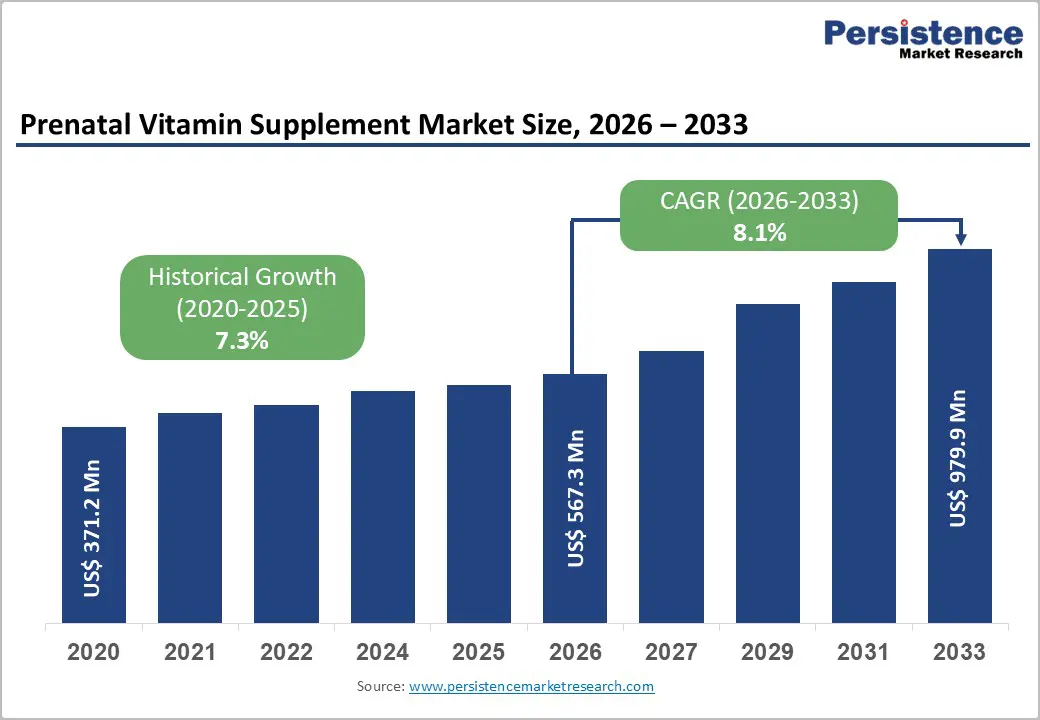
The global prenatal vitamin supplement market size is expected to be valued at US$ 567.3 million in 2026 and projected to reach US$ 979.9 million by 2033, growing at a CAGR of 8.1% between 2026 and 2033.
The market is witnessing steady growth due to increasing awareness about maternal health and the importance of proper nutrition during pregnancy. Prenatal vitamins are specially formulated supplements that provide essential nutrients such as folic acid, iron, calcium, iodine, and DHA, which support fetal development and reduce the risk of birth defects. Rising global birth rates in developing regions, growing healthcare awareness, and recommendations from healthcare professionals are driving market demand. Product availability through pharmacies, online platforms, and healthcare providers is improving accessibility. Manufacturers are also introducing advanced formulations, including organic and plant-based supplements, to meet evolving consumer preferences.
Key Industry Highlights:
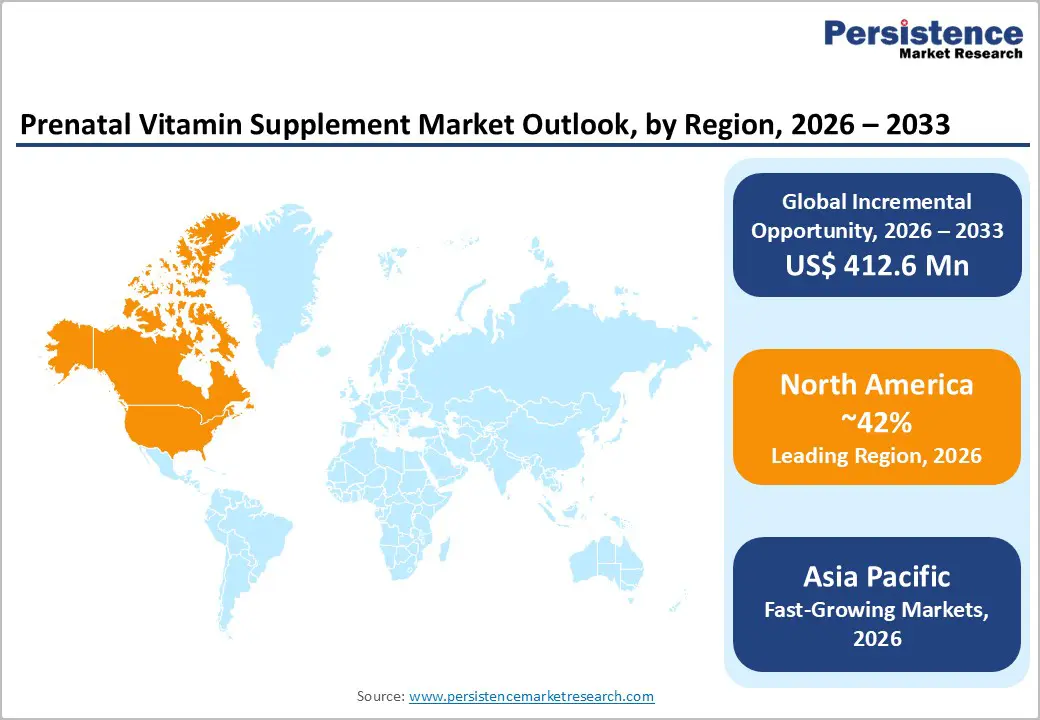
- Regional Leadership: North America leads the prenatal vitamin supplement market due to strong prenatal care systems, physician recommendations, and wide availability through pharmacies and online platforms.
- Asia Pacific is the fastest-growing region, driven by rising incomes, urbanization, and expanding maternal health programs in countries such as China and India.
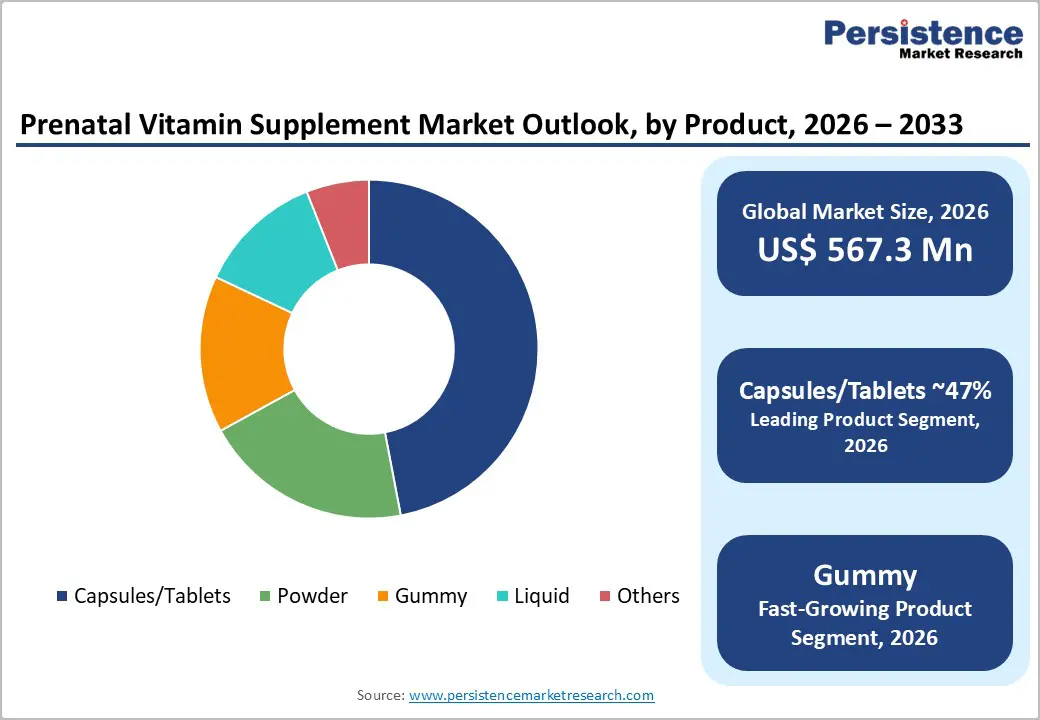
- Capsules and tablets dominate the market, accounting for nearly half of revenues due to standardized dosing, clinical acceptance, and suitability for hospital distribution.
- Gummy and liquid prenatal vitamins are rapidly growing, addressing pill fatigue, improving taste and compliance, and aligning with consumer preference for convenient supplement formats.
- Premium and personalized formulations offer major opportunities, integrating evidence-based nutrients with subscription delivery, digital health platforms, telehealth support, and personalized maternal nutrition guidance.
| Key Insights | Details |
|---|---|
| Prenatal Vitamin Supplement Market Size (2026E) | US$ 567.3 million |
| Market Value Forecast (2033F) | US$ 979.9 million |
| Projected Growth CAGR (2026 - 2033) | 8.1% |
| Historical Market Growth (2020 - 2025) | 7.3% |
Market Dynamics
Drivers - Growing clinical emphasis on folic acid and multiple micronutrients in pregnancy
A critical growth driver is the strong clinical consensus that prenatal vitamins help prevent serious birth defects and maternal complications when taken before conception and throughout pregnancy. The American College of Obstetricians and Gynecologists (ACOG) recommends that women who may become pregnant take a prenatal vitamin containing at least 400 micrograms of folic acid daily beginning at least 1 month before conception to reduce neural tube defects, with higher doses for high-risk women. The World Health Organization (WHO) has long recommended iron-folic acid supplements in pregnancy to prevent and treat gestational anemia and increasingly recognizes multiple micronutrient supplements that combine additional vitamins and minerals. These guidelines are echoed by organizations such as the National Institutes of Health (NIH) and RCOG, which underscore that diet alone may not meet elevated requirements for iron, folate, iodine, vitamin D, and calcium during pregnancy, reinforcing routine use of prenatal multivitamins.
Rising pregnancy risk factors and expanding access to prenatal care
The prenatal vitamin supplement market also benefits from demographic and lifestyle trends that heighten the perceived need for targeted nutrition. Many high- and middle-income countries are seeing women delay childbearing into their 30s and beyond, which correlates with higher risks of gestational diabetes, hypertension, and other complications that increase the importance of optimal micronutrient status. At the same time, global initiatives to expand antenatal care such as WHO recommendations for at least 8 antenatal contacts and national programs to distribute iron-folic acid tablets expose more women to counseling about prenatal vitamins. In the U.S., surveys suggest that roughly 70-80% of pregnant patients report using a prenatal vitamin, yet gaps relative to recommended intakes persist, motivating clinicians to reinforce supplementation and driving steady demand for diverse product formats and strengths.
Restraints - Variability in formulations and misalignment with clinical guidelines
One key restraint is significant variability in the composition and quality of commercially available prenatal vitamins, with many products not fully meeting guideline-recommended nutrient levels. A 2023 evaluation of over-the-counter prenatal vitamins sold in the U.S. found that while approximately 78% of pregnant patients reported taking prenatal vitamins, many formulations failed to provide recommended amounts of nutrients such as iron, choline, iodine, and vitamin D, or exceeded tolerable upper intake levels for others. This misalignment creates confusion among prescribers and patients, raises concerns about under- or over-supplementation, and may prompt some healthcare professionals to favor prescription-only or hospital-supplied formulations, limiting growth for certain retail brands.
Regulatory scrutiny and risk of excessive intake
Regulators also caution against indiscriminate use of high-dose supplements in pregnancy, especially for fat-soluble vitamins such as vitamin A, where excess intake has been linked to teratogenic effects. Professional societies including ACOG and RCOG emphasize that women who require higher folic acid doses to mitigate neural tube defect risk should receive separate folic acid tablets rather than multiple prenatal vitamins, to avoid vitamin A toxicity. This need for clinical supervision, combined with the message that a healthy diet should remain the foundation of pregnancy nutrition, can temper consumer expectations that supplements alone guarantee optimal outcomes and may limit over-the-counter self-prescription without healthcare provider advice.
Opportunities -Premium, evidence-based formulations and personalized nutrition
There is substantial opportunity for companies that develop premium prenatal vitamins aligned closely with evolving clinical guidance and emerging evidence on nutrients such as choline, omega-3 fatty acids, and vitamin D. Research synthesized by pharmacy and obstetric experts highlights the importance of addressing common deficiencies including iron, iodine, and vitamin D through balanced formulations while avoiding unnecessary megadoses. Brands that transparently label nutrient levels, use bioavailable forms (for example, L-methylfolate rather than synthetic folic acid for certain consumers), and publish clinical data on tolerability and outcomes can differentiate themselves in crowded pharmacy shelves and online marketplaces. Coupling such products with digitally enabled personalized recommendation tools that account for diet, lab results, and comorbidities offers further scope to capture higher-value segments of the prenatal vitamin supplement market.
Gummy and organic formats and expansion in emerging markets
Another major opportunity lies in fast-growing product formats and geographies. Gummy prenatal vitamins, flavored liquids, and easy-to-mix powders appeal to women who struggle with swallowing large tablets or experience nausea in early pregnancy, improving compliance and broadening the addressable consumer base. In parallel, demand for organic and "clean-label" prenatal vitamins that avoid artificial colors, preservatives, and genetically modified ingredients is rising among health-conscious consumers, particularly in North America and Europe, while also gaining traction in urban centers across Asia Pacific. Emerging economies with large birth cohorts and expanding antenatal care such as India, China, and parts of Latin America offer significant white space for both over the counter and government-supported distribution of prenatal vitamin supplements, especially via pharmacies, maternal-health clinics, and rapidly growing e-commerce platforms.
Category-wise Insights
By Product
Capsules and tablets are the leading product segment in the prenatal vitamin supplement market, accounting for roughly 47% of global revenues in 2025 thanks to their established role in clinical practice and reimbursement pathways. Obstetricians, midwives, and pharmacists have decades of experience prescribing or recommending tablet and capsule prenatal vitamins containing folic acid, iron, and other key micronutrients, which supports high levels of trust and adherence. Solid-dose forms also allow for precise control over nutrient content and are easier to store, transport, and distribute through hospital systems and public-health programs than liquids or gummies. While newer formats such as gummies and drink mixes are growing rapidly, tablets and capsules remain the default choice in clinical guidelines and formularies across North America, Europe, and many Asia Pacific health systems, underpinning their dominant market share.
By Distribution Channel
Pharmacy and drug stores constitute the leading distribution channel for prenatal vitamin supplements, mirroring the broader pattern in maternal health products where pharmacists and obstetric providers play a central advisory role. In the U.S. and much of Europe, retail and hospital-based pharmacies are the primary points of dispensing both prescription and over-the-counter prenatal vitamins, with pharmacists counseling on appropriate folic acid doses, iron content, and potential interactions with other medications. This professional interface bolsters consumer confidence and drives steady repeat purchases throughout pregnancy.
At the same time, online channels are the fastest-growing distribution route, supported by broader trends in e-commerce for vitamins and dietary supplements. Industry analyses indicate that online platforms and specialized digital pharmacies are rapidly gaining share, particularly among millennial and Gen Z women who value subscription models, home delivery, and access to user reviews and telehealth advice. Supermarkets and hypermarkets also play a role, especially in stocking mainstream over-the-counter prenatal vitamins alongside general multivitamins, but growth is strongest where digital and pharmacy-based models intersect to offer both clinical credibility and convenience.
Regional Insights
North America Prenatal Vitamin Supplement Market Trends and Insights
North America is the leading regional market for prenatal vitamin supplements, representing an estimated 42% of global revenues in 2025, driven predominantly by the U.S. High awareness of the importance of prenatal nutrition, comprehensive insurance coverage for many prenatal care services, and widespread availability of both prescription and over-the-counter products underpin this leadership. The U.S. Food and Drug Administration (FDA) regulate prenatal vitamins as dietary supplements or drugs depending on their formulation, and the ACOG provides clear guidance on folic acid, iron, and other nutrient requirements, shaping product design and labelling.
Innovation in North America is characterized by the proliferation of subscription-based prenatal vitamin brands, personalized nutrition platforms, and formulations tailored to preconception, pregnancy, and postpartum stages. These companies leverage telehealth partnerships, at-home lab testing, and digital education to differentiate in a crowded market. In Canada and Mexico, government-supported maternal health programs and public-health campaigns about folic acid fortification and supplementation further expand the addressable base of women using prenatal vitamins, reinforcing the region’s status as the largest global market.
Asia Pacific Prenatal Vitamin Supplement Market Trends and Insights
Asia Pacific is the fastest-growing region in the prenatal vitamin supplement market, underpinned by large birth cohorts, rising incomes, and rapid urbanization in countries such as China, India, and across ASEAN. While dietary patterns and traditional practices vary widely, awareness of the importance of micronutrients in pregnancy is increasing through government-led maternal and child health programs and the dissemination of WHO guidance on iron-folic acid and multiple micronutrient supplementation. In India, for example, national schemes provide iron-folic acid tablets to pregnant women through public facilities, while in China, urban hospitals and private obstetric clinics frequently recommend prenatal multivitamins as part of comprehensive antenatal packages.
Manufacturing capabilities for generic vitamins and mineral premixes are substantial in China, India, and Japan, enabling competitive domestic production of prenatal vitamins and export opportunities. E-commerce and social commerce platforms across Asia Pacific including major marketplaces and maternity-focused apps are rapidly expanding as preferred channels for younger, digitally savvy expectant mothers, accelerating uptake of both local and international prenatal vitamin brands. Together, these factors position Asia Pacific as the key growth engine for the global prenatal vitamin supplement market over the next decade.
Competitive Landscape
The prenatal vitamin supplement market is highly competitive, with a mix of pharmaceutical companies, nutraceutical manufacturers, and wellness brands competing through product innovation and broad distribution networks. Leading companies focus on clinically validated formulations containing folic acid, iron, DHA, and other essential nutrients recommended during pregnancy. Established players maintain strong market positions through extensive retail, pharmacy, and online channels, while emerging brands differentiate through organic, vegan, and clean-label formulations. Strategic initiatives such as product launches, partnerships with healthcare professionals, and digital subscription models are common. The market remains moderately concentrated, with multinational brands holding significant share while regional and niche companies continue gaining traction through targeted prenatal nutrition solutions.
Key Developments:
- In February 2026, Needed introduced a reformulated Prenatal Multi Essentials supplement. The updated prenatal product was developed to provide key nutrients in fewer capsules while addressing common nutritional gaps often found in conventional prenatal vitamins.
- In October 2025, Walmart expanded its wellness portfolio by adding four multivitamin formulations from Ritual to its retail shelves and online platform, emphasizing products backed by clinical validation and transparent ingredient sourcing.
- In June 2024, Abbott Laboratories collaborated with the National Association of Community Health Centers to expand access to nutritious foods and support improved health outcomes. The initiative focused on addressing malnutrition and its link to chronic diseases by incorporating nutrition services within community health centers.
Companies Covered in Prenatal Vitamin Supplement Market
- Country Life Vitamins
- Garden of Life
- MegaFood
- Biotics Research Corporation
- Renew Life Formulas, LLC.
- Church & Dwight Co., Inc.
- Avion Pharmaceuticals
- New Chapter.
- Abbott
- Others
Frequently Asked Questions
The global prenatal vitamin supplement market size is expected to reach about US$ 567.3 million in 2026.
Demand is driven by strong clinical consensus on preventing neural tube defects and anemia through folic acid and iron, demographic shifts toward older motherhood, and government and professional campaigns encouraging routine prenatal supplementation across preconception and pregnancy stages.
North America leads the global prenatal vitamin supplement market, aided by high supplement usage among pregnant women, structured prenatal care pathways, robust pharmacy and e-commerce distribution, and clear guidance from ACOG, NIH, and other health authorities.
A key opportunity lies in premium, clinically aligned formulations especially those adding choline, omega-3 DHA, and bioavailable folate combined with subscription-based, personalized digital services that improve adherence and tailor nutrient profiles to individual risk factors.
Key players include Country Life Vitamins, Garden of Life, MegaFood, Biotics Research Corporation, Renew Life Formulas, LLC., Church & Dwight Co., Inc., Avion Pharmaceuticals, New Chapter, and Abbott.


