




- Nutraceuticals & Functional Foods
- Functional Proteins Market
Functional Proteins Market Size, Share, and Growth Forecast 2026 - 2033
Functional Proteins Market by Protein Type (Whey Protein Concentrates, Whey Protein Isolates, Hydrolysates, Casein/Caseinates, Soy Protein, Other), Source (Animal, Plant), Application, and Regional Analysis, 2026 - 2033

Functional Proteins Market Size and Trend Analysis
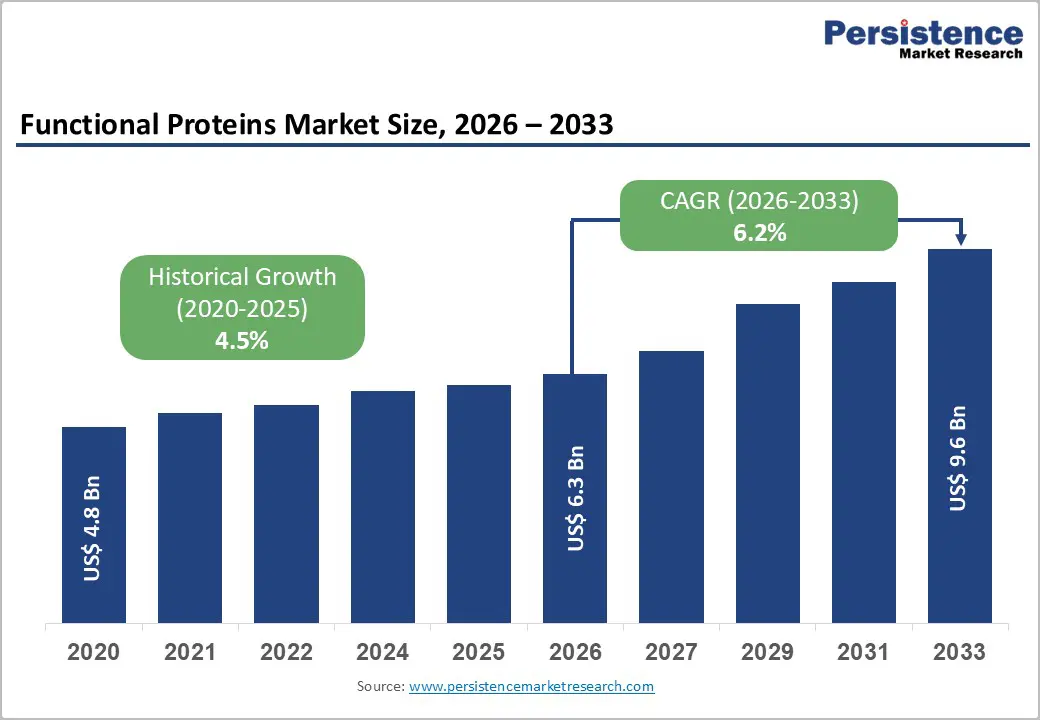
The global functional proteins market size is expected to be valued at US$ 6.3 billion in 2026 and projected to reach US$ 9.6 billion by 2033, growing at a CAGR of 6.2% between 2026 and 2033.
The market comprises protein ingredients that deliver specific health and performance benefits beyond basic nutrition. These include whey, casein, soy, pea, and other plant-based proteins used across dietary supplements, sports nutrition, clinical nutrition, and fortified foods.
Functional proteins support muscle growth, weight management, immune health, and overall wellness. Rising health awareness, increasing fitness trends, and demand for clean-label and high-protein diets are driving market growth. Technological advancements in protein extraction and processing, along with expanding applications in food and beverages, are further enhancing product innovation and market penetration globally.
Key Industry Highlights:
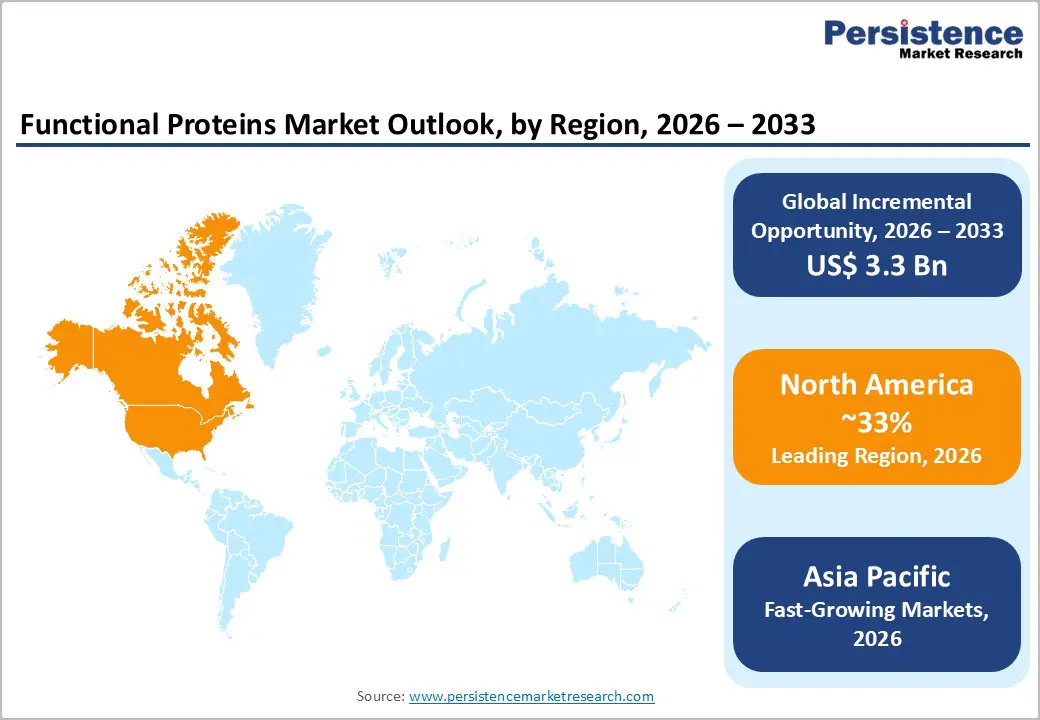
- Leading Region - North America holds 33% share in 2025, driven by strong U.S. leadership in sports nutrition, supplements, and advanced dairy protein manufacturing infrastructure.
- Fastest Growing Region - Asia Pacific will achieve a fast-growth by 2033 for functional proteins supported by rising incomes, expanding fitness culture, government nutrition initiatives, and booming e-commerce supplement markets.
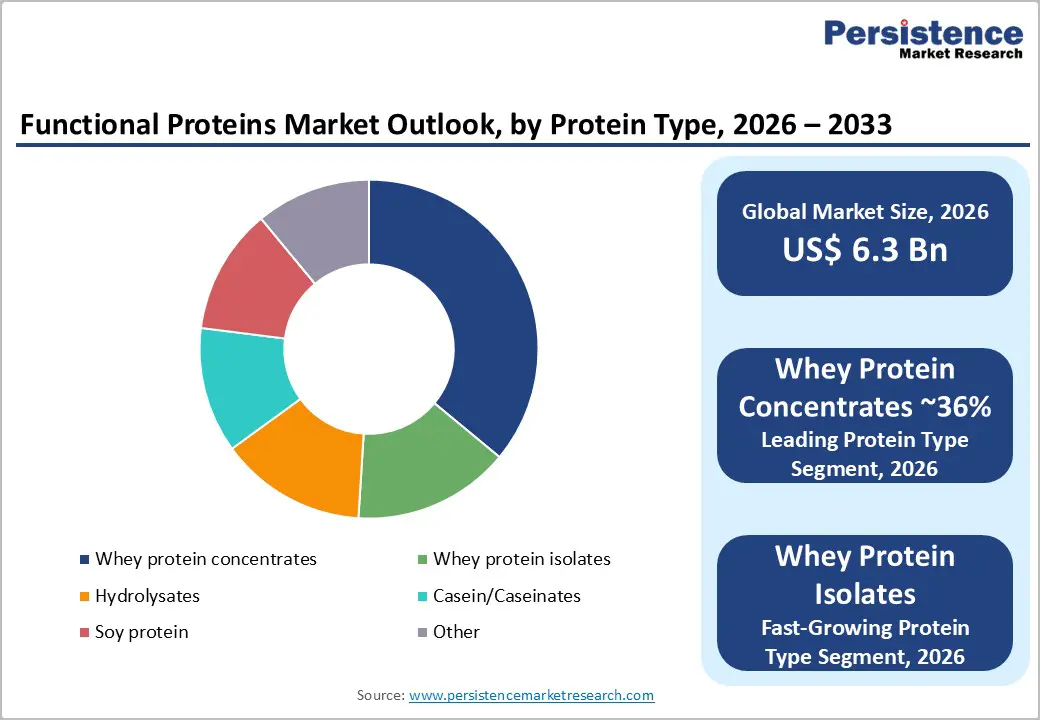
- Dominant Segment - Whey protein concentrates lead with 36% share in 2025, driven by strong amino acid profile, cost efficiency, and wide applications across nutrition products.
- Fastest Growing Segment - Whey protein isolates will register fastest growth through 2033, driven by demand for high-purity, low-lactose proteins in premium sports and clinical nutrition.
- Key Opportunity - Precision fermentation and Asia Pacific expansion offer major growth opportunities, enabling scalable protein production and tapping rising supplement demand in emerging markets.
Market Dynamics
Drivers - Increasing Consumer Focus on Health, Fitness, and Immunity
Rising consumer focus on health, fitness, and immunity is significantly driving demand for functional proteins across global markets. Increasing awareness of the role of nutrition in preventing chronic conditions has encouraged consumers to adopt protein-rich diets. According to the U.S. Food and Drug Administration (2024), chronic diseases such as heart disease, diabetes, and cancer account for 7 of the top 10 causes of death in the United States, many of which are linked to poor dietary habits. Functional proteins, including whey, plant-based, and hydrolyzed variants, provide essential amino acids that support muscle maintenance, weight management, and immune health, making them a key component of preventive healthcare strategies.
In Europe, a strong preventive health culture is further accelerating market growth. Data from Eurostat indicates that over 67.9% of EU citizens rated their health as very good or good in 2023, reflecting heightened awareness around wellness and nutrition. This growing emphasis on maintaining long-term health is driving demand for functional proteins in dietary supplements, sports nutrition, and fortified foods, as consumers increasingly prioritize high-quality protein sources.
Restraints - High Production Costs and Raw Material Price Volatility
High production costs remain a major restraint for the functional proteins market, particularly for premium ingredients such as whey protein isolates and hydrolysates. These products require complex, multi-stage processing techniques including microfiltration, ion exchange chromatography, and enzymatic hydrolysis, significantly increasing manufacturing expenses compared to conventional protein concentrates. Additionally, strict quality standards and the need for high purity further elevate operational costs, limiting large-scale affordability.
Raw material price volatility further intensifies market challenges. Fluctuations in dairy prices, climate-induced disruptions in crop yields, and geopolitical events such as the Russia-Ukraine conflict have impacted the supply of key inputs like milk, peas, and wheat. These uncertainties create margin pressures for manufacturers and result in inconsistent pricing. Consequently, higher costs restrict the adoption of functional proteins among price-sensitive consumers and limit penetration in emerging markets, where affordability remains a critical factor.
Opportunities - Companies Capitalize on the Growing Preference for Chemical-Free and Naturally Sourced Functional Proteins
As consumers become more health-conscious, there is an increasing need for chemical-free, naturally obtained functional proteins. This shift is driven by concerns over artificial additives, GMOs, and extensive processing methods in protein production. Companies that encourage clean-label, natural, and sustainably produced functional proteins have enormous opportunities to further expand their market share.
Vivici, a Netherlands-based company, launched its nature-identical whey protein. Vivici uses precise fermentation to manufacture animal-free whey protein that has the qualities of regular dairy protein without relying on livestock farming. The product has self-certified GRAS (Generally Recognized as Safe) in the U.S., enabling functional proteins as a safe and sustainable choice.
As the demand for plant-based proteins, non-GMO, and clean-label proteins grows, companies that invest in natural protein innovation and sustainable production methods will gain a competitive advantage. Offering minimally processed, eco-friendly functional proteins meets customer expectations and gives companies a strategic advantage in the growing protein market.
Category-wise Analysis
Protein Type Insights
Whey protein concentrates (WPC) hold a prominent share in the functional proteins market due to their high nutritional value, cost-effectiveness, and versatility in various applications. WPC contains vital amino acids, making it ideal for sports nutrition, functional food, and nutritional supplements. WPC's outstanding solubility and functional qualities make it a popular ingredient in protein powders, RTD beverages, dairy products, and bread compositions.
Compared to whey protein isolates and hydrolysates, WPC contains more bioactive components and has a balanced protein-to-fat ratio, making it best suited to a wider range of consumers. The growing demand for high-protein diets, fueled by health-conscious consumers and exercise fanatics, has greatly increased WPC usage. Additionally, the growing awareness of muscle recovery, weight management, and overall wellness has led to increased consumption of whey-based protein products.
Application Insights
In the application category, dietary supplements represent the leading segment of the global market in 2025. The dietary supplements segment captures the largest application share, driven by robust consumer demand for protein powders, capsules, bars, and meal replacements that provide targeted nutritional benefits, including muscle recovery, weight management, and metabolic support.
The Council for Responsible Nutrition (CRN) has consistently reported high and growing rates of dietary supplement usage in the U.S., with protein supplements among the top categories. The segment benefits from increasing health literacy, growing awareness of protein's role in healthy aging, and the expansion of premium sports nutrition brands across e-commerce channels. In March 2025, GNC launched a new Pro Performance 100% Whey + Nitro Surge protein supplement in India through Guardian Healthcare Pvt. Ltd., illustrating the expanding geographic reach of supplement protein demand.
Regional Insights
North America Functional Proteins Market Trends and Insights
North America dominates the Functional Proteins market, accounting for nearly 33% of global share in 2025, driven by strong demand for sports nutrition, dietary supplements, and functional foods. The region benefits from advanced dairy processing infrastructure, established supply chains, and a well-defined regulatory framework under the U.S. Food and Drug Administration, enabling safe ingredient usage and clear health claims. Rising health awareness and increasing adoption of protein-rich diets, including among GLP-1 users, continue to accelerate market growth.
U.S. Functional Proteins Market Trends
The U.S. leads regional demand due to a mature sports nutrition ecosystem and strong consumer focus on high-protein diets. The market is projected to grow at a CAGR of 6.8% through 2033, supported by strong protein consumption trends, with protein contributing 16% of total daily energy intake among adults, according to USDA Economic Research Service data. Additionally, average intake reaches 97g/day for men, reflecting high demand for protein-rich and fortified food products.
Canada Functional Proteins Market Trend:
Canada is witnessing steady growth supported by rising health consciousness, clean-label demand, and expanding plant-based protein consumption. Government-backed food innovation initiatives and increasing functional food adoption are strengthening market penetration across retail and nutraceutical segments.
Europe Functional Proteins Market Trends and Insights
Europe represents a mature and strategically important Functional Proteins market, driven by strong consumer awareness of nutrition, stringent food safety norms, and rising demand for sustainable and organic proteins. Key markets such as Germany, the UK, France, and the Netherlands lead consumption. Growth is further supported by clean-label trends, innovation in clinical and sports nutrition, and increasing investments in sustainable protein sourcing.
Germany Functional Proteins Market Trends
Germany leads Europe with strong demand across sports and clinical nutrition segments. The country’s advanced food processing industry, high consumer focus on balanced diets, and increasing shift toward plant-based and fortified foods continue to support consistent market growth, product innovation, and wider adoption of functional protein ingredients.
UK Functional Proteins Market Trends
The UK functional proteins market is supported by a well-established food manufacturing sector and ongoing product reformulation using functional proteins. Growing consumer awareness around nutrition, coupled with rising demand for fortified foods and beverages, is driving expansion across retail, sports nutrition, and health-focused product categories.
Asia Pacific Functional Proteins Market Trends and Insights
Asia Pacific is the fastest-growing market and is projected to experience a CAGR of 7.8% during the forecast period, supported by rising incomes, urbanization, and increasing health awareness across China, Japan, India, and ASEAN nations. Government-led nutrition programs, expanding middle-class populations, and rapid growth in sports nutrition and functional foods are key drivers. The region also benefits from cost-efficient manufacturing and expanding e-commerce channels, enabling wider product accessibility and accelerating market growth through 2033.
China Functional Proteins Market Trends
China dominates the Asia Pacific functional proteins market, supported by strong demand for sports nutrition products and fortified foods. Government-led nutrition improvement programs and food fortification initiatives continue to drive consumption. Large-scale domestic production, expanding middle-class population, and rising health awareness are accelerating market growth and supporting innovation across functional food and beverage applications.
India Functional Proteins Market Trends
India is emerging as a high-growth functional proteins market, driven by increasing fitness awareness and rising consumption of dietary supplements. Expansion of e-commerce platforms, urbanization, and growing disposable incomes are supporting accessibility. Entry of global nutrition brands and increasing demand for protein-enriched foods are further strengthening market growth across sports nutrition and functional food segments.
Competitive Landscape
The global functional proteins market is fragmented and competitive as food companies are actively investing in plant-based protein alternatives to meet growing consumer demand for sustainable and health-conscious options. Companies are investing extensively in research and development to develop advanced protein formulations that cater to increasing consumer demands.
Partnerships between ingredient suppliers and food manufacturers are becoming increasingly prevalent, allowing for elevated product development and widened market reach. Given the rising demand for high-protein products among athletes, fitness enthusiasts, and health-conscious consumers, sports nutrition continues to be a crucial area of competitiveness. Specialized protein formulas are introduced by companies to improve overall performance, endurance and muscle recovery
Key Developments:
- In February 2026, PepsiCo Foods launched protein snacks with a bold twist with the launch of Doritos® Protein tortilla-style chips, offering a new, protein-enhanced take on the classic Doritos experience.
- In March 2025, Arla Foods announced plans to expand its U.S. presence by partnering with South Dakota-based Valley Queen to manufacture whey protein for the food and beverage industry. The partnership will support the production of Nutrilac ProteinBoost.
- In November 2024, Ingredion Incorporated and Lantmännen announced a long-term collaboration to enhance the European pea protein market. This partnership focuses on delivering sustainably sourced, high-quality pea protein isolates while driving sales growth, product innovation, and process enhancements.
- In September 2024, Arla Foods Ingredients launched the ‘Go High in Protein’ campaign to promote its Nutrilac® ProteinBoost range. This line of microparticulated whey proteins is rich in essential amino acids, supporting high-protein dairy innovation.
- In June 2023, BENEO launched a new toolbox of high-quality, non-GMO vegetable proteins to support the growing demand for natural, plant-based, and sustainable pet food products.
Functional Proteins Market Report - Key Insights & Details
| Key Insights | Details |
|---|---|
| Historical Market Value (2020) | US$ 4.8 billion |
| Current Market Value (2026) | US$ 6.3 billion |
| Projected Market Value (2033) | US$ 9.6 billion |
| CAGR (2026 - 2033) | 6.2% |
| Leading Region | North America, 33% share |
| Dominant Product Type | Whey Protein Concentrates, 36% share |
| Top-ranking Source | Animal, 64% |
| Incremental Opportunity | US$ 3.3 Bn |
Companies Covered in Functional Proteins Market
- Glanbia plc
- ADM
- Kerry Group plc
- Fonterra Co-Operative Group Limited
- Ingredion
- Cargill, Incorporated
- Arla Foods Ingredients Group P/S
- Roquette Frères
- dsm-firmenich
- Hilmar Cheese Company, Inc.
- Essentia Protein Solutions
- Amai Proteins
- Burcon
- BENEO
- Others
Frequently Asked Questions
The global functional proteins market is projected to be valued at approximately US$ 6.3 billion in 2026.
Rising consumer demand for high-protein, nutritious, and functional food products is a key demand driver.
The North America region dominates the global functional proteins market.
Key opportunities include Asia Pacific demand growth from rising incomes and health awareness, and precision fermentation enabling scalable, animal-free functional protein production.
Glanbia plc, ADM, Kerry Group plc, Fonterra Co-Operative Group Limited, Ingredion, Cargill, Incorporated, Arla Foods Ingredients Group P/S, among others, are the leading players in the functional proteins market.


