




- Food Packaging
- Modified Atmosphere Packaging Market
Modified Atmosphere Packaging Market Size, Share, and Growth Forecast, 2026 - 2033
Modified Atmosphere Packaging Market by Gas Type (Oxygen, Nitrogen, Others), Packaging Type (Films & Liners, Trays, Others), Application, and Regional Analysis for 2026 - 2033

Modified Atmosphere Packaging Market Size and Trends Analysis
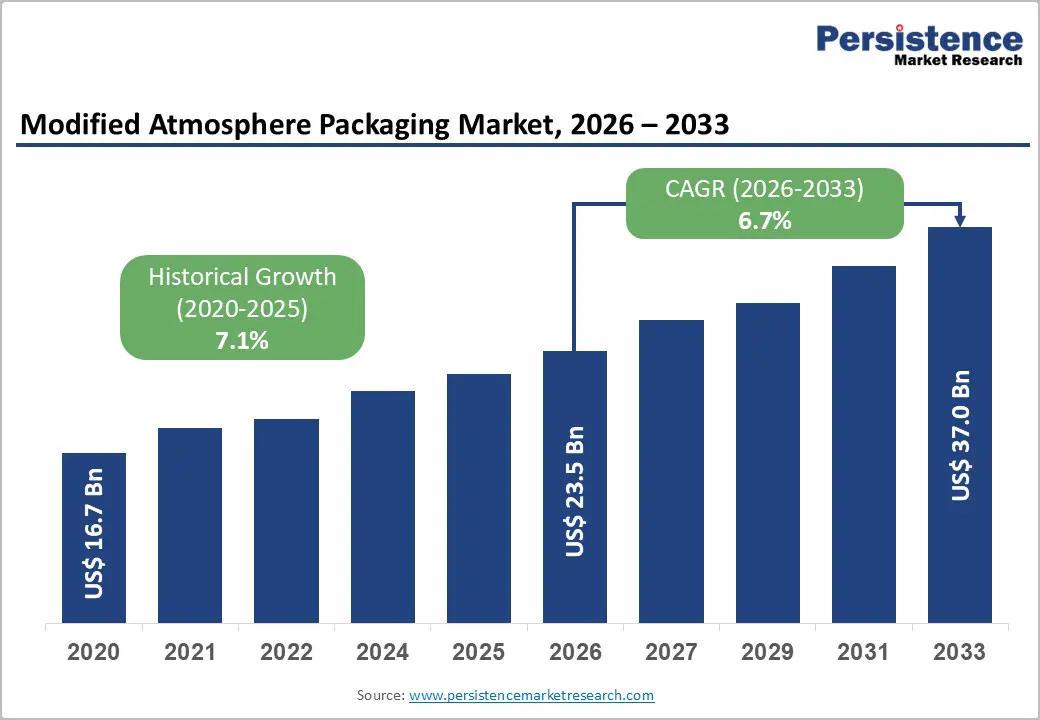
The global modified atmosphere packaging market size is likely to be valued at US$23.5 billion in 2026 and is expected to reach US$37.0 billion by 2033, growing at a CAGR of 6.7% between 2026 and 2033, driven by increasing demand for extended shelf life, reduced food waste, and improved food safety.
Growth is supported by rising consumption of packaged and convenience foods, advancements in cold-chain infrastructure, and stricter food preservation standards. Sustainability initiatives and regulatory pressure on packaging efficiency are further shaping innovation in MAP materials and formats.
Key Industry Highlights
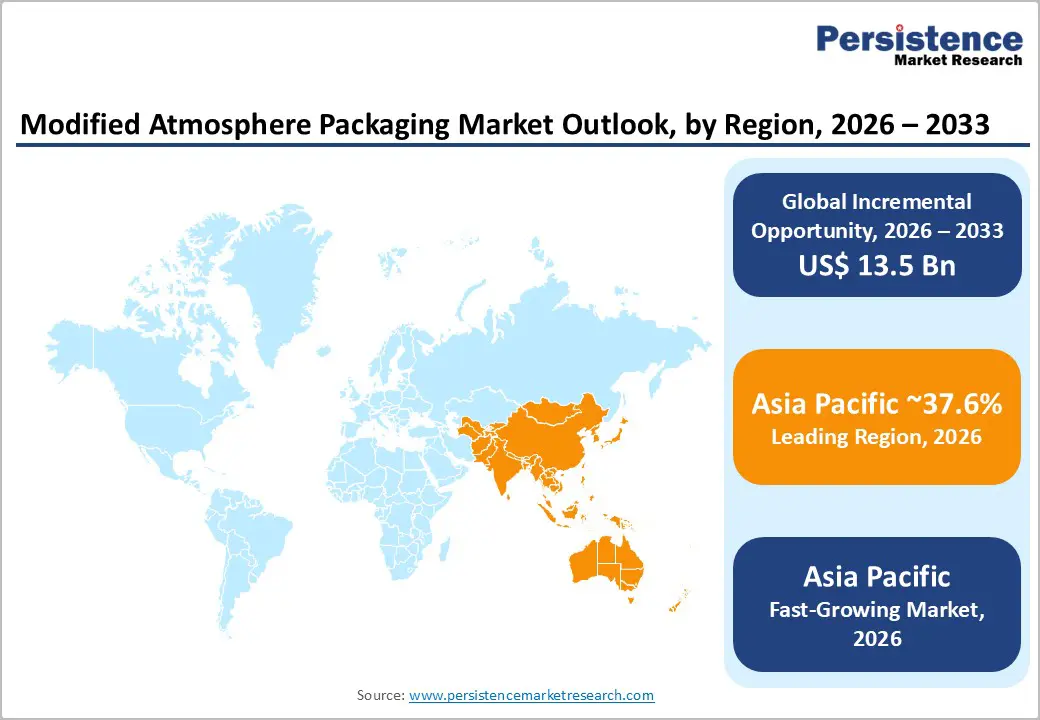
- Leading Region: Asia Pacific is projected to lead the market, accounting for approximately 37.6% of the market share, supported by strong manufacturing capabilities, expanding food processing industries, and rising consumption of packaged foods.
- Fastest-growing Region: Asia Pacific is expected to be also the fastest-growing region, driven by rapid urbanization, increasing disposable incomes, and significant investments in cold-chain infrastructure and modern retail systems.
- Investment Plans: Leading companies are actively investing in sustainable and recyclable MAP solutions, including lightweight trays, mono-material films, and fiber-based packaging, along with automation technologies to enhance efficiency and compliance with environmental regulations.
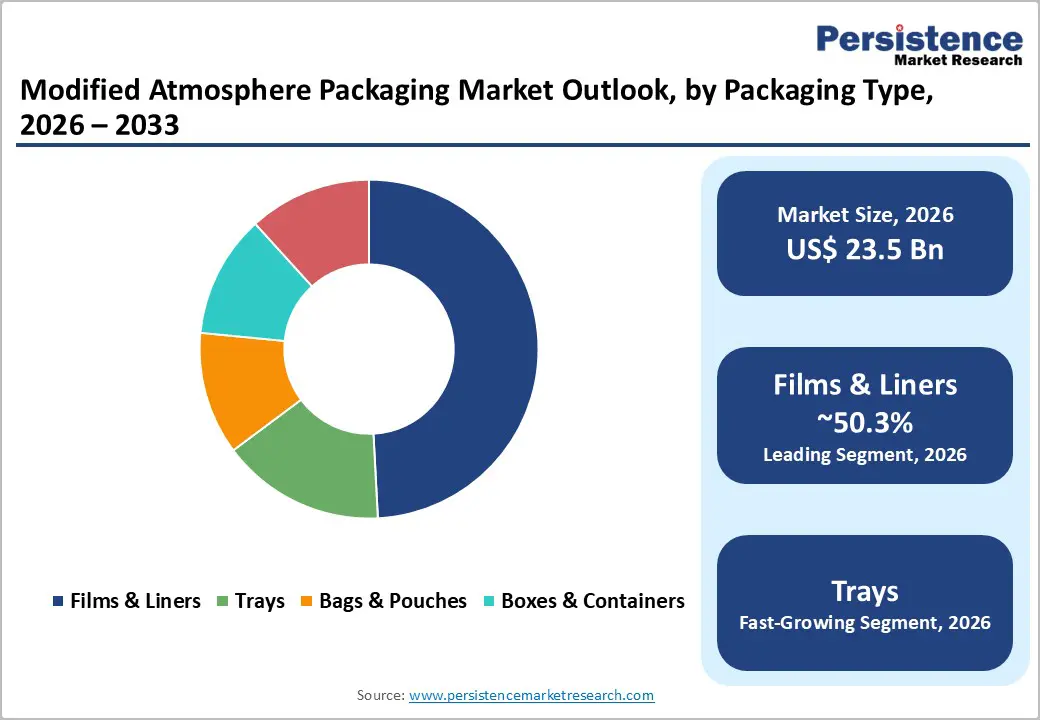
- Dominant Packaging Type: Films and liners are anticipated to hold over 50.3% market share in 2026, due to their superior barrier properties, cost efficiency, and compatibility with high-speed packaging operations.
- Leading Application: The meat, poultry, and seafood segment is anticipated to be the leading segment, accounting for approximately 33.4% of the market share in 2026, driven by high perishability, strict food safety requirements, and strong global consumption patterns.
| Key Insights | Details |
|---|---|
| Modified Atmosphere Packaging Market Size (2026E) | US$23.5 Bn |
| Market Value Forecast (2033F) | US$37.0 Bn |
| Projected Growth (CAGR 2026 to 2033) | 6.7% |
| Historical Market Growth (CAGR 2020 to 2025) | 7.1% |
Market Factors - Driver, Restraint, and Opportunity Analysis
Driver Analysis - Rising Demand for Food Safety and Shelf-Life Extension
Modified atmosphere packaging (MAP) plays a critical role in preserving food quality by altering the gas composition inside packaging, typically reducing oxygen and increasing nitrogen or carbon dioxide. This process slows microbial growth, oxidation, and moisture loss, thereby extending shelf life. Regulatory bodies emphasize the importance of safe food handling and preservation, especially for perishable categories such as meat, seafood, and fresh produce. The increasing global burden of foodborne illnesses reinforces the need for packaging technologies that maintain product integrity throughout distribution. As a result, MAP is widely adopted by food processors and retailers as a reliable method to enhance food safety, reduce spoilage, and maintain product quality across supply chains.
Growing Focus on Food Waste Reduction and Supply Chain Efficiency
Food waste reduction has become a strategic priority across the global food value chain. Packaging technologies such as MAP are increasingly recognized as cost-effective tools to minimize losses during storage, transportation, and retail display. By extending product shelf life, MAP reduces shrinkage rates and improves inventory turnover for retailers and distributors. Governments and international organizations continue to highlight the importance of reducing food losses to improve resource efficiency and food security. This shift is encouraging food producers to invest in advanced packaging solutions that balance preservation performance with environmental responsibility. Consequently, MAP adoption is expanding across fresh produce, dairy, and ready-to-eat segments.
Expansion of Convenience Foods and Cold-Chain Infrastructure
The rapid growth of ready-to-eat meals, fresh-cut produce, and packaged convenience foods is significantly increasing demand for MAP solutions. Consumers increasingly prioritize convenience, hygiene, and longer shelf life, especially in urban markets. At the same time, improvements in cold-chain logistics, including refrigerated transportation and storage systems, are enabling broader distribution of perishable products. MAP complements these developments by maintaining product freshness during extended transit periods. The combined effect of changing consumer lifestyles and infrastructure advancements is expanding the addressable market for MAP beyond traditional applications into premium and value-added food categories.
Restraint Analysis - High Capital Investment and Operational Complexity
The implementation of MAP requires specialized equipment such as gas-flushing systems, high-barrier packaging materials, and precise sealing technologies. These systems demand significant capital investment and ongoing maintenance, which can be a barrier for small and medium-sized food processors. In addition, maintaining optimal gas composition and ensuring consistent packaging quality requires technical expertise and process control. This complexity limits adoption among cost-sensitive manufacturers and regions with underdeveloped processing infrastructure, thereby slowing market penetration in certain segments.
Regulatory and Sustainability Constraints
MAP solutions must comply with strict food safety and packaging regulations, particularly regarding reduced-oxygen environments. Improper handling or inadequate temperature control can increase the risk of microbial growth, making regulatory compliance essential. At the same time, increasing pressure to reduce packaging waste and improve recyclability is challenging traditional MAP material structures, especially multi-layer plastics. Regulatory frameworks are pushing manufacturers to redesign packaging formats that meet both preservation and sustainability requirements. This dual constraint increases development costs and may limit the use of certain materials.
Opportunity Analysis - Development of Recyclable and Sustainable MAP Materials
The transition toward sustainable packaging presents a major opportunity for innovation in MAP solutions. Manufacturers are increasingly investing in recyclable, mono-material, and fiber-based packaging structures that maintain high barrier performance while reducing environmental impact. This shift is being driven by stricter regulatory frameworks, corporate sustainability targets, and growing consumer preference for eco-friendly packaging. Lightweight designs and material reduction strategies are gaining traction, particularly in retail-ready tray and flexible packaging formats, where reducing plastic content without compromising shelf life is critical. For example, companies like Amcor plc and Coveris are actively developing recyclable MAP-compatible solutions to meet evolving compliance requirements. As sustainability becomes a key purchasing criterion for retailers and consumers, companies that successfully integrate performance, recyclability, and cost efficiency are expected to gain a strong competitive advantage, especially in highly regulated markets such as Europe.
Rapid Growth in Emerging Markets
Emerging economies in Asia Pacific, Latin America, and parts of the Middle East are experiencing strong growth in packaged food consumption, creating substantial opportunities for MAP adoption. Rising disposable incomes, urbanization, and changing dietary patterns are increasing the demand for fresh, hygienic, and longer shelf-life food products. At the same time, governments and private players are investing in food processing infrastructure and cold-chain logistics, enabling wider distribution of perishable goods across urban and semi-urban regions. For instance, companies such as Ishida Co., Ltd. are expanding their presence in these regions by providing advanced packaging and weighing systems tailored to high-growth markets. Additionally, the rapid expansion of modern retail chains and e-commerce grocery platforms is accelerating the need for durable and efficient packaging solutions. These markets offer significant volume growth potential, particularly for cost-effective, scalable, and adaptable MAP technologies designed to meet local supply chain and regulatory conditions.
Category-wise Analysis
Packaging Type Insights
Films and liners are anticipated to hold 48-51% market share in 2026, supported by their high barrier performance, flexibility, and compatibility with automated packaging systems. These materials effectively maintain the internal gas composition by limiting oxygen ingress and carbon dioxide loss, which is critical for extending shelf life in perishable food categories. Flexible MAP films are extensively used in fresh meat cuts, sliced processed meats, cheese blocks, and bakery items, where maintaining moisture balance and preventing oxidation are essential. For instance, vacuum skin packaging and flow-wrap MAP solutions are widely adopted by large meat processors and dairy brands to ensure consistent product quality across retail chains. Their lightweight nature and lower material consumption also contribute to cost efficiency, particularly in high-volume production environments.
Additionally, films and liners are increasingly being developed using recyclable mono-material structures and downgauged multilayer formats, aligning with sustainability goals without compromising barrier performance. This scalability, combined with ease of integration into existing packaging lines, makes films and liners the preferred choice for both global food manufacturers and contract packers.
Trays are emerging as the fastest-growing packaging format, driven by increasing demand for retail-ready, visually appealing, and structurally robust packaging solutions. They are widely used in fresh meat, poultry, seafood, and ready-meal applications, where product visibility and presentation play a critical role in consumer purchasing decisions. For example, pre-packaged meat trays with MAP sealing are now standard in supermarkets, offering extended shelf life while maintaining product color and freshness.
Recent innovations in lightweight, recyclable, and fiber-based tray designs are accelerating adoption, particularly in regions with stringent sustainability regulations. Trays also support automation and high-speed sealing technologies, making them suitable for large-scale retail supply chains. Their compatibility with high-barrier lidding films enables effective MAP performance, while their rigid structure enhances product protection during transportation and storage. As retailers increasingly prioritize convenience and premium presentation, tray-based MAP solutions are expected to gain significant traction.
Application Insights
The meat, poultry, and seafood are anticipated to account for 33.4% market share in 2026, driven by high global consumption and stringent food safety requirements. These products are highly perishable and susceptible to microbial growth, oxidation, and discoloration, making effective packaging essential. MAP is widely used to extend shelf life, preserve color, and maintain texture, particularly in fresh red meat and seafood products. For instance, oxygen-rich MAP is commonly used to maintain the bright red appearance of beef, while carbon dioxide-rich environments are used for seafood to inhibit bacterial growth.
The segment’s leadership is further supported by strict regulatory standards and retailer quality requirements, especially in developed markets. Large supermarket chains rely heavily on MAP for pre-packaged protein products to reduce spoilage and improve inventory management. In emerging economies, rising disposable incomes and increasing protein consumption are further strengthening demand. This combination of regulatory pressure and consumption growth ensures the continued dominance of this segment.
Ready meals and convenience food categories are the fastest-growing applications for MAP, fueled by changing consumer lifestyles, urbanization, and demand for time-saving food options. MAP enables extended shelf life for chilled and pre-packaged meals without the need for excessive preservatives, making it ideal for ready-to-eat meals, fresh-cut salads, and meal kits. For example, pre-packaged pasta dishes, microwaveable curries, and mixed salad bowls commonly use MAP to maintain freshness and quality during distribution and storage.
The growth of e-commerce grocery platforms and modern retail chains is further accelerating demand, as these channels require packaging solutions that can withstand longer logistics cycles while preserving product integrity. Fruits and vegetables, bakery products, and dairy items also benefit from MAP applications, particularly in maintaining freshness and reducing waste. However, their growth remains comparatively moderate due to shorter shelf-life requirements and lower dependence on complex gas mixtures. Overall, the increasing preference for convenience and premium packaged foods is expected to sustain strong growth in this segment.
Regional Insights
North America Modified Atmosphere Packaging Market Trends-Private-Label Expansion & High-Performance MAP Innovation
North America represents a mature and technologically advanced MAP market, led by the U.S. The region benefits from a well-established food processing industry, strong cold-chain infrastructure, and high consumer demand for packaged and convenience foods. Regulatory frameworks emphasize food safety and proper handling of reduced-oxygen packaging, encouraging the adoption of validated and high-quality MAP solutions. Large retailers such as Walmart and Kroger have increasingly expanded their private-label fresh and ready-meal offerings, many of which rely on MAP to maintain shelf life and product consistency across wide distribution networks.
Key growth drivers include increasing demand for premium packaged foods, expansion of private-label products, and continuous innovation in packaging materials and automation technologies. Companies such as Sealed Air Corporation have continued to advance Cryovac MAP solutions for protein packaging, enabling longer shelf life and improved food safety for meat processors. Similarly, Amcor plc has expanded its high-barrier recyclable flexible packaging portfolio in North America, aligning with the sustainability goals of major food brands. These developments are reinforcing the region’s leadership in high-performance and compliant MAP systems, even as overall growth remains moderate compared to emerging markets.
Europe Modified Atmosphere Packaging Market Trends - Sustainability-Driven MAP Design & Regulatory Leadership
Europe is characterized by strong regulatory influence and a focus on sustainability-driven innovation. Countries such as Germany, the U.K., France, and Spain play a significant role in the regional market due to their advanced food processing industries and high consumption of packaged foods. The region’s regulatory environment emphasizes recyclability, waste reduction, and circular economy principles, which are reshaping the design and material composition of MAP solutions.
Manufacturers are increasingly adopting lightweight and recyclable materials to comply with evolving standards. For example, Mondi plc has introduced recyclable mono-material flexible packaging solutions suitable for MAP applications, particularly in fresh food categories. At the same time, Coveris launched fiber-based MAP tray solutions that significantly reduce plastic usage while maintaining shelf-life performance.
Retailers such as Tesco and Carrefour are also pushing suppliers to adopt sustainable packaging formats, accelerating innovation across the value chain. Europe’s competitive advantage lies in its ability to combine engineering expertise with regulatory compliance, positioning it as a global leader in sustainable MAP development.
Asia Pacific Modified Atmosphere Packaging Market Trends-Rapid Retail Growth & MAP Adoption in Emerging Food Systems
Asia Pacific is the largest and fastest-growing region in the market, accounting for approximately 37.6% of the market share. Rapid urbanization, population growth, and rising disposable incomes are driving demand for packaged and processed foods. Countries such as China, Japan, India, and key ASEAN economies are leading regional growth, supported by expanding retail infrastructure and increasing penetration of organized food distribution channels.
The expansion of modern retail formats, improvements in cold-chain logistics, and increasing food exports are key factors supporting MAP adoption. For instance, Japan-based Ishida Co., Ltd. has strengthened its presence in Asia by providing advanced weighing and packaging systems integrated with MAP technologies for ready-meal and fresh food producers. In India, major dairy and fresh food brands such as Amul and Reliance Retail are increasingly adopting MAP for packaged dairy products and fresh produce to extend shelf life and reduce wastage.
In China, large-scale meat processors are investing in automated MAP tray-sealing lines to meet growing demand for packaged protein products in urban markets. These developments highlight how industrial expansion, retail modernization, and technology adoption are collectively driving strong growth in the region, making Asia Pacific the most dynamic market for MAP solutions.
Competitive Landscape
The global modified atmosphere packaging market is moderately fragmented, with a mix of global packaging companies, specialized equipment manufacturers, and regional material suppliers. Competition is based on material innovation, barrier performance, cost efficiency, and compliance with regulatory standards. Companies are increasingly focusing on integrated solutions that combine packaging materials with advanced machinery and process optimization.
Key players are focusing on sustainable material innovation, automation integration, and global market expansion. Differentiation is achieved through high-performance packaging solutions, cost optimization, and compliance with evolving environmental regulations. Companies are increasingly offering end-to-end solutions that integrate packaging materials with processing and sealing technologies.
Key Industry Developments:
- In May 2025, ULMA Packaging showcased advanced modified atmosphere packaging solutions at IFFA 2025, including fully automated hygienic packaging lines for the meat industry, aimed at improving food safety, operational efficiency, and sustainability in high-volume processing environments.
- In June 2025, Coveris introduced its BarrierFresh MAP tray range for fresh meat, fish, and poultry, designed to reduce plastic usage by up to 90% while maintaining shelf life and recyclability, strengthening its sustainable packaging portfolio.
Companies Covered in Modified Atmosphere Packaging Market
- Amcor plc
- Sealed Air Corporation
- Mondi plc
- Huhtamäki Oyj
- Sonoco Products Company
- Coveris
- ProAmpac
- Winpak Ltd.
- MULTIVAC
- Coesia
- G. Mondini S.p.A.
- SEALPAC GmbH
- ULMA Packaging
- Ishida Co., Ltd.
- Berry Global Group, Inc.
- Klöckner Pentaplast
Frequently Asked Questions
The modified atmosphere packaging market is estimated to be valued at US$ 23.5 billion in 2026.
The modified atmosphere packaging market is projected to reach US$ 37.0 billion by 2033.
Key trends include the shift toward sustainable and recyclable packaging materials, growing adoption of high-barrier flexible films, increasing demand for ready-to-eat and convenience foods, and integration of automation in packaging processes.
The meat, poultry, and seafood segment is the leading application category, accounting for approximately 33.4% of the total market share, due to high perishability and strict food safety requirements.
The modified atmosphere packaging market is expected to grow at a CAGR of 6.7% from 2026 to 2033.
Some of the companies include Amcor plc, Sealed Air Corporation, Mondi plc, Huhtamäki Oyj, and MULTIVAC.


