




- Industrial Goods & Service
- Medical Pumps Market
Medical Pumps Market Size, Share, and Growth Forecast, 2026 - 2033
Medical Pumps Market by Product Type (Infusion Pumps, Syringe Pumps, Peristaltic Pumps, Volumetric Pumps), Application (Insulin Delivery, Pain Management, Chemotherapy, Enteral Nutrition, Parenteral Nutrition), And Regional Analysis for 2026 - 2033

Medical Pumps Market Size and Trends Analysis
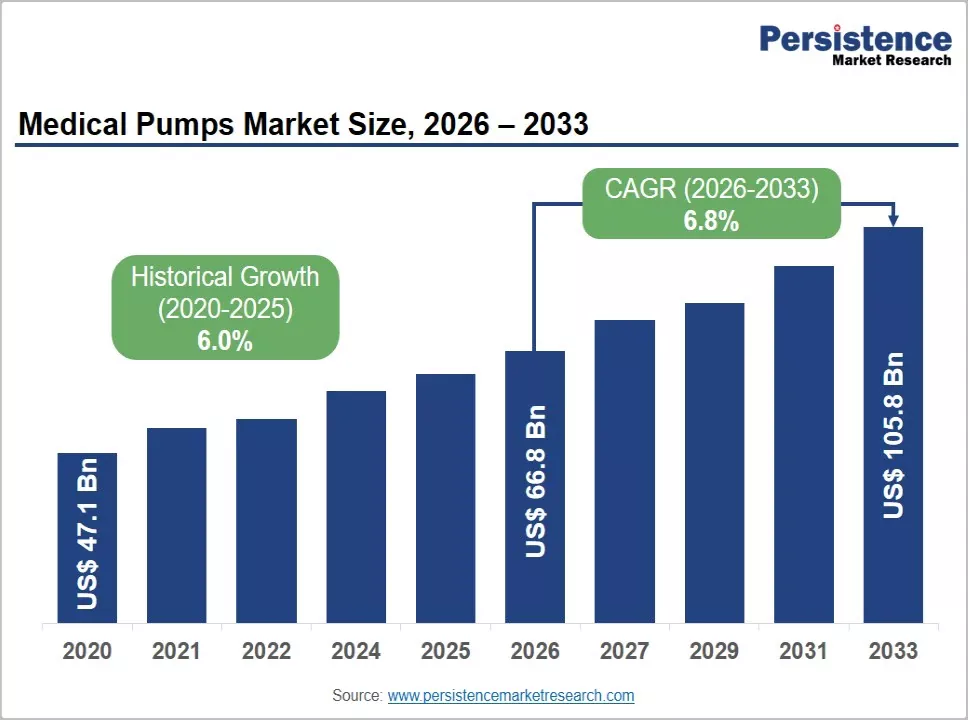
The global medical pumps market size is likely to be valued at US$ 66.8 billion in 2026 and is expected to reach US$ 105.8 billion by 2033, growing at a CAGR of 6.8% during the forecast period from 2026 to 2033. This growth is driven by increasing reliance on medical pumps across hospitals, home care providers, and patients for the precise delivery of fluids, drugs, insulin, and nutrition.
The rising prevalence of chronic conditions such as diabetes and cancer, ageing populations, and the shift toward home-based treatment are increasing demand for smart, connected, and portable pumps. Safety features, interoperability with electronic health records, and dose error reduction software are increasingly shaping purchasing decisions.
Key Industry Highlights
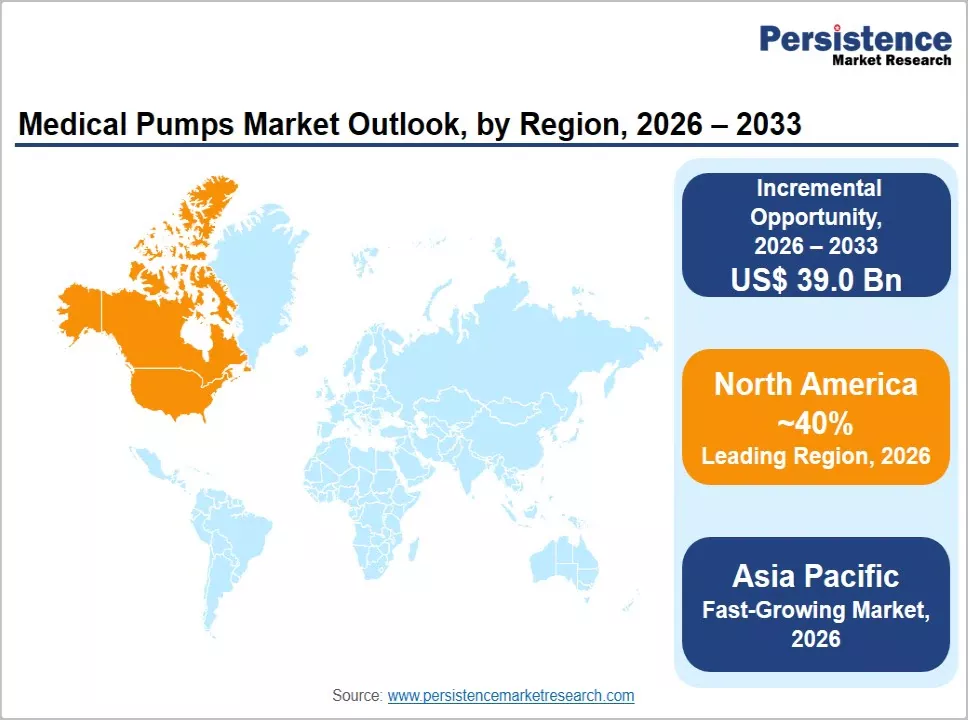
- Leading Region: North America is anticipated to be the leading region, accounting for a market share of 40% in 2026, driven by a large installed base of hospital infusion systems, a high prevalence of chronic diseases, established reimbursement systems, and rapid adoption of smart pumps and insulin delivery devices.
- Fastest-Growing Region: Asia Pacific is likely to be the fastest-growing region in the medical pumps market in 2026, supported by expanding healthcare infrastructure, a rising chronic disease burden, growing diabetes and cancer care requirements, and increasing investment in hospital modernization and home healthcare.
- Leading Product Type: Infusion pumps are projected to represent the leading product type in 2026, accounting for 42% of the revenue share, owing to their central role in hospital medication delivery and increasing use in home and ambulatory care.
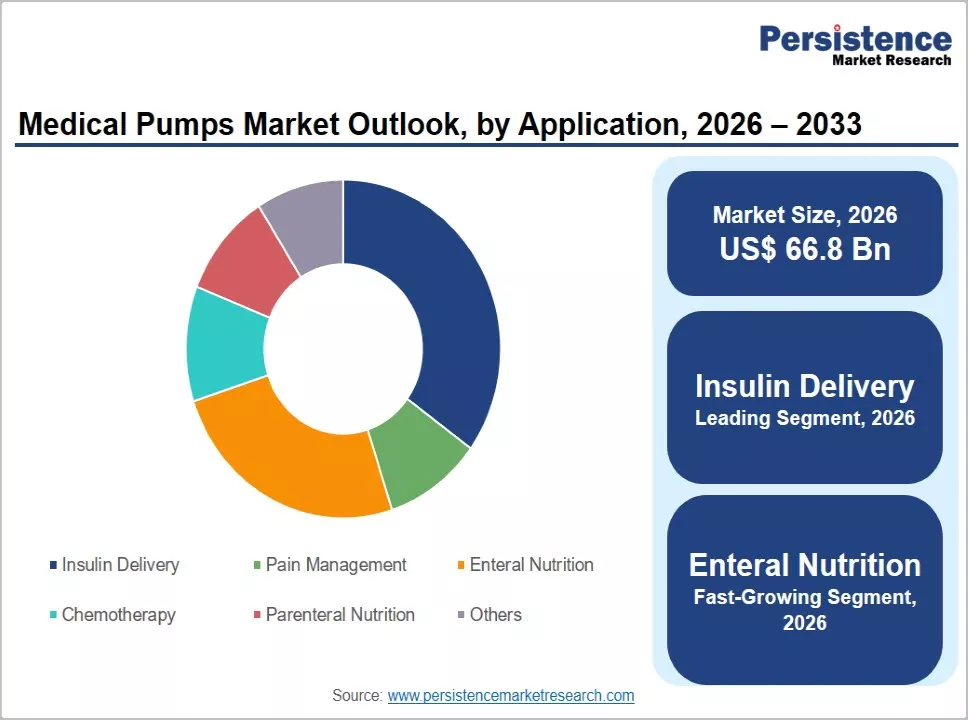
- Leading Application: Insulin delivery is anticipated to be the leading application, accounting for over 31% of the revenue share in 2026, as insulin pumps and connected delivery systems gain wider adoption among people with diabetes.
- Key Opportunity: The key market opportunity lies in developing smart, connected, and portable pumps with dose error reduction software, remote monitoring, and interoperability features that support hospital safety and home-based treatment.
Market Dynamics
Driver - Rising Chronic Disease Burden and Shift Toward Home-Based and Ambulatory Care
Conditions such as diabetes, cancer, and chronic pain require continuous or repeated delivery of medications and nutrition, creating steady demand for medical pumps. Hospitals use infusion systems to deliver fluids, antibiotics, chemotherapy, and anesthesia, while patients increasingly manage therapy at home using wearable or portable devices. Healthcare systems favor this shift because it helps reduce hospital bed occupancy and improve patient convenience.
Technology upgrades are driving replacement cycles. Smart pumps with drug libraries, dose limits, wireless connectivity, and integration with electronic health records help reduce medication errors and support regulatory compliance. Hospitals are replacing legacy devices to improve patient safety and data capture. Insulin pumps and automated insulin delivery systems are also gaining adoption as sensors and algorithms improve glucose management. Standardization of drug libraries, barcode medication administration, and alarm management practices is further encouraging hospitals to adopt pumps that align with broader patient safety programs and digital workflows.
Growth in specialty therapies adds further momentum. Chemotherapy, pain management, and parenteral nutrition require accurate flow rates and reliable alarms, with these therapies increasingly delivered in outpatient infusion centers and home settings. Neonatal and pediatric care require precise low-volume delivery, supporting demand for syringe pumps. Ongoing investment in ambulatory infusion capacity continues to expand the use of compact devices. Telehealth, remote patient monitoring, and hospital-at-home programs are also increasing demand for portable pumps, as clinicians can monitor and adjust therapy through connected platforms while patients recover in more comfortable and cost-effective settings.
Restraint - Safety Recalls, Regulatory Scrutiny, and Cybersecurity and Cost Concerns
Medical pumps are high-risk devices, and software errors, mechanical issues, or user errors can result in under-infusion or over-infusion. Recalls and quality-related actions can disrupt supply and erode customer confidence. In January 2026, the FDA classified Baxter's removal of certain Sigma Spectrum infusion pumps as a Class I recall, the most serious classification, due to a software version issue. Regulatory and cost pressures further challenge market growth.
Hospitals face tight budgets and need to consider upgrade costs, training requirements, and cybersecurity risks when connecting pumps to healthcare networks. Reimbursement uncertainty for certain home infusion therapies and the costs associated with cleaning, maintaining, and recalibrating reusable pumps further limit adoption among smaller hospitals and clinics with constrained capital budgets.
Opportunity - Connected Care, Home Infusion, and Next-Generation Insulin and Specialty Delivery
Connected pumps that integrate with electronic health records, smart drug libraries, and remote monitoring platforms can improve patient safety and clinical workflows, providing hospitals with strong incentives to modernize their equipment fleets. Cloud-based analytics and interoperability tools are expected to help clinicians track infusion events, identify alarms earlier, and reduce manual documentation, creating additional service and software revenue opportunities alongside hardware sales.
Home infusion and ambulatory care are expanding. Compact, battery-powered pumps designed for use outside hospitals support antibiotic therapy, immunoglobulin delivery, pain management, and nutrition. Training programs, remote nursing support, and simplified user interfaces help patients and caregivers manage therapy safely. Payers increasingly favor lower-cost treatment settings, supporting this transition.
Innovation in insulin delivery, wearable patch pumps, and precision syringe systems also presents growth opportunities. Automated insulin delivery combined with continuous glucose monitoring is improving diabetes management, while advances in micro-pumps and disposable cartridges are helping reduce device size and complexity. Emerging markets present additional prospects as hospitals modernize and local manufacturers develop affordable pump options. Disposable and single-use components, tubing with built-in safety features, and standardized consumables are also creating recurring revenue opportunities and reducing cleaning requirements, helping suppliers establish longer-term relationships with hospitals and home infusion providers.
Category-Wise Analysis
Product Type Insights
Infusion pumps are the leading product type segment, accounting for 42% of the market share in 2026. Their leading position reflects their widespread use across hospitals, surgery centers, and home care settings for delivering fluids, medications, blood products, and nutrition. Large-volume and ambulatory systems undergo regular upgrades to incorporate safety software and connectivity features. Smart pump platforms with drug libraries are now widely adopted across hospitals. For example, Baxter, BD, and ICU Medical have established large installed bases of hospital infusion systems.
Syringe pumps are likely to be the fastest-growing segment, supported by demand for precise, low-volume delivery in neonatal, pediatric, anesthesia, and palliative care. Peristaltic and volumetric pumps remain important for enteral feeding, dialysis-related fluid delivery, and general infusion applications where consistent flow rates and simple tubing sets are valued.
Application Insights
Insulin delivery is projected to lead the application category, capturing around 31% of the market share in 2026. Rising diabetes prevalence and advancements in automated insulin delivery systems are increasing the adoption of insulin pumps and patch devices. Companies such as Insulet, Medtronic, and Tandem Diabetes Care offer pump systems that integrate with glucose sensors. Device recalls and advancements in tubeless patch pump technology continue to influence patient and clinician preferences.
Enteral nutrition is likely to be the fastest-growing application, as more patients receive tube feeding in home care and long-term care settings. Chemotherapy, pain management, and parenteral nutrition also remain significant applications, with ambulatory pumps supporting treatment outside hospitals and precise medication delivery for specialized therapies.
Regional Analysis
North America Medical Pumps Market Trends
North America is anticipated to be the leading region, accounting for a market share of 40% in 2026. The region’s leadership is supported by a large installed base of hospital infusion systems, a high prevalence of chronic diseases, established reimbursement systems, and rapid adoption of smart pumps and insulin delivery devices. Strong regulatory oversight shapes product design and post-market surveillance, while home infusion networks continue to expand.
U.S. Medical Pumps Market Trends
The U.S. is expected to dominate the regional market, accounting for an estimated 89% of the North American market share in 2026, owing to its large hospital sector, high diabetes and cancer burden, and strong innovation in connected pumps. Major manufacturers are headquartered in the country, and FDA actions, including recalls and product clearances, influence purchasing and equipment upgrade decisions.
Canada Medical Pumps Market Trends
Canada is likely to be a significant market for medical pumps, holding an estimated 11% of the North American market share in 2026. Provincial health systems purchase pumps through consolidated tenders, while growth in home care and diabetes management supports demand. Baxter's Novum pump program, introduced in Canada earlier, illustrates ongoing hospital pump modernization.
Europe Medical Pumps Market Trends
Europe is expected to hold a significant market share in 2026, driven by ageing populations, universal healthcare systems, and a strong emphasis on patient safety and medical device regulation. Hospitals are upgrading to connected smart pumps, while home-based therapies and diabetes technologies are gaining acceptance. Medical device regulatory requirements continue to influence product approvals and market entry.
Germany Medical Pumps Market Trends
Germany is anticipated to dominate the regional market, accounting for around 30% of the European market share in 2026, as its large hospital network and strong medical technology industry support the adoption of advanced infusion and syringe pumps. Domestic manufacturers such as B. Braun supply hospitals across the country and export products globally.
U.K. Medical Pumps Market Trends
The U.K. is likely to hold around 22% of the European market share in 2026. National Health Service procurement, growth in community and home infusion services, and increasing adoption of diabetes technologies support market demand. Safety guidance and regulatory alerts encourage hospitals to maintain and upgrade their pump fleets.
Asia Pacific Medical Pumps Market Trends
The Asia Pacific region is likely to be the fastest-growing region in the medical pumps market in 2026, as hospital capacity expansion, rising diabetes and cancer prevalence, and growing healthcare expenditure increase the adoption of infusion and insulin delivery devices. Local manufacturers are improving product quality and offering competitive pricing, while multinational companies are expanding their distribution and service networks.
China Medical Pumps Market Trends
China is projected to dominate the regional market, holding around 33% of the Asia Pacific market share in 2026, due to its large hospital system and expanding domestic medical device industry. Local manufacturers such as Mindray supply infusion and syringe pumps to public hospitals, while demand for insulin pumps is increasing among people with diabetes.
India Medical Pumps Market Trends
India is expected to emerge as a significant market, accounting for an estimated 18% of the Asia Pacific market share in 2026. Rising private hospital capacity, increasing diabetes prevalence, and the expansion of oncology centers support market demand. Cost-conscious buyers prefer affordable syringe and volumetric pumps, while premium smart pumps are gaining adoption among larger hospital chains.
Competitive Landscape
The global medical pumps market exhibits a moderately consolidated structure, driven by the presence of large multinational medical technology companies, specialist diabetes device makers, and regional manufacturers. Key competitive factors include safety and reliability, software and connectivity, regulatory compliance, service networks, pricing, and the ability to support hospital and home care settings.
With key leaders including Baxter International Inc., Becton, Dickinson and Company, ICU Medical, Inc., Fresenius Kabi AG, and B. Braun SE, the market comprises providers with differing product portfolios and geographic reach. These players compete through smart pump platforms, drug libraries, interoperability, quality improvements, and long-term contracts with hospitals and health systems.
Key Industry Developments:
- In January 2026, the U.S. FDA classified Baxter's removal of certain Sigma Spectrum infusion system pumps as a Class I recall, the most serious type, highlighting the importance of software control and device safety in infusion pump programs.
- In April 2025, ICU Medical reported that it agreed to withdraw 510(k) applications for next-generation MedFusion syringe pumps and CADD ambulatory infusion pumps after FDA requests for additional testing, and plans to resubmit following further verification work.
Companies Covered in Medical Pumps Market
- Baxter International Inc.
- Becton, Dickinson and Company
- ICU Medical, Inc.
- Fresenius Kabi AG
- B. Braun SE
- Medtronic plc
- Insulet Corporation
- Tandem Diabetes Care, Inc.
- Terumo Corporation
- Ypsomed Holding AG
- Shenzhen Mindray Bio-Medical Electronics Co., Ltd.
- Nipro Corporation
Frequently Asked Questions
The medical pumps market is projected to reach US$ 66.8 billion in 2026.
Rising chronic disease burden, ageing populations, growth of home-based care, and adoption of smart and connected pumps.
The medical pumps market is expected to grow at a CAGR of 6.8% from 2026 to 2033.
Development of smart, connected, and portable pumps with dose error reduction software, remote monitoring, and interoperability for hospital and home-based care.
Baxter International Inc., Becton, Dickinson and Company, ICU Medical, Inc., Fresenius Kabi AG and B. Braun SE are the leading players.


