




- Nutraceuticals & Functional Foods
- Lycopene Market
Lycopene Market Size, Trends, Share, and Growth Forecast, 2026 - 2033
Lycopene Market by Form (Powder, Beadlets, Oil Suspension, Emulsion), Application (Dietary Supplements, Food & Beverages, Personal Care Products, Pharmaceuticals), Source (Organic, Conventional), and Regional Analysis for 2026 - 2033

Lycopene Market Share and Trends Analysis
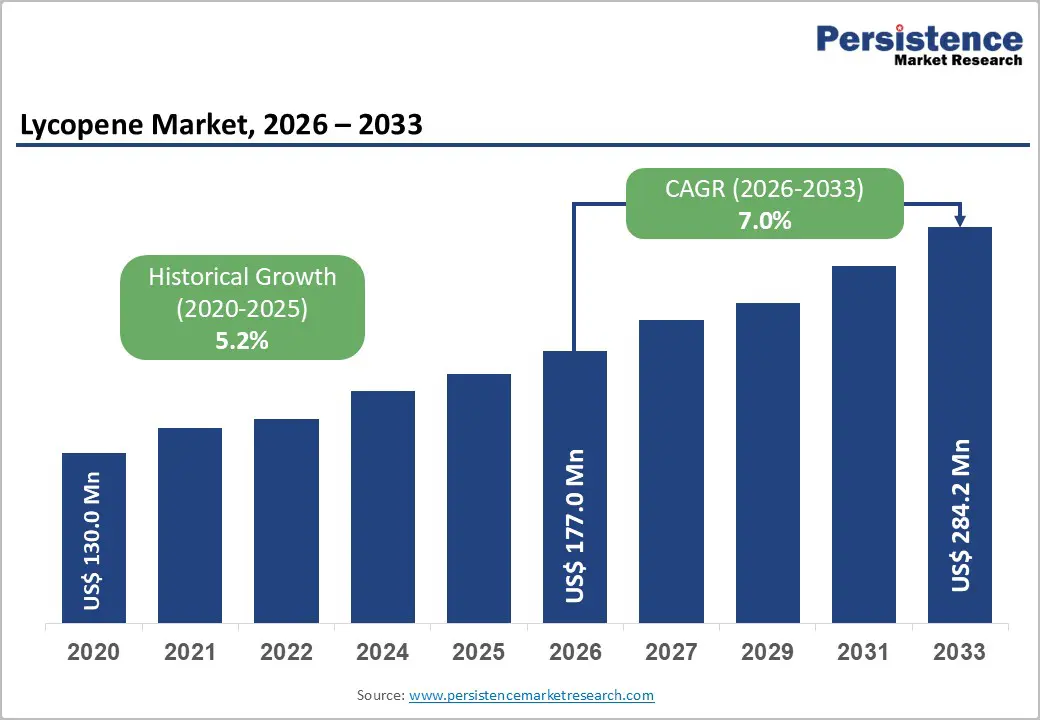
The global lycopene market size is likely to be valued at US$ 177.0 Mn in 2026 and is projected to reach US$284.2 Mn by 2033, growing at a CAGR of 7.0% during the forecast period 2026−2033.
Growth is primarily driven by rising consumer preference for antioxidant-rich nutraceuticals, the shift towards clean-label and plant-based products, and increased adoption across food & beverage, dietary supplement, and cosmetic industries. Demand is further supported by expanding regulatory recognition of lycopene’s health benefits linked to cardiovascular protection and oxidative stress reduction.
Key Industry Highlights:
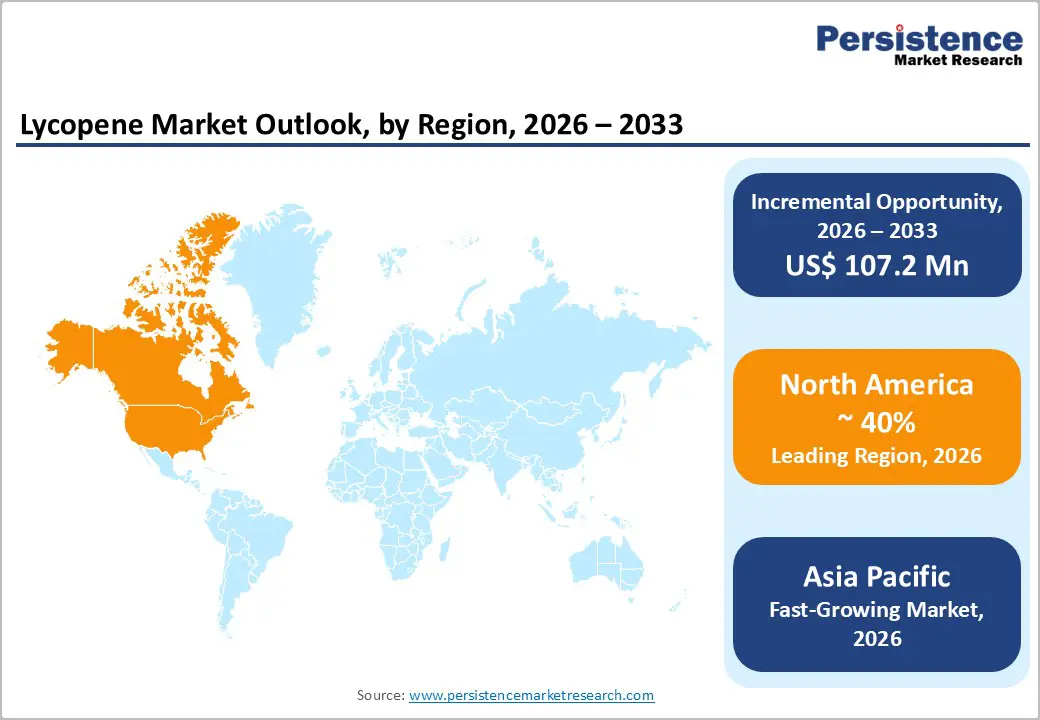
- Dominant Region: North America is expected to command about a 40% market share in 2026, supported by a robust demand for natural and functional ingredients in the food and nutraceutical sectors.
- Fastest-growing Region: The Asia Pacific market is the fastest-growing during the forecast period, due to the increasing health awareness and rapid urbanization.
- Leading & Fastest-growing Form: Powder currently dominates the segment, commanding approximately 58% of total market revenue; beadlets are likely to be the fastest-growing segment during the 2026-2033 forecast period.
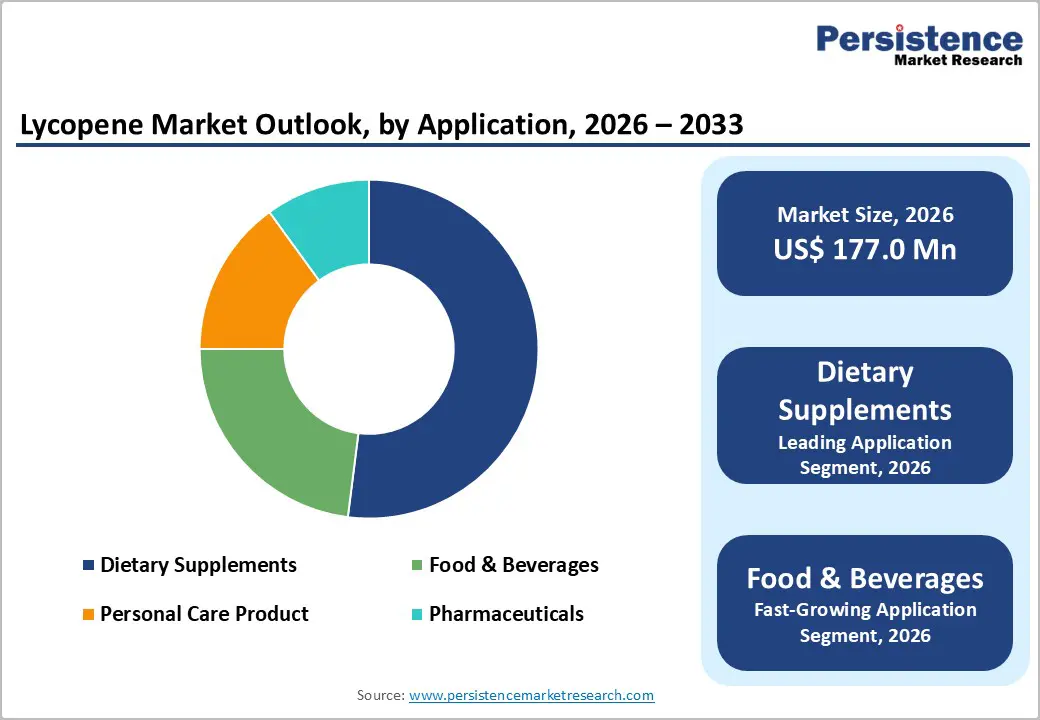
- Leading & Fastest-growing Application: Dietary supplements represent the dominant application segment, capturing approximately 52% of market revenue share in 2026. Food & beverages are expected to be the fastest-growing segment over the 2026-2033 forecast period.
| Key Insights | Details |
|---|---|
|
Lycopene Market Size (2026E) |
US$177.0 Mn |
|
Market Value Forecast (2033F) |
US$284.2 Mn |
|
Projected Growth (CAGR 2026 to 2033) |
7.0% |
|
Historical Market Growth (CAGR 2020 to 2025) |
5.2% |
Market Factors - Growth, Barriers, and Opportunity Analysis
Rising Global Health & Wellness Demand
The global population is increasingly prioritizing preventive health, driving strong demand for antioxidant compounds such as lycopene. Lycopene is well documented for reducing oxidative stress and supporting cardiovascular health. Consumers are showing greater interest in maintaining wellness before health issues arise, which is encouraging the development of functional foods and nutraceutical products enriched with natural antioxidants. Companies are responding by expanding product portfolios that include dietary supplements, fortified beverages, and enriched food ingredients. This trend is also influencing the food and beverage industry to focus on ingredients that offer scientifically validated health benefits, ensuring that products meet the growing expectations of health-conscious consumers.
Population aging is reinforcing the adoption of nutraceuticals in both developed and emerging markets. Older adults are increasingly seeking natural compounds such as lycopene to support cardiovascular function and counteract age-related oxidative stress. Nutritional guidance and public health campaigns are encouraging proactive health management, which is stimulating demand for supplements and functional ingredients that can be integrated into daily diets. Food manufacturers are innovating by offering convenient formats such as capsules, powders, and fortified foods, ensuring accessibility for different consumer segments. The market is gradually shifting from treatment-focused solutions to preventive strategies, which is shaping the way health products are formulated and marketed. This movement is creating opportunities for sustainable growth and long-term consumer engagement within the wellness and nutraceutical sectors.
Clean-Label and Plant-Based Consumer Preferences
Consumers are increasingly prioritizing natural, organic, and plant-derived ingredients, which is driving demand for natural lycopene extracted from tomatoes and other fruits. Lycopene is recognized for its antioxidant properties, and individuals are choosing plant-sourced options over synthetic alternatives to align with wellness goals and environmental considerations. Food and supplement manufacturers are responding by incorporating natural lycopene into functional foods, beverages, and dietary supplements, creating products that resonate with health-conscious audiences. This approach is also strengthening brand positioning, as clean-label products gain credibility and appeal in a competitive market.
Regulatory frameworks are supporting this shift by offering incentives for products that use natural ingredients, encouraging companies to prioritize transparency and ingredient authenticity. Marketing strategies emphasize plant-based sourcing and natural benefits, which are reinforcing consumer trust and engagement. Awareness of dietary choices continues to grow, and the adoption of natural lycopene in health-focused formulations is expanding rapidly, shaping the future of nutraceutical innovation.
Competition from Synthetic Alternatives
Synthetic lycopene is maintaining a substantial presence in the market due to its lower production costs and consistent purity levels. Manufacturers are benefiting from reliable supply chains and predictable quality, which allows for large-scale production of dietary supplements, food colorants, and fortified products. Industries that prioritize cost efficiency, such as bulk food processing, are continuing to rely on synthetic lycopene to meet high-volume demands while keeping prices competitive. This consistency is particularly valuable for applications that require precise coloring or stable antioxidant content, making synthetic options attractive for both manufacturers and retailers.
Even as consumer demand for natural ingredients is rising, synthetic lycopene remains a strong competitor. Companies are navigating this balance by offering both natural and synthetic formulations to cater to different market segments. Price-sensitive sectors are still favoring synthetic options due to affordability, while premium health-focused segments are shifting toward plant-derived alternatives. Regulatory compliance and marketing transparency are shaping this landscape, as producers take care of ingredient sourcing and safety standards. The interplay between cost, quality, and consumer perception is defining how synthetic lycopene will continue to position itself within the evolving nutraceutical and food industries.
Extraction Cost & Feedstock Variability
High costs associated with natural lycopene extraction from tomatoes and other fruit sources are creating structural challenges for manufacturers. The process requires advanced technology and careful handling to preserve the compound’s antioxidant properties, which increases production expenses. Companies are facing fluctuations in raw material availability, as seasonal changes and agricultural output variability are affecting supply levels. These factors are influencing unit economics and making it difficult to maintain stable pricing for natural lycopene in supplements, fortified foods, and beverages.
Variations in quality across different suppliers are adding complexity to product formulation. Manufacturers are investing in rigorous quality control measures to ensure consistency in potency, color, and stability of lycopene-enriched products. This requires ongoing monitoring and testing, which raises operational costs but ensures that products meet consumer expectations for performance and safety. As demand for natural antioxidants grows, producers are exploring innovative extraction techniques and strategic sourcing strategies to manage cost and supply risks. These efforts are shaping a more resilient and reliable market for natural lycopene in the nutraceutical and functional food industries.
Functional Food & Beverage Innovation
Incorporating lycopene into functional beverages, fortified foods, and health bars directly responds to consumer preferences for convenient and health-oriented options. People are looking for products that combine nutrition with ease of consumption, making it simple to include wellness in busy lifestyles. Food and beverage companies are reformulating their products to include natural antioxidants like lycopene, boosting both nutritional value and appeal. Innovation is focused on formats that provide consistent dosage, taste, and stability, ensuring consumers get both effectiveness and enjoyment from fortified options.
Growth in fortified food applications is indicating strong market potential, with brands exploring ways to communicate nutritional benefits effectively. Retailers and manufacturers are emphasizing functional positioning, packaging, and labeling to attract health-conscious buyers. Investment in research and development is supporting the creation of lycopene-enriched snacks, beverages, and supplements that integrate seamlessly into daily diets. Awareness of preventive health continues to rise, and the adoption of fortified products with natural antioxidants is shaping a dynamic market landscape, fostering innovation and long-term consumer engagement across food and nutraceutical sectors.
Biotechnology & Fermentation-Based Extraction
Advances in fermentation, enzymatic synthesis, and high-yield biotechnologies offer scalable and cost-competitive alternatives to traditional extraction of lycopene from natural sources. These approaches enable manufacturers to produce high-purity lycopene more efficiently while reducing reliance on seasonal agricultural feedstocks. Companies are adopting these methods to expand production capacity, maintain consistent product quality, and manage costs effectively. Biotechnology-based processes are also supporting more sustainable operations by lowering resource consumption and minimize environmental impact, which aligns with growing consumer and regulatory expectations for responsible production.
Early investments in these technologies are giving firms strategic advantages in supply flexibility and market responsiveness. Businesses are positioning themselves to meet rising demand for lycopene-enriched functional foods, beverages, and supplements without being constrained by the volatility of crop-dependent sources. Research and development teams are refining production techniques to improve lycopene yield, stability, and bioavailability, ensuring that end-use products deliver maximum health benefits. As these innovations continue to mature, they are shaping a future in which reliable, efficient, and sustainable lycopene supply supports both commercial growth and consumer wellness priorities.
Category-wise Analysis
Form Insights
Powder currently dominates the segment, commanding approximately 58% of total market revenue, due to its versatility and ease of incorporation into a wide range of applications such as dietary supplements, functional foods, and beverages. Powders offer long shelf life, stability under varying temperature conditions, and precise dosing, which appeals to manufacturers and consumers alike. They are compatible with capsules, tablets, and fortified foods, making them the most widely adopted format in the nutraceutical and functional food industries. The established manufacturing processes and widespread availability further reinforce the dominance of the powder segment.
Beadlets are likely to be the fastest-growing segment during the forecast period, as they offer enhanced stability, controlled release, and improved bioavailability compared to other formats. Encapsulation protects lycopene from oxidation and heat, allowing it to retain potency in fortified beverages, snacks, and functional foods. Beadlets are particularly attractive for manufacturers seeking to develop innovative products that deliver consistent efficacy while meeting consumer demand for convenient, health-focused options. The growing interest in premium and performance-oriented formulations is driving the rapid adoption of beadlet technology globally.
Application Insights
Dietary supplements represent the dominant application segment, capturing approximately 52% of market revenue share in 2026. Individuals are seeking convenient ways to support cardiovascular health, reduce oxidative stress, and meet daily antioxidant requirements, making supplements an ideal delivery format. Manufacturers are offering lycopene in capsules, tablets, and soft gels, providing precise dosing and long shelf life. Established supply chains and regulatory frameworks for supplements further support their dominance. The segment’s strong market penetration, coupled with consistent consumer trust, ensures dietary supplements remain the primary driver of lycopene demand across markets.
Food & beverages are expected to be the fastest-growing segment over the 2026-2033 forecast period, as manufacturers innovate to integrate lycopene into functional drinks, fortified snacks, and health bars. Consumers are seeking convenient, tasty, and nutritious options that provide antioxidant benefits throughout daily routines. Formulation advances such as beadlets, powders, and emulsions are enabling stable incorporation without compromising taste or color. Increased health awareness and demand for plant-derived ingredients are accelerating adoption in both developed and emerging markets. This growth trajectory is creating opportunities for product differentiation and expanding the presence of lycopene in mainstream functional food and beverage offerings.
Regional Insights
North America Lycopene Market Trends
North America is set to command a significant portion of the lycopene market share at approximately 40% in 2026. Consumers are increasingly prioritizing antioxidant intake, which is driving demand for dietary supplements and functional foods enriched with lycopene. The U.S. regulatory framework, including the Food and Drug Administration (FDA), is supporting safe ingredient use and clear labeling standards, enabling manufacturers to innovate across food, pharmaceutical, and personal care categories. Companies are concentrating investments in research and development (R&D) and formulation technologies to enhance bioavailability, stability, and product appeal. Competitive activity is intensifying, with regional capacity expansions and new product launches emphasizing cardiovascular health benefits. This focus is positioning North America as a hub for innovation and premium product offerings.
Structured regulatory oversight and consumer preference for scientifically validated functional ingredients are strengthening market growth in the region. High per capita spending on health products, combined with well-developed retail and e-commerce infrastructure, is facilitating easier access to lycopene-enriched products. Manufacturers are leveraging these advantages to introduce versatile product formats such as capsules, beadlets, powders, and fortified beverages. Consumer awareness continues to grow, and North America is shaping the strategic roadmap for global lycopene development, driving adoption and setting benchmarks for quality, innovation, and health-focused product positioning.
Europe Lycopene Market Trends
Europe is maintaining a significant share of the global lycopene market, driven by health-focused consumption patterns and strict food safety standards. Key countries such as Germany, the United Kingdom (UK), France, and Spain are actively contributing to market growth through high consumer awareness of antioxidants and preventive wellness products. Harmonized European Union (EU) regulations are enabling manufacturers to develop pan-regional formulations while ensuring that natural ingredient claims meet stringent quality and safety standards. Rising interest in organic and natural products, combined with aging populations seeking cardiovascular and overall health support, is increasing lycopene adoption in dietary supplements and cosmeceutical products.
Companies are innovating product formats such as powders, beadlets, and fortified beverages to align with consumer preferences and enhance usability and efficacy. Regulatory harmonization across Europe is promoting compliance, traceability, and product safety, although rigorous testing requirements are extending development timelines. Manufacturers are focusing on clean-label formulations, certifications, and transparent sourcing to strengthen competitive positioning and brand credibility. R&D investments are enabling enhanced bioavailability, stability, and formulation flexibility. Region is shaping a robust and dynamic market for lycopene, supporting long-term growth opportunities and encouraging product innovation that meets evolving consumer expectations.
Asia Pacific Lycopene Market Trends
Asia Pacific is anticipated to emerge as the fastest-growing lycopene market, supported by increasing health awareness, rapid urbanization, and expanding middle-class consumption in countries such as China and India. Consumers are seeking preventive health solutions and functional foods enriched with natural antioxidants, which is stimulating demand for dietary supplements, fortified beverages, and health-focused snacks. Regional manufacturing advantages, including lower raw material sourcing costs and established production infrastructure, are enabling companies to scale operations efficiently while maintaining competitive pricing. Evolving regulatory frameworks are supporting innovation in functional foods while ensuring that food safety and quality standards are met, creating a favorable environment for both local and multinational players to introduce new lycopene-based offerings.
Local producers are forming strategic partnerships and expanding capacities to align with global companies, accelerating market penetration and product accessibility. Emerging economies in the Association of Southeast Asian Nations (ASEAN) region are opening new growth corridors as younger demographics adopt health-conscious lifestyles and show strong interest in plant-derived ingredients such as lycopene. R&D investments are focusing on enhanced bioavailability, stability, and convenient formats such as powders, beadlets, and emulsions. As preventive wellness gains prominence, the Asia Pacific region is emerging as a highly dynamic and high-growth market, fueling innovation and long-term expansion in the lycopene industry.
Competitive Landscape
The global lycopene market structure is moderately fragmented, dominated by leading players such as Royal DSM, Lycored, BASF SE, Divi’s Laboratories, Xi’an Pincredit Biotech, and San-Ei Gen F.F.I. These players collectively capture 35-40% of the market share. Leading companies in the lycopene market are actively investing in R&D to broaden their product portfolios and strengthen market growth. Industry participants are pursuing diverse strategic initiatives to enhance their global presence, including new product launches, partnerships, mergers and acquisitions, increased capital investments, and collaborations with other organizations. To remain competitive and capture opportunities in a rapidly growing market, lycopene producers are focusing on delivering cost-effective products without compromising quality or efficacy. These efforts are driving innovation, expanding accessibility, and positioning companies to meet rising consumer demand for functional foods, dietary supplements, and health-focused formulations enriched with lycopene.
Key Developments:
- In March 2026, Researchers at the Kazakh Scientific Research Institute of Processing and Food Industry are developing a low-cost dietary supplement based on domestically sourced plant materials, including lycopene-rich tomato and watermelon powders, pumpkin seed powder, and safflower oil, aimed at helping prevent cancer and cardiovascular diseases. The formulation is designed to deliver high antioxidant activity with good bioavailability, while relying on affordable, locally available raw materials to support both domestic health-product supply and export potential.
- In October 2025, Lycored debuted its innovative VAS (Versatile Application Solution) technology at SupplySide Global 2025, featuring microencapsulated starch beadlets with lycopene like Lycobeads VAS 10% for enhanced stability across tablets, gummies, beverages, and capsules. The portfolio supports lycopene's antioxidant benefits for cardiovascular, skin, and prostate health while simplifying formulations for food, beverage, and supplement brands.
- In April 2026, China’s State Administration for Market Regulation released a draft “Catalog of Health Food Ingredients” that proposes adding lycopene as an official health food ingredient in China and is seeking public comments through May 10, 2026. This move would support the regulatory filing of lycopene-containing health food products in the Chinese market under defined conditions if finalized.
Companies Covered in Lycopene Market
- Royal DSM
- Lycored
- BASF SE
- Divi’s Laboratories
- San Ei Gen F.F.I., Inc.
- Xi’an Pincredit Biotech Co., Ltd.
- Wellgreen Technology Co., Ltd.
- Dangshang Sannuo Limited
- EID Parry
- Farbest Brands
Frequently Asked Questions
The lycopene market is projected to reach US$177.0 Mn in 2026.
The market is driven by rising demand for antioxidant‑rich functional foods, dietary supplements, and natural colorants, supported by growing preventive‑wellness and clean‑label trends.
The lycopene market is poised to witness a CAGR of 7.0% from 2026 to 2033.
Major opportunities lie in expanding into fortified beverages, plant‑based and functional foods, and premium nutraceuticals in fast‑growing regions such as the Asia Pacific and Latin America.
Royal DSM, Lycored, BASF SE, Divi’s Laboratories, Xi’an Pincredit Biotech, and San‑Ei Gen F.F.I. are some key players in the market.


