




- Medical Devices
- Gastroesophageal pH Meter Market
Gastroesophageal pH Meter Market Size, Share, and Growth Forecast, 2026 – 2033
Gastroesophageal pH Meter Market by Product (Portable pH Meters, Bench Top pH Meters, Continuous pH Meters), Test (Catheter-Based, Wireless-Based), and Regional Analysis for 2026 – 2033

Gastroesophageal pH Meter Market Size and Trends Analysis
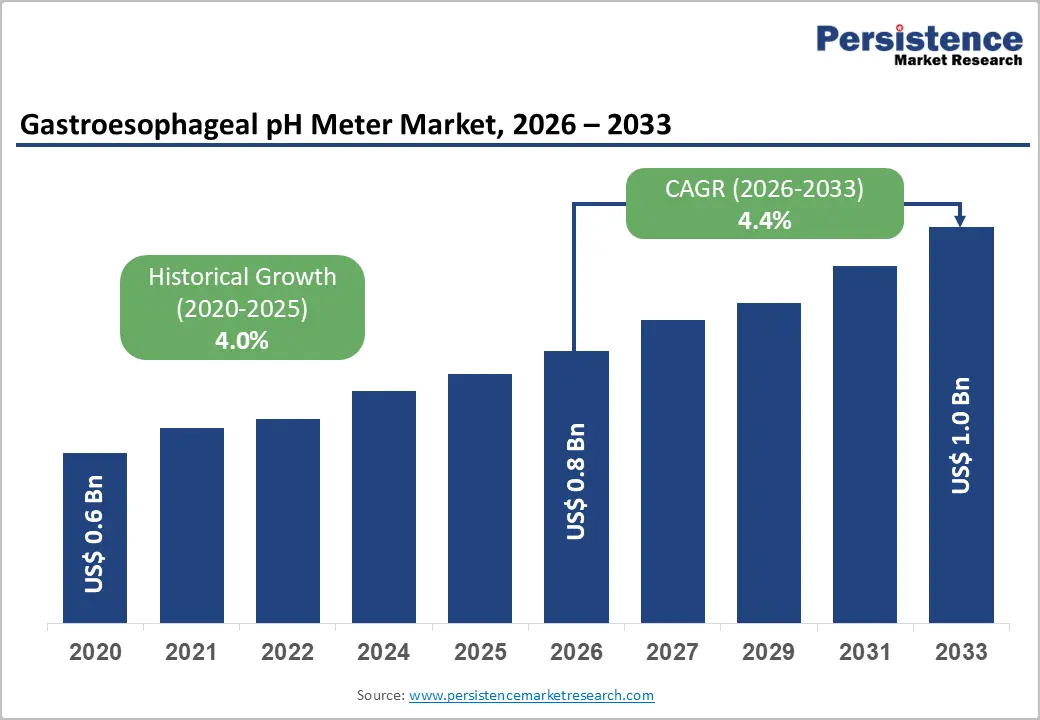
The global gastroesophageal pH meter market size is likely to be valued at US$0.8 billion in 2026 and is expected to reach US$1.0 billion by 2033, growing at a CAGR of 4.4% during the forecast period from 2026 to 2033, driven by the increasing burden of gastroesophageal reflux disease (GERD) and the rising demand for accurate gastrointestinal diagnostic solutions.
Changing lifestyles, increasing obesity rates, unhealthy dietary habits, smoking, and a growing aging population are contributing to higher incidences of acid reflux disorders. Technological advancements in wireless and portable pH monitoring systems are improving patient comfort, diagnostic accuracy, and long-duration monitoring capabilities. The market is benefiting from rising adoption of wireless and portable pH monitoring systems that improve patient comfort, enable longer monitoring periods, and enhance diagnostic efficiency in gastroenterology practices.
Key Industry Highlights:
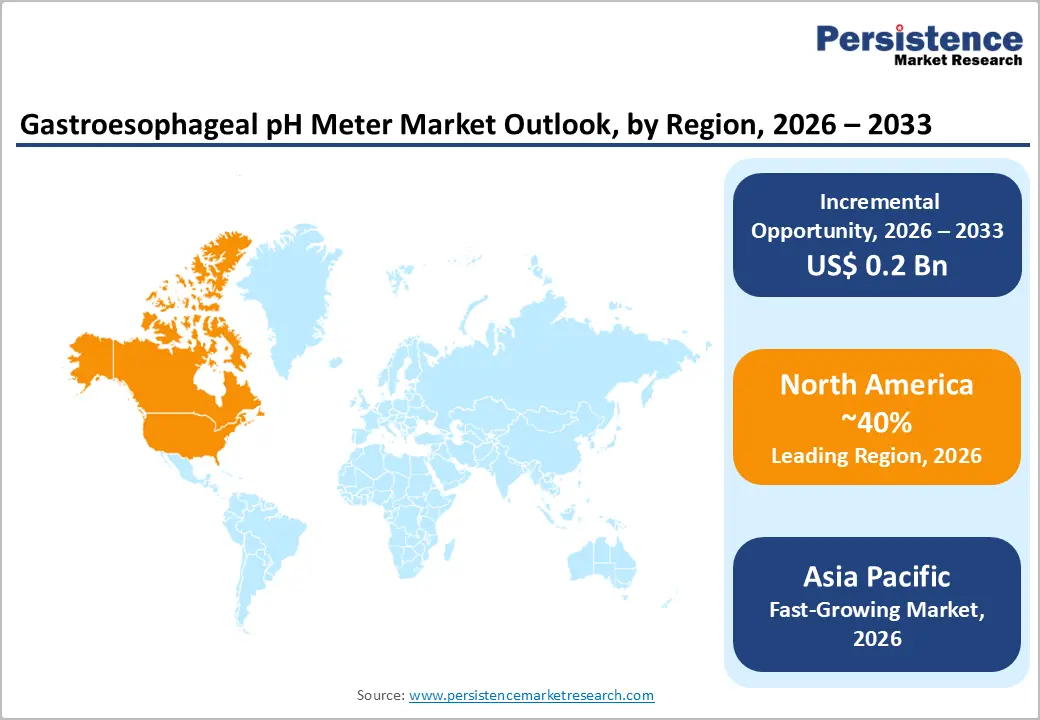
- Leading Region: North America is anticipated to be the leading region, accounting for a market share of 40% in 2026, driven by high GERD prevalence, advanced healthcare infrastructure, and strong adoption of innovative diagnostic technologies.
- Fastest-growing Region: Asia Pacific is likely to be the fastest-growing region, supported by rising healthcare awareness, expanding medical infrastructure, and increasing adoption of portable diagnostic devices.
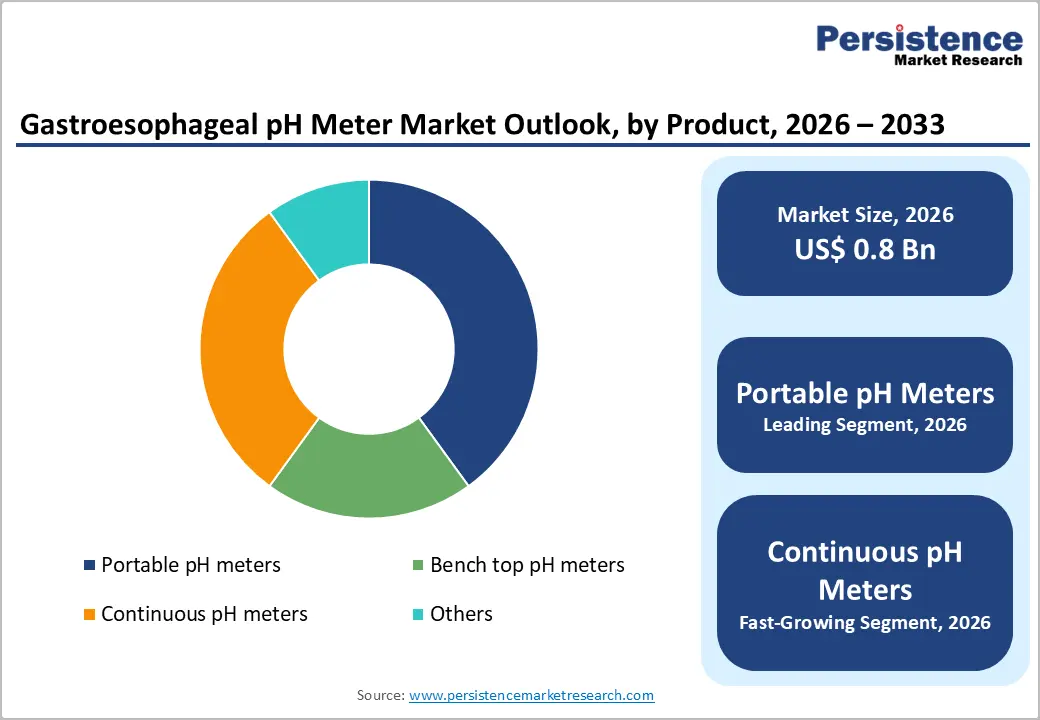
- Leading Product Type: Portable pH meters are projected to represent the leading product type in 2026, accounting for 45% of the revenue share, due to their convenience, portability, and suitability for ambulatory monitoring.
- Leading Test Type: Catheter-based tests are anticipated to be the leading test type, accounting for over 50% of the revenue share in 2026, supported by their widespread clinical adoption and cost-effective diagnostic capabilities.
- Key Opportunity: The growing shift toward wireless, AI-enabled, and patient-friendly reflux monitoring solutions across outpatient and home care settings is creating significant growth opportunities in the gastroesophageal pH meter market.
DRO Analysis
Driver - Rising Prevalence of GERD and Related Disorders
The increasing prevalence of gastroesophageal reflux disease (GERD) and associated gastrointestinal disorders is a major factor driving growth in the gastroesophageal pH meter Market. Sedentary lifestyles, rising obesity rates, excessive consumption of processed foods, smoking habits, alcohol intake, and increasing stress levels have significantly contributed to the growing incidence of acid reflux conditions worldwide.
Healthcare providers are increasingly recommending esophageal pH monitoring for accurate diagnosis and treatment planning, particularly for chronic reflux patients. Growing awareness regarding complications such as Barrett’s esophagus and esophageal cancer has strengthened demand for advanced pH monitoring systems across hospitals, specialty clinics, and diagnostic centers.
The growing burden of digestive disorders among aging populations is also accelerating the adoption of gastroesophageal pH monitoring technologies. Elderly individuals are more vulnerable to chronic acid reflux due to weakened digestive function and prolonged medication use, increasing the need for reliable diagnostic solutions. Healthcare systems are emphasizing early disease detection and minimally invasive procedures, which support the use of portable and wireless pH meters.
Restraint - Lack of Skilled Professionals and Training Requirements
Accurate placement of pH monitoring devices, interpretation of diagnostic results, and management of patient monitoring procedures require experienced gastroenterologists and trained healthcare personnel. Many developing and underdeveloped healthcare systems continue to face shortages of qualified specialists capable of performing advanced reflux diagnostic procedures effectively.
Continuous technological advancements in wireless and ambulatory pH monitoring systems increase the need for regular professional training and technical education. Healthcare providers must remain updated regarding evolving diagnostic protocols, software integration systems, and device handling procedures to ensure effective patient outcomes. However, training programs and certification opportunities remain limited in several regions, creating barriers for broader technology adoption.
Opportunity - Increasing Uptake in Pediatric GERD Diagnosis
Rising awareness regarding digestive disorders among infants and children is encouraging healthcare providers to adopt accurate reflux monitoring technologies for early diagnosis and treatment. Pediatric GERD cases are becoming more frequently identified due to changing dietary patterns, premature births, food allergies, and growing recognition of reflux-related respiratory complications.
Physicians are increasingly using pH monitoring systems to evaluate chronic cough, feeding difficulties, vomiting, and unexplained irritability in children. This expanding diagnostic focus is creating favorable demand for safe, minimally invasive, and child-friendly monitoring solutions. Manufacturers are increasingly developing portable, wireless, and patient-friendly pH monitoring systems specifically designed for pediatric applications.
Smaller device sizes, improved comfort levels, and extended monitoring capabilities are enhancing diagnostic accuracy while minimizing discomfort for young patients. Increasing parental awareness regarding long-term complications associated with untreated pediatric GERD is encouraging early clinical intervention.
Category-wise Analysis
Product Type Insights
Portable pH meters are expected to lead, accounting for 45% of revenue in 2026, due to their convenience, flexibility, and suitability for ambulatory reflux monitoring. These devices are widely preferred in hospitals, specialty clinics, and outpatient diagnostic settings because they allow patients to continue routine daily activities during monitoring procedures, improving diagnostic accuracy under real-world conditions. A notable example includes portable pH monitoring systems offered by Medtronic, which are extensively utilized for ambulatory esophageal reflux testing and long-duration gastrointestinal monitoring applications.
Continuous pH meters are likely to represent the fastest-growing segment, supported by increasing demand for extended and real-time esophageal acid monitoring capabilities. These systems provide continuous tracking of reflux episodes over longer durations, helping physicians evaluate complex and intermittent GERD conditions more accurately. For instance, Diversatek Healthcare’s advanced reflux monitoring solutions, which support continuous pH assessment.
Test Type Insights
Catheter-based tests are projected to lead the market, capturing around 50% of the revenue share in 2026, supported by their long-standing clinical adoption, affordability, and reliability in reflux diagnosis procedures. These tests are widely used across hospitals and diagnostic centers because they provide accurate, real-time measurements of esophageal acid exposure in controlled healthcare environments. For example, Laborie’s catheter-based gastroesophageal reflux diagnostic systems, which are commonly used in clinical gastroenterology settings for reliable esophageal pH monitoring.
Wireless-based tests are likely to be the fastest-growing test type due to rising preference for patient-friendly and minimally invasive diagnostic procedures. These systems eliminate the discomfort associated with nasal catheter insertion and enable extended monitoring durations, significantly improving patient compliance and diagnostic yield. A notable example includes Medtronic’s Bravo wireless reflux testing system, which is widely recognized for extended esophageal pH monitoring.
Regional Insights
North America Gastroesophageal pH Meter Market Trends
North America is anticipated to be the leading region, accounting for a market share of 40% in 2026. Increasing prevalence of gastroesophageal reflux disease, advanced healthcare infrastructure, and rising demand for minimally invasive gastrointestinal diagnostic technologies. Healthcare providers across the region are increasingly adopting wireless and portable pH monitoring systems to improve patient comfort and diagnostic efficiency. Continuous technological innovation, favorable reimbursement frameworks, and increasing investments in gastroenterology services continue to strengthen regional demand. A valid company example includes Medtronic, which continues expanding the adoption of its Bravo wireless reflux testing system.
U.S. Gastroesophageal pH Meter Market Trends
The U.S. dominates the regional market, driven by high GERD diagnosis rates and advanced specialty healthcare services. Rising obesity prevalence and unhealthy dietary habits continue to increase reflux-related disorders across the country. Hospitals and ambulatory care centers are increasingly integrating wireless reflux monitoring technologies to improve outpatient diagnostics and patient compliance.
Canada Gastroesophageal pH Meter Market Trends
Canada is a significant market for gastroesophageal pH meters, supported by improving awareness regarding digestive health disorders and increasing access to specialized gastroenterology services. Rising healthcare expenditure and growing emphasis on early disease diagnosis are supporting demand for advanced reflux diagnostic technologies across Canadian healthcare facilities. Hospitals are increasingly adopting portable and wireless pH monitoring systems to improve patient comfort and long-duration reflux assessment procedures.
Europe Gastroesophageal pH Meter Market Trends
Europe is likely to be a significant market for gastroesophageal pH meters in 2026, due to increasing awareness regarding reflux disease diagnosis, a rising aging population, and a strong healthcare infrastructure across major European economies. A notable example includes Laborie, which has strengthened its gastrointestinal diagnostics portfolio across European healthcare markets by offering advanced esophageal pH monitoring systems designed to improve diagnostic precision and patient comfort in reflux disease management applications.
U.K. Gastroesophageal pH Meter Market Trends
The U.K. is experiencing increasing demand for gastroesophageal pH monitoring systems due to growing awareness regarding chronic reflux disorders and the expansion of specialized digestive disease services. National healthcare initiatives focused on early disease detection and improved outpatient diagnostics are supporting market growth. Hospitals and gastroenterology clinics are increasingly integrating wireless reflux monitoring devices to improve patient experience and diagnostic outcomes.
Germany Gastroesophageal pH Meter Market Trends
Germany dominates the regional market due to its advanced medical technology sector and strong gastroenterology healthcare infrastructure. The increasing prevalence of digestive disorders and rising healthcare awareness are supporting demand for accurate reflux diagnostic procedures across hospitals and specialty centers. German healthcare facilities are increasingly adopting wireless monitoring technologies to improve patient convenience and diagnostic efficiency.
Asia Pacific Gastroesophageal pH Meter Market Trends
The Asia Pacific region is likely to be the fastest-growing region in the gastroesophageal pH meter in 2026, due to increasing healthcare expenditure, rising awareness regarding gastrointestinal disorders, and improving access to specialized diagnostic services. Urbanization, changing dietary habits, and rising obesity levels are significantly contributing to increasing cases of gastroesophageal reflux disease across the region. For instance, Diversatek Healthcare is expanding the availability of advanced reflux monitoring technologies across Asia Pacific.
China Gastroesophageal pH Meter Market Trends
China dominates the regional market, supported by rapid healthcare infrastructure development and increasing prevalence of digestive disorders linked to urban lifestyles and dietary changes. The rising middle-class population and growing healthcare awareness are encouraging demand for advanced reflux diagnostic procedures across hospitals and specialty clinics. Government investments in healthcare modernization and medical technology adoption are strengthening market expansion nationwide.
India Gastroesophageal pH Meter Market Trends
India is a significant market for gastroesophageal pH meters. Due to rising awareness regarding digestive health disorders and expanding access to specialty gastroenterology care. The increasing prevalence of acid reflux conditions associated with changing dietary patterns, stress, and sedentary lifestyles is supporting market growth. Hospitals and diagnostic centers are gradually adopting portable and wireless pH monitoring technologies to improve patient-friendly diagnostics and long-duration monitoring capabilities.
Competitive Landscape
The global gastroesophageal pH meter market exhibits a moderately fragmented structure, driven by rising demand for advanced reflux diagnostic technologies, increasing prevalence of gastroesophageal reflux disease, and continuous innovation in wireless monitoring systems. Market participants are focusing on expanding their gastrointestinal diagnostics portfolios through product innovation, strategic collaborations, digital integration, and geographic expansion initiatives.
With key leaders including Medtronic, Diversatek Healthcare, Laborie Medical Technologies, Thermo Fisher Scientific, Metrohm, and HORIBA, Ltd., the market continues witnessing investments in wireless pH monitoring, AI-enabled analytics, and ambulatory diagnostic solutions to strengthen competitive positioning. These players compete through technological advancements, product differentiation, strategic acquisitions, service expansion, and integration of digital healthcare capabilities into reflux monitoring systems.
Key Industry Developments:
- In May 2026, Medtronic highlighted the growing adoption of its Bravo™ Calibration-Free Reflux Testing System for advanced gastroesophageal reflux disease (GERD) diagnosis, emphasizing extended wireless pH monitoring capabilities of up to 96 hours to improve diagnostic accuracy and patient comfort in ambulatory reflux testing procedures.
Companies Covered in Gastroesophageal pH Meter Market
- Thermo Fisher Scientific
- Medica S.p.A
- Diversatek, Inc.
- EB Neuro S.p.A
- Laborie, Inc
- Medtronic
- METTLER TOLEDO
- Metrohm
- HORIBA, Ltd.
Frequently Asked Questions
The global gastroesophageal pH meter market is projected to reach US$0.8 billion in 2026.
The gastroesophageal pH meter market is driven by the rising prevalence of GERD and increasing demand for accurate, minimally invasive gastrointestinal diagnostic technologies.
The gastroesophageal pH meter market is expected to grow at a CAGR of 4.4% from 2026 to 2033.
Key market opportunities in the gastroesophageal pH meter market lie in the growing adoption of wireless and portable pH monitoring systems, expanding pediatric GERD diagnosis, and increasing demand for outpatient gastrointestinal diagnostics.
Thermo Fisher Scientific, Medica S.p.A, Diversatek, Inc., and Laborie, Inc are the leading players.


