




- Processed Food
- Functional Cheese Market
Functional Cheese Market Size, Share, Growth, and Regional Forecast, 2026 - 2033
Functional Cheese Market is segmented by Product Type (High-Protein Cheese, Probiotic Cheese, Lactose-Free Cheese, Reduced-Fat Cheese, Others), Source (Dairy-Based, Plant-Based), by Sales Channel (Supermarkets & Hypermarkets, Convenience Stores, Specialty Stores, Online Retail, Others), and Regional Analysis, 2026 - 2033

Functional Cheese Market Share and Trends Analysis
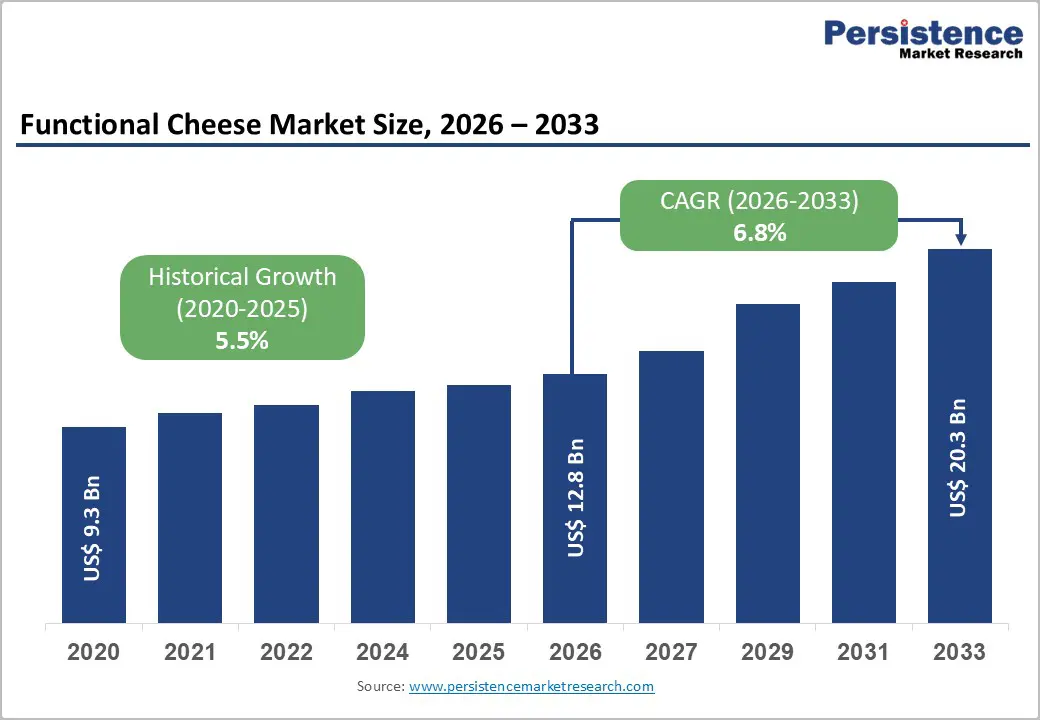
The global Functional Cheese market size is expected to be valued at US$ 12.8 billion in 2026 and projected to reach US$ 20.3 billion by 2033, growing at a CAGR of 6.8% between 2026 and 2033.
The market expansion is primarily driven by rising consumer demand for value-added dairy products that offer specific health benefits beyond basic nutrition. As lifestyle-related health concerns rise, consumers are pivoting toward functional snacks that support gut health, weight management, and muscle recovery. This shift is supported by significant advancements in fermentation technology and ingredient fortification, allowing major dairy processors to integrate vitamins, minerals, and live cultures into traditional cheese formats without compromising sensory appeal.
Key Industry Highlights:
- Leading Region: North America, holding 36% market share, driven by strong snackification trends, advanced health-focused retail infrastructure, and increasing demand for high-protein and lactose-free dairy snacks.
- Fastest-Growing Region: Asia Pacific, supported by rising health awareness, rapid westernization of diets, and strong growth in probiotic and lactose-free cheese consumption across China, Japan, and India.
- Leading Product Type Segment: High-Protein Cheese dominates the market with approximately 35% share, fueled by rising adoption among fitness-focused consumers seeking convenient, protein-rich snack alternatives.
- Fastest-Growing Source Segment: Plant-based cheese alternatives are expanding rapidly due to rising lactose intolerance, increased adoption of vegan diets, and innovations using almonds, cashews, and fermented oat bases.
- Growth Indicators: Rising consumer focus on preventative healthcare and digestive wellness is accelerating the adoption of functional dairy products enriched with probiotics and high-quality proteins.
- Opportunities: Expansion of online retail platforms and wellness-focused subscription grocery services provides niche functional cheese brands with direct-to-consumer distribution and stronger consumer engagement.
- Key Developments: In February 2026, Arla Foods announced its largest-ever investment in a new cheese dairy in Sweden. In February 2026, Kraft Natural Cheese launched a new line of high-protein cheese sticks in the United States. In November 2025, Planteneers introduced a new portfolio of plant-based cheese alternatives designed to enhance sensory appeal and nutritional value.
| Key Insights | Details |
|---|---|
|
Functional Cheese Market Size (2026E) |
US$ 12.8 Bn |
|
Market Value Forecast (2033F) |
US$ 20.3 Bn |
|
Projected Growth (CAGR 2026 to 2033) |
6.8% |
|
Historical Market Growth (CAGR 2020 to 2025) |
5.5% |
Market Dynamics
Driver - Rising Consumer Awareness Regarding Preventative Healthcare and Gut Health
The primary driver for the market is the fundamental shift in global dietary habits toward preventative health. According to the World Gastroenterology Organisation, gut health has become a top priority for consumers, leading to a surge in demand for probiotic-enriched foods. Cheese serves as an excellent carrier for probiotic strains like Lactobacillus and Bifidobacterium due to its relatively low acidity and high fat content, which protect the cultures through the digestive tract. This nutritional advantage has encouraged companies such as Danone S.A. and Arla Foods amba to launch specialized functional lines. As consumers seek out natural, whole-food sources for their probiotic intake, functional cheese has emerged as a preferred alternative to synthetic supplements, particularly among the aging population and parents seeking healthy options for children.
Restraints - Stringent Regulatory Frameworks for Health Claims
The functional food industry faces rigorous scrutiny of health claims on packaging. In the United States, the Food and Drug Administration (FDA) maintains strict guidelines for labeling products as "heart-healthy" or "immune-boosting," while the European Food Safety Authority (EFSA) requires exhaustive clinical evidence for probiotic claims. These regulatory hurdles can be a deterrent for smaller market participants. Any variation in regional standards complicates international trade for giants like Lactalis Group, as packaging and formulations must be tailored to meet local laws. Misalignment with these regulations can lead to costly recalls or legal challenges, tarnishing brand reputation in an industry where transparency and consumer trust are paramount for premium-priced products.
Opportunity - Expansion into the Online Retail and Subscription Box Channel
The rapid maturation of e-commerce offers a unique opportunity for niche functional cheese brands to bypass traditional shelf-space limitations. Online Retail is the fastest-growing sales channel, allowing producers to educate consumers directly about the specific benefits of Probiotic Cheese or Reduced-Fat Cheese through digital storytelling. The rise of "wellness" subscription boxes and specialized grocery platforms like Thrive Market enables brands to reach target demographics such as lactose-intolerant individuals or fitness enthusiasts more efficiently. By leveraging improvements in cold-chain logistics, companies can offer specialized "aged" functional rinds or "fresh" probiotic spreads directly to consumers. This D2C (Direct-to-Consumer) model enables better margin retention and the collection of valuable data on consumer preferences for future product development.
Category-wise Analysis
Product Type Insights
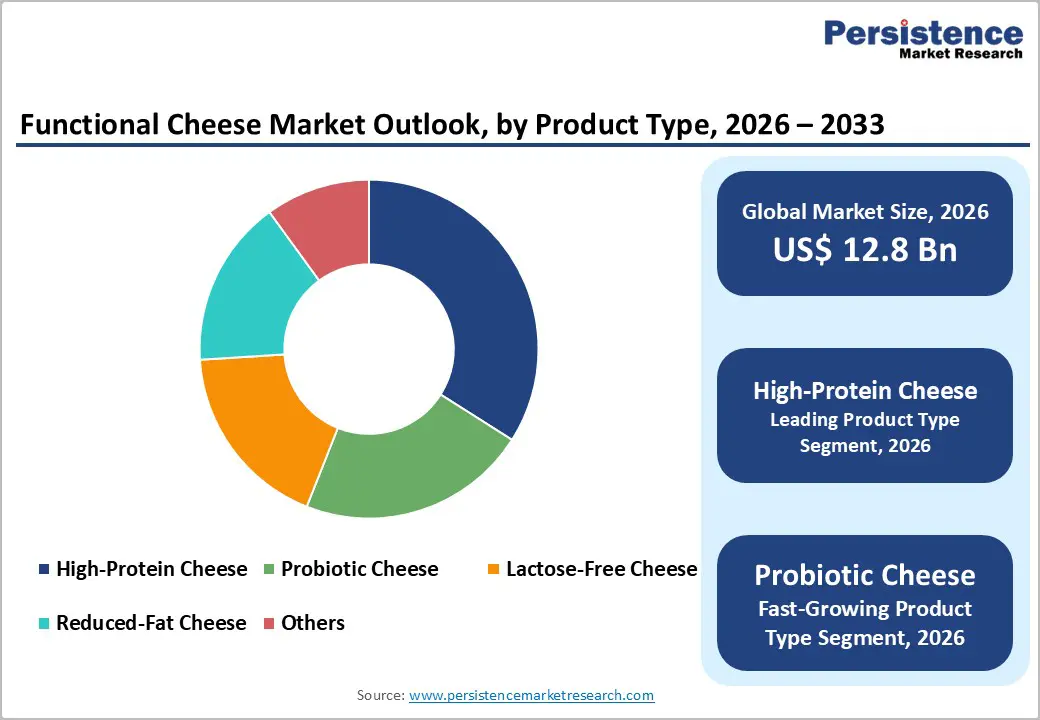
The high-protein cheese segment is the leading segment in product type, accounting for a dominant 35% market share in 2025. Its leadership is justified by its widespread adoption in the fitness community and its perception as a satiating meal replacement. Consumers are increasingly replacing high-carb snacks with high-protein cheese sticks and curds. Meanwhile, Probiotic Cheese is identified as the fastest growing segment through 2033. This rapid growth is fueled by the burgeoning scientific evidence linking the gut microbiome to overall immunity and mental health. As dairy technology allows for the inclusion of heat-stable probiotic strains that survive the cheese-making process, this segment is expected to see a surge in innovation, particularly in the spreadable and soft cheese categories.
Source Insights
The dairy-based segment led in 2025, supported by the natural nutritional density of cow, goat, and sheep milk. Traditional dairy cheese already contains high-quality proteins and calcium, making it a natural base for functional enhancement. Leading cooperatives like Fonterra Co-operative Group leverage their control over raw milk supply to ensure high-quality functional derivatives. On the other hand, the Plant-Based segment is the fastest-growing source. This is driven by the increasing prevalence of dairy allergies and the environmental concerns associated with industrial dairy farming. As companies master the use of cashews, almonds, and fermented oats to create "cheese-like" structures, the integration of functional nutrients into these products is becoming a key differentiator for premium plant-based brands.
Region-wise Insights
North America Functional Cheese Market Trends and Insights
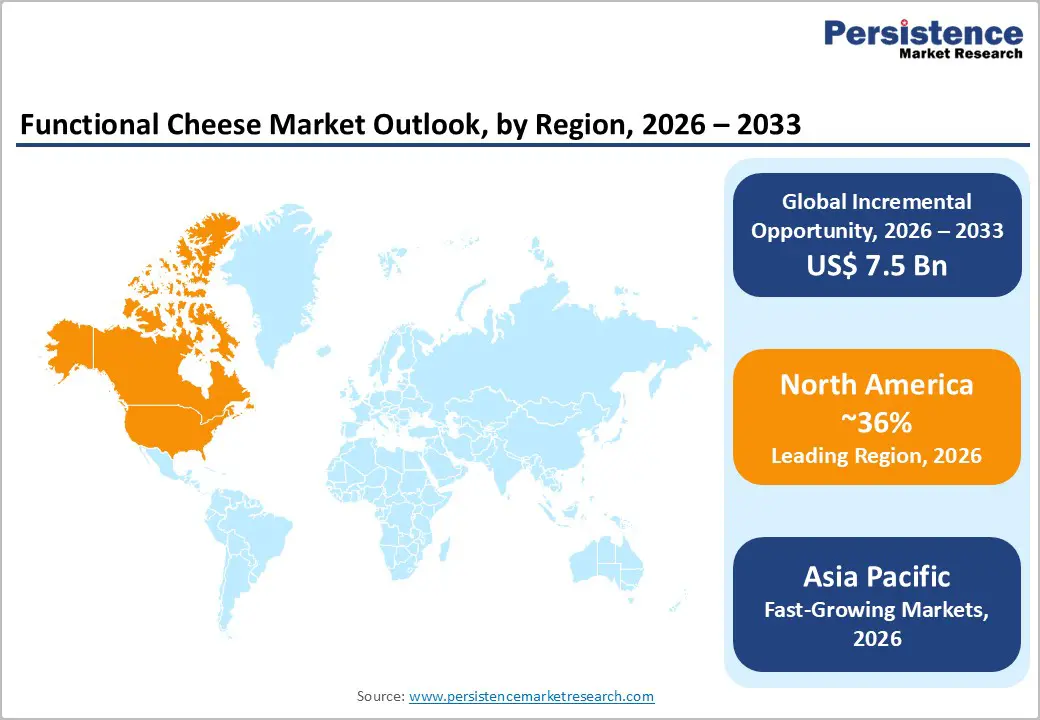
North America is the leading region in the global market, holding a 36% share in 2025. The region's leadership is underpinned by a highly developed "snackification" culture and a mature health-and-wellness retail infrastructure. In the United States, the regulatory framework provided by the FDA allows for a clear, albeit strict, path for functional labeling, which has encouraged major players like The Kraft Heinz Company and Leprino Foods to invest in the segment.
Innovation in this region is focused on convenience and portability. There is a notable trend toward "on-the-go" functional cheese packs that combine cheese with nuts and dried fruits to create a balanced macronutrient profile. Furthermore, the high prevalence of lactose intolerance in the U.S. has made the Lactose-Free Cheese segment a staple in mainstream supermarkets. The presence of a strong innovation ecosystem, with several biotech startups working on precision fermentation in California, ensures that North America remains at the forefront of functional dairy breakthroughs and consumer adoption.
Asia Pacific Functional Cheese Market Trends and Insights
Asia Pacific is identified as the fastest-growing segment for the functional cheese market through 2033. This rapid expansion is primarily driven by the westernization of diets in China, Japan, and India, combined with a growing middle class that is increasingly health-conscious. In Japan, the concept of "FOSHU" (Foods for Specified Health Uses) has paved the way for the acceptance of functional dairy products. Meiji Holdings is a key player here, focusing on calcium-fortified and bone-health-centric cheese products for the elderly.
Growth dynamics in China are particularly noteworthy, as the government promotes dairy consumption for its nutritional benefits. Since a large portion of the Asian population is naturally lactose-intolerant, the Lactose-Free Cheese and Probiotic Cheese segments are seeing explosive growth. The region's manufacturing advantages, along with the rapid expansion of Online Retail channels like Alibaba and JD.com, enable functional cheese brands to reach vast urban populations quickly. As local dairy giants in India and China increase their R&D spend, the region is set to become a global leader in functional dairy innovation.
Competitive Landscape
The functional cheese market exhibits a consolidated structure at the top, where global dairy conglomerates like Lactalis Group, Danone S.A., and Saputo Inc. hold significant market share. These companies leverage their massive distribution networks and R&D budgets to dominate the Supermarkets & Hypermarkets channel. However, the market is seeing increasing fragmentation at the niche level, where specialized health-focused brands are carving out space in Specialty Stores and Online Retail. Key differentiators employed by market leaders include proprietary probiotic strains and patented ultrafiltration technologies. Emerging business model trends point to strategic partnerships between dairy companies and biotech firms to develop "next-gen" functional ingredients. As the market moves toward personalized nutrition, companies that can offer tailored functional profiles, such as cheese for bone health or cognitive support, will likely gain a competitive edge.
Key Developments:
- In February 2026, Arla Foods announced its largest-ever investment in a new cheese dairy in Sweden, aimed at expanding production capacity and strengthening the company’s position in the premium European cheese market.
- In February 2026, Kraft Natural Cheese introduced a new range of high-protein cheese sticks in the United States, responding to the rising consumer demand for convenient, protein-rich dairy snack options.
- In November 2025, Planteneers launched a new portfolio of plant-based cheese alternatives, developed to deliver improved sensory qualities and nutritional value while addressing the growing demand for dairy-free cheese solutions.
- In March 2025, Lindahls launched a high-protein cheese and dairy drink range, targeting fitness-focused consumers seeking functional dairy products with enhanced protein content.
Companies Covered in Functional Cheese Market
- The Kraft Heinz Company
- Danone S.A.
- Royal FrieslandCampina N.V.
- Fonterra Co-operative Group
- Lactalis Group
- Saputo Inc.
- Savencia SA
- Arla Foods amba
- Meiji Holdings
- Agropur
- Leprino Foods
- Others
Frequently Asked Questions
The global functional cheese market is projected to be valued at US$ 12.8 Bn in 2026.
Rising Consumer Awareness Regarding Preventative Healthcare and Gut Health is a major factor driving global Functional Cheese market.
The Global Functional Cheese market is poised to witness a CAGR of 6.8% between 2026 and 2033
Expansion into the Online Retail and Subscription Box Channel is a significant opportunity in the Functional Cheese market.
Major players in the Global Functional Cheese market include The Kraft Heinz Company, Danone S.A., Royal FrieslandCampina N.V., Fonterra Co-operative Group, Lactalis Group, Saputo Inc., and others.


