




- Beverages
- Fruit Beer Market
Fruit Beer Market Size, Share, Growth, and Regional Forecast, 2026 to 2033
Fruit Beer Market by Flavor (Peach, Raspberry, Cherry, Apricot, Strawberry, Others), Distribution Channel (On-Trade, Off-Trade), and Regional Analysis from 2026 to 2033

Fruit Beer Market Share and Trends Analysis
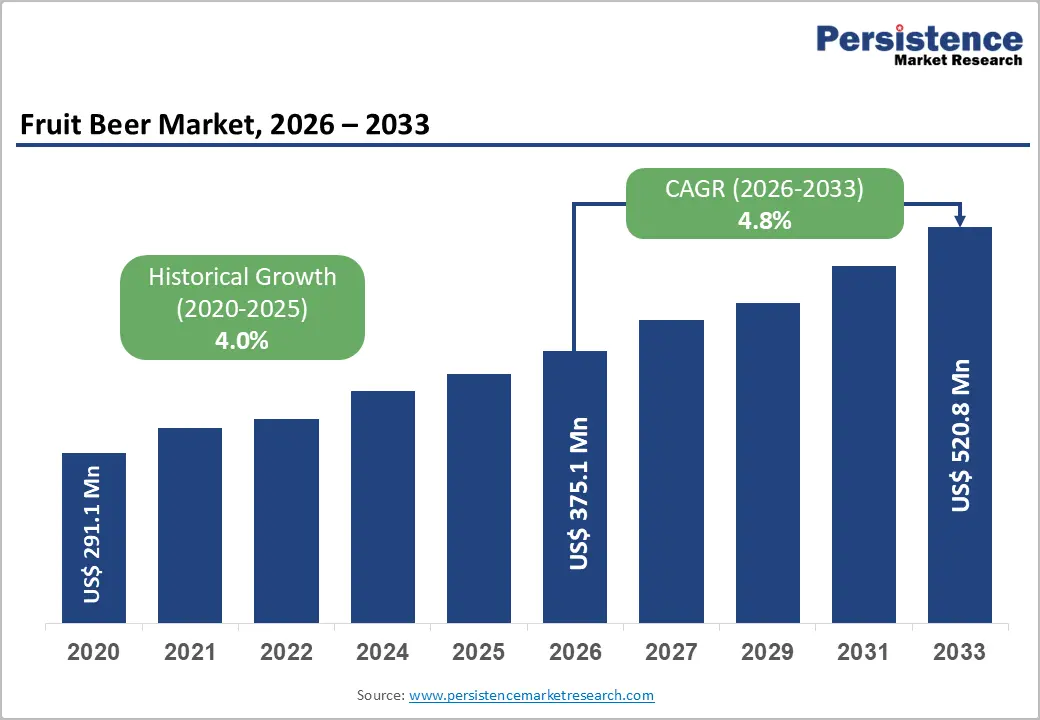
The global fruit beer market is estimated to grow from US$ 375.1 million in 2026 to US$ 520.8 million by 2033. The market is projected to record a CAGR of 4.8% during the forecast period from 2026 to 2033.
The global market is expanding steadily, driven by growing consumer preference for flavored alcoholic beverages and innovative craft brewing. Europe leads due to a strong beer culture and established breweries, while Asia-Pacific is the fastest-growing region, supported by rising disposable incomes, urbanization, and increasing demand for premium and flavored beer varieties.
Key Industry Highlights:
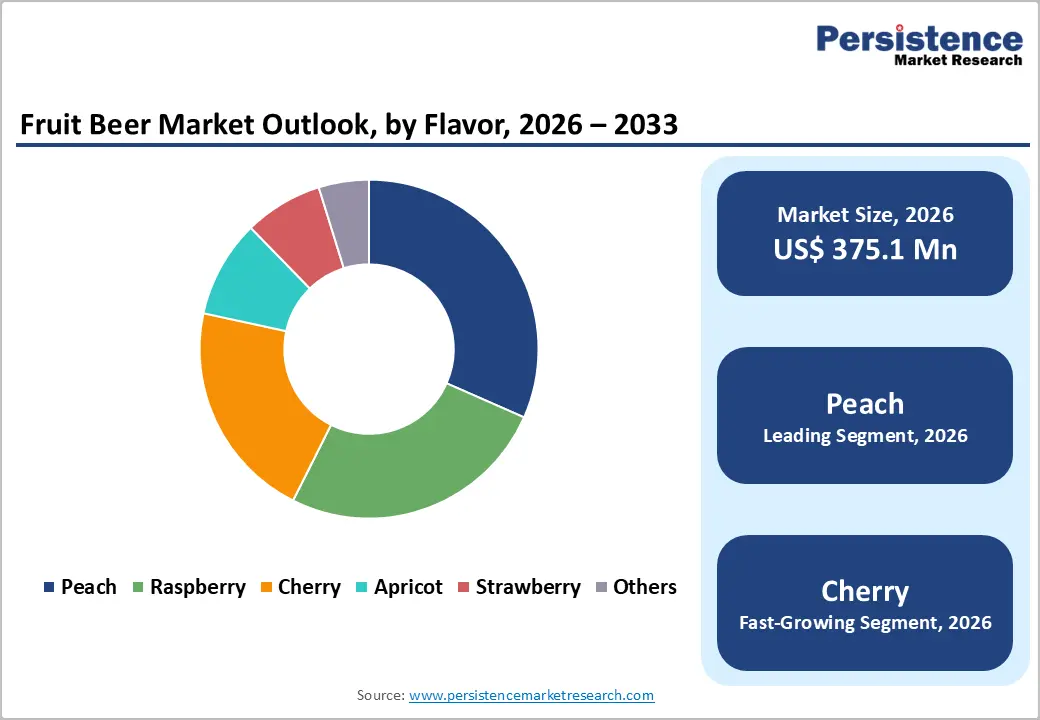
- Dominant Segment: Peach fruit beer held nearly 31.6% share in 2025, driven by strong consumer preference for sweet, refreshing alcoholic beverages and increasing product innovation with flavors such as cherry, peach, raspberry, and strawberry, especially among younger consumers and craft beer drinkers.
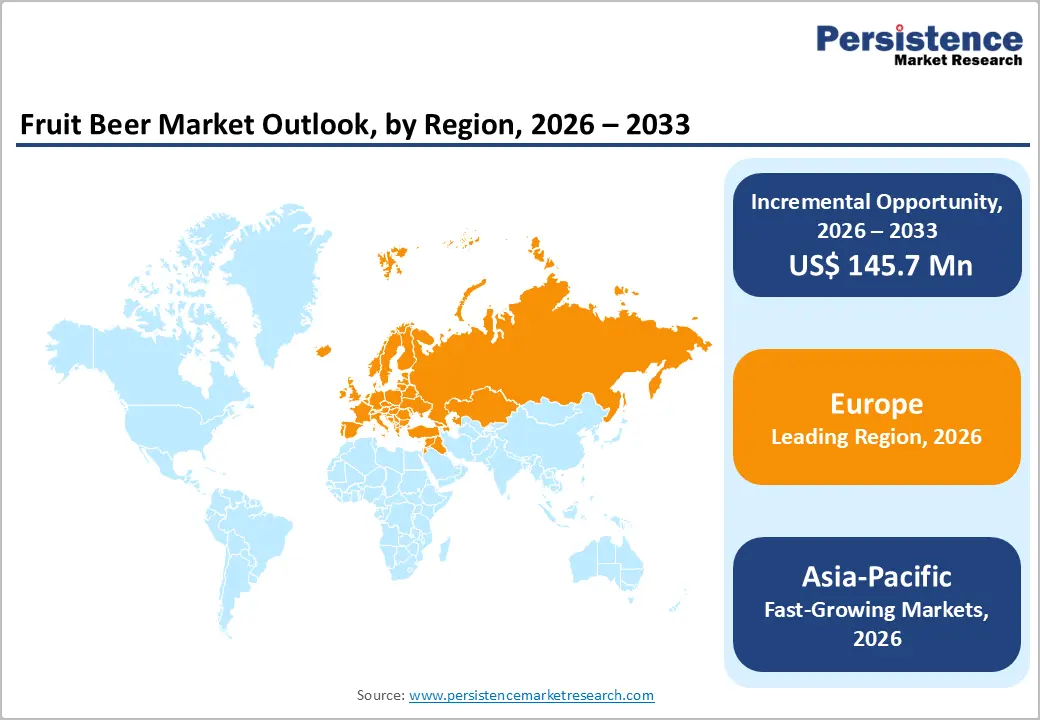
- Dominant Region: Europe is the leading region in the fruit beer market with 36.7% share in 2025, supported by a long-standing beer culture, strong presence of traditional fruit beer styles such as Belgian lambics, and high consumption across countries like Belgium, Germany, and the UK.
- Market Drivers: Growth is driven by rising demand for flavored alcoholic beverages, expanding craft beer industry, increasing consumer preference for low-bitterness beer, and continuous innovation in fruit-based beer flavors and premium products.
- Market Opportunity: Opportunities include the development of low-alcohol and non-alcoholic fruit beers, the expansion of craft breweries, the introduction of exotic fruit flavors, and increasing demand from emerging markets with evolving beer consumption habits.
| Key Insights | Details |
|---|---|
| Global Fruit Beer Market Size (2026E) | US$ 375.1 Mn |
| Market Value Forecast (2033F) | US$ 520.8 Mn |
| Projected Growth (CAGR 2026 to 2033) | 4.8% |
| Historical Market Growth (CAGR 2020 to 2025) | 4.0% |
Market Dynamics
Driver: Rising Consumer Demand for Flavored and Innovative Beer Varieties
The global beverage industry is witnessing a strong shift toward flavored alcoholic beverages, particularly among younger consumers seeking refreshing and less bitter alternatives to traditional beer. Fruit beer has gained popularity because the addition of natural fruit extracts enhances sweetness and reduces bitterness, making it more approachable for new drinkers. Studies show that about 64% of consumers aged 21-34 prefer fruit-flavored beer over traditional beer styles, reflecting a generational shift toward experimentation and flavor diversity. Additionally, fruit flavors reduce perceived bitterness by around 43%, which significantly increases first-time trial and repeat purchases among casual beer drinkers.
Market trends also indicate strong consumer interest in innovative fruit-based beverages. More than 65% of breweries introduced new fruit-infused beer products between 2023 and 2025, focusing on natural fruit ingredients and unique flavor combinations to attract modern consumers. Furthermore, flavored varieties already account for over 50% of total fruit beer demand globally, showing how central flavor innovation has become to the category. The rapid expansion of craft breweries and experimental brewing styles has further accelerated the adoption of fruit beers, making flavor innovation one of the most important drivers supporting long-term growth in the fruit beer market.
Restraint: High Production Costs of Fruit-Infused Brewing
Despite strong demand, fruit beer production is more complex and expensive than conventional beer brewing. Fruit-infused beers require additional ingredients such as fresh fruit pulp, puree, or juice concentrates, which increase raw material costs and introduce variability in production. Seasonal availability of fruits, transportation costs, and storage requirements also raise expenses for breweries. In many cases, fruit beer production requires specialized processing techniques to preserve flavor and prevent fermentation instability, increasing operational costs compared to traditional lager or ale production.
Another challenge is the stability and shelf life of fruit-based beers. Natural fruit ingredients are more susceptible to oxidation, microbial contamination, and flavor degradation during storage. As a result, around 27-34% of distributors report higher spoilage and storage sensitivity for fruit beers compared with conventional beers, which increases wastage and logistics costs. These technical challenges can limit large-scale production and raise retail prices, making fruit beer less competitive in price-sensitive markets. Consequently, higher production costs remain a key restraint affecting profitability and market expansion for fruit beer manufacturers.
OPPORTUNITY: Growing Demand for Low-Alcohol and Non-Alcoholic Fruit Beers
The global beverage market is experiencing a rapid shift toward healthier and moderation-focused drinking habits. Consumers, especially millennials and Gen Z, increasingly prefer beverages with lower alcohol content that still deliver flavor and refreshment. Fruit beers are well positioned to benefit from this trend because fruit ingredients naturally complement lighter and lower-alcohol beer styles. Market observations indicate that about 18% of consumers are switching from soft drinks to fruit-based beer beverages as a “healthier indulgence” option, reflecting rising demand for lighter alcoholic drinks.
The growth of the non-alcoholic beer segment further highlights this opportunity. Global retail sales of non-alcoholic beer exceeded USD 17 billion in 2023, and the category is expanding faster than traditional beer in many markets as consumers adopt “sober-curious” lifestyles. Many major breweries are therefore introducing alcohol-free or low-alcohol fruit beer variants to attract health-conscious consumers and expand product portfolios. This shift toward low-alcohol and non-alcoholic alternatives is expected to create significant opportunities for fruit beer producers, particularly in urban markets where consumers seek flavorful yet moderate drinking options.
Category-wise Insights
By Flavor
Peach is one of the most widely preferred flavors in fruit beer because of its natural sweetness, mild acidity, and aromatic profile, which blends well with light beer styles such as wheat beer and lagers. Its balanced flavor improves drinkability by reducing bitterness while maintaining a refreshing taste, making it attractive to both experienced beer drinkers and new consumers. Market observations indicate that peach-flavored fruit beer accounts for about 31.6% of the flavor segment, reflecting its strong global acceptance among consumers seeking sweeter and lighter alcoholic beverages.
Another reason for peach’s dominance is its versatility and seasonal popularity. Peach pairs easily with brewing bases without overpowering the beer’s body, allowing breweries to create smooth and aromatic beverages. Industry data also shows that peach variants represent around 18% of global fruit beer demand and production volumes increased by about 22% between 2022 and 2024, demonstrating rising consumer interest. The flavor’s broad appeal across demographics, especially younger drinkers who prefer sweeter and less bitter beverages, has helped peach remain a leading flavor in the fruit beer market worldwide.
By Distribution Channel
On-trade channels such as bars, pubs, restaurants, and breweries dominate the fruit beer market because these venues encourage social consumption and product experimentation. Fruit beer is often introduced to consumers through taprooms and restaurants where customers can sample new flavors and seasonal varieties. Data shows that bars and restaurants account for a significant share of fruit beer sales due to their high customer footfall and wide availability of flavored beer options, which increases product visibility and trial rates.
Another important factor is the experiential nature of fruit beer consumption. Breweries frequently launch limited-edition or seasonal fruit beers through pubs and festivals to attract consumers looking for unique drinking experiences. Industry insights indicate that on-trade establishments play a major role in promoting fruit beers through tasting events, food pairings, and social drinking occasions, helping consumers discover new flavors. Because fruit beer is often marketed as a premium or craft beverage, consumers prefer to try it in bars or restaurants first, making on-trade channels the dominant distribution route in the global fruit beer market.
Regional Insights
Europe Fruit Beer Market Trends
Europe dominates the fruit beer market mainly because of its strong brewing heritage and high beer consumption across many countries. Belgium, Germany, and the United Kingdom have centuries-old traditions of brewing fruit-based beers such as lambic, kriek, and framboise. The region also has a very large beer production base. According to Eurostat, European Union countries produced 34.7 billion litres of beer in 2024, highlighting the region’s strong brewing capacity and mature beer industry. Germany alone produced 7.2 billion litres, accounting for more than 22% of total EU production.
Europe also benefits from strong consumer acceptance of flavored and specialty beers. Many European breweries focus on fruit-infused varieties made from cherries, raspberries, or peaches, which are widely consumed in pubs and restaurants. The region also has a dense network of microbreweries and craft breweries that experiment with fruit ingredients, helping expand the category. Because beer already holds a dominant share of alcohol consumption in many European countries, fruit beer has naturally gained traction as a premium and innovative extension of traditional beer styles.
North America Fruit Beer Market Trends
North America is an important region for the fruit beer market due to its strong craft brewing industry and high consumer demand for innovative alcoholic beverages. The United States has one of the largest brewing industries globally, supported by thousands of independent craft breweries that frequently introduce fruit-flavored beers. According to the Brewers Association, U.S. craft breweries produced more than 25 million barrels of beer in 2023, with many breweries experimenting with fruit-based styles such as raspberry ales, citrus IPAs, and peach lagers.
Another factor is consumer preference for premium and experimental drinks. Younger consumers in North America increasingly prefer beers with distinctive flavors and lower bitterness, encouraging breweries to innovate with fruit ingredients. Government support for local agriculture also strengthens this market. Programs from the U.S. Department of Agriculture encourage breweries to source fruits and agricultural ingredients locally, improving supply chains for fruit-based brewing. These trends have helped North America become a key innovation hub for fruit beer products and craft brewing styles.
Asia Pacific Fruit Beer Market Trends
Asia-Pacific is the fastest-growing region in the fruit beer market due to rapid urbanization, rising disposable incomes, and changing consumer lifestyles. Many countries in the region, including China, India, Japan, and South Korea, are experiencing strong growth in modern retail, nightlife culture, and premium beverage consumption. Increasing exposure to Western drinking habits has encouraged younger consumers to try flavored alcoholic beverages such as fruit beer. As a result, production capacity for fruit beer in the region has expanded significantly in recent years.
Economic growth and demographic trends further support this expansion. The Asia-Pacific region accounts for more than 60% of the global population, according to the United Nations, creating a massive consumer base for new beverage categories. Rising middle-class incomes and urban lifestyles are increasing demand for premium and flavored beers in metropolitan areas. In addition, the growing craft brewing scene in countries such as Japan, China, and Australia is introducing innovative fruit-infused beer styles, accelerating the adoption of fruit beer across the region.
Competitive Landscape
The fruit beer market is highly competitive, led by global brewing companies such as Anheuser-Busch InBev, Heineken N.V., Carlsberg Group, and Molson Coors Beverage Company. These companies focus on launching innovative fruit-flavored beers, expanding craft beer portfolios, strengthening distribution networks, and introducing seasonal or limited-edition products to attract younger consumers and maintain market share.
Key Industry Developments:
- In February 2026, Heineken N.V. expanded its non-alcoholic beverage portfolio by introducing two new flavored variants under its Heineken® 0.0 brand: Cold Pressed Lime and Nectarine Juniper. The launch aimed to strengthen the company’s presence in the rapidly growing non-alcoholic beer segment by offering refreshing flavor options for consumers seeking alcohol-free alternatives.
- In January 2026, Heineken N.V. completed the acquisition of the beverage and retail businesses of Florida Ice & Farm Company (FIFCO) in the United States. The transaction strengthened HEINEKEN’s presence in the North American market by expanding its distribution capabilities and enhancing its access to retail and beverage operations.
Companies Covered in Fruit Beer Market
- Anheuser Busch InBev
- Carlsberg Group
- Heineken N.V.
- SABMiller (AB InBev)
- Molson Coors Beverage Company
- Asahi Group Holdings, Ltd.
- Kirin Holdings Company, Limited
- Tsingtao Brewery Co., Ltd.
- Boston Beer Company (Samuel Adams)
- BrewDog plc
- Duvel Moortgat NV (Brouwerij Duvel)
- Dogfish Head Craft Brewery
- Sierra Nevada Brewing Co.
- Others
Frequently Asked Questions
The global fruit beer market is projected to be valued at US$ 375.1 Mn in 2026.
Rising demand for flavored alcoholic beverages, craft beer expansion, youth preference, product innovation, and premiumization trends.
The global fruit beer market is poised to witness a CAGR of 4.8% between 2026 and 2033.
Growth in low-alcohol fruit beers, exotic flavors, craft brewery expansion, emerging markets, and premium beverage demand.
Anheuser Busch InBev, Carlsberg Group, Heineken N.V., SABMiller (AB InBev), Molson Coors Beverage Company, Asahi Group Holdings, Ltd.


