




- Healthcare Services
- Emergency Telemedicine Services Market
Emergency Telemedicine Services Market Size, Share, and Growth Forecast, 2026 – 2033
Emergency Telemedicine Services Market by Product Type (Teleconsultation, Telemonitoring, Teleeducation, Telecare, Teletraining), Application (Cardiology, Neurology, Dermatology, Orthopedics, Emergency care), and Regional Analysis for 2026 – 2033

Emergency Telemedicine Services Market Size and Trends Analysis
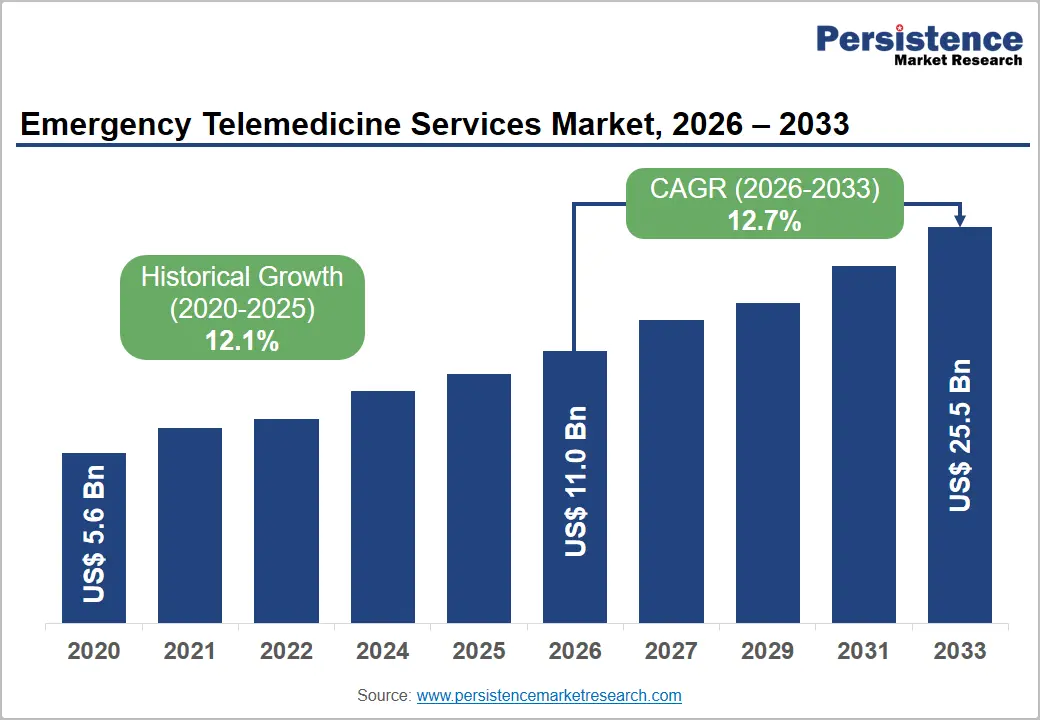
The global emergency telemedicine services market size is likely to be valued at US$11.0 billion in 2026 and is expected to reach US$25.5 billion by 2033, growing at a CAGR of 12.7% during the forecast period from 2026 to 2033, driven by the increasing adoption of remote emergency care to improve access, reduce treatment delays, and address workforce shortages. Emergency telemedicine plays a critical role in managing acute conditions such as stroke, cardiac emergencies, and trauma through real-time specialist consultations and remote patient monitoring. In 2024, the World Health Organization (WHO) highlighted telemedicine as a key digital health intervention for strengthening healthcare delivery, particularly for noncommunicable diseases and emergency care. The OECD reported that teleconsultation usage across member countries remained twice the pre-pandemic level in 2023, reflecting the continued integration of telemedicine into routine healthcare services.
Key Industry Highlights:
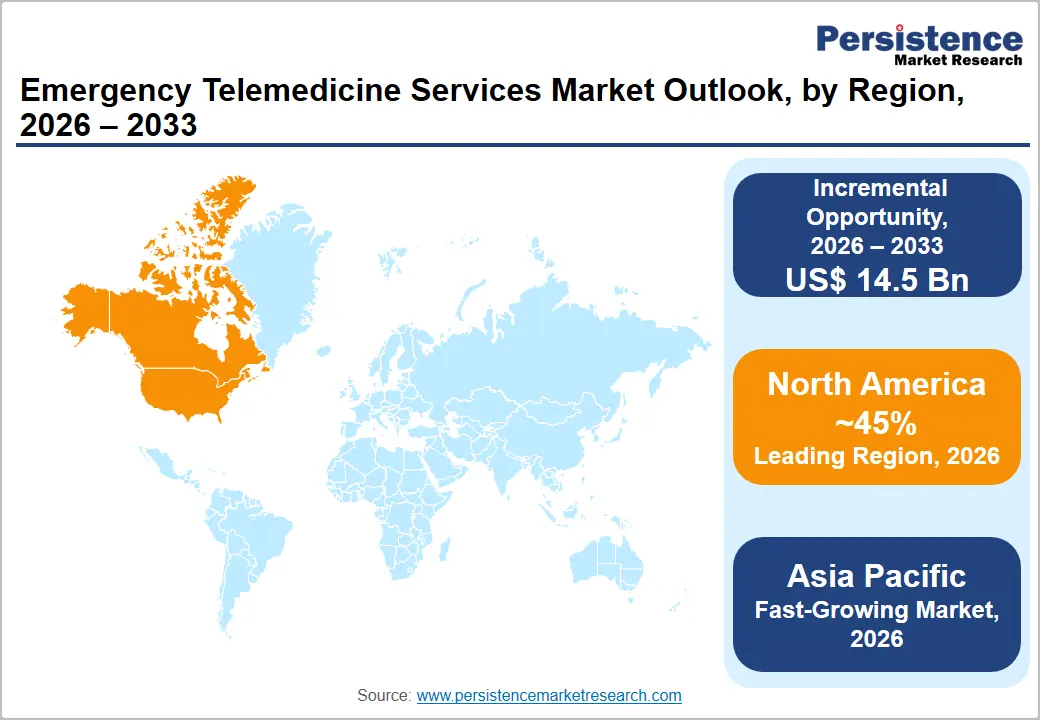
- Leading Region: North America is anticipated to be the leading region, accounting for a market share of 45% in 2026, driven by advanced healthcare infrastructure, favorable reimbursement policies, and high telehealth adoption.
- Fastest-growing Region: Asia Pacific is likely to be the fastest-growing region, supported by rapid digital health expansion, government initiatives, and increasing adoption of emergency telemedicine services.
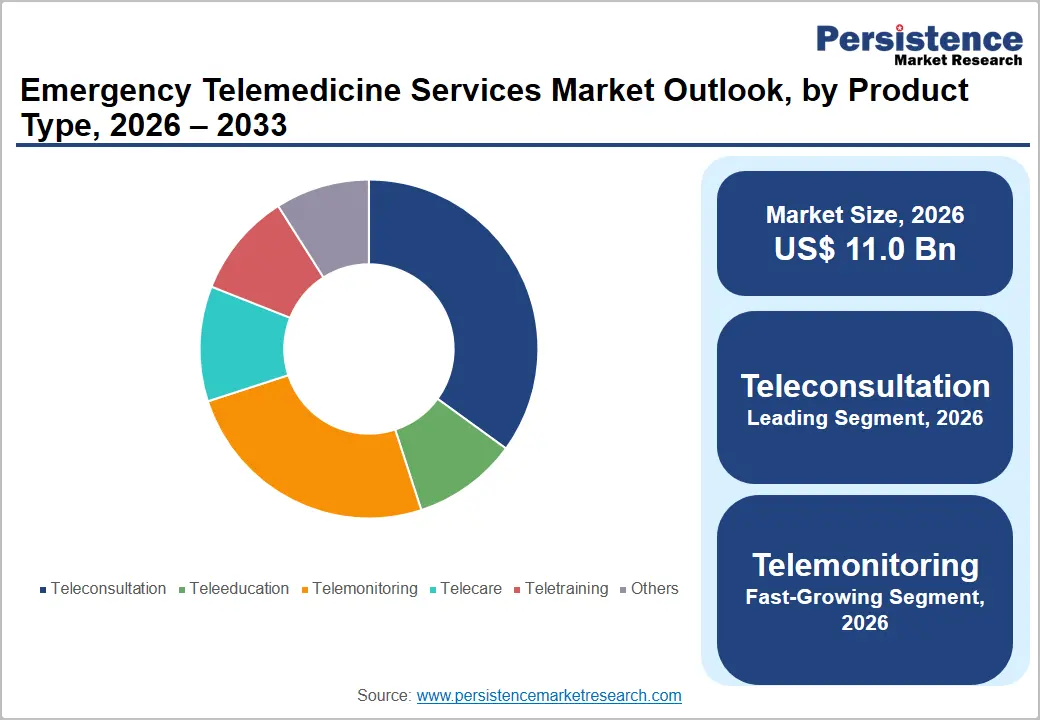
- Leading Product Type: The teleconsultation segment is projected to represent the leading product type in 2026, accounting for 42% of the revenue share, due to its widespread use in real-time emergency consultations.
- Leading Application: The neurology segment is anticipated to be the leading application, accounting for over 30% of the revenue share in 2026, supported by the growing adoption of telestroke services.
- Key Opportunity: Expanding AI-enabled emergency telemedicine platforms integrated with remote patient monitoring and digital healthcare infrastructure to improve rapid emergency care access across underserved, rural, and urban populations worldwide.
DRO Analysis
Driver - Technological Advancements and Infrastructure Improvements
High-speed internet, cloud computing, artificial intelligence, wearable medical devices, and secure communication platforms have significantly improved the efficiency of emergency consultations. Hospitals increasingly integrate telemedicine solutions with electronic health records, ambulance networks, and emergency departments to accelerate clinical decision-making.
The rollout of 5G networks enhances real-time transmission of high-resolution medical images and patient data, allowing specialists to assess critical conditions remotely while reducing treatment delays and improving overall emergency care coordination across healthcare systems. Infrastructure improvements continue to support emergency telemedicine adoption by expanding digital healthcare capabilities.
Governments and healthcare organizations are investing in broadband connectivity, digital hospitals, interoperable health information systems, and remote monitoring networks to improve emergency response. Modern emergency medical services increasingly utilize connected ambulances equipped with telemedicine platforms that allow physicians to guide treatment before hospital arrival.
Restraint - Data Privacy and Security Concerns
Emergency telemedicine platforms process highly sensitive patient information, including medical histories, diagnostic images, laboratory reports, and live video consultations. The increasing use of cloud-based healthcare systems and connected medical devices raises concerns regarding unauthorized access, ransomware attacks, and data breaches. Healthcare providers must comply with strict national and international data protection regulations while ensuring uninterrupted emergency services.
Cybersecurity challenges become increasingly complex as emergency telemedicine networks expand across multiple healthcare facilities and connected devices. Integration with electronic health records, wearable devices, ambulances, and remote monitoring systems creates additional entry points for cyber threats if security measures are inadequate. Healthcare organizations must implement encryption, multi-factor authentication, secure cloud architecture, and continuous network monitoring to minimize risks.
Opportunity - Technological Convergence with AI and IoT
AI-powered clinical decision support systems assist physicians in rapidly identifying high-risk patients, interpreting medical images, and prioritizing emergency cases. IoT-enabled wearable devices continuously monitor vital signs, allowing healthcare professionals to detect medical deterioration before emergencies become critical.
Integration of connected sensors, cloud platforms, and predictive analytics enables proactive emergency care while improving response times. These technologies support more accurate diagnoses, optimized resource allocation, and enhanced patient monitoring across hospitals, ambulances, and home healthcare environments.
Future opportunities will expand as healthcare providers increasingly combine AI, IoT, advanced analytics, and next-generation communication networks within emergency medical systems. Smart ambulances equipped with connected diagnostic devices can transmit patient data directly to emergency specialists before hospital arrival, enabling immediate treatment planning. AI algorithms can analyze large volumes of clinical data to predict emergency events and recommend appropriate interventions.
Category-wise Analysis
Product Type Insights
The teleconsultation segment is expected to lead, accounting for 42% of revenue in 2026, due to its ability to provide immediate access to emergency specialists regardless of patient location. The service enables emergency physicians, neurologists, cardiologists, and trauma experts to assess patients remotely through secure audio and video communication, significantly reducing treatment delays during time-sensitive medical conditions. For example, Teladoc Health provides emergency teleconsultation services that connect hospitals with remote specialists for faster clinical decisions.
The telemonitoring segment is likely to represent the fastest-growing segment, supported by increasing adoption of connected medical devices, wearable sensors, and continuous remote patient monitoring technologies. Continuous transmission of vital signs enables clinicians to identify early deterioration and initiate timely medical intervention before conditions become life-threatening. A notable example is BioTelemetry, Inc., which offers remote cardiac monitoring solutions for continuous patient monitoring and early emergency detection.
Application Insights
The neurology segment is projected to lead the market, capturing around 30% of the revenue share in 2026, supported by the widespread adoption of telestroke services and the urgent need for rapid neurological assessment. Stroke treatment is highly time-sensitive, making immediate access to neurologists essential for improving patient survival and minimizing long-term disability. For instance, the Mayo Clinic Telestroke Network enables rapid remote stroke diagnosis and treatment support for hospitals.
The emergency care segment is expected to be the fastest-growing application, driven by the increasing integration of telemedicine into emergency medical services, ambulance networks, and hospital emergency departments. Remote emergency consultations enable physicians to assess trauma, cardiac events, respiratory emergencies, and other acute conditions before patients arrive at healthcare facilities. For example, Medtronic supports emergency telemedicine through connected patient monitoring technologies designed for critically ill patients.
Regional Insights
North America Emergency Telemedicine Services Market Trends
North America is anticipated to be the leading region, accounting for a global market share of 45% in 2026, supported by advanced healthcare infrastructure, favorable reimbursement policies, and widespread adoption of digital health technologies. For instance, Oracle Health has expanded its cloud-based healthcare platform, enabling hospitals to integrate emergency telemedicine with electronic health records and clinical workflows for faster care coordination.
U.S. Emergency Telemedicine Services Market Trends
The U.S. is expected to dominate, accounting for approximately 80% of the regional market share in 2026, driven by hospitals increasingly integrating telemedicine into emergency departments, stroke centers, and intensive care units to improve specialist access and reduce treatment delays. Expansion of AI-supported triage systems and connected ambulance programs is enhancing emergency response capabilities. Government reimbursement policies continue encouraging telehealth adoption across healthcare providers. Healthcare organizations are investing in secure cloud infrastructure, remote monitoring technologies, and interoperable digital platforms.
Canada Emergency Telemedicine Services Market Trends
Canada is expected to be a significant market for emergency telemedicine services, accounting for approximately 20% of the regional share in 2026. Growth is supported by provincial government investments in digital healthcare infrastructure and virtual emergency care programs that connect community hospitals with specialist physicians. Healthcare providers are increasingly deploying remote patient monitoring and virtual consultations for emergency assessment and follow-up care. Additionally, the expansion of broadband connectivity is improving access to reliable telemedicine services across underserved communities.
Europe Emergency Telemedicine Services Market Trends
Europe is likely to be a significant market for emergency telemedicine services in 2026, due to increasing digital healthcare adoption, supportive government policies, and rising demand for rapid emergency care. Healthcare providers are integrating teleconsultation, remote patient monitoring, and AI-enabled clinical decision support into emergency departments to improve patient outcomes and reduce treatment delays. For example, Siemens Healthineers offers digital health and remote imaging solutions that enhance emergency diagnosis and hospital care coordination across Europe.
U.K. Emergency Telemedicine Services Market Trends
The U.K. is expected to be a significant market for emergency telemedicine services, accounting for approximately 14% of the Europe market in 2026. Growth is supported by the increasing use of remote specialist consultations in emergency departments to improve patient triage and reduce waiting times. Investments by the NHS in digital infrastructure, electronic patient records, and virtual care pathways are accelerating telemedicine adoption across hospitals. In addition, remote patient monitoring technologies are enhancing the management of individuals with chronic conditions requiring urgent medical attention. Collaboration between NHS trusts and healthcare technology providers continues to strengthen emergency care delivery.
Germany Emergency Telemedicine Services Market Trends
Germany is anticipated to dominate, accounting for around 38% of the Europe market share in 2026, due to its advanced healthcare infrastructure and strong digital health investments. Hospitals are increasingly implementing telemedicine platforms to support emergency consultations, stroke management, and intensive care services. The country's digital healthcare reforms continue encouraging the integration of connected medical technologies across healthcare facilities.
Asia Pacific Emergency Telemedicine Services Market Trends
The Asia Pacific region is likely to be the fastest-growing region, driven by rapid digitalization, expanding healthcare infrastructure, and supportive government initiatives. Rising smartphone penetration, increasing internet connectivity, and growing demand for accessible emergency healthcare continue to drive adoption across the region. A notable example includes Fujifilm Healthcare, which provides digital diagnostic imaging and telehealth solutions, supporting remote emergency consultations and improving clinical decision-making across hospitals in Asia Pacific.
China Emergency Telemedicine Services Market Trends
China is projected to dominate, accounting for approximately 30% of the regional market share, driven by the increasing adoption of AI-assisted clinical decision support, cloud-based platforms, and remote imaging technologies by major hospitals to enhance emergency diagnosis and treatment. The expansion of 5G connectivity is enabling real-time communication between ambulances and hospitals, while healthcare providers are strengthening remote specialist networks to improve access to emergency care across rural and underserved provinces.
India Emergency Telemedicine Services Market Trends
India is expected to account for approximately 22% of the regional share in 2026, as hospitals are adopting telemedicine platforms to connect emergency physicians with specialists, reducing delays in diagnosis and treatment. Growth in smartphone usage and affordable digital technologies supports wider patient access to emergency healthcare services. Increasing deployment of remote patient monitoring, electronic health records, and AI-enabled healthcare solutions continues to strengthen emergency care delivery.
Competitive Landscape
The global emergency telemedicine services market exhibits a moderately fragmented structure, driven by the presence of established healthcare technology providers, digital health companies, medical device manufacturers, and specialized telemedicine solution providers. Market participants are focused on expanding emergency care capabilities through integrated teleconsultation platforms, remote patient monitoring, AI-assisted clinical decision support, and cloud-based healthcare systems.
With key leaders, including Aerotel Medical Systems, Allscripts Healthcare, BioTelemetry, Inc., Medtronic, McKesson Corporation, Honeywell International Inc., and AMD Telemedicine, the market continues to witness strategic investments in advanced emergency care technologies and digital healthcare infrastructure. These players compete through continuous product innovation, strategic partnerships with hospitals and emergency medical service providers, acquisitions, software platform enhancements, and expansion of remote monitoring capabilities.
Key Industry Developments:
- In December 2025, Researchers published "Transforming Emergency Care Through Telemedicine: A Narrative Review" in Cureus, highlighting that telemedicine is becoming a core component of emergency care by improving access to specialist consultations, enhancing clinical outcomes, reducing emergency department overcrowding, and supporting AI-enabled remote monitoring and disaster response capabilities.
Companies Covered in Emergency Telemedicine Services Market
- Aerotel Medical Systems
- Allscripts Healthcare
- BioTelemetry, Inc.
- Medtronic
- McKesson Corporation
- Honeywell International Inc.
- AMD Global Telemedicine
Frequently Asked Questions
The global emergency telemedicine services market is projected to reach US$11.0 billion in 2026.
Rising adoption of digital healthcare technologies, increasing emergency care demand, and advancements in telecommunication infrastructure drive the emergency telemedicine services market.
The emergency telemedicine services market is expected to grow at a CAGR of 12.7% from 2026 to 2033.
Integration of AI, IoT-enabled remote patient monitoring, and expansion of emergency telemedicine services in underserved and rural regions present significant market opportunities.
Aerotel Medical Systems, Allscripts Healthcare, BioTelemetry, Inc., Medtronic, and McKesson Corporation are the leading players.


