




- Nutraceuticals & Functional Foods
- Eggshell Membrane Derivatives Market
Eggshell Membrane Derivatives Market Size, Share, and Growth Forecast, 2026 - 2033
Eggshell Membrane Derivatives Market by Processing Grade (Hydrolyzed, Unhydrolyzed), Form (Powdered, Concentrated/Liquid, Capsules/Tablets), Application (Nutraceuticals, Cosmetics, Others), and Regional Analysis 2026 - 2033

Eggshell Membrane Derivatives Market Size and Trends Analysis
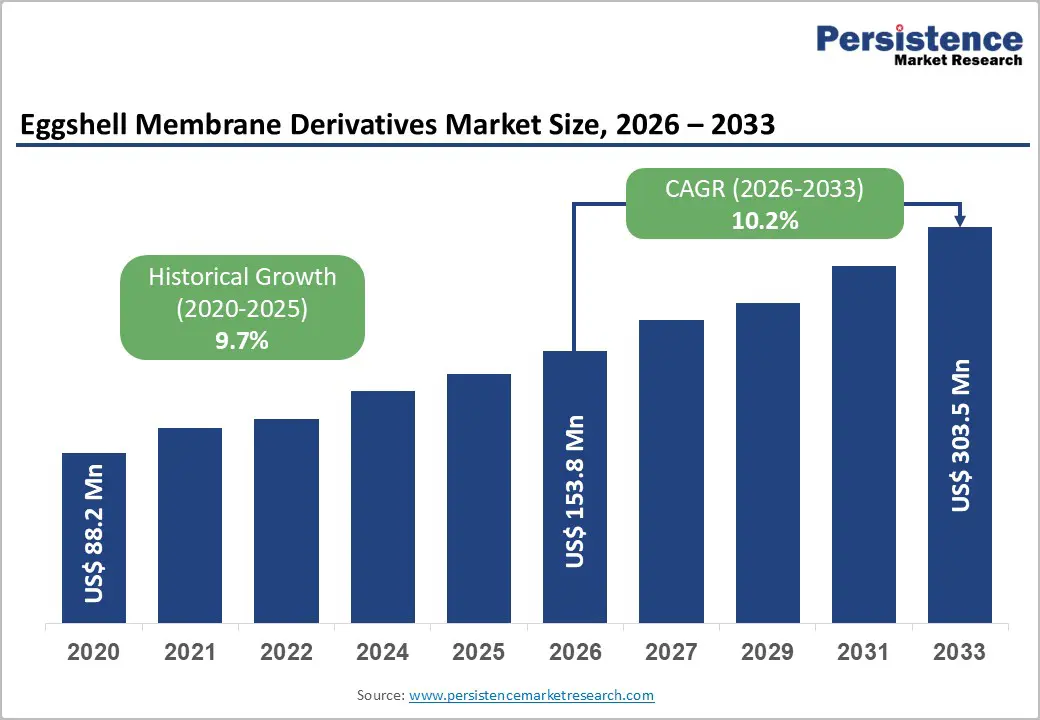
The global eggshell membrane derivatives market size is likely to be valued at US$153.8 million in 2026 and is expected to reach US$303.5 million by 2033, growing at a CAGR of 10.2% during the forecast period from 2026 to 2033, driven by increasing consumer focus on joint health, which is boosting demand for bioactive protein ingredients.
Manufacturers are increasingly leveraging upcycled poultry by-products to produce high-value collagen, aligning with circular economy principles and ensuring a stable raw material supply. Sustainable sourcing is becoming a key priority in nutraceutical ingredient development, while advancements in extraction technologies are enhancing bioavailability to meet the requirements of premium formulations. Looking ahead, market expansion is expected to be supported by continued progress in clinical validation and product efficacy.
Key Industry Highlights:
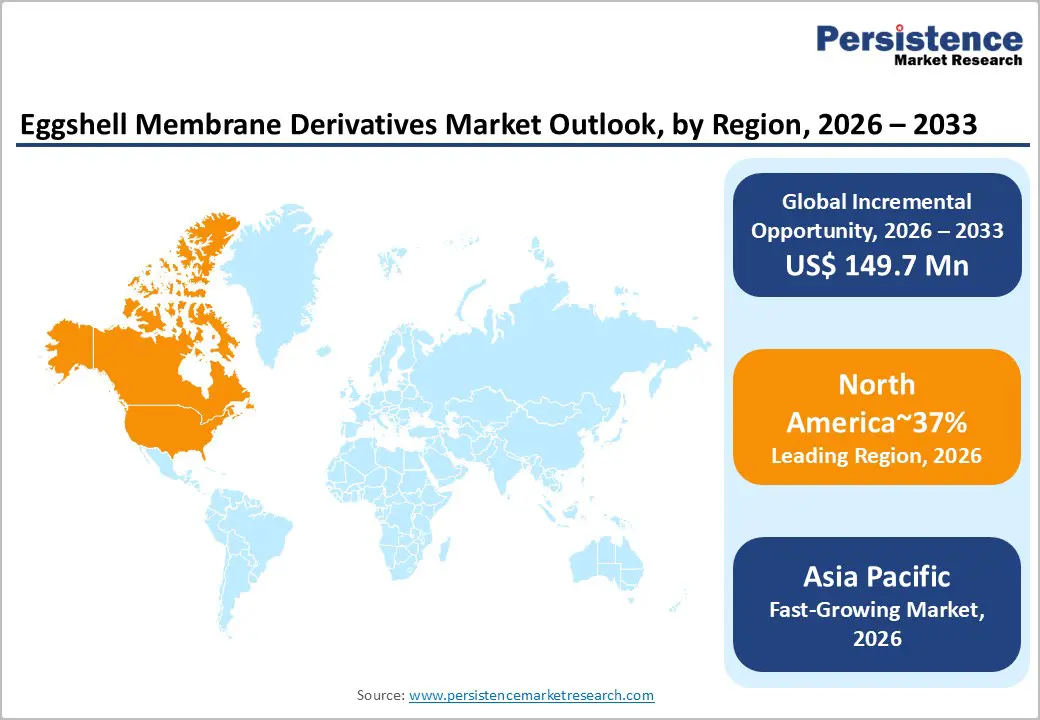
- Leading Region: North America is projected to lead, accounting for approximately 37% share in 2026, supported by established health infrastructure, high consumer awareness, and robust domestic manufacturing.
- Fastest-growing Region: Asia Pacific is anticipated to grow the fastest, driven by high egg production, rapid urbanization, and expanding pharmaceutical sectors.
- Leading Processing Grade: The hydrolyzed segment is expected to lead, accounting for approximately 66% share in 2026, anchored by superior solubility and high bioavailability in human applications.
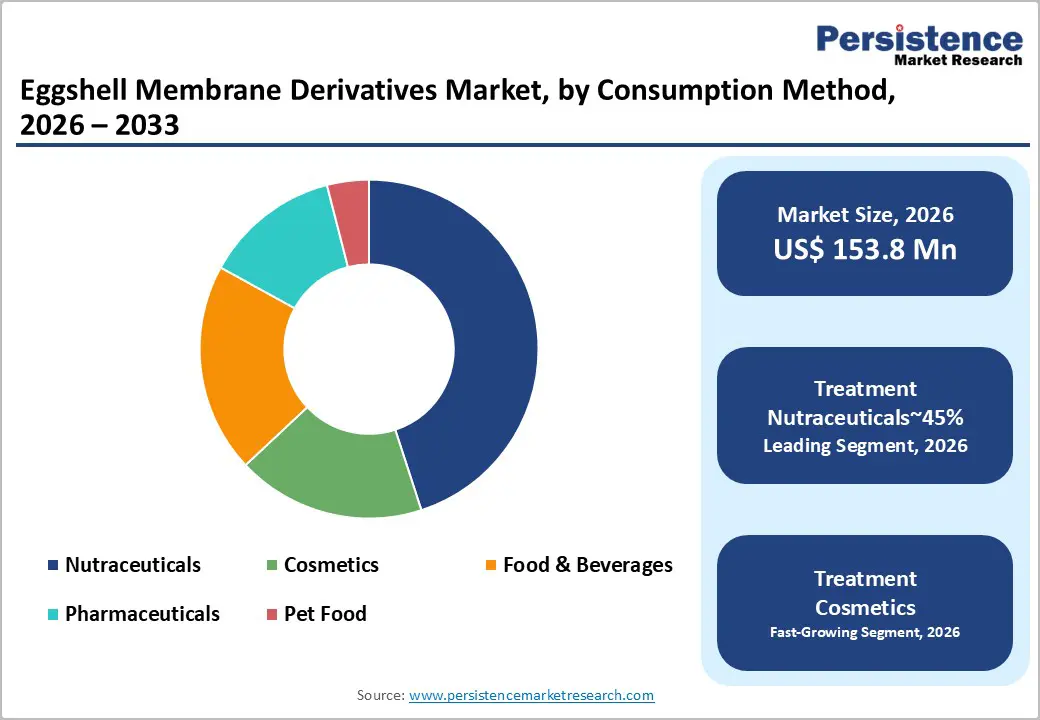
- Leading Application: Nutraceuticals are projected to dominate, holding approximately 45% share in 2026, driven by rising demand for natural joint and bone health solutions.
| Key Insights | Details |
|---|---|
| Eggshell Membrane Derivatives Market Size (2026E) | US$153.8 Mn |
| Market Value Forecast (2033F) | US$303.5 Mn |
| Projected Growth (CAGR 2026 to 2033) | 10.2% |
| Historical Market Growth (CAGR 2020 to 2025) | 9.7% |
DRO Analysis
Driver - Bioactive Compound Extraction Efficiency
Advanced enzymatic hydrolysis improves the extraction yield from eggshell industrial waste streams significantly. Higher purity reduces formulation costs for nutraceutical manufacturers' premium applications significantly across supply chains. Efficiency gains expand raw material availability for sustained industrial scaling requirements across processing networks. Procurement volumes increase as processors integrate optimized extraction protocols operationally within manufacturing systems. Biova with BiovaFlex demonstrates yield enhancement through standardized enzymatic hydrolysis methods and frameworks. Commercial implications favor vendors offering turnkey extraction solutions for formulators across mid-sized segments. Supply chain integration strengthens scalability across diversified nutraceutical manufacturing ecosystems and distribution frameworks.
Integration of enzymatic processing improves consistency in bioactive compound recovery systems at an industrial scale. Improved enzymatic efficiency reduces processing waste and supports the adoption of a circular bioeconomy model framework. Standardization of hydrolysis parameters enhances reproducibility across nutraceutical ingredient production chains and systems integration. Higher process stability enables predictable output quality for regulated supplement manufacturers' consistency requirements. Industrial adoption accelerates as waste valorization strategies align with sustainability frameworks and compliance structures. Market expansion continues through integration into functional nutrition and clinical applications delivery ecosystems. Regulatory alignment reinforces quality assurance across bioactive ingredient commercialization pathways and governance systems.
Advancements in Hydrolysis and Bioavailability Technology
Technological evolution in protein processing is significantly enhancing the therapeutic potential of eggshell membrane extracts. Modern hydrolysis methods break down complex fibrous proteins into smaller peptides, increasing molecular absorption and bioavailability. These advancements allow higher concentration levels in final product formulations, supporting functional beverages and liquid supplement applications. Manufacturers are prioritizing enzymatic processes that preserve delicate molecular bioactivity, ensuring each dosage delivers maximum efficacy. Improved solubility and stability broaden the utility of hydrolyzed derivatives across nutraceutical and clinical-grade applications. The integration of these technologies also reduces formulation complexity, lowering production constraints while maintaining quality consistency.
Eggnovo SL with Ovoderm demonstrates successful incorporation of hydrolyzed membranes into cosmetic formulations, addressing consumer demand for scientifically validated, skin-rejuvenating ingredients. High solubility ensures stability across topical and liquid formats, allowing broader adoption by personal care and pharmaceutical manufacturers. Ongoing research into protein bioactivity and functional applications continues to expand potential uses, from anti-aging skincare to clinical nutraceuticals. This combination of technological refinement and application versatility reinforces the strategic value of hydrolyzed eggshell membrane derivatives in advanced ingredient portfolios.
Restraint - Raw Material Supply Variability
Seasonal fluctuations in egg production create uneven availability of eggshell membrane feedstock across industrial processing networks. This variability disrupts procurement continuity for manufacturers dependent on consistent bioactive input streams. Regional supply imbalances amplify sourcing complexity, particularly in markets reliant on concentrated poultry production cycles. Downstream formulators experience cost escalation when alternative procurement channels are activated to stabilize input flows. Capacity utilization becomes constrained as production planning must accommodate irregular raw material inflows. These structural inconsistencies introduce operational inefficiencies across nutraceutical manufacturing systems and reduce scalability and predictability for high-volume output requirements.
Supply instability also affects long-term contracting strategies within ingredient supply chains and limits production assurance mechanisms. Biova with BiovaFlex experiences periodic sourcing pressure during elevated demand cycles, particularly when upstream supply tightens. Contract manufacturers face restrictions in committing to fixed-volume agreements due to uncertain feedstock continuity. This unpredictability increases inventory buffering requirements and elevates working capital exposure across production cycles. Market participants must navigate fluctuating input availability that directly impacts formulation scheduling and delivery timelines. Over time, such variability constrains expansion planning and reinforces dependency on geographically concentrated supply bases.
Opportunity - Functional Food Integration
Clean-label food manufacturing is increasingly integrating eggshell membrane derivatives into fortified beverage and bakery formulations. Powdered hydrolyzed variants demonstrate structural stability under thermal processing conditions commonly used in large-scale food production. This stability preserves functional integrity without altering sensory profiles, enabling seamless incorporation into diverse food matrices. Expanding utilization beyond encapsulated supplements into everyday consumables reflects a broader shift toward nutrition embedded within staple diets. Reformulation trends across bakery and beverage segments are driven by demand for protein enrichment and joint health positioning. These dynamics support functional ingredient penetration into mass-market food systems where consistency and process compatibility are critical.
Hydrolyzed powders enable manufacturers to maintain formulation performance across variable processing environments without degradation of bioactive properties. This technical resilience supports scaling into high-volume production channels, including packaged foods and ready-to-drink formats. As functional nutrition becomes embedded in mainstream consumption patterns, demand for stable, versatile bioactive powders continues to strengthen. Commercial opportunity concentrates in staple food categories where fortification can be systematically integrated into existing production architectures.
Pet Health Premiumization and Humanization
The pet care sector is shifting toward human-grade nutritional benchmarks across companion animal wellness categories. Pet owners are increasingly prioritizing functional ingredients that address mobility decline in aging animals. Eggshell membrane derivatives provide a naturally derived, multi-component profile supporting hip and joint health in dogs. Demand is expanding as consumers move away from synthetic pharmaceutical interventions in routine animal care. Formulation integration across soft chews, powders, and veterinary diets enables flexible delivery across diverse consumption formats. High palatability enhances compliance, supporting consistent intake across varied feeding behaviors and product applications. These factors collectively strengthen incorporation within premium pet nutrition systems focused on functional performance outcomes.
Strategic collaboration between ingredient suppliers and pet brands is accelerating commercial penetration across veterinary nutrition markets. Stratum Nutrition with NEM demonstrates growing utilization in premium canine health formulations supported by clinical validation frameworks. Cross-sector leverage of human clinical evidence enhances trust-building and reduces adoption friction in pet applications. High-margin positioning is reinforced by consumer willingness to invest in scientifically validated animal health supplements. Premiumization trends favor ingredient transparency and functional efficacy as key purchasing determinants in veterinary segments. Sustained demand is expected for powdered unhydrolyzed formats due to formulation stability and processing compatibility across pet food manufacturing systems.
Category-wise Analysis
Processing Grade
Hydrolyzed is expected to lead, accounting for approximately 66% share in 2026, underpinned by superior gastrointestinal absorption efficiency across diversified formulations. Advanced enzymatic hydrolysis converts dense fibrous proteins into low molecular weight peptides with improved bioavailability. Nutraceutical manufacturers prioritize these standardized inputs to enhance joint health outcomes and ensure dosage consistency across product lines. Clinical validation data support superior uptake efficiency in human supplementation frameworks. Biova with BiovaFlex and Stratum Nutrition with Ovolux illustrate commercial-scale adoption across premium supplement ecosystems. Integration into powders and liquid formats reinforces formulation flexibility across high-volume manufacturing systems. This structural compatibility with industrial processing requirements consolidates hydrolyzed dominance across established nutraceutical supply chains.
Unhydrolyzed is anticipated to be the fastest-growing segment, driven by rising demand for whole-food matrix applications within pet nutrition and functional foods. This segment preserves native protein complexes, glycosaminoglycans, and mineral structures that support synergistic bioactivity. Formulators increasingly leverage intact membranes to support clean-label positioning and minimal processing claims. Pet food manufacturers integrate unhydrolyzed inputs into extrusion-based systems to maintain structural stability and functional integrity. Stratum Nutrition with NEM demonstrates established adoption within premium canine joint health formulations. Improved processing adaptability enhances usage across soft chews and fortified feed formats. Expanding preference for minimally altered ingredients continues to accelerate uptake across diversified end-use applications.
Application Insights
Nutraceuticals are expected to lead the market, accounting for approximately 45% share in 2026, supported by sustained demand for joint and bone health supplementation across aging populations. Standardized membrane extracts deliver measurable improvements in mobility and recovery outcomes within clinical and sports nutrition settings. Adoption remains concentrated in multi-ingredient joint health formulations where bioactive consistency is critical for efficacy positioning. Manufacturers prioritize validated inputs to ensure repeatable performance across large-scale supplement production systems. Biova with BiovaFlex and Stratum Nutrition with NEM brand exemplify clinically supported deployment across established nutraceutical channels. Integration into capsules, powders, and functional blends reinforces stable demand across retail and clinical distribution networks, sustaining structural dominance within the application landscape.
The cosmetics segment is anticipated to be the fastest-growing segment, driven by rising demand for bioactive anti-aging formulations and sustainable skin health solutions. Eggshell membrane derivatives provide natural sources of collagen-like proteins and elastin-supporting compounds that enhance skin elasticity and hydration. Cosmetic formulators increasingly replace synthetic additives with bioactive complexes to meet clean-label and upcycled ingredient expectations. This shift strengthens adoption across premium skincare and dermaceutical products targeting aging and environmental stress effects. Eggnovo SL with Ovoderm demonstrates successful integration into high-end dermatological formulations. Improved delivery systems enhance peptide stability and absorption in topical applications. Expanding consumer preference for science-backed natural actives continues to accelerate segment growth across global beauty markets.
Regional Insights
North America Eggshell Membrane Derivatives Market Trends
North America is expected to remain the leading regional market, accounting for approximately 37% share in 2026, supported by high consumer awareness and a robust infrastructure for dietary supplement manufacturing. The region's dominance is anchored in a mature health and wellness culture that prioritizes preventive care and natural ingredients. Well-established distribution networks and a high concentration of market-leading vendors facilitate rapid product adoption across diverse demographics. Stringent quality standards and clinical validation are essential requirements for maintaining competitiveness in this highly regulated environment. Continued investments in research and development ensure a steady pipeline of innovative derivative formulations.
The U.S. is expected to anchor regional momentum through sustained demand for specialized joint health solutions among an aging baby boomer population. High disposable income levels support the purchase of premium nutraceuticals and specialized pet health products. Stratum Nutrition with NEM is headquartered in the region and maintains a significant influence over domestic market trends. Regulatory alignment with the FDA provides a stable environment for manufacturers to launch new derivative applications. Increasing focus on clean-label and sustainable sourcing is driving the adoption of upcycled ingredients in the food sector.
Europe Eggshell Membrane Derivatives Market Trends
Europe is expected to remain a mature and structurally stable regional market, with demand primarily anchored in rigorous regulatory compliance and sustainability mandates. The region's market dynamics are shaped by strict EFSA guidelines that govern the approval and labeling of novel food ingredients. Consumers in this territory exhibit a strong preference for transparently sourced and environmentally responsible health products. Circular economy policies are compelling egg processors to adopt advanced waste valorization technologies. This regulatory pressure fosters a high-quality supply chain for premium membrane derivatives across the continent.
Spain is expected to serve as a critical hub for European market activity due to its advanced poultry processing infrastructure and leading ingredient manufacturers. Local companies are at the forefront of obtaining the necessary EU authorizations for membrane-based novel foods. Eggnovo SL with Ovoderm leverages its strategic location to supply hydrolyzed derivatives to the burgeoning European cosmeceutical sector. Government initiatives promoting sustainable agriculture further reinforce the growth of the domestic extraction industry. Continuous collaboration between academic institutions and private firms accelerates the development of specialized pharmaceutical-grade derivatives.
Asia Pacific Eggshell Membrane Derivatives Market Trends
Asia Pacific is expected to be the fastest growing, as rapid urbanization and expanding pharmaceutical manufacturing capabilities accelerate market expansion. The region's growth is underpinned by the world's largest egg production volumes, providing an abundant and cost-effective raw material supply. Rising health consciousness among the growing middle class is driving the procurement of functional ingredients for joint and skin health. Local governments are increasingly supporting the development of high-value agricultural byproducts to boost export revenues. Strategic investments in automated processing facilities are enhancing the regional capacity for high-purity derivative production.
India drives regional acceleration through government-backed nutraceutical manufacturing incentives. Rising disposable incomes boost joint health supplement consumption patterns. Kewpie with NEM brand benefits from localization strategies, enhancing price competitiveness. Regulatory harmonization with global standards strengthens export-oriented production scaling. Rapid advancements in skincare technology further expand the application of membranes in the premium beauty sector.
Competitive Landscape
The eggshell membrane derivatives market is moderately consolidated, with leadership concentrated among specialized biotechnology firms such as Biova LLC, Stratum Nutrition, and Eggnovo SL. These companies exert influence through proprietary extraction technologies, strong patent portfolios, and established supply relationships with poultry processors. Their products set benchmarks for bioavailability, purity, and clinical validation across nutraceutical and cosmeceutical applications. Limited raw material traceability complexity reinforces reliance on established vendors with proven quality systems. Strong regulatory compliance and clinical documentation further support procurement preferences among supplement manufacturers.
Competitive positioning reflects vertical differentiation through extraction precision and application-specific formulation rather than broad product diversification. Premium participants emphasize clinically validated hydrolyzed derivatives targeting joint health and regenerative applications. Companies such as Gelita and Maypro advance differentiated offerings across pharmaceutical-grade and cost-efficient segments. Industry dynamics include partnerships between extractors and cosmetic or nutraceutical formulators, expanding application scope. Platform evolution increasingly prioritizes enzymatic process optimization and encapsulation technologies. Forward-looking strategies emphasize regulatory compliance, sustainability integration, and functional performance validation across diversified end-use sectors.
Key Industry Developments:
- In January 2026, Stratum Nutrition identified "Beauty-from-Within" and "Structural Nutrition" as the top trends for the year, pivoting their marketing strategy toward multi-collagen offerings. This strategic shift enables the company to capture the growing "nutricosmetics" segment by positioning eggshell membrane as a source of Collagen types I, V, and X for hair, skin, and nails.
- In September 2025, Stratum Nutrition will exhibit at Vitafoods Asia and SupplySide Global to showcase its expanding portfolio, including sageXtra™ and Bimuno® GOS alongside eggshell membrane. These global exhibitions serve as a launchpad for synergistic ingredient blends, targeting the "gut-joint-skin" health axis, which is a major emerging consumer interest.
Companies Covered in Eggshell Membrane Derivatives Market
- Biova LLC
- Stratum Nutrition
- Eggnovo SL
- Gelita AG
- Balchem Corporation
- Rousselot
- PLT Health Solutions
- Certified Nutraceuticals Inc.
- Ecovatec Solutions
- Microcore Research Laboratories
- Mitushi Biopharma
- Eggbrane (DEPP B.V.)
- Kewpie Corporation
- Maypro Industries
- Micro Ingredients
- Bolise Co., Limited
Frequently Asked Questions
The global eggshell membrane derivatives market is projected to be valued at US$153.8 million in 2026 and is expected to reach US$303.5 million by 2033, driven by rising demand for joint health supplements and bioactive protein applications across nutraceuticals and cosmetics.
Advanced enzymatic hydrolysis enhances extraction efficiency from eggshell waste, improving peptide purity, bioavailability, and consistency, which lowers formulation costs and supports large-scale industrial adoption across functional nutrition and clinical-grade supplement production.
The eggshell membrane derivatives market is forecast to grow at a CAGR of 10.2% from 2026 to 2033, reflecting increasing integration of hydrolyzed derivatives into nutraceuticals, cosmetics, functional foods, and pet health applications.
Asia Pacific is anticipated to grow fastest, driven by high egg production volumes, rapid urbanization, expanding pharmaceutical and nutraceutical manufacturing capacities, and rising consumer awareness of functional health ingredients.
The eggshell membrane derivatives market is moderately consolidated, with leading companies including Biova LLC, Stratum Nutrition, Eggnovo SL, Gelita AG, and Kewpie Corporation. These players compete through proprietary extraction technologies, clinical validation, and sustainable sourcing frameworks.


