




- Pharmaceuticals
- Bone and Joint Health Supplements Market
Bone and Joint Health Supplements Market Form, Share, Growth, and Regional Forecast, 2025 to 2032
Bone and Joint Health Supplements Market by Type (Calcium, Vitamins & Minerals, Glucosamine & Chondroitin, Omega-3, Others), by Form (Tablets/Capsules, Liquids, Powders, Gummies, Soft Gels), by Sales Channel (Supermarkets/Hypermarkets, Pharmacies & Drug Stores, Specialty Health stores, Online Retail, Others), and Regional Analysis from 2025 to 2032

Bone and Joint Health Supplements Market Size and Trends Analysis
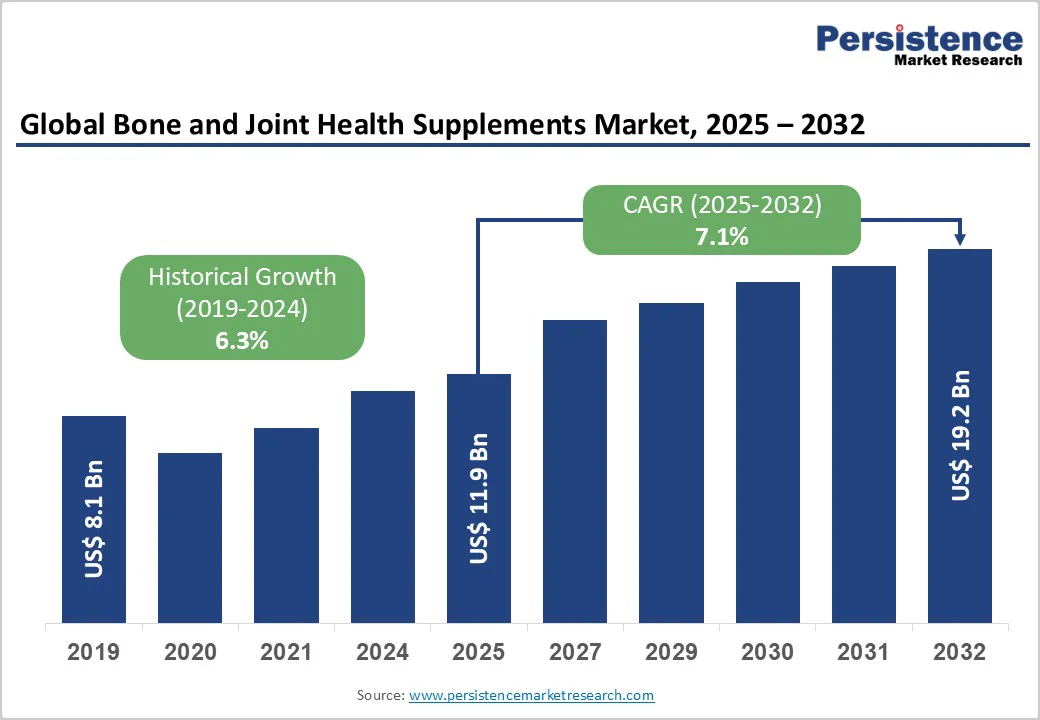
The global bone and joint health supplements market is estimated to grow from US$11.9 billion in 2025 to US$19.2 billion by 2032. The market is projected to record a CAGR of 7.1% from 2025 to 2032.
The global Bone and Joint Health Supplements market is gaining momentum as healthy aging, mobility preservation, and preventive wellness become mainstream priorities across regions. Companies advancing clinically validated formulations, personalization technologies, and digital engagement ecosystems are shaping the next growth phase.
Key Industry Highlights
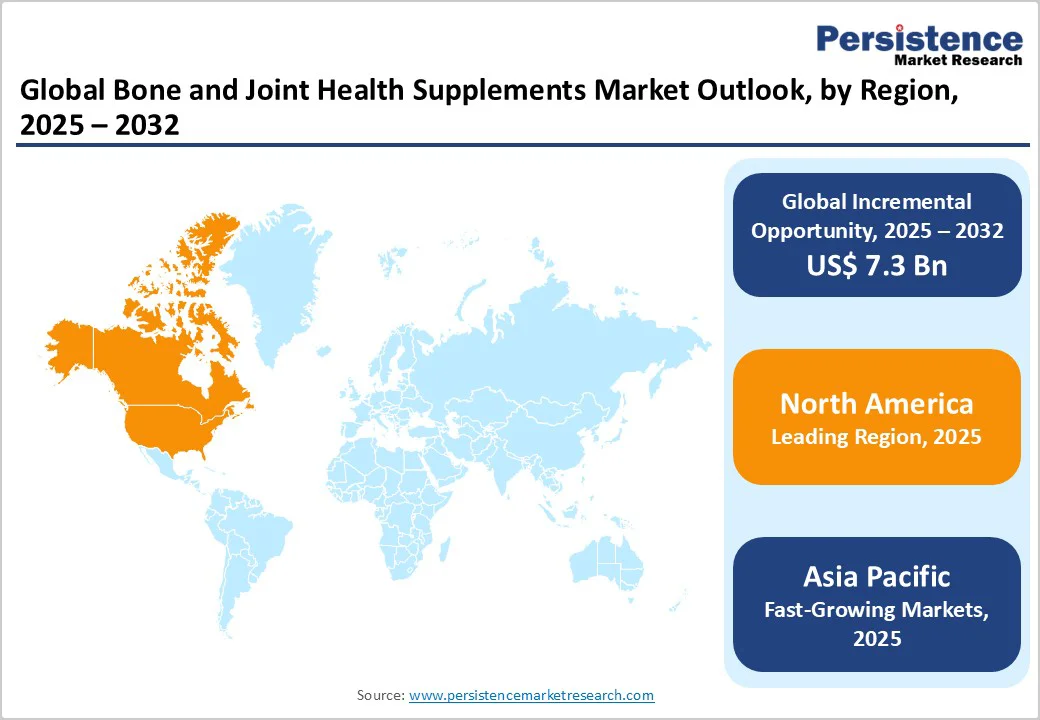
- Leading Region: North America, holding 34% market share, driven by strong adoption of clinically backed formulations, women’s health-focused bone support, clean-label preferences, and rapid uptake of digital diagnostics and subscription-based supplement routines.
- Fastest-Growing Region: Asia Pacific, fueled by aging populations, rising mobility concerns, rapid e-commerce penetration, and growing consumer interest in multifunctional formulations across India, China, Japan, South Korea, and Indonesia.
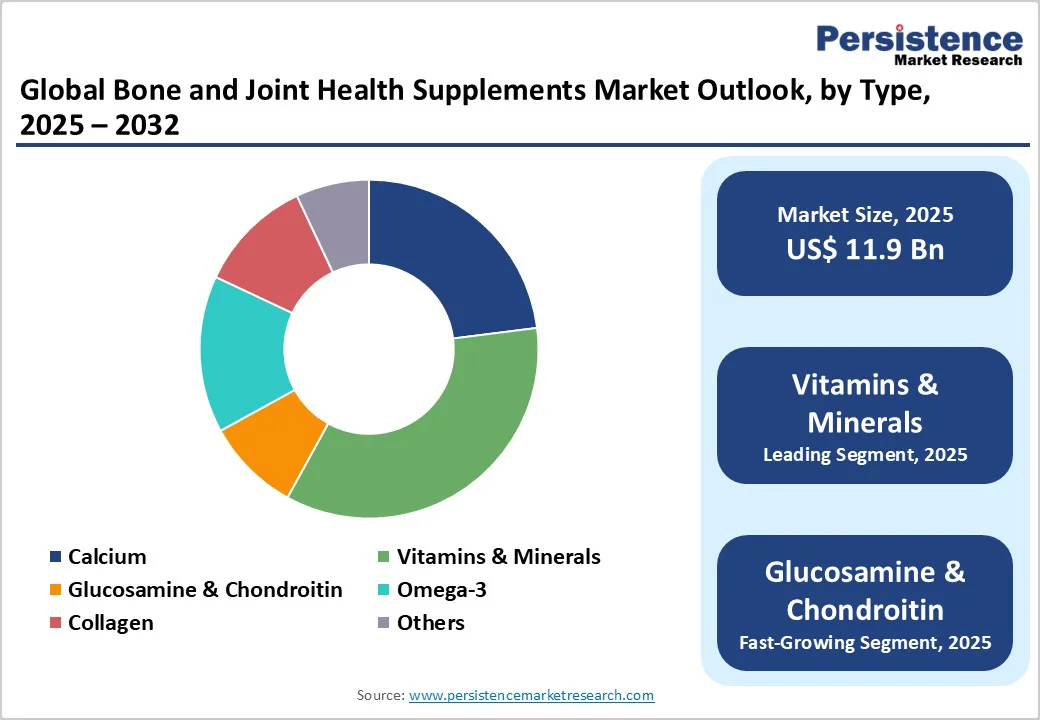
- Fastest-Growing Product Type Segment: Vitamins & Minerals, supported by high physician trust, strong clinical evidence for bone-density and joint-health benefits, and rising demand for calcium complexes, omega-3 blends, collagen peptides, and glucosamine-chondroitin combinations.
- Market Drivers: The shift toward preventive healthcare is motivating consumers to maintain bone and joint strength, accelerating demand for supplements that support mobility, reduce inflammation, and address age-related bone loss while aligning with clean-label and science-backed expectations.
- Opportunities: Personalized nutrition platforms are opening high-value opportunities, enabling brands to deliver bone-density and mobility solutions tailored to biomarkers, lifestyle patterns, and genomic insights, supported by AI-driven recommendations and subscription models.
- Key Developments: In April 2025, Juvent introduced its HydroxyBMD3 supplement system at the BHOF Symposium, reinforcing its push into advanced musculoskeletal wellness solutions. In January 2025, Hebrew SeniorLife launched a major clinical nutrition trial evaluating Solarea Bio’s Bondia® (SBD111) blend for improving bone health in women aged 60 and above.
| Global Market Attributes | Key Insights |
|---|---|
| Bone and Joint Health Supplements Market Form (2025E) | US$11.9 Bn |
| Market Value Forecast (2032F) | US$19.2 Bn |
| Projected Growth (CAGR 2025 to 2032) | 7.1% |
| Historical Market Growth (CAGR 2019 to 2024) | 6.3% |
Market Dynamics
Driver - The shift toward preventive healthcare is motivating consumers to maintain bone and joint strength
A growing mindset toward staying healthy for the long run is reshaping consumer behavior in favor of bone and joint support solutions. As people become more aware of mobility challenges that emerge with age, they are proactively turning to supplements that help preserve strength, flexibility, and structural integrity.
This shift is reinforced by rising fitness engagement, longer work hours, and digital lifestyles that increase musculoskeletal strain. Consumers across age groups view early supplementation as a way to delay discomfort, maintain activity levels, and avoid future medical interventions.
Brands that highlight science-backed formulations, clean labels, and targeted nutrient combinations are benefiting, as shoppers increasingly prioritize products that align with their prevention-first approach to lifelong skeletal and joint wellness.
Restraints - Competition from functional foods and fortified beverages dilutes supplement category growth
A steady shift inside the wellness industry is creating unexpected pressure on traditional supplements as functional foods and fortified beverages gain traction. Consumers prefer everyday formats such as enhanced dairy drinks, collagen-infused snacks, calcium-rich bars, and vitamin-fortified juices because they blend convenience with a perception of greater naturalness.
This behavioral pivot redirects spending toward products embedded in regular diets, reducing reliance on standalone tablets or capsules. Brands in beverages and packaged foods are aggressively innovating with bone-strengthening minerals and joint-supporting botanicals, which blur category boundaries and intensify competition.
As retailers expand shelf space for multifunctional foods, supplement companies face a tougher fight for visibility, slowing growth unless they differentiate with stronger clinical validation and targeted formulations.
Opportunity - Personalized nutrition platforms create opportunities for tailored bone-density and mobility solutions.
A surge in demand for precision wellness is turning personalized nutrition platforms into a powerful growth engine for bone and joint health supplement companies. These systems analyze biomarkers, lifestyle inputs, and mobility patterns to recommend targeted formulations that improve calcium utilization, reduce inflammation, and support cartilage preservation.
Tapping into genomic data and AI-driven risk scoring are forming deeper customer relationships by offering dynamic supplement plans that evolve with age and health status. Startups are leveraging digital diagnostics and at-home bone-density screening tools to close the gap between early detection and intervention.
This ecosystem rewards firms that integrate data science, formulation expertise, and subscription models to deliver highly customized bone-strength and mobility solutions aligned with long-term consumer needs.
Category-wise Analysis
By Type, Vitamins & Minerals dominate the global Bone and Joint Health Supplements market
Vitamins & Minerals holds approx. 34% market share as of 2024, reflecting their central role in maintaining bone density, cartilage strength, and joint mobility. Consumers gravitate toward these formulations because they deliver foundational nutrients with strong clinical validation and high physician recommendation rates.
Calcium remains a cornerstone for skeletal integrity, particularly among aging populations and postmenopausal women seeking preventive support. Glucosamine & Chondroitin appeal to individuals aiming to improve joint lubrication and slow cartilage wear.
Omega-3 supplements attract users focused on reducing inflammation associated with chronic joint discomfort. Collagen continues to rise in popularity due to its benefits in strengthening connective tissues and supporting overall mobility. Together, these categories reinforce the dominance of vitamins and minerals in global demand.
By Sales Channel, Specialty Health stores are expected to show promising growth during the forecast period.
Specialty Health stores are projected to grow at a CAGR of 9.2% during the forecast period, and this momentum reflects a shift toward expert-guided supplement purchasing. Consumers seeking targeted bone and joint support increasingly rely on trained staff who can explain ingredient science, compare formulations, and recommend condition-specific blends.
This channel benefits from a trust premium because shoppers perceive curated assortments and higher-quality brands. Specialty outlets are expanding in urban centers and premium malls, creating stronger visibility for advanced joint-health products such as glucosamine blends, calcium complexes, and collagen-based formulations.
Their ability to host in-store diagnostics, loyalty programs, and educational events strengthens shopper engagement, positioning these stores to capture rising demand for preventive nutrition and mobility-focused supplementation.
Region-wise Insights
North America Bone and Joint Health Supplements Market Trends
North America holds approximately 34% market share in the global Bone and Joint Health Supplements Market, and the region is entering a phase where mobility preservation and healthy aging are shaping long-term demand patterns.
In the United States, consumers are gravitating toward clinically validated formulations targeting inflammation, joint stiffness, and age-related bone loss, encouraging brands to innovate with synergistic nutrient blends and advanced delivery systems. The rise of women’s health supplements focused on post-menopausal bone support is another strong current.
In Canada, demand is shifting toward sustainably sourced ingredients and clean-label formulations aligned with national wellness programs promoting active lifestyles. Across the region, digital diagnostics, subscription-based supplement routines, and practitioner-led recommendations are strengthening market traction and pushing companies toward evidence-driven product development.
Asia Pacific Bone and Joint Health Supplements Market Trends
Asia Pacific Bone and Joint Health Supplements Market is expected to grow at a CAGR of 8.7%, creating a strong momentum driven by lifestyle changes, aging populations, and rising preventive-health awareness across emerging and mature economies. India is witnessing higher adoption as urban consumers prioritize joint mobility products to counter sedentary work patterns.
China is accelerating demand through e-commerce-led supplement personalization and growing interest in multifunctional formulations. Japan’s super-aging society continues to favor clinically backed bone-strength solutions, while South Korea’s beauty-and-wellness convergence pushes collagen and calcium blends into mainstream retail.
Indonesia is experiencing a steady rise in herbal-infused joint support products as traditional remedies merge with modern supplement formats, strengthening regional growth dynamics.
Market Competitive Landscape
A moderately fragmented market structure defines the global Bone and Joint Health Supplements landscape, creating room for innovation-driven players to sharpen their competitive edge. Leading brands are strengthening scientific credibility through clinically supported formulations, investing heavily in R&D to validate claims around mobility, bone density, and inflammation support.
Companies are scaling digital marketing ecosystems that leverage influencer-led education and algorithmic targeting to reach aging consumers and younger preventive-health adopters. Regulatory alignment around clean labels, approved claims, and quality testing is becoming a central differentiator, pushing brands to secure certifications that reinforce trust.
Strategic collaborations with biotech firms, ingredient suppliers, and personalized nutrition platforms are accelerating product diversification. At the same time, retail partnerships across pharmacies and specialty wellness chains elevate visibility in an increasingly crowded marketplace.
Key Industry Developments:
- In April 2025, Juvent introduced its new HydroxyBMD3 supplement system at the BHOF Interdisciplinary Symposium, positioning it as a next-generation approach to bone and musculoskeletal wellness.
- In January 2025, investigators at the Hinda and Arthur Marcus Institute for Aging Research at Hebrew SeniorLife initiated a major clinical nutrition trial evaluating Solarea Bio’s Bondia® (SBD111) probiotic-prebiotic blend to support bone health in women aged 60+.
- In October 2024, Pharmed Limited introduced the India Bone Health Initiative (IBHI) on World Osteoporosis Day to strengthen nationwide awareness and early prevention of bone disorders.
Companies Covered in Bone and Joint Health Supplements Market
- Amway Corporation
- Bayer AG
- Glanbia PLC
- Now Foods
- Pfizer Inc.
- GNC Holdings, LLC
- Nature's Bounty Co.
- Herbalife International, Inc.
- Reckitt Benckiser Group plc
- GSK plc
- Nestlé Health Science
- Vitabiotics Ltd.
- Others
Frequently Asked Questions
The global Bone and Joint Health Supplements market is projected to be valued at US$ 11.9 Bn in 2025.
Growing focus on proactive wellness is pushing consumers to support long-term bone and joint strength, intensifying global demand for bone and joint health supplements.
The global Bone and Joint Health Supplements market is poised to witness a CAGR of 7.1% between 2025 and 2032.
Personalized nutrition platforms create opportunities for tailored bone-density and mobility solutions in global bone and joint health supplements.
Major players in the global Bone and Joint Health Supplements market include Amway Corporation, Bayer AG, Glanbia PLC, Pfizer Inc., GNC Holdings, LLC, Herbalife International, Inc., Nestlé Health Science, and others


