




- Beverages
- Craft Rum Market
Craft Rum Market Size, Share, Growth, and Regional Forecast, 2026 to 2033
Craft Rum Market is segmented by Product Type (White Rum, Dark Rum, Spiced Rum, Flavored Rum, Others), by Sales Channel (On Trade, Off Trade), and by Regional Analysis, 2026 - 2033

Craft Rum Market Share and Trends Analysis
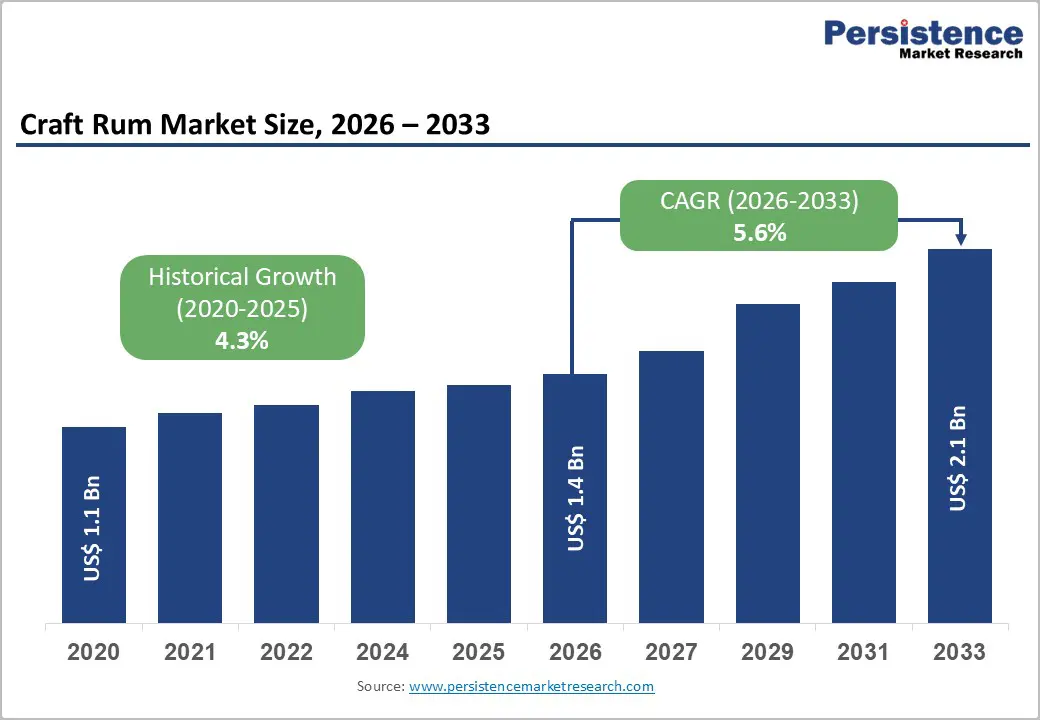
The global craft rum market size is expected to be valued at US$ 1.4 billion in 2026 and projected to reach US$ 2.1 billion by 2033, growing at a CAGR of 5.6% between 2026 and 2033.
This steady expansion is primarily driven by the "premiumization" trend within the spirits industry, where consumers increasingly prioritize quality, provenance, and artisanal production methods over mass-produced alternatives. As a more diverse demographic of drinkers seeks unique flavor profiles and transparent sourcing-shifting from industrial molasses to fresh cane juice or specific heirloom varieties the craft segment has carved out a significant niche. Furthermore, the rise of cocktail culture and the resurgence of classic rum-based drinks in high-end establishments have solidified rum's position as a versatile, premium spirit suitable for both sipping and sophisticated mixing.
Key Industry Highlights:
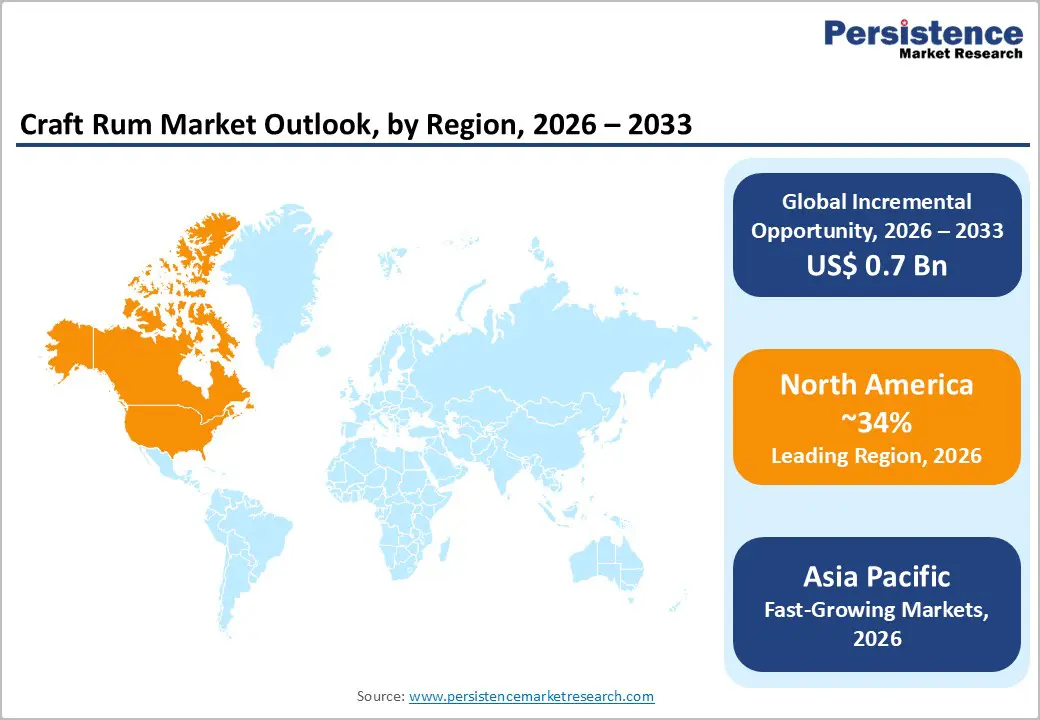
- Leading Region: North America, holding 34% market share, supported by the rapid expansion of craft distilleries in the United States and increasing consumer demand for premium aged, spiced, and terroir-driven rum varieties.
- Fastest-Growing Region: Asia Pacific, driven by rising middle-class incomes, growing premium drinking culture in countries such as China, India, and Australia, and the region’s strong sugarcane production base supporting local craft rum innovation.
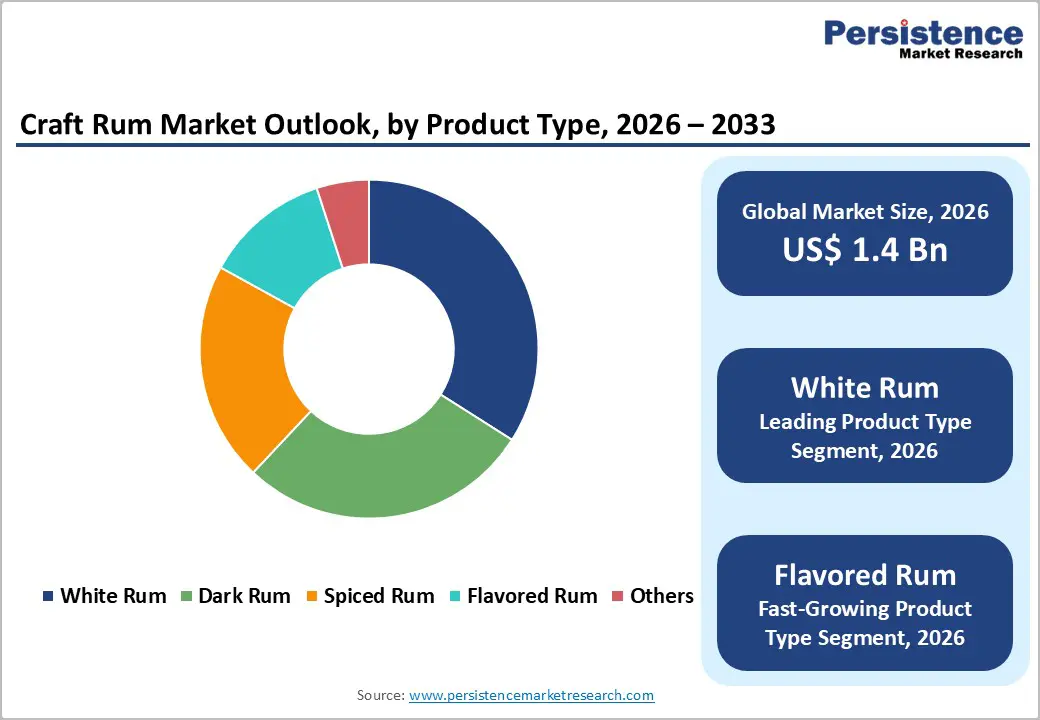
- Fastest-Growing Product Type Segment: Flavored Rum, fueled by increasing demand for natural infusions including coconut, pineapple, and spice-based blends that appeal to experimental consumers seeking artisanal flavor experiences.
- Market Drivers: The resurgence of global cocktail culture and mixology innovation is increasing demand for high-character craft rums with complex flavor profiles suited for premium cocktails.
- Opportunities: Sustainability-driven production models, including eco-friendly packaging, organic sugarcane sourcing, and circular distillery practices, are creating differentiation opportunities for craft rum brands.
- Key Developments: In November 2025, Camikara became the first Indian rum brand to win ‘Rum Brand of the Year’ at The Spirits Business Awards 2025 in London. In January 2025, Funk Harbor Distilling launched Funk Harbor Premium Silver Rum, a crystal-clear rum inspired by Jamaica’s sugarcane distillation heritage.
| Key Insights | Details |
|---|---|
| Global Craft Rum Market Size (2026E) | US$ 1.4 Bn |
| Market Value Forecast (2033F) | US$ 2.1 Bn |
| Projected Growth (CAGR 2026 to 2033) | 5.6% |
| Historical Market Growth (CAGR 2020 to 2025) | 4.3% |
Market Dynamics
Driver - Resurgence of Global Cocktail Culture and Mixology Innovation
The global revival of Tiki culture and the expansion of high-end mixology have acted as a powerful catalyst for craft rum. Bartenders and mixologists are increasingly seeking spirits with high character and ester levels to serve as the backbone for complex cocktails. Authentic statistics from Persistence Market Research show a marked increase in the use of overproof and high-ester rums in professional settings. Craft brands are often favored in the On Trade channel because they offer unique flavor profiles ranging from grassy and vegetal to rich and funky that industrial brands cannot replicate. This rum-naissance has encouraged distilleries to experiment with unique finishes, such as ex-bourbon, sherry, or even wine casks, further enticing a crossover audience from the premium whiskey and cognac markets.
Restraints - High Production Costs and Limited Access to Distribution Networks
Craft distilleries face substantial overhead costs due to small-batch production, longer aging cycles, and the use of premium raw materials. Artisanal producers often lack the financial muscle of conglomerates like Pernod Ricard SA or Constellation Brands Inc, making it difficult to secure consistent shelf space in the Off Trade channel. Furthermore, the three-tier system in certain markets can be a major hurdle for small producers trying to reach consumers outside their local region. These high costs, combined with the volatility of sugarcane prices and the logistical challenges of international shipping, can squeeze profit margins, forcing many craft distilleries to rely heavily on direct-to-consumer sales and local tourism to remain viable.
Opportunity - Innovation in Sustainable Production and Eco-Friendly Packaging
Sustainability has emerged as a high-value opportunity for craft rum producers to differentiate themselves. Modern consumers are increasingly willing to pay a premium for brands that prioritize environmental stewardship. Opportunities exist for distilleries to implement "circular economy" practices, such as utilizing solar-powered stills, converting dunder into fertilizer, or sourcing organic sugarcane. Brands like Oxbow Estate Rum and Bumbu Rum Company can leverage their smaller scale to pivot more quickly toward eco-friendly initiatives, such as plastic-free packaging or lightweight glass bottles. As organizations like the World Wildlife Fund (WWF) highlight the environmental impact of agriculture, craft rum brands that can prove a "net-zero" or positive environmental impact will likely capture a larger share of the ethically conscious millennial and Gen Z market.
Category-wise Analysis
By Product Type
The White Rum segment is the leading segment in Category-1, accounting for an estimated 36% market share in 2026. Its leadership is justified by its fundamental role as a versatile base for global cocktails like the Mojito and Daiquiri. Craft white rums, often produced from fresh cane juice (Agricole style) or high-quality molasses with minimal filtration, offer a flavor intensity that appeals to the premium mixology sector. Meanwhile, Flavored Rum is identified as the fastest growing segment through 2033. This growth is driven by the use of natural infusions such as pineapple, coconut, or local spices rather than synthetic additives. Consumers are moving away from "candy-flavored" spirits toward artisanal infusions that maintain the integrity of the base spirit, a trend spearheaded by brands like Jim & Tonic and Lyon Rum.
By Sales Channel
The On Trade segment (bars, restaurants, and hotels) stands as the leading sales channel for craft rum in 2025. This channel is crucial for brand discovery, as consumers are often introduced to premium craft rums through expert recommendations from bartenders. High-end cocktail bars serve as a "showroom" for artisanal brands, allowing them to justify their premium price points through professional presentation. Conversely, the Off Trade (liquor stores and e-commerce) is emerging as a significant growth area, particularly as home bartending becomes more popular. Specialized retailers and online spirits boutiques are increasingly dedicating shelf space to craft rum, catering to enthusiasts who want to replicate the professional bar experience at home. This shift is further supported by the rise of sip-able dark rums that are consumed like fine scotch.
Regional Insights
North America Craft Rum Market Trends and Insights
North America is the leading region in the global market, holding a 34% market share in 2025. The region's leadership is underpinned by the massive expansion of the "craft revolution" in the United States, which has seen the number of small-scale distilleries explode over the last decade. In the U.S., the regulatory framework managed by the TTB has seen a surge in "American Prairie" style rums, often produced in non-traditional rum-producing states.
Innovation in the region is driven by brands like Lyon Rum in Maryland and Key West Legal Rum in Florida, which leverage local history and unique climates for aging. The "premiumization" of the American palate, as noted by the American Craft Spirits Association (ACSA), has led to a high demand for aged and spiced varieties. Furthermore, the strong presence of major beverage conglomerates like Constellation Brands Inc, which are increasingly investing in or acquiring craft spirits, ensures a robust investment climate and sophisticated marketing strategies that keep North America at the forefront of global craft rum trends.
Asia Pacific Craft Rum Market Trends and Insights
Asia Pacific is identified as the fastest growing segment for the craft rum market through 2032. This rapid expansion is primarily driven by the burgeoning middle class in China, India, and Australia, who are increasingly adopting Western-style premium drinking habits. The region's growth dynamics are further supported by a rich history of sugarcane production, particularly in India and the Philippines, where local producers are pivoting from mass-market rums to premium craft offerings.
In Australia, the craft spirits scene is booming, with distilleries utilizing native botanicals to create unique spiced and flavored rums. Japan is also emerging as a high-potential market, where the meticulous attention to detail associated with Japanese whisky is being applied to rum production. The manufacturing advantages in the region, combined with a young, urbanized population eager for "new" luxury experiences, make Asia Pacific a critical future battleground for both local craft startups and international craft-focused groups like Pernod Ricard SA.
Competitive Landscape
The global craft rum market exhibits a fragmented structure, where thousands of small-to-medium-sized distilleries operate alongside a few specialty-focused subsidiaries of global beverage giants. While the market is populated by artisanal leaders like Hampden Estate and Bumbu Rum Company, the influence of major corporations such as Pernod Ricard SA and Constellation Brands Inc cannot be overlooked, as they increasingly provide the distribution muscle for promising craft labels. Key differentiators in this market include unique "terroir-based" production, innovative aging techniques, and bold, storytelling-centric branding. Emerging business models are prioritizing "hyper-local" sourcing and "farm-to-bottle" transparency. As the segment matures, we are seeing a shift toward specialized "rum consultancies" that help small brands navigate global distribution and regulatory hurdles, helping the market move toward a more professionalized artisanal structure.
Key Developments:
- In November 2025, Camikara became the first Indian rum brand to win ‘Rum Brand of the Year’ at the The Spirits Business Awards 2025 in London, marking a major milestone for India’s premium rum industry and global craft spirits recognition.
- In January 2025, Funk Harbor Distilling announced the launch of Funk Harbor Premium Silver Rum, a crystal-clear rum inspired by Jamaica’s sugarcane distillation heritage and positioned as a vibrant, premium craft rum offering.
Companies Covered in Craft Rum Market
- Pernod Ricard SA
- Lyon Rum
- Echo Spirits Distilling Co.
- Barrelstation
- Oxbow Estate Rum
- Key West Legal Rum
- Bumbu Rum Company
- Devon Rum Co.
- Jim & Tonic
- Hampden Estate
- Constellation Brands Inc
- Others
Frequently Asked Questions
The global craft rum market is projected to be valued at US$ 1.4 Bn in 2026.
Resurgence of Global Cocktail Culture and Mixology Innovation is a major factor driving global Craft Rum market.
The Global Craft Rum market is poised to witness a CAGR of 5.6% between 2026 and 2033.
Innovation in Sustainable Production and Eco-Friendly Packaging is a significant opportunity in the Craft Rum market.
Major players in the Global Craft Rum market include Pernod Ricard SA, Lyon Rum, Echo Spirits Distilling Co., Devon Rum Co., Hampden Estate, Constellation Brands Inc, and others.


