




- Beverages
- Cocktail Syrups Market
Cocktail Syrups Market Size, Share, Growth, and Regional Forecast, 2026 - 2033
Cocktail Syrups Market is segmented by Product Type (Fruit Syrups, Nut Syrups, Herbs & Botanical Syrups, Others), Nature (Organic, Conventional), Sales Channel (HoReCa, Supermarkets & Hypermarkets, Convenience Stores, Specialty Stores, Online Retail, Others), and by Regional Analysis, from 2026 to 2033

Cocktail Syrups Market Share and Trends Analysis
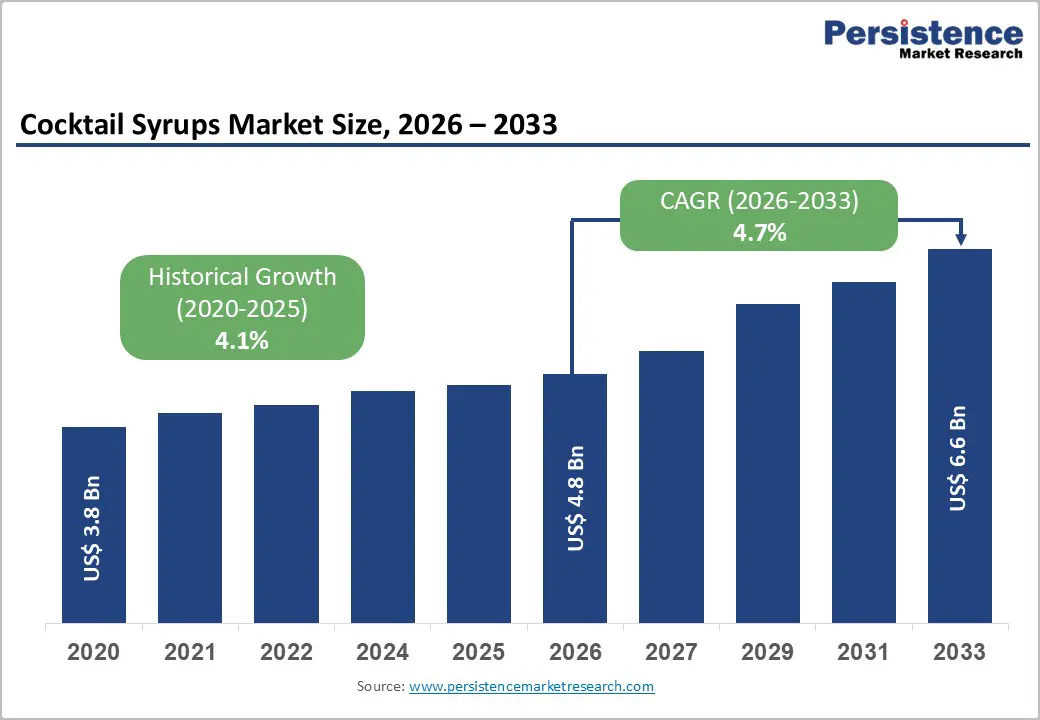
The global cocktail syrups market size is expected to be valued at US$ 4.8 billion in 2026 and projected to reach US$ 6.6 billion by 2033, growing at a CAGR of 4.7% between 2026 and 2033.
The market growth is primarily propelled by the burgeoning global cocktail culture and the rising consumer preference for premium, professional-grade home mixology experiences. As the hospitality sector continues to innovate, there is an escalating demand for high-quality, authentic flavor enhancers that can replicate the complexity of craft bar drinks. Furthermore, the expansion of the non-alcoholic beverage segment, including mocktails and functional sodas, has created a sustainable secondary demand for versatile syrups that offer botanical and herbaceous notes, ensuring steady volume growth across both retail and commercial channels.
Key Industry Highlights:
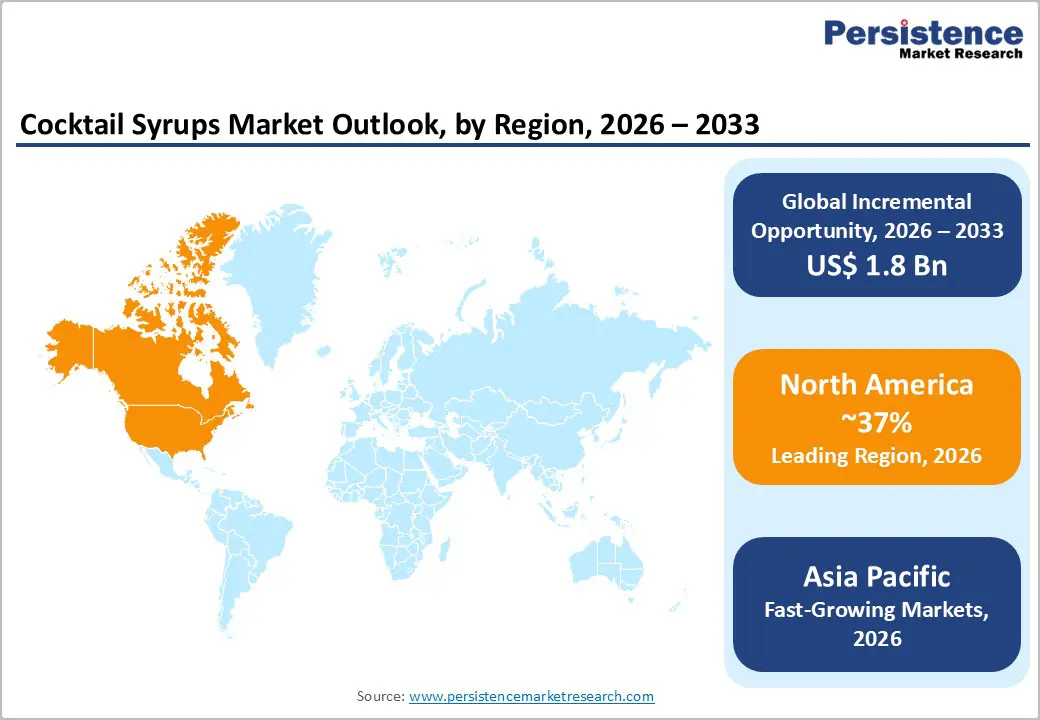
- Leading Region: North America, holding 37% market share, driven by a well-established craft cocktail culture, strong presence of premium spirits consumers, and continuous flavor innovation from major syrup brands.
- Fastest-Growing Region: Asia Pacific, fueled by rising middle-class spending, expanding nightlife culture, rapid café industry growth, and increasing adoption of Western-style cocktail and beverage experiences.
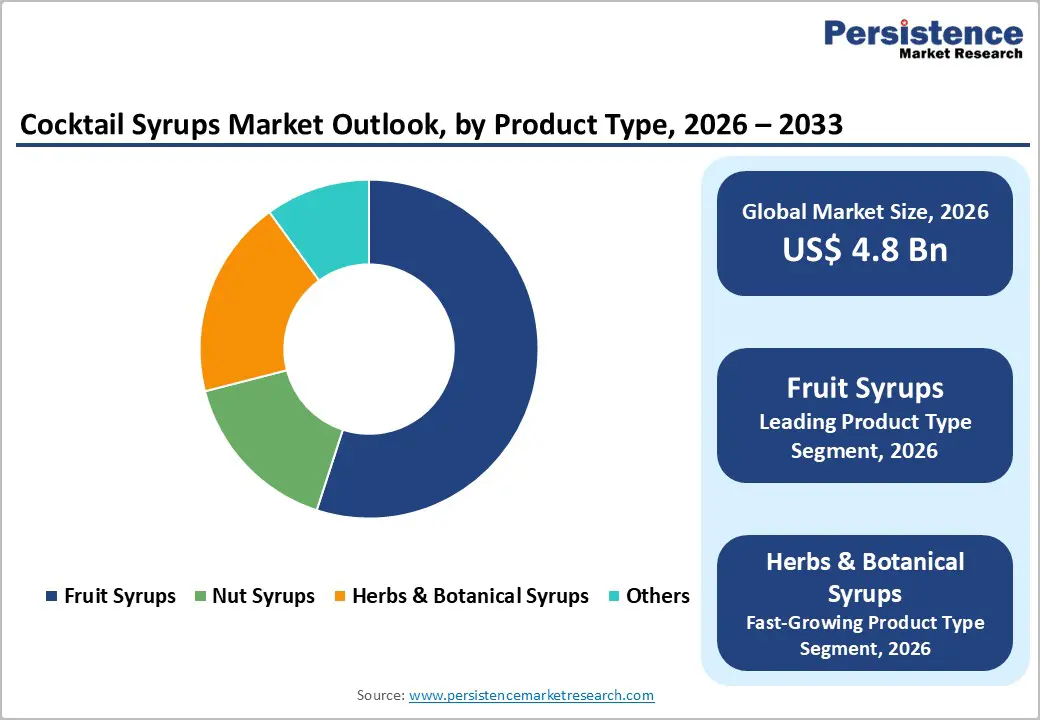
- Fastest-Growing Product Type Segment: Herbs & Botanical Syrups are witnessing the fastest growth as mixologists and consumers increasingly favor sophisticated flavors such as lavender, rosemary, elderflower, and ginger.
- Market Drivers: Growing popularity of home mixology and premium spirits consumption is driving demand for authentic, high-quality cocktail syrups that enable consumers to recreate craft beverages at home.
- Opportunities: Development of functional and botanical syrups infused with ingredients such as turmeric, ginger, elderberry, and adaptogens offers brands new premiumization opportunities.
- Key Developments: In November 2025, DIBS Mixers expanded nationally with premium cocktail syrups created by founder Ohio Crawford for both professional bars and home mixologists. In May 2025, Monin launched matcha concentrate products, leveraging the growing matcha beverage trend amplified by TikTok.
| Key Insights | Details |
|---|---|
| Global Cocktail Syrups Market Size (2026E) | US$ 4.8 Bn |
| Market Value Forecast (2033F) | US$ 6.6 Bn |
| Projected Growth (CAGR 2026 to 2033) | 4.7% |
| Historical Market Growth (CAGR 2020 to 2025) | 4.1% |
Market Dynamics
Driver - Rising Popularity of Home Mixology and Premiumization Trends
A primary driver for the cocktail syrups industry is the significant shift toward at-home entertainment and the consumer desire for professional-quality beverages. The premiumization of spirits has led to a subsequent demand for high-end mixers and syrups that do not compromise the quality of the base spirit. Consumers are increasingly educated about flavor profiles and are seeking out syrups that use real fruit juices and natural extracts rather than synthetic substitutes. This trend is particularly strong among millennials and Gen Z demographics who prioritize the experience of a drink. Consequently, brands like Monin Inc. and Giffard have seen increased retail adoption as consumers look to replicate complex craft cocktails in their own kitchens.
Restraints - High Sugar Content and Health-Related Consumer Skepticism
A significant barrier to market expansion is the growing consumer awareness regarding the health risks associated with high sugar intake, such as obesity and type-2 diabetes. As regulatory bodies like the Food and Drug Administration implement stricter labeling requirements and sugar taxes gain traction in various countries, some consumers are becoming wary of traditional syrups. Although manufacturers are innovating with stevia, monk fruit, and erythritol, replicating the precise mouthfeel and shelf stability of sucrose remains a technical challenge. This skepticism can lead to a decrease in the frequency of use among calorie-conscious demographics. Furthermore, the ultra-processed label often associated with commercial syrups can deter those seeking a clean label or whole-food diet, potentially limiting the market’s penetration into the highest-tier wellness segments.
Opportunity - Expansion into the Functional and Botanical Syrup Segment
There is a burgeoning opportunity for market participants to differentiate their offerings by integrating functional ingredients and exotic botanicals into their syrup formulations. As consumers look for better-for-you options, syrups infused with adaptogens, antioxidants, or vitamins such as ginger, turmeric, or elderberry are gaining significant traction. This trend aligns with the Fastest Growing Segment of Herbs & Botanical Syrups, which is projected to see a high CAGR through 2033. By positioning syrups as not just a sweetener but a health-enhancing component of a drink, brands can command premium pricing. Furthermore, tapping into regional specificities, such as utilizing yuzu from Asia Pacific or agave from Latin America, allows brands to cater to the growing demand for authentic, globally-inspired flavor profiles in the professional bar scene.
Category-wise Analysis
Product Type Insights
The fruit syrups segment remains the dominant force in the market, capturing a substantial 56% market share in 2025. This leadership is attributed to the universal appeal of fruit flavors like grenadine, lime, and passion fruit, which are fundamental to classic cocktail recipes. Fruit syrups offer a high level of versatility, being used in everything from sodas to complex tiki drinks. However, the Herbs & Botanical Syrups segment is identified as the fastest growing segment through 2032. This shift is driven by a sophisticated consumer base looking for less sugary, more savory or complex profiles. Flavors such as lavender, rosemary, and elderflower are becoming staples in modern mixology, providing a refined edge to both alcoholic and non-alcoholic beverages in high-end specialty stores.
Nature Insights
The conventional segment currently holds the leading market share in 2025, primarily due to its established supply chains and lower price points, which make it the preferred choice for high-volume HoReCa establishments. Conventional syrups offer the shelf stability and consistency required for large-scale operations. On the other hand, the Organic segment is experiencing the fastest growth. As the clean label movement penetrates the spirits industry, consumers are increasingly willing to pay a premium for syrups that are certified non-GMO and free from synthetic pesticides. This trend is particularly evident in North America and Europe, where organic certifications serve as a proxy for high quality and environmental responsibility, encouraging brands like Monin Inc. to expand their organic-certified portfolios.
Region-wise Insights
North America Cocktail Syrups Market Trends and Insights
North America held a leading share of 37% in 2025, underpinned by a mature cocktail culture and a high concentration of premium spirits consumers. The United States is the primary driver in this region, where the craft cocktail movement originated and continues to evolve. U.S. market leadership is supported by a robust innovation ecosystem where startups and established giants like R. Torre & Company (Torani) frequently launch seasonal and limited-edition flavors to keep consumer interest high.
The regulatory framework in North America, governed by agencies like the FDA, ensures high standards for food safety and labeling, which fosters consumer trust. There is a notable trend toward low-sugar and natural mixers across major metropolitan hubs. Furthermore, the strong presence of major beverage conglomerates like Diageo PLC and Molson Coors Beverage Co. provides significant marketing support for the category. The region's well-developed Online Retail infrastructure also facilitates the rapid growth of the direct-to-consumer segment, making it the most significant revenue generator for the global market.
Asia Pacific Cocktail Syrups Market Trends and Insights
Asia Pacific is identified as the fastest growing segment for the cocktail syrups market through 2032. This rapid expansion is primarily driven by the burgeoning middle class in China, India, and the ASEAN countries, who are increasingly adopting Western-style nightlife and social drinking habits. The region's growth dynamics are further supported by a massive young population that is eager to explore international flavors. Japan and Australia remain the leaders in terms of mixology innovation, with a strong focus on utilizing local tropical fruits and exotic botanicals.
The region also benefits from significant manufacturing advantages and a lower cost of raw materials like sugar and tropical fruits. In China, the rapid expansion of modern retail and e-commerce platforms like Alibaba has made premium international syrup brands highly accessible to urban consumers. Furthermore, the rise of the cafe culture in Southeast Asia, where syrups are used not just in cocktails but also in premium coffees and teas, provides a diverse revenue base. As local manufacturing hubs develop and international players like Kerry Group PLC increase their regional investments, Asia Pacific is poised to become a central pillar of the global market.
Competitive Landscape
The cocktail syrups market exhibits a moderately consolidated structure, where a few global flavor and beverage giants operate alongside a vibrant array of artisanal and regional players. Leaders like Kerry Group PLC and IFF leverage their massive R&D capabilities to produce functional and high-stability syrups for the global HoReCa sector. In contrast, brands like Monin Inc. and Giffard dominate the premium retail and professional bar segments through a strong focus on brand heritage and extensive flavor portfolios. Key differentiators in this market include the authenticity of ingredients, shelf-life stability without high preservative use, and brand recognition among professional mixologists. Emerging business model trends show a move toward co-branding with spirits companies to offer complete cocktail solutions. As the market matures, we are seeing a shift toward hyper-localization, where brands create region-specific flavors to capture the local cultural nuances of the global cocktail scene.
Key Developments:
- In November 2025, DIBS Mixers, founded by spirits educator Ohio Crawford, expanded its national presence with a line of premium cocktail syrups designed for both professional bars and home mixology enthusiasts, reflecting the rising demand for authentic and high-quality beverage mixers.
- In May 2025, Monin introduced new matcha concentrate products, capitalizing on the rapidly growing matcha beverage trend fueled by social media platforms such as TikTok, where matcha-based drinks and café-style recipes have gained significant popularity among younger consumers.
Companies Covered in Cocktail Syrups Market
- Kerry Group PLC
- IFF
- Pernod Ricard SA
- Diageo PLC
- Molson Coors Beverage Co.
- Toschi Vignola S.r.l.
- Jones Soda Co.
- Monin Inc.
- R. Torre & Company
- Giffard
- Others
Frequently Asked Questions
The global Cocktail Syrups market is projected to be valued at US$ 4.8 Bn in 2026.
Rising Popularity of Home Mixology and Premiumization Trends is a major factor driving global Cocktail Syrups market.
The Global Cocktail Syrups market is poised to witness a CAGR of 4.7% between 2026 and 2033.
Expansion into the Functional and Botanical Syrup Segment is a significant opportunity in the Cocktail Syrups market.
Major players in the Global Cocktail Syrups market include Kerry Group PLC, IFF, Pernod Ricard SA, Diageo PLC, Toschi Vignola S.r.l., Monin Inc., and others.


